
The Significance of Inscriptions in Understanding Ancient Indian Trade Routes


Welcome to Ancient India History, where we embark on a fascinating journey through the rich tapestry of ancient Indian civilizations. In today’s exploration, we delve into the significance of inscriptions that illuminate the intricate web of ancient Indian trade routes. These routes were not just pathways for commerce; they were vital arteries of culture, ideas, and innovation. Curious about how these inscriptions shape our understanding of historical trade dynamics? Join us as we uncover the layers of meaning behind these ancient scripts and their impact on the world of trade in India!

Inscriptions serve as invaluable artifacts that provide insights into the multifaceted tapestry of ancient Indian civilizations, particularly concerning their trade routes. These inscriptions, often etched in stone or written on metal, offer a glimpse into the economic activities, cultural exchanges, and social structures that characterized ancient India.
By examining these historical texts, researchers and historians can uncover the significance of ancient Indian trade routes, revealing not only the pathways of commerce but also the interconnectedness of various regions and communities. This article will delve into the importance of inscriptions in understanding the significance of ancient Indian trade routes, exploring their role in economic and cultural development from the Indus Valley to the Gupta Empire.
Introduction to Ancient Indian Trade Routes
Overview of Trade in Ancient India
Trade in ancient India played a crucial role in shaping the economy and culture of the region. The subcontinent was strategically located, serving as a bridge between the East and the West, which facilitated the flow of goods, ideas, and culture. Key trade goods included:
- Spices: India's spices were highly sought after in international markets.
- Textiles: Artisanal textiles, particularly cotton and silk, were prized commodities.
- Metals: Gold, silver, and various alloys were traded extensively.
These goods were transported along various trade routes, which connected not only different parts of India but also linked India with other civilizations, such as those in Central Asia, the Middle East, and beyond.
Importance of Trade Routes in Ancient Civilization
The significance of trade routes in ancient civilizations cannot be overstated. They served as conduits for:
- Cultural Exchange: Trade routes facilitated the movement of people, leading to the exchange of cultural practices, beliefs, and innovations.
- Economic Prosperity: The wealth generated from trade contributed to the growth of cities and the establishment of powerful kingdoms.
- Political Alliances: Control over trade routes often led to the establishment of alliances, influencing regional politics.
Understanding these factors is essential for appreciating the role of inscriptions in documenting and analyzing the dynamics of ancient trade.
The Role of Inscriptions in Historical Analysis
What are Inscriptions?
Inscriptions are written records that provide historical information about various aspects of ancient societies. They can be found on a variety of materials, including:
- Stone tablets
- Copper plates
- Pottery
These inscriptions often contain important information regarding trade agreements, transactions, and routes, serving as a vital source for historians studying ancient economic systems.
Types of Inscriptions Relevant to Trade
Several types of inscriptions are particularly relevant to understanding ancient Indian trade routes:
- Commercial Inscriptions: These documents detail trade transactions and agreements.
- Royal Edicts: Issued by rulers, these inscriptions often outline trade regulations and policies.
- Religious Texts: Some inscriptions include references to trade in the context of religious offerings and donations.
These inscriptions collectively contribute to a comprehensive understanding of the trade networks that existed in ancient India.
The Process of Deciphering Ancient Inscriptions
Deciphering inscriptions is a complex process that involves:
- Identifying the Script: Recognizing the script used, such as Brahmi or Kharosthi, is the first step.
- Translating the Text: Scholars translate the inscriptions, often requiring knowledge of the historical context.
- Analyzing Content: The content is then analyzed to extract information relevant to trade routes and practices.
This meticulous process allows historians to piece together the significance of trade in ancient Indian civilization, revealing how these routes shaped the economic and cultural landscape of the time.
Key Inscriptions That Illuminate Trade Routes
Inscriptions from ancient India serve as vital evidence for understanding the trade routes that facilitated commerce across the subcontinent and beyond. These inscriptions not only document the goods exchanged but also provide insights into the socio-economic conditions of the time. Notable inscriptions, often found on stone tablets, pillars, and other mediums, reveal a wealth of information about trade practices, the movement of people, and the integration of various cultures through trade interactions.
Inscriptions from various dynasties, such as the Mauryas, the Satavahanas, and the Guptas, illustrate the interconnectedness of trade routes. These texts often include details about local governance, trade regulations, and the roles of merchants, which collectively enhance our understanding of how ancient Indian trade routes functioned. The significance of these inscriptions lies in their ability to trace the evolution of trade practices and their influence on cultural exchange in ancient India.
Major Inscriptions and Their Locations
Several significant inscriptions across different regions of ancient India provide crucial information about trade routes. Some of the most prominent include:
- Ashoka's Edicts: These inscriptions, found throughout the Indian subcontinent, particularly in places like Lumbini, Sarnath, and Kalinga, emphasize trade regulations and the promotion of commerce as a means for societal welfare.
- The Junagadh Rock Edicts: Located in Gujarat, these edicts detail the importance of trade in the region and mention interactions with traders from far-off lands, showcasing the coastal trade networks.
- The Nasik Caves Inscriptions: Found in Maharashtra, these inscriptions highlight the flourishing trade connections with the western regions and goods such as textiles and spices.
- The Kharavela Inscriptions: Located in Odisha, these inscriptions document the trade practices of the Kalinga kingdom and its extensive maritime trade connections.
These inscriptions are scattered across various locations and provide a mosaic of information that helps reconstruct the ancient trade landscape of India.
Case Studies of Specific Inscriptions and Their Impact on Trade Understanding
Examining specific inscriptions can significantly enhance our knowledge of ancient Indian trade routes. For instance:
- The Edicts of Ashoka: These inscriptions not only promote ethical trade practices but also mention various goods like textiles, ivory, and precious stones. They reveal the vast network of trade routes that connected the Mauryan Empire with regions such as Central Asia and the Mediterranean.
- The Bhattiprolu Inscriptions: Located in Andhra Pradesh, these inscriptions offer insights into the trade of local goods, such as spices and medicinal herbs, which were significant in both domestic and international markets.
- The Eran Inscription: This inscription highlights the trade practices of the Gupta period and mentions trading centers that became hubs for the exchange of goods, such as coins, textiles, and agricultural products.
These case studies illustrate how specific inscriptions can provide targeted insights into the dynamics of trade, the types of goods exchanged, and the evolution of trade networks over time.
How Inscriptions Reveal Trade Practices
Inscriptions serve as a unique window into the trade practices of ancient India, offering invaluable evidence that helps decipher the complexities of commerce during that era. They document not only the goods being traded but also the regulations and customs that governed trade interactions. By analyzing these inscriptions, historians can piece together how trade influenced economic development and cultural exchange.
Evidence of Goods Traded Through Inscriptions
Many inscriptions specifically mention the types of goods that were traded, providing a clear picture of the economic landscape. Commonly referenced items include:
- Spices: Highly sought after in both domestic and international markets, spices like black pepper and cardamom are frequently mentioned in trade-related inscriptions.
- Textiles: Inscriptions often highlight the production and trade of high-quality fabrics, particularly cotton and silk, which were significant exports.
- Precious Metals and Stones: Inscriptions document the trade of gold, silver, and gemstones, underscoring their value in ancient trade networks.
- Agricultural Products: Items such as rice, wheat, and pulses are also mentioned, reflecting the agricultural wealth of the regions involved in trade.
These references not only illuminate the economic practices of the time but also signify the cultural importance of these goods in ancient society.
Inscriptions as Indicators of Trade Networks and Connections
Inscriptions also serve as critical indicators of the intricate trade networks that existed in ancient India. They often detail relationships between different regions, showcasing how trade routes facilitated cultural and economic exchanges. For example:
- Geographical References: Many inscriptions include names of cities and regions, helping to map out trade routes and connections. This geographical context is essential for understanding the flow of goods and cultural influences.
- Merchant Guilds and Associations: Inscriptions frequently mention merchant groups, indicating organized trade practices and the establishment of guilds that governed trade activities.
- Diplomatic Relations: Some inscriptions hint at diplomatic trade connections with foreign powers, suggesting that trade was not just an economic activity but also a means of political alliance and cultural exchange.
Through these indicators, inscriptions provide a comprehensive view of the complex trade networks that characterized ancient India, highlighting how trade was integral to the development of social and economic structures.
The Influence of Geography on Trade Routes
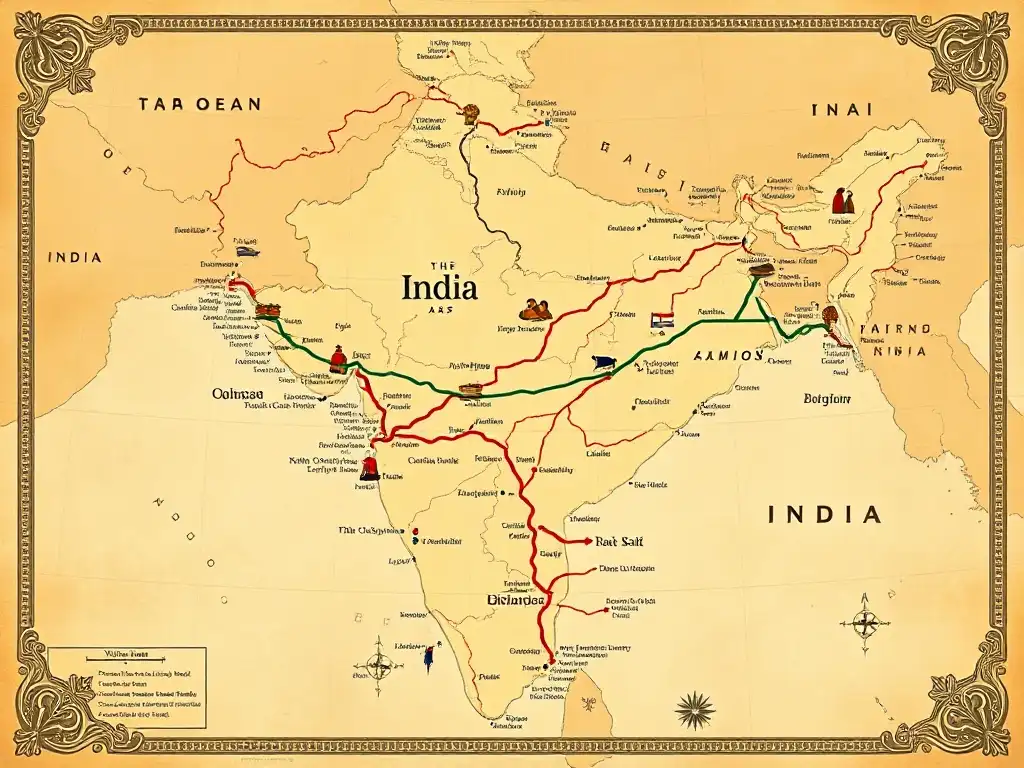
Geography played a crucial role in shaping the ancient Indian trade routes, determining both the pathways taken by traders and the commodities exchanged. The diverse landscapes of India—from the towering Himalayas to the vast coastal plains—offered unique challenges and opportunities that influenced trade dynamics. The most prominent trade routes were established along natural features such as rivers, mountain passes, and coastal lines, which facilitated the movement of goods and people.
The northern trade routes, for instance, were significantly influenced by the presence of the Himalayan Mountains, which not only acted as a barrier but also provided vital passageways through the Khyber Pass. Similarly, the extensive river systems, like the Ganges and the Indus, served as major arteries for commerce, linking inland cities with coastal ports. Additionally, the Deccan Plateau's central location allowed for the convergence of trading routes from various parts of India, enhancing its role as a hub for internal and external trade.
Topographical Factors Affecting Ancient Indian Trade Routes
The topographical features of ancient India greatly affected trade routes in several ways:
- Mountain Ranges: The Himalayas and Western Ghats created natural barriers that influenced the direction of trade. Traders had to navigate through specific passes, which were often well-marked and used for centuries.
- Rivers: Major rivers acted as trade highways. The Indus River, for example, was essential for the Harappan civilization, facilitating trade with Mesopotamia. The navigability of rivers allowed for the easy transport of bulk goods.
- Deserts: The Thar Desert's harsh conditions limited trade routes, compelling traders to seek alternative paths around it, thus affecting trade flow and economic relationships.
- Coasts: Coastal areas, such as those along the Arabian Sea and the Bay of Bengal, provided access to maritime trade, leading to interactions with distant lands like Africa, the Middle East, and Southeast Asia.
These topographical factors not only shaped the physical routes but also influenced the economic prosperity of regions based on their geographical advantages.
Inscriptions Reflecting Geographical Knowledge
Inscriptions from ancient Indian civilizations provide valuable insights into the geographical knowledge of traders and the significance of various trade routes. Many inscriptions mention the locations of cities, rivers, and mountain passes, highlighting their importance in commerce. For instance, inscriptions found at the ancient port city of Lothal detail its role in maritime trade and mention specific goods traded, indicating a well-established network of routes.
Moreover, inscriptions often included directions and distances between various regions, demonstrating the awareness of ancient Indians regarding their geography. These records were crucial for guiding traders, ensuring safe passage, and facilitating efficient trade operations. They reflect a sophisticated understanding of geography, which was essential for the success of trade in ancient India.
Cultural Exchange Through Trade Routes
The trade routes of ancient India were not just conduits for goods; they were also avenues for cultural exchange, leading to the dissemination of ideas, art, and religious beliefs. The interactions facilitated by these routes fostered a rich tapestry of cultural syncretism that significantly shaped Indian civilization.
Inscriptions That Highlight Cultural Interactions
Numerous inscriptions document the cultural interactions that occurred along ancient trade routes. For example, the presence of inscriptions in multiple languages, such as Sanskrit, Prakrit, and Tamil, indicates a melting pot of cultures and the movement of diverse communities. These inscriptions often commemorate the contributions of traders and merchants from various regions and their impact on local culture.
Additionally, inscriptions from monuments and temples reveal how trade influenced art and architecture. The styles of sculptures and motifs often reflect the aesthetic traditions of distant lands, suggesting that trade was instrumental in introducing new artistic elements to Indian culture.
The Role of Trade in the Spread of Ideas and Innovations
Trade routes were vital for the transmission of ideas and innovations across regions. The exchange of goods often paralleled the exchange of knowledge, such as agricultural practices, technological advancements, and religious philosophies. For instance, the spread of Buddhism along trade routes facilitated the establishment of monasteries and cultural centers, enabling the sharing of teachings and texts.
Inscriptions from this period frequently reference the introduction of new technologies, such as metallurgy and textile production techniques, which were often brought in by traders. This cross-pollination of ideas not only enriched Indian culture but also fostered economic growth, as regions adapted and innovated based on new knowledge acquired through trade.
The significance of ancient Indian trade routes extends far beyond the exchange of commodities. The geographical influences and cultural interactions documented through inscriptions have provided a deep understanding of how trade shaped the civilization's economic, social, and cultural landscapes.
Challenges in Interpreting Inscriptions
Interpreting inscriptions from ancient Indian civilizations presents several challenges that scholars must navigate. One of the primary difficulties is the linguistic diversity of the inscriptions, which were often written in various languages and scripts, such as Brahmi, Kharosthi, and Tamil. This diversity necessitates a deep understanding of the specific script and language used in a given inscription, as well as the cultural context in which it was produced.
Another challenge is the fragmentary nature of many inscriptions. Often, only parts of the original texts have survived due to weathering, erosion, or human activity, resulting in incomplete information. This can lead to misinterpretations, as scholars may have to rely on conjecture to fill in the gaps. Additionally, the regional variations in the language and script can further complicate interpretations, as different areas may have employed distinct terms or phrases to describe similar concepts.
The historical context is also crucial, as inscriptions can be influenced by the political, social, and economic conditions of their time. Without a thorough understanding of these contexts, scholars may misinterpret the significance of certain inscriptions. Furthermore, the intent of the inscription—whether it was meant for public display, ceremonial purposes, or private commemoration—can greatly affect its content and meaning, requiring careful analysis to ascertain the author's intent.
Limitations of Inscriptions in Understanding Trade
While inscriptions provide valuable insights into ancient Indian trade routes, they are not without limitations. One significant drawback is that inscriptions often reflect the perspective of the elite or ruling classes, as they were typically commissioned by kings or wealthy merchants. This can result in a skewed representation of trade activities, overlooking the roles of lower classes and local traders who also played crucial roles in commercial exchanges.
Moreover, inscriptions frequently focus on specific events or transactions, which can lead to an incomplete picture of trade dynamics over time. For instance, they may commemorate a particular trade agreement or an important shipment but fail to provide details about the broader context of ongoing trade practices or the various goods traded.
Another limitation is the geographical focus of many inscriptions. They often pertain to specific regions or cities, which can lead to an underrepresentation of trade routes that connected different areas of India or linked India to external markets. This can hinder our understanding of the interconnectivity of ancient trade networks.
Modern Techniques in Analyzing Ancient Inscriptions
Advancements in technology have significantly enhanced the analysis of ancient inscriptions. One of the most promising techniques is digital imaging, which allows researchers to capture high-resolution images of inscriptions that may be difficult to read with the naked eye. This can help in deciphering faded texts and revealing details that were previously overlooked.
Additionally, multispectral imaging has emerged as a valuable tool. This method involves capturing images at various wavelengths of light, enabling the detection of ink and inscriptions that are not visible under normal lighting. Such techniques can uncover layers of text or details that contribute to a more comprehensive understanding of the inscriptions' content.
Machine learning and artificial intelligence are also being utilized to analyze inscriptions. These technologies can assist in identifying patterns in language use, script variations, and even geographical distributions of inscriptions, offering new insights into trade routes and interactions across ancient India.
Through collaboration with archaeologists and historians, these modern techniques pave the way for a more nuanced interpretation of inscriptions, allowing scholars to reconstruct ancient trade networks more accurately.
Conclusion: The Lasting Impact of Inscriptions on Understanding Ancient Indian Trade Routes
Inscriptions remain a critical source of information for scholars studying ancient Indian trade routes. Despite the challenges and limitations in interpreting them, they provide unique insights into the economic, cultural, and political exchanges that shaped the region.
Summary of Key Insights
Key insights gleaned from the study of inscriptions include their ability to reveal the economic significance of trade routes, the goods exchanged, and the social dynamics of trade. They highlight not only the major commercial centers but also the interconnectedness of various regions within India and their links to international markets. Furthermore, inscriptions often serve as historical records that document the evolution of trade practices over time.
Future Research Directions in Ancient Indian Trade Studies
Future research directions should focus on employing more advanced technological methods to analyze inscriptions and enhance our understanding of trade dynamics. Collaborative studies that integrate archaeological findings with inscriptions can provide a more comprehensive picture of ancient trade routes. Additionally, exploring the socio-political implications of trade as reflected in inscriptions can shed light on how economic activities influenced societal structures in ancient India.
Moreover, expanding the research to include less studied regions and inscriptions can uncover new trade routes and interactions that have yet to be fully understood. By continually refining our methodologies and broadening our research scope, we can deepen our knowledge of the significance of ancient Indian trade routes and their enduring impact on history.
- Introduction to Ancient Indian Trade Routes
- The Role of Inscriptions in Historical Analysis
- Key Inscriptions That Illuminate Trade Routes
- How Inscriptions Reveal Trade Practices
- The Influence of Geography on Trade Routes
- Cultural Exchange Through Trade Routes
- Challenges in Interpreting Inscriptions
- Conclusion: The Lasting Impact of Inscriptions on Understanding Ancient Indian Trade Routes
Frequently Asked Questions
What are ancient Indian trade routes?
Ancient Indian trade routes were pathways used for commerce and cultural exchange between different regions, connecting India with Central Asia, the Middle East, and beyond.
How did inscriptions contribute to our understanding of trade routes?
Inscriptions provide valuable historical data that reveal the locations, trade goods, and the economy of ancient civilizations, helping researchers understand the significance of these trade routes.
What goods were commonly traded along these routes?
Commonly traded goods included spices, silks, jewels, and metals. These commodities were significant in establishing India's reputation as a key player in global trade.
What role did ancient Indian trade routes play in cultural exchange?
These trade routes facilitated not only the exchange of goods but also the sharing of ideas, religions, and cultural practices, enriching the diverse tapestry of ancient Indian civilization.
Why is the study of ancient Indian trade routes important today?
Studying these routes helps us understand the economic impact, cultural interactions, and the historical significance of trade in shaping the development of ancient Indian societies and their connections with the world.
Final Reflection: The Enduring Significance of Ancient Indian Trade Routes
The exploration of ancient Indian trade routes reveals not only the intricate networks that facilitated commerce but also the profound cultural exchanges that shaped civilizations. Today, as we navigate a globalized world, the lessons from these historical pathways remind us of the interconnectedness of societies and the importance of trade in fostering mutual understanding and collaboration. The significance of these ancient routes transcends time, highlighting how commerce can serve as a bridge between diverse cultures.
The impact of ancient Indian trade routes continues to resonate in our cultural and social landscapes. These routes were not merely conduits for goods; they were channels for ideas, art, and technology that enriched societies along their paths. As we reflect on this legacy, we recognize that trade has always been a catalyst for cultural dialogue and innovation. Trade is not just about goods; it is about the exchange of ideas and the forging of relationships.
This perspective encourages us to appreciate the historical context of our modern trade practices and the cultural richness they can foster.
As we conclude our exploration of the significance of ancient Indian trade routes, I invite you to reflect on how these lessons can be applied in your own life. Consider the ways in which you engage with diverse cultures and communities, and think about how trade—whether in ideas, goods, or experiences—can enhance your understanding of the world. Embrace the spirit of connection and collaboration that these ancient pathways exemplify, and let it inspire you to build bridges in your own journey.
Unveil the Mysteries of Ancient Trade Routes!
Thank you for diving into the fascinating world of ancient Indian trade routes with us! Your interest in historical inscriptions reveals the hidden narratives of commerce and culture, enriching our understanding of history. Now, it’s time to take action and deepen your exploration!
- Start by visiting your local library or online archives to uncover more inscriptions related to trade. You might be surprised by what you discover!
- Join a history forum or online community where you can engage in discussions about findings and insights regarding ancient trade networks with fellow enthusiasts.
- Share your newfound knowledge with friends or on social media—help raise awareness about the significance of these historical inscriptions!
What aspect of ancient trade routes do you find most intriguing, and how has your perspective shifted after reading this article?