
Ancient Indian Trade and Its Influence on Neighboring Civilizations

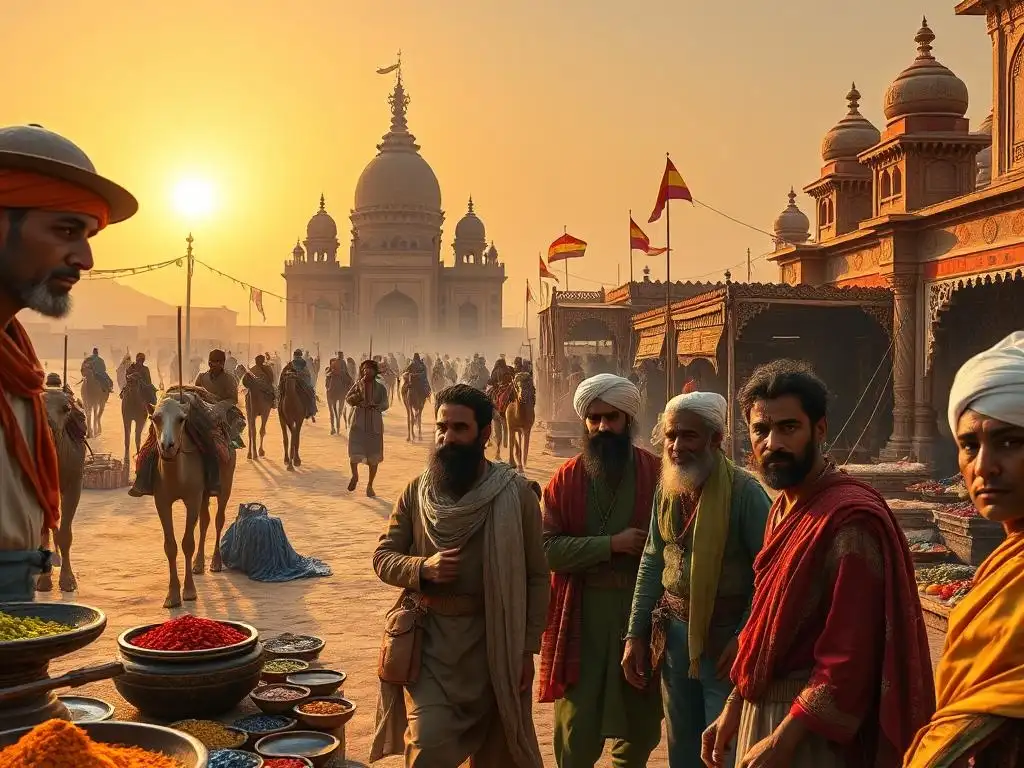
Welcome to Ancient India History, where we embark on a fascinating journey through time to uncover the rich tapestry of civilizations that shaped the Indian subcontinent. Today, we delve into the intriguing world of ancient Indian trade routes, a vital aspect of commerce that not only fueled economic prosperity but also fostered cultural exchanges with neighboring civilizations. What secrets lie within these routes, and how did they influence the course of history? Join us as we explore the profound impact of trade on ancient Indian societies and beyond, igniting your curiosity to discover more about this remarkable legacy.
Introduction to Ancient Indian Trade
Ancient Indian trade was a cornerstone of the subcontinent's economic and cultural development, facilitating exchanges not only of goods but also of ideas, technologies, and cultures. Spanning thousands of years, these trade networks connected diverse civilizations, from the early Indus Valley settlements to the sophisticated realms of the Gupta Empire.
The intricate web of ancient Indian trade routes played a pivotal role in shaping the political and social dynamics of the region, influencing neighboring civilizations and contributing to the spread of Indian culture and innovation across Asia and beyond. Understanding the significance of these trade routes allows us to appreciate the profound impact they had on the development of ancient societies and their economies.
Overview of Ancient Indian Trade Routes
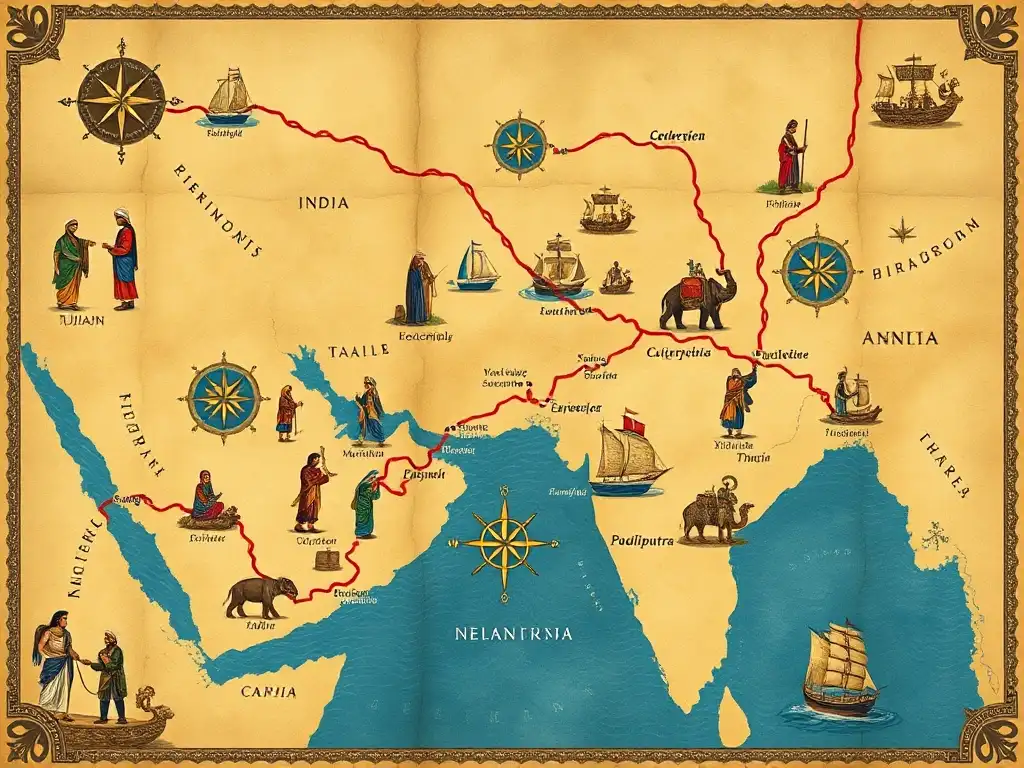
The ancient Indian trade routes were vast and varied, connecting the Indian subcontinent with regions such as the Middle East, Southeast Asia, and even parts of Europe. These routes can be broadly categorized into:
- Land Routes:
- The Silk Road, which facilitated trade between India and China.
- The Royal Road, linking key Indian cities with Persian territories.
- Maritime Routes:
- The Indian Ocean Trade Network, connecting Indian ports with East Africa, the Arabian Peninsula, and Southeast Asia.
These routes enabled the exchange of a myriad of commodities, including spices, textiles, precious stones, and metals, forming a vital part of the ancient global economy.
Importance of Trade in Ancient Indian Society
Trade was not merely an economic activity in ancient India; it was a vital aspect of societal structure and cultural exchange. The flourishing trade led to:
- Economic Prosperity: Cities became hubs of commerce, leading to urbanization and wealth accumulation.
- Cultural Exchange: Interaction with foreign merchants and cultures enriched Indian society, influencing art, religion, and philosophy.
- Political Alliances: Trade relationships often translated into political alliances, enhancing stability and security.
The benefits of trade extended beyond material wealth, fostering a sense of community and shared identity among diverse groups.
Historical Context of Ancient Indian Trade
To fully grasp the significance of ancient Indian trade, one must explore its historical context, which includes major trade centers, the role of early civilizations, and trade practices during key periods.
Major Trade Centers in Ancient India
Ancient India boasted several prominent trade centers that played critical roles in commerce:
- Taxila: A major hub for trade and education, linking the northwest with the rest of India.
- Pataliputra: The capital of the Maurya Empire, it became a focal point for both domestic and international trade.
- Kanchi: Known for its textile industry, it connected traders from the east and west.
These centers facilitated not only trade but also the exchange of knowledge, leading to advancements in various fields.
The Role of the Indus Valley Civilization in Trade
The Indus Valley Civilization (circa 3300–1300 BCE) was among the earliest examples of urbanized society that engaged in extensive trade. Key features include:
- Well-Planned Cities: Cities like Harappa and Mohenjo-Daro had advanced infrastructure that supported trade activities.
- Standardized Weights and Measures: This facilitated fair trade practices, allowing for consistency in transactions.
- Trade Goods: The civilization traded goods such as cotton textiles, pottery, and semi-precious stones with Mesopotamia and other regions.
The Indus Valley's trade practices laid the groundwork for future trade dynamics in ancient India.
Trade During the Vedic Period
The Vedic Period (circa 1500–500 BCE) marked a significant evolution in trade practices, characterized by:
- Emergence of Local Markets: Increased agricultural production led to the establishment of local marketplaces.
- Use of Coinage: The introduction of coins facilitated more complex trade transactions.
- Cultural Exchange: Trade during this period was also marked by the exchange of philosophical and religious ideas, further enriching Indian culture.
These developments set the stage for the expansive trade networks that would follow in the subsequent empires.
By examining these aspects, we can appreciate the intricate and influential nature of ancient Indian trade and its lasting legacy on surrounding civilizations.
Ancient Indian Trade Routes
Ancient Indian trade routes played a crucial role in shaping not only the economy of India but also the cultural and social interactions with neighboring civilizations. These routes were not merely pathways for the exchange of goods; they facilitated the movement of ideas, cultures, and technologies across vast distances. The trade networks that emerged during various periods, particularly from the Indus Valley Civilization through to the Gupta Empire, were instrumental in establishing India as a significant player in global commerce.
Trade routes in ancient India can be categorized into land and maritime paths, each contributing uniquely to the prosperity of the region. The extensive network of trade routes helped connect India with regions such as Central Asia, the Middle East, and Southeast Asia, enabling the exchange of a wide array of commodities and cultural elements.
Key Land Routes of Ancient India
The land routes of ancient India were vital for trade, especially with regions to the north and west. One of the most significant land routes was the Silk Road, which linked India to China and facilitated the trade of silk, spices, and other luxury goods.
Key characteristics of these land routes include:
- Northern Trade Routes: These routes connected India with Central Asia, facilitating trade with the Persian Empire and beyond. Goods such as textiles and spices were transported through the Khyber Pass and other mountain passes.
- Western Trade Routes: The routes leading to the Arabian Peninsula enabled trade with regions such as Mesopotamia. These routes were crucial for the exchange of agricultural products and crafted goods.
- Southern Trade Routes: Connecting the Deccan Plateau to the southern regions, these routes facilitated trade with Southeast Asia, particularly in spices, textiles, and precious stones.
These land routes not only facilitated economic exchange but also contributed to the spread of cultural practices and religions, including Buddhism and Hinduism, into neighboring territories.
Maritime Trade Routes and Their Significance
Maritime trade routes were equally significant, particularly for coastal civilizations. Ancient Indian ports such as Lothal and Kharavela served as bustling hubs for maritime trade. The Indian Ocean trade network connected India with Africa, the Middle East, and Southeast Asia.
Key aspects of maritime trade routes include:
- Trade with the Roman Empire: Indian goods were highly valued in Rome, leading to the establishment of trade relations that brought in wealth and cultural exchanges. Items such as silk, spices, and gemstones were in high demand.
- Cultural Exchanges: Maritime routes facilitated not only trade but also the exchange of ideas, religions, and technologies, as seen in the spread of Buddhism to Southeast Asia through seafaring traders.
- Strategic Importance: Control over maritime routes allowed ancient Indian kingdoms to exert influence over trade and protect their economic interests, leading to the establishment of powerful trading empires.
Maritime trade routes were crucial for sustaining the economy and fostering intercultural dialogue, making them an integral part of ancient Indian commerce.
Influence of Geography on Trade Routes
Geography played a pivotal role in shaping ancient Indian trade routes. The diverse topography of India, including mountains, rivers, and coastal lines, directly influenced trade dynamics.
Key geographical factors include:
- Natural Barriers: The Himalayas served as a natural barrier, but also as a conduit for trade between India and Tibet, facilitating the exchange of goods and cultural ideas.
- River Systems: Major rivers such as the Ganges and Indus provided routes for inland trade, allowing goods to be transported efficiently across regions.
- Coastal Access: The extensive coastline of India allowed for the development of maritime trade routes, connecting it to distant lands and fostering economic ties with various civilizations.
The geographical features not only determined the nature of the routes but also influenced the type of goods traded, the cultures that interacted, and the overall prosperity of ancient Indian societies.
Goods Traded through Ancient Indian Trade Routes
The ancient Indian trade routes were bustling avenues of commerce that facilitated the exchange of a wide variety of goods, significantly impacting both the Indian economy and neighboring civilizations.
Exported Goods: Spices, Textiles, and More
Ancient India was renowned for its rich assortment of exports. Key exported goods included:
- Spices: India was the world's leading supplier of spices, including pepper, cardamom, and cinnamon, which were highly sought after in international markets.
- Textiles: Indian textiles such as silk, cotton, and woolen fabrics were prized for their quality and craftsmanship. The export of these textiles contributed significantly to India's wealth.
- Metallurgy and Crafts: Skilled artisans produced intricate metalwork, jewelry, and pottery that were exported to various regions, showcasing India's advanced craftsmanship.
These goods not only generated economic wealth but also established India as a cultural hub, influencing fashion, cuisine, and art in other civilizations.
Imported Goods: Metals, Gems, and Cultural Artifacts
In addition to exports, ancient India was also a recipient of various imported goods. Notable imports included:
- Metals: Gold, silver, and tin were imported to supplement India’s own resources for crafting jewelry and tools.
- Gems: Precious stones such as rubies, emeralds, and diamonds were highly valued and often traded with regions like Persia and Arabia.
- Cultural Artifacts: Items such as pottery, religious artifacts, and even manuscripts from other cultures were imported, enriching Indian society and contributing to its artistic and intellectual heritage.
The import of these goods played a crucial role in fostering innovation and cultural diversity within ancient Indian civilization.
The Role of Trade in Cultural Exchange
Trade routes served as conduits for cultural exchange, impacting the social and cultural landscape of ancient India. The interactions between traders and local populations resulted in a significant exchange of ideas, religions, and technologies.
Key elements of cultural exchange include:
- Religious Spread: The movement of traders facilitated the spread of religions such as Buddhism and Hinduism to neighboring regions, leading to the establishment of cultural ties and shared beliefs.
- Language and Literature: The contact with different cultures fostered the exchange of languages, scripts, and literature, enriching the intellectual landscape of ancient India.
- Art and Architecture: Trade influenced artistic styles and architectural designs, leading to the fusion of different artistic traditions, as seen in the sculptures and temple designs that emerged from this period.
Overall, the interplay between trade and cultural exchange significantly shaped the development of ancient Indian civilization, leaving a lasting legacy that would influence future generations.
Influence of Ancient Indian Trade on Neighboring Civilizations
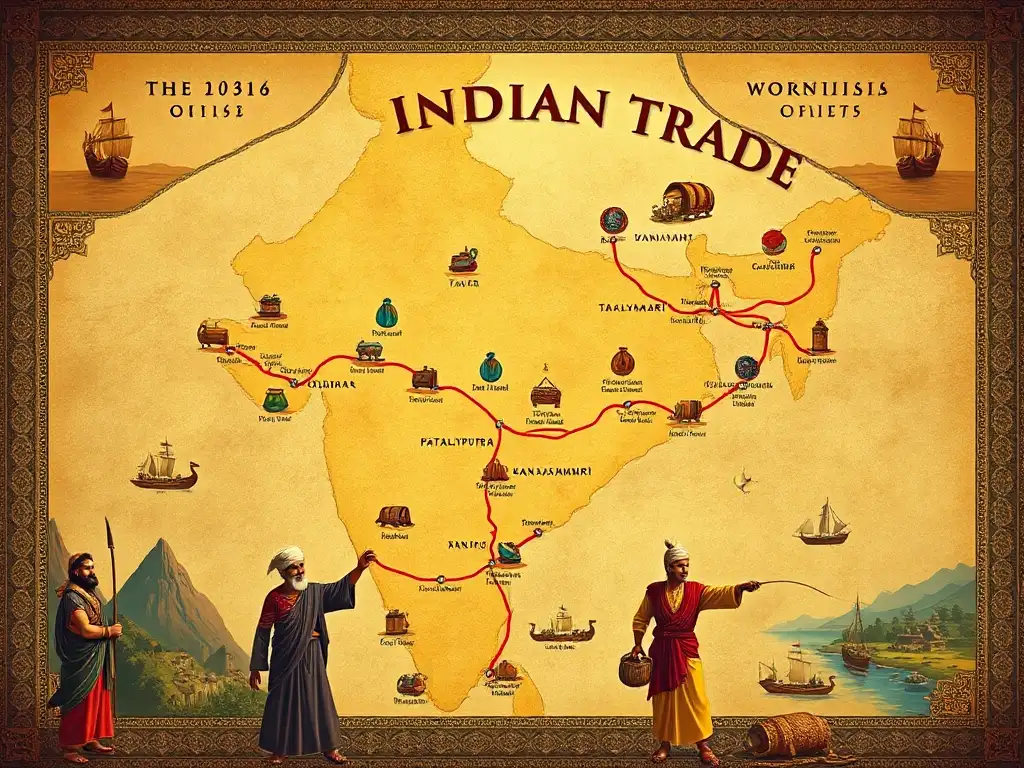
Ancient Indian trade routes served as vital channels for the exchange of goods, ideas, and culture, significantly impacting neighboring civilizations. The strategic location of the Indian subcontinent, coupled with its rich resources, facilitated extensive trade networks that stretched across Asia and beyond. Through these interactions, ancient India not only influenced the economic landscapes of surrounding regions but also enriched their cultural and social fabrics.
Impact on Southeast Asian Civilizations
The influence of ancient Indian trade on Southeast Asian civilizations is profound and multifaceted. Indian merchants traveled extensively to regions like present-day Indonesia, Malaysia, and Thailand, establishing trade links that fostered cultural exchange. Goods such as spices, textiles, and precious stones were traded, while Indian cultural elements, including Hinduism and Buddhism, gained a foothold in Southeast Asia.
One notable example is the Srivijaya Empire, which thrived as a maritime trading power in the 7th to 13th centuries. This empire became a crucial hub for the trade of spices and other commodities, facilitating the spread of Indian culture and religious practices throughout the region. The influence of Indian art, architecture, and language can still be observed in modern Southeast Asian societies, highlighting the enduring legacy of these ancient trade interactions.
Contributions to Middle Eastern Trade Practices
Ancient Indian trade routes also significantly impacted Middle Eastern trade practices. Indian merchants participated actively in the trade of textiles, spices, and precious metals, contributing to the vibrant commerce of cities like Baghdad and Damascus. The Silk Route and maritime routes connecting India to the Arabian Peninsula allowed for the exchange of not only goods but also knowledge and technology.
The introduction of Indian numeral systems and mathematical concepts into the Middle East through trade interactions helped lay the groundwork for advancements in science and mathematics. Furthermore, the culinary influences from Indian spices transformed Middle Eastern cuisine, showcasing how trade fostered a mutual exchange of cultural practices and innovations.
Trade Relations with the Roman Empire
The trade relations between ancient India and the Roman Empire were characterized by a rich exchange of goods, ideas, and culture. Roman demand for Indian products, particularly spices, silk, and gemstones, led to the establishment of direct trade routes across the Indian Ocean. Ports such as Alexandria in Egypt became bustling centers for this trade, facilitating the movement of Indian goods into the heart of the Roman Empire.
The Periplus of the Erythraean Sea, a navigational guide from the first century, provides insights into the thriving trade between these two great civilizations. It highlights the importance of Indian trade routes in connecting the Mediterranean world with Asia, illustrating how goods and culture flowed freely across these networks. This interaction not only enriched the economies of both regions but also led to the exchange of ideas, art, and technology.
The Legacy of Ancient Indian Trade
The ancient Indian trade system has left an indelible mark on the historical and cultural landscape of the regions it touched. Its influence continues to resonate in contemporary trade practices and cultural exchanges.
Lasting Effects on Modern Trade Practices
The ancient trade routes established by Indian merchants laid the foundation for modern trade practices. Many of today's global trade networks can trace their origins back to these early exchanges. The emphasis on trade routes, merchant guilds, and market organization that characterized ancient Indian commerce has parallels in contemporary trade systems, reflecting a continuity of economic practices.
Moreover, the principles of fair trade and ethical commerce that were prevalent among ancient Indian traders are increasingly relevant today. The focus on sustainable practices and mutual benefit in trade relations can be traced back to these age-old traditions.
Preservation of Cultural Heritage through Trade
Trade played a crucial role in the preservation and dissemination of cultural heritage across civilizations. Ancient Indian trade routes facilitated not just the exchange of goods but also the sharing of art, literature, and religious beliefs, which helped maintain cultural continuity among diverse societies.
The diffusion of Indian art forms, architectural styles, and literary traditions throughout Asia is a testament to the importance of trade in cultural preservation. This blending of cultures enriched the artistic and philosophical landscapes of multiple civilizations, showcasing how commerce can serve as a bridge between different peoples.
Lessons from Ancient Indian Trade for Contemporary Economies
Modern economies can glean valuable lessons from ancient Indian trade practices. The importance of establishing strong trade networks, fostering cultural exchange, and promoting ethical commerce are principles that remain relevant today. Additionally, the adaptability and resilience of ancient trade routes in response to changing geopolitical landscapes offer insights into navigating contemporary global trade challenges.
Furthermore, the emphasis on local resources and sustainable practices observed in ancient Indian trade serves as a reminder of the need for responsible economic strategies in the face of globalization. By studying these historical trade dynamics, contemporary economies can develop more robust and resilient trade systems that honor both heritage and innovation.
Conclusion
The ancient Indian trade routes played a crucial role in shaping not only the economy of India but also the cultural and social dynamics of neighboring civilizations. These trade routes facilitated the exchange of goods, ideas, and cultural practices, leading to a rich tapestry of interactions that influenced various regions across Asia and beyond. The legacy of ancient Indian trade continues to resonate today, reminding us of the interconnectedness of ancient societies.
Summary of Ancient Indian Trade’s Influence
The influence of ancient Indian trade can be summarized through several key points:
- Cultural Exchange: Trade routes were not just conduits for material goods; they were also pathways for the exchange of ideas, philosophies, and religions. For example, Buddhism spread from India to Central Asia and beyond, largely due to the movement of traders along these routes.
- Economic Impact: The trade of spices, textiles, and precious stones positioned India as a significant player in global commerce. The demand for Indian goods in foreign markets boosted the economy and contributed to the prosperity of various Indian kingdoms.
- Diplomatic Relations: Trade fostered relationships between India and other civilizations, such as Persia, Greece, and China. These interactions often led to alliances and cultural exchanges that enriched all involved parties.
- Innovation and Technology: The need to facilitate trade led to advancements in navigation, shipbuilding, and trade technologies. Indian merchants developed sophisticated methods for managing trade, including the use of standardized weights and measures.
- Urban Development: Major trade routes contributed to the growth of urban centers in India, such as Taxila and Pataliputra, which became hubs of commerce and culture, attracting traders from distant lands.
Final Thoughts on the Importance of Trade in Ancient History
Trade in ancient India was more than a mere economic activity; it was a fundamental aspect of societal development and cultural enrichment. The ancient Indian trade routes exemplify how commerce can bridge gaps between diverse civilizations, leading to mutual benefit and understanding. As historians and scholars continue to explore the depths of ancient trade, it becomes increasingly evident that these interactions laid the groundwork for the globalized world we live in today.
Understanding the significance of ancient Indian trade routes helps us appreciate the complexity of historical interactions and their lasting impact on contemporary societies. The legacy of these trade networks serves as a testament to the ingenuity and resilience of ancient civilizations, highlighting the pivotal role that trade played in shaping human history.
- Introduction to Ancient Indian Trade
- Historical Context of Ancient Indian Trade
- Ancient Indian Trade Routes
- Goods Traded through Ancient Indian Trade Routes
- Influence of Ancient Indian Trade on Neighboring Civilizations
- The Legacy of Ancient Indian Trade
- Conclusion
Frequently Asked Questions
What were the main ancient Indian trade routes?
The primary ancient Indian trade routes included the Silk Road and maritime routes across the Indian Ocean, connecting India to regions like Central Asia, Middle East, and Southeast Asia.
How did ancient Indian trade influence neighboring civilizations?
Ancient Indian trade facilitated the exchange of goods, ideas, and cultural practices, which significantly influenced art, religion, and technology in neighboring civilizations such as China and Persia.
What goods were commonly traded in ancient Indian trade?
Ancient Indian traders exchanged a variety of goods, including spices, textiles, precious stones, and metals, which were highly sought after in other regions.
How did the Indus Valley Civilization contribute to trade?
The Indus Valley Civilization established early trade networks, using advanced urban planning and standardized weights and measures, which laid the foundation for trade practices in later Indian civilizations.
What role did the Gupta Empire play in trade?
The Gupta Empire marked a golden age of trade and commerce, promoting economic prosperity and cultural exchanges with other civilizations, enhancing India's position as a global trading hub.
Final Reflection: The Enduring Legacy of Ancient Indian Trade Routes
The intricate web of ancient Indian trade routes not only facilitated the exchange of goods but also fostered cultural and intellectual connections that resonate in our world today. The significance of these trade routes extends far beyond mere commerce; they were vital conduits for the spread of ideas, religions, and innovations that shaped neighboring civilizations. In a time when globalization is often viewed as a modern phenomenon, it is crucial to recognize that the foundations of interconnectedness were laid centuries ago through these ancient pathways.
The influence of ancient Indian trade routes can still be felt in our cultural and social landscapes, as they contributed to the rich tapestry of shared heritage among diverse societies. The interactions that took place along these routes led to the blending of traditions, languages, and philosophies, which continue to enrich our global culture today. As Mahatma Gandhi once said, “A nation’s greatness is measured by how it treats its weakest members,” reminding us that the spirit of trade was not only about economic gain but also about fostering mutual respect and understanding among different peoples. Trade is not just about goods; it's about relationships.
As we reflect on the lessons of ancient Indian trade, let us embrace the spirit of collaboration and exchange in our own lives. Consider how you can foster connections with those around you, whether through cultural appreciation, shared knowledge, or simply by engaging in meaningful conversations. The legacy of ancient trade routes teaches us that our world is interconnected, and by nurturing these connections, we can create a more harmonious and enriched society for future generations.
Explore the Legacy of Ancient Indian Trade!
Thank you for diving into the fascinating world of ancient Indian trade and its profound impact on neighboring civilizations! Your interest in these historical connections enriches our understanding of cultural exchanges and economic interactions.
Now, let's take the next step and deepen your exploration. Here’s how you can engage further:
- Dive into exploration: Read more articles about the trade routes of ancient India and discover the civilizations that thrived alongside these exchanges.
- Join the conversation: Share your insights or ask questions in the comments below to connect with fellow history enthusiasts.
- Extend your knowledge: Visit your local library or explore online resources to learn more about the artifacts and goods that were traded during this period.
What surprising connections between ancient trade and modern society do you believe are most relevant today?