
The Contributions of Udayana: A Key Figure in the Nyaya Tradition


Welcome to Ancient India History, where we embark on a fascinating journey through the rich tapestry of India's past. Dive deep into the intriguing world of Udayana, a pivotal figure in Nyaya philosophy whose contributions have shaped the very foundations of logical reasoning and critical thinking in ancient thought. As you explore our latest article, "The Contributions of Udayana: A Key Figure in the Nyaya Tradition," prepare to uncover the profound impact of his ideas and the vibrant intellectual landscape of the time. Join us as we unravel the mysteries of ancient Indian civilizations and their enduring legacy!
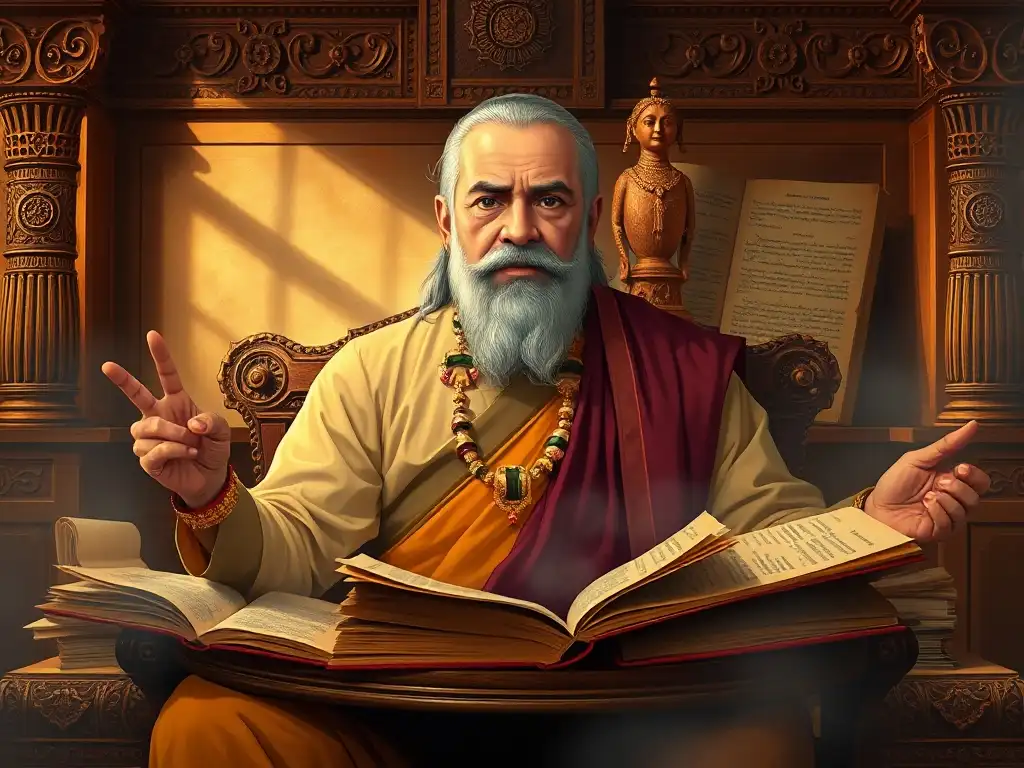
Introduction to Udayana in Nyaya Philosophy
The figure of Udayana emerges as a pivotal contributor to the Nyaya tradition, an influential school of thought in ancient Indian philosophy. Flourishing during the 10th to 11th centuries CE, Udayana's work not only enriched the discourse of logic and epistemology but also laid the groundwork for subsequent philosophical inquiries within the Nyaya framework.
His teachings and writings reflect a synthesis of earlier Nyaya concepts while introducing innovative ideas that addressed contemporary philosophical challenges. This article aims to delve into Udayana's contributions to Nyaya philosophy, examining his life, the significance of his work, and the lasting impact he had on both philosophical thought and the broader intellectual landscape of ancient India.
Overview of Udayana's Life and Influence
Udayana, often referred to as Udayana Acharya, was born in a time marked by vibrant intellectual activity in India. His works, especially the Nyaya Kusumanjali and the Prameya Nirnaya, showcase his profound understanding of logic and epistemology, reflecting the rich tradition of debate and discourse in ancient Indian philosophy. Udayana was not only an accomplished philosopher but also a skilled debater, engaging with rival schools of thought such as Buddhism and Mimamsa.
His influence extended beyond his immediate contemporaries; Udayana's ideas were instrumental in shaping the trajectory of Nyaya philosophy and have been referenced by later philosophers, such as Raghunatha Siromani and others. The clarity and rigor of his arguments helped solidify the principles of Nyaya, making them accessible and relevant to future generations of thinkers.
Significance of Udayana in Ancient Indian Philosophy
Udayana's significance in ancient Indian philosophy can be attributed to several key factors:
- Integration of Logic and Epistemology: Udayana's works meticulously analyzed the nature of knowledge, perception, and inference, contributing to a robust understanding of epistemology within the Nyaya tradition.
- Engagement with Opposing Philosophies: His ability to critique and respond to the ideas of rival philosophical schools demonstrated the dynamic nature of intellectual discourse in ancient India. Udayana's arguments often highlighted the strengths and weaknesses of various perspectives, enriching philosophical debates of his time.
- Legacy and Influence: The impact of Udayana's thoughts transcended his era, influencing not only the Nyaya tradition but also shaping the broader landscape of Indian philosophy. His ideas continue to be studied and respected in contemporary philosophical discourse.
Udayana's Role in the Development of Nyaya Thought
Udayana's contributions to the development of Nyaya thought are foundational, as he navigated and expanded upon complex philosophical concepts that underpin this school of thought.
Historical Context of the Nyaya School
The Nyaya school of thought, one of the six orthodox schools of Indian philosophy, emphasizes logic and critical reasoning. Established by Gautama (or Gotama) in the Nyaya Sutras, Nyaya seeks to establish a systematic approach to understanding reality, employing tools of logic to discern truth from falsehood. During Udayana's time, the school faced significant challenges from competing philosophies, particularly Buddhism, which questioned the validity of inference and perception.
Udayana's role was critical in defending and refining Nyaya principles, ensuring its relevance in a rapidly evolving philosophical landscape. His ability to articulate the nuances of Nyaya thought allowed it to withstand critiques and adapt to new intellectual challenges.
Key Philosophical Contributions of Udayana in Nyaya
Udayana made several notable contributions to Nyaya philosophy that continue to resonate today:
- Epistemological Framework: Udayana expanded the traditional Nyaya epistemology by introducing new categories of knowledge and refining the criteria for valid inference. His discussions on the nature of perception, inference, and testimony provided a comprehensive understanding of how knowledge is acquired and validated.
- Critique of Buddhism: Through his works, Udayana systematically addressed the philosophical positions of Buddhist thinkers, particularly their arguments against the validity of logical inference and the nature of reality. His critiques not only strengthened Nyaya's stance but also fostered a more rigorous approach to philosophical inquiry.
- Influence on Later Thinkers: The principles articulated by Udayana influenced various subsequent philosophers within the Nyaya tradition and beyond, establishing a legacy that would endure through the centuries.
Udayana's contributions to Nyaya philosophy represent a significant chapter in the rich tapestry of ancient Indian thought, illustrating the depth and dynamism of philosophical inquiry in this vibrant period. Through his life and works, Udayana exemplifies the enduring relevance of the Nyaya tradition, continuing to inspire scholars and philosophers alike.
Major Works of Udayana in Nyaya Philosophy
Udayana, a prominent figure in the Nyaya school of thought during the 10th century CE, made significant contributions through his works that shaped the trajectory of Indian logic and epistemology. His major texts, notably the Nyaya Kusumanjali and Atmatattvaviveka, are revered for their analytical depth and methodological rigor. Udayana's writings not only expound on the principles of Nyaya philosophy but also integrate various philosophical ideas, making them essential for understanding the evolution of Indian logic.
In the Nyaya Kusumanjali, Udayana addresses various epistemological issues and defends the Nyaya perspective against critiques from rival schools. The Atmatattvaviveka further explores the nature of the self and reality, providing insights into metaphysical inquiries. Together, these works reflect Udayana's profound engagement with both logic and philosophy, positioning him as a pivotal figure in the development of Nyaya thought.
Analysis of "Nyaya Kusumanjali"
The Nyaya Kusumanjali is a cornerstone of Udayana's philosophical contributions and serves as a comprehensive treatise on logic and epistemology. In this work, Udayana systematically presents arguments for the validity of perception and inference, two crucial pramanas (sources of knowledge) in Nyaya philosophy. He emphasizes the importance of valid reasoning and the necessity of a sound logical framework to arrive at truth.
Udayana's innovative approach to the Nyaya Kusumanjali includes a detailed critique of the Buddhist position on perception and their denial of the self. By articulating counterarguments that highlight the shortcomings of rival philosophies, Udayana not only defends the Nyaya stance but also enriches the discourse surrounding epistemological issues.
Moreover, the text is structured in a way that facilitates rigorous analysis, making it accessible to scholars and students alike. Udayana's adept use of dialectical reasoning allows for a deeper exploration of essential concepts, enabling readers to engage critically with the material. His work laid the foundation for subsequent discussions in Indian philosophy, cementing its role as a central text in the Nyaya tradition.
Examination of "Atmatattvaviveka"
In the Atmatattvaviveka, Udayana delves into metaphysical questions surrounding the nature of the self (Atman) and its relation to reality. This work is particularly notable for its synthesis of Nyaya thought with elements of Advaita Vedanta, reflecting Udayana's ability to engage with diverse philosophical traditions. He argues for the existence of the self as a distinct, conscious entity, countering the materialistic perspectives held by some rival schools.
Udayana employs logical analysis to elucidate the characteristics of the self, such as its permanence and independence from the body. His exploration of the relationship between the self and the external world reveals the complexities of perception and cognition, underscoring the importance of epistemology in understanding metaphysical concepts.
Additionally, the Atmatattvaviveka serves as a platform for Udayana to critique the theories of other philosophers, particularly those who question the reality of the self. Through his arguments, he reinforces the Nyaya position while also contributing to a broader philosophical dialogue that influences later thinkers. This work exemplifies Udayana's innovative approach, combining rigorous logical reasoning with profound metaphysical inquiry.
Udayana's Innovations in Logical Argumentation
Udayana's contributions to logical argumentation within the Nyaya framework are marked by a distinctive methodology that emphasizes clarity and precision. His innovations can be discerned through his systematic approach to reasoning, which not only strengthens the Nyaya tradition but also sets a benchmark for future philosophical discourse in India.
Introduction to Udayana's Methodology
Udayana's methodology is characterized by a meticulous examination of arguments and a focus on the validity of different pramanas. He introduces a structured format for presenting and analyzing logical propositions, enhancing the rigor of philosophical debate. By employing a dialectical method, Udayana encourages engagement with opposing viewpoints, fostering a culture of critical inquiry.
One of his notable innovations is the use of examples and analogies to clarify complex philosophical concepts. This pedagogical approach not only aids in understanding but also highlights the practical applications of logical reasoning. Udayana's emphasis on clarity and practical relevance allows his works to resonate with both scholars and practitioners of philosophy.
Comparison of Udayana's Logic with Earlier Nyaya Thinkers
When compared to earlier Nyaya thinkers, Udayana's logic reflects a significant evolution in the treatment of epistemological issues. While foundational figures like Gautama and Vatsyayana laid the groundwork for Nyaya philosophy, Udayana expanded upon these ideas by integrating new arguments and addressing critiques more comprehensively.
Udayana's logical frameworks are more sophisticated, incorporating elements from rival schools, including Buddhism and Advaita Vedanta. This integration not only strengthens the Nyaya position but also showcases Udayana's commitment to a holistic understanding of philosophy. His ability to synthesize different perspectives allows him to present a more robust defense of Nyaya principles, setting a precedent for later thinkers.
Influence on Later Philosophical Traditions
Udayana's innovations in logical argumentation and epistemology have had a lasting impact on later philosophical traditions, both within and beyond the Nyaya school. His works influenced subsequent Nyaya philosophers, who built upon his ideas to further refine logical theories and address emerging philosophical challenges.
Moreover, Udayana's synthesis of Nyaya and Advaita Vedanta laid the groundwork for a more integrative approach to Indian philosophy, encouraging dialogues between differing schools of thought. His emphasis on logical reasoning as a tool for philosophical inquiry continues to resonate in contemporary discussions, illustrating the enduring relevance of his contributions. Udayana's legacy as a key figure in the Nyaya tradition underscores the significance of his work in shaping the course of Indian philosophy.
The Legacy of Udayana in Nyaya Philosophy

Udayana, a prominent philosopher of the Nyaya school, left an indelible mark on Indian philosophy through his innovative interpretations and rigorous arguments. His works, most notably the Khandanakhandakhadya, significantly advanced the logical discourse within Nyaya philosophy. Udayana's approach was characterized by a synthesis of earlier Nyaya thought with fresh insights that addressed contemporary philosophical challenges.
His legacy includes the introduction of the concept of pratyakṣa (perception) as a primary means of knowledge, which he argued was essential to establishing a foundation for logical reasoning. Udayana's emphasis on the validity of inference ( anumāna) and the importance of definitions and classifications in understanding reality further enriched the methodology of Nyaya philosophy.
Moreover, Udayana's exploration of the nature of the self, reality, and the relationship between knowledge and belief created a robust framework that influenced later schools of thought, not only within Nyaya but also across various philosophical traditions in India. His legacy endures, as contemporary scholars continue to explore and build upon his insights into logic and epistemology.
Udayana's Impact on Contemporary Philosophy
Udayana's contributions to Nyaya philosophy have far-reaching implications that extend into contemporary philosophical discussions. His nuanced understanding of logic and inference laid the groundwork for modern philosophical debates on epistemology and the nature of knowledge. By rigorously analyzing the processes of reasoning, Udayana helped shape a framework that modern philosophers regard as a precursor to current logical theories.
In contemporary philosophy, Udayana's ideas resonate with discussions surrounding the philosophy of language, particularly in the context of meaning and reference. His analyses of how definitions influence understanding can be seen reflected in modern semantic theories. Additionally, Udayana's work on the self and consciousness has parallels in modern discussions about the mind-body problem, further illustrating his relevance in today's philosophical landscape.
Through his comprehensive approach to logic and inquiry, Udayana not only influenced his contemporaries but also paved the way for future generations to engage with complex philosophical problems, making him a pivotal figure in the evolution of philosophical discourse.
Recognition of Udayana in Modern Scholarship
In recent years, Udayana's work has garnered increasing attention in modern scholarship, with scholars recognizing his pivotal role in the development of Nyaya philosophy. Academic discourse has highlighted his innovative arguments and the systematic nature of his philosophical inquiries. Research papers and conferences focusing on Indian philosophy have frequently included discussions of Udayana's contributions, reflecting a growing appreciation for his intellectual legacy.
Several contemporary philosophers have also revisited Udayana's texts, analyzing them through various lenses such as comparative philosophy and cognitive science. This resurgence of interest underscores the need to understand Udayana not only as a historical figure but as a significant contributor whose ideas remain relevant in ongoing philosophical debates.
Conclusion: Udayana's Enduring Influence in the Nyaya Tradition
Udayana's contributions to the Nyaya tradition have established him as a key figure whose influence continues to resonate within philosophical discussions in India and beyond. His innovative approach to logic, inquiry, and the nature of knowledge has left a lasting imprint on the discipline.
Summary of Udayana's Contributions
To summarize, Udayana's primary contributions to Nyaya philosophy include:
- Reinvention of Logical Frameworks: Udayana refined the methods of reasoning and established a clearer understanding of inference and perception in acquiring knowledge.
- Exploration of the Self: His inquiries into the nature of the self and consciousness have provided a rich foundation for later philosophical explorations.
- Influence on Subsequent Philosophers: Udayana's ideas have impacted not only Nyaya but have also engaged thinkers across various philosophical traditions, influencing discussions on ethics, metaphysics, and epistemology.
Udayana's Relevance in Today's Philosophical Discourse
Udayana's relevance in today's philosophical discourse cannot be overstated. His rigorous logical methodologies and explorations of complex philosophical themes continue to inspire contemporary debates. Philosophers today grapple with questions of knowledge, reality, and existence that echo Udayana's inquiries, demonstrating that his work is not merely of historical interest but is vital to understanding modern philosophical challenges.
In essence, Udayana's enduring influence is a testament to the depth and richness of his philosophical contributions, ensuring that his legacy will continue to inform and inspire future generations of thinkers within the Nyaya tradition and beyond.
References and Further Reading on Udayana in Nyaya Philosophy
Udayana holds a prominent place in the development of Nyaya philosophy, and understanding his contributions can be deepened through various texts and resources. Scholars interested in Udayana's influence on epistemology, logic, and metaphysics within the Nyaya framework can refer to the following materials.
Suggested Texts and Resources for Deeper Understanding
- "Udayana's Nyaya Philosophy" - This comprehensive text explores Udayana's arguments and methodologies in detail, making it essential for anyone studying his work.
- "The Nyaya Sutras" by Gautama - While not exclusively about Udayana, this foundational text provides the context upon which Udayana's ideas were built. It allows readers to appreciate how Udayana expanded and critiqued earlier Nyaya thought.
- "Nyaya Vaisesika: An Introduction": - This book outlines the broader philosophical system within which Udayana developed his theories, offering insights into the interconnectedness of Nyaya and Vaisesika.
- "Philosophical Foundations of the Nyaya School" - A scholarly examination of the core principles of Nyaya philosophy, this resource highlights Udayana's role in articulating and defending these foundational ideas.
- "Critical Essays on Udayana" - A collection of essays by various authors that critically assess Udayana's contributions and their implications for later philosophical developments.
Online Lectures and Courses on Nyaya Thought
For those looking to enhance their understanding of Udayana in Nyaya philosophy through multimedia resources, several online lectures and courses are available:
- Coursera: Indian Philosophy: - This course covers various schools of Indian philosophy, including Nyaya, with lectures that specifically address Udayana's contributions.
- YouTube Lectures by Philosophy Scholars - Several renowned scholars in Indian philosophy have posted lectures discussing Udayana's works and their significance in the Nyaya tradition. Searching for "Udayana in Nyaya philosophy" will yield numerous insightful talks.
- edX: Introduction to Indian Philosophy: - This platform offers a course that touches on key figures in Indian philosophy, including Udayana, providing a structured approach to learning about his ideas.
- OpenCourseWare from University of Philosophy - Some universities provide free course materials related to Indian philosophy, often including sections on Udayana and his philosophical arguments.
Through these suggested texts and online resources, readers can gain a comprehensive understanding of Udayana's significance within the Nyaya tradition and explore the rich landscape of Indian philosophy.
- Introduction to Udayana in Nyaya Philosophy
- Udayana's Role in the Development of Nyaya Thought
- Major Works of Udayana in Nyaya Philosophy
- Udayana's Innovations in Logical Argumentation
- The Legacy of Udayana in Nyaya Philosophy
- Conclusion: Udayana's Enduring Influence in the Nyaya Tradition
- References and Further Reading on Udayana in Nyaya Philosophy
- What is the significance of Udayana in Nyaya philosophy?
- How did Udayana contribute to the development of Nyaya philosophy?
- What are some of Udayana's notable works?
- How does Udayana's philosophy compare to other Indian philosophies?
- Why is Udayana considered a pivotal figure in ancient Indian history?
Frequently Asked Questions
What is the significance of Udayana in Nyaya philosophy?
Udayana is a key figure in the Nyaya tradition, known for his contributions to logic and epistemology, which have greatly influenced Indian philosophical thought.
How did Udayana contribute to the development of Nyaya philosophy?
Udayana introduced innovative concepts and refined existing arguments, particularly in the areas of proof, inference, and the nature of knowledge, helping to shape the discourse in Nyaya philosophy.
What are some of Udayana's notable works?
Some of Udayana's notable works include the "Nyaya Kusumanjali" and "Atmatattvaviveka," which explore logical reasoning and the self, respectively, contributing to a deeper understanding of Nyaya tenets.
How does Udayana's philosophy compare to other Indian philosophies?
Udayana's views often contrast with Buddhist and Advaita Vedanta perspectives, particularly regarding perception and inference, showcasing the rich diversity in Indian philosophical traditions.
Why is Udayana considered a pivotal figure in ancient Indian history?
Udayana's philosophical inquiries and logical advancements have played a crucial role in the evolution of Indian thought, making him a significant figure in both philosophy and history of ancient India.
Final Reflection: The Enduring Legacy of Udayana in Nyaya Philosophy
Udayana's contributions to Nyaya philosophy remain profoundly relevant today, as they challenge us to engage critically with the nature of knowledge and reasoning. In an age where information is abundant yet often misleading, Udayana's emphasis on logical analysis and epistemological rigor serves as a beacon for those seeking clarity and truth. His work invites us to reconsider the foundations of our beliefs and the processes through which we arrive at understanding, reminding us that the pursuit of knowledge is both a personal and collective journey.
The influence of Udayana extends beyond the confines of philosophical discourse; it resonates deeply within our cultural and social landscapes. His teachings encourage a dialogue that transcends time, urging us to explore the intricacies of human thought and the mechanisms of debate. As we navigate the complexities of modern life, Udayana's insights into the nature of perception, inference, and the validity of arguments continue to shape our understanding of justice and ethics in society. The greatest gift of knowledge is the ability to question and to seek the truth.
As we reflect on Udayana's legacy, let us embrace the challenge to cultivate a mindset of inquiry and openness. I invite you to engage with the principles of Nyaya philosophy in your daily life, questioning assumptions and seeking deeper understanding. By doing so, we not only honor Udayana's contributions but also empower ourselves to navigate the complexities of our world with wisdom and discernment. Together, let us commit to a future where critical thinking and philosophical inquiry are not just academic pursuits but essential tools for personal and societal growth.
Embrace the Wisdom of Udayana: Take Action Today!
Thank you for exploring the remarkable contributions of Udayana in the Nyaya tradition. Your interest in this essential figure enriches your understanding of ancient philosophies and their relevance in today’s society. Now, let’s put that knowledge into action!
- Dive deeper into the Nyaya tradition by exploring its foundational principles—discover more insightful articles on our website!
- Engage with others: Share your insights about Udayana on social media or participate in a discussion group dedicated to Indian philosophy.
- Explore modern applications of Nyaya philosophy by practicing critical thinking exercises or engaging in thoughtful debates with friends.
Which aspect of Udayana's philosophy inspires you the most to integrate into your daily life?