
The Upanishadic View of the Self: Atman and Its Universality

Welcome to Ancient India History, where we journey through the rich tapestry of ancient Indian civilizations that have shaped our world today. In this exploration, we invite you to delve into the profound wisdom of the Upanishads and the concept of Atman, a cornerstone of ancient Indian thought that reveals the universal essence of the self. What does it mean to truly know oneself, and how have these ancient teachings influenced spiritual philosophies across cultures?
Join us as we uncover the depths of this fascinating topic and discover the timeless relevance of the Atman in our modern lives. Your adventure into the heart of ancient wisdom begins here!
- Introduction to the Upanishads and the Concept of Atman
- Historical Context of the Upanishads
- Understanding Atman
- Key Teachings about Atman in the Upanishads
- Universality of Atman in Upanishadic Philosophy
- Comparison of Atman with Other Philosophical Concepts
- Conclusion: The Enduring Legacy of the Upanishadic View of Atman
- Frequently Asked Questions
- Final Reflection: The Universal Essence of Atman in Our Lives
- Unveil the Depths of Your Inner Self!
Introduction to the Upanishads and the Concept of Atman
The Upanishads form a crucial part of ancient Indian philosophy and spirituality, offering profound insights into the nature of reality and the self. As the concluding portions of the Vedas, these texts delve into metaphysical inquiries and contemplative practices that have shaped Hindu thought for centuries. Central to their teachings is the concept of Atman, which refers to the true self or soul of an individual.
This article explores the Upanishadic view of Atman, its universality, and its significance in understanding the essence of existence. By examining these ancient texts, we can uncover the depth of their wisdom and their enduring relevance in contemporary spiritual discourse.
Overview of the Upanishads
The Upanishads, comprising over 200 texts, were composed between 800 and 200 BCE, primarily in Sanskrit. They serve as philosophical commentaries on the earlier Vedic scriptures, shifting the focus from ritualistic practices to deep spiritual inquiry. Key features of the Upanishads include:
- Philosophical Dialogues: They often take the form of dialogues between a teacher (guru) and a student (shishya), exploring complex ideas and inviting introspection.
- Metaphysical Concepts: The texts address fundamental questions about existence, the universe, and the nature of the divine, with Atman being a focal point.
- Mystical Experiences: Many Upanishads describe mystical experiences and meditative practices aimed at realizing the self and its unity with Brahman, the ultimate reality.
Some of the most significant Upanishads include the Chandogya, Brihadaranyaka, and Mandukya, each contributing unique perspectives on Atman and the nature of consciousness. The teachings found within these scriptures emphasize that understanding Atman is pivotal for spiritual liberation (moksha) and realizing one's connection to the cosmos.
Significance of Atman in Hindu Philosophy
Atman, often translated as "self" or "soul," holds immense significance in Hindu philosophy, primarily for the following reasons:
- The Essence of Individuality: Atman is considered the true essence of an individual, distinct from the physical body and mind. Understanding this distinction is fundamental for personal growth and spiritual awakening.
- Unity with Brahman: The Upanishads articulate the idea that Atman is ultimately identical to Brahman, the supreme reality. This non-duality (Advaita) suggests that realizing one's Atman leads to the realization of Brahman, fostering a sense of oneness with the universe.
- Path to Moksha: The realization of Atman is essential for achieving moksha, or liberation from the cycle of birth and rebirth (samsara). The Upanishadic teachings encourage individuals to pursue self-knowledge through meditation, ethical living, and intellectual inquiry.
- Ethical Implications: Understanding Atman also has ethical dimensions, as it promotes compassion and respect for all living beings, highlighting the interconnectedness of all life.
The exploration of Atman in the Upanishads not only provides a framework for self-understanding but also serves as a guide for living a meaningful and harmonious life. Through this lens, the ancient teachings continue to resonate, offering profound insights into the nature of existence and the quest for truth.
Historical Context of the Upanishads
The Upanishads represent a profound philosophical evolution within ancient Indian thought, emerging during a transformative period in the subcontinent's intellectual history. Composed between 800 BCE and 200 BCE, these texts are considered the culmination of Vedic thought, reflecting a shift from ritualistic practices to introspective inquiry into the nature of reality and the self. This transition marks a critical phase in the development of Hindu philosophy, where concepts of spirituality began to take precedence over mere ceremonial worship.
The term "Upanishad" itself translates to "sitting down near," implying a close relationship between the teacher and the student, signifying the importance of personal instruction in understanding profound truths. The Upanishads were not merely texts but were often transmitted orally from guru to disciple, emphasizing the experiential nature of knowledge.
Origin and Composition of the Upanishads
The Upanishads originated as commentaries on the Brahmanas, the prose texts that accompany the Vedas. They were composed in Sanskrit and are classified into two main categories: the early Upanishads (such as the Chandogya and Brihadaranyaka) and the later Upanishads, which include texts like the Mandukya and Katha Upanishads.
- Early Upanishads:
- Chandogya Upanishad: Explores the relationship between the self (Atman) and the ultimate reality (Brahman) through various metaphors.
- Brihadaranyaka Upanishad: Considered one of the oldest, it delves deeply into the nature of existence and the unity of Atman and Brahman.
- Later Upanishads:
- Mandukya Upanishad: Focuses explicitly on the concept of AUM, exploring the states of consciousness and their relationship to the Atman.
- Katha Upanishad: Presents a dialogue between a young seeker and Yama, the god of death, discussing the nature of the self and immortality.
The Upanishads employ a variety of literary techniques, including dialogues, metaphors, and philosophical discussions, making them rich in meaning and open to interpretation. Their philosophical depth encourages readers to engage in self-inquiry, aiming to achieve a direct experience of the ultimate truth.
Influence of the Vedas on Upanishadic Thought
The Upanishads are intrinsically linked to the Vedic tradition, drawing heavily from its rituals, hymns, and philosophical inquiries. While the Vedas primarily emphasize rituals and external worship, the Upanishads shift the focus towards internal knowledge and spiritual realization.
- Philosophical Foundations: The Vedas introduced fundamental concepts such as Rita (cosmic order) and Dharma (moral duty), which the Upanishads further developed. They explored the relationship between these concepts and the self, positing that understanding one's Atman is essential for aligning with cosmic order.
- Ritualism to Mysticism: The Upanishads critique the ritualistic practices of Vedic religion, suggesting that true understanding comes from meditation and self-realization rather than mere adherence to rituals. This shift marks a significant evolution in spiritual practices, moving towards introspection and personal experience.
- Integration of Knowledge: The integration of philosophical inquiry with Vedic teachings allowed for a more nuanced understanding of the universe and the self. The Upanishads present a worldview where Atman is not separate from Brahman, emphasizing the universality of the self and its connection to the greater cosmos.
In essence, the Upanishadic texts serve as a bridge between the Vedic traditions and later philosophical developments within Hinduism. Their exploration of the self, particularly the concept of Atman, has had a lasting impact on Indian thought and spirituality, influencing subsequent religious and philosophical movements throughout history.
Understanding Atman
The concept of Atman is central to the Upanishads, which are philosophical texts that form the concluding part of the Vedas. These texts delve into metaphysical inquiries and provide insights into the nature of existence, consciousness, and the self. The Upanishads articulate a profound understanding of Atman, which transcends mere definitions and encapsulates the essence of human existence and the universe.
Definition of Atman in Upanishadic Texts
In the Upanishadic tradition, Atman is generally defined as the true self or the essence of an individual. It is often described in contrast to the physical body and the ego, which are seen as transient and illusory. The term "Atman" originates from the Sanskrit root "āt," meaning "to breathe" or "to live," which implies that it is the life force or the vital principle within every being.
The Upanishads present Atman as:
- Eternal: Atman is described as unchanging and everlasting. Unlike the physical body, which undergoes decay and transformation, Atman remains constant.
- Consciousness: Atman is equated with pure consciousness, suggesting that it is a fundamental aspect of all sentient beings. The essence of awareness itself is Atman.
- Beyond Duality: The texts urge readers to recognize that Atman is beyond dualistic perceptions of existence, such as good and evil, pleasure and pain.
The Chandogya Upanishad, for instance, states, "That which is the subtle essence (the Atman) is the real; it is the essence of all that exists." This encapsulates the Upanishadic view that Atman is the ultimate reality underlying all phenomena.
The Nature of the Self: Individual vs. Universal Atman
The Upanishads draw a significant distinction between the individual Atman (Jivatman) and the universal Atman (Paramatman). This distinction is crucial for understanding the philosophy behind the self and its relation to the cosmos.
Individual Atman (Jivatman)
- Personal Identity: The individual Atman represents the unique essence of a person, encapsulating their thoughts, emotions, and experiences. It is often obscured by ignorance (avidya) and the distractions of worldly life.
- Path to Enlightenment: The journey of self-realization involves recognizing the individual Atman and its connection to the greater universal Atman. This realization leads to liberation (moksha) from the cycles of birth and rebirth (samsara).
Universal Atman (Paramatman)
- Unity of Existence: The universal Atman refers to the ultimate reality that pervades all creation. It signifies the interconnectedness of all beings and emphasizes the idea that the individual self is not separate from the universe.
- Philosophical Implications: The realization that Jivatman is identical to Paramatman is a key teaching in many Upanishadic texts. For instance, the famous Mahavakya "Tat Tvam Asi" (That Thou Art) encapsulates this profound unity, indicating that the individual self is, in essence, one with the universal consciousness.
The Upanishadic exploration of Atman presents a rich tapestry of ideas that transcends mere definitions. It invites individuals to embark on a journey of self-discovery, ultimately leading to the realization of their inherent connection to the universe. Through this understanding, the Upanishads illuminate the path towards spiritual liberation and universal harmony.
Key Teachings about Atman in the Upanishads
The Upanishads, a collection of ancient Indian texts that form the philosophical foundation of Hinduism, explore the profound nature of the self, or Atman. These texts articulate the concept of Atman as the true essence of an individual, distinct from the body and mind. They emphasize that understanding Atman is crucial for spiritual liberation and self-realization.
The Relationship Between Atman and Brahman
A central theme in the Upanishads is the relationship between Atman and Brahman, the ultimate reality or cosmic spirit. This relationship is often encapsulated in the famous Mahavakya (great saying) "Tat Tvam Asi," meaning "That Thou Art." This phrase highlights the non-dualistic perspective that Atman (the individual self) is fundamentally identical to Brahman (the universal self).
- Non-Dualism (Advaita):
- The Upanishads advocate for a non-dualistic view where Atman and Brahman are seen as one and the same. This idea posits that individual souls are not separate from the universal consciousness, suggesting that all beings are connected through this divine essence.
- Self-Realization:
- The realization of this unity is the ultimate goal of spiritual practice. The Upanishads teach that through meditation, self-inquiry, and ethical living, individuals can come to understand their true nature as Atman, leading to a direct experience of Brahman.
- Quotes and Verses:
- In the Chandogya Upanishad (6.8.7), it states: "The essence of all beings is the Atman; the essence of Atman is Brahman." This assertion reinforces the idea that understanding Atman leads to the understanding of Brahman.
The profound nature of this relationship not only shapes philosophical discourse but also influences various spiritual practices within Hinduism, fostering a deeper quest for understanding the self.
The Journey of the Soul: Rebirth and Moksha
The Upanishadic literature also delves into the concepts of rebirth (samsara) and liberation (moksha), elaborating on the journey of the soul through various lifetimes.
- Samsara:
- The Upanishads describe samsara as the cycle of birth, death, and rebirth, wherein the soul (Atman) undergoes numerous incarnations based on its karma (actions). This cyclical journey is influenced by one's actions in past lives, determining the conditions of future births.
- Karma:
- The law of karma plays a crucial role in the Upanishadic worldview, asserting that every action has consequences that affect the soul's journey. Good deeds can lead to favorable rebirths, while negative actions may result in suffering in future lives.
- Moksha:
- Ultimately, the goal of the soul's journey is to attain moksha, or liberation from the cycle of samsara. The Upanishads teach that moksha is achieved through the realization of one's true self as Atman, which is inherently free and eternal. This liberation is characterized by the cessation of all suffering and the unification with Brahman.
- Pathways to Liberation:
- Various paths are outlined in the Upanishads to attain moksha, including:
- Jnana Yoga (the path of knowledge)
- Bhakti Yoga (the path of devotion)
- Karma Yoga (the path of selfless action)
The Upanishads encourage seekers to pursue these paths with dedication and insight, emphasizing that understanding the nature of Atman is essential for achieving liberation and transcending the cycle of rebirth.
The teachings on Atman in the Upanishads provide a profound insight into the self's nature and its relationship with the universe, guiding individuals towards ultimate truth and liberation.
Universality of Atman in Upanishadic Philosophy
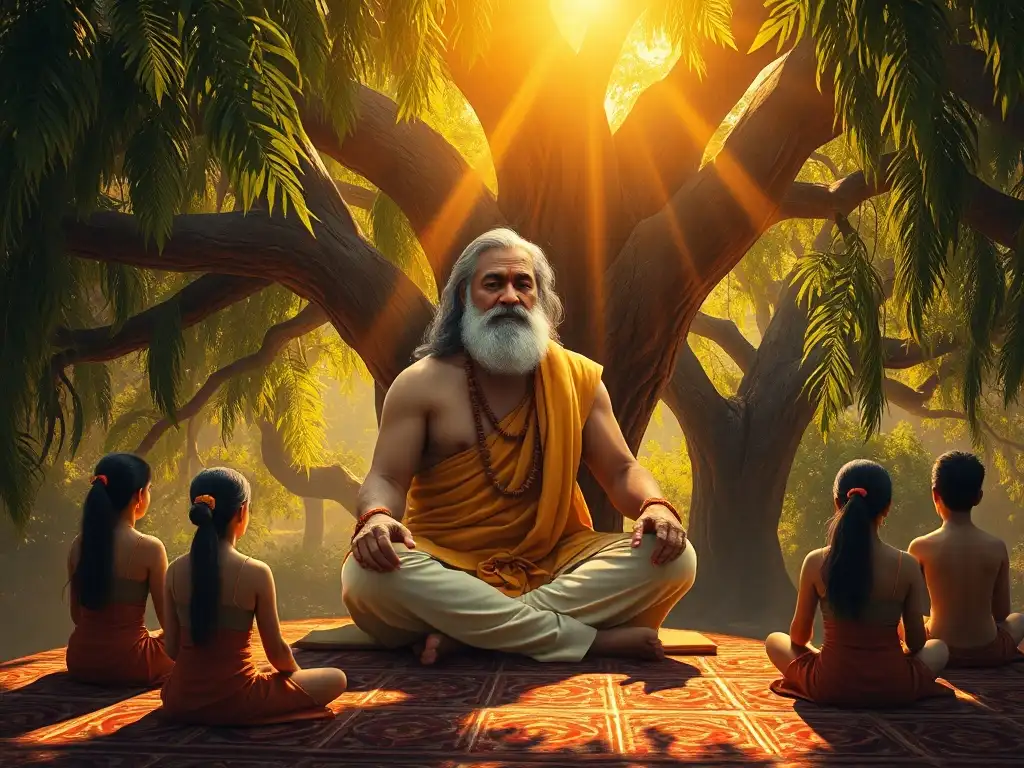
The concept of Atman is central to the philosophical discourse found within the Upanishads, which are revered texts in Hinduism. This principle denotes the true self or soul of an individual, embodying the essence of consciousness and existence. The Upanishads articulate that Atman is not limited to individual identity but is instead a universal reality, interconnected with the Brahman, the ultimate cosmic principle.
Atman as a Universal Principle
Atman is often described in the Upanishads as the unchanging, eternal essence that exists within all living beings. The phrase "Tat Tvam Asi," or "That Thou Art," encapsulates this idea, suggesting that the individual self (Atman) is fundamentally the same as the universal essence (Brahman). This profound statement highlights the non-duality inherent in Upanishadic thought, where distinctions between the self and the cosmos dissolve.
In the Chandogya Upanishad, the relationship between Atman and Brahman is articulated with metaphors such as the analogy of the salt in water, which signifies that while one may perceive individual existence, the underlying reality is a singular, all-encompassing essence. This universal principle of Atman serves as a bridge between the individual and the infinite, emphasizing that every being partakes in this divine essence.
Moreover, the Mandukya Upanishad elaborates on the four states of consciousness—waking, dreaming, deep sleep, and the transcendent state of Turiya—further illustrating the universal nature of Atman. Each state represents a layer of experience through which one realizes the underlying unity of existence. Recognizing Atman as a universal principle invites a deeper understanding of one's place within the grand tapestry of life.
Implications for Human Existence and Spirituality
The recognition of Atman as a universal principle has significant implications for human existence and spirituality. It fosters a sense of interconnectedness among all beings, promoting values such as compassion, empathy, and respect for life. When individuals understand that they share the same essence with others, the barriers of ego and separation diminish, leading to a more harmonious society.
In practical terms, this universality of Atman encourages spiritual seekers to engage in self-inquiry and meditation as pathways to realize their true nature. The Upanishads advocate for practices such as jnana yoga (the path of knowledge) and bhakti yoga (the path of devotion), which help individuals transcend their limited identities and experience the unity of Atman with Brahman.
Furthermore, this understanding influences ethical living, as the realization of shared essence leads to the perspective that harming another being is, in essence, harming oneself. The Ahimsa principle, or non-violence, becomes a natural extension of the understanding of Atman’s universality.
The Upanishadic view of Atman not only enriches individual spirituality but also impacts broader societal interactions, inviting a profound shift in how humanity perceives itself and its relationship with the cosmos. By embracing the universality of Atman, individuals can cultivate a deeper sense of purpose and belonging in the intricate web of existence.
Comparison of Atman with Other Philosophical Concepts
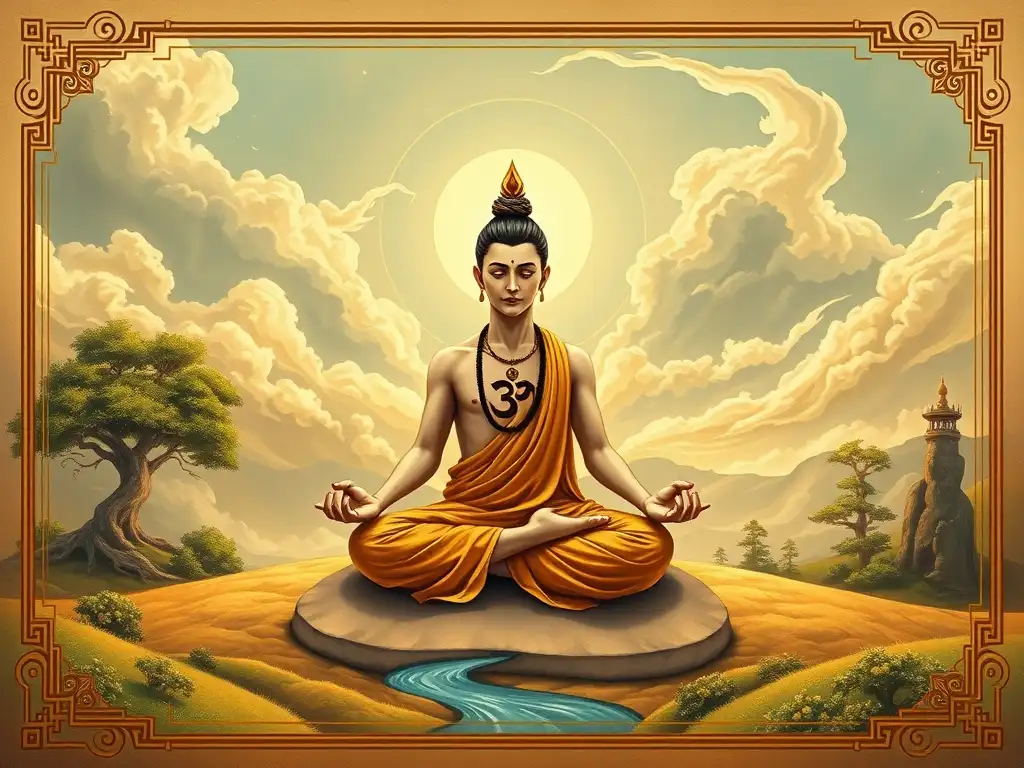
Atman vs. Ego: Distinguishing the True Self
In the context of Hindu philosophy, the distinction between Atman and the ego (or Ahamkara) is fundamental in understanding the nature of the self. Atman refers to the true, eternal self that transcends physical existence, while the ego represents the individual’s identification with the body, mind, and social identity.
- Nature of Existence:
- Atman:
- Considered immutable and eternal.
- It is the essence of consciousness and the ultimate reality.
- The Upanishads teach that realizing one's Atman leads to liberation ( moksha).
- Ego:
- Temporal and ever-changing.
- Built from personal experiences, thoughts, and societal roles.
- Associated with attachments and desires, leading to suffering.
- Atman:
- Philosophical Implications:
- The realization of Atman is seen as a path to enlightenment, encouraging individuals to see beyond the ephemeral nature of the ego.
- In contrast, the ego often leads to confusion and a sense of separation from the universal consciousness.
In essence, the teachings of the Upanishads guide adherents to transcend the ego and realize the unity of Atman with Brahman (the ultimate reality), thus emphasizing the importance of self-realization.
Similarities and Differences with Western Concepts of Self
When comparing the Upanishadic concept of Atman with Western philosophical notions of self, several intriguing parallels and divergences emerge:
- Similarities:
- Both Atman and certain Western concepts, such as the soul in Judeo-Christian thought, suggest an inherent essence that defines individual identity.
- The idea of self-actualization in Western psychology shares a common goal with the realization of Atman, as both emphasize the journey toward understanding one’s true nature.
- Differences:
- Nature of Self:
- In the Upanishads, Atman is seen as an unchanging reality, while Western philosophies, particularly existentialism, often view the self as fluid and constructed through experiences.
- Interconnectedness:
- The Upanishadic concept posits that individual Atman is essentially one with Brahman, promoting a sense of unity with the cosmos. In contrast, many Western philosophies prioritize individualism, where the self is often seen as separate from others and the universe.
- Nature of Self:
- Ultimate Purpose:
- The goal in Upanishadic thought is liberation from the cycle of birth and rebirth ( samsara) through the realization of Atman. In many Western traditions, the focus may be more on moral development or achieving personal fulfillment within societal frameworks.
The Upanishads and the concept of Atman offer profound insights into the nature of existence and self, inviting a deeper exploration of identity that continues to resonate across cultures and philosophies. By understanding these distinctions and similarities, one can appreciate the rich tapestry of human thought surrounding the concept of self.
Conclusion: The Enduring Legacy of the Upanishadic View of Atman
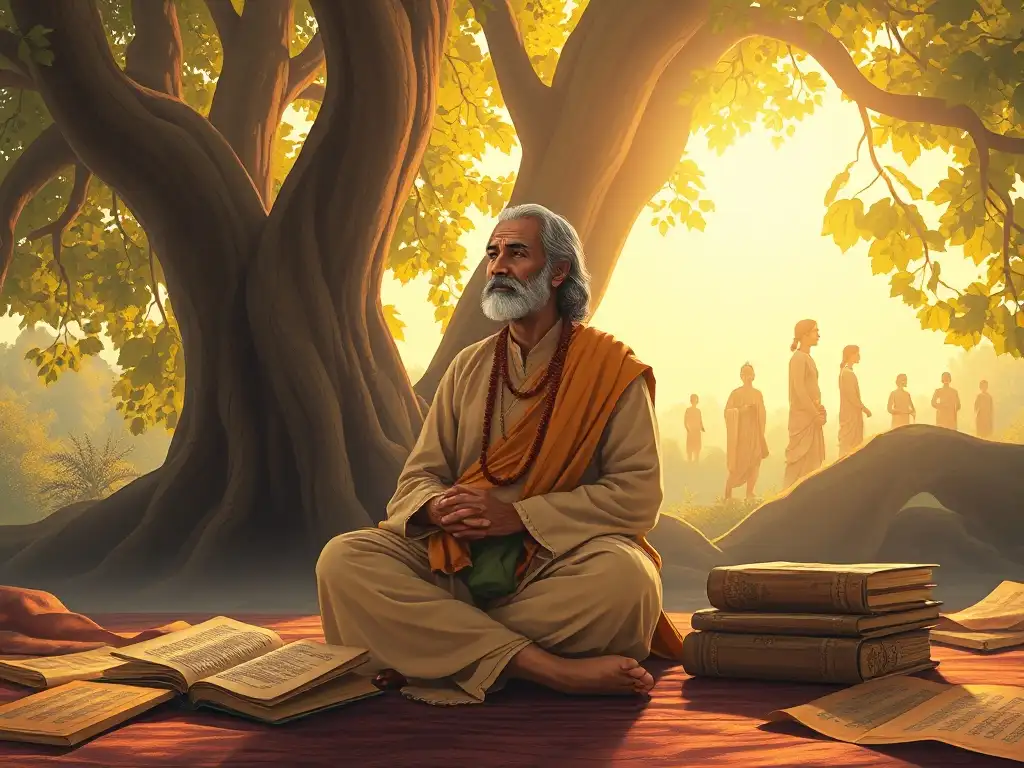
The Upanishadic view of Atman, or the Self, represents one of the most profound philosophical advancements in ancient Indian thought. This concept, foundational to Hindu philosophy, asserts that the Atman is not merely an individual soul but is intrinsically connected to Brahman, the ultimate reality. The teachings found within the Upanishads have shaped spiritual and philosophical dialogues for centuries, leaving a legacy that continues to resonate through various schools of thought.
Impact on Later Hindu Philosophical Schools
The Upanishads profoundly influenced the development of subsequent Hindu philosophical systems. Notably, the Advaita Vedanta school, founded by Adi Shankaracharya in the 8th century CE, emphasizes non-dualism, asserting that Atman and Brahman are one. This perspective highlights the illusion of separation between individual selves and the universal consciousness, echoing the Upanishadic teachings.
In contrast, schools like Dvaita Vedanta, articulated by Madhvacharya, maintain a dualistic approach, arguing that Atman and Brahman are distinct entities. This divergence demonstrates the rich tapestry of interpretations stemming from the Upanishadic texts, each contributing uniquely to the understanding of the Self within Hinduism.
Moreover, the Yoga school, particularly as expounded by Patanjali, integrates the concept of Atman within its framework of achieving moksha (liberation) through self-realization and meditation. The emphasis on introspection and the pursuit of inner truth can be traced back to the Upanishadic exploration of the Self, showcasing its foundational role in shaping spiritual practices.
| Philosophical School | View on Atman |
|---|---|
| Advaita Vedanta | Non-dualism; Atman = Brahman |
| Dvaita Vedanta | Dualism; Atman ≠ Brahman |
| Yoga | Self-realization through meditation |
Continuing Relevance in Modern Spiritual Discourse
The concept of Atman continues to hold significant relevance in contemporary spiritual discussions, transcending cultural and geographical barriers. In an age characterized by materialism and individualism, the Upanishadic teachings remind us of the interconnectedness of all beings. Modern spiritual leaders often draw on these ancient insights to promote ideas of unity, consciousness, and self-awareness.
Furthermore, the global interest in mindfulness and meditation practices can be traced back to the Upanishadic emphasis on inner exploration. Techniques aimed at realizing the true nature of the Self are increasingly incorporated into wellness programs, illustrating the timeless nature of these teachings.
The dialogue surrounding Atman also intersects with modern philosophical inquiries into identity, consciousness, and existence. As scholars and practitioners explore the implications of these ancient texts, the Upanishads offer a profound framework for understanding the Self in relation to the universe, encouraging ongoing reflection and discovery.
The enduring legacy of the Upanishadic view of Atman extends beyond ancient India, influencing various philosophical schools and modern spiritual practices. The exploration of the Self, rooted in these ancient texts, continues to inspire seekers on their journey toward understanding and realization.
Frequently Asked Questions
What are the Upanishads?
The Upanishads are ancient Indian texts that form the philosophical basis of Hinduism. They explore profound concepts such as Atman (the self) and Brahman (the ultimate reality).
How does the concept of Atman differ from the physical self?
Atman is considered the true self, transcending the physical body and mind. It represents the eternal essence of an individual, which is fundamentally connected to the universal spirit.
What is the significance of Atman in Hindu philosophy?
In Hindu philosophy, understanding Atman is essential for realizing one's purpose and achieving moksha (liberation). It emphasizes the need to transcend material attachments and understand one's divine nature.
How do the Upanishads influence modern spirituality?
The Upanishads continue to impact modern spiritual practices and philosophies, encouraging a deeper exploration of the self and fostering a sense of universal connectedness among individuals.
What role does meditation play in understanding Atman?
Meditation is a vital practice in Hinduism for accessing the truth of Atman. It helps individuals quiet the mind and connect with their innate essence, leading to greater self-awareness and enlightenment.
Final Reflection: The Universal Essence of Atman in Our Lives
The exploration of the Upanishads and the concept of Atman reveals a profound truth: our individual selves are interconnected with a universal consciousness. In today's world, where divisions often overshadow unity, the teachings of the Upanishads serve as a reminder of our shared essence. The idea that Atman transcends the individual, connecting us all to a greater whole, is not just a philosophical notion; it is a call to recognize our collective humanity and the sacredness of life itself.
Culturally and socially, the concept of Atman continues to resonate deeply, influencing spiritual practices and ethical frameworks across the globe. The Upanishadic wisdom encourages us to look beyond superficial differences and to seek the deeper connections that bind us. As Mahatma Gandhi once said, “The best way to find yourself is to lose yourself in the service of others.” This sentiment echoes the essence of Atman, urging us to transcend ego and embrace our role in the larger tapestry of existence.
As we reflect on the teachings of the Upanishads, let us invite the concept of Atman into our daily lives. Consider how you can cultivate a sense of unity and compassion in your interactions with others. Whether through acts of kindness, understanding, or simply being present, each of us has the power to embody the universal spirit of Atman. Embrace this journey of self-discovery and connection, and let it inspire you to create a more harmonious world.
Unveil the Depths of Your Inner Self!
Thank you for joining us on this enlightening journey through the Upanishadic perspective of Atman and its universal significance! We hope you gained valuable insights into understanding the essence of the self. Now, it’s time to take those ideas and transform them into meaningful actions.
Here are some powerful steps you can take:
- Reflect on your own understanding of Atman. Set aside a few moments to meditate on your experiences and beliefs regarding the self. Journaling can also help clarify your thoughts.
- Dive deeper into the wisdom of the Upanishads. Explore more texts and teachings that resonate with you. Share your findings with friends or engage in a community discussion—don’t keep this wisdom to yourself!
- Join a local or online philosophy group. Engaging with others who are interested in ancient wisdom can greatly enrich your understanding and provide diverse perspectives.
As you take these steps, we invite you to ponder this: How can the principles of Atman influence your daily life and interactions with others? We encourage you to share your thoughts in the comments below!