
The Exploration of Dualism and NonDualism in Ancient Hindu Thought

Welcome to Ancient India History, where we embark on a fascinating journey through the vibrant tapestry of ancient Indian civilizations. From the enigmatic Indus Valley to the illustrious Gupta Empire, our exploration delves deep into the rich cultural heritage and profound philosophical insights that have shaped human thought.
In our featured article, we uncover the intriguing concept of Dualism in Ancient Hindu Thought, inviting you to discover how this dualistic perspective has influenced spiritual discourse and practices. Get ready to expand your understanding as we unravel the complexities of dualism and non-dualism in ancient Hindu philosophy—your adventure into a world of wisdom awaits!
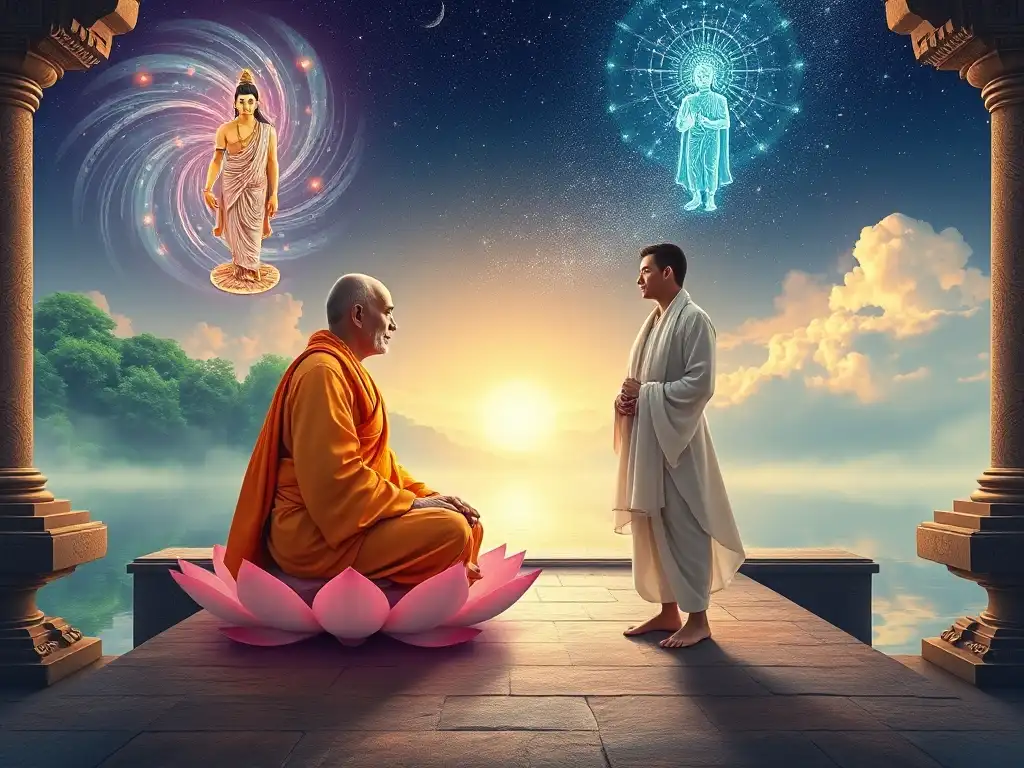
The exploration of dualism and non-dualism in ancient Hindu thought reveals a profound and intricate philosophical landscape that has shaped the spiritual and intellectual traditions of India. These concepts not only inform the metaphysical perspectives of Hinduism but also influence its ethical, social, and cultural dimensions. Dualism in ancient Hindu thought refers to the belief in the existence of two fundamental and distinct realities, often represented as the separation between the individual soul (Atman) and the ultimate reality (Brahman).
In contrast, non-dualism posits that these distinctions are illusory, emphasizing the unity of existence. Understanding these philosophical stances is crucial for appreciating the depth and complexity of ancient Indian spirituality, as well as the ongoing dialogues they inspire within contemporary philosophical discourse.
Introduction to Dualism in Ancient Hindu Thought
Definition of Dualism in Hindu Philosophy
Dualism in Hindu philosophy is characterized by the recognition of two separate and opposing principles. This includes the distinction between the material world and the spiritual realm, as well as the differentiation between the self and the absolute. In this framework, the individual soul (Atman) is perceived as distinct from the universal soul (Brahman), leading to a rich exploration of the relationship between the finite and the infinite. This dualistic perspective is pivotal in various schools of thought, particularly in the Dvaita (dualism) school founded by Madhvacharya, which emphasizes the difference between God and individual souls.
Historical Context of Dualistic Thought in Ancient India
The roots of dualistic thought in ancient India can be traced back to the Vedic texts, where early reflections on the nature of reality began to emerge. The Upanishads further developed these ideas, presenting a nuanced understanding of the relationship between Atman and Brahman. As the philosophical landscape evolved, different schools of thought emerged, each interpreting dualism through unique lenses.
For instance, the emergence of the Samkhya philosophy introduced a systematic dualism that categorized reality into two fundamental entities: Purusha (consciousness) and Prakriti (matter). This historical trajectory illustrates how dualistic thought became a foundational aspect of Hindu philosophy, influencing various spiritual and metaphysical debates.
The Foundations of Dualism in Ancient Hindu Texts
Key Texts Illustrating Dualism in Hinduism
Several ancient texts serve as crucial references for understanding dualism in Hindu philosophy. The Upanishads, particularly the Chandogya Upanishad, articulate the relationship between Atman and Brahman, emphasizing their distinct yet interconnected nature. The Bhagavad Gita also presents dualistic themes, exploring the conflict between the material and spiritual worlds and the duty of the individual soul. Additionally, the Puranas contribute narratives that reflect dualistic thought, offering insights into the roles of deities and the interplay between good and evil.
Major Philosophical Schools Emphasizing Dualism
Various philosophical schools within Hinduism emphasize dualism, each contributing unique interpretations and doctrines. The most notable include:
- Dvaita (Dualism): Founded by Madhvacharya, this school asserts a clear distinction between God (Vishnu) and individual souls, promoting a theistic approach to spirituality.
- Samkhya: This ancient philosophy posits a dualism between Purusha (the eternal self) and Prakriti (the material world), laying the groundwork for later philosophical developments.
- Vaishnavism: While primarily devoted to the worship of Vishnu, certain strands within Vaishnavism also uphold dualistic principles, particularly regarding the relationship between the devotee and the divine.
The interplay of these schools highlights the diversity within ancient Hindu thought, demonstrating how dualism has been a vital thread woven into the fabric of Hindu philosophy and spirituality.
Understanding Non-Dualism in Ancient Hindu Philosophy
Non-dualism, often referred to as Advaita, represents a profound philosophical stance within ancient Hindu thought that emphasizes the interconnectedness of all existence. It posits that the ultimate reality is a singular, undivided entity, transcending the dualities of life. This philosophical outlook has shaped various spiritual practices and interpretations of the self and the cosmos, advocating for a deeper understanding of existence that goes beyond mere appearances.
Definition and Principles of Non-Dualism
At its core, non-dualism asserts that there is no real separation between the individual self (Atman) and the ultimate reality (Brahman). This perspective is encapsulated by the famous phrase "Tat Tvam Asi," meaning "That Thou Art," which underscores the idea that the essence of the individual is the same as that of the universal consciousness.
Key principles of non-dualism include:
- Unity of Existence: All forms of life and matter are manifestations of the same underlying reality.
- Illusion of Duality: The apparent distinctions between subject and object, good and evil, or self and other are considered illusions (Maya) that arise from ignorance.
- Self-Realization: The path to enlightenment involves the realization that one's true self is not separate from the universal consciousness, leading to liberation (Moksha).
This framework provides a foundation for various paths to spirituality, emphasizing meditation, self-inquiry, and ethical living as means to transcend the limitations of dualistic perception.
Key Texts Illustrating Non-Dualism in Hinduism
Several ancient texts serve as foundational sources for non-dualistic philosophy in Hinduism:
- Upanishads: These texts delve deeply into the nature of reality and self. Key verses, such as "Aham Brahmasmi" (I am Brahman), highlight the non-dualistic perspective.
- Brahma Sutras: This philosophical text systematizes the teachings of the Upanishads, emphasizing the unity of Atman and Brahman.
- Advaita Vedanta: Commentaries by philosophers like Adi Shankaracharya further elucidate non-dualism, exploring how ignorance leads to the perception of duality and how knowledge can lead to liberation.
These texts not only explore theoretical aspects but also provide practical guidance on realizing non-duality through meditation and introspection.
Comparison Between Dualism and Non-Dualism in Ancient Hindu Thought
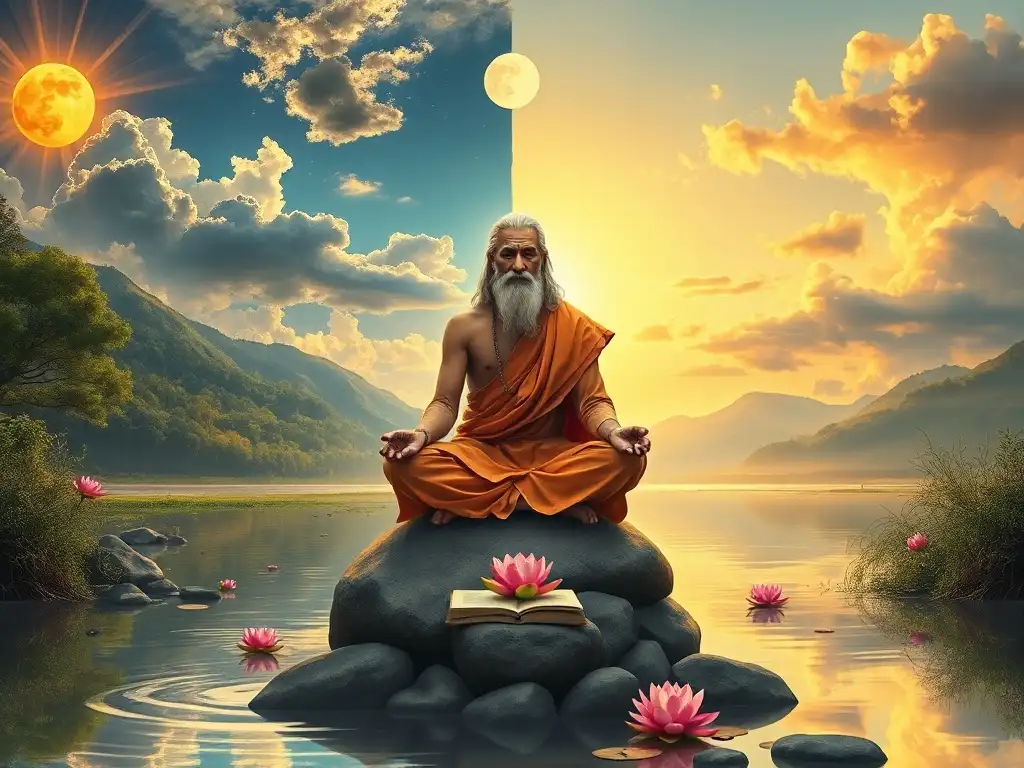
The discourse on dualism and non-dualism is integral to understanding the diverse philosophical landscape of ancient Hindu thought. While both perspectives offer valuable insights into the nature of existence, they differ significantly in their interpretation of reality and the self.
Core Differences Between Dualistic and Non-Dualistic Perspectives
The primary distinction between dualism and non-dualism lies in their views on the relationship between the individual self and the ultimate reality:
- Dualism (Dvaitya) posits a clear distinction between Atman (individual soul) and Brahman (universal spirit). It recognizes multiple deities and often emphasizes devotion (Bhakti) as a means to connect with the divine.
- Non-Dualism (Advaita), on the other hand, sees no separation between Atman and Brahman, advocating the idea that understanding this unity leads to liberation.
This dichotomy influences various aspects of spiritual practice, with dualism often incorporating rituals and devotion, while non-dualism focuses on contemplation and knowledge.
The Role of Maya in Dualism and Non-Dualism
Maya, or illusion, plays a pivotal role in both dualistic and non-dualistic philosophies:
- In dualism, Maya is viewed as the force that creates the distinction between the individual and the divine, leading to a perception of separateness. It is often associated with the material world and the transient nature of life.
- Conversely, in non-dualism, Maya is seen as the primary cause of ignorance that obscures the realization of the inherent unity of all existence. Understanding and transcending Maya is essential for achieving self-realization and liberation.
Both perspectives recognize the influence of Maya but approach its implications and resolutions differently.
Practical Implications of Dualism vs. Non-Dualism in Spiritual Practice
The differing views of dualism and non-dualism lead to distinct spiritual practices and approaches to enlightenment:
- Dualistic Practices: Often involve rituals, prayers, and a strong sense of devotion towards a personal deity. This path emphasizes surrender, love, and worship as means to attain spiritual goals.
- Non-Dualistic Practices: Focus more on self-inquiry and meditation, encouraging practitioners to explore the nature of consciousness and reality. Techniques such as Dhyana (meditation) aim to help individuals realize their true nature as non-separate from the cosmos.
Understanding these practical implications can guide individuals in choosing a path that resonates with their spiritual inclinations, whether they lean towards the devotional aspects of dualism or the introspective nature of non-dualism.
The Influence of Dualism and Non-Dualism on Ancient Indian Culture
The concepts of dualism and non-dualism (Advaita) have profoundly influenced ancient Indian culture, shaping various aspects such as art, literature, and religious practices. These philosophical frameworks explore the nature of reality, the self, and the divine, resulting in a rich tapestry of cultural expression. Dualism, which emphasizes the distinction between the individual soul (Atman) and the ultimate reality (Brahman), has coexisted with non-dualism, which posits that Atman and Brahman are fundamentally one. This interplay has led to a diverse range of interpretations and practices within Hinduism, impacting the everyday lives of individuals and communities.
Impact on Art and Literature
Art and literature from ancient India reflect the philosophical underpinnings of dualism and non-dualism. In literature, texts such as the Bhagavad Gita and the Upanishads serve as prime examples of how these concepts are articulated through narrative and dialogue. The Bhagavad Gita, for instance, illustrates the dualistic struggle between duty and spirituality while also hinting at non-dualistic insights regarding the self’s unity with the divine.
In visual arts, dualism is often depicted through contrasting themes of light and dark, spirit and matter, or the divine and the mundane. Temples and sculptures frequently illustrate deities in pairs, emphasizing their interdependence, while also portraying a unified divine essence. The intricate carvings and frescoes found in ancient Indian temples, such as those at Khajuraho and Hampi, reveal a deep philosophical engagement with these ideas, showcasing a dynamic interplay between form and meaning.
Influence on Ritual Practices and Religious Life
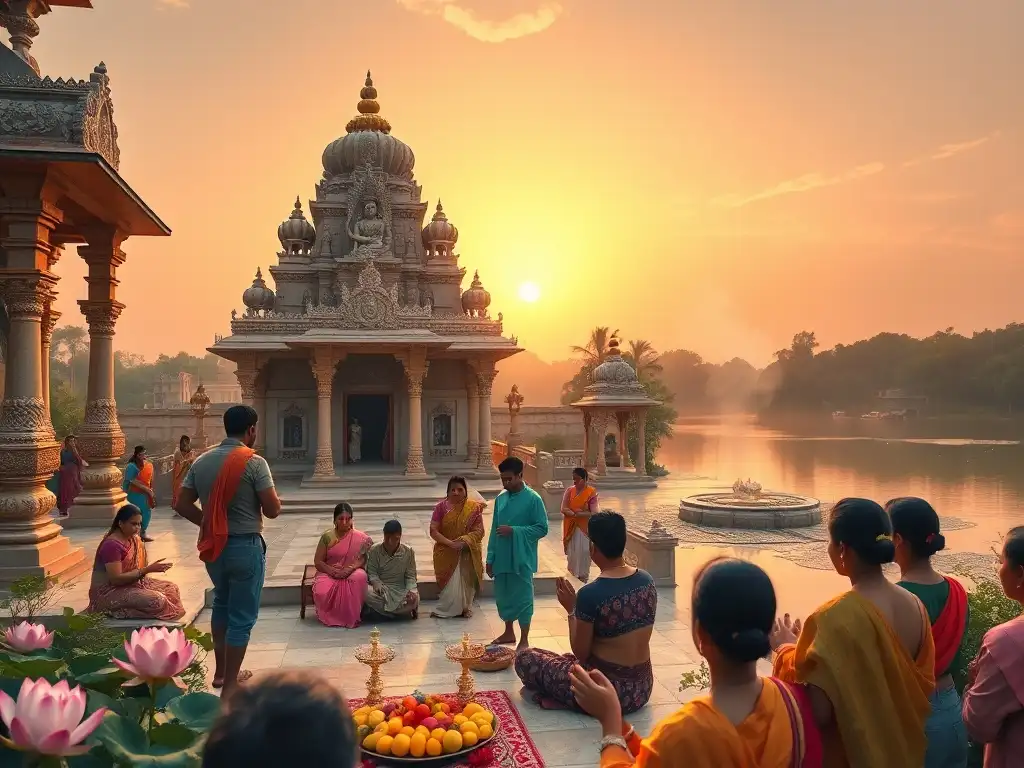
The philosophical stances of dualism and non-dualism have significantly influenced Hindu ritual practices and the overall religious life of ancient Indian society. Rituals often embody dualistic principles, promoting a sense of separation between the devotee and the divine. Offerings, prayers, and ceremonies are performed to invoke the blessings of deities, underscoring the belief in a personal god distinct from the worshipper.
Conversely, non-dualism has encouraged practices aimed at transcending this separation. Meditation, yoga, and self-inquiry are central to the pursuit of realizing one's identity with Brahman. Texts like the Yoga Sutras emphasize practices that dissolve the barriers of individual identity, leading to spiritual liberation (moksha). This dual approach to spirituality has fostered a diverse array of practices within Hinduism, allowing for both devotional worship (bhakti) and philosophical inquiry (jnana).
Conclusion: The Legacy of Dualism and Non-Dualism in Hindu Thought
The exploration of dualism and non-dualism has left an indelible mark on the legacy of Hindu thought, continuing to shape philosophical discourse and spiritual practices. These concepts offer a framework for understanding the complexities of existence and the pursuit of truth, influencing generations of thinkers, artists, and practitioners.
Summary of Key Concepts
Dualism highlights the distinction between the self and the ultimate reality, while non-dualism emphasizes their inherent unity. This dual nature of understanding has facilitated a rich dialogue within Hindu philosophy, allowing for diverse interpretations and practices that cater to varying spiritual inclinations. The coexistence of these philosophies enriches the tapestry of ancient Indian culture, providing profound insights into the human experience.
The Relevance of Dualism and Non-Dualism in Modern Hinduism
In contemporary Hinduism, the influence of dualism and non-dualism remains significant. Many modern spiritual movements draw upon these ancient philosophies, integrating them into practices that resonate with today's seekers. The dualistic emphasis on personal devotion continues to thrive, while non-dualistic teachings inspire individuals seeking deeper spiritual truths. As society evolves, the foundational ideas of dualism and non-dualism offer timeless wisdom, inviting each generation to explore the intricate relationship between the self and the cosmos.
Further Reading and Resources on Dualism in Ancient Hindu Thought
Exploring the intricate concepts of dualism and non-dualism in ancient Hindu thought is a profound journey that can be greatly enhanced by consulting various texts and resources. Below are recommendations that will deepen your understanding of these philosophical frameworks.
Recommended Texts and Authors
-
"The Upanishads"
These ancient texts form the philosophical foundation of Hinduism, presenting key ideas on dualism and non-dualism. Notably, the Brihadaranyaka Upanishad and the Chandogya Upanishad delve into the nature of reality and the self.
-
"Advaita Vedanta: A Philosophical Introduction" by Eliot Deutsch
This book offers a comprehensive overview of Advaita Vedanta, a prominent non-dualistic school of thought within Hindu philosophy, emphasizing the unity of the individual soul (Atman) and the ultimate reality (Brahman).
-
"The Bhagavad Gita" translated by Eknath Easwaran
This revered text presents a dialogue between Prince Arjuna and Lord Krishna, addressing the concepts of duty, righteousness, and the dual nature of existence. The Gita serves as a bridge between dualism and non-dualism.
-
"The Yoga Sutras of Patanjali"
A fundamental text in Hindu philosophy, the Yoga Sutras explore the nature of duality in the context of the mind and spirit, offering insights into achieving spiritual liberation.
-
"Philosophy of the Upanishads" by Paul Deussen
Deussen's work critically examines the philosophical underpinnings of the Upanishads, providing context on how dualism and non-dualism intersect within these ancient texts.
-
"The Essence of the Bhagavad Gita: Explained by Paramhansa Yogananda"
In this work, Yogananda interprets the Gita's teachings, highlighting the dualistic and non-dualistic elements within its spiritual discourse.
Online Resources for Deeper Understanding of Hindu Philosophy
-
The Stanford Encyclopedia of Philosophy
This online resource features articles on various topics in Hindu philosophy, including dualism and non-dualism. It provides scholarly insights and references for further exploration.
-
Hinduism Today Website
A comprehensive platform featuring articles, essays, and interviews with leading scholars on Hindu philosophy. It covers various aspects of dualism and non-dualism in an accessible manner.
-
Internet Archive
An excellent source for accessing a plethora of texts related to Hindu philosophy, including various translations and analyses of key works such as the Upanishads and the Bhagavad Gita.
-
YouTube Lectures and Discussions
Channels dedicated to Hindu philosophy often host lectures by prominent scholars, providing visual and auditory learning experiences on the concepts of dualism and non-dualism.
-
Academia.edu
A platform where researchers and scholars publish papers and articles related to Hindu philosophy, offering insights into contemporary interpretations and discussions of ancient thoughts.
By engaging with these texts and resources, readers can enhance their understanding of dualism and non-dualism within the rich tapestry of ancient Hindu thought, fostering a deeper appreciation for its complexities and contributions to philosophical discourse.
- Introduction to Dualism in Ancient Hindu Thought
- The Foundations of Dualism in Ancient Hindu Texts
- Understanding Non-Dualism in Ancient Hindu Philosophy
- Comparison Between Dualism and Non-Dualism in Ancient Hindu Thought
- The Influence of Dualism and Non-Dualism on Ancient Indian Culture
- Impact on Art and Literature
- Influence on Ritual Practices and Religious Life
- Conclusion: The Legacy of Dualism and Non-Dualism in Hindu Thought
- Further Reading and Resources on Dualism in Ancient Hindu Thought
Frequently Asked Questions
What is Dualism in Ancient Hindu Thought?
Dualism in Ancient Hindu Thought refers to the belief in two fundamental principles: spirit and matter, which often coexist in a dynamic relationship. This concept contrasts with Non-Dualism, where everything is seen as interconnected.
How does Non-Dualism differ from Dualism?
Non-Dualism posits that there is a singular reality where individual identities are ultimately illusions. In contrast, Dualism emphasizes the distinction between spiritual and material aspects of existence.
What are some key texts discussing Dualism in Ancient Hindu Thought?
Key texts include the Upanishads, which explore the nature of reality and the self, and the Bhagavad Gita, which presents various philosophical perspectives, including Dualism and Non-Dualism.
How did Dualism influence ancient Indian philosophy?
Dualism shaped various philosophical schools, leading to diverse interpretations of the relationship between the soul and the universe. It contributed to debates on ethics, metaphysics, and the nature of reality.
What role did Dualism play in the development of Hinduism?
Dualism provided a framework for understanding the relationship between the divine and the material world, influencing practices, rituals, and the overall spiritual landscape of Hinduism throughout its history.
Final Reflection: Embracing the Harmony of Dualism and Non-Dualism
In exploring the intricate tapestry of Dualism in Ancient Hindu Thought, we uncover a profound relevance that resonates with contemporary philosophical and spiritual inquiries. The dichotomy between the self and the universe, the material and the spiritual, continues to shape our understanding of existence. As we navigate a world rife with complexity and division, the insights from ancient Hindu philosophies remind us that the quest for unity amidst diversity is not merely an intellectual exercise but a vital aspect of our human experience.
The enduring influence of dualism and non-dualism in our cultural and social landscapes is palpable. These concepts invite us to reconsider our perceptions of reality, urging us to transcend simplistic binaries. The teachings of ancient sages remind us that the interplay between the individual and the cosmos is a dance of interdependence. The greatest truth is simplicity, and simplicity is the ultimate sophistication.
This quote encapsulates the essence of dualism and non-dualism, urging us to seek clarity and connection in a world that often feels fragmented.
As we reflect on the lessons of dualism and non-dualism, I invite you to engage deeply with these ideas in your own life. Consider how the balance between opposing forces can lead to greater understanding and harmony in your relationships, beliefs, and actions. Let this exploration inspire you to cultivate a sense of unity within yourself and with the world around you. Embrace the journey of self-discovery and interconnectedness, and allow the wisdom of ancient Hindu thought to illuminate your path forward.
Unveil the Wisdom of Dualism and Non-Dualism!
Thank you for diving into the profound exploration of dualism and non-dualism in ancient Hindu thought! We hope you gained valuable insights into these fascinating concepts that have shaped philosophies over centuries. Now, let's take the next steps to deepen your understanding and connection with this rich heritage.
- Explore the Texts: Dive into key ancient texts such as the Upanishads and the Bhagavad Gita to witness these philosophies in action.
- Join the Conversation: Engage with a community of fellow enthusiasts by participating in online forums or local study groups dedicated to Hindu philosophy.
- Share Your Insights: Consider writing a blog or posting on social media to reflect on your thoughts about dualism and non-dualism, inviting others to share their perspectives!
What aspects of dualism and non-dualism resonate most with you, and how do you see them influencing contemporary thought? Let's inspire each other in the comments below!