
Trade and Religion: How Commerce Shaped Beliefs in Ancient India


Welcome to Ancient India History, where we embark on a captivating journey through time to uncover the rich tapestry of civilizations that shaped one of the world's oldest cultures. In our featured article, “Trade and Religion: How Commerce Shaped Beliefs in Ancient India,” we delve into the intricate relationship between commerce and religion, revealing how trade routes not only fueled economies but also influenced spiritual practices and societal norms.
Prepare to be intrigued as we explore how the bustling markets and sacred sites of ancient India wove a complex narrative that continues to resonate today. Join us in this exploration of the past that promises to enlighten and inspire your understanding of India’s historic legacy!

Introduction to Commerce and Religion in Ancient India
The intricate relationship between commerce and religion in ancient India is a fascinating subject that offers deep insights into how trade not only facilitated economic prosperity but also influenced spiritual beliefs and practices among diverse civilizations. From the bustling markets of the Indus Valley to the vibrant exchanges during the Gupta Empire, trade served as a conduit for cultural and religious ideas, significantly impacting the social fabric of ancient Indian societies.
This article delves into the historical context of trade, examining how commerce shaped religious beliefs and practices, and highlights the interconnectedness of these two vital aspects of ancient Indian life.
Overview of Ancient Indian Civilizations
Ancient India was home to several influential civilizations, each contributing uniquely to the region's historical tapestry. Notable among these were:
- Indus Valley Civilization (c. 3300–1300 BCE): Renowned for its advanced urban planning and trade networks.
- Vedic Period (c. 1500–500 BCE): Marked by the composition of sacred texts and the establishment of early religious practices.
- Maurya Empire (c. 322–185 BCE): Known for its political unification and the spread of Buddhism.
- Gupta Empire (c. 320–550 CE): Often referred to as the Golden Age of India, characterized by significant achievements in art, science, and trade.
These civilizations engaged in extensive trade, not only with each other but also with regions beyond the Indian subcontinent, laying the foundation for a rich cultural exchange.
The Interconnection of Trade and Beliefs
The interplay between commerce and religion in ancient India can be observed through various lenses. Trade routes often facilitated the spread of religious ideas, while religious institutions played a crucial role in the regulation of trade practices. For instance:
- Pilgrimages and Trade: Major religious sites attracted traders and pilgrims alike, creating a symbiotic relationship where commerce flourished alongside spiritual practices.
- Merchants as Patrons: Wealthy merchants often contributed to religious establishments, funding temples and rituals, which in turn fostered a sense of community and shared belief.
- Cultural Exchange: The influx of foreign traders introduced new religious concepts, further enriching the existing belief systems.
Historical Context of Trade in Ancient India
Understanding the historical context of trade in ancient India is essential to appreciate its impact on the development of religious beliefs. Trade was not merely an economic activity; it was a vital component of social and cultural life.
Major Trade Routes and Their Importance
Ancient India was traversed by several crucial trade routes, both overland and maritime, that connected it to neighboring regions and distant lands. Some of the most significant routes included:
- Silk Road: Facilitated trade with Central Asia and beyond, allowing for the exchange of silk, spices, and ideas.
- Maritime Routes: Enabled trade with Southeast Asia, the Arabian Peninsula, and even Africa, promoting interactions that shaped cultural and religious landscapes.
- Overland Trade Routes: Linked various Indian kingdoms, contributing to the economic prosperity that supported temples and religious institutions.
Key Trade Partners and Influences
The trade networks of ancient India extended to various regions, establishing key partnerships that influenced both commerce and religious practices:
- Persia: Trade with the Persian Empire introduced Zoroastrian beliefs, which interacted with local traditions.
- Greeks: The arrival of Greek traders during the Hellenistic period brought new philosophical ideas, including early forms of Buddhism.
- China: The exchange of goods and ideas along the Silk Road fostered a mutual influence between Indian and Chinese religious practices.
The Role of the Indus Valley in Early Commerce
The Indus Valley Civilization holds a pivotal place in the history of trade in ancient India. Its well-planned cities, such as Harappa and Mohenjo-Daro, served as major commercial centers that facilitated trade with regions as far as Mesopotamia. The significance of the Indus Valley in early commerce can be highlighted through:
- Urban Planning: The civilization's advanced urban infrastructure supported efficient trade practices.
- Standardized Weights and Measures: This facilitated fair trade and helped in the establishment of economic regulations.
- Cultural Artifacts: Items such as seals and pottery reflect the intricate trading networks and the cultural exchanges that occurred.
This exploration into the interactions between trade and religion in ancient India illustrates how commerce not only shaped economic landscapes but also influenced the spiritual and cultural dimensions of society. The legacy of these interactions continues to resonate in contemporary Indian culture, making this historical inquiry both relevant and enriching.
The Influence of Commerce on Religious Practices
The intersection of commerce and religion in ancient India was profound, shaping the beliefs and practices of society. As trade flourished, merchants and travelers carried not only goods but also ideas, leading to a dynamic exchange that influenced religious beliefs across regions. This interaction was particularly evident in the way trade routes connected various cultures, allowing for a mingling of spiritual practices and commercial activities. The rise of trade centers often coincided with the growth of religious communities, fostering an environment where commerce and spirituality could thrive together.
In ancient India, the prosperity brought by commerce led to the construction of temples and religious monuments, which became focal points for both economic and spiritual activities. Merchants often sponsored these constructions, believing that their contributions would bring divine favor for their enterprises. Thus, the symbiotic relationship between commerce and religion helped to shape the social fabric of ancient Indian society, instilling a sense of shared identity among diverse communities.
How Trade Facilitated Religious Exchange
Trade routes in ancient India served as conduits for not just material goods but also for the exchange of religious beliefs and practices. Merchants traveling along the Silk Road, for instance, encountered various cultures and their respective religions, including Buddhism, Jainism, and Hinduism. This interaction allowed for the syncretism of religious ideas, where elements from different faiths blended together, enriching the spiritual landscape of ancient India.
As goods were exchanged, so too were religious texts and symbols. For example, the spread of Buddhist teachings coincided with the movement of traders who carried Buddhist scriptures and artifacts to new regions. Similarly, Hindu practices found their way into other cultures through trade, leading to a broader acceptance and adaptation of these beliefs. The cross-pollination of ideas facilitated by trade not only enriched individual spiritual experiences but also contributed to the overall diversity of religious practices in ancient India.
The Spread of Religious Ideas Through Trade
The role of trade in disseminating religious ideas cannot be overstated. As merchants traveled long distances, they brought with them stories, philosophies, and rituals from their home regions. The expansion of trade networks, particularly during the Maurya and Gupta empires, facilitated the proliferation of religious ideologies.
For instance, the spread of Buddhism across Asia was significantly aided by traders who traveled to distant lands, sharing their faith with diverse populations. Similarly, Hinduism's principles and practices were carried along trade routes into Southeast Asia, influencing local cultures and leading to the establishment of Hindu kingdoms. The ability of commerce to act as a vehicle for religious dissemination highlights the interconnectedness of trade and belief systems, illustrating how economic pursuits often paved the way for spiritual exploration.
The Impact of Religion on Economic Practices
Religious beliefs significantly influenced economic practices in ancient India, dictating how trade was conducted and regulated. The moral codes embedded in religious teachings shaped the ethical standards of trade, promoting fairness and honesty among merchants. This ethical framework was essential in fostering trust within commercial transactions, which in turn aided the growth of trade networks.
Furthermore, various religious texts, such as the Manusmriti, outlined guidelines for conduct in trade, emphasizing the importance of dharma (righteousness) and the ethical obligations of merchants. This intertwining of religion and commerce established a cultural norm where economic activities were not merely transactional but also imbued with spiritual significance, reinforcing the idea that one’s livelihood should align with their moral and religious values.
Religious Mandates and Trade Regulations
In ancient India, religious mandates often dictated trade regulations, influencing how and when commerce could occur. Sacred texts provided specific guidelines that merchants were expected to follow, promoting ethical trade practices. For example, certain days were considered auspicious for conducting business, while others were deemed inauspicious, affecting trading activities.
Additionally, local customs and religious beliefs influenced trade regulations, such as the prohibition of trading in certain goods deemed impure or unethical, which were often dictated by religious doctrines. This regulation helped shape market dynamics, ensuring that commerce operated within the framework of societal values, thereby reinforcing the importance of spiritual and ethical considerations in economic activities.
The Role of Temples in Economic Activities
Temples in ancient India were not only spiritual centers but also vital economic hubs. They played a crucial role in local economies by facilitating trade, providing employment, and acting as institutions for financial transactions. Temples often engaged in commercial activities, such as collecting taxes and offering loans to merchants, thus integrating themselves into the broader economic framework.
Moreover, temples hosted fairs and festivals that attracted traders and pilgrims alike. These events created opportunities for commerce, as merchants set up stalls to sell their goods to the influx of visitors. The economic significance of temples extended beyond mere religious practices; they became crucial players in the economic landscape of ancient India, highlighting the interconnectedness of spirituality and commerce.
The Influence of Religious Festivals on Trade
Religious festivals in ancient India were significant events that catalyzed trade and economic activity. These festivals, often rooted in ancient traditions and beliefs, drew large crowds of devotees and traders, creating vibrant marketplaces. The influx of people during these occasions provided a lucrative opportunity for merchants to sell their goods, ranging from food and textiles to religious artifacts.
Festivals such as Diwali and Makar Sankranti not only celebrated religious themes but also served as a platform for economic exchange. Merchants would prepare well in advance, stocking their inventories to cater to the increased demand. This interplay between religion and commerce during festivals underscores how spiritual observances could significantly bolster economic activities, thereby reflecting the intertwined nature of commerce and religion in ancient Indian society.
Commerce and Religion in Major Ancient Indian Empires
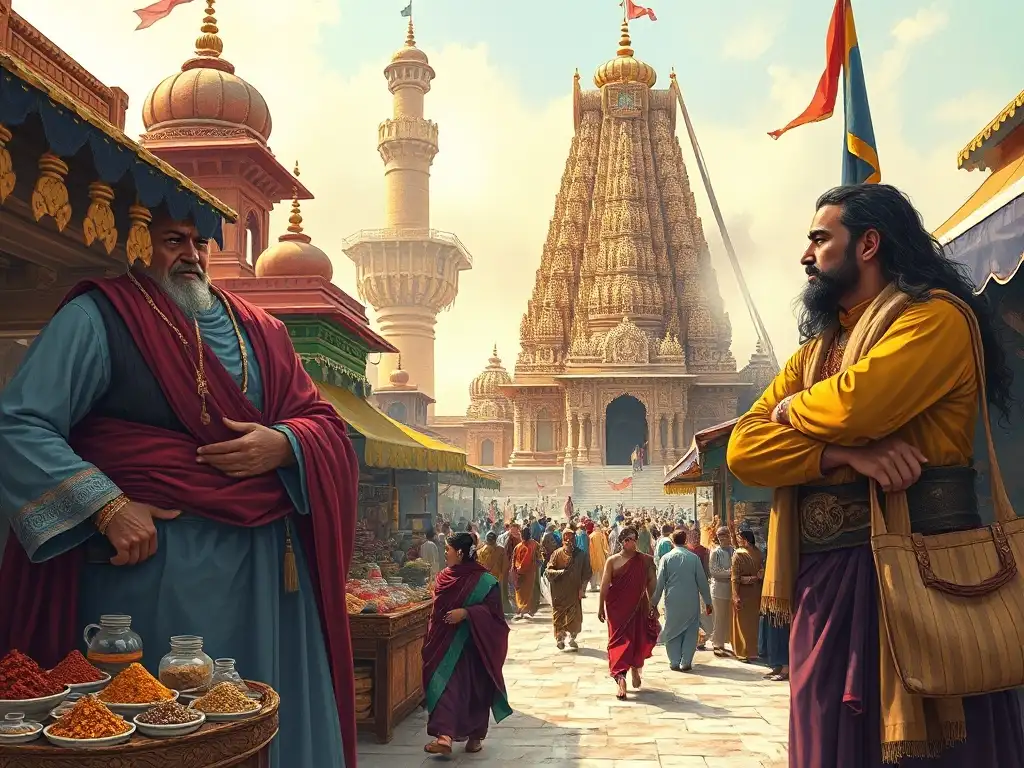
The interplay between commerce and religion in ancient India was profound, particularly in the major empires like the Maurya and Gupta. These empires not only thrived economically through trade but also saw significant religious developments that were interlinked with their commercial activities. The flourishing trade routes facilitated the exchange of goods, ideas, and beliefs, creating a dynamic environment where religion influenced commerce and vice versa. This relationship was further enriched by regional variations that affected how trade and religious practices were perceived and practiced across the subcontinent.
The Maurya Empire: A Hub of Trade and Belief
The Maurya Empire (c. 322-185 BCE) is often considered a pivotal period in the history of ancient India where commerce and religion coalesced. Under the reign of Chandragupta Maurya and later Ashoka, the Maurya Empire became an important center for trade, connecting the Indian subcontinent to Central Asia, the Middle East, and beyond.
Trade routes such as the Grand Trunk Road facilitated the movement of goods like spices, textiles, and precious stones, while also acting as conduits for religious ideas. Ashoka’s conversion to Buddhism significantly impacted trade, as he promoted the spread of Buddhist ideals along trade routes. He established stupas and monasteries that served as rest stops for traders, allowing for the dissemination of Buddhist teachings. This integration of trade and religion fostered a rich cultural exchange, with merchants often funding religious projects, thereby intertwining their economic interests with spiritual beliefs.
The Gupta Empire: Cultural and Economic Flourishing
The Gupta Empire (c. 320-550 CE) is often referred to as the Golden Age of India, marked by significant advancements in arts, science, and philosophy. During this period, trade flourished due to both internal and external commerce, which was crucial for the empire's economic prosperity. The Guptas established extensive trade networks that reached as far as the Roman Empire and Southeast Asia.
The flourishing economy during the Gupta period also had a major impact on religious practices. Hinduism saw a resurgence, with temples becoming centers of economic activity. Merchants and traders contributed to temple building and maintenance, linking their economic success to the patronage of the deities. This relationship not only enhanced the status of the merchants but also reinforced the notion that commerce and religious devotion were complementary. Moreover, the Gupta period witnessed the compilation of religious texts, which were often funded by wealthy traders, further intertwining commerce with religious development.
Regional Variations in Trade and Religious Practices
Ancient India was characterized by diverse regional cultures and practices, which influenced how trade and religion interacted. In regions like the South, trade with foreign lands, particularly through the ports of the Tamil kingdoms, facilitated the spread of Hinduism and Buddhism. The extensive maritime trade routes connected India with Southeast Asia, allowing for the exchange of not only goods but also religious beliefs.
In contrast, the northern regions saw the flourishing of Buddhism alongside Hinduism as trade routes expanded into Central Asia. The Silk Road facilitated the movement of Buddhist monks who spread the teachings of the Buddha, establishing monasteries along these vital trade paths. These regional variations underscore the adaptability of religious practices in response to economic conditions and trade networks, highlighting a complex relationship between commerce and spirituality.
The Symbiotic Relationship Between Trade and Religion
The relationship between trade and religion in ancient India was not merely transactional; it was symbiotic. This dynamic interplay shaped not only economic practices but also the spiritual landscape of the region. Merchants and traders played a significant role in the propagation of religious ideas, while religious institutions often supported and protected trade activities, creating an environment where both could thrive.
How Commerce Shaped Hindu Practices
Hindu practices in ancient India were significantly influenced by commerce. The wealth generated from trade allowed for the construction of grand temples and public works, which became focal points for community gatherings and religious activities. Rituals and festivals often had commercial undertones, with traders participating in temple fairs and markets that featured religious offerings alongside goods.
Moreover, the concept of dharma in Hinduism, which encompasses duty and morality, was closely tied to economic activities. Merchants were expected to conduct their business ethically, adhering to principles that aligned with their religious beliefs. This ethical framework helped to shape a community where commerce was not viewed solely as a means for profit but as a way to fulfill one's spiritual and social responsibilities.
The Interplay Between Buddhism and Trade
Buddhism's relationship with trade was particularly pronounced as it spread across Asia via established trade routes. Monks often traveled along these routes, sharing Buddhist teachings with merchants and fostering a communal identity among traders. The establishment of monasteries along trade routes provided shelter and support for travelers, and in return, merchants contributed to the maintenance of these religious centers.
This exchange not only enriched the spiritual life of communities but also promoted the idea of sangha (community), which was vital for the Buddhist way of life. The economic prosperity resulting from trade allowed for the proliferation of Buddhist art and architecture, further embedding the religion into the cultural fabric of the regions it touched.
Jainism and Its Economic Ethics
Jainism presents a unique perspective on the relationship between commerce and religion in ancient India. With its strict principles of non-violence ( ahimsa) and truthfulness, Jainism influenced the ethical practices of merchants and traders. Jain merchants often adhered to a strict code of conduct, avoiding harm to living beings in their business dealings and promoting fair trade.
The economic ethics of Jainism led to the establishment of prosperous trading communities, particularly in regions like Gujarat. The wealth generated by these merchants was often reinvested into religious projects, including temples and educational institutions, reflecting a commitment to both economic and spiritual growth. This intertwining of commerce and religion highlights how Jainism not only shaped individual practices but also contributed to the broader economic landscape of ancient India.
Conclusion
The intricate relationship between commerce and religion in ancient India reveals a fascinating interplay that shaped both economic practices and spiritual beliefs. Trade routes not only facilitated the exchange of goods but also served as conduits for cultural and religious interactions. As merchants traveled across vast distances, they brought with them new ideas, philosophies, and practices that enriched the local spiritual landscapes. This synergy contributed to the evolution of various religious traditions and fostered a sense of community among diverse populations.
Summary of the Interrelationship Between Commerce and Religion
In ancient India, commerce and religion were deeply intertwined, influencing each other in profound ways. Trade routes such as the Silk Road and maritime pathways allowed for the movement of not just goods but also ideas and religious philosophies. The prosperity generated by trade enabled the patronage of religious institutions, leading to the construction of temples and centers of learning.
Additionally, many merchants and traders adopted local religious practices and integrated them into their business activities, creating a unique blend of commerce and spirituality. This reciprocal relationship helped to shape the moral and ethical frameworks within which commerce operated, promoting values such as honesty and fairness in trade.
The Lasting Legacy of Trade on Religious Beliefs in Ancient India
The legacy of trade on religious beliefs in ancient India is evident in various aspects of contemporary Indian culture. Many festivals and rituals have roots in ancient trade practices, celebrating the abundance brought forth by successful commerce. Furthermore, the syncretism observed in Indian religions can be traced back to the interactions facilitated by trade.
For example, the influence of Buddhism and Jainism spread significantly through trade routes, leading to the establishment of communities that practiced these religions far from their origins. The blending of traditions continues to be a hallmark of Indian spirituality, demonstrating the lasting impact of ancient commerce on religious beliefs.
References
Key Texts on Ancient Indian Trade and Religion
-
"Trade and Religion in Ancient India" by R. S. Sharma
This book explores the connections between trade practices and religious developments in ancient Indian society.
-
"The Silk Road: A New History" by Valerie Hansen
Hansen provides insights into how trade routes influenced cultural and religious exchanges across Asia, including India.
-
"Buddhism and Trade: The Spread of Buddhism along Trade Routes" by John S. Strong
This text delves into the relationship between the spread of Buddhism and trade networks in ancient India.
Suggested Further Reading on Commerce and Religion in Ancient India
- "The Economic History of Ancient India" by J. C. Bharat
This comprehensive account details the economic systems in ancient India, highlighting the role of commerce in shaping society.
- "Religion and Society in Ancient India" by A. M. Shastri
Shastri examines the multifaceted relationship between religious practices and societal structures, including economic factors.
- "Merchants and Trade in Ancient India" by D. P. Sharma
This work focuses on the lives of merchants and their contributions to the economy and religious landscapes in ancient India.
- Introduction to Commerce and Religion in Ancient India
- Historical Context of Trade in Ancient India
- The Influence of Commerce on Religious Practices
- The Impact of Religion on Economic Practices
- Commerce and Religion in Major Ancient Indian Empires
- The Symbiotic Relationship Between Trade and Religion
- Conclusion
- References
- What role did commerce play in shaping religion in ancient India?
- How did the Indus Valley Civilization contribute to trade?
- What was the impact of the Silk Road on ancient Indian religions?
- How did religious institutions influence trade in ancient India?
- What were the key commodities traded in ancient India?
Frequently Asked Questions
What role did commerce play in shaping religion in ancient India?
Commerce was instrumental in the spread of religious beliefs and practices, facilitating interactions between diverse cultures and promoting the exchange of ideas and spiritual philosophies.
How did the Indus Valley Civilization contribute to trade?
The Indus Valley Civilization had advanced urban planning and a robust trading network, which included trade with Mesopotamia. This helped in the exchange of not only goods but also cultural values and religious practices.
What was the impact of the Silk Road on ancient Indian religions?
The Silk Road connected India with regions like China and the Middle East, allowing for the exchange of goods and the dissemination of Buddhism and Hindu philosophies, influencing various cultures along the way.
How did religious institutions influence trade in ancient India?
Religious institutions, such as temples, often controlled trade routes and markets, providing sanctuaries for merchants and promoting commerce through rituals and festivals that attracted traders and pilgrims alike.
What were the key commodities traded in ancient India?
Ancient India was known for trading spices, textiles, jewelry, and precious stones. These commodities were not only valuable for their economic worth but also played a role in the cultural exchange of ideas and beliefs.
Final Reflection: The Interwoven Tapestry of Commerce and Religion in Ancient India
The relationship between commerce and religion in ancient India is not merely a historical curiosity; it is a profound reminder of how economic activities can shape belief systems and cultural practices. Today, as we navigate a globalized world where trade continues to influence our values and ideologies, understanding this dynamic becomes increasingly relevant. The intricate ways in which commerce and religion intersect remind us that our modern beliefs are often rooted in the economic exchanges of the past.
Culture is a living entity, continuously molded by the forces of trade and spirituality. The legacy of ancient Indian merchants and their interactions with diverse religious practices illustrates how commerce can foster not only economic prosperity but also spiritual growth and cultural exchange. As we reflect on this, we are reminded of the words of Mahatma Gandhi: Commerce with all its benefits must be subservient to the moral law.
This sentiment underscores the enduring impact of commerce on our ethical frameworks, urging us to consider how our economic choices today resonate with our spiritual beliefs.
As you ponder the lessons drawn from the interplay of commerce and religion in ancient India, I invite you to reflect on your own life. Consider how your daily transactions and interactions shape not only your material existence but also your beliefs and values. Embrace the opportunity to cultivate a deeper understanding of the connections between your economic activities and spiritual life, fostering a more harmonious existence that honors both your cultural heritage and the diverse world around you.
Unveil the Dynamic Dance of Trade and Faith!
Thank you for exploring the fascinating interplay between trade and religion in ancient India. Your interest sheds light on how commerce transformed beliefs and cultural practices throughout history. Now that you’ve gained insights into this rich tapestry, it’s time to take action and dive deeper!
- Join a discussion group focused on the impacts of trade on religious practices by visiting your local library or participating in online forums.
- Share this article with friends and family who are passionate about history, sparking conversations about how these themes resonate in our modern world.
- Consider visiting a local museum or historical site that highlights the trade routes of ancient India to experience this heritage firsthand!
How do you believe trade continues to shape our beliefs and values today? We invite you to share your thoughts below!