
The Relationship Between Mathematics and Astronomy in Ancient Indian Texts


Welcome to Ancient India History! Immerse yourself in the fascinating tapestry of a civilization that shaped the world through its remarkable achievements in mathematics and astronomy. In our featured article, "The Relationship Between Mathematics and Astronomy in Ancient Indian Texts," we unravel the intricate connections between these two disciplines, revealing how ancient Indian scholars laid the groundwork for modern sciences. Prepare to be captivated by discoveries that not only illuminate the past but also inspire a deeper understanding of our universe. Dive in and let your curiosity guide you through the wonders of ancient Indian intellect!
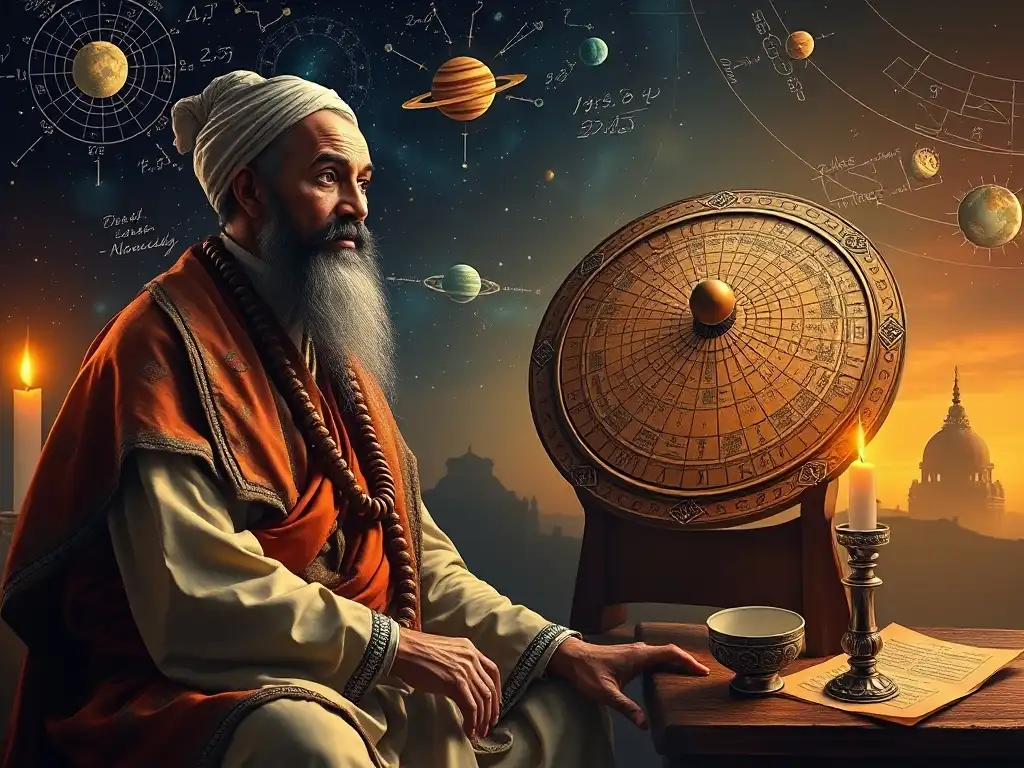
The intricate relationship between mathematics and astronomy in ancient India is a captivating subject that highlights the profound intellect of early Indian scholars. From the sophisticated calculations of celestial bodies to the development of numerical systems, ancient Indian mathematics and astronomy interweave in ways that not only reflect the scientific prowess of the time but also their cultural and philosophical significance. This article delves into the contributions of ancient Indian civilizations, tracing their advancements in mathematics and astronomy through seminal texts and historical contexts, ultimately showcasing how these disciplines were interdependent in shaping the scientific landscape of ancient India.
Introduction to Ancient Indian Mathematics and Astronomy
Ancient Indian mathematics and astronomy are characterized by a remarkable level of sophistication that laid the groundwork for future scientific endeavors. The mathematicians and astronomers of ancient India developed concepts and techniques that were revolutionary for their time.
Overview of Ancient Indian Contributions to Science
- Numerical Systems: The concept of zero and the decimal system emerged from ancient Indian mathematics, significantly influencing global mathematical practices.
- Astronomical Calculations: Texts such as the Aryabhatiya by Aryabhata provided intricate methods for calculating planetary positions and eclipses, demonstrating a deep understanding of celestial mechanics.
- Trigonometry: Indian scholars were pioneers in trigonometry, with sine and cosine functions appearing in various astronomical calculations.
These contributions not only showcase the mathematical ingenuity but also indicate a strong desire to understand the cosmos, revealing the interconnectedness of these two fields.
Importance of Mathematics in Astronomy
Mathematics served as the language through which ancient astronomers articulated their observations and predictions about celestial phenomena. The reliance on mathematical principles allowed for:
- Predictive Models: Formulating predictions for eclipses, planetary movements, and seasonal changes.
- Navigation and Timekeeping: Accurate calculations were essential for navigation, agriculture, and calendar systems, impacting daily life and rituals.
- Philosophical Insights: The study of celestial bodies was often intertwined with philosophical inquiries into the nature of existence, time, and the universe.
This mathematical foundation was crucial in developing a systematic approach to astronomy that was both empirical and theoretical.
Historical Context of Mathematics and Astronomy in Ancient India
Understanding the historical context of mathematics and astronomy in ancient India requires an exploration of various periods that contributed to the evolution of these disciplines.
The Vedic Period: Roots of Mathematics and Astronomy
The Vedic period (c. 1500 – c. 500 BCE) marked the beginning of systematic mathematical thought in India. The texts from this era, including the Vedas, contain references to calculations related to rituals and sacrifices, illustrating early mathematical concepts. Notable features include:
- Geometric Measurements: The Shulba Sutras detail rules for constructing altars using geometric principles, indicating an early application of geometry.
- Calendar Systems: Astronomical knowledge was applied to develop lunar calendars, vital for agriculture and religious observances.
Contributions from the Indus Valley Civilization
The Indus Valley Civilization (c. 3300 – c. 1300 BCE) also made significant strides in mathematics and astronomy, although much of their knowledge remains enigmatic due to the undeciphered script. Key aspects include:
- Urban Planning: The use of standardized weights and measures suggests advanced mathematical knowledge, essential for trade and construction.
- Astronomical Alignments: Archaeological evidence indicates that some structures may have been aligned with celestial events, hinting at an early understanding of astronomy.
The Gupta Empire: A Golden Age of Science
The Gupta Empire (c. 320 – c. 550 CE) is often referred to as a golden age for science and mathematics in ancient India. This period saw the flourishing of prominent scholars such as Aryabhata and Brahmagupta, who made groundbreaking advancements:
- Aryabhata's Innovations: Aryabhata introduced concepts such as the approximation of π and the use of algebra in astronomical calculations.
- Brahmagupta's Work: Brahmagupta's Brahmasphutasiddhanta compiled and expanded upon earlier knowledge, providing rules for arithmetic operations and solving quadratic equations.
The achievements during this period not only advanced mathematical thought but also established a legacy that would influence future generations across the globe.
Key Ancient Indian Texts on Mathematics and Astronomy
Ancient Indian civilization produced a wealth of texts that intricately wove together mathematics and astronomy. These texts not only reflect the advanced understanding of mathematical concepts but also highlight their practical applications in celestial observations and rituals. Key texts such as the Sulbasutras, Aryabhatiya, and Brahmasphutasiddhanta serve as foundational pillars in the study of ancient Indian mathematics and astronomy.
Each of these works contributed uniquely to the development of mathematical thought and astronomical practices, showcasing the innovations and intellectual rigor of their time. The insights gleaned from these texts continue to influence modern mathematical and astronomical methodologies, demonstrating the timelessness of ancient Indian scholarly pursuits.
The Sulbasutras: Geometry and Ritual
The Sulbasutras, dating back to around 800-500 BCE, are ancient texts primarily concerned with the construction of altars for Vedic rituals. These texts are notable for their early use of geometric principles, often employing intricate calculations to define specific shapes and dimensions necessary for ritualistic purposes.
One of the key contributions of the Sulbasutras is the introduction of the Pythagorean theorem long before it was formally recognized in Western mathematics. The texts provide methods for constructing squares and circles, demonstrating an understanding of various geometric properties. For example, one of the Sulbasutras describes how to construct a square altar with a diagonal equal in length to the side of a square, illustrating the application of geometric relationships in practical contexts.
Moreover, the Sulbasutras emphasize the importance of precision in measurement, reflecting the intersection of mathematics with spirituality in ancient Indian culture. The rituals, often tied to agricultural cycles and celestial events, further underscore the practical necessity for accurate astronomical calculations.
Aryabhatiya: Astronomy and Mathematical Concepts
The Aryabhatiya, authored by the mathematician Aryabhata in the 5th century CE, is one of the most significant texts in ancient Indian mathematics and astronomy. This seminal work consists of 118 verses and addresses both mathematical theories and astronomical phenomena. Aryabhata's approach combines rigorous mathematical formulations with practical applications in astronomy.
In the Aryabhatiya, Aryabhata introduces concepts such as the calculation of the circumference of the Earth, the determination of the length of a year, and the calculation of eclipses. His innovative methods for solving quadratic equations and his use of trigonometric functions laid the groundwork for future mathematical advancements.
Aryabhata's assertion that the Earth rotates on its axis was revolutionary, providing a cosmological perspective that influenced subsequent astronomical studies. The text also employs a place-value system that enhances computational efficiency, making it a pivotal reference in both mathematics and astronomy.
Brahmasphutasiddhanta: Innovations in Astronomical Calculations
Written by Brahmagupta in the 7th century CE, the Brahmasphutasiddhanta is another cornerstone of ancient Indian mathematics and astronomy. This text is particularly noteworthy for its systematic approach to mathematical operations and its extensive treatment of astronomical calculations.
Brahmagupta introduced rules for arithmetic operations, including addition, subtraction, multiplication, and division, along with methods for solving linear and quadratic equations. Importantly, he provided solutions for problems involving negative numbers, a concept that was relatively advanced for his time.
In terms of astronomy, the Brahmasphutasiddhanta presents a detailed explanation of planetary positions and their calculations, including the calculation of the positions of celestial bodies at specific times. Brahmagupta's work also emphasizes the use of sine functions in trigonometry, which were instrumental in computing angles and distances in astronomy.
Mathematical Principles in Ancient Indian Astronomy
Ancient Indian astronomy was deeply intertwined with mathematical principles, showcasing a sophisticated understanding of both fields. The application of mathematical concepts in astronomy not only facilitated celestial observations but also influenced various aspects of daily life, including agriculture, religious practices, and timekeeping.
Use of Zero and Place Value System
The introduction of zero as a numeral and the development of the place value system were monumental achievements in ancient Indian mathematics. These innovations allowed for more efficient calculation methods and the representation of large numbers, significantly impacting astronomical calculations.
In texts like the Aryabhatiya, the use of zero is evident in calculations related to planetary positions and eclipses. This concept enabled astronomers to perform complex computations with ease, fostering advancements in both mathematics and astronomy. The place value system further enhanced numerical representation, allowing astronomers to articulate vast quantities and temporal cycles accurately.
Trigonometry and Its Applications in Astronomy
Trigonometry emerged as a critical mathematical tool in ancient Indian astronomy, with its applications evident in various texts, including the Aryabhatiya and Brahmasphutasiddhanta. The study of angles and their relationships facilitated the computation of celestial positions, distances, and movements.
Ancient Indian astronomers developed sine and cosine functions, which were essential for calculating the angles of celestial bodies. This trigonometric knowledge allowed for the accurate prediction of astronomical events, such as eclipses and planetary alignments, thus enhancing the understanding of celestial mechanics.
Calendar Systems and Timekeeping
Accurate timekeeping was vital in ancient Indian society, particularly for agricultural cycles and religious observances. The development of sophisticated calendar systems, such as the lunar and solar calendars, reflects the intersection of mathematics and astronomy.
Ancient texts detail methods for calculating the length of a year, the phases of the moon, and the timing of seasonal festivals. The integration of mathematical calculations with astronomical observations ensured that calendars remained accurate, allowing communities to synchronize their agricultural activities and religious rituals with cosmic events.
The relationship between mathematics and astronomy in ancient Indian texts illustrates a rich intellectual tradition that has profoundly influenced subsequent scientific thought and practices.
Intersections of Mathematics and Astronomy in Ancient Indian Practices
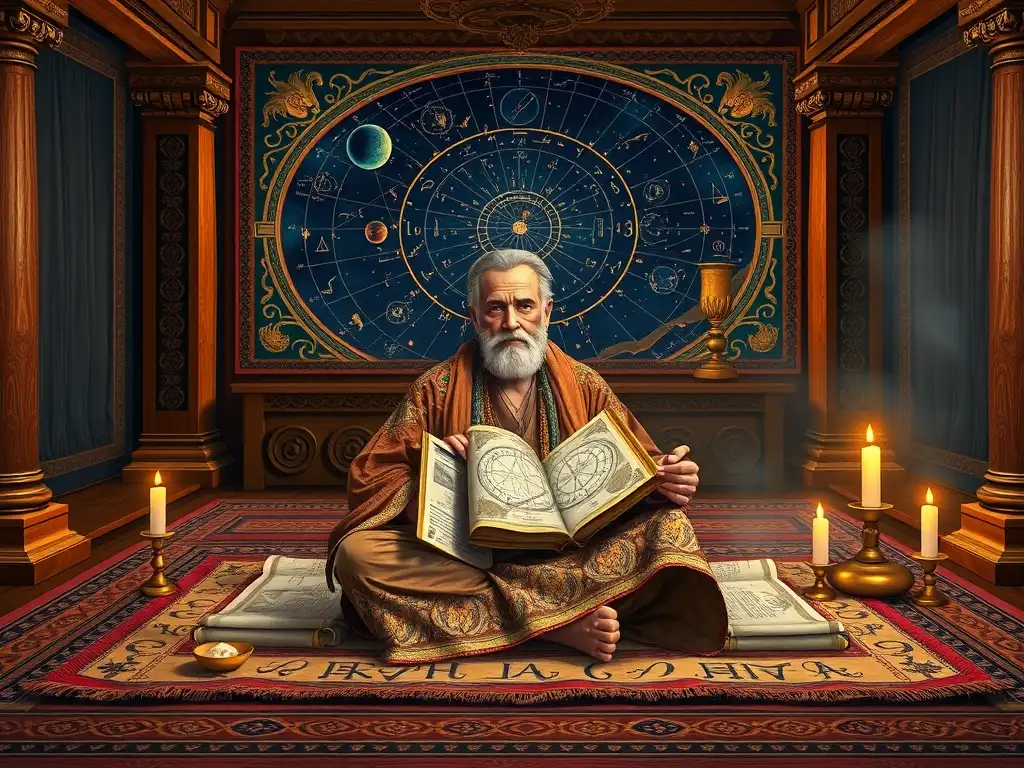
In ancient India, mathematics and astronomy were intricately linked, forming a foundation that was essential for various practical and theoretical applications. This relationship can be traced back to the early Vedic texts, where the movement of celestial bodies was closely observed and documented. The ancient Indians developed a sophisticated understanding of the cosmos, which was reflected in their mathematical practices.
The concepts of geometry, trigonometry, and arithmetic were not merely abstract ideas; they were applied to calculate time, predict eclipses, and create calendars. The measurement of time was particularly vital for agricultural practices, religious rituals, and social events.
Mathematics served as a tool to interpret celestial phenomena, leading to the creation of astrological charts and calendars that were critical for societal organization. These intersections of mathematics and astronomy illustrate the holistic approach of ancient Indian scholars, who saw the cosmos as a dynamic entity interconnected with earthly life.
Calculating Eclipses: Techniques and Accuracy
The ability to predict eclipses with remarkable accuracy was one of the notable achievements of ancient Indian astronomers. Texts such as the "Surya Siddhanta," dating back to the 5th century CE, detail the methods used to calculate the timings and durations of solar and lunar eclipses.
Ancient Indian mathematicians utilized a combination of observational data and mathematical formulas to develop algorithms that could predict eclipses. For instance, they employed the concept of the sine function and created tables to simplify calculations. The "Siddhanta" texts also provided rules for understanding the geometric configurations of the Earth, Moon, and Sun.
The accuracy of these calculations is particularly impressive when considering the technological limitations of the time. The predictions made by ancient Indian mathematicians often rivaled those of contemporaneous civilizations, demonstrating their advanced understanding of celestial mechanics.
Astrological Charts and Their Mathematical Foundations
Astrological charts, or "horoscopes," have been a significant part of Indian culture, deeply rooted in the intersection of mathematics and astronomy. These charts are constructed based on precise calculations of celestial positions at a given time, often at the moment of an individual's birth.
Mathematical techniques such as trigonometry were fundamental in determining the positions of planets and stars in relation to Earth. Ancient texts like "Brahmasphutasiddhanta" by Brahmagupta and "Aryabhatiya" by Aryabhata established guidelines for creating these sophisticated astrological charts.
The use of mathematical principles not only facilitated the creation of horoscopes but also reflected the belief that celestial bodies influenced human affairs. This integration of mathematical precision with astrological interpretation highlights the unique worldview of ancient Indian scholars, who sought to connect the cosmos with personal destinies.
Influence of Mathematics on Astronomical Observations
The influence of mathematics on astronomical observations in ancient India cannot be overstated. Observational astronomy, which relied heavily on precise measurements, was significantly enhanced by mathematical techniques. The ancient Indians developed instruments such as the gnomon and armillary sphere to assist in their observations of celestial bodies.
Mathematical models were created to describe the movements of planets and stars, enabling astronomers to make more accurate predictions. For example, the Kalidasa model, which included concepts of eccentricity and epicycles, allowed for a better understanding of planetary motion.
Furthermore, the systematic approach to collecting and analyzing astronomical data laid the groundwork for future advancements in both mathematics and astronomy. The emphasis on empirical observation combined with mathematical rigor exemplifies the innovative spirit of ancient Indian scholars.
Legacy of Ancient Indian Mathematics and Astronomy
The legacy of ancient Indian mathematics and astronomy is profound, influencing not only subsequent Indian thought but also shaping the mathematical and astronomical frameworks of other cultures.
Influence on Later Civilizations and Cultures
Ancient Indian mathematical and astronomical texts had a significant impact on civilizations beyond India. The transmission of knowledge through trade routes facilitated the spread of Indian mathematical concepts to the Islamic Golden Age, where scholars such as Al-Khwarizmi and Al-Battani built upon these foundations.
The introduction of the Hindu-Arabic numeral system, which originated in ancient India, revolutionized mathematics globally. This numeral system, including the concept of zero, became a crucial element in the development of mathematics in Europe and the Middle East.
Modern Applications of Ancient Techniques
Many ancient techniques developed by Indian mathematicians and astronomers are still relevant today. For instance, the methods for calculating eclipses have influenced modern astronomical calculations, demonstrating the enduring value of these ancient practices.
Modern astronomers often refer to ancient texts for insights into historical observations and methodologies. The integration of ancient techniques into contemporary scientific practices underscores the timelessness of the knowledge produced by ancient Indian scholars.
Recognition of Ancient Indian Scholars in Global History
The contributions of ancient Indian scholars in mathematics and astronomy are increasingly recognized in global history. Figures like Aryabhata, Brahmagupta, and Bhaskara II have garnered respect for their groundbreaking work in these fields.
Historians and mathematicians alike are beginning to acknowledge the depth and sophistication of ancient Indian scholarship, which was often overshadowed by the achievements of Greek and Roman civilizations. Efforts to highlight these contributions are crucial for a more comprehensive understanding of the development of mathematics and astronomy worldwide.
The rich tapestry of ancient Indian mathematics and astronomy not only reflects a remarkable intellectual tradition but also serves as a testament to the interconnectedness of knowledge across cultures and time periods.
Conclusion
The intricate relationship between mathematics and astronomy in ancient Indian texts highlights the profound understanding and contributions of Indian scholars to these fields. This interconnection not only reflects the intellectual prowess of ancient civilizations but also underscores their commitment to exploration and inquiry. The mathematical principles derived from astronomical observations laid the groundwork for advancements that would echo throughout history and continue to influence modern scientific thought.
Summary of the Interrelationship Between Mathematics and Astronomy
In ancient India, mathematics served as an essential tool for astronomical studies. The meticulous calculations of celestial bodies' movements relied heavily on mathematical concepts such as geometry, algebra, and trigonometry. Texts like the Surya Siddhanta and Aryabhata’s Aryabhatiya illustrate how mathematicians and astronomers collaborated to create sophisticated models for predicting eclipses, understanding planetary positions, and developing calendars.
The integration of mathematical techniques into astronomy enabled ancient Indian scholars to achieve remarkable accuracy in their observations. For instance, Aryabhata's use of the sine function and his methods for calculating the circumference of the Earth showcase a deep interdependence between these disciplines. This interrelationship not only advanced the understanding of celestial phenomena but also influenced the development of mathematics as a formal discipline in its own right.
The Lasting Impact of Ancient Indian Mathematics and Astronomy on Contemporary Science
The contributions of ancient Indian mathematics and astronomy have left an indelible mark on contemporary science. Many mathematical concepts, such as the place-value system and the concept of zero, originated from this rich historical backdrop, significantly shaping modern mathematics.
Additionally, the astronomical models developed by ancient Indian scholars laid the foundation for later advancements in global astronomy. The precision in their calculations influenced various cultures and was instrumental in the evolution of navigation, calendar systems, and even space science.
As modern scientists continue to explore the universe, the methodologies and insights from ancient Indian texts serve as a reminder of the interconnectedness of knowledge across time. The legacy of ancient Indian mathematics and astronomy not only enriches our understanding of the past but also inspires ongoing inquiry and exploration in the realms of science and mathematics today.
- Introduction to Ancient Indian Mathematics and Astronomy
- Historical Context of Mathematics and Astronomy in Ancient India
- Key Ancient Indian Texts on Mathematics and Astronomy
- Mathematical Principles in Ancient Indian Astronomy
- Intersections of Mathematics and Astronomy in Ancient Indian Practices
- Legacy of Ancient Indian Mathematics and Astronomy
- Conclusion
- What contributions did ancient Indian mathematicians make to the field of mathematics?
- How did astronomy influence ancient Indian mathematics?
- Which ancient Indian texts discuss mathematics and astronomy?
- What role did the Gupta Empire play in the development of mathematics and astronomy?
- How is ancient Indian mathematics and astronomy relevant today?
Frequently Asked Questions
What contributions did ancient Indian mathematicians make to the field of mathematics?
Ancient Indian mathematicians are known for their innovations in zero, the decimal system, and algorithms. Their work laid the groundwork for modern mathematics.
How did astronomy influence ancient Indian mathematics?
Astronomy was crucial in ancient India for calendar calculations and astrological predictions, which required precise mathematical calculations and geometry.
Which ancient Indian texts discuss mathematics and astronomy?
Key texts include the Sulbasutras, which detail geometrical principles, and the Aryabhatiya, authored by Aryabhata, which covers both mathematical concepts and astronomical observations.
What role did the Gupta Empire play in the development of mathematics and astronomy?
The Gupta Empire marked a golden age in mathematics and astronomy, with scholars like Brahmagupta making significant advances in algebra and astronomical theories.
How is ancient Indian mathematics and astronomy relevant today?
The principles established by ancient Indian scholars, such as trigonometry and the concept of zero, continue to be foundational in modern mathematics and scientific exploration.
Final Reflection: The Timeless Connection Between Ancient Indian Mathematics and Astronomy
The intricate relationship between mathematics and astronomy in ancient Indian texts remains profoundly relevant today, as it highlights the brilliance of early scholars who laid the groundwork for modern scientific thought. The mathematical principles and astronomical observations recorded in these ancient texts not only showcase the intellectual prowess of their time but also serve as a reminder of the interconnectedness of various fields of study. This connection is a testament to the enduring legacy of ancient Indian mathematics and astronomy, which continues to inspire contemporary exploration and understanding of the universe.
The influence of ancient Indian mathematics and astronomy extends far beyond historical significance; it shapes our cultural and scientific landscape today. The meticulous calculations and celestial observations made by ancient scholars have paved the way for advancements in both mathematics and astronomy, influencing generations of thinkers across the globe. As we reflect on this rich heritage, we are reminded of the words of the renowned mathematician Bhaskara II: Mathematics is the language of the universe.
This sentiment encapsulates the essence of how these disciplines intertwine, urging us to appreciate the wisdom of the past while recognizing its relevance in our current pursuits.
As we conclude this exploration of ancient Indian mathematics and astronomy, I invite you to reflect on how these timeless principles can be applied in your own life. Consider the ways in which the analytical skills and cosmic curiosity demonstrated by ancient scholars can inspire your own quest for knowledge and understanding. Embrace the spirit of inquiry that defined these remarkable thinkers, and let it guide you in your journey through the complexities of the universe, reminding you that the pursuit of knowledge is a path that transcends time and culture.
Unlock the Secrets of Ancient Wisdom Today!
Thank you for diving into the fascinating world of mathematics and astronomy in ancient Indian texts! Your curiosity has equipped you with a deeper understanding of how these fields intertwined in the past. Now, let’s take your passion further with some simple yet impactful actions you can take right now:
- Explore ancient texts: Seek out original translations of key mathematical and astronomical works such as the **Aryabhatiya** and the **Brahmasphutasiddhanta** to discover their timeless knowledge.
- Share your insights: Discuss your newfound understanding with friends or online communities interested in history and science. You might inspire someone else to delve into these captivating topics!
- Join a local astronomy club: Experience the wonders of the night sky firsthand and connect with fellow enthusiasts who share your passion for both mathematics and astronomy.
What discoveries capture your interest the most when you consider the fusion of mathematics and astronomy in ancient India? We invite you to share your thoughts with us!