
How Ancient Indian Scholars Documented Astronomical Phenomena


Welcome to Ancient India History, where we embark on a fascinating journey through time to uncover the remarkable tapestry of civilizations that shaped the Indian subcontinent. In this exploration, we delve into the incredible contributions of ancient Indian astronomy, revealing how early scholars meticulously documented celestial phenomena that continue to influence our understanding of the universe today. Prepare to be captivated as we unveil the secrets of the stars and the intellect behind them—your adventure into the legacy of ancient Indian scholars starts here!
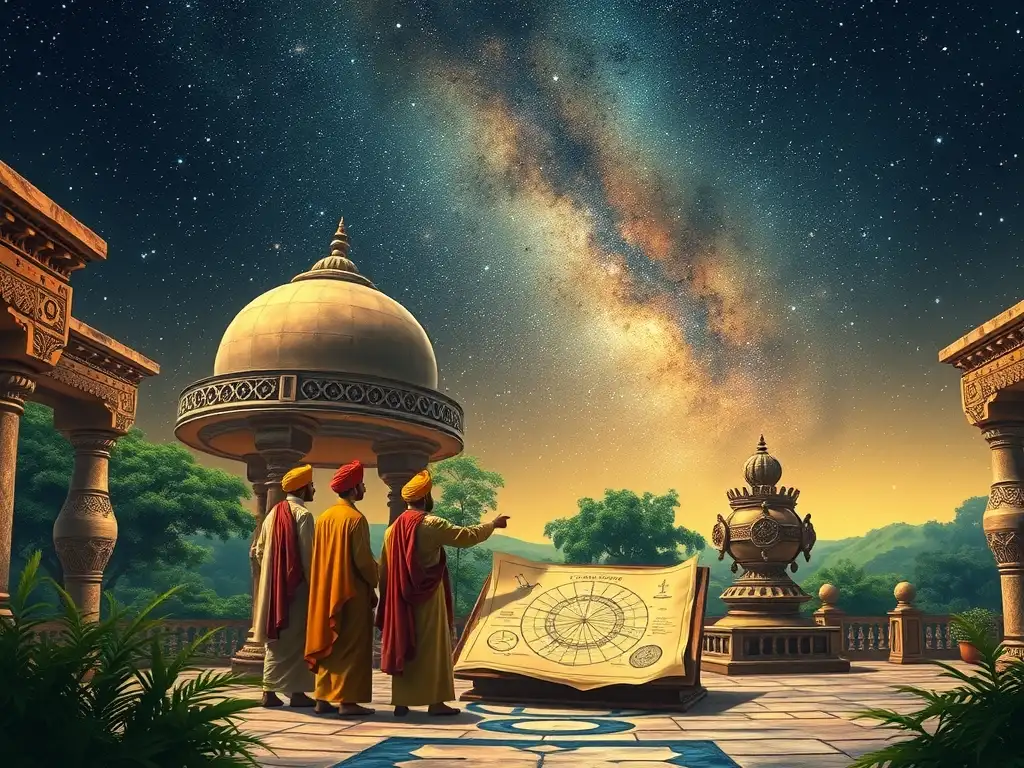
Introduction to Ancient Indian Astronomy Contributions
Ancient India boasts a rich tapestry of astronomical knowledge that has significantly influenced both regional and global understandings of the cosmos. From the meticulous observations of celestial bodies to the development of sophisticated mathematical models, ancient Indian scholars made remarkable contributions to astronomy. This article delves into how these scholars documented astronomical phenomena, highlighting their methodologies and the lasting impact of their findings on the field of astronomy. By exploring ancient texts, tools, and practices, we aim to shed light on the intricate connections between ancient Indian civilization and the vast universe beyond.
Overview of Ancient Indian Astronomy
The roots of ancient Indian astronomy can be traced back to the Vedic period, around 1500 BCE, where astronomical references began appearing in religious texts and rituals. Scholars such as Aryabhata, Varahamihira, and Bhaskara II laid the groundwork for a systematic approach to understanding celestial movements.
- Notable Contributions:
- Aryabhata introduced concepts of zero and the approximation of π.
- Varahamihira compiled astronomical knowledge in the Brihat Samhita.
- Bhaskara II contributed to planetary calculations and eclipses in his work Siddhanta Shiromani.
These scholars utilized observational techniques and mathematical calculations to document phenomena such as eclipses, planetary motions, and the duration of celestial cycles.
Importance of Documenting Astronomical Phenomena
The documentation of astronomical phenomena in ancient India was not merely an academic exercise; it held profound significance in various aspects of life.
- Cultural Significance:
- Astronomy played a vital role in religious festivals and agricultural practices, aligning harvest times with celestial events.
- Scientific Progress:
- The meticulous records allowed for predictions and a deeper understanding of the universe, paving the way for future generations of astronomers and mathematicians.
Historical Context of Astronomy in Ancient India
The historical context of astronomy in ancient India reveals a civilization deeply engaged with the cosmos, influencing both daily life and broader philosophical inquiries.
The Role of Astronomy in Ancient Indian Civilization
In ancient Indian society, astronomy was intertwined with timekeeping, navigation, and astrology. The movement of celestial bodies was closely monitored and recorded, informing everything from agricultural cycles to religious observances.
- Timekeeping:
- The development of calendars based on lunar and solar cycles facilitated agricultural planning.
- Navigation:
- Astronomical knowledge was essential for maritime navigation, particularly for trade routes across the Indian Ocean.
Key Ancient Indian Texts on Astronomy
Numerous ancient texts serve as a testament to the advanced understanding of astronomy in India. These texts not only document astronomical phenomena but also provide insights into the methodologies employed by ancient scholars.
| Text Name | Author/Period | Key Contributions |
|---|---|---|
| Aryabhatiya | Aryabhata (5th century) | Introduced the concept of the rotation of the Earth; calculated the value of π. |
| Brahmasphutasiddhanta | Brahmagupta (7th century) | Discussed planetary motion and eclipses; contributed to arithmetic and algebra. |
| Siddhanta Shiromani | Bhaskara II (12th century) | Detailed calculations for eclipses and planetary positions; emphasized the importance of observational accuracy. |
These texts illustrate the depth of scholarship and the enduring legacy of ancient Indian contributions to astronomy, which continue to resonate in modern scientific discourse.
Major Ancient Indian Scholars and Their Contributions
Ancient India was home to several notable scholars who made significant contributions to the field of astronomy. Their work not only advanced the understanding of celestial phenomena but also laid the groundwork for future scientific inquiry. These scholars utilized a combination of observational techniques and mathematical formulations to document and explain astronomical events. Among the most prominent figures in this domain are Aryabhata, Varahamihira, and Brahmagupta, each of whom brought unique insights and innovations that profoundly influenced both Indian and global astronomy.
Aryabhata: Pioneering Astronomical Concepts
Aryabhata, who lived in the 5th century CE, is often regarded as the first major mathematician and astronomer of ancient India. His seminal work, the Aryabhatiya, presents a comprehensive overview of mathematical and astronomical concepts. Aryabhata introduced several groundbreaking ideas, including:
- Heliocentric Theory: He proposed that the Earth rotates on its axis, which was revolutionary for his time.
- Concept of Zero: His work contributed to the development of the concept of zero, which is crucial for mathematical calculations.
- Planetary Motion: Aryabhata formulated methods to calculate the positions of the planets and their movements, emphasizing the importance of mathematical precision in astronomy.
His methodologies combined rigorous observation with innovative mathematical techniques, influencing subsequent scholars in both astronomy and mathematics.
Varahamihira: Bridging Astronomy and Astrology
Varahamihira, a contemporary of Aryabhata in the 6th century CE, is best known for his work Brihat Samhita, which integrates astronomy with astrology. His contributions include:
- Astronomical Tables: Varahamihira created extensive astronomical tables that provided data on planetary positions, eclipses, and astrological predictions.
- Weather Predictions: He emphasized the correlations between celestial events and meteorological phenomena, marking one of the early intersections of astronomy and environmental science.
- Cultural Impact: Varahamihira's work influenced not only scientific thought but also cultural practices, as astrology played a significant role in ancient Indian society.
His ability to synthesize astronomical concepts with astrological applications allowed for a broader understanding and acceptance of astronomical studies in ancient India.
Brahmagupta: Innovations in Mathematical Astronomy
Brahmagupta, a 7th-century mathematician and astronomer, made notable strides in both mathematics and astronomy through his influential text, Brahmasphutasiddhanta. His key contributions include:
- Rules for Calculating Eclipses: Brahmagupta developed precise methods for predicting solar and lunar eclipses, enhancing the predictive capabilities of ancient Indian astronomy.
- Algebraic Methods: He introduced systematic approaches to solving quadratic equations, which were pivotal for astronomical calculations.
- Understanding of Gravity: Brahmagupta is credited with early notions of gravity, suggesting that celestial bodies have a natural tendency towards the Earth, a concept that laid the groundwork for later scientific exploration.
His work not only enriched the field of astronomy but also had lasting impacts on mathematics, influencing both contemporary and future scholars.
Techniques Used by Ancient Indian Scholars in Astronomy
Ancient Indian scholars employed a variety of techniques to observe and document astronomical phenomena. These methods showcased their understanding of the cosmos and their innovative approaches to scientific inquiry.
Observational Methods in Ancient Indian Astronomy
The observational techniques utilized by ancient Indian astronomers were diverse and sophisticated. Scholars often relied on:
- Naked Eye Observations: Without the aid of telescopes, astronomers meticulously observed celestial bodies, noting their positions, movements, and phases.
- Lunar Calendars: The development of lunar calendars based on the moon's phases allowed scholars to track time and predict events such as eclipses and solstices.
- Instruments: Ancient Indian astronomers designed and used various instruments, such as the gnomon (a vertical stick used to measure the angle of the sun) and the armillary sphere, to enhance their observations and calculations.
These methods underscored the importance of empirical evidence in their astronomical studies.
Mathematical Techniques and Tools
Mathematics played a crucial role in the advancement of astronomy in ancient India. Scholars employed various mathematical techniques and tools, including:
- Sine and Cosine Functions: Aryabhata introduced trigonometric functions, which were essential for calculating angles and distances in celestial phenomena.
- Algebraic Equations: Brahmagupta's work with algebraic equations facilitated complex calculations related to planetary motions and eclipses.
- Astronomical Algorithms: The creation of algorithms for computations allowed scholars to systematically determine celestial events, making their predictions more accurate.
These mathematical innovations not only enhanced the understanding of astronomy in ancient India but also contributed to the global body of mathematical knowledge.
Documenting Astronomical Phenomena: Methods and Tools

Ancient Indian scholars employed a variety of methods and tools to document astronomical phenomena, reflecting their advanced understanding of celestial bodies and their movements. The meticulous observations were often recorded in texts that combined practical astronomy with philosophical and religious contexts.
One of the primary tools used was the gnomon, a simple yet effective instrument that cast a shadow, allowing astronomers to measure the angle of the sun and track time. Additionally, water clocks (or clepsydra) played a crucial role in timekeeping, especially during the night when solar observations were impossible.
The use of observational sites was also significant. Scholars constructed observatories, often on elevated ground, to minimize atmospheric distortion and maximize visibility. These sites enabled astronomers to catalog celestial events with greater accuracy. The combination of these methods and tools laid a foundational framework for the study of astronomy in ancient India, influencing later generations of scientists.
Use of Zīj (Astronomical Tables) in Ancient India
The Zīj, or astronomical tables, served as essential references for ancient Indian astronomers, compiling extensive data on celestial phenomena. These tables included calculations on the positions of stars, planets, and other celestial bodies, offering practitioners a systematic way to predict astronomical events.
One of the most notable contributions was the Zīj of Brahmagupta, which provided rules for calculating the motions of celestial bodies and included detailed explanations of eclipses and planetary conjunctions. The precision of these tables was remarkable, showcasing a deep understanding of mathematics and geometry.
Furthermore, the Zīj were not static documents; they underwent revisions and expansions by subsequent scholars. For instance, Varahamihira, in his seminal work Brihat Samhita, built upon the earlier tables, making significant contributions to the understanding of planetary positions and their influences on Earth.
Role of Manuscripts in Preserving Astronomical Knowledge
Manuscripts played a pivotal role in preserving the astronomical knowledge of ancient Indian scholars. These texts were meticulously transcribed and often adorned with illustrations, diagrams, and annotations that enhanced comprehension. The Siddhantic texts, which included works like Surya Siddhanta, were particularly influential, as they compiled astronomical theories and practices from various scholars.
The preservation of manuscripts ensured that knowledge was not lost to time; many were written on materials such as palm leaves and birch bark, which were durable yet susceptible to decay. To combat this, ancient scholars often copied texts multiple times, creating a network of similar manuscripts that secured the transmission of knowledge through generations.
In addition to their scientific value, these manuscripts also provided insights into the historical, cultural, and philosophical contexts of the time, allowing modern scholars to appreciate the depth of ancient Indian astronomy.
Key Astronomical Phenomena Documented by Ancient Indian Scholars
Ancient Indian scholars meticulously documented a variety of astronomical phenomena, contributing significantly to the broader field of astronomy. Their records included observations that were not only scientific but also held cultural and religious significance.
Solar and Lunar Eclipses: Observational Records
Solar and lunar eclipses were carefully observed and recorded by ancient Indian astronomers, as these events held great importance in Hindu cosmology and ritual practice. Texts such as the Surya Siddhanta provided detailed methodologies for predicting eclipses, emphasizing the cyclical nature of these phenomena.
The observations included precise timings and durations of eclipses, often correlated with mythological narratives. Scholars like Aryabhata were known for their mathematical prowess, calculating the duration of eclipses with remarkable accuracy. For instance, Aryabhata's calculations of the solar eclipse lasted approximately 13 hours, which was astoundingly close to modern measurements.
These records not only enriched scientific understanding but also served as educational tools, teaching future generations about the movements of celestial bodies and their effects on earthly events.
Planetary Movements and Their Significance
The movements of planets, particularly their retrograde motions, were of great interest to ancient Indian astronomers. They meticulously documented the apparent movements of the five classical planets—Mercury, Venus, Mars, Jupiter, and Saturn—recognizing their cycles and influences on earthly affairs.
In works like Brahmasphutasiddhanta by Brahmagupta, scholars explained the significance of planetary positions in astrology, linking them to prosperity, health, and natural events. The careful tracking of planetary cycles facilitated the development of predictive models that were crucial for agricultural planning and societal activities.
These observations highlighted the interconnectedness of astronomy and daily life in ancient Indian society, illustrating how celestial events were not merely scientific phenomena but also deeply woven into the fabric of cultural identity and spirituality.
The Influence of Ancient Indian Astronomy on Other Cultures
Ancient Indian astronomy, characterized by its intricate observations and sophisticated calculations, has had a profound influence on various cultures across the globe. Scholars from ancient India not only documented astronomical phenomena but also developed methodologies that were later adopted and adapted by civilizations in the Middle East, Europe, and beyond. The systematic approach to celestial observations laid the groundwork for future astronomical studies, illustrating the interconnectivity of human knowledge and the shared pursuit of understanding the cosmos.
The texts produced by ancient Indian astronomers, particularly the Surya Siddhanta and the Aryabhatiya, became vital resources for scholars in neighboring regions. These works often blended observational data with mathematical concepts, thus serving as a bridge between empirical knowledge and theoretical frameworks. The exchange of ideas facilitated the cross-pollination of astronomical concepts, which ultimately enriched the scientific heritage of various cultures.
Exchange of Astronomical Knowledge with Other Civilizations
The exchange of astronomical knowledge between ancient Indian scholars and other civilizations was facilitated through trade routes, cultural exchanges, and conquests. Notably, during the early medieval period, Indian astronomy found its way into Persian and Arab scholarly circles. Translations of key texts into Arabic played a significant role in disseminating Indian astronomical insights throughout the Islamic world.
One of the most remarkable instances of this exchange can be traced to the works of Brahmagupta and later scholars like Bhaskara. Their treatises on mathematics and astronomy were translated into Arabic, where they influenced prominent Islamic astronomers such as Al-Khwarizmi and Al-Battani. These scholars incorporated Indian concepts into their own works, leading to advancements in trigonometry and the development of astronomical tables that would later be utilized in medieval Europe.
Impact on Islamic Astronomy and Beyond
The impact of ancient Indian astronomy on Islamic astronomy cannot be overstated. The adoption of Indian methods of calculation, particularly the use of sines and tangents, revolutionized the field and enhanced the precision of celestial predictions. Islamic astronomers, building on the foundation laid by their Indian predecessors, were able to refine astronomical instruments and techniques, leading to significant advancements in the understanding of planetary movements and eclipses.
Furthermore, the integration of Indian astronomical knowledge into Islamic scholarship played a crucial role in the European Renaissance. As Europe began to rediscover ancient texts, the astronomical knowledge derived from Indian contributions was instrumental in shaping the scientific revolution. The Ptolemaic system, which dominated medieval European thought, was enriched by the mathematical advancements and observational insights provided by Indian scholars, illustrating the enduring legacy of ancient Indian astronomy.
Conclusion: Legacy of Ancient Indian Astronomy Contributions
The contributions of ancient Indian scholars to the field of astronomy are a testament to the rich intellectual tradition that flourished in the subcontinent. Their meticulous documentation and innovative methodologies have not only left an indelible mark on subsequent cultures but also laid the groundwork for future astronomical exploration.
Summary of Key Contributions and Their Relevance Today
Key contributions from ancient Indian astronomy include the development of sophisticated calendars, precise calculations of planetary positions, and the introduction of the concept of zero in mathematical calculations. These advancements are not only historically significant but also relevant in modern contexts, as they highlight the importance of interdisciplinary approaches in science and mathematics.
Today, as we continue to explore the cosmos, the foundational principles established by ancient Indian astronomers remain influential. Their work serves as a reminder of the interconnectedness of scientific inquiry across cultures and epochs.
The Continuing Influence of Ancient Indian Astronomical Knowledge
The influence of ancient Indian astronomical knowledge persists in contemporary scientific discourse. Modern astronomers and mathematicians still reference the innovative methods developed by their ancient counterparts, particularly in the fields of celestial navigation and timekeeping.
Moreover, the philosophical underpinnings of ancient Indian astronomy, which emphasized observation and empirical evidence, resonate with modern scientific methodologies. As we delve deeper into the mysteries of the universe, the legacy of ancient Indian astronomy inspires a continued quest for knowledge, fostering a spirit of inquiry that transcends cultural and temporal boundaries.
- Introduction to Ancient Indian Astronomy Contributions
- Historical Context of Astronomy in Ancient India
- Major Ancient Indian Scholars and Their Contributions
- Techniques Used by Ancient Indian Scholars in Astronomy
- Documenting Astronomical Phenomena: Methods and Tools
- Key Astronomical Phenomena Documented by Ancient Indian Scholars
- The Influence of Ancient Indian Astronomy on Other Cultures
- Conclusion: Legacy of Ancient Indian Astronomy Contributions
- What were the main contributions of ancient Indian scholars to astronomy?
- How did the Indus Valley Civilization influence astronomy?
- Who were some key figures in ancient Indian astronomy?
- What texts document ancient Indian astronomical knowledge?
- How did ancient Indian astronomy influence other cultures?
Frequently Asked Questions
What were the main contributions of ancient Indian scholars to astronomy?
Ancient Indian scholars made significant contributions to astronomy, including the development of celestial models, accurate calculations of planetary positions, and the creation of detailed astronomical texts.
How did the Indus Valley Civilization influence astronomy?
The Indus Valley Civilization showcased early astronomical knowledge through the construction of observatories and the alignment of their urban layouts with celestial bodies, indicating a deep understanding of astronomical phenomena.
Who were some key figures in ancient Indian astronomy?
Key figures include Aryabhata, who introduced the concept of the Earth's rotation, and Brahmagupta, known for his work on mathematics and planetary motion, laying the groundwork for future astronomical studies.
What texts document ancient Indian astronomical knowledge?
Ancient texts such as the Surya Siddhanta and Aryabhatiya are crucial, as they provide insights into astronomical calculations, calendar systems, and the scientific methods used by ancient scholars.
How did ancient Indian astronomy influence other cultures?
The astronomical concepts and methods developed in ancient India had a profound impact on other cultures, particularly in Islamic astronomy, where they were adapted and built upon, facilitating the spread of knowledge across civilizations.
Final Reflection: The Enduring Legacy of Ancient Indian Astronomy
The contributions of ancient Indian scholars to the field of astronomy are not just historical footnotes; they are foundational pillars that continue to shape our understanding of the cosmos today. As we delve into the intricate methods and profound insights of these early astronomers, we uncover a legacy that transcends time and geography, reminding us of the universal quest for knowledge that binds humanity together. The precision and sophistication of their astronomical observations challenge us to appreciate the depth of human intellect and creativity.
The impact of ancient Indian astronomy extends far beyond the confines of academic study; it resonates deeply within our cultural and social consciousness. The meticulous records kept by scholars such as Aryabhata and Varahamihira have not only enriched the scientific community but have also inspired countless generations to look up at the stars with wonder and curiosity. The stars are not just points of light; they are the echoes of our ancestors' inquiries into the nature of existence.
This ongoing influence serves as a reminder of the importance of preserving and honoring the intellectual heritage that has shaped our understanding of the universe.
As we reflect on the remarkable achievements of ancient Indian astronomers, let us take a moment to consider how their dedication to knowledge can inspire our own pursuits. I invite you to explore the wonders of the cosmos, to question, to learn, and to contribute to the ongoing dialogue of discovery. By embracing the spirit of inquiry that these scholars embodied, we can continue to push the boundaries of our understanding and honor the legacy of those who came before us. The stars await your curiosity—let them guide you on your journey of exploration.
Unveil the Wonders of Ancient Astronomy!
Thank you for diving into the fascinating world of ancient Indian scholars and their remarkable contributions to astronomy. We hope you’ve gained valuable insights into how these brilliant minds documented celestial phenomena that continue to inspire us today. Now, it's time to take action!
- Explore further by delving into specific ancient texts or notable scholars discussed in this article. There’s a wealth of knowledge waiting for you!
- Share this article with friends or on social media to spark curiosity about India's rich astronomical heritage.
- Consider joining or creating a community discussion group focused on the sciences of antiquity. Engaging with others enhances understanding and discovery of these profound topics.
What celestial mysteries do you think ancient scholars would be eager to explore in today's world?