
The Role of Logic in Ancient Indian Debates: The Nyaya Perspective

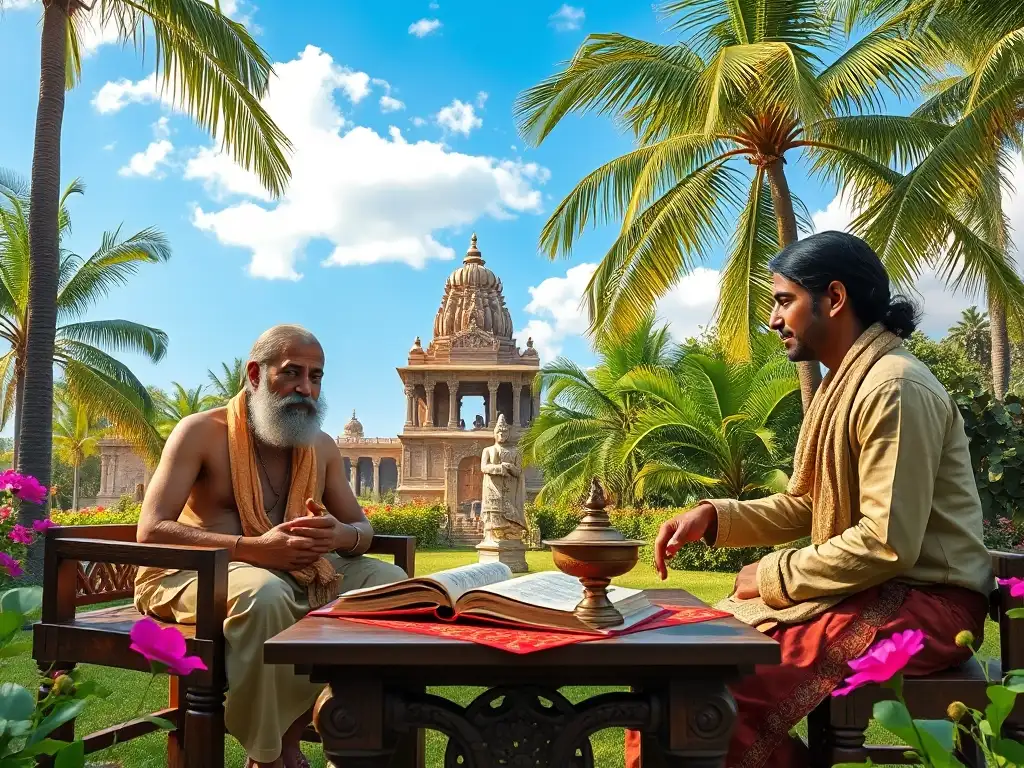
Welcome to Ancient India History, where we embark on an enlightening journey through the rich tapestry of India’s past. In this exploration, we delve into the profound realm of Nyaya philosophy in ancient India, a cornerstone of logical reasoning that shaped debates and discussions for centuries. Discover how this intellectual tradition not only influenced the art and architecture of its time but also laid the groundwork for philosophical inquiry that resonates even today.
Are you ready to unlock the secrets of ancient logic and its enduring impact? Dive into our featured article, "The Role of Logic in Ancient Indian Debates: The Nyaya Perspective," and let the legacy of the past inspire your understanding of the present!
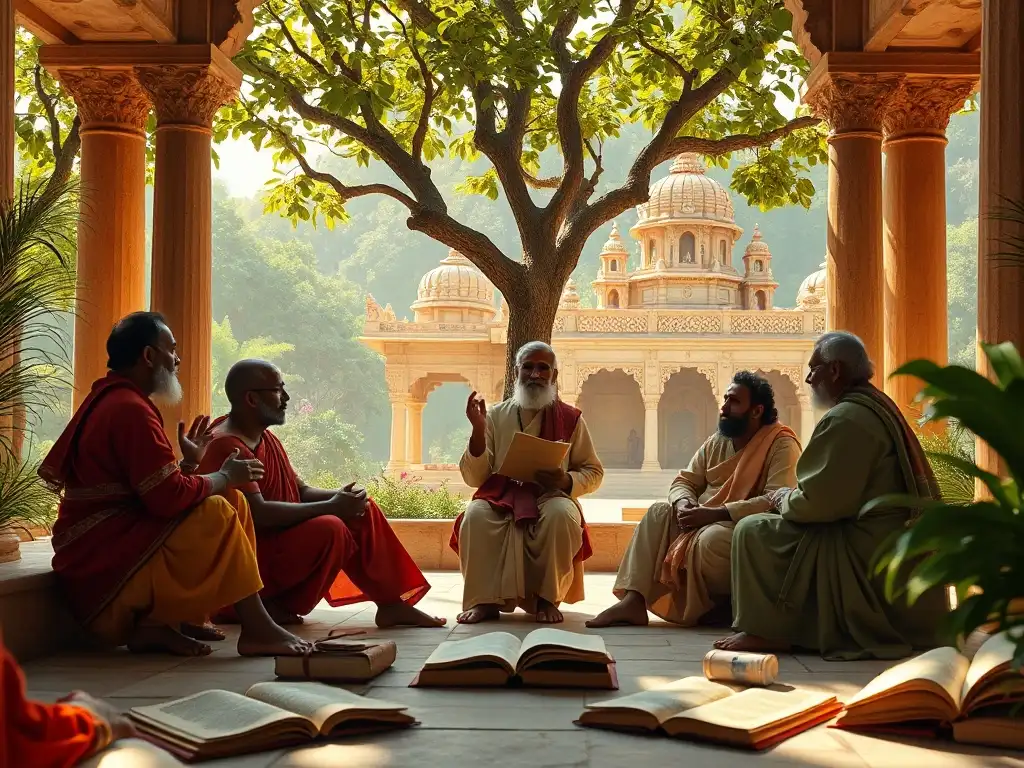
Introduction to Nyaya Philosophy in Ancient India
The Nyaya philosophy, one of the six orthodox schools of Indian philosophy, plays a pivotal role in understanding the rich tapestry of ancient Indian thought. Centered on the principles of logic and reasoning, Nyaya provides a systematic framework for debate and inquiry that has influenced various aspects of Indian intellectual life.
Through its rigorous methodologies, Nyaya not only contributes to philosophical discourse but also lays the groundwork for critical thinking and rational analysis in various fields, including ethics, metaphysics, and epistemology. This article delves into the significance of Nyaya philosophy in ancient India, exploring its origins, key figures, and its lasting impact on other philosophical schools.
Overview of Nyaya Philosophy
At its core, Nyaya philosophy is concerned with the means of acquiring knowledge and the processes of logical reasoning that lead to valid conclusions. The foundational text of this school is the Nyaya Sutras, composed by the sage Gautama around the second century BCE. This text outlines the principles of logic, argumentation, and the five sources of valid knowledge (pramana), which include perception, inference, comparison, testimony, and non-cognition. The Nyaya system emphasizes the importance of debate and dialogue as essential tools for acquiring truth and understanding the nature of reality.
Importance of Logic in Ancient Indian Thought
Logic in ancient Indian thought transcended mere academic pursuit; it was integral to various aspects of life, including governance, law, and personal conduct. The Nyaya approach to logic not only facilitated philosophical debate but also encouraged the application of rational thinking in everyday situations. By establishing criteria for valid arguments and sound reasoning, Nyaya philosophy fostered a culture of intellectual rigor that permeated other philosophical schools, enhancing the overall discourse in ancient India.
Historical Context of Nyaya Philosophy
Origin and Development of Nyaya in Ancient India
The origins of Nyaya philosophy can be traced back to the early centuries of the common era, during a period marked by significant intellectual activity in ancient India. Emerging as a response to the challenges posed by rival philosophical systems, Nyaya sought to establish a coherent framework for reasoning and debate. Over the centuries, it evolved through various interpretations and commentaries, notably by philosophers such as Vatsyayana and Udayana, who expanded the scope of Nyaya thought and integrated it with other intellectual traditions.
Key Figures in Nyaya Philosophy
The development of Nyaya philosophy is closely associated with several key figures who contributed to its evolution. Among them:
- Gautama (Aksapada): The founder of Nyaya, known for his foundational text, the Nyaya Sutras.
- Vatsyayana: A prominent commentator whose works helped to clarify and elaborate upon Nyaya principles.
- Udayana: A philosopher who integrated Nyaya with theistic elements, enriching its discourse and appeal.
These thinkers, along with many others, shaped the trajectory of Nyaya philosophy, creating a legacy that would influence subsequent generations of scholars.
Influence of Nyaya on Other Philosophical Schools
Nyaya philosophy's emphasis on logic and reasoning significantly impacted other schools of thought in ancient India. Its principles were absorbed by the Vaisheshika school, which focused on categories of existence, and the Sankhya school, which explored dualism and the nature of reality. Moreover, Nyaya served as a critical framework for the development of Buddhist logic, leading to a vibrant exchange of ideas that enriched the philosophical landscape of ancient India. This cross-pollination of thought not only demonstrates the interconnectedness of various philosophical traditions but also highlights the enduring relevance of Nyaya in the broader context of Indian philosophy.
Fundamental Concepts of Nyaya Logic
Nyaya philosophy, a significant school of thought in ancient India, emphasizes the importance of logic and reasoning in understanding the world and establishing truth. At its core, Nyaya provides a systematic framework for debate and inquiry, focusing on the processes through which knowledge is acquired and validated. This philosophical tradition is rooted in the belief that logical reasoning is essential for discerning the nature of reality and for engaging in fruitful discussions. The key concepts of Nyaya logic revolve around pramanas, or means of knowledge, which serve as the foundation for all epistemological claims.
Nyaya thinkers like Gautama (also known as Akshapada) laid the groundwork for these ideas in their texts, most notably the Nyaya Sutras. The systematic exploration of logic and debate within the Nyaya framework has influenced various aspects of Indian philosophy and has contributed significantly to the discourse on epistemology, metaphysics, and ethics.
Definition of Pramanas (Means of Knowledge)
In Nyaya philosophy, pramanas are defined as the valid means through which knowledge is acquired. They establish the criteria for determining what is considered true or false, ultimately guiding individuals in their understanding of the world. The Nyaya school identifies four primary pramanas:
- Pratyaksha: Perception, which refers to direct sensory experience.
- Anumana: Inference, which involves deriving conclusions based on premises and logical reasoning.
- Upamana: Comparison, which is the process of gaining knowledge through analogy or similarity.
- Shabda: Testimony, which encompasses knowledge gained through verbal communication or scriptural texts.
Each pramana serves a unique role in the epistemological process, allowing for a comprehensive approach to knowledge acquisition. By establishing these means, Nyaya philosophers ensure that debates and discussions are grounded in a reliable framework, minimizing ambiguity and enhancing clarity.
Types of Pramanas in Nyaya Philosophy
The four pramanas in Nyaya philosophy can be categorized as follows:
- Pratyaksha (Perception):
- Direct Perception: Knowledge gained through immediate sensory experience.
- Indirect Perception: Knowledge acquired through inference based on sensory experiences.
- Anumana (Inference):
- General Inference: Drawing conclusions based on universal principles.
- Particular Inference: Making specific conclusions from particular instances.
- Upamana (Comparison):
- Analogical Reasoning: Gaining knowledge through similarities between two entities.
- Metaphorical Understanding: Understanding concepts through metaphorical language.
- Shabda (Testimony):
- Scriptural Testimony: Knowledge derived from authoritative texts.
- Expert Testimony: Knowledge acquired from credible individuals or authorities.
These types of pramanas illustrate the diverse ways in which knowledge can be obtained, highlighting the richness of Nyaya’s epistemological framework. Each type plays a pivotal role in ensuring that debates are underpinned by sound reasoning and verification.
The Role of Anumana (Inference) in Debates
Anumana, or inference, occupies a central role in Nyaya debates. It enables debaters to draw conclusions based on premises derived from observation and reasoning. The process of inference is structured logically, often formulated in a syllogistic format, which consists of three components:
- Major Premise: A general statement or rule.
- Minor Premise: A specific observation or instance.
- Conclusion: The inference drawn from the premises.
For example, if one observes that "all humans are mortal" (major premise) and identifies "Socrates as a human" (minor premise), one can logically conclude that "Socrates is mortal" (conclusion). This structured approach to inference not only strengthens arguments but also facilitates clarity in debates, allowing participants to explore complex ideas systematically.
The significance of anumana in Nyaya debates lies in its ability to establish connections between general principles and specific cases, making it a powerful tool for demonstrating the validity of claims and counterclaims. It emphasizes critical thinking and logical reasoning, essential qualities for participants in philosophical discussions.
The Structure of Nyaya Debates
Nyaya debates are characterized by a formal structure that prioritizes clarity, precision, and logical consistency. The debates follow specific rules and guidelines, enabling participants to engage in constructive dialogue. This structured approach ensures that arguments are thoroughly examined, allowing for the exploration of various perspectives and the potential resolution of conflicts.
Key Features of Nyaya Debates
The key features of Nyaya debates include:
- Clarity of Proposition: Arguments must be clearly stated to avoid misunderstandings.
- Logical Consistency: Each argument should adhere to the principles of sound reasoning.
- Respectful Engagement: Participants are expected to engage respectfully, valuing differing opinions.
- Use of Pramanas: All claims require support through established pramanas to ensure validity.
- Critical Examination: Arguments are subject to rigorous scrutiny, encouraging participants to defend their positions effectively.
These features contribute to the overall integrity of the debate process, allowing for a productive exchange of ideas and promoting the advancement of knowledge.
The Process of Argumentation in Nyaya Philosophy
The argumentation process in Nyaya philosophy is systematic and well-defined. It typically unfolds in the following stages:
- Presentation of the Thesis: One participant presents a claim or thesis to be debated.
- Supporting Arguments: The proposer offers supporting evidence and reasoning based on the pramanas.
- Counterarguments: The opposing participant presents counterarguments, challenging the initial claim.
- Refutation: The original proponent addresses the counterarguments, defending their position.
- Conclusion: The debate concludes with a synthesis of the arguments, leading to a resolution or acknowledgment of differing views.
This structured process enables participants to engage deeply with the subject matter, fostering a thorough understanding of the topic and promoting intellectual growth.
Role of Dialectics in Ancient Indian Debates
Dialectics plays a crucial role in ancient Indian debates, particularly within the Nyaya framework. It refers to the method of argumentation that involves dialogue and the exchange of differing viewpoints. Dialectics encourages participants to explore the implications of their arguments, facilitating a deeper understanding of complex philosophical issues.
In the context of Nyaya, dialectics serves several purposes:
- Clarification of Concepts: Engaging with opposing viewpoints helps clarify and refine one’s own understanding.
- Development of Ideas: The dialogue fosters the development of new ideas and perspectives through interaction.
- Resolution of Conflicts: Dialectical engagement allows for the resolution of disagreements, promoting harmony and consensus.
Through the use of dialectics, Nyaya debates not only advance individual understanding but also contribute to the collective knowledge of ancient Indian philosophy, enriching the intellectual landscape of the time.
Case Studies: Notable Nyaya Debates
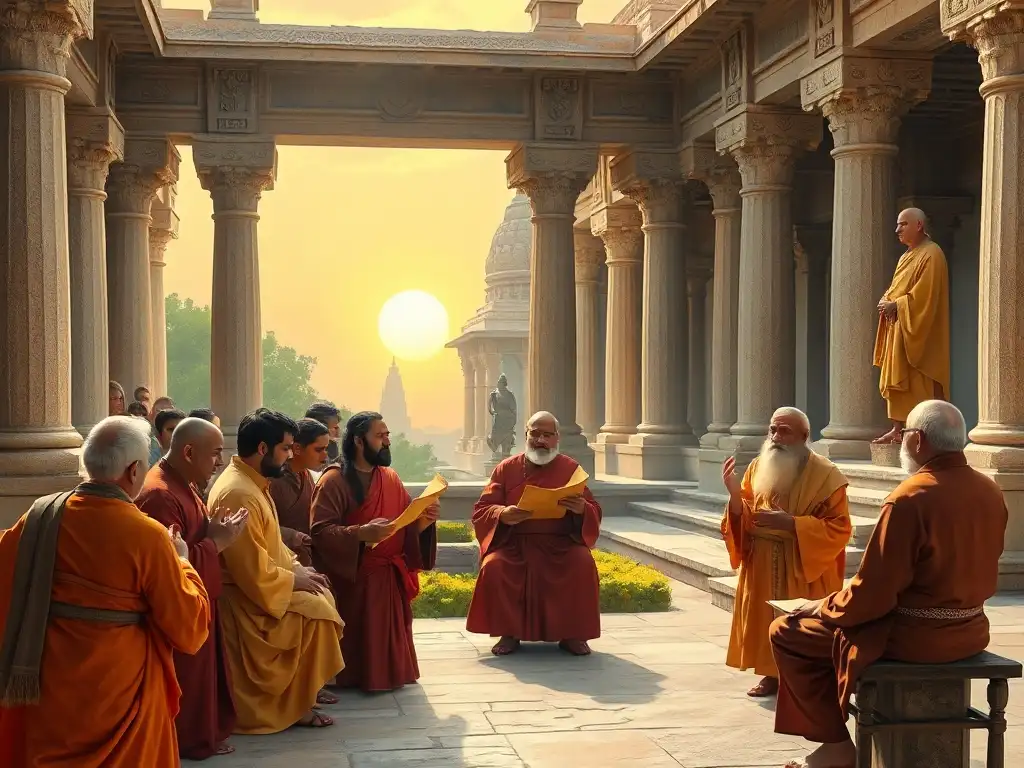
Nyaya philosophy, a significant school of thought in ancient India, is well-known for its rigorous emphasis on logic and debate. Several notable debates have been documented, exemplifying the application of Nyaya principles to various philosophical and metaphysical questions. These debates not only highlight the methodological sophistication of Nyaya scholars but also their contributions to broader philosophical inquiries.
One prominent case is the debate between Nyaya and Buddhist philosophers regarding the existence of external objects. The Nyaya school, represented by thinkers like Gautama, argued for the reality of external objects through a detailed examination of perception and inference. This debate shaped the trajectory of Indian philosophical discourse, showing how logical analysis can influence metaphysical positions.
Another significant debate arose between Nyaya and the Mimamsa school concerning the nature of knowledge and the validity of scriptures. Nyaya philosophers critiqued the Mimamsa assertion that knowledge is primarily derived from textual authority, emphasizing the role of perception and reasoning. This contention not only enriched the dialogue between the two schools but also laid the groundwork for future discussions about epistemology in Indian philosophy.
Analysis of a Prominent Debate in Nyaya History
One of the most celebrated debates in Nyaya history is the discourse on "the nature of the self" between the Nyaya and the Vedanta schools. Nyaya philosophers argued for a dualistic understanding of the self, positing that the self is distinct from the body and mind, while Vedanta philosophers contended that the self is ultimately one with Brahman, the universal consciousness.
The Nyaya argument rested on four pramanas (means of knowledge): perception, inference, analogy, and testimony. They contended that the self can be known through direct experience and logical reasoning, emphasizing the importance of empirical evidence in philosophical inquiry. The debate involved intricate arguments about the nature of knowledge, reality, and the relationship between the self and the universe.
Ultimately, this debate not only showcased the analytical rigor of Nyaya philosophy but also illustrated its influence on subsequent philosophical developments, where questions about the self continued to resonate throughout Indian thought. The rigorous methodology employed by Nyaya philosophers in this debate has been crucial in shaping discussions in both ancient and modern contexts.
Impact of Nyaya Debates on Philosophical Discourse
The impact of Nyaya debates on philosophical discourse in ancient India is profound. These debates established a framework for critical thinking and logical analysis that transcended individual philosophical schools. By advocating for structured argumentation and clarity in reasoning, Nyaya philosophy contributed to a culture of intellectual rigor.
The methodologies employed in Nyaya debates set a precedent for later philosophical inquiry, influencing schools such as Vaisheshika and Sankhya. The emphasis on logical coherence and empirical validation became a standard in philosophical discussions, fostering a spirit of inquiry that encouraged cross-examination of ideas. This intellectual environment allowed for a rich interplay of concepts, ultimately leading to the development of diverse philosophical perspectives.
Furthermore, the debates instigated by Nyaya thinkers encouraged engagement with foreign philosophies, such as those from Greece and Persia, during later periods. This interaction not only enriched Indian philosophy but also facilitated the integration of various philosophical ideas, leading to a more holistic understanding of metaphysical and epistemological questions.
The Legacy of Nyaya Philosophy
Nyaya philosophy has left an enduring legacy that continues to be relevant in contemporary discussions of logic and epistemology. Its rigorous analytical framework and commitment to reasoned discourse have influenced not only Indian philosophy but also global philosophical traditions.
The principles of Nyaya logic, particularly the focus on clear definitions, valid inference, and systematic argumentation, have been adopted and adapted in various fields, including law, science, and ethics. This legacy underscores the importance of logical reasoning as a tool for understanding complex problems and making informed decisions.
Continued Relevance of Nyaya Logic Today
In today's world, the principles of Nyaya logic resonate within various disciplines. The systematic approach to argumentation and critical thinking that Nyaya philosophers championed can be seen in modern logic and analytical philosophy. Educational institutions worldwide incorporate critical reasoning skills that echo Nyaya teachings, emphasizing the need for clarity, coherence, and empirical support in arguments.
Moreover, as societies confront increasingly complex ethical and philosophical dilemmas, the methods developed by Nyaya scholars for evaluating evidence and reasoning remain essential. The ability to engage in constructive dialogue, assess competing claims, and arrive at sound conclusions is more relevant than ever in an age characterized by information overload and polarized viewpoints.
Nyaya Philosophy's Influence on Modern Thought
Nyaya philosophy's influence extends beyond its historical context, shaping modern thought in various ways. Its emphasis on logic and critical thinking has found a place in contemporary philosophical discussions, especially in areas like epistemology and the philosophy of science. The methodology of rigorous debate that Nyaya exemplifies is mirrored in modern philosophical practices, fostering a culture of inquiry and skepticism.
Additionally, Nyaya's focus on the process of reasoning has implications for artificial intelligence and cognitive science, where principles of logical reasoning and inference are crucial for developing intelligent systems. The exploration of how knowledge is acquired and validated in Nyaya philosophy continues to inform contemporary discussions about the nature of knowledge in an increasingly digital world.
The legacy of Nyaya philosophy remains significant, providing valuable insights into the nature of logic, reasoning, and debate that continue to inspire scholars and thinkers today. Its contributions to philosophical discourse demonstrate the timeless relevance of ancient Indian thought in addressing the fundamental questions of existence, knowledge, and reality.
Conclusion
The significance of logic within the framework of Nyaya philosophy in ancient India cannot be overstated. It served not only as a tool for philosophical inquiry but also as a foundational element in the broader intellectual landscape of the time. By emphasizing the importance of valid reasoning and systematic argumentation, the Nyaya school provided a structured approach to understanding reality, knowledge, and the nature of existence. This emphasis on logic influenced not just philosophical debates but also enriched the cultural and intellectual fabric of ancient Indian society.
Summary of the Role of Logic in Nyaya Debates
In the context of Nyaya debates, logic was pivotal in establishing clarity and precision in discussions. The Nyaya philosophers, particularly Gautama, articulated a methodology that involved a set of rules and principles to evaluate arguments effectively. This included:
- Pramanas (Sources of Knowledge): The Nyaya school identified four main pramanas: perception, inference, comparison, and testimony. Each source was examined through logical scrutiny to ascertain truth.
- Nyaya Sutras: These foundational texts encapsulated the principles of logical reasoning and argumentation, guiding scholars in their philosophical inquiries.
- Dialectical Methods: The use of debate techniques, including the formulation of objections and counter-objections, fostered a rigorous environment for testing ideas.
Through these methods, Nyaya philosophers contributed significantly to the development of formal logic, which would later influence various schools of thought within and beyond Indian philosophy.
Final Thoughts on Nyaya Philosophy in Ancient India
Nyaya philosophy represents a hallmark of intellectual achievement in ancient India, showcasing the profound relationship between logic and philosophical discourse. Its contributions extend beyond mere academic pursuits; they fostered a culture of critical thinking and rational inquiry that resonates even in contemporary discussions. The legacy of Nyaya philosophy underscores the importance of logic in shaping not only philosophical debates but also broader societal values regarding knowledge and understanding.
As we explore the rich tapestry of ancient Indian history, the role of logic in Nyaya debates stands out as a testament to the sophistication and depth of thought that characterized this remarkable era. Thus, the study of Nyaya philosophy remains relevant, offering insights into the foundational concepts that continue to influence philosophical discourse today.
- Introduction to Nyaya Philosophy in Ancient India
- Historical Context of Nyaya Philosophy
- Fundamental Concepts of Nyaya Logic
- The Structure of Nyaya Debates
- Case Studies: Notable Nyaya Debates
- The Legacy of Nyaya Philosophy
- Conclusion
Frequently Asked Questions
What is Nyaya philosophy?
Nyaya philosophy is a classical Indian philosophy that emphasizes logic and reasoning. It originated from the Nyaya Sutras written by Gautama, focusing on the means of acquiring knowledge and the process of argumentation.
How did Nyaya philosophy influence debates in ancient India?
The Nyaya philosophy played a crucial role in shaping the structure of debates in ancient India. It introduced methods of logical reasoning and defined rules for valid arguments, which helped in resolving philosophical and metaphysical issues.
What are the key contributions of the Nyaya school?
The Nyaya school contributed significantly to the study of logic, epistemology, and metaphysics in ancient India. Its texts laid the groundwork for systematic thought and influenced other schools of Indian philosophy, such as Vaisesika and Advaita Vedanta.
How does Nyaya philosophy compare to Western logic?
While both Nyaya philosophy and Western logic focus on reasoning, they differ in approaches. Nyaya emphasizes practical applications in debates and ethical considerations, whereas Western logic often prioritizes formal structures and proofs.
What texts are essential for understanding Nyaya philosophy?
Essential texts for understanding Nyaya philosophy include the Nyaya Sutras by Gautama and commentaries by later philosophers like Vatsyayana and Uddyotakara. These works elaborate on logical principles and their applications in philosophical discussions.
Final Reflection: The Enduring Legacy of Nyaya Philosophy in Ancient India
The exploration of Nyaya philosophy in ancient India reveals its profound relevance in today's discourse on logic and reasoning. As we navigate an increasingly complex world filled with information and differing viewpoints, the principles established by Nyaya thinkers remind us of the importance of structured debate and critical analysis. The legacy of this ancient school of thought is not merely historical; it is a guiding light for contemporary discussions on rationality and argumentation.
Delving into the Nyaya perspective has not only enriched our understanding of ancient Indian philosophy but has also shaped the cultural and social landscape of rational discourse. The emphasis on logical reasoning and the systematic approach to debate laid the groundwork for intellectual traditions that continue to influence modern philosophy and ethics. The art of debate is the art of understanding, and through understanding, we find the path to truth.
This quote encapsulates the essence of Nyaya philosophy, reminding us that the pursuit of knowledge is a collaborative endeavor that thrives on dialogue and reasoned argumentation.
As we reflect on the teachings of Nyaya, I invite you to embrace the principles of logic and reason in your own life. Consider how you can apply these timeless lessons to foster meaningful conversations and navigate the complexities of our modern world. By engaging with diverse perspectives and cultivating a spirit of inquiry, we can honor the legacy of Nyaya philosophy and contribute to a more thoughtful and understanding society. Let us carry forward the torch of reason, illuminating the path for ourselves and future generations.
Unveil the Power of Logic in Your Debates!
Thank you for diving into the fascinating exploration of logic through the lens of the Nyaya perspective in ancient Indian debates! You've gained valuable insights into how structured reasoning can enhance discussions and sharpen your critical thinking skills.
Now, it's time to put that knowledge into action. Here are some steps you can take to deepen your understanding and engage with this enriching topic further:
- Engage in a debate: Organize a friendly debate with friends or family focusing on a current topic of interest. Use the principles of Nyaya logic to structure your arguments!
- Explore Nyaya texts: Dive deeper by reading original Nyaya literature, which can provide even more context and understanding. Check online resources or visit your local library.
- Share your insights: Start a conversation on social media or in a community group about the role of logic in everyday discussions. Your unique perspective might inspire others!
What insights have you gained about the application of ancient logic in today's debates, and how can you integrate those lessons into your own discussions?