
The Gupta Empire's Influence on Global Scientific Thought


Welcome to Ancient India History, where we embark on an enthralling journey through the vibrant tapestry of India's past. Delve into the Gupta Empire's scientific contributions, a remarkable chapter that not only shaped the subcontinent but also influenced global thought and innovation. Curious about how this golden age of discovery transformed the realms of mathematics, astronomy, and medicine? Join us as we uncover the profound impact of Gupta scholars and their enduring legacy. Your exploration of ancient wisdom begins here!

Introduction to the Gupta Empire
The Gupta Empire, often heralded as a pivotal period in ancient Indian history, marked a profound transformation in the realms of science, mathematics, and philosophy. Spanning from approximately 320 to 550 CE, this era is renowned for its remarkable advancements that not only shaped India but also laid foundational concepts that would influence global thought for centuries to come. As we delve into the intricate tapestry of the Gupta Empire's scientific contributions, we uncover a legacy that includes groundbreaking developments in various fields, many of which are still revered in modern academia.
Overview of the Gupta Empire
At its zenith, the Gupta Empire encompassed a vast region of northern India, with its capital located at Pataliputra (modern-day Patna). This period is characterized by political stability, economic prosperity, and cultural flourishing. The empire's rulers, such as Chandragupta I and his grandson Samudragupta, fostered an environment conducive to intellectual pursuits and artistic expression. The Guptas were instrumental in the consolidation of power, unifying diverse states and promoting trade, which facilitated the exchange of ideas and knowledge both within and beyond the subcontinent.
The Golden Age of India
The Gupta Empire is often referred to as the "Golden Age" of India, a time when arts, sciences, and philosophy reached unprecedented heights. During this period, scholars like Aryabhata and Varahamihira made significant strides in mathematics and astronomy, while literature flourished with the works of Kalidasa and others. The advancements made during this time had far-reaching implications, influencing not only Indian society but also contributing to scientific thought across the world. The synthesis of knowledge during the Gupta era set the stage for future innovations in various disciplines, establishing a legacy that echoes through history.
Gupta Empire Scientific Contributions
The Gupta Empire's contributions to science are manifold and demonstrate a sophisticated understanding of various disciplines. The advancements made during this period are often considered groundbreaking, and they laid the groundwork for future scientific exploration and discovery.
Key Areas of Scientific Advancements
- Mathematics:
- The introduction of the concept of zero as a numeral, revolutionizing mathematical calculations.
- Development of the decimal system, which has become the foundation for modern mathematics.
- Astronomy:
- Aryabhata's theories on the rotation of the Earth and the calculation of the solar year, showcasing an advanced understanding of celestial mechanics.
- The creation of astronomical tables that aided in predicting eclipses and celestial events.
- Medicine:
- Advances in surgical techniques and medical practices, as detailed in texts like the "Sushruta Samhita," which is recognized for its comprehensive approach to surgery.
- The introduction of herbal medicines and treatments, emphasizing the holistic understanding of health and wellness.
- Metallurgy:
- Innovations in metalworking, particularly the creation of high-quality steel, exemplified by the famous Iron Pillar of Delhi, which has resisted corrosion for centuries.
The Gupta Empire's scientific contributions not only advanced knowledge within its borders but also influenced cultures and civilizations far and wide, underscoring the empire's significance in the annals of global scientific thought.
The Impact of Gupta Scientific Contributions on Global Thought
The Gupta Empire, often referred to as the Golden Age of India, was a period marked by remarkable advancements in various fields of science, mathematics, and medicine. The contributions made during this era not only transformed Indian society but also significantly influenced global scientific thought. This impact can be traced through the interactions with other cultures and the subsequent transmission of knowledge across borders.
The Gupta scholars laid foundational principles in mathematics, such as the concept of zero and the decimal system, which would later play a crucial role in the development of mathematics in other cultures. Furthermore, their advancements in medicine and astronomy set the stage for future discoveries and innovations. The richness of their intellectual contributions has continued to resonate throughout history, demonstrating the Gupta Empire's pivotal role in shaping scientific discourse worldwide.
Influence on Islamic Golden Age Scholars
The scientific contributions of the Gupta Empire reached a crescendo during the Islamic Golden Age (8th to 14th centuries), when scholars in the Islamic world actively engaged with and expanded upon earlier Indian works. Prominent figures such as Al-Khwarizmi, who is often regarded as the father of algebra, were influenced by Indian mathematical concepts, particularly the ideas surrounding the numeral system and the concept of zero.
Islamic scholars translated numerous texts from Sanskrit into Arabic, facilitating the spread of Gupta knowledge. These translations not only preserved ancient Indian wisdom but also integrated it into the burgeoning scientific frameworks of the Islamic world. The synthesis of Indian and Islamic thought led to remarkable advancements in mathematics, astronomy, and medicine, establishing a bridge between ancient Indian contributions and later European scientific developments.
Transmission of Knowledge to the West
As the Islamic Empire expanded, the knowledge derived from the Gupta Empire was transmitted to Europe, particularly during the Renaissance. This period saw the reintroduction of classical knowledge, including mathematical texts, which were originally influenced by Gupta scholars.
Key translations, such as those of Al-Khwarizmi's works, provided Europeans with essential mathematical tools, fostering advancements in scientific methodology. The influence of the Gupta numeral system was evident in the transition to the use of Arabic numerals in Europe, which facilitated more complex calculations and ultimately revolutionized mathematics and science. Thus, the Gupta Empire's intellectual legacy played a crucial role in shaping modern Western scientific thought.
Legacy of the Gupta Empire in Modern Science
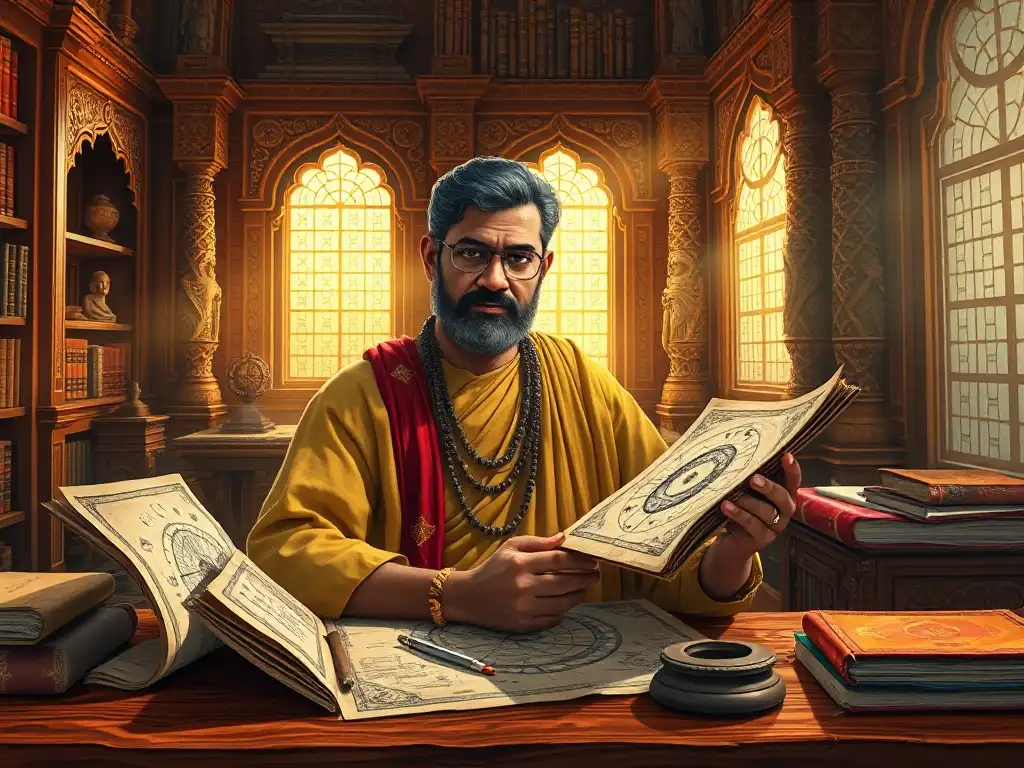
The legacy of the Gupta Empire is evident in various modern scientific disciplines, as their contributions have laid groundwork that continues to inform contemporary practices. This legacy manifests particularly in mathematics, astronomy, and medicine, showcasing the timeless nature of Gupta innovations.
Lasting Influence on Contemporary Mathematics
One of the most significant legacies of the Gupta Empire is its profound impact on mathematics. The introduction of the concept of zero as a number, alongside the decimal system, revolutionized mathematical computation. This framework not only simplified calculations but also enabled the development of advanced mathematics.
Today, the principles established during the Gupta period form the backbone of modern mathematical operations and theories. The integration of these concepts into global mathematics curricula underscores their enduring relevance, demonstrating how Gupta innovations continue to shape educational systems and scientific inquiry worldwide.
Contributions to Astronomy’s Evolution
The Gupta Empire made substantial contributions to astronomy, with scholars like Aryabhata and Varahamihira making significant advances in understanding celestial phenomena. Aryabhata's work in calculating the circumference of the Earth and his heliocentric theories challenged contemporary views and laid the groundwork for future astronomers.
These contributions informed later astronomical studies in both the Islamic world and Europe, influencing notable figures such as Copernicus and Galileo. The Gupta Empire's astronomical texts served as vital references, highlighting the interconnectedness of ancient scientific traditions and their role in the evolution of modern astronomy.
The Enduring Relevance of Ayurvedic Medicine
Ayurveda, the traditional system of medicine that flourished during the Gupta Empire, remains a significant aspect of global health practices today. The Gupta scholars made remarkable contributions to medical science, including detailed texts on surgery, herbal medicine, and holistic health.
The principles of Ayurveda emphasize a balance between body, mind, and spirit, which resonates with contemporary approaches to health and wellness. As interest in alternative and holistic medicine grows, the Gupta contributions to Ayurvedic practices are increasingly recognized for their relevance and efficacy, reinforcing the importance of ancient wisdom in modern healthcare systems.
The Gupta Empire's scientific contributions have left an indelible mark on global thought, influencing various fields and continuing to be relevant in today's scientific discourse.
Conclusion
The Gupta Empire, often heralded as a golden age of Indian history, made profound contributions to scientific thought that resonate even today. This era not only fostered advancements in various scientific fields but also laid the groundwork for future generations to build upon. The intellectual pursuits that flourished during this period were characterized by a harmonious blend of empirical observation, mathematical precision, and philosophical inquiry, resulting in a rich tapestry of knowledge that transcended geographical boundaries.
Summary of the Gupta Empire's Scientific Legacy
The Gupta Empire's scientific legacy is multifaceted, encompassing significant developments in mathematics, astronomy, medicine, and metallurgy, among other fields. Notable figures such as Aryabhata and Varahamihira emerged during this period, making groundbreaking contributions that would influence both Indian and global scientific communities.
- Mathematics: Aryabhata introduced the concept of zero and positional numeral systems, which revolutionized mathematics. His work on algebra and trigonometry laid foundational principles that are still in use today.
- Astronomy: The Gupta astronomers made remarkable strides in understanding celestial movements. Aryabhata's heliocentric model proposed that the Earth rotates on its axis, challenging prevailing geocentric views and influencing future astronomers worldwide.
- Medicine: The medical texts from this era, such as the Sushruta Samhita, showcased advanced surgical techniques and an understanding of anatomy that were centuries ahead of their time. These texts informed practices in both Indian and later Islamic medicine.
- Metallurgy: The Gupta Empire is also renowned for its advancements in metallurgy, particularly in the production of high-quality iron and the crafting of intricate metal sculptures, which demonstrate both artistic and technical skill.
The cumulative effect of these contributions is a robust legacy that has shaped scientific inquiry and methodology in diverse cultures across the globe.
The Gupta Empire's Role in Shaping Global Scientific Thought
The Gupta Empire played a pivotal role in shaping global scientific thought by acting as a conduit of knowledge between the East and the West. This period saw the exchange of ideas, facilitated by trade routes that connected different civilizations. Scholars and travelers, such as those from the Islamic Golden Age, later accessed Gupta texts, leading to the dissemination of Indian scientific knowledge across the world.
- Cultural Exchange: The movement of scholars, traders, and pilgrims across Asia enabled the transfer of knowledge. The Gupta scientific advancements were translated into Arabic and later into Latin, effectively bridging the gap between ancient Indian science and European thought during the Renaissance.
- Influence on Later Civilizations: The principles established during the Gupta period influenced various global scientific traditions. The introduction of the decimal system and the concept of zero into the Islamic world significantly advanced mathematical sciences and laid the groundwork for European mathematics.
- Legacy in Scientific Methodology: The Gupta Empire's emphasis on observation and logical reasoning contributed to the evolution of the scientific method. This methodology would eventually be adopted and refined by later scientists, leading to the advancements of the Enlightenment period.
The Gupta Empire's scientific contributions not only enriched their own civilization but also established a foundation upon which global scientific thought would build, influencing countless generations and shaping the course of human understanding.
- Introduction to the Gupta Empire
- Gupta Empire Scientific Contributions
- The Impact of Gupta Scientific Contributions on Global Thought
- Legacy of the Gupta Empire in Modern Science
- Conclusion
- What were the major scientific contributions of the Gupta Empire?
- How did the Gupta Empire influence global scientific thought?
- Who were some notable scientists from the Gupta Empire?
- What role did the Nalanda University play during the Gupta period?
- How did the Gupta Empire promote scientific research and education?
Frequently Asked Questions
What were the major scientific contributions of the Gupta Empire?
The Gupta Empire is renowned for its advancements in mathematics, astronomy, and medicine, including the concept of zero and significant work in Ayurvedic medicine.
How did the Gupta Empire influence global scientific thought?
The Gupta Empire's contributions laid the groundwork for future scientific advancements, influencing scholars in Islamic and European traditions during the Middle Ages.
Who were some notable scientists from the Gupta Empire?
Notable figures include Aryabhata, who made significant contributions to mathematics and astronomy, and Sushruta, known for his pioneering work in surgery and medicine.
What role did the Nalanda University play during the Gupta period?
Nalanda University was a prestigious center of learning, attracting scholars from across the world, facilitating the exchange of knowledge in science, philosophy, and the arts.
How did the Gupta Empire promote scientific research and education?
The Gupta rulers supported scholarly pursuits through patronage, establishing universities and encouraging research in various fields, which led to a flourishing of scientific inquiry.
Final Reflection: The Gupta Empire's Enduring Legacy in Scientific Thought
The Gupta Empire's scientific contributions remain profoundly relevant today, as they laid the groundwork for many modern disciplines. The advancements in mathematics, astronomy, and medicine during this golden age not only shaped the intellectual landscape of their time but also continue to influence contemporary scientific inquiry. The brilliance of Gupta scholars serves as a reminder that knowledge transcends borders and eras, illuminating the path for future generations of thinkers and innovators.
The impact of the Gupta Empire on global scientific thought is a testament to the power of cultural exchange and intellectual curiosity. The principles established by Gupta scholars have permeated various fields, inspiring countless individuals across the globe to pursue knowledge and innovation. As the mathematician Aryabhata once stated, "The earth is round, and it rotates," a concept that resonates with the scientific understanding we hold today. This legacy of inquiry and exploration encourages us to appreciate the interconnectedness of our intellectual heritage.
As we reflect on the Gupta Empire's remarkable contributions, let us embrace the spirit of inquiry and innovation that characterized this era. I invite you to explore the realms of knowledge in your own life, drawing inspiration from the past to fuel your curiosity and creativity. Whether through studying mathematics, engaging in scientific discussions, or simply questioning the world around you, remember that the pursuit of knowledge is a journey that knows no bounds. Together, we can honor the legacy of the Gupta Empire by fostering a culture of learning and exploration in our own communities.
Unleash Your Curiosity: Dive Deeper into the Gupta Empire's Legacy!
Thank you for exploring the fascinating influence of the Gupta Empire on global scientific thought! Your journey through this incredible era has equipped you with valuable insights into how ancient wisdom continues to shape our modern world. Now, it's time to take action and further your understanding!
Here are some ways you can continue your exploration:
- Delve into primary texts: Seek out original works from renowned Gupta scholars like Aryabhata and Varahamihira to experience their groundbreaking ideas firsthand.
- Join a discussion group: Connect with fellow history enthusiasts in online forums or local clubs to share thoughts and insights about the contributions of the Gupta Empire.
- Share your findings: Write a blog post or update your social media about what you've learned—you might inspire others to appreciate this rich part of our history!
As you reflect on the Gupta Empire's lasting impact, consider this: How can we apply ancient scientific principles to solve today's challenges? Let's keep the conversation going!