
The Art and Science of Northern India: Contributions to Mathematics and Astronomy


Welcome to Ancient India History, your gateway to uncovering the rich tapestry of civilizations that shaped the subcontinent. Dive into our featured article, "The Art and Science of Northern India: Contributions to Mathematics and Astronomy," where we explore the groundbreaking achievements of ancient Indian scholars. Did you know that the foundations of modern mathematics and astronomy were laid centuries ago in the heart of India? Let curiosity guide you as we reveal the fascinating stories and timeless wisdom that continue to inspire our understanding of the universe. Join us on this enlightening journey through time!
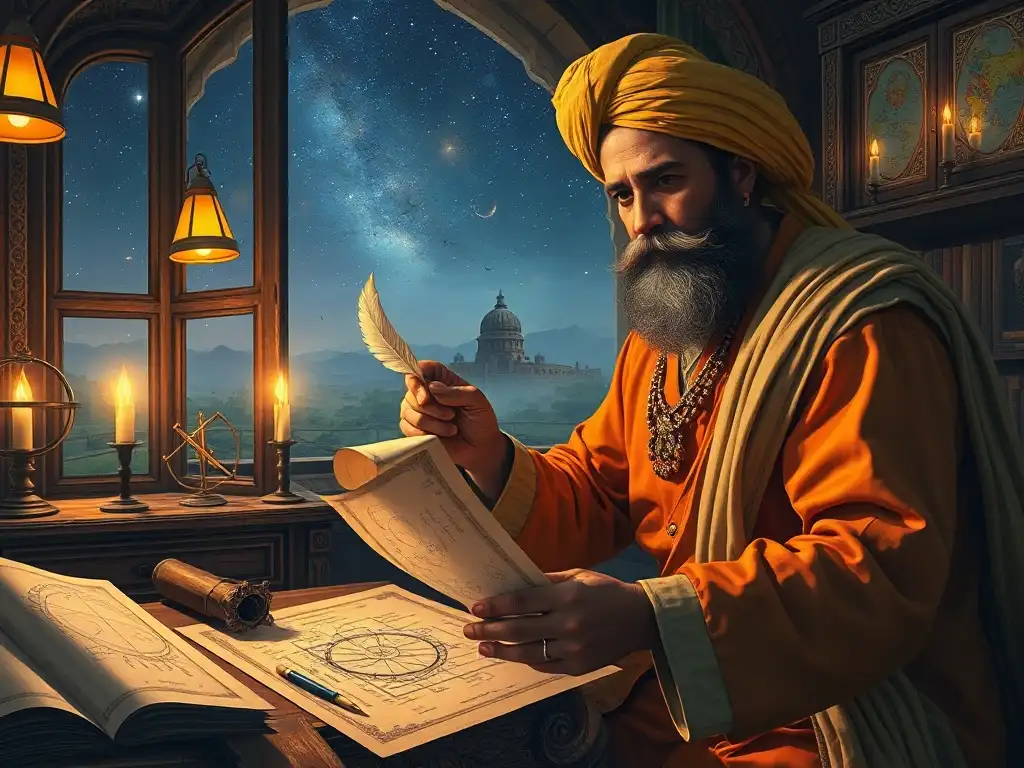
Introduction to Ancient Indian Mathematics and Astronomy
The journey through ancient Indian mathematics and astronomy reveals a rich tapestry of knowledge and innovation that significantly influenced not only the Indian subcontinent but also the broader realms of science and mathematics across the globe. Ancient Indian scholars made remarkable strides in these fields, laying foundational principles that would later resonate through the works of great mathematicians and astronomers worldwide.
This article aims to explore the profound contributions of Northern Indian civilizations, from the intricate calculations of the Indus Valley to the sophisticated astronomical observations during the Gupta Empire. By delving into the historical context, the evolution of mathematical concepts, and the integration of these disciplines into daily life, we can appreciate the legacy of ancient Indian mathematics and astronomy.
Overview of Northern India’s Historical Context
Northern India has a storied history that serves as a backdrop for its advancements in mathematics and astronomy. The region, characterized by diverse cultures and societies, played a pivotal role in the development of early urban civilizations, most notably the Indus Valley Civilization (c. 3300–1300 BCE). This civilization was marked by its sophisticated urban planning, standardized weights and measures, and evidence of early mathematical practices.
Following the Indus Valley era, the Vedic period (c. 1500–500 BCE) brought about significant developments in religious texts and philosophy, which also influenced mathematical thought. The subsequent rise of the Maurya and Gupta Empires (c. 322 BCE–550 CE) saw a flourishing of intellectual pursuits, with scholars like Aryabhata and Brahmagupta making groundbreaking contributions that would shape the future of mathematics and astronomy.
Significance of Mathematics and Astronomy in Ancient Indian Culture
Mathematics and astronomy were not mere academic subjects in ancient India; they were integral to various aspects of daily life, religious practices, and cultural identity. The precise calculations of time, essential for agricultural practices, were rooted in astronomical observations, leading to the formulation of calendars that governed the agrarian lifestyle.
In addition, the pursuit of knowledge in these fields was often linked to spiritual and philosophical inquiries. The mathematical concepts developed during this period were often intertwined with cosmological beliefs, reflecting the ancient Indian view of the universe. Thus, mathematics and astronomy became not only tools for practical applications but also avenues for exploring the mysteries of existence and the cosmos.
The Evolution of Mathematics in Ancient India
Early Mathematical Concepts in the Indus Valley Civilization
The Indus Valley Civilization is known for its advanced urban planning and trade networks, but it also laid the foundations for early mathematical concepts. Archaeological findings reveal the use of standardized weights and measures, suggesting a sophisticated understanding of geometry and arithmetic.
- Weights and Measures: Standardized weights made of stone and bronze indicate a system of measurement that facilitated trade and commerce.
- Geometry: The layout of cities, with their grid patterns and sophisticated drainage systems, reflects an understanding of geometric principles.
These early mathematical practices demonstrate that the foundations of mathematics in ancient India were established long before the formal study of the subject began.
Contributions of Vedic Mathematics
The Vedic period brought forth a treasure trove of mathematical knowledge, encapsulated in texts known as the Vedas. Vedic mathematics is characterized by its unique approach to arithmetic and algebra, emphasizing mental calculation and problem-solving techniques.
Some key contributions include:
- Decimal System: The concept of zero as a numeral, which revolutionized arithmetic operations.
- Algebraic Techniques: The use of algorithms and sutras (aphorisms) that provided shortcuts to complex calculations.
These advancements not only eased mathematical computations but also influenced subsequent mathematical developments both in India and beyond.
The Role of Mathematics in Daily Life and Rituals
Mathematics permeated everyday life in ancient India, serving practical as well as ritualistic purposes. From calculating agricultural yields to determining auspicious dates for religious ceremonies, mathematical knowledge was essential.
- Agriculture: Farmers relied on mathematical calculations for planting and harvesting cycles, ensuring optimal crop yields.
- Rituals and Festivals: Many religious rituals were governed by precise timings, which required astronomical calculations to align with celestial events.
In this way, mathematics was not an isolated field of study; it was interwoven with the fabric of societal norms, beliefs, and daily activities, showcasing the profound impact of ancient Indian mathematics and astronomy on the culture of Northern India.
Key Figures in Ancient Indian Mathematics
The landscape of ancient Indian mathematics is illuminated by several remarkable scholars whose contributions have significantly influenced the field. These key figures laid the groundwork for numerous mathematical concepts still in use today. Their legacies encompass not only theoretical advancements but also practical applications that served various societal needs.
The contributions of these scholars often intersected with astronomy, showcasing the interdisciplinary nature of ancient Indian studies. Through their works, they introduced innovative ideas in arithmetic, algebra, and geometry, establishing a strong foundation for future generations of mathematicians and astronomers both in India and globally.
Aryabhata: Pioneer of Indian Mathematics
Aryabhata, who lived during the 5th century CE, is hailed as one of the foremost mathematicians and astronomers of ancient India. His seminal work, the Aryabhatiya, covers a range of mathematical topics, including arithmetic, algebra, and trigonometry. One of his most significant contributions was the introduction of the concept of zero as a placeholder, which revolutionized numerical representation.
In the Aryabhatiya, Aryabhata also presented methods for calculating the areas of circles and the volumes of spheres, and he formulated rules for solving linear and quadratic equations. His innovative approach to mathematics was intertwined with his astronomical observations, where he calculated the value of π to a high degree of accuracy and proposed a heliocentric model of the solar system, suggesting that the Earth rotates on its axis. His influence extends beyond the Indian subcontinent, impacting Islamic and European mathematicians in later centuries.
Brahmagupta’s Innovations in Algebra and Arithmetic
Brahmagupta, a 7th-century mathematician, made groundbreaking contributions to algebra and arithmetic that are still relevant today. His work, the Brahmasphutasiddhanta, is one of the earliest known texts to provide rules for arithmetic operations involving negative numbers, a concept that was not widely accepted until much later in mathematical history.
Brahmagupta introduced algorithms for solving quadratic equations and outlined methods for calculating the area of cyclic quadrilaterals. Additionally, he is known for his rules regarding the manipulation of fractions and the arithmetic of integers. His approach to mathematics was systematic and pragmatic, focusing on practical applications that catered to the needs of commerce and agriculture, thus making mathematics accessible to a broader audience.
Bhaskara II: Advancements in Calculus and Astronomy
Bhaskara II, also known as Bhaskara the Learned, flourished in the 12th century and is renowned for his contributions to both mathematics and astronomy. His major work, the Siddhanta Shiromani, is divided into two parts: the Lilavati, which focuses on arithmetic and geometry, and the Bija Ganita, which deals with algebra.
One of Bhaskara's notable achievements was his early formulation of concepts akin to calculus, particularly in his work on rates of change and instantaneous motion. He provided methods for solving equations with multiple variables and introduced the concept of "infinitesimals," which foreshadowed later developments in calculus. In astronomy, he made significant advancements in predicting planetary positions and eclipses, integrating mathematical techniques into astronomical observations.
The Development of Astronomy in Northern India
The development of astronomy in Northern India was deeply rooted in the cultural and religious practices of the time. Ancient Indian astronomers sought to understand celestial phenomena not only for scientific inquiry but also for astrological purposes. This dual focus led to significant advancements in both observational techniques and theoretical frameworks.
Astronomy in Northern India flourished from the Vedic period through the classical age, supported by a strong tradition of scholarly work and the establishment of observatories. The integration of mathematics and astronomy was evident, as many astronomical texts incorporated mathematical principles to enhance the accuracy of celestial calculations.
Ancient Indian Cosmology and Its Foundations
Ancient Indian cosmology was characterized by a rich tapestry of beliefs and philosophical concepts. It was influenced by various schools of thought, including Hinduism, Buddhism, and Jainism, each contributing to the understanding of the universe's structure and the cycles of time.
Key cosmological ideas included the concepts of kalpas (time cycles) and yugas (ages), which framed the understanding of the cosmos as a cyclical entity. Indian astronomers developed models that encompassed celestial bodies, their movements, and the underlying principles governing these phenomena. The integration of cosmology with mathematics allowed astronomers to create precise calendars, essential for agricultural and religious activities.
Instruments and Techniques Used in Ancient Indian Astronomy
Ancient Indian astronomers utilized a variety of instruments and techniques to observe celestial bodies and phenomena. These included:
- Gnomons: Simple devices used to measure the position of the sun, essential for determining time and seasons.
- Astrolabes: Instruments that allowed astronomers to make precise measurements of celestial angles and positions.
- Sundials: Employed to tell time based on the sun's position in the sky.
Astronomers also developed mathematical techniques for calculating planetary positions and predicting eclipses. The use of sine and cosine functions in trigonometry facilitated these calculations, showcasing the interplay between mathematics and observational astronomy.
Astronomical Texts: Surya Siddhanta and Other Key Works
The Surya Siddhanta is one of the most important astronomical texts from ancient India, believed to have been compiled around the 4th century CE. It serves as a comprehensive guide to Indian astronomy, detailing calculations for eclipses, planetary motions, and the geometry of the celestial sphere. This text laid the foundation for subsequent astronomical works and was instrumental in shaping the practices of later astronomers.
Other significant texts include the Aryabhatiya, which also contains critical astronomical content, and the works of Bhaskara II, which further expanded upon earlier knowledge. These texts not only documented astronomical findings but also provided methodologies that influenced scholars in neighboring cultures, demonstrating the widespread impact of ancient Indian astronomy on the global stage.
Interconnection Between Mathematics and Astronomy

The relationship between mathematics and astronomy in ancient India is a profound testament to the ingenuity of its scholars. Mathematics was not merely a tool for abstract reasoning but a vital instrument for astronomical observations and calendrical calculations. The ancient Indian astronomers, such as Aryabhata and Brahmagupta, seamlessly integrated mathematical concepts into the celestial studies, leading to groundbreaking advancements.
Mathematics provided the framework necessary for understanding celestial movements and the patterns of the stars. This integration allowed astronomers to formulate complex models that could predict astronomical events such as eclipses and the positions of planets. The precision in calculations required for these predictions exemplifies the sophistication of ancient Indian mathematics and its application beyond terrestrial concerns, marrying theory with celestial phenomena.
Mathematical Techniques Applied in Astronomical Calculations
Ancient Indian mathematicians employed various techniques to enhance their astronomical calculations. One of the most significant methods was the use of trigonometry, which facilitated the determination of angles and distances in celestial navigation. Scholars like Aryabhata developed sine and cosine tables, which were essential for making accurate calculations related to celestial bodies' movements.
Additionally, the concept of time measurement, based on the rotation of the Earth and the lunar cycles, was crucial. Astronomers devised intricate algorithms to convert time into angular measurements, enabling them to predict the positions of celestial objects effectively. The use of fractions and the decimal system further improved the accuracy of these calculations, showcasing the advanced mathematical understanding present in ancient Indian society.
The Influence of Astronomy on Mathematical Theories
The study of astronomy significantly influenced the development of mathematical theories in ancient India. The need for accurate calculations in astronomy led to innovations in mathematical concepts, particularly in number systems and geometry. For instance, the introduction of the decimal place value system revolutionized mathematical computation, allowing for more complex calculations than previously possible.
Furthermore, the challenges posed by astronomical phenomena, such as the irregularities in planetary motion, spurred mathematicians to explore new mathematical methods and theories. This ongoing dialogue between astronomy and mathematics not only enriched both fields but also laid the groundwork for future scientific inquiry and advancements in India and beyond.
Case Studies of Mathematical and Astronomical Contributions
The contributions of ancient Indian scholars to mathematics and astronomy are exemplified by several notable case studies that reflect their innovative spirit and intellectual rigor. These cases not only highlight specific achievements but also demonstrate the broader impact of these contributions on subsequent generations of scholars.
The Concept of Zero and Its Impact on Mathematics
One of the most revolutionary contributions of ancient Indian mathematics is the concept of zero. Documented in texts such as Aryabhata’s "Aryabhatiya," zero was not just a placeholder but also represented the absence of quantity, which fundamentally transformed mathematical calculations. This innovation allowed for the development of algebra and calculus, enabling mathematicians to perform complex calculations that were previously unimaginable.
The concept of zero also facilitated advances in numerical systems, allowing for arithmetic operations to be conducted more efficiently. The adoption of zero in mathematical notation spread to other cultures, profoundly influencing mathematics worldwide and establishing a foundation for modern computational systems.
Eclipse Predictions and Their Mathematical Basis
The ability to predict eclipses showcases the advanced mathematical skills of ancient Indian astronomers. Texts like the "Surya Siddhanta" detail methods for calculating the timing and duration of solar and lunar eclipses. By understanding the geometrical relationships between the Earth, Moon, and Sun, astronomers were able to develop precise algorithms for eclipse predictions.
These calculations relied on a comprehensive understanding of cycles, such as the Saros cycle, which relates to the periodicity of eclipses. The mathematical models created for these predictions not only demonstrated the intersection of mathematics and astronomy but also underscored the practical applications of mathematical theories in understanding and predicting natural phenomena, a legacy that continues to influence modern astronomy today.
The Legacy of Ancient Indian Mathematics and Astronomy
The legacy of ancient Indian mathematics and astronomy is profound and multifaceted, showcasing a rich tapestry of intellectual achievements that have shaped global understanding in these fields. From the early contributions of the Indus Valley civilization to the sophisticated theories developed during the Gupta Empire, ancient Indian scholars laid the groundwork for various mathematical concepts and astronomical models that continue to influence contemporary science.
One of the most notable aspects of this legacy is the development of the decimal system, which included the concept of zero as a number. This innovation, attributed to mathematicians like Aryabhata and Brahmagupta, revolutionized numerical representation and calculations. Furthermore, ancient Indian mathematicians made significant contributions to algebra, geometry, and trigonometry, with works such as Aryabhata's "Aryabhatiya" providing foundational methods and formulas still relevant today.
In the realm of astronomy, ancient Indian scholars excelled in celestial observations and calculations. They developed intricate calendars and accurately predicted astronomical phenomena such as eclipses. The Siddhanta texts, which compiled astronomical knowledge, illustrate the advanced understanding of planetary motion and the cosmos that these ancient civilizations possessed. This rich legacy has not only contributed to the field of mathematics and astronomy but also laid a strong foundation for future generations of scholars worldwide.
Influence on Global Mathematical and Astronomical Practices
The influence of ancient Indian mathematics and astronomy on global practices is both significant and far-reaching. The introduction of the decimal system, including the numeral zero, transformed mathematical thought across cultures. This system was transmitted to the Islamic world during the medieval period and subsequently spread to Europe, where it replaced the cumbersome Roman numeral system, facilitating advances in mathematics and science.
Moreover, the astronomical models developed by Indian scholars, particularly the heliocentric theories and detailed calculations of planetary positions, impacted Islamic astronomers such as Al-Battani and Al-Khwarizmi. These scholars built upon Indian knowledge, refining and expanding it, which ultimately shaped European astronomy during the Renaissance. The translation of works from Sanskrit to Arabic played a crucial role in this knowledge transfer, highlighting the collaborative nature of intellectual development across cultures.
The influence of ancient Indian thought can also be observed in the work of famous mathematicians and astronomers like Copernicus, who drew inspiration from earlier models that emphasized observational accuracy and mathematical precision. The integration of Indian mathematical concepts into global practices underscores the interconnectedness of knowledge and the significant role that ancient India played in the evolution of these disciplines.
Preservation and Transmission of Knowledge Through Generations
The preservation and transmission of knowledge in ancient Indian mathematics and astronomy were facilitated through a combination of oral traditions, manuscripts, and institutional support. Gurukuls and universities, such as Nalanda and Takshashila, served as centers of learning where scholars would gather to study and share their work. The rigorous education system ensured that knowledge was systematically passed down through generations, maintaining its integrity and relevance.
Manuscripts containing mathematical texts, astronomical observations, and treatises were meticulously copied and preserved, often in the form of palm-leaf manuscripts. These texts were written in classical languages such as Sanskrit and later translated into regional languages to reach a broader audience. The efforts of scholars to document their findings in written form played a vital role in ensuring that the advancements in mathematics and astronomy were not lost to time.
Additionally, the integration of mathematics and astronomy into religious and cultural practices helped in their preservation. Rituals, calendars, and astrological predictions necessitated the application of these sciences, embedding them deeply within the societal fabric of ancient India. This intertwining of knowledge with daily life ensured that mathematical and astronomical concepts continued to be valued and taught, leading to their enduring legacy.
Conclusion: The Impact of Ancient Indian Mathematics and Astronomy on Modern Science
The impact of ancient Indian mathematics and astronomy on modern science is profound and continues to resonate in contemporary scholarly pursuits. The innovations introduced by ancient mathematicians and astronomers not only advanced their fields during their time but also laid the foundational principles upon which modern mathematics and astronomical science are built. Concepts such as zero, the decimal system, and sophisticated algorithms have become integral to mathematical education and practice worldwide.
Reflection on the Importance of Historical Contributions
Reflecting on the historical contributions of ancient Indian scholars reveals the critical role they played in shaping global scientific discourse. Their discoveries and theories provided the tools necessary for future generations to explore and expand upon these ideas. Understanding this rich history is essential for appreciating the complexity and depth of modern science, as well as recognizing the contributions of various cultures to the global body of knowledge.
Moreover, acknowledging the achievements of ancient Indian mathematicians and astronomers fosters a greater appreciation for diversity in scientific thought. It highlights the importance of cross-cultural exchanges and the collaborative nature of knowledge creation, reminding us that scientific progress is not confined to any single region or tradition.
Future Research Directions in Ancient Indian Studies
Future research directions in ancient Indian studies should focus on further unearthing and interpreting the vast wealth of texts and artifacts that remain. Interdisciplinary approaches that combine history, mathematics, and astronomy can provide deeper insights into the methodologies and philosophies of ancient scholars. Collaborative research initiatives can facilitate a more comprehensive understanding of how ancient Indian mathematics and astronomy interacted with other cultures and contributed to the global scientific heritage.
Additionally, the digitization and analysis of ancient manuscripts can open new avenues for research, enabling scholars to access previously neglected texts and unravel the complexities of ancient knowledge systems. Engaging with modern computational techniques may also allow for a reevaluation of historical astronomical calculations, offering fresh perspectives on ancient methodologies.
The study of ancient Indian mathematics and astronomy is not only a journey into the past but also a pathway to understanding the evolution of human thought and the interconnected nature of science across civilizations.
- Introduction to Ancient Indian Mathematics and Astronomy
- The Evolution of Mathematics in Ancient India
- Key Figures in Ancient Indian Mathematics
- The Development of Astronomy in Northern India
- Interconnection Between Mathematics and Astronomy
- Case Studies of Mathematical and Astronomical Contributions
- The Legacy of Ancient Indian Mathematics and Astronomy
- Conclusion: The Impact of Ancient Indian Mathematics and Astronomy on Modern Science
- What were the key contributions of ancient Indian mathematics?
- How did ancient Indian astronomy differ from other civilizations?
- Who were some prominent mathematicians and astronomers in ancient India?
- What role did the Gupta Empire play in mathematics and astronomy?
- How did ancient Indian mathematics influence the world?
Frequently Asked Questions
What were the key contributions of ancient Indian mathematics?
Ancient Indian mathematics introduced concepts such as zero, decimal system, and advanced geometry. These innovations laid the groundwork for modern mathematical principles.
How did ancient Indian astronomy differ from other civilizations?
Ancient Indian astronomy was characterized by its systematic observations, the development of planetary models, and the calculation of eclipses. This was more advanced compared to some contemporaneous civilizations.
Who were some prominent mathematicians and astronomers in ancient India?
Notable figures include Aryabhata, who calculated the value of pi, and Brahmagupta, who made significant contributions to algebra and geometry. Their works influenced both Indian and global mathematics.
What role did the Gupta Empire play in mathematics and astronomy?
The Gupta Empire is often referred to as the Golden Age of Indian mathematics and astronomy, producing influential texts like the Aryabhatiya and advancing knowledge in trigonometry and algebra.
How did ancient Indian mathematics influence the world?
Ancient Indian mathematics, especially through the transmission of knowledge via trade routes, significantly impacted the development of mathematics in Islamic and European cultures, particularly during the Middle Ages.
Final Reflection: Embracing the Legacy of Ancient Indian Mathematics and Astronomy
The contributions of ancient Indian mathematics and astronomy remain profoundly relevant today, as they not only laid the groundwork for modern scientific thought but also inspire contemporary innovations in these fields. The intricate systems of numerals, the concept of zero, and celestial calculations developed by scholars like Aryabhata and Brahmagupta continue to influence how we understand and interact with the universe. Their brilliance serves as a reminder that the pursuit of knowledge transcends time and geography, urging us to appreciate the rich tapestry of human intellect.
The impact of ancient Indian mathematics and astronomy extends far beyond historical significance; it shapes our cultural and intellectual landscape today. The principles established by these early thinkers resonate in various domains, from technology to philosophy, fostering a sense of continuity in our quest for understanding. As Carl Sagan once said, "> We are made of star-stuff. We are a way for the universe to know itself." This profound connection emphasizes the importance of recognizing our shared heritage in the cosmos, reminding us that the legacy of these ancient scholars is woven into the very fabric of our existence.
As we reflect on the lessons from ancient Indian mathematics and astronomy, let us be inspired to cultivate curiosity and a thirst for knowledge in our own lives. Consider how you can engage with the wonders of mathematics and the mysteries of the universe, whether through study, exploration, or simply by fostering a sense of wonder in everyday experiences. Embrace the spirit of inquiry that these ancient thinkers embodied, and allow their legacy to guide you toward a deeper understanding of the world around you.
Unveil the Wonders of Ancient Indian Science!
Thank you for exploring the rich tapestry of Northern India's contributions to mathematics and astronomy with us! By delving into these remarkable achievements, you've gained insights into how innovation shaped civilization. Now, it's time to take that knowledge further and inspire both yourself and others!
Here are a few actions you can take to deepen your engagement with this fascinating topic:
- Dive into a book about ancient Indian mathematicians and astronomers to discover more about their groundbreaking work.
- Share your newfound knowledge on social media with friends or fellow enthusiasts to spark discussions about the significance of these contributions.
- Join a local history group or online community where you can connect with others who share your passion for ancient civilizations and explore deeper conversations about this remarkable era.
How do you think the innovations of ancient Indian mathematicians could influence modern science and technology today?