
Discovering the Vedic Age: How Northern India Shaped Early Indian Society


Welcome to Ancient India History, where we embark on a fascinating journey through the rich tapestry of India’s past! In this exploration, we delve into the profound Vedic Age influence on society, a pivotal era that shaped the cultural and social foundations of Northern India. What secrets lie within the sacred texts and rituals of this time? Join us as we uncover how the Vedic Age not only defined early Indian civilization but also ignited a legacy that resonates to this day. Your adventure into the depths of history awaits—let's dive deeper!
Introduction to the Vedic Age
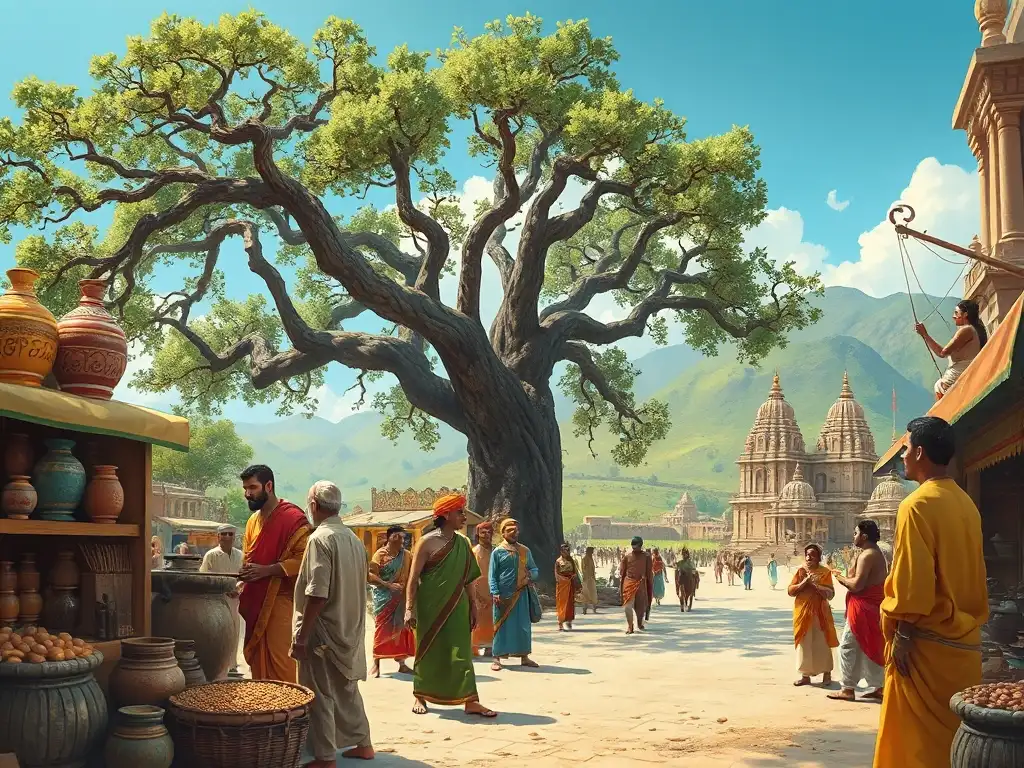
The Vedic Age, spanning from approximately 1500 BCE to 500 BCE, marks a pivotal era in the evolution of ancient Indian civilization, particularly in Northern India. This period is characterized by the composition of the Vedas, a collection of sacred texts that form the foundation of Hindu philosophy, spirituality, and social structure.
The influence of the Vedic Age on society is profound, as it laid the groundwork for various aspects of Indian culture, including religion, governance, and social hierarchy. Understanding this transformative epoch provides valuable insights into how early Indian society was shaped and how its legacies continue to resonate in contemporary India.
The Emergence of Vedic Culture
Overview of the Vedic Period in Northern India
The Vedic Period is divided into two main phases: the early Vedic period (or Rigvedic period) and the later Vedic period. The early Vedic society, primarily nomadic and pastoral, was characterized by tribes that migrated across the northwestern regions of the Indian subcontinent. The Rigveda, one of the oldest known texts, encapsulates the thoughts, beliefs, and practices of these early Indo-Aryans.
As society evolved, the later Vedic period witnessed significant changes, including the transition from a predominantly pastoral lifestyle to settled agriculture. This shift not only influenced economic practices but also had profound social implications, as communities began to form more structured societies with distinct classes.
Significance of the Vedic Age in Early Indian Society
The Vedic Age's significance extends beyond mere historical timelines; it fundamentally shaped various elements of Indian culture and identity. Key contributions include:
- Religious Foundations: The Vedas are the earliest scriptures of Hinduism, laying the groundwork for many religious practices and beliefs that persist to this day.
- Social Structure: The period introduced the Varna system, which categorized society into four main groups: Brahmins (priests), Kshatriyas (warriors), Vaishyas (traders), and Shudras (laborers). This classification influenced social interactions and roles for centuries.
- Philosophical Thought: The philosophical inquiries found in texts such as the Upanishads emerged during the later Vedic period, exploring concepts of reality, knowledge, and the self, which continue to be relevant in modern philosophical discussions.
The Emergence of Vedic Culture
Characteristics of Vedic Society and Culture
Vedic society was characterized by its dynamic and evolving nature. Key features include:
- Agricultural Development: The emergence of agriculture led to permanent settlements and increased trade, transforming the socio-economic landscape.
- Patriarchal Structure: Vedic society was predominantly patriarchal, with men holding primary authority in familial and social matters, although women also played significant roles in rituals and family life.
- Oral Tradition: Knowledge was primarily transmitted orally, with a rich tradition of storytelling, poetry, and hymns that captured the ethos of the time.
The Role of Religion and Rituals in Vedic Life
Religion and rituals were integral to Vedic life, with various ceremonies aimed at appeasing deities and ensuring prosperity. Key aspects include:
- Yajnas (Sacrificial Rituals): Central to Vedic religion, these rituals involved offerings to gods, believed to ensure blessings for the community.
- Role of Priests: Brahmins, as custodians of Vedic knowledge, officiated rituals and safeguarded the oral tradition, significantly influencing societal norms and practices.
- Cosmic Order (Rta): The concept of Rta represented the moral order of the universe, guiding ethical behavior and social responsibilities within Vedic society.
The Vedic Age represents a foundational chapter in the history of Northern India, profoundly influencing the trajectory of Indian civilization. Through an exploration of its culture, social structure, and religious practices, we can better appreciate the complexities and legacies of this transformative period.
The Vedic Age Influence on Society
The Vedic Age, spanning from approximately 1500 to 500 BCE, is a pivotal period in ancient Indian history that laid the foundation for many aspects of Indian society. This era is characterized by the composition of the Vedas, which are the oldest sacred texts of Hinduism, and they significantly influenced the social, economic, and political structures of the time.
The teachings and cultural norms embedded within these texts not only shaped the Vedic society but also left a lasting legacy on subsequent Indian civilizations. Understanding the Vedic Age's influence on society provides insight into the evolution of social norms, economic practices, and political organization that would define Indian culture for centuries.
Impact on Social Structure and Hierarchy
The social structure of the Vedic Age was primarily organized around the concept of varna, which divided society into four main categories: Brahmins (priests and scholars), Kshatriyas (warriors and rulers), Vaishyas (traders and agriculturists), and Shudras (laborers and service providers). This hierarchical system was not merely a social classification but also dictated the roles and responsibilities of individuals within society.
- Brahmins held significant power due to their role in performing rituals and preserving sacred knowledge, establishing a culture of reverence towards learning and spirituality.
- Kshatriyas were tasked with governance and protection, which reinforced the idea of a warrior elite responsible for maintaining order and justice.
- Vaishyas contributed to the economy through agriculture and trade, facilitating commerce and prosperity in various regions.
- Shudras, while often marginalized, provided essential services that supported the functioning of society.
This social hierarchy was further emphasized by inter-varna dynamics, where mobility between varnas was limited, solidifying the structure over time. Additionally, the Vedic texts introduced the notion of dharma, or duty, which defined ethical and moral conduct for each varna, thereby reinforcing the societal framework and promoting stability across the region.
Economic Influences of the Vedic Age
The economic landscape during the Vedic Age was marked by a transition from a predominantly pastoral economy to one that embraced agriculture and trade. The early Vedic society was largely nomadic, focusing on herding cattle and subsistence farming. However, as agricultural practices evolved, settlements began to form, leading to the establishment of more complex economic systems.
- Agriculture: The fertile plains of northern India, particularly along the river basins, became the epicenter for agricultural development. The introduction of iron tools and plows significantly enhanced productivity, allowing for the cultivation of various crops.
- Trade: The Vedic period saw the emergence of trade routes that facilitated exchange not only within the Indian subcontinent but also with neighboring regions. Artisanship flourished, leading to the production of textiles, pottery, and metalwork, which were traded extensively.
- Wealth Distribution: Economic prosperity led to the accumulation of wealth among certain groups, particularly the Kshatriyas and wealthy Vaishyas. This created a dynamic where material wealth could influence social standing, eventually contributing to the emergence of more complex societal structures.
Overall, the Vedic Age laid the groundwork for economic practices that would evolve into the comprehensive trade networks and agrarian societies characterizing later Indian empires.
Political Organization in the Vedic Age
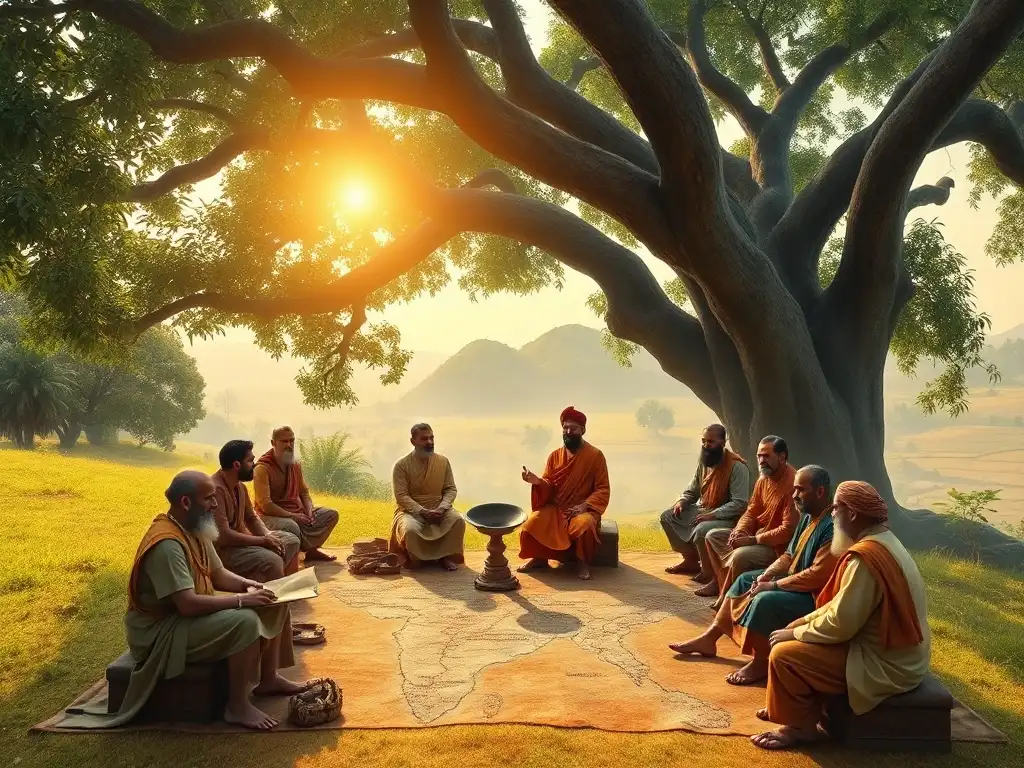
The political organization of the Vedic Age was multifaceted, characterized by a combination of tribal affiliations and emerging state-like entities. The governance structure was influenced by the societal norms and religious beliefs prevalent during this period.
Formation of Janapadas and Mahajanapadas
The Vedic period saw the formation of janapadas (kingdoms) and later mahajanapadas (great kingdoms) as political entities. Each janapada was typically ruled by a king who was advised by a council of elders or nobles, reflecting a rudimentary form of governance.
- Janapadas were often small, localized kingdoms that could vary in size and power. The establishment of boundaries marked the beginning of territorial governance, leading to conflicts and alliances between different groups.
- Mahajanapadas, which emerged later, were larger and more organized political units that consolidated power and resources. Approximately 16 mahajanapadas are documented in ancient texts, with notable ones like Magadha, Kosala, and Vatsa playing significant roles in the political landscape.
These entities were instrumental in the shift from tribal governance to more centralized forms of administration, paving the way for future empires.
Governance and Leadership in Vedic Society
Governance during the Vedic Age was primarily based on a combination of hereditary leadership and council decision-making. The king, often seen as a protector and upholder of dharma, held considerable authority but was also expected to govern with wisdom and fairness.
- Role of the King: The king was responsible for maintaining law and order, conducting rituals, and protecting his subjects. His legitimacy was often tied to his adherence to dharma, which dictated ethical governance.
- Councils and Assemblies: The sabha and samiti were important assemblies that represented the interests of the people and provided a platform for discussion and decision-making. These councils played a crucial role in legitimizing the king’s authority and ensuring accountability.
This blend of leadership styles and communal governance laid the foundation for future political systems in India, fostering a culture of civic engagement and collective decision-making that would influence subsequent political developments in the region.
Vedic Literature and Its Societal Reflections
The Vedic Age, spanning from approximately 1500 to 500 BCE, produced a wealth of literature that offers profound insights into the societal structures, beliefs, and values of early Indian civilization. The Vedic texts, primarily composed in Sanskrit, include the four Vedas: Rigveda, Samaveda, Yajurveda, and Atharvaveda, along with numerous Upanishads and Brahmanas. These texts are not merely religious scriptures; they encapsulate the essence of the Vedic society, reflecting its rituals, governance, social norms, and philosophical inquiries.
The literature emphasizes the importance of rituals (yajnas) and hymns, which were essential for maintaining cosmic order and societal harmony. Moreover, the oral tradition of passing down these texts highlights the significance of knowledge and education in Vedic society, laying a foundation for future scholarly pursuits. The societal reflections found in Vedic literature reveal a civilization deeply engaged with questions of existence, morality, and the universe, while also addressing practical aspects of daily life and governance.
The Rigveda and Its Cultural Significance
The Rigveda, the oldest of the Vedas, is a cornerstone of Vedic literature and serves as a crucial document for understanding the cultural and social fabric of early Indian society. Comprising 1,028 hymns, it is primarily dedicated to various deities, such as Agni (the fire god), Indra (the king of gods), and Varuna (the cosmic order). These hymns not only illustrate the religious practices of the time but also provide insights into the values and aspirations of the people.
The cultural significance of the Rigveda is evident in its portrayal of a society that revered nature, celebrated communal rituals, and upheld the virtues of bravery and hospitality. It reflects a social structure that was likely patriarchal, with roles defined for both men and women, although women's contributions to rituals and society were also recognized. Furthermore, the Rigveda's emphasis on the importance of truth (rita) and duty (dharma) laid philosophical foundations that would influence Indian thought for centuries.
Philosophical Texts and Their Impact on Society
In addition to the Vedas, the Upanishads emerged as profound philosophical texts during the later Vedic period, marking a significant evolution in thought. These texts delve into metaphysical questions, exploring concepts such as the nature of reality (Brahman) and the individual self (Atman). The philosophical inquiries presented in the Upanishads encouraged a shift from ritualistic practices towards more introspective spiritual pursuits.
The impact of these philosophical texts on society was substantial. They fostered a culture of critical thinking and dialogue, which encouraged individuals to explore their existence and relationship with the universe. This shift in focus contributed to the development of various schools of thought, including Vedanta and Mimamsa, which further enriched the intellectual landscape of ancient India. The emphasis on self-realization and ethical living found in these texts would influence subsequent generations and contribute to the broader spiritual evolution within Indian society.
The Vedic Age's Legacy in Northern India
The legacy of the Vedic Age in Northern India is profound and multifaceted, shaping not only the immediate societal structures but also influencing future civilizations and philosophies. The societal norms, governance models, and religious practices established during this period continued to resonate throughout Indian history, creating a lasting imprint on the subcontinent's cultural identity.
How Vedic Principles Shaped Future Indian Philosophies
Vedic principles, particularly those concerning duty (dharma), righteousness, and cosmic order (rita), became foundational elements in the development of subsequent Indian philosophies. These concepts were integral to the formulation of ethical and moral frameworks that guided societal conduct. The ideas presented in the Vedas and Upanishads provided a springboard for later philosophical systems, such as Buddhism and Jainism, which sought to address the nature of suffering and the path to liberation.
Moreover, the interconnectedness of the individual and the cosmos, as portrayed in Vedic philosophy, influenced various schools of thought that emerged in ancient India. This philosophical legacy became a vital aspect of Indian culture, shaping not only religious practices but also arts, literature, and governance, fostering a holistic approach to life that emphasized balance and harmony.
Influence on Subsequent Empires and Dynasties
The influence of the Vedic Age extended far beyond its own time, impacting subsequent empires and dynasties that rose to prominence in Northern India. The Maurya and Gupta empires, for instance, drew upon Vedic principles to establish governance models that emphasized dharma and justice. The integration of Vedic thought into statecraft allowed rulers to legitimize their authority and promote societal welfare.
Additionally, the cultural and religious practices rooted in the Vedic tradition, such as rituals, festivals, and social norms, continued to thrive throughout various historical periods. The enduring legacy of the Vedic Age is evident in the rich tapestry of Indian culture, which celebrates its ancient roots while adapting to new ideas and influences. This adaptability has allowed Vedic traditions to persist and evolve, ensuring their relevance in contemporary Indian society.
Conclusion: The Enduring Influence of the Vedic Age
The Vedic Age, spanning approximately from 1500 BCE to 500 BCE, represents a foundational period in Indian history that has left an indelible mark on the fabric of Indian society. The influences of this era are not merely historical remnants; they continue to resonate within contemporary Indian culture, religion, and social structures. As the cradle of many pivotal ideas, beliefs, and practices, the Vedic Age laid the groundwork for various aspects of life, shaping the values and identity of millions in India and beyond.
The texts from this period, particularly the Vedas themselves, encapsulate a wealth of knowledge and philosophical thought that transcends time. The focus on spiritual inquiry, ritualistic practices, and the quest for knowledge fostered a tradition of scholarship that has persisted throughout Indian history. Additionally, the formation of societal norms, such as the varna system, played a crucial role in organizing society, albeit with complexities that have evolved over the centuries.
Ultimately, the Vedic Age's contributions to Indian society are characterized by a synthesis of spirituality, philosophy, and social structure, which continues to influence various facets of life today. Its enduring legacy serves as a testament to the importance of this transformative period in shaping not just ancient India, but also the modern Indian ethos.
Summary of Vedic Contributions to Indian Society
The Vedic Age brought forth several key contributions that have significantly impacted Indian society:
- Religious Foundations: The Vedas, the oldest sacred texts of Hinduism, established essential spiritual practices and beliefs that continue to guide Hindu worship and philosophy today. Concepts such as dharma (duty), karma (action and consequence), and moksha (liberation) emerged during this period.
- Social Structure: The varna system, which categorized society into four main groups—Brahmins (priests), Kshatriyas (warriors), Vaishyas (merchants), and Shudras (laborers)—originated in the Vedic Age. This classification influenced social organization for centuries.
- Philosophical Thought: The development of early philosophical ideas, particularly the questioning of existence and the nature of reality, began in this era. Schools of thought such as Vedanta emerged, laying the groundwork for later philosophical discourse.
- Literature and Arts: The Vedic texts not only focused on rituals but also included poetry and hymns that celebrated nature and the cosmos, contributing to the rich literary heritage of India.
- Cultural Practices: Rituals and ceremonies originating from the Vedic period have been integral to Hindu culture, influencing festivals, rites of passage, and various communal practices that are observed to this day.
The Vedic contributions have woven a complex tapestry that reflects the aspirations, beliefs, and social dynamics of early Indian civilization, leaving a legacy that continues to be relevant.
The Vedic Age's Role in Shaping Modern Indian Identity
The Vedic Age has played a pivotal role in shaping the modern Indian identity by embedding core values and cultural practices into the collective consciousness of the Indian populace. The following aspects illustrate this influence:
- Cultural Continuity: Many customs and traditions practiced in modern India can be traced back to the Vedic texts and rituals. Festivals like Diwali and Holi, which have their roots in Vedic agriculture and seasonal changes, reflect a continuity of cultural practices.
- Philosophical Underpinnings: The philosophical inquiries that began during the Vedic Age have influenced modern thought, encouraging a blend of spirituality and rationality that is evident in contemporary Indian philosophy and lifestyle.
- Religious Identity: The Vedic texts form the foundation of Hindu religious practices, shaping the beliefs and rituals that define the identity of a significant portion of the Indian population. The concepts of karma and reincarnation, for example, continue to be integral to Hindu worldview and ethics.
- Social Norms: Despite the criticisms and complexities surrounding the varna system, its historical roots provide context for discussions on social hierarchy and class in modern India, influencing social dynamics and policies.
- National Identity: The Vedic Age is often romanticized as a golden period of Indian civilization, contributing to a sense of pride and identity among Indians. It serves as a reference point for cultural revival and nationalistic sentiments.
The Vedic Age's influence on society is profound and multifaceted, forging connections between ancient practices and modern life, and continuing to shape the identity of India as a diverse and culturally rich nation.
- Introduction to the Vedic Age
- The Emergence of Vedic Culture
- The Emergence of Vedic Culture
- The Vedic Age Influence on Society
- Political Organization in the Vedic Age
- Vedic Literature and Its Societal Reflections
- The Vedic Age's Legacy in Northern India
- Conclusion: The Enduring Influence of the Vedic Age
Frequently Asked Questions
What was the Vedic Age?
The Vedic Age refers to the period in ancient Indian history when the Vedas, the oldest sacred texts of Hinduism, were composed. This era laid the foundation for social, religious, and cultural practices in India.
How did the Vedic Age influence society?
The Vedic Age significantly impacted Indian society by establishing social hierarchies, religious rituals, and the concept of dharma (duty). These elements shaped the cultural norms and values of later Indian civilizations.
What are the key texts from the Vedic Age?
The primary texts from the Vedic Age include the Rigveda, Samaveda, Yajurveda, and Atharvaveda. These texts encompass hymns, rituals, and philosophical discussions that influenced subsequent Indian thought.
How did the Vedic Age contribute to Indian philosophy?
The Vedic Age introduced complex ideas about the self, cosmology, and ethics, which formed the basis for later philosophical schools, including Vedanta and Samkhya. These concepts continue to influence modern Indian philosophy.
The Vedic Age established the varna system, which classified society into different groups based on occupation. This early social stratification influenced the development of the caste system in later Indian history.
Final Reflection: The Enduring Influence of the Vedic Age on Society
The exploration of the Vedic Age's influence on society reveals a profound connection between ancient traditions and contemporary life. As we delve into the rich tapestry of Northern India's history, it becomes evident that the philosophical, social, and cultural frameworks established during this era continue to resonate in modern society. The Vedic texts, with their timeless wisdom, not only shaped the spiritual landscape of India but also laid the groundwork for societal norms that persist today.
The impact of the Vedic Age is not merely a relic of the past; it actively shapes our cultural and social dynamics. The principles of dharma, community, and knowledge that emerged during this period have woven themselves into the very fabric of Indian identity. As we navigate the complexities of today's world, these ancient teachings remind us of the importance of balance and harmony in our lives. The Vedic texts are not just historical documents; they are living traditions that guide us in our quest for meaning and purpose.
As we reflect on the lessons from the Vedic Age, let us embrace the opportunity to integrate these insights into our daily lives. Consider how the values of wisdom, respect for nature, and community can enrich your personal journey. I invite you to take a moment to ponder how the teachings of this ancient era can inspire your actions and decisions today. By acknowledging the influence of the Vedic Age, we can cultivate a deeper understanding of ourselves and our place in the world, fostering a society that honors its roots while looking toward a brighter future.
Uncover Your Path to Vedic Wisdom!
Thank you for diving into the fascinating world of the Vedic Age with us! Your interest in how Northern India shaped early Indian society is a crucial step toward understanding the roots of our civilization. Now, let’s transform that knowledge into action!
Here’s how you can explore further and engage with this rich historical era:
- Dive Deeper: Read more articles on Vedic texts and philosophies to uncover the wisdom that continues to influence modern society.
- Join a Community: Connect with fellow history enthusiasts online—share insights, ask questions, and participate in discussions on various platforms.
- Share the Journey: Promote awareness of the Vedic Age on your social media to inspire others to learn about our ancient heritage.
What aspect of the Vedic Age resonates with you the most, and how can you apply these insights to your everyday life? We’d love to hear your thoughts!