
The Role of Military Commanders in the Mauryan Administrative Structure

Welcome to Ancient India History! Dive into the fascinating world of Mauryan military commanders, where we unravel their pivotal roles in shaping one of history's most influential empires. As you explore this rich tapestry of ancient Indian civilization, prepare to discover how these strategic leaders influenced not only the battlefield but also the very fabric of governance during the Mauryan era. Join us on this enlightening journey and unlock the secrets of their legacy—your adventure in understanding ancient India's profound contributions begins here!
Introduction to the Mauryan Empire
The Mauryan Empire, one of the largest and most powerful empires in ancient India, flourished between 322 BCE and 185 BCE. Established by Chandragupta Maurya, this empire marked a significant turning point in Indian history through its extensive administrative framework and military prowess. The empire's vast territory stretched from the northern plains of India to parts of modern-day Afghanistan, creating a diverse cultural and political landscape.
Within this complex structure, military commanders played a crucial role, not only in the defense of the realm but also in the administration of its vast territories. Understanding the roles of Mauryan military commanders provides valuable insight into the governance and stability of the empire during its height.
Overview of the Mauryan Empire
The Mauryan Empire was characterized by its centralized governance and sophisticated administrative systems. Under the leadership of notable emperors like Ashoka, the empire achieved remarkable advancements in various fields, including art, science, and philosophy. The administrative structure of the Mauryan Empire was meticulously organized, comprising various officials, including military commanders who held significant influence over both military and civil affairs. Their contributions were vital in maintaining order and enforcing the emperor's policies across a vast and diverse population.
Importance of Military Commanders in Ancient India
Military commanders in ancient India were not merely leaders of armed forces; they were pivotal figures in the socio-political landscape. Their roles extended beyond warfare, encompassing responsibilities such as tax collection, law enforcement, and the management of local governance. In the context of the Mauryan Empire, military commanders were instrumental in maintaining the empire's territorial integrity and ensuring the loyalty of the local populace. Their dual role as military leaders and administrative heads allowed for a cohesive structure that facilitated the implementation of the emperor's directives and enhanced overall stability.
The Structure of Mauryan Administration
The Mauryan administration was a complex system that integrated various components to ensure efficient governance. At its core were the emperor and his council, which included military commanders whose insights and experiences were invaluable in decision-making processes. The interplay between military and civil administration was essential for the empire's functionality, allowing for a balance of power that supported both military endeavors and civil governance.
Key Components of Mauryan Governance
The administrative framework of the Mauryan Empire was divided into several key components, each playing a distinct role in governance:
- The Emperor: Central authority responsible for all aspects of governance.
- Councils and Assemblies: Bodies that advised the emperor, often including military commanders.
- Provincial Governors: Appointed officials who oversaw different regions, often supported by military commanders.
- Military Commanders: Leaders responsible for both military operations and regional administration.
These components worked in harmony to create a stable and effective governance model that was crucial for the empire's longevity.
The Interplay Between Military and Civil Administration
The relationship between military and civil administration in the Mauryan Empire was symbiotic. Military commanders were often tasked with civil duties, allowing for a seamless integration of military and administrative functions. This duality not only ensured that military leaders were well-versed in the local governance issues but also enabled them to enforce the emperor's policies effectively. The result was a robust administrative structure capable of managing the empire's diverse challenges while maintaining order and promoting economic prosperity throughout the realm.
Roles of Military Commanders in the Mauryan Empire
The Mauryan Empire, known for its extensive administrative and military organization, relied heavily on the roles of military commanders to maintain its power and stability. These commanders were not only responsible for leading troops into battle but also played multifaceted roles that were crucial for the empire's governance. Their duties encompassed strategic military leadership, administrative responsibilities, and integration into the societal fabric of the empire. The effectiveness of these military leaders significantly influenced the Mauryan administration and contributed to the empire's enduring legacy.
Strategic Leadership in Military Campaigns
Military commanders in the Mauryan Empire were pivotal in orchestrating military campaigns that expanded and defended the empire's vast territories. They were tasked with formulating strategies that considered various factors such as geography, enemy strength, and supply lines. Notable commanders like Chandragupta Maurya and his successors demonstrated exceptional strategic foresight, leading to decisive victories against rival states and tribes.
The commanders utilized a range of tactics, including guerilla warfare, siege strategies, and diplomatic maneuvers, to outsmart their opponents. Their ability to adapt to changing battlefield conditions was crucial for the success of military expeditions. Moreover, they were responsible for the training and morale of their troops, ensuring that the soldiers were not only skilled in combat but also committed to the empire’s cause. This strategic leadership was essential in securing the stability and expansion of the Mauryan Empire.
Administrative Powers of Military Commanders
Beyond military engagements, Mauryan military commanders held significant administrative powers within the empire. They were often appointed as governors of provinces, where they oversaw not only military affairs but also civil administration. This dual role allowed commanders to enforce imperial policies and maintain order in their regions, thereby integrating military and administrative functions.
The commanders were responsible for collecting taxes, implementing laws, and managing local governance. Their close interaction with the local populace enabled them to address grievances and ensure the efficient functioning of the bureaucratic system. This administrative authority helped to solidify the Mauryan Empire's control over its territories, as commanders could swiftly respond to any unrest or rebellion, maintaining the overall stability of the empire.
The Military Commanders’ Impact on Mauryan Society
The influence of military commanders extended far beyond the battlefield and administrative offices; they played a crucial role in shaping the social and economic landscape of the Mauryan Empire. Their integration into local communities and contributions to economic stability were vital for the sustenance of the empire.
Integration of Military Commanders into Local Communities
Military commanders often settled in the regions they governed, fostering integration with local communities. This relationship was essential for maintaining loyalty and support among the populace. By engaging with local leaders and participating in community activities, these commanders built strong ties that helped to mitigate resistance against the Mauryan rule.
Additionally, the commanders acted as patrons of local culture and traditions, promoting a sense of unity and identity among diverse populations within the empire. Their presence often brought a degree of security and stability, which encouraged people to engage in trade and agricultural activities. As a result, military commanders became respected figures within their communities, bridging the gap between the imperial authority and the local populace.
Contributions to Economic Stability and Growth
The economic role of military commanders in the Mauryan Empire was significant. By ensuring the security of trade routes and agricultural lands, they facilitated commerce and agricultural productivity. The stability provided by military oversight allowed for increased trade activities, which were crucial for the empire's overall economic health.
Moreover, commanders were instrumental in implementing infrastructure projects, such as roads and irrigation systems, which supported both military logistics and economic development. These initiatives not only improved military efficiency but also enhanced the livelihoods of local farmers and traders, contributing to the prosperity of the regions under their command.
Through their multifaceted roles, Mauryan military commanders helped to create a stable and integrated society, ensuring the long-term success of the Mauryan Empire and leaving an indelible mark on its history.
Comparison of Military Commanders’ Roles with Other Ancient Civilizations
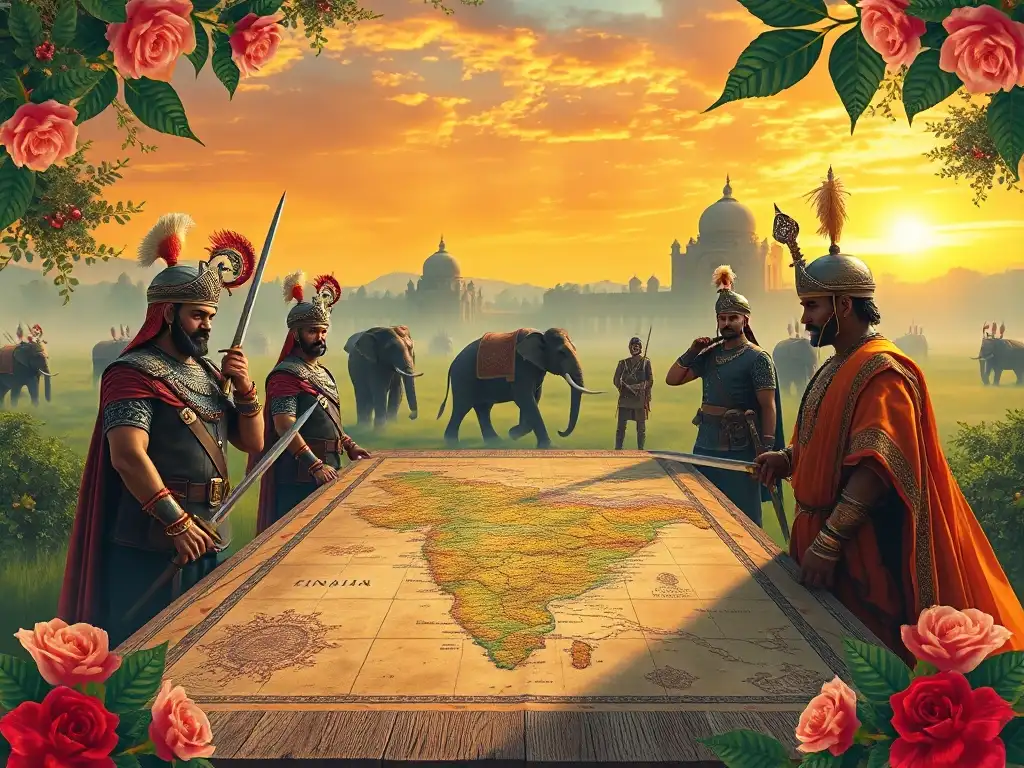
The roles of military commanders in the Mauryan Empire were not only pivotal to the administration but also reflected broader military practices across ancient civilizations. By examining these roles, we can gain a clearer understanding of how military leadership influenced governance and societal structure.
In the Mauryan Empire, military commanders were integral to the state's military and administrative operations. They were responsible for not only leading troops in battle but also for maintaining law and order within their jurisdictions. This dual role emphasized their importance in both military and civil spheres, a characteristic that can be compared with other ancient civilizations, such as the Gupta Empire and the Persian Empire.
Contrasts with Military Leadership in the Gupta Empire
In the Gupta Empire, military leadership evolved in the context of a more decentralized administration compared to the Mauryan model. While Gupta commanders had significant autonomy in their regions, the central authority was less involved in the direct management of military campaigns. Gupta military leaders often focused on regional conflicts and personal feudal allegiances rather than the expansive imperial control characteristic of the Mauryan commanders.
Another notable contrast was the approach to warfare. The Mauryan commanders, such as Chandragupta Maurya, emphasized large-scale, organized military campaigns often aimed at territorial expansion. In contrast, the Guptas adopted a strategy that favored more localized battles and alliances, often relying on diplomacy alongside military strength.
Similarities with Commanders in the Persian Empire
The Mauryan military commanders share several similarities with their counterparts in the Persian Empire, particularly in terms of their roles within the administrative structure. Both empires utilized military leaders as essential components of governance, where commanders were expected to ensure loyalty and stability in their regions.
Like the Persian generals, Mauryan commanders were often appointed based on merit and skill rather than solely on nobility or lineage. This meritocratic approach fostered a sense of loyalty among soldiers and commanders alike, helping to maintain the integrity of the empire. Additionally, both empires utilized a vast network of spies and informants to maintain control over their territories, highlighting the importance of intelligence in military operations.
Case Studies of Prominent Mauryan Military Commanders
Chandragupta Maurya: The Founder’s Military Strategy
Chandragupta Maurya, the founder of the Maurya Empire, exemplified the military command structure with his innovative strategies and leadership. He effectively utilized guerrilla tactics against the Nanda Empire, combining speed and surprise to gain the upper hand. His successful campaigns against Alexander the Great's successors demonstrated not only his military prowess but also his ability to adapt to different combat scenarios.
Chandragupta's establishment of a centralized military system set a precedent for future commanders. He organized his forces into various divisions, each with specific roles, ensuring efficient command and control during conflicts. His focus on logistics and supply chains also highlighted the importance of resource management in warfare, a principle that would influence military strategies in later Indian empires.
Ashoka the Great: From Warrior to Peaceful Ruler
Ashoka, the grandson of Chandragupta Maurya, presents a compelling case study as a military commander who transformed into a pacifist ruler. Initially, Ashoka was known for his military conquests, notably the Kalinga War, which resulted in significant bloodshed. This conflict profoundly affected him, leading to his embrace of Buddhism and the principles of non-violence.
Ashoka’s shift from a warrior to a peaceful ruler is significant in understanding the evolution of military roles within the Mauryan administrative structure. After the Kalinga War, he redefined the role of military commanders, emphasizing diplomacy, welfare, and moral leadership over brute force. His edicts promoted ethical governance and religious tolerance, demonstrating how military authority could be redirected toward peaceful administration, which had a lasting impact on the governance of ancient India.
Conclusion
The role of military commanders in the Mauryan administrative structure was pivotal in shaping not only the military might of the empire but also its governance and stability. These commanders were not merely warriors; they were integral to the functioning of the state, bridging the gap between military strategy and administrative duties. Their responsibilities extended beyond the battlefield, encompassing aspects such as local governance, resource management, and maintaining law and order, which were essential for the effective rule of a vast and diverse empire.
Summary of the Importance of Military Commanders in Mauryan Administration
Military commanders in the Mauryan Empire played a multi-faceted role that was crucial for the administration's effectiveness. Their significance can be summarized as follows:
- Military Leadership: They led armies during campaigns and maintained defense against external threats, ensuring the security of the empire.
- Administrative Authority: Many commanders assumed administrative roles, overseeing territories, managing resources, and enforcing laws.
- Local Governance: They were often responsible for local governance, providing stability and order in regions far from the central authority.
- Integration of Diverse Cultures: By collaborating with local leaders and communities, military commanders facilitated the integration of various cultures within the empire, promoting unity and cooperation.
In essence, the military commanders were instrumental in not only defending the empire but also in its governance, making them central figures in the Mauryan administrative framework.
Legacy of Mauryan Military Commanders in Ancient Indian History
The legacy of Mauryan military commanders extends beyond their immediate contributions to military and administrative functions. They laid the foundation for future military leadership in India and influenced subsequent empires in their approach to governance and military organization. Their strategies and administrative practices became templates for future rulers, emphasizing the need for a strong military presence integrated with effective governance.
Moreover, the Mauryan commanders contributed to the cultural and political landscape of ancient India by establishing norms and practices that persisted long after the fall of the Mauryan Empire. Their involvement in local governance and cultural integration fostered a sense of unity among diverse populations, which became a hallmark of Indian polity.
References
Suggested Readings on Mauryan Administration and Military Roles
- "The Mauryan Empire" by Romila Thapar - An insightful exploration of the administrative and military structures of the Mauryan Empire.
- "Military Strategies in Ancient India" by R. C. Gupta - This book delves into the military tactics and the roles of military leaders throughout Indian history, including the Mauryan period.
- "The Arthashastra" by Kautilya - A classic text that provides a comprehensive look at statecraft, military strategies, and governance during the Mauryan era.
Historical Texts and Archaeological Evidence
Historical texts such as the "Indica" by Megasthenes provide valuable insights into the administrative structure and military organization of the Mauryan Empire from the perspective of a foreign ambassador. Additionally, archaeological evidence from sites like Pataliputra and Taxila reveals the sophisticated military infrastructure and fortifications that were established under Mauryan rule, highlighting the strategic importance of military commanders in sustaining the empire's strength and governance.
- Introduction to the Mauryan Empire
- The Structure of Mauryan Administration
- Roles of Military Commanders in the Mauryan Empire
- The Military Commanders’ Impact on Mauryan Society
- Comparison of Military Commanders’ Roles with Other Ancient Civilizations
- Case Studies of Prominent Mauryan Military Commanders
- Conclusion
- References
- What was the significance of military commanders in the Mauryan Empire?
- How did military commanders influence the Mauryan military strategies?
- Who were some notable military commanders in the Mauryan Empire?
- What was the relationship between military commanders and the Mauryan administration?
- How did the roles of military commanders evolve during the Mauryan period?
Frequently Asked Questions
What was the significance of military commanders in the Mauryan Empire?
Military commanders played a crucial role in the Mauryan Empire's administrative structure, ensuring effective governance and military organization to maintain centralized control over vast territories.
How did military commanders influence the Mauryan military strategies?
Military commanders were responsible for devising and implementing strategic plans, which included tactics for both offense and defense, enhancing the Empire's ability to expand and protect its borders.
Who were some notable military commanders in the Mauryan Empire?
Key figures such as Chanakya (Kautilya) and Bindusara's generals played significant roles in shaping military policies and strategies, contributing to the expansion and stability of the Mauryan Empire.
What was the relationship between military commanders and the Mauryan administration?
Military commanders worked closely with the Emperor and other officials, ensuring that military operations aligned with administrative goals and effectively responded to local needs and challenges.
How did the roles of military commanders evolve during the Mauryan period?
The roles of military commanders evolved from primarily military functions to include political and administrative duties, reflecting the Empire's growth and the need for a integrated governance approach.
Final Reflection: The Enduring Legacy of Mauryan Military Commanders
The roles of Mauryan military commanders are not just relics of ancient history; they resonate profoundly in today's discussions about leadership and governance. As we explore the intricate administrative structure of the Mauryan Empire, we uncover the vital contributions of military leaders who shaped not only the empire's military strategies but also its political and social frameworks. Their influence serves as a reminder that effective leadership is often rooted in the ability to balance power with responsibility.
Clearly, the impact of these commanders extends beyond their immediate military duties; they were pivotal in establishing a governance model that emphasized order and unity. The principles they embodied—strategic foresight, discipline, and adaptability—continue to inform modern leadership practices across various sectors. As historian Romila Thapar aptly stated, The Mauryan Empire exemplifies how military prowess can be harmonized with administrative acumen to create a cohesive state.
This observation underscores the relevance of studying such historical figures, as their legacies inform our understanding of effective governance today.
As we reflect on the roles of Mauryan military commanders, let us consider how their lessons can inspire our own leadership journeys. I invite you to think about the qualities that define effective leaders in your life and how you can embody those traits in your personal and professional endeavors. By embracing the wisdom of the past, we can cultivate a future where leadership is characterized by integrity, vision, and a commitment to the greater good.
Empower Your Knowledge: Engage with Mauryan History!
Thank you for diving into the fascinating world of the Mauryan administrative structure! Your interest in understanding the pivotal role of military commanders enriches your grasp of ancient governance. Now, it's time to take some impactful steps to deepen your understanding and connect with this riveting historical era.
- Explore further: Delve into primary sources or contemporary analyses to uncover how military strategies influenced governance.
- Share your insights: Discuss your thoughts on military leadership in the Mauryan Empire with friends or join online forums dedicated to ancient Indian history.
- Reflect creatively: Write a short story or create artwork inspired by the life of a Mauryan military commander.
What aspect of the Mauryan military structure surprises you the most, and how do you think it contributed to the empire's remarkable achievements?