
The Legacy of Brahmagupta: Contributions to Algebra and Beyond


Welcome to Ancient India History, where we embark on a fascinating journey through the rich tapestry of ancient Indian civilizations. In this exploration, we delve into groundbreaking contributions that have shaped our understanding of the world, such as the remarkable work of Brahmagupta in the realm of algebra. What innovations did this brilliant mathematician introduce, and how did they influence the course of mathematics? Join us as we uncover the legacy of Brahmagupta and discover the profound impact of ancient Indian scholars on the scientific landscape. Your adventure into the depths of history begins now!
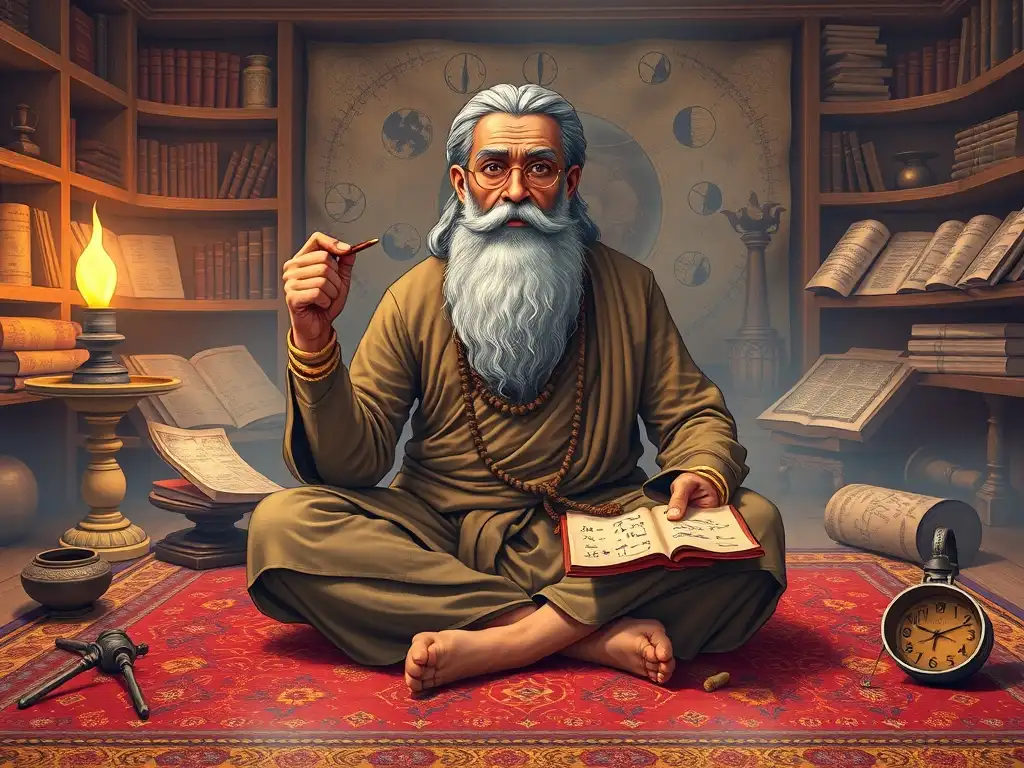
Brahmagupta, a towering figure in the realm of mathematics, particularly algebra, emerged during the Gupta Empire, a golden age of science and culture in ancient India. His works not only advanced mathematical thought but also laid the groundwork for future developments in the field. As we delve into Brahmagupta's life and contributions, we will explore how his ideas shaped the understanding of algebra, influencing both Indian and global mathematics. This article aims to illuminate the profound impact of Brahmagupta's contributions to algebra and beyond, showcasing the brilliance of ancient Indian scholars.
Introduction to Brahmagupta
Who Was Brahmagupta?
Brahmagupta was a 7th-century mathematician and astronomer from Ujjain, a prominent city in ancient India renowned for its intellectual pursuits. He is best known for his seminal works in mathematics, particularly in algebra and arithmetic. Brahmagupta's writings reflect a deep understanding of mathematical concepts, and he is often credited with formalizing rules that govern operations on numbers, including negative numbers. His approach to mathematics was groundbreaking, establishing principles that would influence scholars for centuries.
Historical Context of Brahmagupta's Life
Brahmagupta lived during a period marked by significant advancements in science and culture, known as the Gupta Empire (approximately 320 to 550 CE). This era was characterized by a flourishing of arts, literature, and sciences, with considerable support from the ruling class for intellectual pursuits. The environment fostered by the Gupta dynasty enabled mathematicians like Brahmagupta to thrive and contribute substantially to the field. His works were not isolated but were part of a broader tradition of mathematical inquiry in ancient India, which included the contributions of earlier scholars and contemporaries.
Brahmagupta's Contributions to Algebra
Overview of Algebra in Ancient India
Algebra, as a branch of mathematics, was significantly developed in ancient India, with Brahmagupta’s contributions marking a pivotal point in its evolution. Indian mathematicians utilized a unique approach to solving equations, focusing on systematic methods that would later be recognized as algebraic techniques. The ancient Indian understanding of algebra encompassed various elements, including the representation of unknowns and the manipulation of equations, all of which were foundational to Brahmagupta's work.
Key Works: Brahmagupta's "Brahmasphutasiddhanta"
One of Brahmagupta's most important texts is the "Brahmasphutasiddhanta," which translates to "The Opening of the Universe." This work presents an extensive collection of mathematical rules and astronomical theories. It consists of a compilation of methodologies for solving linear and quadratic equations, including practical applications of mathematics in areas such as land measurement and astronomy. The text is notable for introducing clear rules for arithmetic operations involving zero and negative numbers—concepts that were revolutionary for its time.
Fundamental Theorems and Concepts Introduced by Brahmagupta
Brahmagupta’s contributions to algebra include several fundamental theorems and concepts that are still relevant today. Some of the key ideas introduced by Brahmagupta are:
- Rules for Zero: Brahmagupta provided guidelines for operations involving zero, establishing that:
- Any number added to zero remains unchanged.
- Any number subtracted from itself equals zero.
- Negative Numbers: He recognized negative numbers as valid solutions in equations, which was a significant advancement in mathematical thought.
- Quadratic Equations: Brahmagupta offered methods for solving quadratic equations, detailing rules for finding both positive and negative roots.
Through these contributions, Brahmagupta significantly enriched the landscape of algebra, paving the way for future mathematicians to build upon his foundational work.
The Impact of Brahmagupta's Algebra on Mathematics
Brahmagupta, a prominent mathematician of the 7th century CE, made groundbreaking contributions to algebra that significantly influenced the course of mathematics. His seminal work, the Brahmasphutasiddhanta, is noted for its comprehensive treatment of arithmetic and algebraic concepts. He was among the first to articulate the rules for solving linear and quadratic equations, laying the groundwork for future algebraic thought. Brahmagupta’s work introduced the concept of zero as a number, a revolutionary idea that transformed mathematical calculations and theories.
His algebraic rules emphasized the importance of negative numbers, operations involving them, and the use of symbolic notation, which were significant advancements for his time. Brahmagupta's methods for solving equations were systematic and logical, allowing for a clear understanding of algebraic processes. This led to a more methodical approach to problem-solving in mathematics, influencing not only Indian mathematicians but also those in other cultures.
Influence on Later Mathematicians
The influence of Brahmagupta's algebraic principles extended beyond his lifetime, shaping the work of later mathematicians in India and the Islamic world. His concepts were absorbed and expanded upon by notable figures like Bhaskara I and II, who built on Brahmagupta's foundations to develop more advanced mathematical theories. The adoption of his rules for arithmetic and algebra fostered a rich tradition of mathematical inquiry in ancient India, with scholars continually refining and enhancing his methods.
Moreover, Brahmagupta's work made its way into Islamic mathematics through translations of his texts. Mathematicians such as Al-Khwarizmi, often referred to as the "father of algebra," were influenced by Brahmagupta's ideas, leading to the further evolution of algebraic concepts in the medieval period. The integration of Brahmagupta's algebra into the broader mathematical discourse illustrates the enduring legacy of his contributions.
The Transition from Ancient to Medieval Mathematics
Brahmagupta's algebra marked a critical transition from ancient mathematical practices to the more structured approaches of medieval mathematics. His systematic rules for arithmetic and algebra represented a shift from the reliance on geometric methods to a more abstract understanding of numbers and operations. This transition was pivotal in establishing algebra as a distinct mathematical discipline.
As the knowledge of Brahmagupta's work spread, it facilitated the exchange of ideas between cultures. The synthesis of Indian mathematical thought with the developments in the Islamic Golden Age led to significant advancements in algebra and other fields, creating a bridge between ancient and medieval mathematics. This cultural interchange not only preserved Brahmagupta’s contributions but also propelled them into new realms of innovation.
The Role of Brahmagupta's Work in Islamic Mathematics
Brahmagupta's algebraic contributions were instrumental in shaping the development of mathematics within Islamic civilization. His texts were translated into Arabic, where they were studied by scholars who appreciated the rigor and clarity of his methods. Notably, Al-Khwarizmi’s Al-Kitab al-Mukhtasar fi Hisab al-Jabr wal-Muqabala, which laid the foundations of algebra, heavily drew upon the principles established by Brahmagupta.
The integration of Brahmagupta's ideas into Islamic mathematics led to the enhancement of algebraic techniques, including the systematic solving of equations and the application of algebra in practical scenarios such as commerce and astronomy. His influence can be seen in the way algebraic concepts were formalized, ultimately leading to developments that would shape modern mathematics.
Beyond Algebra: Brahmagupta's Contributions to Other Fields

Brahmagupta’s legacy is not confined to algebra alone; he made significant contributions across various fields, including astronomy and geometry. His interdisciplinary expertise exemplifies the rich scholarly tradition of ancient Indian civilization.
Astronomy and Brahmagupta’s Astronomical Calculations
Brahmagupta was also an accomplished astronomer, providing detailed calculations regarding celestial bodies and their movements. His works included methods for determining the positions of planets, eclipses, and other astronomical phenomena, showcasing his understanding of the cosmos. In his Brahmasphutasiddhanta, he outlined algorithms for calculating the positions of the sun and moon, a notable achievement for the time.
His astronomical calculations were pivotal in the development of accurate calendars, influencing both Indian and Islamic traditions. Brahmagupta's emphasis on observational astronomy and mathematical precision was crucial in advancing the field, making him a key figure in the history of astronomy.
Contributions to Geometry
In addition to his work in algebra and astronomy, Brahmagupta made important contributions to geometry. He explored geometric figures, providing formulas for calculating areas and volumes. His insights into cyclic quadrilaterals and the properties of triangles were particularly noteworthy, laying the groundwork for future geometric theories.
Brahmagupta's geometric principles were practical, often applied to land measurement and architecture, demonstrating the applicability of mathematics in everyday life. His geometric work complemented his algebraic findings, illustrating the interconnectedness of these fields in ancient Indian mathematics.
Brahmagupta's Influence on Calendar Systems
Brahmagupta's contributions extended to the development of calendar systems, where he introduced methods for calculating the lunar calendar and determining significant astronomical events. His work on the calculation of months and years established a framework that was significant for agricultural and religious practices in ancient India.
The precision of his calendar systems influenced subsequent Indian calendars and even those in Islamic contexts. His ability to merge astronomical observations with practical timekeeping illustrates the innovative spirit of his contributions, cementing his legacy as a multifaceted scholar whose work transcended disciplines.
The Legacy of Brahmagupta in Modern Mathematics
Brahmagupta, an eminent mathematician and astronomer of the 7th century, has left an indelible mark on the field of mathematics, particularly in algebra. His work, particularly the seminal text "Brahmasphutasiddhanta," introduced concepts that laid the groundwork for algebraic thinking and problem-solving. His contributions transcended mere arithmetic; they encompassed the systematic treatment of equations, rules for manipulating numbers, and the introduction of zero as a number. This legacy continues to resonate in contemporary mathematics, influencing both theoretical frameworks and practical applications.
Brahmagupta was among the first to provide rules for solving quadratic equations and to address the concept of negative numbers. His innovative approach to arithmetic operations paved the way for future developments in mathematics, establishing him as a pivotal figure in the transition from ancient to modern mathematical thought.
Recognition in Contemporary Mathematics
Today, Brahmagupta's contributions to algebra are acknowledged in various mathematical fields. His methods for solving quadratic equations are still taught in classrooms around the world, often cited as foundational principles in algebra courses. Additionally, his work on the rules of arithmetic operations involving zero and negative numbers is recognized as a crucial step towards our modern understanding of mathematics.
Modern mathematicians and educational institutions have begun to emphasize Brahmagupta's role in the historical development of mathematics. His texts are included in the curriculum of mathematics courses, particularly those focusing on the history of mathematics, underscoring his significance in the broader context of mathematical evolution.
Educational Impact: Teaching Brahmagupta's Principles Today
The principles established by Brahmagupta are integral to math education today. Schools and universities globally incorporate his methods into their curricula, highlighting his systematic approaches to solving equations and manipulating numbers. For instance, his rules for dealing with positive and negative integers are foundational in algebra courses, aiding students in developing a robust understanding of mathematical operations.
Moreover, educators are increasingly focusing on the historical aspects of mathematics, including Brahmagupta's work, to provide students with a richer context for their studies. This approach not only enhances students' appreciation of mathematics but also encourages a more comprehensive understanding of how different cultures and civilizations have contributed to the field.
Preservation of Ancient Knowledge: Manuscripts and Translations
The preservation of Brahmagupta's works has been crucial for the continuation of his legacy. Manuscripts of his texts, particularly "Brahmasphutasiddhanta," have been meticulously copied and translated over centuries. These texts have survived through various translations into Arabic and Latin, which were vital in introducing his ideas to the Islamic world and, eventually, to Europe.
Today, scholars continue to study these ancient manuscripts, shedding light on Brahmagupta's methodologies and their relevance in contemporary mathematics. The collaborative efforts of historians, mathematicians, and linguists to translate and publish these works ensure that Brahmagupta's contributions remain accessible to new generations of students and scholars.
Conclusion: The Enduring Influence of Brahmagupta
Brahmagupta's legacy in the realm of mathematics is profound and enduring. His innovative ideas and systematic approaches not only advanced algebra but also influenced a wide array of mathematical practices that persist today.
Summary of Brahmagupta's Key Contributions
Brahmagupta's key contributions include:
- The introduction of zero as a number, expanding the number system.
- Establishing rules for arithmetic operations involving negative numbers.
- Formulating methods for solving quadratic equations systematically.
- Providing guidelines for practical applications of mathematics, such as in commerce and astronomy.
These contributions have become foundational elements in the study of mathematics, illustrating his role as a pioneer in the field.
The Importance of Recognizing Ancient Indian Mathematicians in Global History
Recognizing the contributions of ancient Indian mathematicians like Brahmagupta is essential for a well-rounded understanding of global mathematical history. Their innovations laid the groundwork for many mathematical concepts we take for granted today. Acknowledging their work not only honors their legacy but also enriches the narrative of mathematical development, showcasing the contributions of diverse cultures to the field. Emphasizing these historical figures fosters a more inclusive perspective on the evolution of mathematics, inspiring future generations to appreciate and build upon the rich tapestry of human knowledge.
- Introduction to Brahmagupta
- Brahmagupta's Contributions to Algebra
- The Impact of Brahmagupta's Algebra on Mathematics
- Beyond Algebra: Brahmagupta's Contributions to Other Fields
- The Legacy of Brahmagupta in Modern Mathematics
- Conclusion: The Enduring Influence of Brahmagupta
- What were Brahmagupta's main contributions to algebra?
- How did Brahmagupta influence later mathematicians?
- What is the significance of Brahmagupta's book, the Brahmasphutasiddhanta?
- Did Brahmagupta contribute to any other fields besides algebra?
- How did Brahmagupta's work differ from his predecessors?
Frequently Asked Questions
What were Brahmagupta's main contributions to algebra?
Brahmagupta is known for introducing fundamental algebraic concepts, including the rules for manipulating negative numbers and the solution of quadratic equations.
How did Brahmagupta influence later mathematicians?
His work laid the groundwork for subsequent mathematicians, particularly in the Islamic Golden Age, where his texts were translated and expanded upon, influencing the development of algebra in the medieval world.
What is the significance of Brahmagupta's book, the Brahmasphutasiddhanta?
The Brahmasphutasiddhanta is a seminal text that outlines arithmetic, algebra, and astronomy, showcasing Brahmagupta's holistic approach to mathematics and its applications in various fields.
Did Brahmagupta contribute to any other fields besides algebra?
Yes, Brahmagupta also made significant contributions to astronomy, particularly in calculating planetary positions and eclipses, demonstrating the interconnectedness of mathematics and science in ancient India.
How did Brahmagupta's work differ from his predecessors?
Brahmagupta's approach was more systematic and formalized, focusing on rules and solutions rather than merely presenting problems, which marked a shift in mathematical thinking during his time.
Final Reflection: The Enduring Legacy of Brahmagupta's Contributions to Algebra
Brahmagupta's contributions to algebra remain profoundly relevant today, as they laid the groundwork for mathematical principles that continue to shape our understanding of the world. In an age where technology and data drive innovation, the foundational concepts introduced by Brahmagupta remind us of the timeless nature of mathematical inquiry. His work not only advanced algebra but also provided a framework for problem-solving that transcends cultures and eras, illustrating the universal language of mathematics.
The influence of Brahmagupta's ideas can be seen in the way we approach mathematics and science today. His methods for solving quadratic equations and his rules for arithmetic operations have become integral to modern curricula around the globe. As we navigate an increasingly complex world, his insights encourage us to think critically and creatively. Mathematics is the language with which God has written the universe,
said Galileo, and Brahmagupta's contributions have certainly enriched this language, allowing us to decode the mysteries of our universe.
As we reflect on the legacy of Brahmagupta, let us embrace the lessons of his work and apply them to our own lives. Consider how the principles of algebra can guide your problem-solving, whether in personal challenges or professional endeavors. Take a moment to appreciate the interconnectedness of knowledge across time and cultures, and let Brahmagupta's pioneering spirit inspire you to explore, innovate, and contribute to the ongoing dialogue of mathematics and beyond.
Unleash Your Inner Mathematician Today!
Thank you for diving into the fascinating world of Brahmagupta and his incredible contributions to algebra and mathematics! You've uncovered some remarkable insights into how his legacy continues to influence our understanding of numbers and equations. Now it’s time to take that knowledge and explore further!
Here are a few steps you can take right now:
- Dive deeper into algebra: Challenge yourself with algebraic puzzles or create your own equations, inspired by Brahmagupta's work.
- Share the knowledge: Discuss Brahmagupta's achievements with friends or share your thoughts on social media — inspire others to appreciate the brilliance of ancient mathematicians!
- Join a community: Engage in online forums or local groups focused on mathematics and history; exchanging ideas can spark new insights and friendships.
As you reflect on Brahmagupta's profound impact, consider which aspect of his work inspires you the most to explore mathematics in your own life.