
The Unraveling of Mysteries: The Lost Cities of Northern India


Welcome to Ancient India History, where we embark on a fascinating journey through time to uncover the rich tapestry of civilization that flourished on the Indian subcontinent. In our featured article, "The Unraveling of Mysteries: The Lost Cities of Northern India," we delve into the enigmatic remnants of ancient urban centers that once thrived, holding secrets of a long-forgotten past.
What stories do these lost cities tell us about the people who built them? Join us as we explore the intricate connections between history, culture, and the remarkable contributions of ancient Indian civilizations, igniting your curiosity to learn more about this captivating world.

Introduction to the Lost Cities of Ancient India
The lost cities of ancient India serve as a fascinating gateway into the rich tapestry of India's historical legacy. These cities, often shrouded in mystery and intrigue, offer insights into the advanced urban planning, societal structures, and cultural practices of civilizations that flourished thousands of years ago. The exploration of these enigmatic sites not only contributes to our understanding of ancient Indian civilizations but also highlights the intricate connections between geography, culture, and history. By delving into the stories behind these forgotten urban landscapes, we can better appreciate the profound contributions of ancient India to global heritage.
Overview of Ancient Indian Civilizations
Ancient India was home to several remarkable civilizations, each contributing uniquely to the country's cultural and historical narrative. Among the most notable are:
- Indus Valley Civilization: Flourishing around 2500 BCE, this civilization is renowned for its sophisticated urban planning, drainage systems, and standardized weights and measures.
- Vedic Period: Following the decline of the Indus Valley, the Vedic period (1500-500 BCE) emphasized spiritual and philosophical growth, laying the foundations for Hinduism.
- Maurya Empire: Established in the 4th century BCE, this empire marked a significant political unification under leaders like Ashoka, who promoted Buddhism and social welfare.
- Gupta Empire: Often referred to as the Golden Age of India (c. 320-550 CE), this period was characterized by achievements in arts, science, and mathematics.
These civilizations not only shaped the course of Indian history but also left behind a plethora of lost cities that tell the tale of their rise and fall.
Importance of Lost Cities in Historical Context
The lost cities of ancient India are pivotal in understanding the socio-political dynamics and cultural exchanges that occurred over millennia. These urban centers often served as hubs of trade, religion, and governance, reflecting the complexities of their time. Studying these cities provides several benefits:
- Archaeological Insights: Excavations reveal artifacts, architectural styles, and urban layouts that inform us about daily life and societal organization.
- Cultural Heritage: The ruins of these cities serve as a testament to the artistic and intellectual achievements of ancient peoples.
- Historical Narratives: Each lost city has its own story, often intertwining with the broader historical events of the region, such as invasions, trade routes, and cultural exchanges.
Understanding the significance of these lost cities enhances our appreciation for the ingenuity and resilience of ancient Indian civilizations.
Historical Background of Northern India
Northern India has been a cradle of civilization, where various cultures and empires have thrived. The historical backdrop of this region is marked by both continuity and change, reflecting a dynamic interplay of different peoples and ideas.
Key Civilizations in Northern India
Throughout history, several key civilizations have emerged in Northern India, each contributing to the region's cultural and historical landscape:
- Indo-Aryans: Their migration brought significant changes to the cultural and linguistic fabric of Northern India.
- Mauryan Empire: As one of the largest empires in ancient history, it unified much of Northern India and facilitated the spread of Buddhism.
- Gupta Empire: This era is celebrated for its advancements in science, art, and literature, establishing a legacy that continues to influence India today.
These civilizations not only shaped the political landscape but also left behind lost cities that echo their cultural achievements.
Cultural Significance of Urban Centers
The urban centers of ancient Northern India played a crucial role in shaping the region's cultural identity. These cities were not merely places of residence; they were bustling hubs of activity that fostered:
- Trade and Commerce: Major trade routes passed through these cities, facilitating economic exchanges that contributed to their prosperity.
- Religious Diversity: Cities often hosted various religious communities, promoting a rich tapestry of beliefs and practices.
- Art and Architecture: The artistic expressions found in these urban centers, from intricate sculptures to grand temples, reflect the values and aspirations of their inhabitants.
The lost cities of ancient India, particularly in Northern India, embody the historical and cultural complexities of a region that has significantly influenced the course of civilization. Their exploration offers a fascinating glimpse into the past, enriching our understanding of India's diverse heritage.
The Concept of Lost Cities
The concept of lost cities has fascinated historians, archaeologists, and enthusiasts alike for centuries. These cities, often shrouded in mystery, represent the remnants of advanced civilizations that thrived in ancient times. In the context of ancient India, lost cities signify urban centers that were once bustling with life but have since vanished from the collective memory, revealing only traces of their existence through archaeological findings. The allure of these locations lies not only in their historical significance but also in the stories they tell about the cultures, trade, and daily lives of the people who inhabited them.
Lost cities can be characterized by their sudden disappearance, often due to natural disasters, wars, or shifts in trade routes. The search for these cities combines elements of archaeology, anthropology, and history, making it a multidisciplinary endeavor. The exploration of lost cities offers insights into the technological advancements, urban planning, and social structures of the civilizations that built them. Scholars and adventurers alike continue to delve into these mysteries, hoping to uncover the secrets of the past and understand the factors that led to their decline.
Definition of Lost Cities in Ancient India
In the context of ancient India, lost cities refer to significant urban centers that once played pivotal roles in trade, culture, and governance but are now either completely abandoned or have been partially forgotten over time. These cities often reflect the architectural prowess and urban planning of their respective civilizations, showcasing advanced drainage systems, fortifications, and public buildings. The term encompasses a range of sites, from well-documented cities like Harappa and Mohenjo-Daro of the Indus Valley Civilization to lesser-known locations that await discovery.
Lost cities are often identified through archaeological excavations, ancient texts, and oral traditions. They serve as a testament to the rich tapestry of human history in India, illustrating the interplay of cultural, economic, and environmental factors that contributed to their rise and fall. Understanding these lost cities is crucial for piecing together the historical narrative of ancient India, highlighting the complexity and diversity of its civilizations.
Examples of Lost Cities and Their Mysteries
Several examples of lost cities in ancient India have left an indelible mark on history, each with its unique mysteries. Notable among these are:
- Harappa: Once a thriving metropolis of the Indus Valley Civilization, Harappa is known for its sophisticated urban planning and advanced drainage systems. Its sudden decline around 1900 BCE remains a subject of debate among historians, with theories ranging from climate change to invasions.
- Mohenjo-Daro: Another key city of the Indus Valley, Mohenjo-Daro is famous for its well-preserved ruins and the enigmatic "Dancing Girl" statue. The reasons for its abandonment around the same time as Harappa are still unclear, leading to speculation about natural disasters or societal collapse.
- Taxila: This ancient city was a major center for learning and trade, known for its diverse cultural influences. The mysteries surrounding Taxila include the identity of its inhabitants and the factors that led to its eventual decline, as it transitioned from a flourishing city to a site of archaeological interest.
Each of these cities presents a unique puzzle, inviting further exploration and research to unravel the historical narratives embedded within their ruins.
Major Lost Cities of Northern India
1. Harappa
Harappa, located in present-day Punjab, Pakistan, is one of the most significant archaeological sites of the Indus Valley Civilization. It is characterized by its grid-like layout and advanced architectural techniques, including baked brick buildings, sophisticated drainage systems, and large public baths. The city flourished around 2600 BCE but faced a mysterious decline by 1900 BCE. Archaeologists continue to study Harappa to understand the sociopolitical and environmental factors that contributed to its downfall. The artifacts found at the site, such as seals, pottery, and tools, provide invaluable insights into the daily lives and economic activities of its inhabitants.
2. Mohenjo-Daro
Mohenjo-Daro, situated near the Indus River in Sindh, is another key city of the Indus Valley Civilization. Its name translates to "Mound of the Dead," reflecting its historical significance as an urban center. The city is renowned for its well-planned streets, advanced drainage systems, and the Great Bath, which suggests a culture that valued cleanliness and ritual.
The reasons for its decline, similar to Harappa, remain a topic of debate. Theories propose that environmental changes, such as flooding or drought, may have played a role. Ongoing research continues to reveal more about the city's layout and the lifestyle of its ancient inhabitants.
3. Taxila
Taxila, located in modern-day Pakistan, was an important city during various periods of ancient Indian history, particularly from the 6th century BCE to the 5th century CE. Recognized as a UNESCO World Heritage Site, Taxila was a center of learning, culture, and trade, attracting scholars and traders from across Asia. The city is notable for its impressive ruins, including stupas, monasteries, and ancient universities.
Taxila's mysteries lie in its diverse cultural influences and the reasons behind its eventual decline following the rise of neighboring powers. The site continues to be a focus of archaeological studies, shedding light on the complex interactions between different civilizations in ancient India.
The Archaeological Pursuit of Lost Cities
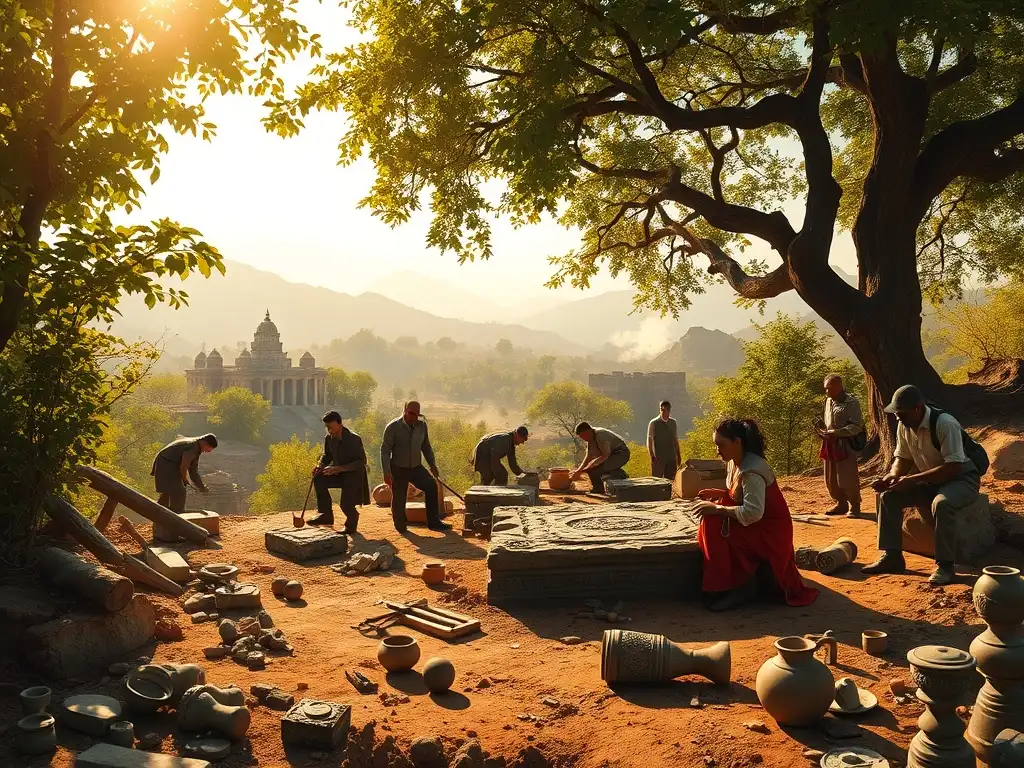
The quest to uncover the lost cities of ancient India has captivated archaeologists, historians, and enthusiasts alike. As researchers delve into the rich tapestry of India's past, they seek to unravel the mysteries surrounding urban centers that once thrived. These cities, which include the likes of Harappa and Mohenjo-Daro from the Indus Valley Civilization, are not just remnants of stone and brick; they are gateways to understanding the socio-economic, political, and spiritual lives of ancient Indians.
The archaeological pursuit is often driven by a combination of historical texts, local folklore, and modern technology. Excavations reveal not only artifacts but also urban planning and architectural styles that reflect the ingenuity of their inhabitants. The meticulous study of these sites helps in piecing together the intricate puzzle of ancient urban life, revealing a civilization that was sophisticated in trade, governance, and culture.
Techniques Used in Discovering Lost Cities
The discovery of lost cities in Northern India employs a variety of cutting-edge techniques:
- Remote Sensing: Satellite imagery and aerial photography allow archaeologists to identify potential sites by revealing patterns in the landscape that may indicate human activity.
- Geophysical Surveys: Techniques such as ground-penetrating radar (GPR) help in mapping subsurface structures without disturbing the ground, allowing researchers to visualize what lies beneath the surface.
- Excavation and Stratigraphy: Careful excavation reveals layers of human occupation, helping to date artifacts and understand the chronological development of a site.
- Ethnoarchaeology: Studying contemporary communities can provide insights into ancient practices, as modern cultural behaviors often reflect longstanding traditions.
- Interdisciplinary Approaches: Collaboration with experts in fields such as geology, botany, and climatology enriches archaeological research, providing a comprehensive view of the factors that influenced urban development.
These techniques collectively enhance the efficiency and accuracy of archaeological endeavors, leading to significant discoveries that contribute to our understanding of the lost cities.
Challenges in Uncovering Ancient Sites
Uncovering the lost cities of ancient India is fraught with challenges that can hinder archaeological efforts:
- Environmental Conditions: Harsh weather, such as monsoons and extreme temperatures, can damage excavation sites and artifacts, complicating preservation efforts.
- Urban Development: Rapid urbanization and infrastructure projects often threaten archaeological sites. Many potential sites are buried under modern cities, making them inaccessible for study.
- Funding and Support: Limited financial resources can restrict the scope of archaeological projects, leading to incomplete excavations and the loss of potential findings.
- Political and Cultural Sensitivities: Archaeological work can be impacted by local politics and cultural sentiments. Communities may have differing views on the significance of a site, which can affect collaboration and access.
- Data Interpretation: The interpretation of findings can be subjective and influenced by the archaeological paradigm of the time, leading to discrepancies in understanding the historical significance of a site.
Despite these challenges, the determination to uncover the lost cities continues, driven by the potential to rewrite historical narratives and enhance our appreciation for ancient civilizations.
The Cultural Impact of the Lost Cities
The lost cities of ancient India have profoundly influenced the cultural landscape of modern India. These archaeological sites serve as a reminder of the country's rich heritage and the sophisticated societies that once thrived.
- Historical Awareness: The discovery and study of lost cities have fostered a deeper understanding of ancient Indian civilizations, inspiring national pride and cultural identity.
- Cultural Tourism: Sites like Harappa and Mohenjo-Daro attract tourists, creating opportunities for educational engagement and economic benefits for local communities.
- Art and Literature: The narratives surrounding these cities have inspired artists and writers, contributing to a renaissance of interest in India's ancient history.
Influence on Modern Indian Culture and Identity

The influence of lost cities extends to the very identity of modern India. They have become symbols of resilience and continuity, reflecting the enduring legacy of India's past. The stories of these cities resonate with contemporary values such as community, innovation, and sustainability, drawing parallels between ancient and modern practices.
Furthermore, educational initiatives aimed at highlighting the significance of these sites have helped instill a sense of responsibility among younger generations to preserve their heritage. As India's global presence grows, the stories of its ancient civilizations serve as a cultural cornerstone that informs national identity.
Preservation Efforts and Their Importance
Preservation efforts for the lost cities of ancient India are crucial for several reasons:
- Cultural Heritage: Protecting these sites ensures that future generations can access and learn from their cultural heritage, fostering a sense of identity and continuity.
- Scientific Research: Well-preserved sites offer invaluable data for researchers, enhancing our understanding of ancient urbanism, trade networks, and societal structures.
- Sustainable Development: Integrating preservation with modern development can lead to sustainable practices that honor historical significance while accommodating growth.
- Community Engagement: Involving local communities in preservation efforts can empower them, fostering stewardship and enhancing tourism, which benefits the local economy.
The preservation of lost cities is not merely an archaeological concern; it is a crucial aspect of maintaining the cultural fabric of modern India. By safeguarding these remnants of the past, we enrich our understanding of history and ensure that the stories of ancient civilizations continue to inspire future generations.
Conclusion: The Future of Lost Cities Exploration
The exploration of the lost cities of ancient India is not merely an archaeological endeavor but a journey into understanding the complexities of human civilization. As technology advances, the methods used to discover and analyze these ancient sites continue to evolve. The future of lost cities exploration promises the potential for groundbreaking discoveries that could reshape our understanding of historical narratives and cultural developments in Northern India.
With the integration of cutting-edge technologies such as remote sensing, LiDAR (Light Detection and Ranging), and advanced dating techniques, researchers are now equipped to uncover hidden layers of history previously obscured by time and natural elements. These innovations are pivotal in revealing the urban planning, architectural brilliance, and social organization of ancient civilizations. As interdisciplinary collaborations increase among archaeologists, historians, and environmental scientists, we can expect a more nuanced comprehension of ancient Indian societies and their interactions with their environment and each other.
Ongoing Research and Future Discoveries
Ongoing research in the field of archaeology and history focuses on several key areas related to the lost cities of ancient India. Projects are currently underway in regions such as the Indus Valley and the Gangetic plains, where remnants of urban centers have been discovered but remain largely unexplored. This research aims to:
- Excavate and Document: Systematic excavations are crucial for uncovering artifacts and structures that provide insights into daily life, trade, and cultural practices.
- Utilize Modern Technology: The application of satellite imagery and geophysical surveys can help identify potential sites that are yet to be discovered.
- Interdisciplinary Approaches: Collaborations with geologists, botanists, and climate scientists are essential to understanding how environmental factors influenced the rise and fall of these cities.
Future discoveries may reveal not only the architectural and artistic achievements of these civilizations but also their socio-political structures and economic systems. As more evidence comes to light, the narrative of ancient India’s urbanization and its historical significance is bound to expand, offering deeper insights into the region’s past.
The Legacy of Lost Cities in Understanding Ancient India
The legacy of lost cities in ancient India extends beyond their ruins; they serve as vital keys to unlocking the mysteries of early urbanization, cultural exchange, and technological innovation. Each site tells a story—of thriving communities, advanced governance systems, and rich cultural traditions that laid the foundation for contemporary Indian society.
By studying these lost cities, historians and archaeologists can trace the evolution of urban life in Northern India, revealing how these early settlements influenced later civilizations. The artifacts and architectural remains found at these sites provide essential clues about trade routes, social hierarchies, and even religious practices. Moreover, the insights gained from these explorations contribute to a broader understanding of human resilience and adaptability in the face of environmental and political challenges.
As these ancient cities come back to life through research and exploration, their legacy will continue to inform our understanding of India’s diverse history and cultural heritage, fostering a deeper appreciation for the complexities of ancient civilizations.
References and Further Reading
For those interested in delving deeper into the subject of lost cities and ancient Indian history, the following resources offer valuable insights and scholarly perspectives:
Suggested Books on Ancient Indian History
-
"The Indus Civilization: A Contemporary Perspective" by Jane McIntosh
This book provides a comprehensive overview of the Indus Valley Civilization, exploring its urban planning, culture, and decline.
-
"Ancient India: In Historical Outline" by Romila Thapar
A concise yet thorough examination of Indian history, covering significant events and developments across different periods.
-
"The Lost Cities of Ancient India" by R. S. Sharma
This work focuses specifically on the archaeological findings and significance of various lost cities throughout the Indian subcontinent.
Academic Journals and Articles on Lost Cities
-
"Journal of Indian History"
This journal publishes scholarly articles on various aspects of Indian history, including archaeological findings related to lost cities.
-
"Archaeological Review from Cambridge"
Features research articles that often highlight significant archaeological discoveries, including studies on ancient urban centers in India.
-
"Ancient India and Early Medieval India: A Review"
An academic compilation focusing on the transition from ancient to medieval times, offering insights into the continuity and changes in urbanization.
These resources are instrumental for anyone looking to deepen their understanding of the rich history surrounding the lost cities of ancient India and their implications for our modern world.
- Introduction to the Lost Cities of Ancient India
- Historical Background of Northern India
- The Concept of Lost Cities
- Major Lost Cities of Northern India
- The Archaeological Pursuit of Lost Cities
- Techniques Used in Discovering Lost Cities
- Challenges in Uncovering Ancient Sites
- The Cultural Impact of the Lost Cities
- Influence on Modern Indian Culture and Identity
- Preservation Efforts and Their Importance
- Conclusion: The Future of Lost Cities Exploration
- References and Further Reading
- What are the lost cities of ancient India?
- Why are the lost cities important for understanding ancient Indian history?
- How have archaeologists uncovered these lost cities?
- What role did the Gupta Empire play in the narrative of lost cities?
- Are there any notable examples of lost cities in Northern India?
Frequently Asked Questions
What are the lost cities of ancient India?
The lost cities of ancient India refer to urban centers from ancient civilizations, such as the Indus Valley Civilization, that have been uncovered but not fully understood, showcasing advanced urban planning and culture.
Why are the lost cities important for understanding ancient Indian history?
These cities provide valuable insights into the social, political, and economic aspects of ancient civilizations, revealing their technological advancements and daily life, which contribute to our understanding of the region's historical evolution.
How have archaeologists uncovered these lost cities?
Archaeologists utilize modern technology, including satellite imagery and ground-penetrating radar, to discover and excavate remnants of these cities, helping to piece together their historical significance.
What role did the Gupta Empire play in the narrative of lost cities?
The Gupta Empire is often seen as a period of cultural renaissance following the decline of earlier civilizations. While it didn’t directly relate to the lost cities, it highlights the continuity and change in urban development in ancient India.
Are there any notable examples of lost cities in Northern India?
Yes, some notable examples include Harappa and Mohenjo-Daro, which are key sites from the Indus Valley Civilization, as well as Pataliputra, a significant city during the Maurya and Gupta empires, showcasing the depth of ancient urbanization in India.
Final Reflection: Rediscovering the Lost Cities of Ancient India
The exploration of the lost cities of ancient India is not just a journey through time; it is a profound reminder of our cultural heritage and the mysteries that continue to shape our identity today. As we delve into the remnants of these once-thriving civilizations, we uncover stories that resonate with our present, urging us to cherish and preserve our history. The allure of these lost cities beckons us to reflect on the lessons they hold, reminding us that our past is intricately woven into the fabric of our present.
The lost cities of ancient India serve as a testament to the resilience and ingenuity of our ancestors, influencing our cultural and social landscape in ways that are often overlooked. The echoes of their achievements and failures reverberate through time, shaping our understanding of community, architecture, and sustainability. As we navigate the complexities of modern life, we can draw inspiration from the wisdom of those who came before us. History is not just about the past; it is a guide to our future.
This sentiment encapsulates the importance of remembering and learning from our history, as it informs our identity and values today.
As we conclude this exploration of the lost cities of ancient India, I invite you to reflect on your own connection to history and culture. Consider how the stories of these ancient civilizations can inspire you to engage with your heritage and contribute to the preservation of our collective memory.
Let the mysteries of the past ignite your curiosity and passion for discovery, encouraging you to seek out the narratives that shape who you are and the world around you. Embrace the journey of unraveling these mysteries, for in doing so, you not only honor the past but also pave the way for a richer future.
Unveil the Secrets of Northern India's Lost Cities!
Thank you for joining us on this captivating journey through the lost cities of Northern India! We've uncovered a treasure trove of historical gems that highlight the rich tapestry of our past. Now, it's your turn to dive even deeper and make these stories part of your own adventure.
Here are a few powerful ways to continue your exploration:
- Join a historical walking tour in your local area or plan a trip to Northern India— experience the breathtaking heritage firsthand!
- Share this article with friends and family— spark their curiosity about our ancient past!
- Participate in online forums or social media groups dedicated to historical discoveries— connect with fellow history enthusiasts!
Which lost city tale will inspire your next adventure? We invite you to share your thoughts below!