
Upanishads and the Concept of Brahman: The Ultimate Reality

Welcome to Ancient India History! Embark on a journey through time as we uncover the rich tapestry of ancient Indian civilizations, exploring their profound contributions to culture, philosophy, and spirituality. In this captivating article, we delve into the Upanishads and Brahman philosophy, revealing the intricate concepts that shaped the spiritual landscape of India.
What secrets do these ancient texts hold about the ultimate reality? Join us as we unravel the mysteries of these foundational ideas and ignite your curiosity about the wisdom of the ancients. Continue reading to discover how these philosophies continue to influence our understanding of existence today!
- Introduction to Upanishads and Brahman Philosophy
- Historical Context of the Upanishads
- Key Concepts in Upanishads
- Major Upanishads and Their Teachings
- Brahman Philosophy: Interpretations and Implications
- The Influence of Upanishads on Later Indian Thought
- Contemporary Relevance of Upanishads and Brahman Philosophy
- Conclusion: The Enduring Legacy of Upanishads and Brahman Philosophy
- Frequently Asked Questions
- Final Reflection: Embracing the Essence of Brahman in Today's World
- Unveil the Depths of Your Understanding!
Introduction to Upanishads and Brahman Philosophy
The Upanishads, a collection of philosophical texts that form the concluding part of the Vedas, are pivotal in understanding the spiritual and metaphysical landscape of ancient Indian thought. These texts not only delve into the nature of existence but also explore the profound relationship between the individual soul (atman) and the ultimate reality (Brahman). As we embark on this exploration of Upanishads and Brahman philosophy, we uncover the rich tapestry of ideas that have significantly shaped Hinduism and influenced spiritual thought worldwide. The Upanishads invite us to contemplate the core questions of life: Who are we?
What is the universe? And what is our connection to the divine? This article will provide a comprehensive overview of the significance of the Upanishads and illuminate the concept of Brahman as the ultimate reality.
Understanding the Importance of Upanishads in Hinduism
The Upanishads are often regarded as the philosophical backbone of Hinduism, offering insights that transcend mere ritualistic practices. Composed between 800 BCE and 400 BCE, these texts represent a transition from the external rituals of the Vedic tradition to a focus on introspection and spiritual knowledge.
- Spiritual Inquiry: The Upanishads encourage a quest for self-realization and understanding, emphasizing that knowledge leads to liberation (moksha). This shift in focus from external rites to internal exploration is a defining feature of Hindu philosophy.
- Core Philosophical Concepts: Within the Upanishads, several key concepts emerge:
- Atman: The individual soul or self, which is seen as eternal and divine.
- Brahman: The ultimate, unchanging reality, which is transcendent and immanent.
- Maya: The illusion that prevents individuals from seeing the true nature of reality.
- Dialogue and Metaphor: The teachings of the Upanishads are often presented through dialogues between teachers and students, filled with metaphors and analogies that provoke deep thought. This pedagogical method fosters a personal engagement with the material, encouraging readers to contemplate their own experiences and beliefs.
The Upanishads have not only influenced Hindu thought but have also left a lasting impact on various philosophical traditions around the world, inviting seekers from all backgrounds to explore the nature of reality and consciousness.
Overview of Brahman as the Ultimate Reality
Brahman, as articulated in the Upanishads, represents the ultimate reality that underpins and transcends the universe. Understanding this concept is crucial for grasping the essence of Upanishadic philosophy.
- Nature of Brahman:
- Brahman is described as Nirguna (without attributes) and Saguna (with attributes), illustrating its dual nature. As Nirguna, Brahman is beyond human comprehension, while as Saguna, it can be perceived through various divine forms and manifestations.
- It is often summarized in the phrase "Tat Tvam Asi," meaning "That Thou Art," indicating the oneness of the individual self and Brahman.
- Brahman in Practice:
- The realization of Brahman leads to a profound understanding of one's true nature, fostering a sense of unity with all existence. This realization is considered the highest goal of human life within the Upanishadic framework.
- Rituals and meditation practices in Hinduism are designed to facilitate this realization, helping individuals to transcend the illusion of separateness and achieve a direct experience of Brahman.
- Impact on Philosophy: The concept of Brahman has inspired countless philosophical discussions and interpretations, influencing various schools of thought within Hinduism and beyond. The idea that everything is interconnected through a singular ultimate reality has profound implications for ethics, spirituality, and the understanding of the self.
The Upanishads provide a rich philosophical foundation for exploring the concept of Brahman as the ultimate reality, inviting individuals to embark on a journey of self-discovery and spiritual awakening. Through this exploration, we not only gain insights into ancient Indian thought but also cultivate a deeper understanding of our own existence and purpose.
Historical Context of the Upanishads

Origins of the Upanishads in Ancient Indian Philosophy
The Upanishads, often regarded as the philosophical backbone of Hinduism, emerged around the 8th to 6th centuries BCE, during a transformative period in ancient Indian thought. These texts marked a significant departure from the ritualistic focus of the earlier Vedic texts, introducing profound metaphysical inquiries and a deeper understanding of reality. The word "Upanishad" itself translates to "sitting down near," indicating the student-teacher relationship that was central to the transmission of this esoteric knowledge.
The origins of the Upanishads are deeply rooted in the Vedic tradition, which comprises four main texts: the Rigveda, Samaveda, Yajurveda, and Atharvaveda. The Upanishads are considered the concluding part of the Vedas, known as the Vedanta ("the end of the Vedas"). This positioning reflects their role as a culmination of Vedic thought, where ritualistic practices evolved into philosophical discussion.
- Key Themes of the Upanishads:
- Brahman: The ultimate reality or cosmic spirit, which is the source of all existence.
- Atman: The individual soul or self, which is ultimately identical to Brahman.
- Moksha: Liberation from the cycle of birth and rebirth, attainable through knowledge and realization of the unity of Atman and Brahman.
The philosophical shift represented by the Upanishads was influenced by various factors, including interactions with other cultures and emerging new thoughts that challenged traditional rituals. They laid the groundwork for later philosophical schools within Hinduism, such as Advaita Vedanta, which emphasizes non-duality and the unity of Atman and Brahman.
The Role of Upanishads in Vedic Literature
The Upanishads play a crucial role in the broader context of Vedic literature, serving as a bridge between the ritualistic practices of the Vedas and the ethical and philosophical dimensions of later Hindu thought. Unlike the earlier parts of the Vedas, which focus extensively on rituals, hymns, and sacrifices, the Upanishads emphasize knowledge (jnana) over ritual (karma).
- Structural Overview:
- Philosophical Dialogues: Many Upanishads are written as dialogues between a teacher (guru) and a student (shishya), exploring complex ideas through questions and answers.
- Metaphysical Concepts: They delve into subjects such as the nature of reality, the self, and the universe, encouraging personal exploration and understanding.
The Upanishads also introduce key philosophical concepts that have influenced not only Hinduism but also other Indian philosophies and religions:
- Brahman as the Ultimate Reality: The Upanishads articulate that Brahman transcends all forms and limitations, representing the singular essence of the universe.
- Unity of Atman and Brahman: This pivotal idea posits that individual consciousness (Atman) is fundamentally the same as the universal consciousness (Brahman), leading to revolutionary thoughts on the nature of existence.
The Upanishads represent a significant evolution in Vedic literature, moving from a focus on external rituals to an inward journey of knowledge and self-realization. They have become foundational texts that inform numerous aspects of Hindu philosophy, spirituality, and practice, continuing to inspire seekers of truth and wisdom to this day.
Key Concepts in Upanishads
The Upanishads represent a pivotal moment in ancient Indian philosophy, articulating complex ideas about existence, reality, and the nature of the divine. Central to this discourse is the concept of Brahman, which serves as the foundation for understanding the universe and our place within it.
Definition of Brahman in Upanishadic Texts
Brahman is described in the Upanishads as the ultimate reality, transcending the physical and manifesting as the source of all creation. It is often defined through various attributes:
- Aksara (Imperishable): Brahman is eternal and unchanging, beyond the temporal world.
- Satchidananda: This term encapsulates Brahman's essence, meaning existence (Sat), consciousness (Chit), and bliss (Ananda).
- Nirguna and Saguna: The Upanishads discuss Brahman in two aspects:
- Nirguna: Brahman without attributes, representing the formless and infinite aspect.
- Saguna: Brahman with attributes, manifested in various forms, including deities.
One of the most profound declarations regarding Brahman comes from the Chandogya Upanishad, which states, "Tat Tvam Asi" (That Thou Art), emphasizing the interconnectedness of the individual soul (Atman) and the ultimate reality (Brahman).
The Nature of Reality According to Upanishads
The Upanishads present a dualistic view of reality, distinguishing between the empirical world (Maya) and the absolute reality (Brahman). This framework leads to several key insights:
- Maya: The Upanishads describe the material world as an illusion, a veil that obscures the true nature of reality. This concept encourages seekers to look beyond sensory experiences to grasp the underlying truth.
- Non-Dualism: The idea of Advaita (non-dualism) is central to Upanishadic philosophy. It posits that Brahman is not separate from the universe or the individual self (Atman). Instead, all distinctions are ultimately illusory, leading to the realization that Atman and Brahman are one.
- Transcendental Experience: The Upanishads advocate for personal experience and meditation as means to attain knowledge of Brahman. This experiential approach is fundamental in realizing the unity of existence.
Atman and Its Relationship with Brahman
Atman, often translated as the "self" or "soul," is a crucial concept in understanding Brahman. The Upanishads elucidate the relationship between Atman and Brahman through several critical perspectives:
- Identity: The notion that Atman is essentially Brahman is a recurrent theme. The famous phrase "Aham Brahmasmi" (I am Brahman) from the Brihadaranyaka Upanishad encapsulates this idea, suggesting that the individual self is not distinct from the cosmic reality.
- Path to Liberation: Understanding the relationship between Atman and Brahman is fundamental to achieving Moksha (liberation). The Upanishads teach that through self-realization and the elimination of ignorance (Avidya), one can attain unity with Brahman.
- Meditative Practices: The Upanishadic texts emphasize meditation and contemplation as essential practices for realizing the oneness of Atman and Brahman. Techniques such as Dhyana (meditation) and Upasana (worship) are prescribed to facilitate this profound understanding.
The Upanishads and Brahman philosophy provide a rich tapestry of thought that explores the intricacies of existence, urging individuals to seek deeper truths beyond the surface of reality. The exploration of Brahman and its relationship to Atman is not merely academic; it serves as a guide for spiritual practice and personal transformation.
Major Upanishads and Their Teachings
The Upanishads are a collection of ancient Indian texts that form the philosophical backbone of Hinduism, exploring the nature of reality, existence, and the ultimate essence known as Brahman. Among the numerous Upanishads, several stand out for their profound insights and teachings. This section delves into three major Upanishads: the Chandogya, Brihadaranyaka, and Taittiriya Upanishads, each offering unique perspectives on Brahman and the self.
Chandogya Upanishad: Insights into Brahman
The Chandogya Upanishad is one of the oldest Upanishads, rich in philosophical discourse and meditative practices. Its teachings revolve around the idea that Brahman, the ultimate reality, is the essence of all existence.
-
Brahman as the Source of All
The Chandogya Upanishad posits that everything in the universe emanates from Brahman, emphasizing the interconnectedness of all beings. It states:
In the beginning, there was the One, and from that, all beings emerged.
This concept is foundational to understanding Brahman as the root of both the seen and unseen. -
Meditation and Sound
The Upanishad introduces the significance of Om (Aum) as a sacred sound representing Brahman. The practice of meditating on this sound is considered a pathway to realizing the unity of the individual soul (Atman) and Brahman. The text encourages seekers to contemplate:
- The nature of sound and silence
- The relationship between the material and spiritual realms
-
Experiential Knowledge
The emphasis on personal experience over mere intellectual understanding is a hallmark of the Chandogya Upanishad. It encourages practitioners to engage in spiritual practices that lead to direct realization of Brahman, rather than relying solely on external teachings.
Brihadaranyaka Upanishad: The Concept of the Self
The Brihadaranyaka Upanishad is renowned for its depth and complexity, offering profound insights into the nature of the self (Atman) and its relation to Brahman.
-
Atman and Brahman
One of the central themes of this Upanishad is the identification of Atman with Brahman. It famously states:
Tat Tvam Asi
(That Thou Art)
This declaration encapsulates the idea that the individual self is fundamentally one with the universal self, challenging dualistic notions of existence. -
Self-Inquiry and Knowledge
The Brihadaranyaka Upanishad advocates for self-inquiry as a means to uncover the truth of one's own nature. It presents a series of dialogues that explore:
- The distinction between the physical body and the true self
- The process of understanding one’s own consciousness
-
The Role of the Guru
This Upanishad highlights the importance of a teacher (Guru) in guiding the seeker through the complexities of philosophical inquiry. The relationship between the Guru and disciple is depicted as essential for attaining knowledge of Brahman.
Taittiriya Upanishad: Exploring the Layers of Existence
The Taittiriya Upanishad provides a structured approach to understanding the nature of reality, emphasizing the various layers or sheaths (koshas) that constitute human existence.
-
The Five Sheaths
This Upanishad categorizes existence into five layers:
- Annamaya Kosha (Physical body)
- Pranamaya Kosha (Vital energy)
- Manomaya Kosha (Mental body)
- Vijnanamaya Kosha (Wisdom body)
- Anandamaya Kosha (Bliss body)
Each sheath represents a different aspect of the self, ultimately leading to the realization of Brahman as the essence that transcends these layers.
-
Unity of the Sheaths and Brahman
The Taittiriya Upanishad teaches that while individuals may identify with one or more of these sheaths, true liberation comes from recognizing one’s unity with Brahman. The text asserts:
From bliss, all beings are born; by bliss, they live; and into bliss, they return.
This cyclical view of existence underscores the importance of understanding Brahman as the source of all joy and fulfillment. -
Practical Application
The teachings of the Taittiriya Upanishad encourage practitioners to engage in meditation and ethical living as ways to peel back the layers of existence, ultimately leading to the realization of the self's true nature.
The exploration of these major Upanishads reveals the profound philosophical insights surrounding Brahman and the self within ancient Indian thought. Each text contributes uniquely to the understanding of Upanishads and Brahman philosophy, serving as a guide for seekers in their spiritual journeys.
Brahman Philosophy: Interpretations and Implications
The philosophy of Brahman in the Upanishads is multifaceted, presenting a profound exploration of the nature of reality and the self. Central to this discourse is the understanding of Brahman as the ultimate, unchanging reality amid the transitory world. The Upanishads articulate various interpretations of Brahman, which have shaped Hindu thought and influenced subsequent philosophical schools.
The implications of Brahman extend beyond mere theological musings; they encompass ethical, metaphysical, and existential dimensions. The Upanishadic texts encourage individuals to seek unity with Brahman, fostering a sense of interconnectedness with all beings and the cosmos. This pursuit of understanding leads to significant implications for personal conduct, societal norms, and spiritual practices, marking the essence of Hindu philosophical inquiry.
Non-Dualism (Advaita) and the Concept of Brahman
Non-dualism, or Advaita Vedanta, is a philosophical perspective that posits the ultimate oneness of Brahman and the individual soul (Atman). This school of thought, primarily attributed to the sage Adi Shankaracharya, emphasizes that Atman is not separate from Brahman but is, in fact, identical to it.
- Key Principles of Advaita:
- Brahman as the Absolute: Brahman is described as the infinite, formless reality that transcends all dualities, including existence and non-existence.
- Illusion of Maya: The world we perceive is considered an illusion (Maya) that obscures the true understanding of reality. This leads to the misconception of individuality and separation from Brahman.
- Path to Liberation:
- Self-Realization: Advaita teaches that liberation (Moksha) is attained through the realization of one's identity with Brahman. This involves deep meditation, self-inquiry, and the dismantling of the ego.
- Scriptural Support: The Upanishads, particularly texts like the Chandogya Upanishad and the Mandukya Upanishad, provide foundational support for these teachings, illustrating the non-dual nature of reality.
- Implications for Spiritual Practice:
- Meditative Practices: Advaita encourages practitioners to engage in meditation and self-reflection to experience the unity with Brahman.
- Ethical Living: Understanding the non-dual nature fosters compassion and humility, as all beings are seen as manifestations of the same ultimate reality.
Dualism (Dvaita) vs. Non-Dualism: Perspectives on Brahman
The dichotomy between Dualism (Dvaita) and Non-Dualism (Advaita) represents a critical philosophical debate within Hindu thought regarding the nature of Brahman and the relationship between the individual soul and the divine.
- Dvaita (Dualism):
- Philosophy of Distinction: Dvaita, articulated by Madhvacharya, asserts that Brahman (the Supreme Being, often identified with Vishnu) is distinct from individual souls (Jivas).
- Personal God: In this view, God is a personal entity who is separate from creation, and worshiping this personal God is essential for attaining liberation.
- Importance of Bhakti: Dvaita emphasizes devotion (Bhakti) as the primary means of realizing Brahman, fostering a relationship of love and surrender.
- Contrast with Advaita:
- Nature of Reality: While Advaita teaches that Brahman and Atman are identical, Dvaita maintains that individual souls are eternally distinct from Brahman.
- Multiplicity of Existence: Dvaita recognizes a diverse and pluralistic universe where individual experiences and relationships with the divine are valid and meaningful.
- Philosophical and Practical Implications:
- Diverse Paths to Liberation: Both philosophies offer distinct pathways to liberation, with Advaita focusing on knowledge and realization, while Dvaita highlights devotion and personal relationship with God.
- Ethical Frameworks: Each perspective shapes ethical frameworks differently, influencing how adherents view their responsibilities toward others and their environment.
The discourse around Brahman philosophy in the Upanishads, encompassing both Advaita and Dvaita perspectives, presents rich interpretations that continue to influence Hindu thought and practice. Understanding these philosophies provides deeper insights into the nature of reality, the self, and the universe's interconnectedness.
The Influence of Upanishads on Later Indian Thought
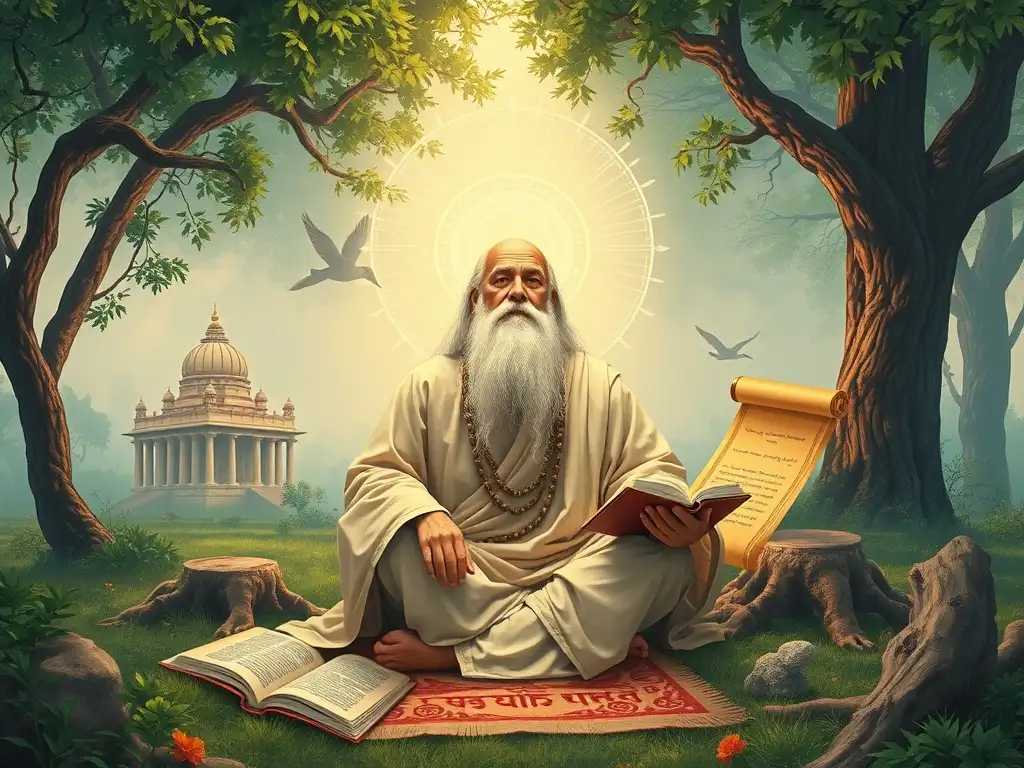
Impact on Hindu Philosophy and Spiritual Practices
The Upanishads, often regarded as the zenith of Vedic thought, have profoundly influenced Hindu philosophy and spiritual practices. Their profound insights into the nature of reality, the self, and the ultimate truth—Brahman—have shaped various schools of thought and practices within Hinduism.
- Philosophical Foundations: The Upanishads introduce core concepts such as Atman (the individual soul) and Brahman (the ultimate reality). This duality forms the philosophical foundation for many later Hindu beliefs. For instance, the realization that Atman and Brahman are fundamentally one has led to the affirmation of monism in many Hindu texts.
- Meditative Practices: The teachings of the Upanishads have also woven themselves into the fabric of Hindu meditation and yoga practices. They emphasize the importance of self-realization and the quest for knowledge through meditative techniques. The Dhyana Yoga described in the Upanishads underscores the need for an introspective journey to understand the nature of the self.
- Ritual and Spiritual Ethics: The Upanishads advocate for a shift from ritualistic practices to a more introspective and philosophical approach to spirituality. This transition has nurtured the growth of ethical teachings, promoting concepts such as ahimsa (non-violence) and satya (truthfulness) as integral to spiritual development.
- Influence on Key Texts: The philosophical underpinnings laid by the Upanishads have been echoed in later scriptures, including the Bhagavad Gita and various Puranas. The Gita, in particular, synthesizes Upanishadic philosophy with practical aspects of life, illustrating how philosophical principles can be applied in everyday situations.
The impact of the Upanishads extends beyond Hinduism, influencing various schools of Indian philosophy, including Buddhism and Jainism, which draw on similar concepts of self and ultimate reality.
Upanishads and Their Role in Advaita Vedanta
Advaita Vedanta, one of the most influential schools of Indian philosophy, derives much of its foundational thought from the Upanishads. The term "Advaita" means non-dualism, encapsulating the belief that there is no fundamental distinction between Atman and Brahman. This philosophy is primarily attributed to the renowned philosopher Adi Shankaracharya, who extensively commented on the Upanishads.
- Non-Dualistic Interpretation: Advaita Vedanta posits that the ultimate reality, Brahman, is singular and formless, while the perceived diversity of the universe is an illusion, known as Maya. This interpretation stems directly from Upanishadic texts, particularly the Chandogya Upanishad, which articulates the identity of Atman and Brahman.
- Path to Liberation: According to Advaita, liberation ( Moksha) is achieved through the realization of this non-dualistic nature. The Upanishads provide the methodological framework for this realization, emphasizing jnana (knowledge) as the primary means to discern the truth about reality. The famous Mahāvākya (great sayings) such as “ Tat Tvam Asi” (That Thou Art) encapsulate this essence.
- Critique of Dualism: Advaita Vedanta also challenges dualistic philosophies, which posit a separation between the individual soul and the ultimate reality. By drawing from the Upanishads, Advaita critiques these views, advocating instead for a unified understanding of existence.
- Influence on Later Thought: The teachings of Advaita Vedanta have permeated various aspects of Indian culture, influencing art, literature, and spiritual practices. The Upanishadic emphasis on self-inquiry and philosophical discourse has led to a rich tradition of dialogues and debates that continue to thrive in modern times.
The Upanishads serve as a critical source of inspiration for Advaita Vedanta, shaping its doctrines and practices. The exploration of Brahman through the lens of the Upanishads continues to be a captivating pursuit for scholars, philosophers, and practitioners, affirming the timeless relevance of these ancient texts in contemporary spiritual discourse.
Contemporary Relevance of Upanishads and Brahman Philosophy
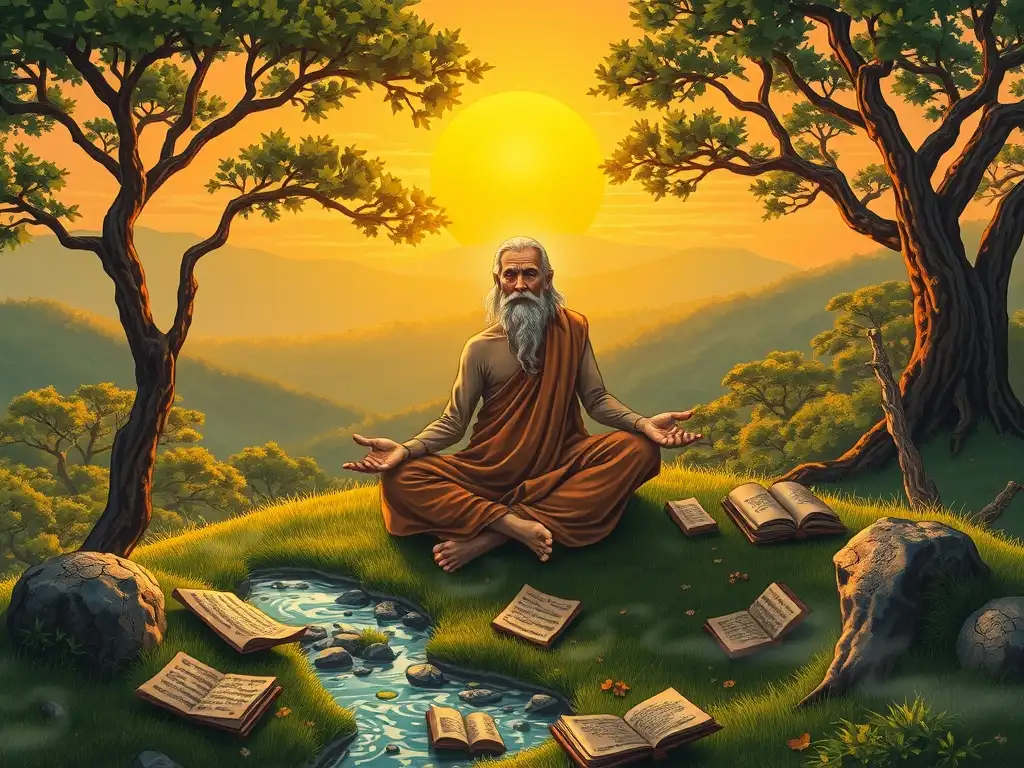
The Upanishads, ancient texts that form the philosophical basis of Hinduism, continue to hold significant relevance in contemporary society. Their exploration of spiritual concepts, particularly the idea of Brahman as the ultimate reality, has transcended time and cultural boundaries. This section delves into how these ancient teachings are interpreted and applied in modern contexts, shedding light on their enduring wisdom.
Modern Interpretations of Upanishads and Brahman
In today’s context, the Upanishads are often interpreted through various lenses, including philosophy, psychology, and even quantum physics. Scholars and spiritual leaders have sought to extract the essence of the Upanishadic teachings to provide guidance for contemporary issues.
- Philosophical Exploration: Modern philosophers engage with the Upanishads to address existential questions concerning the nature of reality, consciousness, and the self. The profound statement "Tat Tvam Asi" (That Thou Art) epitomizes the non-dualistic approach, suggesting an intrinsic connection between the individual soul (Atman) and Brahman. This understanding encourages individuals to seek inner peace and self-realization in a chaotic world.
- Psychological Perspectives: Psychologists have found that the meditative practices encouraged in the Upanishads can lead to significant mental health benefits. Techniques such as mindfulness meditation, inspired by Upanishadic thought, promote self-awareness and emotional regulation. The emphasis on inner silence and contemplation fosters a deeper understanding of the self, which is increasingly relevant in today’s fast-paced society.
- Scientific Resonance: With the advent of quantum theory, parallels have been drawn between scientific principles and Upanishadic concepts. The idea of interconnectedness and the observation effect in quantum physics resonate with the Upanishadic view of a unified reality. This intersection invites a dialogue between science and spirituality, encouraging a holistic view of existence.
The Upanishadic Influence on Global Spirituality
The teachings of the Upanishads have transcended geographical and cultural boundaries, influencing a wide array of spiritual traditions worldwide. Their impact can be seen in various philosophies and practices:
- Western Philosophy: Thinkers like Ralph Waldo Emerson and Aldous Huxley have integrated Upanishadic ideas into their works, promoting a deeper understanding of the self and the universe. Huxley’s concept of the "perennial philosophy" is heavily influenced by the non-dualistic elements found in the Upanishads.
- New Age Spirituality: The resurgence of interest in Eastern philosophies during the 20th century led to the incorporation of Upanishadic ideas into New Age spirituality. Concepts such as universal consciousness and the divine nature of reality are embedded in many modern spiritual practices, including yoga and meditation.
- Interfaith Dialogues: The Upanishads have become a focal point in interfaith discussions, particularly regarding the nature of God and the essence of spirituality. Their teachings encourage respect for diverse beliefs while promoting a shared understanding of the ultimate reality.
The contemporary relevance of the Upanishads and Brahman philosophy is profound. Their teachings not only provide a framework for personal development and understanding the cosmos but also foster a sense of unity among diverse spiritual traditions. As society continues to grapple with existential questions, the wisdom of the Upanishads remains a guiding light for seekers of truth and meaning.
Conclusion: The Enduring Legacy of Upanishads and Brahman Philosophy
Summary of Key Insights
The Upanishads stand as a monumental body of work within ancient Indian literature, encapsulating profound philosophical ideas and spiritual insights. Central to their teachings is the concept of Brahman, described as the ultimate reality that transcends the physical universe. This non-dualistic outlook emphasizes the oneness of existence, asserting that all individual souls (Atman) are essentially manifestations of Brahman. The Upanishads explore this relationship through various narratives and dialogues, offering a pathway to self-realization and enlightenment.
Key insights from the Upanishads include:
- Unity of Existence: The Upanishads assert that Brahman is the source of all creation, emphasizing the interconnectedness of all beings. This perspective encourages a holistic understanding of life and existence.
- Meditative Practices: The texts advocate for meditation and introspection as means to realize one's true nature and connect with Brahman. Techniques such as dhyana (meditation) and jnana (knowledge) are highlighted as essential practices.
- Ethical Living: The teachings promote a moral framework guiding individuals towards righteousness (dharma) and compassion, reinforcing the idea that understanding Brahman leads to ethical living.
- Philosophical Inquiry: The Upanishads foster a spirit of inquiry, encouraging seekers to question and explore their beliefs, thereby enriching their understanding of reality.
The Importance of Understanding Upanishads in Today’s Context
In contemporary society, the teachings of the Upanishads and the philosophy surrounding Brahman offer valuable insights relevant to modern life. As individuals navigate the complexities of existence, the Upanishadic emphasis on inner peace, self-awareness, and ethical living remains pertinent.
- Spiritual Well-being: In a world often characterized by stress and distraction, the Upanishadic practices of meditation and reflection can provide a refuge, promoting mental health and spiritual tranquility.
- Interconnectedness: The recognition of the oneness of all beings fosters empathy and understanding in our increasingly diverse and globalized society. This perspective can aid in resolving conflicts and nurturing harmony.
- Ethical Framework: As ethical dilemmas arise in various fields, the moral teachings embedded in the Upanishads can guide individuals and organizations in making decisions that align with higher values and principles.
- Philosophical Exploration: The Upanishads encourage a culture of inquiry and critical thinking, which is essential for personal growth and societal advancement. Engaging with these texts invites individuals to contemplate their purpose and place within the universe.
The Upanishads and their exploration of Brahman philosophy not only enrich our understanding of ancient Indian thought but also provide timeless wisdom applicable to the challenges of modern life. By delving into these teachings, we can cultivate a deeper sense of purpose, interconnectedness, and ethical responsibility.
Frequently Asked Questions
What are the Upanishads?
The Upanishads are ancient Indian texts that form the philosophical basis of Hinduism, exploring concepts like Brahman and the nature of reality.
How do the Upanishads relate to Brahman philosophy?
The Upanishads delve into Brahman philosophy by presenting Brahman as the ultimate reality and source of the universe, emphasizing the connection between the individual soul (Atman) and Brahman.
What is the significance of Brahman in ancient Indian thought?
Brahman is considered the ultimate reality in ancient Indian philosophy, representing the infinite, unchanging essence that underlies all existence.
How did the Upanishads influence later philosophical systems?
The Upanishads laid the groundwork for various philosophical systems in India, including Vedanta, which further developed ideas about Brahman and the nature of existence.
Why are the Upanishads considered a crucial part of Indian heritage?
The Upanishads are essential to Indian heritage as they encapsulate profound spiritual insights and contribute significantly to the understanding of Brahman philosophy, shaping Hindu beliefs and practices.
Final Reflection: Embracing the Essence of Brahman in Today's World
In exploring the Upanishads and Brahman philosophy, we uncover profound insights that resonate deeply with our contemporary quest for meaning and understanding. The teachings of the Upanishads remind us that the pursuit of ultimate reality is not merely an ancient endeavor but a vital part of our existence today. As we navigate a world filled with distractions and superficiality, the call to recognize and connect with Brahman—the ultimate reality—becomes increasingly relevant. The essence of our being is intertwined with the cosmos, urging us to seek a deeper connection beyond the material.
The influence of the Upanishads extends far beyond their historical context, shaping the cultural and spiritual landscape of our time. These ancient texts invite us to reflect on our relationship with the universe and our place within it. The teachings encourage a journey inward, fostering a sense of unity with all existence. As the philosopher Aldous Huxley once said, The Upanishads are the greatest philosophical achievement of mankind.
This profound observation highlights the enduring impact of these teachings, reminding us that the quest for understanding Brahman is a timeless journey that continues to inspire seekers across generations.
As we conclude this exploration of the Upanishads and the concept of Brahman, I invite you to reflect on your own journey toward understanding ultimate reality. Consider how the principles of interconnectedness and unity can inform your daily life and interactions with others. Let the wisdom of the Upanishads guide you in cultivating a deeper awareness of your own essence and the world around you. Embrace the opportunity to engage with these teachings, and allow them to illuminate your path toward a more profound existence.
Unveil the Depths of Your Understanding!
Thank you for diving into the mystical world of the Upanishads and the profound concept of Brahman. Your journey through these ancient texts enriches your understanding of the ultimate reality. Now, it’s time to take that knowledge and transform it into action!
Take a moment to explore the following steps to deepen your engagement:
- Read a translated Upanishad to experience this philosophy firsthand and reflect on its teachings in your daily life.
- Consider joining or forming a discussion group focused on the Upanishads to share insights and interpretations with others who are intrigued by this profound subject.
- Share your learnings on social media, or even write a short blog post about how the concept of Brahman resonates with your own beliefs.
What new insights have you discovered about Brahman that could transform your perspective on reality? We invite you to share your thoughts below!