
The Historical Context of Buddhist Art: A Window into Ancient Beliefs

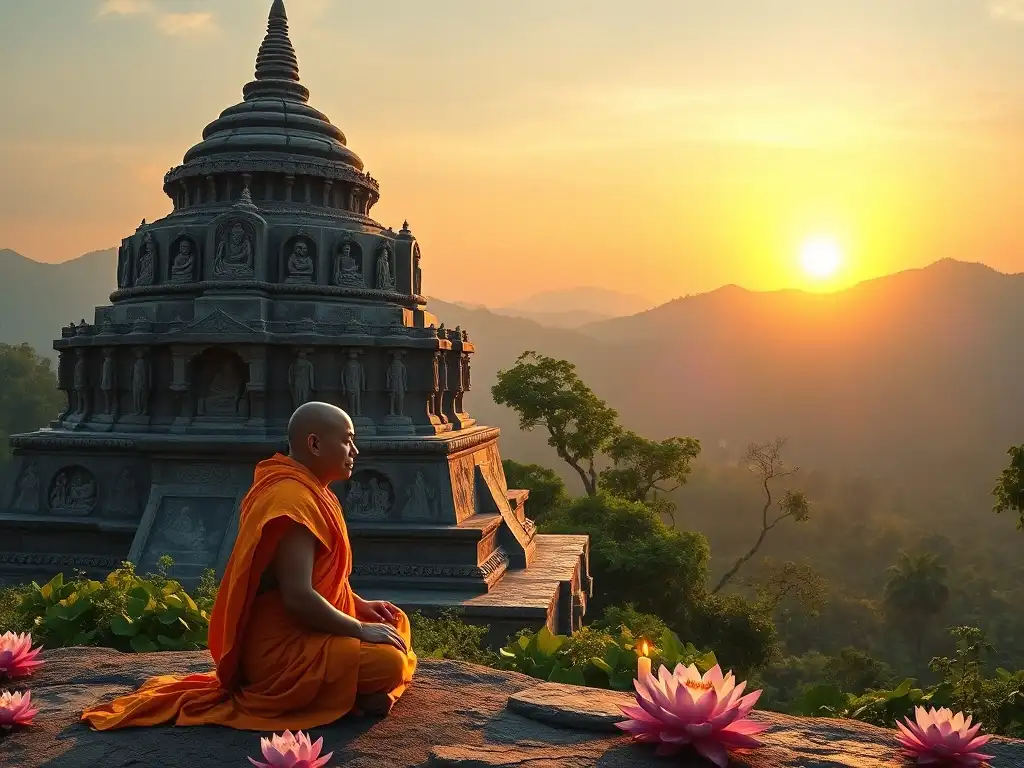
Welcome to Ancient India History, where we embark on a fascinating journey through time to uncover the rich tapestry of ancient Indian civilizations. In our featured article, “The Historical Context of Buddhist Art: A Window into Ancient Beliefs,” we delve into the captivating world of Buddhist art in ancient India, revealing how this intricate artistic expression reflects the profound spiritual and cultural beliefs of the era. What secrets does this art hold about the ancient psyche?
Join us as we explore the masterpieces that not only adorned sacred spaces but also shaped the very essence of a civilization. Prepare to be intrigued and inspired as you uncover the layers of history that continue to resonate today!
Introduction to Buddhist Art in Ancient India
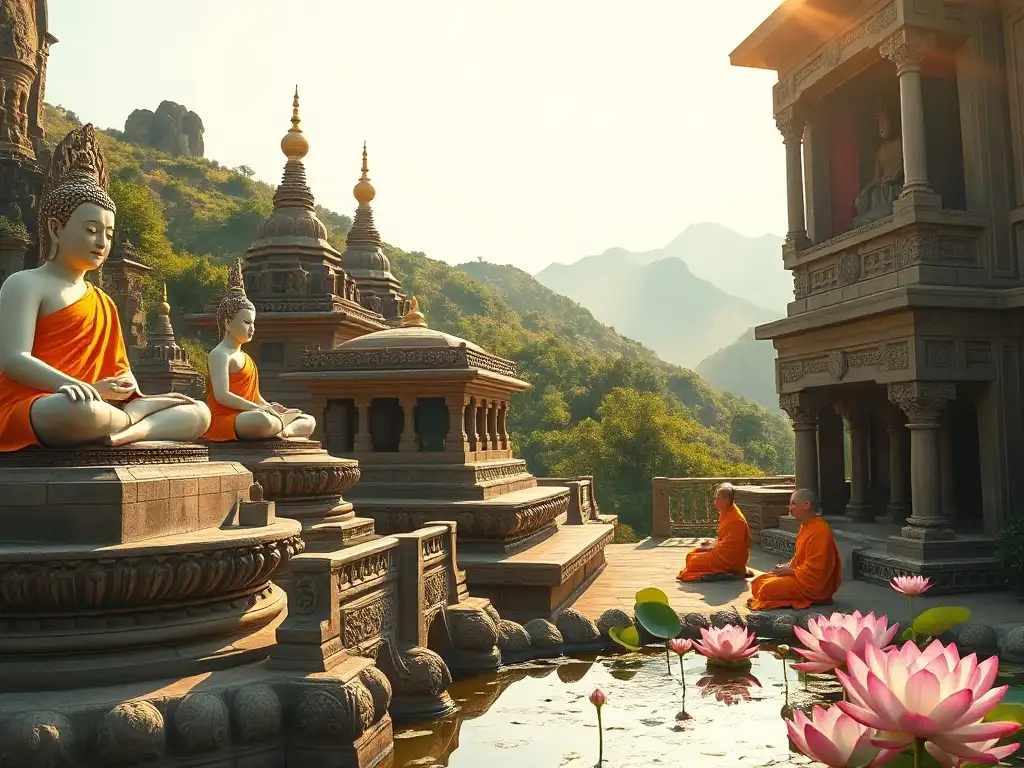
Buddhist art in ancient India serves as a remarkable lens through which we can explore the spiritual, cultural, and social dynamics of early Indian civilization. This artistic expression not only reflects the beliefs and teachings of Buddhism but also embodies the broader historical context in which it flourished. From the intricate carvings of stupas to the serene sculptures of the Buddha, these artworks reveal the profound relationship between religion and artistry, highlighting how the aesthetic choices made by ancient artisans were deeply intertwined with the spiritual narratives of their time.
Definition of Buddhist Art
Buddhist art encompasses a wide array of artistic expressions that emerged in connection with the teachings of the Buddha and the subsequent development of Buddhism as a major world religion. This includes:
- Sculpture: Statues of the Buddha, Bodhisattvas, and other significant figures.
- Painting: Murals and frescoes depicting Buddhist narratives and principles.
- Architecture: Stupas, monasteries, and temples designed for worship and meditation.
These forms of art were not merely decorative; they served as visual representations of Buddhist doctrines, helping to convey complex philosophical ideas to followers and practitioners.
Importance of Buddhist Art in Cultural Heritage
Buddhist art holds substantial significance in the cultural heritage of ancient India and beyond. It is a testament to the rich tapestry of beliefs that shaped the Indian subcontinent. The art provides insights into:
- Religious Practices: Understanding rituals and ceremonies through artistic depictions.
- Historical Context: Reflecting social and political changes during different periods of Buddhist history.
- Cultural Exchange: Demonstrating interactions with other cultures and religions, particularly during the spread of Buddhism across Asia.
The preservation and study of Buddhist art allow us to appreciate the aesthetic achievements of ancient civilizations while fostering a deeper understanding of their worldviews and values.
The Origins of Buddhism and Its Artistic Expressions
Historical Background of Buddhism in Ancient India
Buddhism originated in the 5th century BCE, rooted in the teachings of Siddhartha Gautama, known as the Buddha. Emerging in a period marked by significant philosophical inquiry and social change in ancient India, Buddhism offered a new perspective on life, suffering, and the path to enlightenment. As the religion spread, it adapted to various cultural contexts, leading to a rich diversity of artistic expressions influenced by local traditions and beliefs.
The historical development of Buddhism corresponds with notable empires, such as the Maurya and Gupta, which played crucial roles in the promotion and patronage of Buddhist art. The reign of Emperor Ashoka (c. 268–232 BCE) is particularly significant, as he actively supported the dissemination of Buddhist teachings and commissioned numerous monuments and artworks that helped shape the visual language of Buddhism.
Early Forms of Buddhist Art and Iconography
The earliest forms of Buddhist art emerged in the centuries following the Buddha’s death, primarily in the form of aniconic representations. Initially, the Buddha was symbolized through motifs such as the lotus, wheel, or stupa, which conveyed his teachings without depicting his physical form.
As Buddhism evolved, so did its art. By the 1st century CE, figurative representations of the Buddha became prominent, particularly in the Gandhara and Mathura schools of art. Key characteristics of early Buddhist iconography include:
- Serene Expressions: Reflecting the Buddha's enlightenment and transcendent nature.
- Mudras: Symbolic hand gestures representing various aspects of the Buddha’s teachings.
- Attire and Ornamentation: Indicative of the cultural influences and the status of the figures depicted.
These artistic expressions not only served religious purposes but also played a pivotal role in disseminating Buddhist philosophy to a broader audience, making the teachings accessible through visual storytelling.
Key Influences on Buddhist Art Development
The development of Buddhist art in ancient India was significantly influenced by various factors, including cultural, religious, and political dynamics. These influences contributed to a rich tapestry of artistic expression that reflected the evolving beliefs and practices of Buddhism. Key influences included:
- Cultural Context: The integration of local traditions and aesthetics played a crucial role in shaping Buddhist art. As Buddhism spread across different regions, local artistic styles and materials were incorporated into Buddhist iconography and architecture.
- Royal Patronage: The support of influential monarchs, particularly during the Mauryan and Gupta periods, was instrumental in the proliferation of Buddhist art. Kings and emperors not only commissioned artworks but also built stupas and monasteries, creating environments conducive to artistic expression.
- Trade Interactions: The Silk Road and other trade routes facilitated cultural exchanges between India and neighboring regions, including Central Asia and China. This interaction led to the transmission of artistic styles and motifs, enriching the visual language of Buddhist art.
The Role of Indian Culture in Shaping Buddhist Art
Indian culture had a profound impact on the creation and evolution of Buddhist art. From the early depictions of the Buddha that avoided direct representation to the more elaborate forms that followed, Indian cultural values and aesthetics shaped the narrative and visual elements of Buddhist art.
- Symbolism and Iconography: Indian artistic traditions emphasized symbolism, which significantly influenced how the Buddha and other figures were represented. Common symbols, such as the lotus flower representing purity and enlightenment, became integral to Buddhist iconography.
- Narrative Techniques: The storytelling tradition in Indian art influenced the depiction of Jataka tales—stories of the Buddha's previous lives. These narratives were often illustrated in sculptures and paintings, blending religious teachings with artistic expression.
- Materials and Techniques: The use of local materials, such as sandstone, terracotta, and later metal, showcased the craftsmanship of ancient Indian artisans. Techniques such as relief carving and fresco painting were refined and became hallmarks of Buddhist art.
Interaction with Other Religions and Artistic Traditions
The interaction between Buddhism and other religious traditions in ancient India enriched its artistic landscape. This cross-pollination of ideas and styles resulted in a diverse array of artistic expressions.
- Hinduism: The close relationship between Buddhism and Hinduism led to shared iconographic elements and themes. For instance, certain motifs and deities were adapted from Hindu art into Buddhist representation, creating a continuum of religious expression.
- Jainism: Jain art also influenced Buddhist art, particularly in the use of intricate carvings and elaborate ornamentation. The emphasis on non-violence and asceticism in Jainism resonated with Buddhist ideals, leading to similar artistic representations.
- Greco-Buddhist Art: The Hellenistic influence, particularly during the Kushan Empire, introduced new artistic techniques and styles. The depiction of the Buddha in human form, with features reminiscent of Greek sculptures, marked a significant transformation in Buddhist art.
Major Periods in Buddhist Art History
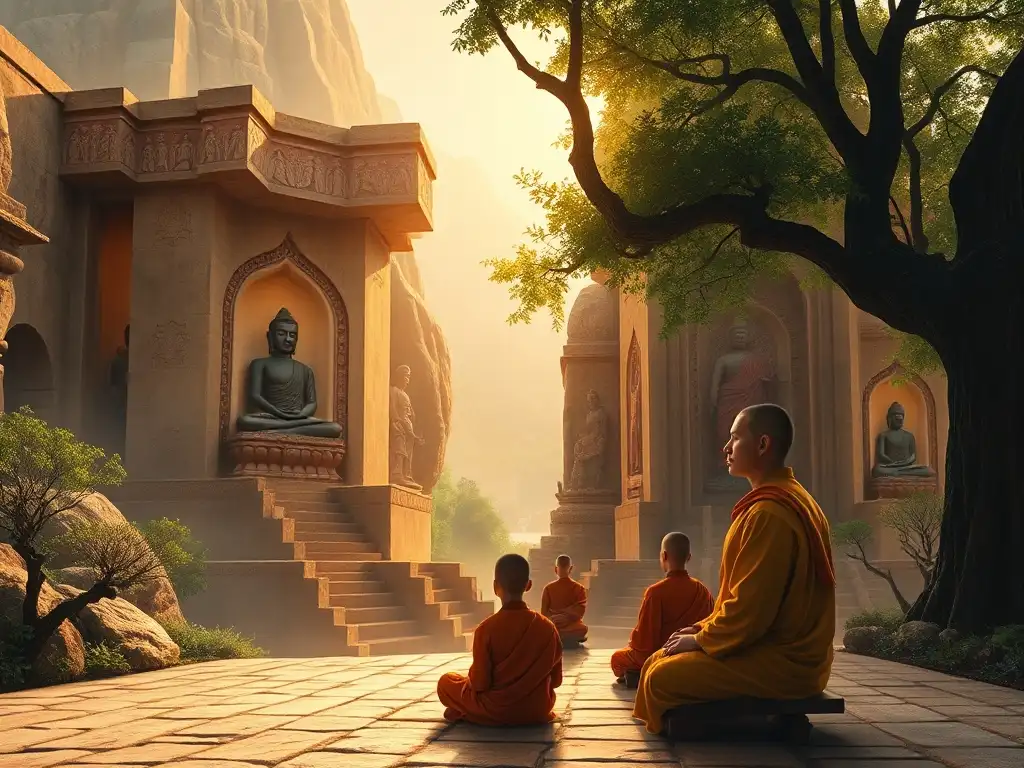
Buddhist art in ancient India can be categorized into several major periods, each characterized by distinct styles, themes, and advancements. These periods reflect the growth and evolution of Buddhist beliefs and practices.
Mauryan Period: The Birth of Buddhist Art
The Mauryan period (circa 322-185 BCE) is often regarded as the genesis of Buddhist art. Under Emperor Ashoka's reign, Buddhism gained royal patronage, leading to the construction of stupas and rock-cut caves that served as early artistic expressions of Buddhist beliefs.
- Ashoka's Edicts: The edicts of Ashoka, inscribed on pillars and rocks, not only propagated Buddhist teachings but also marked the emergence of monumental art. These inscriptions often accompanied symbols of the Dharma Wheel and were integral to the visual representation of Buddhist principles.
- Stupas and Monuments: The creation of stupas, such as the Sanchi Stupa, exemplified early Buddhist architecture. These structures served as reliquaries and were adorned with intricate carvings depicting scenes from the Buddha's life and symbolic motifs.
Sarnath and the Evolution of Stupas
Sarnath, the site of the Buddha's first sermon, became an important center for Buddhist art and architecture. The stupas at Sarnath reflect significant advancements in design and artistic expression.
- Dhamek Stupa: This stupa, built during the Mauryan period and later expanded, is a prime example of early Buddhist architecture. Its elaborate carvings and inscriptions illustrate the teachings of the Buddha and the importance of the site.
- Narrative Reliefs: The art at Sarnath showcased a shift towards narrative reliefs that depicted stories from the Buddha's life. These reliefs not only served decorative purposes but also communicated essential teachings to the lay community.
Gupta Period: Golden Age of Buddhist Art
The Gupta period (circa 320-550 CE) is often referred to as the "Golden Age" of Indian art, including Buddhist art. This era witnessed a flourishing of artistic expression, marked by sophistication and innovation.
- Iconography and Representation: The Gupta period saw the emergence of highly refined depictions of the Buddha and Bodhisattvas, characterized by graceful forms and elaborate ornamentation. This period established the artistic standards for subsequent generations.
- Cave Temples: The development of rock-cut cave temples, such as those at Ajanta and Ellora, illustrated the integration of architectural and sculptural elements. These caves featured intricate frescoes and detailed carvings, serving as important centers for Buddhist practice and art.
- Buddhist Sculpture: The Gupta artisans excelled in creating lifelike sculptures that conveyed spiritual depth. The use of drapery, facial expressions, and postures reflected a deep understanding of human emotion and spiritual experience.
The historical context of Buddhist art in ancient India is shaped by a multitude of influences, interactions, and periods that collectively narrate the evolution of Buddhist beliefs and practices through rich artistic expression.
Iconography in Buddhist Art
Buddhist art serves as a profound visual language that communicates the teachings and beliefs of Buddhism. It encompasses various forms including sculpture, painting, and architecture, each rich with symbolism. The iconography within Buddhist art is not merely decorative but deeply rooted in the narratives and doctrines of Buddhism, representing key figures, events, and teachings. The most prominent depictions include images of the Buddha, bodhisattvas, and various symbols that convey spiritual concepts. Understanding this iconography provides insight into how ancient Indian civilizations perceived the divine and the path to enlightenment.
Symbolism of Buddha Images
Buddha images hold paramount significance in Buddhist art, representing the historical Buddha, Siddhartha Gautama, and his journey to enlightenment. Each aspect of a Buddha image is laden with meaning:
- Mudras: The different hand gestures known as mudras convey specific teachings. For example, the Dharmachakra mudra symbolizes the turning of the wheel of Dharma, while the Bhumisparsha mudra represents the moment of enlightenment.
- Posture: The seated position of the Buddha often signifies meditation and tranquility, while standing figures may express readiness to teach or engage with the world.
- Physical Features: The elongated earlobes signify renunciation of material wealth, while the ushnisha (a topknot of hair) represents an expanded wisdom and spiritual attainment.
Through these symbols, the Buddha's images invite devotees to reflect on the principles of Buddhism and inspire them toward spiritual growth.
Depictions of Bodhisattvas and Their Significance
Bodhisattvas play a crucial role in Buddhist art, symbolizing compassion and the aspiration to attain Buddhahood for the benefit of all sentient beings. Unlike the Buddha, who has achieved enlightenment, bodhisattvas delay their own nirvana to assist others in their spiritual journeys. Notable bodhisattvas depicted in art include Avalokiteshvara, the embodiment of compassion, and Manjushri, who represents wisdom.
These figures are often illustrated with distinct attributes, such as:
- Avalokiteshvara: Usually depicted with multiple arms to show the ability to help many beings simultaneously.
- Manjushri: Often portrayed holding a sword that signifies the cutting through of ignorance.
The rich iconography associated with bodhisattvas underscores their importance in the devotional practices of Buddhism and highlights the values of compassion, wisdom, and altruism central to Buddhist teachings.
Use of Mandalas in Buddhist Art
Mandalas are intricate geometric designs that serve as spiritual symbols in Buddhist art, representing the universe and aiding in meditation. Originating as a tool for meditation and ritual, mandalas are often circular in form, symbolizing the cyclical nature of life and the interconnectedness of all beings.
- Types of Mandalas: There are different types of mandalas, including the Buddhist mandala that typically depicts a deity at the center surrounded by various figures and symbols representing the cosmos.
- Function in Practice: Mandalas are not just artistic expressions; they are utilized in rituals, serving as a focal point for meditation. Practitioners may visualize themselves within the mandala to cultivate a deeper spiritual connection.
Mandalas demonstrate the synthesis of art and spirituality in ancient Indian Buddhism, allowing practitioners to engage with complex philosophical concepts through visual representation.
Regional Variations in Buddhist Art
Buddhist art in ancient India is not monolithic but varies significantly across different regions. Each area reflects local cultures, materials, and artistic traditions, resulting in a rich tapestry of styles and expressions.
Differences in Artistic Styles Across Indian Regions
The regional variations in Buddhist art can be observed through distinct styles that emerged in different parts of ancient India:
- Gandhara Art: Characterized by Greco-Buddhist influences, this style is noted for its realistic human figures and elaborate drapery. The sculptures often depict the Buddha and bodhisattvas with Hellenistic traits, reflecting the cultural exchanges along trade routes.
- Mathura Art: In contrast, Mathura art showcases more indigenous styles with a focus on spiritual expression rather than realism. The figures are often more robust, and the iconography is imbued with local traditions.
- Ajanta Caves: The murals and sculptures in the Ajanta Caves represent a fusion of various artistic influences, highlighting narrative storytelling and intricate details of Buddhist tales.
These regional styles underline the adaptability of Buddhist art, which evolved to accommodate and integrate the cultural contexts of diverse communities.
Influence of Buddhism on Neighboring Countries' Art
The spread of Buddhism from India had a significant impact on the art of neighboring countries, influencing their artistic traditions and religious expressions:
- Southeast Asia: Countries like Thailand and Cambodia adopted Buddhist iconography, resulting in unique styles such as the Khmer art seen in Angkor Wat, where Hindu and Buddhist themes coexist.
- Tibet: Tibetan art incorporates Buddhist symbols while developing distinctive styles, particularly in thangka paintings and sculptures depicting deities and mandalas.
- China and Japan: The transmission of Buddhism to China saw the fusion of indigenous artistic styles with Buddhist themes, leading to the creation of Chinese Buddhist sculpture and ink painting, which later influenced Japanese practices.
The cross-cultural exchange facilitated by Buddhism not only enriched the artistic landscape of these regions but also fostered a shared spiritual heritage that continues to resonate today.
The Role of Monasteries and Temples in Buddhist Art
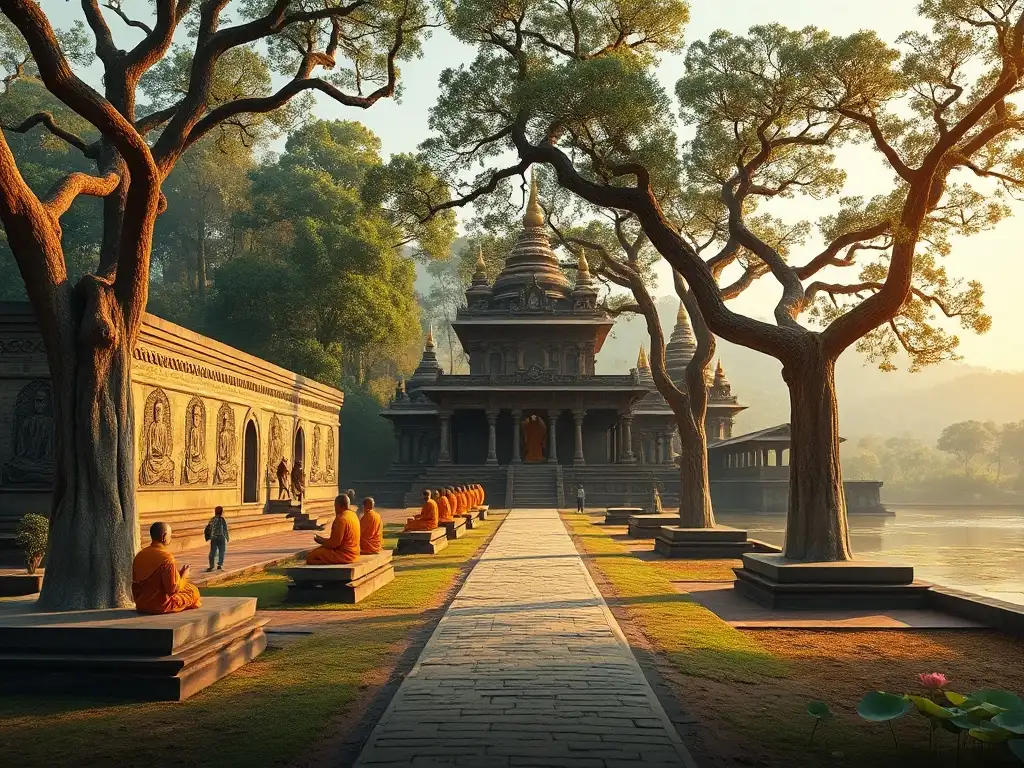
Buddhist monasteries and temples have played a pivotal role in the development and expression of Buddhist art in ancient India. These sacred spaces served not only as places of worship and meditation but also as centers for artistic innovation and cultural exchange. The architecture and decorative arts found within these structures reflect the philosophical and spiritual tenets of Buddhism, providing a visual representation of its teachings.
Monasteries, or viharas, were often the nucleus of Buddhist activity, where monks lived, studied, and engaged in communal practices. The design of these monasteries allowed for the integration of art into everyday monastic life, with murals, sculptures, and carvings depicting key events in the life of the Buddha and various bodhisattvas. Temples, too, became repositories of artistic expression, showcasing intricate carvings and elaborate frescoes that communicated Buddhist narratives to the faithful and served as an educational tool for those who could not read.
Furthermore, the interaction between local cultures and the Buddhist monastic community resulted in diverse artistic styles, signifying a blend of indigenous traditions with Buddhist iconography. This cross-pollination is evident in various regional forms of Buddhist art, which evolved as the religion spread across different parts of India and beyond.
Architectural Contributions of Buddhist Monasteries
The architectural designs of Buddhist monasteries reflect a deep understanding of space, community, and environmental harmony. Early examples, such as the rock-cut caves at Ajanta and Ellora, display remarkable ingenuity in utilizing natural formations to create meditation halls and monastic cells. These structures often featured complex layouts that included prayer halls ( chaityas), monastic quarters ( viharas), and assembly halls, all adorned with exquisite carvings and sculptures.
The stupa, a dome-shaped structure that housed relics of the Buddha, became a significant architectural element in Buddhist monasteries. The Great Stupa at Sanchi, for example, is a masterpiece of ancient Indian architecture, symbolizing the universe and the path to enlightenment. Its detailed carvings narrate stories from the Buddha's life and embody the core teachings of Buddhism.
Additionally, monasteries were strategically located along trade routes, facilitating the exchange of ideas and artistic techniques with other cultures. This led to the incorporation of various architectural elements, such as the use of columns from ancient Indian architecture, which enhanced the aesthetic appeal and structural integrity of Buddhist edifices.
Artistic Elements Found in Buddhist Temples
Buddhist temples are adorned with a variety of artistic elements that convey the richness of Buddhist thought and practice. Sculptures of the Buddha in various postures—such as the lotus position and the mudras (hand gestures)—are prevalent, each representing different aspects of his teachings. These sculptures are often intricately detailed, showcasing the craftsmen's skills and the theological significance of the depicted figures.
Murals and frescoes are another prominent feature of Buddhist temples, serving as visual narratives of Jataka tales—stories of the Buddha's previous lives. These artworks not only beautify the temple interiors but also serve an educational purpose, illustrating moral lessons and the virtues of compassion, wisdom, and selflessness.
In addition to sculptures and paintings, decorative motifs such as floral patterns, geometric designs, and symbolic animals are commonly found in Buddhist temples. These elements are imbued with spiritual significance, often symbolizing the interconnectedness of life and the cosmos. The incorporation of local artistic styles into Buddhist temple art further highlights the adaptability and syncretic nature of Buddhism as it spread across different regions.
The Decline of Buddhist Art and Its Legacy
The decline of Buddhist art in India can be attributed to a complex interplay of social, political, and religious factors that emerged over the centuries. As Hinduism began to reassert its dominance, particularly during the rise of the Gupta Empire, the patronage of Buddhist institutions waned. This shift led to the neglect of monastic complexes and a decrease in the production of Buddhist art.
Additionally, the invasions by foreign powers, such as the Huns in the 5th century CE, further destabilized the Buddhist community. Many monasteries were destroyed or repurposed, leading to a significant loss of artistic heritage. The decline of Buddhism as a major religious force in India resulted in the erosion of its artistic traditions, leaving behind fragmented remnants of a once-vibrant culture.
Factors Contributing to the Decline of Buddhist Art in India
Several factors contributed to the decline of Buddhist art in ancient India:
- Political Shifts: The rise of Hinduism and the decline of royal patronage for Buddhist institutions diminished the resources available for artistic endeavors.
- Invasions and Destruction: Foreign invasions led to the destruction of monasteries and temples, disrupting the continuity of artistic production.
- Cultural Assimilation: As Buddhism became more integrated into local cultures, many of its distinct artistic practices were absorbed into Hindu art, diluting the unique characteristics of Buddhist art.
- Decline in Monastic Communities: The reduction in the number of active monastic communities resulted in fewer opportunities for artistic training and expression.
Preservation and Revival of Buddhist Art Traditions
Despite the decline of Buddhist art in India, its legacy has endured through various means of preservation and revival. Many ancient texts and manuscripts detailing Buddhist art techniques and iconography have been preserved in libraries and monasteries, serving as valuable resources for scholars and artists alike.
In modern times, there has been a resurgence of interest in Buddhist art, both within India and globally. Art historians and practitioners have undertaken efforts to revive traditional techniques and styles, drawing inspiration from ancient works while adapting them to contemporary contexts. This revival has also led to the establishment of workshops and educational programs aimed at fostering a new generation of artists skilled in Buddhist artistic traditions.
Additionally, international collaborations and exhibitions have highlighted the significance of Buddhist art, promoting cross-cultural appreciation and dialogue. The preservation of ancient sites, such as the restoration of the Ajanta Caves, has further ensured that the rich legacy of Buddhist art continues to inspire and educate future generations.
Conclusion: The Enduring Influence of Buddhist Art in Ancient India
Buddhist art in ancient India serves as a profound testament to the rich spiritual and cultural landscape that flourished during the time of the Buddha and beyond. It not only reflects the teachings and philosophies of Buddhism but also encapsulates the socio-political dynamics and cultural exchanges that shaped the subcontinent.
The intricate sculptures, serene stupas, and vibrant frescoes found in various regions, from the Indus Valley to the Gupta Empire, provide valuable insights into the beliefs and practices of ancient Indian societies. These artistic expressions illustrate the evolution of Buddhist iconography, highlighting the transition from aniconic representations to more figurative depictions of the Buddha, Bodhisattvas, and other significant figures in Buddhism.
The stylistic variations seen in Buddhist art across different regions, such as Gandhara and Mathura, underscore the syncretic nature of ancient Indian culture, where local traditions and foreign influences coalesced. Moreover, the patronage from diverse rulers and communities played a crucial role in the proliferation of Buddhist art, allowing it to thrive and adapt over time. This historical context not only enriches our understanding of Buddhism's artistic legacy but also emphasizes the importance of art as a medium for spiritual expression and communal identity.
Summary of Key Points on Buddhist Art in Ancient India
- Historical Evolution: Buddhist art evolved significantly from the 3rd century BCE to the 6th century CE, reflecting the changing beliefs and practices within Buddhism.
- Iconography: Early Buddhist art was characterized by aniconic symbols, transitioning to the depiction of the Buddha and Bodhisattvas in more human-like forms, which illustrated key teachings and narratives.
- Regional Styles: Distinct regional styles emerged, notably the Gandhara style with its Greco-Roman influences and the Mathura style that showcased indigenous Indian aesthetics.
- Cultural Syncretism: Buddhist art exemplified the blending of various cultural elements, showcasing interactions between different communities and religions in ancient India.
- Patronage: Various rulers, including Mauryan emperors and later dynasties, supported the creation of stupas, monasteries, and sculptures, facilitating the spread of Buddhist art across the region.
The Continued Relevance of Buddhist Artistic Heritage
The legacy of Buddhist art in ancient India continues to resonate in contemporary culture and practices. It remains a vital source of inspiration for modern artists, scholars, and spiritual seekers who draw upon its rich symbolism and aesthetic principles. The themes of compassion, enlightenment, and the interconnectedness of all beings that are embedded in Buddhist art are increasingly relevant in today's globalized society, where mindfulness and spiritual exploration are gaining prominence.
Moreover, the preservation and study of ancient Buddhist art contribute to a broader understanding of historical narratives and cultural heritage. Institutions and museums around the world recognize the importance of these artworks in fostering intercultural dialogue and understanding. The continued interest in Buddhist art not only underscores its aesthetic value but also highlights its role in promoting peace and compassion, core tenets of Buddhism that remain essential in addressing contemporary challenges.
The enduring influence of Buddhist art in ancient India is a remarkable reflection of the civilization's spiritual depth and cultural richness, ensuring that its legacy will live on through future generations.
- Introduction to Buddhist Art in Ancient India
- The Origins of Buddhism and Its Artistic Expressions
- Key Influences on Buddhist Art Development
- Major Periods in Buddhist Art History
- Iconography in Buddhist Art
- Regional Variations in Buddhist Art
- The Role of Monasteries and Temples in Buddhist Art
- The Decline of Buddhist Art and Its Legacy
- Conclusion: The Enduring Influence of Buddhist Art in Ancient India
Frequently Asked Questions
What is the significance of Buddhist art in ancient India?
Buddhist art reflects the spiritual and cultural beliefs of ancient Indian civilizations, showcasing their values and philosophies through various artistic forms, such as sculptures and paintings.
How did Buddhist art evolve over time in ancient India?
Buddhist art evolved from simple symbolic representations to intricate narrative sculptures and frescoes, influenced by regional styles and the spread of Buddhism across Asia.
What materials were commonly used in ancient Buddhist art?
Artisans utilized materials like stone, bronze, and clay to create sculptures, while murals were painted on walls using natural pigments, highlighting the craftsmanship of the era.
How did the Gupta Empire influence Buddhist art?
Under the Gupta Empire, Buddhist art flourished, characterized by a more refined style and the introduction of new themes, including bodhisattvas and depictions of Buddha in various postures.
What role did Buddhist monasteries play in the development of art?
Buddhist monasteries were not only centers of learning but also served as patrons for artists, fostering the creation of religious art that conveyed doctrinal teachings and cultural heritage.
Final Reflection: The Enduring Legacy of Buddhist Art in Ancient India
The exploration of Buddhist art in ancient India reveals not only the aesthetic achievements of a bygone era but also the profound spiritual and philosophical beliefs that shaped its creation. Today, as we navigate a world increasingly defined by rapid change and cultural exchange, the timeless messages embedded in these artworks resonate more than ever. The intricate carvings, serene statues, and vibrant murals serve as a reminder of the enduring quest for enlightenment and understanding that transcends time and geography.
The influence of Buddhist art extends far beyond its historical context, permeating contemporary culture and spirituality. From the meditative practices inspired by these ancient teachings to the resurgence of interest in mindfulness and compassion, the legacy of Buddhist art continues to shape our collective consciousness. As the philosopher Alan Watts once said, The art of the East is not merely decorative; it is a means of expressing the inner nature of reality.
This observation underscores the importance of engaging with these artistic expressions, as they invite us to reflect on our own beliefs and values in a modern context.
As you contemplate the significance of Buddhist art in ancient India, I invite you to take a moment to reflect on how these timeless teachings can inform your own life. Consider how the principles of compassion, mindfulness, and interconnectedness can be woven into your daily experiences. By embracing the lessons of the past, we can cultivate a deeper understanding of ourselves and our place in the world, fostering a sense of harmony and purpose that echoes the wisdom of those who came before us.
Unveil the Insights of Buddhist Art Today!
Thank you for exploring the intricate world of Buddhist art and gaining a deeper understanding of its historical significance. As we’ve discovered, these masterpieces are not just beautiful creations; they serve as windows into the ancient beliefs that shaped various civilizations. Now, let’s take the next step in your journey of discovery!
- Dive deeper: Visit a local museum or an online gallery that showcases Buddhist art and symbolism. You’ll be amazed at the captivating stories behind each piece!
- Share your insights: Engage in conversations with friends or family about what you’ve learned. Discuss the profound influence of art on spirituality and cultural identity.
- Join a community: Connect with online forums or social media groups focused on Buddhist art and history. Engaging with like-minded individuals can open up new perspectives.
What aspect of Buddhist art has inspired you the most, and how would you like to explore it further?