
The Political Landscape of Ancient India Before and After Chandragupta Maurya

Welcome to Ancient India History, where we embark on a journey through the rich tapestry of India's past, uncovering the remarkable civilizations that shaped its identity. In our feature article, "The Political Landscape of Ancient India Before and After Chandragupta Maurya," we delve into the intricate web of political dynamics that defined this era. Discover how the rise and fall of empires influenced the governance and society of ancient India.
As we peel back the layers of time, prepare to be captivated by the stories that have laid the groundwork for modern India. Join us as we explore the fascinating world of Ancient Indian political history and unlock the secrets of an age long past!
Introduction to Ancient Indian Political History
The political history of ancient India is a tapestry woven from the threads of diverse kingdoms, empires, and cultures that flourished on the subcontinent over millennia. Understanding this intricate web is crucial for recognizing how political ideologies, governance structures, and regional powers evolved, particularly during pivotal periods such as the rise of Chandragupta Maurya.
This article aims to unpack the ancient Indian political history, focusing on the landscape before and after Chandragupta Maurya, whose reign marked a significant turning point in Indian governance and imperial power dynamics. By exploring the shifts in power, the emergence of new political entities, and the consolidation of authority, we can gain insights into the complexities of ancient Indian societies.
Overview of Ancient Indian Civilizations
Ancient India was home to several prominent civilizations, each contributing uniquely to the political landscape. The civilization of the Indus Valley, characterized by its advanced urban planning and trade networks, laid the groundwork for subsequent political developments. Following this, the Vedic period introduced a more stratified society with emerging kingdoms led by Kshatriya warrior clans.
The Mahajanapadas, or great kingdoms, emerged during the 6th century BCE, marking a significant phase in ancient Indian history. These 16 powerful states, including Magadha, Kosala, and Vatsa, were characterized by their diverse political structures ranging from republics to monarchies. Each kingdom contributed to the rich tapestry of Indian political history, setting the stage for the subsequent rise of the Mauryan Empire.
Importance of Understanding Political Transitions
Studying the transitions in ancient Indian political history is vital for several reasons:
- Cultural Insights: Political changes often reflect broader cultural and social transformations, providing a deeper understanding of ancient Indian life.
- Influence on Modern Politics: The political structures and philosophies developed during ancient times continue to influence contemporary Indian governance.
- Lessons from History: Analyzing the successes and failures of past political entities offers valuable lessons for current and future leaders.
The Political Landscape Before Chandragupta Maurya
Major Kingdoms and Empires in Ancient India
Prior to the rise of Chandragupta Maurya, ancient India was marked by a multitude of kingdoms and empires, each vying for power and influence. Some of the most notable include:
- Magadha: A dominant force in eastern India, it played a crucial role in the political landscape leading up to the Mauryan Empire.
- Kosala: Known for its rich cultural heritage, Kosala was a significant kingdom during the later Vedic period.
- Avanti: Famed for its strategic location and economic wealth, Avanti was a key player in regional politics.
- Vatsa: A republic that exemplified the political diversity of ancient India, showcasing a different governance model.
These kingdoms engaged in alliances, wars, and diplomacy, creating a dynamic political environment that laid the foundation for the Mauryan Empire.
Political Structures and Governance
The governance of ancient Indian kingdoms varied widely, reflecting the diverse cultural and social landscapes. Some key features included:
- Monarchical Systems: Many kingdoms were ruled by kings who wielded significant power and authority, often justified by divine right or hereditary succession.
- Republics: In contrast, some regions, like the Lichchhavis of Vaishali, practiced a form of republicanism where power was shared among elected representatives.
- Bureaucratic Administration: The emergence of complex bureaucracies in major kingdoms facilitated efficient governance and tax collection, fostering economic growth and stability.
Understanding these political structures is essential to grasp the complexities of power dynamics that Chandragupta Maurya would later navigate and transform.
The Rise of Chandragupta Maurya
Chandragupta Maurya's ascent to power marked a significant turning point in ancient Indian political history. Emerging from relative obscurity, he founded the Maurya Empire, which became one of the largest empires in ancient India. His rise can be attributed to a combination of personal ambition, strategic alliances, and the socio-political environment of the time.
Chandragupta's journey began in the 4th century BCE, shortly after the decline of the Nanda dynasty, which had ruled over the Magadha region. He was inspired by the teachings of the renowned philosopher Chanakya (also known as Kautilya), who played a crucial role in shaping his political ideology. Chanakya's vision of a united India under a strong ruler resonated with Chandragupta, leading to a formidable partnership that would lay the groundwork for the Maurya Empire.
The socio-political landscape of the time was characterized by fragmentation and the presence of numerous small kingdoms and republics. Chandragupta capitalized on this disunity, leveraging his strategic vision and military acumen to rally support and challenge the existing powers. His ability to forge alliances with local rulers and garner popular support among the populace was instrumental in his rise.
Early Life and Influences on Political Thought
Chandragupta Maurya's early life remains somewhat enigmatic, but historical accounts suggest he belonged to a humble background in the region of Magadha. His formative years were shaped by experiences that instilled in him a desire for power and governance. The influence of Chanakya was pivotal, as he not only mentored Chandragupta but also provided him with a philosophical framework grounded in realism and strategic thinking.
Chanakya's seminal work, the Arthashastra, laid out principles of statecraft, economics, and military strategy that profoundly influenced Chandragupta’s approach to governance. This text emphasized the importance of a centralized authority, the role of espionage, and the necessity of military preparedness in ensuring the stability of the state. Together, they envisioned a powerful empire that would unify the fragmented territories of India.
Chandragupta's early experiences, coupled with Chanakya’s mentorship, fostered a political thought characterized by pragmatism and a keen understanding of human nature. This foundation would later prove essential as he navigated complex alliances and confronted formidable adversaries in his quest for power.
Formation of the Maurya Empire
The formation of the Maurya Empire was a remarkable achievement that began with Chandragupta's conquest of the Nanda dynasty around 321 BCE. Utilizing the strategic insights and resources provided by Chanakya, he launched a carefully planned campaign that culminated in the overthrow of the Nandas. The fall of this dynasty marked the beginning of a new era in ancient Indian political history.
Following his victory, Chandragupta set about consolidating power and expanding his territory. He established a centralized administration that allowed for effective governance across diverse regions. The empire's foundation was laid on principles of justice, fiscal administration, and military readiness, which were critical for maintaining control over the vast territories.
Chandragupta's reign also witnessed the integration of various cultures and communities into the Maurya Empire, fostering a sense of unity among his subjects. This period marked a significant shift in political dynamics, as the Maurya Empire emerged as a dominant force in ancient India, influencing trade, culture, and governance across the subcontinent.
The Political Landscape During the Maurya Empire
The Maurya Empire, under the rule of Chandragupta and his successors, represents a pinnacle in ancient Indian political history. This era was defined by a sophisticated political structure that facilitated effective governance and expansive territorial control. The centralized nature of the empire allowed for greater coherence in administration and law enforcement, establishing a model that would influence subsequent Indian kingdoms.
The political landscape was characterized by the integration of diverse regions and cultures, which led to a flourishing of trade, arts, and sciences. The Maurya Empire not only unified the Indian subcontinent but also engaged in diplomatic relations with neighboring kingdoms, creating a network of alliances that enhanced its stability and influence.
Centralized Governance and Administration
Centralized governance was a hallmark of the Maurya Empire, allowing for efficient administration across its vast territories. Chandragupta implemented a bureaucratic system that empowered local governors, known as amatyas, to oversee various regions while adhering to the central authority. This hierarchical structure ensured that policies were uniformly enforced and that resources were effectively managed.
Key features of the Mauryan administration included:
- Standardized Taxation: The empire established a structured tax system that facilitated revenue collection, enabling the state to fund military campaigns and public projects.
- Legal Framework: The Maurya Empire implemented a codified legal system that promoted justice and reduced corruption, thus enhancing public trust in the government.
- Infrastructure Development: Significant investments in infrastructure, such as roads and irrigation systems, were made to promote trade and agriculture, ensuring economic stability.
This centralized governance not only strengthened the empire's political authority but also fostered a sense of identity among its diverse populations.
Military Strategies and Expansion
Chandragupta Maurya's military strategies were crucial to the expansion and consolidation of his empire. His approach combined strategic planning, innovative tactics, and a well-trained army, which allowed him to secure victories against formidable adversaries.
Key elements of his military strategies included:
- Use of Elephants: Chandragupta effectively utilized war elephants in battle, which provided both psychological and tactical advantages over his enemies.
- Guerrilla Tactics: He employed guerrilla warfare strategies to exploit the weaknesses of larger armies, enabling smaller forces to achieve significant victories.
- Fortification and Defense: The establishment of fortified cities and strategically placed military outposts enhanced the empire's defensive capabilities, deterring invasions and securing trade routes.
The Maurya Empire's military prowess facilitated not only territorial expansion but also the establishment of a lasting legacy in ancient Indian political history, as it laid the groundwork for future empires and dynasties.
The Political Landscape After Chandragupta Maurya
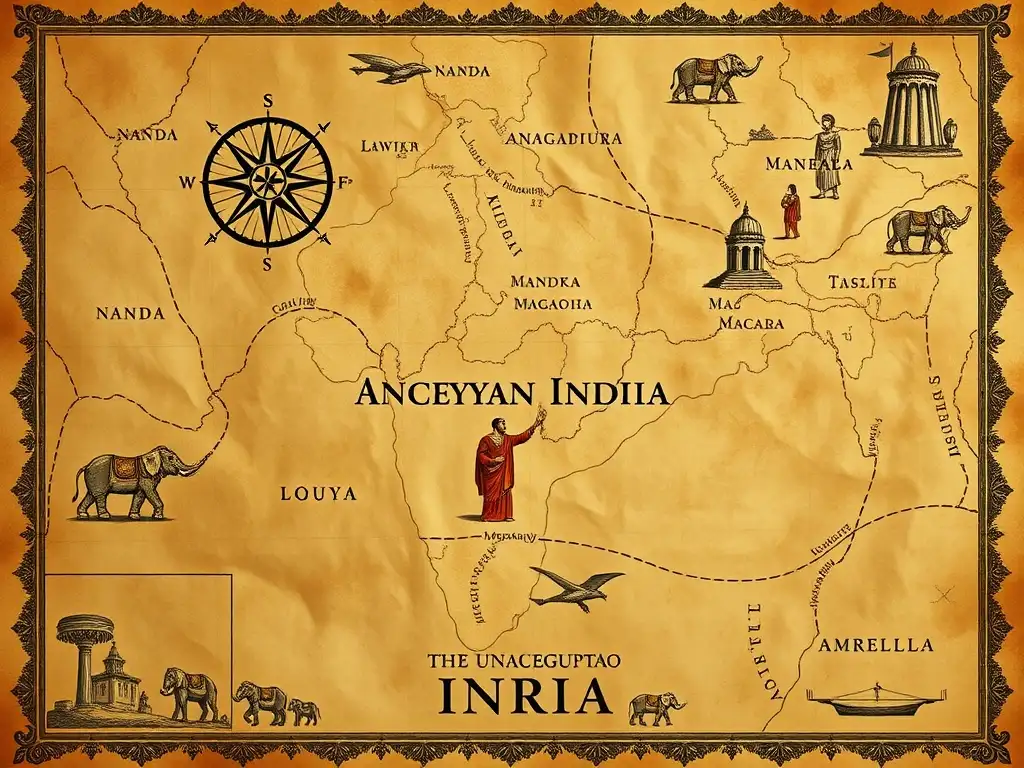
The political landscape of ancient India underwent significant transformations following the reign of Chandragupta Maurya, the founder of the Maurya Empire. His rule marked the beginning of a centralized governance system, which set the stage for future dynasties and influenced the political fabric of the subcontinent. The Maurya Empire expanded under Chandragupta's leadership, and this consolidation of power created a strong administrative framework that was pivotal for subsequent rulers.
After his abdication, Chandragupta passed the throne to his son, Bindusara, who continued to solidify the empire. Under Bindusara, the Maurya Empire further expanded its territory, especially in the Deccan region. This era was characterized by diplomatic engagements with neighboring kingdoms, an emphasis on trade, and the establishment of a more sophisticated administrative structure. The political strategies employed during this time laid the foundation for a governance model that emphasized both central authority and regional autonomy.
Transition to Bindusara's Rule
The transition from Chandragupta to Bindusara's rule was marked by a smooth succession that contributed to political stability. Bindusara, also known as Amitraghata, focused on consolidating and expanding his father's empire. His reign saw the Maurya Empire reach new heights as he successfully negotiated alliances and engaged in military conquests.
Bindusara's diplomatic approach with the Greeks, particularly with the Seleucid Empire, demonstrated an astute understanding of international relations. This period also saw the Mauryan administration adopt a more nuanced approach to governance, balancing local customs and traditions with the overarching framework of centralized authority established by Chandragupta. The integration of diverse regions into the empire was facilitated through a combination of military strength and diplomatic acumen, ensuring a relatively peaceful transition of power and continued expansion.
Impact on Subsequent Dynasties
The political changes initiated during and after Chandragupta Maurya's reign had a profound impact on subsequent dynasties in ancient India. The Maurya Empire served as a model for later rulers who sought to establish their own powerful kingdoms. The administrative practices, including revenue collection and law enforcement, influenced various dynasties such as the Shunga, Kanva, and Gupta empires.
The Gupta Empire, in particular, adopted and adapted many Mauryan governance strategies, leading to a golden age of culture and administration. The emphasis on trade and the establishment of a vast network of roads and communication systems initiated during the Mauryan period laid the groundwork for economic prosperity in the Gupta era. The political ideologies and practices of the Mauryas, such as the concept of a dharmic ruler, continued to resonate in the political discourse of later Indian states, emphasizing the importance of moral governance.
Conclusion
The political landscape of ancient India experienced significant evolution before and after the reign of Chandragupta Maurya, transforming from fragmented kingdoms to a centralized empire that influenced future dynasties. The Maurya period not only shaped the immediate political context but also established enduring principles of governance that would resonate through Indian history.
Summary of Key Political Changes in Ancient India
- Centralization of Power: Chandragupta Maurya established a strong centralized government, which became a template for future rulers.
- Expansion of Territory: Under both Chandragupta and Bindusara, the Maurya Empire expanded significantly, incorporating diverse regions and cultures.
- Administrative Innovations: The Mauryan administration introduced effective governance practices, including tax collection and law enforcement, which were emulated by subsequent dynasties.
- Diplomatic Relations: The Mauryas engaged in diplomatic negotiations, particularly with the Greeks, setting a precedent for international relations in ancient India.
The Lasting Impact of Chandragupta Maurya on Indian Governance
Chandragupta Maurya's legacy in Indian governance is profound and far-reaching. His establishment of a centralized state not only unified diverse regions but also set a precedent for administrative efficiency. The principles of governance he introduced—such as meritocracy, the importance of law, and the role of the ruler as a protector—continued to influence Indian political thought for centuries.
His descendants, particularly Ashoka, further developed these ideas, emphasizing moral leadership and the welfare of subjects, which became central tenets in Indian political philosophy. The Maurya Empire's emphasis on trade, diplomacy, and cultural integration left an indelible mark on the political landscape, shaping the trajectory of Indian history long after the decline of the Mauryan dynasty.
References
The study of ancient Indian political history, particularly during the time of Chandragupta Maurya and the Maurya Empire, is enriched by a variety of historical texts, archaeological findings, and scholarly analyses. These references provide critical insights into the political structures, governance, and the socio-economic conditions of ancient India. Here, we explore suggested readings and key historical texts that illuminate the political landscape of ancient India before and after Chandragupta Maurya.
Suggested Readings on Ancient Indian Political History
-
"The Mauryan Empire" by Romila Thapar
This book offers a comprehensive overview of the Mauryan Empire, focusing on its political dynamics, administration, and impact on subsequent Indian history. Thapar's analysis is grounded in a rich array of archaeological evidence and ancient texts.
-
"Ancient India: From the Earliest Times to the Present" by Hermann Kulke and Dietmar Rothermund
This text provides a broad historical narrative, covering various periods in Indian history, including the Mauryan era. The authors delve into political structures, cultural developments, and the legacy of ancient Indian civilizations.
-
"A History of Ancient and Early Medieval India: From the Stone Age to the 12th Century" by Upinder Singh
Singh's work is an exhaustive examination of ancient Indian history with an emphasis on political history. It discusses the rise and fall of empires, including the Maurya, and their influence on later Indian polity.
-
"The History of India" by John Keay
Keay's narrative is accessible and engaging, providing insights into the political landscape of India through various epochs, including the Mauryan period. His synthesis of historical events makes it an excellent starting point for understanding ancient Indian political history.
-
"The Oxford Handbook of Ancient India" edited by Patrick Olivelle
This comprehensive handbook includes contributions from various scholars, offering diverse perspectives on political, social, and economic aspects of ancient Indian history. It is an essential resource for understanding the complexities of the Maurya Empire and its predecessors.
Key Historical Texts and Sources on the Maurya Empire
-
Arthashastra by Kautilya (Chanakya)
This ancient Indian treatise on statecraft, economic policy, and military strategy is attributed to Kautilya, Chandragupta Maurya's chief advisor. It provides invaluable insights into the political philosophy and administrative practices during the Mauryan Empire.
-
Indica by Megasthenes
As a Greek ambassador to the Mauryan court, Megasthenes' accounts offer a unique outside perspective on the Maurya Empire, detailing its governance, social structures, and the wealth of the empire. His observations are crucial for understanding the political climate of ancient India.
-
Puranas
These ancient texts, particularly the Vishnu Purana and Bhagavata Purana, contain historical narratives that include references to the Mauryan dynasty. They offer insights into the legends, genealogies, and the socio-political context of the time.
-
Buddhist Texts
Texts such as the Dipavamsa and the Mahavamsa provide accounts of the Mauryan Empire's interactions with Buddhism, including the reign of Ashoka, Chandragupta's grandson. These texts are pivotal for understanding the political landscape and its ties to religion.
-
Rock Edicts of Ashoka
These inscriptions, created during the reign of Ashoka, provide direct evidence of the Mauryan political ideology, governance principles, and the promotion of Dharma. They serve as a testament to the administrative practices and moral governance of the Maurya Empire.
The exploration of these readings and texts is essential for anyone looking to gain a deeper understanding of ancient Indian political history, particularly the transformative period surrounding Chandragupta Maurya and his successors.
- Introduction to Ancient Indian Political History
- The Political Landscape Before Chandragupta Maurya
- The Rise of Chandragupta Maurya
- The Political Landscape During the Maurya Empire
- The Political Landscape After Chandragupta Maurya
- Conclusion
- References
- What were the major political systems in ancient Indian political history?
- Who was Chandragupta Maurya and why is he significant?
- How did the political landscape change after Chandragupta Maurya?
- What role did the Indus Valley Civilization play in shaping political structures?
- How did the Gupta Empire influence political history in ancient India?
Frequently Asked Questions
What were the major political systems in ancient Indian political history?
Ancient India featured various political systems including monarchies, republics, and city-states. Each region had its own governance structure, with kingship being predominant.
Who was Chandragupta Maurya and why is he significant?
Chandragupta Maurya was the founder of the Maurya Empire and is significant for unifying a large part of India under one rule, marking a pivotal shift in ancient Indian political history.
How did the political landscape change after Chandragupta Maurya?
After Chandragupta Maurya, the political landscape evolved with his grandson Ashoka promoting Buddhism and non-violence, which influenced governance and administration throughout the empire.
What role did the Indus Valley Civilization play in shaping political structures?
The Indus Valley Civilization is noted for its urban planning and trade networks, which laid early foundations for political organization and societal structures in ancient India.
How did the Gupta Empire influence political history in ancient India?
The Gupta Empire, often referred to as the Golden Age of India, brought advancements in science, art, and political stability, influencing governance models that lasted for centuries.
Final Reflection: The Enduring Legacy of Ancient Indian Political History
The political landscape of ancient India, particularly before and after Chandragupta Maurya, remains a pivotal chapter in understanding the evolution of governance and statecraft. The intricate systems of power, the rise of empires, and the philosophical underpinnings of leadership during this era resonate profoundly in today's political discourse. As we navigate our contemporary political environments, the lessons from ancient Indian political history remind us of the complexities and responsibilities inherent in governance.
The influence of Chandragupta Maurya and his successors on the cultural and social fabric of India is undeniable. The Mauryan Empire not only established a centralized form of governance but also laid the groundwork for political thought that would echo through the ages. This historical narrative serves as a testament to the enduring nature of political ideologies and practices. History is not a burden on the memory but an illumination of the soul.
- Lord Acton. This quote encapsulates how the lessons from ancient political structures can illuminate our understanding of modern governance.
As we reflect on the intricate tapestry of ancient Indian political history, I invite you to consider how these historical insights can inform your own perspectives on leadership and civic responsibility. What can we learn from the past to shape a more equitable and just society today? Embrace the wisdom of history as a guide for your actions, and let the legacy of ancient leaders inspire you to contribute positively to the political landscape of your own time.
Uncover the Vibrant History of Ancient India!
Thank you for exploring the fascinating political landscape of Ancient India with us! You've gained valuable insights into how **Chandragupta Maurya** shaped an era of transformation and stability. Now, it’s time to take your curiosity further!
Here are some ways to deepen your engagement with this rich history:
- Explore more: Delve into our articles on the **cultural achievements of the Mauryan Empire** and the significant figures that followed Chandragupta.
- Share your thoughts: Start a conversation in the comments below or on social media about how **ancient politics** influences **modern governance**.
- Join our community: Subscribe to our newsletter for regular updates on **Ancient Indian history**, and connect with fellow enthusiasts!
What do you think was the most pivotal moment in Ancient India's political evolution, and how does it resonate with today’s political climate?