
A Deep Dive into the Mathematical Treatises of Ancient India Featuring Zero

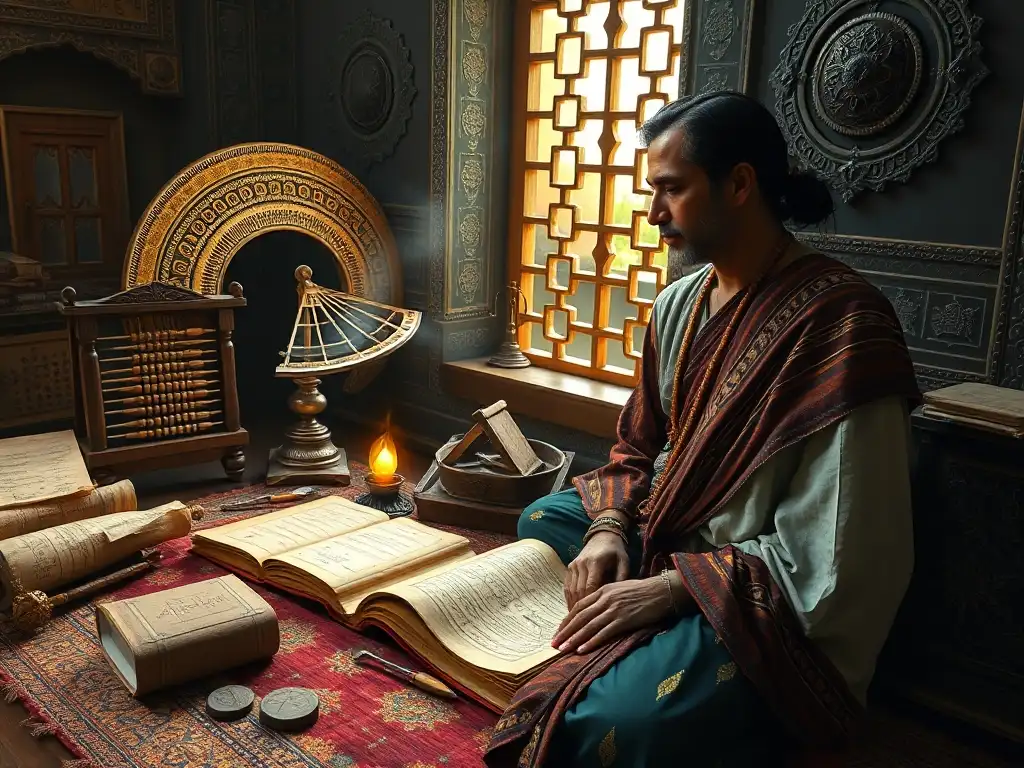
Welcome to Ancient India History, where we embark on a fascinating journey through the rich tapestry of India's past. Here, we delve into the profound contributions of ancient Indian civilizations, spotlighting their remarkable achievements in various fields. In this edition, prepare to be captivated by our exploration of "ancient Indian mathematics and zero," a groundbreaking concept that revolutionized not only Indian thought but also the world.
What secrets lie within the mathematical treatises of ancient scholars? Join us as we uncover the brilliance of these early mathematicians and their enduring legacy that continues to influence us today. Dive in and discover the wonders that await!
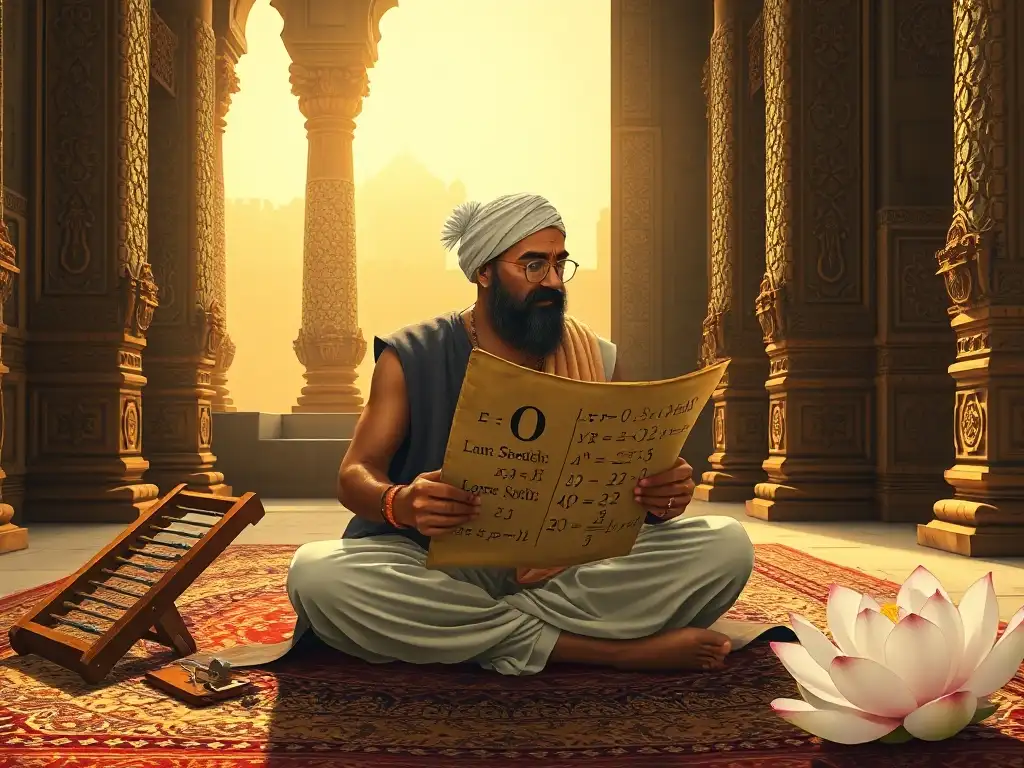
Introduction to Ancient Indian Mathematics and Zero
Ancient Indian mathematics is a fascinating field that showcases the profound intellectual contributions and innovations of early Indian civilizations. Among these contributions, the concept of zero stands out as one of the most significant breakthroughs in the history of mathematics. This article aims to explore the intricate mathematical treatises of ancient India, particularly focusing on the development and implications of zero.
The journey through ancient Indian mathematics reveals not only the technical advancements but also the cultural and philosophical contexts that shaped these ideas. Understanding the role of zero in ancient Indian mathematics not only highlights its mathematical importance but also illustrates its impact on global mathematical thought.
Overview of Ancient Indian Mathematics
The mathematical achievements of ancient India are remarkable and varied, encompassing arithmetic, algebra, geometry, and astronomy. Key texts such as the Sulba Sutras, Aryabhatiya, and Bakhshali Manuscript provide insight into the sophisticated numerical systems and mathematical concepts that emerged.
- Key Features:
- Use of decimal system.
- Development of algorithms for calculations.
- Innovations in geometry, particularly in constructing altars.
Furthermore, ancient Indian mathematicians employed a unique approach to problem-solving, blending practical applications with theoretical explorations. The contributions from this era laid foundational principles that would influence mathematicians for centuries to come.
Significance of Zero in Mathematical Developments
The invention of zero as a numerical digit was a revolutionary leap in mathematics, transforming calculations and representations of numbers. Before this innovation, the absence of a number was often left unrepresented, leading to ambiguity and confusion.
- Impact of Zero:
- Place Value System: Zero enabled the development of the place value system, allowing for the clear representation of large numbers.
- Mathematical Operations: It facilitated arithmetic operations, making addition, subtraction, and multiplication more systematic and efficient.
- Conceptual Advances: The philosophical implications of zero also influenced the understanding of infinity and the void in various Indian philosophical traditions.
The significance of zero extends beyond mathematics; it represents a conceptual understanding of absence and presence, which has permeated various aspects of Indian culture and thought.
Historical Context of Mathematics in Ancient India
Early Mathematical Practices in the Indus Valley Civilization
The Indus Valley Civilization (c. 2500–1900 BCE) is one of the earliest urban cultures in the world and showcases some of the earliest forms of mathematical practices. Archaeological findings suggest that the inhabitants employed advanced techniques in measurement and geometry.
- Notable Discoveries:
- Use of standardized weights and measures for trade.
- Layout of cities indicating an understanding of geometric principles.
These practices set the groundwork for future developments in mathematics, influencing subsequent generations of mathematicians in India.
The Vedic Period: Foundations of Mathematical Concepts
The Vedic period (c. 1500–500 BCE) heralded profound advancements in mathematics, particularly through the sacred texts known as the Vedas. The Sulba Sutras, part of the Kalpa texts, are particularly noteworthy for their mathematical content.
- Contributions:
- Techniques for constructing altars using geometric principles.
- Early forms of algebra and arithmetic, including methods for solving equations.
The Vedic texts reflect a blend of religious practice and mathematical reasoning, showcasing the integral role of mathematics in ancient Indian society.
Contributions from Famous Mathematicians of Ancient India
Several mathematicians from ancient India made significant contributions that shaped the course of mathematics.
- Key Figures:
- Aryabhata (476–550 CE): Introduced concepts such as the approximation of pi and the use of zero in calculations.
- Brahmagupta (598–668 CE): Authored the Brahmasphutasiddhanta, which included rules for arithmetic operations involving zero.
- Bhaskara II (1114–1185 CE): Further developed algebraic concepts and provided extensive commentary on the mathematical works of his predecessors.
These mathematicians not only advanced mathematical thought but also played a crucial role in disseminating these ideas across cultures, paving the way for future innovations in mathematics globally.
The Birth of Zero: A Revolutionary Concept
The concept of zero is one of the most significant advancements in mathematics, and its origins can be traced back to ancient Indian civilization. Before the formal introduction of zero, the numeral system was limited, as it lacked a symbol to represent the absence of quantity. The birth of zero as a numerical entity transformed not only mathematics but also the way calculations were performed and understood.
Ancient Indian mathematicians recognized the necessity of a placeholder in positional numeral systems, which allowed them to differentiate between numbers like 10 and 100. This innovation paved the way for more complex arithmetic operations and laid the groundwork for the development of algebra and calculus in later centuries. The introduction of zero enabled a comprehensive framework to express ideas of nothingness and infinity, thus altering the mathematical landscape permanently.
The Evolution of the Concept of Zero
The concept of zero evolved significantly over centuries. Initially, the idea of 'nothing' was represented by a space or a dot. Early Indian texts from around the 5th century CE began to explicitly define zero as a number, moving beyond its role as a mere placeholder. The mathematician Brahmagupta, in his seminal work "Brahmasphutasiddhanta," described rules for arithmetic involving zero, including operations like addition and subtraction.
As the notion of zero matured, it became integral to the decimal system. This system, with the combination of the digits 1 through 9 and the inclusion of zero, facilitated complex calculations and advanced mathematical concepts. The mathematical treatises of ancient India, such as "Aryabhatiya" by Aryabhata, further solidified the understanding of zero, emphasizing its importance in both mathematics and astronomy.
Comparison of Zero in Different Cultures
The concept of zero is not unique to ancient India; however, its interpretation and application varied across cultures. In Mesopotamia, for instance, a placeholder was used in cuneiform numerals, but it did not represent a number in its own right. Similarly, the ancient Greeks had no symbol for zero, and the philosophical implications of 'nothingness' were often debated rather than embraced.
In contrast, ancient Indian mathematicians fully integrated zero into their number system, allowing for advanced mathematical formulations. The Chinese also acknowledged a form of zero, but it was not as systematically developed or utilized as in India. The culmination of these different approaches to zero highlights the innovative spirit of ancient Indian mathematics, setting it apart from other civilizations.
The Symbolic Representation of Zero in Ancient Indian Texts
In ancient Indian texts, zero was often represented by a dot or a small circle, illustrating its foundational role as a symbol of nothingness. This representation can be found in several manuscripts, including the "Bakhshali Manuscript," which is one of the earliest known documents to use a symbol for zero.
The transition from a dot to the numeral '0' we recognize today occurred as the numeral system became more refined. The use of zero in written form allowed for greater complexity in calculations and contributed to a more comprehensive understanding of mathematics. The symbolic representation of zero in ancient texts signifies not just a number, but also a philosophical concept that challenged traditional notions of quantity and existence.
Key Mathematical Treatises Featuring Zero
Ancient India produced several influential mathematical treatises that prominently featured the concept of zero. These texts not only showcased the advanced understanding of mathematics at the time but also laid the groundwork for future developments in the field.
Overview of Prominent Texts in Ancient Indian Mathematics
- Brahmasphutasiddhanta by Brahmagupta (7th century CE): This work is pivotal for its systematic treatment of arithmetic operations involving zero. Brahmagupta provided rules for addition, subtraction, multiplication, and division with zero, offering insights into its functional applications.
- Aryabhatiya by Aryabhata (5th century CE): Aryabhata's text is crucial in understanding the mathematical framework of the time. While it may not explicitly define zero, it utilizes the concept within its calculations and astronomical computations.
- Lilavati by Bhaskara II (12th century CE): This text, aimed at teaching mathematics, includes problems that involve zero, highlighting its importance in practical applications. Bhaskara II's work further popularized the use of zero in mathematical discourse.
- Bakhshali Manuscript (circa 7th century CE): This ancient manuscript is notable for its early use of the zero symbol. It contains numerous mathematical problems and solutions that illustrate the use of zero as both a placeholder and a number.
These treatises collectively reflect the sophisticated understanding of zero in ancient Indian mathematics, demonstrating its critical role in advancing mathematical thought and practice.
Understanding the Influence of Zero on Mathematics
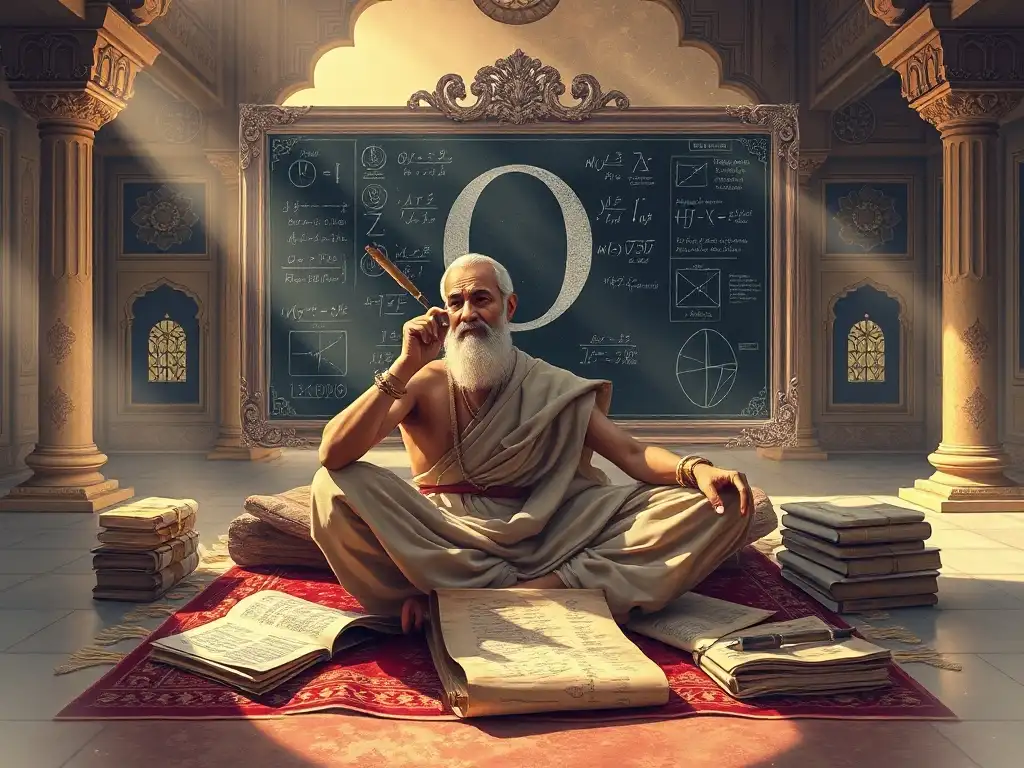
The concept of zero is one of the most profound contributions of ancient Indian mathematics. Its introduction marked a pivotal point in mathematical history, enabling complex calculations and paving the way for advancements in various mathematical fields. Before the formal acceptance of zero, various cultures struggled with the concept of representing nothingness in numerical systems.
The Indian mathematicians, particularly during the Gupta period, conceptualized zero not only as a number but also as a placeholder, which revolutionized arithmetic operations. This shift allowed for more efficient calculation methods and the development of a positional number system, which remains the foundation of modern mathematics.
Zero's influence extends beyond mere calculations. It introduced a new way of thinking about numbers and their relationships, ultimately leading to the exploration of more abstract mathematical concepts. The philosophical implications of zero—representing the void or nothingness—challenged existing paradigms and inspired further inquiry into the nature of numbers and mathematics itself.
How Zero Transformed Mathematical Calculations
The introduction of zero transformed mathematical calculations in several significant ways. First and foremost, zero acted as a placeholder in the decimal system, allowing for the clear differentiation between numbers like 10 and 100. This clarity significantly reduced the complexity of calculations, enabling mathematicians to perform operations with greater ease and accuracy.
Additionally, the use of zero facilitated the development of algorithms for arithmetic operations such as addition, subtraction, multiplication, and division. For example, the ability to express numbers like 205 or 6001 became possible, allowing for more sophisticated calculations that were previously cumbersome or impossible. The ability to perform these operations efficiently meant that mathematical tasks could be completed in a fraction of the time, thus enhancing productivity in trade, astronomy, and various scientific endeavors.
This transformation in calculation methods not only improved mathematical literacy among scholars but also democratized the use of mathematics in daily life. Merchants and traders began to adopt mathematical principles that incorporated zero, leading to more accurate accounting systems and better economic management.
The Role of Zero in the Development of Algebra
Zero played a crucial role in the development of algebra, acting as a foundational element in the formulation of algebraic expressions and equations. By allowing for the representation of equations that included both positive and negative values, zero enabled mathematicians to explore relationships between variables in a more nuanced manner.
In ancient Indian texts, such as the "Aryabhatiya" by Aryabhata and the "Brahmasphutasiddhanta" by Brahmagupta, zero is not only defined but is also treated as a number that can be manipulated within algebraic frameworks. For instance, Brahmagupta's rules for arithmetic operations involving zero laid the groundwork for future algebraic principles, including the handling of equations that yield zero as a solution.
The acceptance of zero in algebra also facilitated the development of more complex concepts such as polynomial equations and functions, which would later become essential in advanced mathematics. This evolution can be seen as a precursor to modern algebra, wherein zero's role is indispensable in solving equations and understanding variable relationships.
The Impact of Zero on Future Mathematical Innovations
The conceptualization of zero was a catalyst for future mathematical innovations that would shape the course of mathematics across the globe. Its introduction laid the groundwork for calculus, allowing mathematicians to explore limits and continuity—concepts that would later be formalized by figures such as Newton and Leibniz in the 17th century.
Moreover, zero's influence extended to the fields of geometry and topology, where concepts of dimensionality and void became integral to understanding shapes and spaces. Mathematicians began to explore the implications of "empty space" in geometric terms, leading to innovations in both theoretical and applied mathematics.
In addition, the Indian numeral system, which incorporated zero, eventually spread to the Islamic world and then to Europe, further embedding the concept within global mathematical thought. This dissemination of knowledge not only enriched the mathematical landscape but also fostered a spirit of inquiry and innovation that continues to this day.
Legacy of Ancient Indian Mathematics and Zero
The legacy of ancient Indian mathematics is firmly intertwined with the concept of zero, which remains a cornerstone of mathematical theory and practice. The contributions of Indian mathematicians during ancient times laid the foundation for a mathematical tradition that influenced cultures across the world. Their work in formalizing the use of zero as both a numeral and a concept has ensured that it occupies a central role in mathematics education and application today.
The Global Influence of Ancient Indian Mathematics
Ancient Indian mathematics, particularly its treatment of zero, significantly impacted mathematical practices worldwide. As Indian numerals migrated through trade routes and scholarly exchanges, they influenced the development of numerical systems in the Islamic Golden Age. This transfer of knowledge culminated in the adoption of the decimal system in Europe, profoundly changing Western mathematics.
Mathematicians like Al-Khwarizmi, often referred to as the "father of algebra," built upon the foundational concepts introduced by Indian scholars, further propagating these ideas through their works. The result was a rich tapestry of mathematical thought that drew upon diverse cultural influences, with zero at the heart of many advancements.
The Continuing Relevance of Zero in Modern Mathematics
Today, zero remains an essential element in modern mathematics, underpinning various fields, from computer science to physics. In binary code, for example, which forms the basis of all digital technology, zero plays a critical role in representing data.
Moreover, the concept of zero is fundamental in advanced mathematical theories, including set theory and calculus, where it is used to describe limits and convergence. The continuing relevance of zero in practical applications—such as statistical analysis, data modeling, and algorithm design—demonstrates its lasting impact on both theoretical and applied mathematics.
Recognition of Ancient Indian Contributions in Contemporary Education
In contemporary education, the contributions of ancient Indian mathematicians, particularly regarding zero, are increasingly recognized. Educational curricula around the world now highlight the historical significance of zero and its origins in ancient India. This acknowledgment not only honors the intellectual heritage of Indian mathematics but also fosters a more inclusive understanding of the global history of mathematics.
Institutions and scholars are actively working to integrate this knowledge into mathematics education, emphasizing the interconnectedness of mathematical ideas across cultures. By teaching the story of zero and its evolution, educators aim to inspire future generations to appreciate the depth and diversity of mathematical thought, encouraging a more global perspective in the study of mathematics.
Conclusion: The Enduring Impact of Zero in Mathematics
The invention of zero is one of the most significant contributions of ancient Indian mathematics, fundamentally changing how we understand and express numerical concepts. This simple yet profound symbol not only facilitated calculations but also laid the groundwork for advanced mathematical theories. The use of zero as a placeholder enabled the development of positional numeral systems, which are essential in modern mathematics.
The impact of zero extends beyond mere calculation; it has influenced various fields, including science, engineering, economics, and computer science. Without zero, the advancement of algebra, calculus, and even programming languages would be profoundly different. Thus, the legacy of ancient Indian mathematicians continues to resonate in contemporary mathematical practices, showcasing their brilliance and foresight.
Summary of Key Contributions of Ancient Indian Mathematics
Ancient Indian mathematicians made several critical contributions that shaped the development of mathematics as we know it today. Key highlights include:
- The Concept of Zero: Introduced as both a numerical figure and a concept, zero revolutionized arithmetic and mathematics.
- Positional Notation: The use of a place-value system allowed for more efficient calculations and the representation of large numbers.
- Decimal System: The adoption of a base-10 system made calculations more straightforward and accessible.
- Algebraic Innovations: Works like "Aryabhatiya" by Aryabhata introduced early algebraic concepts, including methods for solving quadratic equations.
- Trigonometry: Ancient texts explored sine and cosine functions, laying the groundwork for later advancements in trigonometry.
Collectively, these contributions represent a cornerstone of mathematical thought that has influenced civilizations worldwide.
Final Thoughts on the Legacy of Zero
The legacy of zero is not just a historical footnote; it is a living testament to the ingenuity of ancient Indian scholars. The philosophical implications of zero, representing the concept of nothingness, challenge our understanding of existence itself. The mathematical implications, however, are even more profound, affecting everything from basic arithmetic to complex algorithms used in computing today.
The ongoing study and appreciation of ancient Indian mathematics, particularly the role of zero, remind us of the interconnectedness of global knowledge. As we explore these contributions, we gain insight into the rich tapestry of human thought and the evolution of mathematics through centuries.
References for Further Reading on Ancient Indian Mathematics and Zero
Recommended Books and Articles
-
"The History of Mathematics: A Brief Course" by Roger L. Cooke
This book offers a comprehensive overview of the development of mathematics across cultures, including a significant section on ancient Indian contributions.
-
"A History of Indian Mathematics" by C. N. Srinivasiengar
This work provides an in-depth analysis of the mathematical advancements in ancient India, including the invention of zero.
-
"Mathematics in India" by Kim Plofker
Plofker's book explores the evolution of mathematics in India, its cultural context, and its influence on the global mathematical community.
-
"The Story of Zero" by Charles Seife
This article delves into the history and implications of zero, highlighting its journey from ancient India to modern times.
Online Resources for Exploring Ancient Mathematics
-
The MacTutor History of Mathematics Archive
An extensive online resource that covers various aspects of mathematical history, including ancient Indian mathematics.
-
Indian Mathematics: A Historical Perspective
A dedicated portal that provides articles, papers, and resources related to the contributions of Indian mathematicians.
-
Project Gutenberg
Offers free access to various historical texts and documents related to ancient Indian mathematics, including translations and analyses.
These resources can enhance your understanding of the rich history of ancient Indian mathematics and the pivotal role of zero in its development.
- Introduction to Ancient Indian Mathematics and Zero
- Historical Context of Mathematics in Ancient India
- The Birth of Zero: A Revolutionary Concept
- Key Mathematical Treatises Featuring Zero
- Understanding the Influence of Zero on Mathematics
- Legacy of Ancient Indian Mathematics and Zero
- Conclusion: The Enduring Impact of Zero in Mathematics
- References for Further Reading on Ancient Indian Mathematics and Zero
- What is the significance of zero in ancient Indian mathematics?
- How did ancient Indian mathematicians contribute to the field?
- What are some notable mathematical texts from ancient India?
- How did the Indus Valley Civilization influence mathematics?
- In what ways did the Gupta Empire advance mathematical knowledge?
Frequently Asked Questions
What is the significance of zero in ancient Indian mathematics?
The concept of zero as a numeral was a revolutionary contribution from ancient India, enabling advanced calculations and the development of the decimal system.
How did ancient Indian mathematicians contribute to the field?
Ancient Indian mathematicians made significant advancements in algebra, geometry, and trigonometry, laying the groundwork for modern mathematics and introducing concepts like negative numbers and infinity.
What are some notable mathematical texts from ancient India?
Key texts include the Bakhshali Manuscript, which discusses arithmetic and algebra, and the Aryabhatiya by Aryabhata, which covers mathematics and astronomy extensively.
How did the Indus Valley Civilization influence mathematics?
The Indus Valley Civilization showcased early forms of mathematics through their urban planning, precise measurements, and the use of standardized weights and measures, reflecting an advanced understanding of geometry.
In what ways did the Gupta Empire advance mathematical knowledge?
During the Gupta Empire, there was a flourishing of mathematical thought, with scholars like Brahmagupta and Bhaskara making pioneering contributions to calculus, algebra, and the formal use of zero.
Final Reflection: The Enduring Legacy of Ancient Indian Mathematics and Zero
The exploration of ancient Indian mathematics, particularly the concept of zero, reveals its profound relevance in today’s digital age. As we navigate a world increasingly driven by technology and data, the foundational principles established by ancient Indian mathematicians serve as a reminder of the power of innovation and intellectual curiosity. The introduction of zero not only revolutionized mathematics but also transformed the way we perceive and interact with numbers, highlighting the importance of creativity in problem-solving.
The influence of ancient Indian mathematics extends far beyond historical significance; it continues to shape our cultural and educational landscapes. The principles derived from these ancient texts encourage a deeper appreciation for mathematical thought and its applications in various fields. As mathematician Carl Friedrich Gauss once said, Mathematics is the queen of the sciences and number theory is its crown.
This underscores the vital role that concepts like zero play in the broader tapestry of human knowledge, inspiring generations to explore the depths of mathematical inquiry.
As we reflect on the lessons from ancient Indian mathematics, let us embrace the spirit of innovation and inquiry that these scholars exemplified. I invite you to consider how the principles of zero and mathematical thinking can be applied in your own life, whether in problem-solving, critical thinking, or fostering creativity. By recognizing the importance of these ancient contributions, we not only honor their legacy but also empower ourselves to push the boundaries of knowledge and discovery in our own pursuits.
Unveil the Wonders of Ancient Indian Mathematics!
Thank you for journeying with us through the fascinating world of Ancient India’s mathematical innovations, particularly the groundbreaking concept of zero. Your curiosity not only enriches your understanding but also honors the incredible intellect of ancient scholars. Now, it’s time to take action and deepen your connection to this vital aspect of history!
- Explore a local library or museum with historical artifacts related to mathematics and ancient civilizations. You might discover surprising insights!
- Share your newfound knowledge with friends or classmates by hosting a discussion or online chat about the significance of zero in mathematics.
- Join a community forum or group that celebrates ancient history or mathematics; engaging with diverse perspectives can enhance your understanding even further.
Which piece of ancient wisdom about mathematics do you find most inspiring, and how do you think it influences modern-day practices?