
How Sankhya Philosophy Influenced Ancient Indian Art and Literature

Welcome to Ancient India History, where we embark on an enthralling journey through the rich tapestry of India's past! In this exploration, we delve into the profound impact of Sankhya Philosophy on Indian Art and Literature. Discover how this ancient philosophical framework not only shaped the creative expressions of its time but also left a lasting legacy that continues to inspire today. Are you ready to uncover the intricate connections between philosophy and artistry in the heart of ancient Indian civilization? Join us as we unravel the threads that bind thought and creativity in our captivating feature!
- Introduction to Sankhya Philosophy in Indian Art
- Historical Context of Sankhya Philosophy
- Influence of Sankhya Philosophy on Ancient Indian Art
- Sankhya Philosophy's Impact on Ancient Indian Literature
- Interconnections Between Art and Literature in the Context of Sankhya
- Conclusion: The Legacy of Sankhya Philosophy in Indian Art and Literature
- Frequently Asked Questions
- Final Reflection: The Enduring Legacy of Sankhya Philosophy in Indian Art
- Unveil the Rich Legacy of Sankhya in Art and Literature
Introduction to Sankhya Philosophy in Indian Art
The influence of Sankhya Philosophy on ancient Indian art and literature is a profound testament to the interconnectedness of thought, culture, and expression in one of the world's oldest civilizations. Originating as one of the six orthodox schools of Hindu philosophy, Sankhya presents a dualistic framework that delineates the material (Prakriti) from the spiritual (Purusha). This philosophical dichotomy has not only shaped metaphysical discussions but has also permeated various facets of cultural production, including visual art, sculpture, and literary forms.
By exploring how Sankhya Philosophy informs artistic and literary expressions, we can gain insights into the broader intellectual currents that influenced ancient Indian society. This article will delve into the tenets of Sankhya Philosophy and its significant impact on the artistic and literary realms of ancient India, revealing the intricate relationship between philosophy and the creative arts.
Overview of Sankhya Philosophy
Sankhya Philosophy is characterized by its systematic approach to understanding reality through a framework of enumerated principles. It posits that there are two fundamental realities: Purusha (the conscious self) and Prakriti (the material world).
- Core Concepts of Sankhya:
- Dualism: The distinction between the observer (Purusha) and the observed (Prakriti).
- Evolution of Prakriti: The material world evolves through a series of stages, influenced by the interplay of three gunas (qualities): Sattva (purity), Rajas (activity), and Tamas (inertia).
- Liberation (Moksha): The ultimate goal of human existence, achieved through the realization of the self's true nature as Purusha.
This framework has been foundational in shaping various aspects of Indian philosophy and spirituality. The clarity and depth of Sankhya have influenced numerous thinkers, and its principles resonate throughout ancient Indian texts, art, and cultural practices.
Importance of Art and Literature in Ancient India
Art and literature in ancient India served as vital expressions of cultural identity and spiritual beliefs. They were not merely aesthetic endeavors but reflections of the philosophical ideas that permeated society.
- Cultural Reflection:
- Art and literature encapsulated the societal values, beliefs, and experiences of ancient Indian civilizations.
- They provided a medium for the expression of philosophical concepts, including those from Sankhya, making complex ideas accessible to the public.
- Educational Role:
- Literary works often functioned as pedagogical tools, conveying moral and philosophical lessons.
- Artistic representations, including sculptures and paintings, depicted mythological narratives that illustrated philosophical teachings.
- Spiritual Significance:
- Many art forms were deeply intertwined with religious practices, serving as offerings to deities or as part of ritualistic ceremonies.
- The aesthetic experience was seen as a pathway to spiritual realization, aligning with the Sankhya goal of understanding the nature of reality.
The interplay between Sankhya Philosophy and ancient Indian art and literature provides a fascinating glimpse into how philosophical thought shaped cultural expression, creating a rich tapestry of ideas that continues to resonate in contemporary discourse.
Historical Context of Sankhya Philosophy
Sankhya philosophy, one of the six orthodox schools of Indian philosophy, has a profound historical context that intertwines with various aspects of ancient Indian thought and culture. Emerging during a time when spiritual and philosophical inquiry was at its peak, Sankhya provided a systematic framework for understanding the nature of reality and consciousness.
Origins and Development of Sankhya Philosophy
The origins of Sankhya philosophy can be traced back to the early Vedic texts, particularly the Upanishads, which delve into metaphysical questions and the nature of existence. This philosophy was later codified by the sage Kapila, who is widely regarded as its founder. The term "Sankhya" itself means "number" or "enumeration," reflecting its analytical approach to understanding the dualities of existence, such as the material (Prakriti) and the spiritual (Purusha).
- Early Influences: Sankhya was influenced by the rich tapestry of early Indian thought, including the concepts found in the Vedas and the Upanishads. The focus on meditation and self-realization, prevalent in these texts, laid the groundwork for Sankhya's later developments.
- Textual Development: The foundational text of Sankhya philosophy is the “Sankhya Karika” authored by Ishvara Krishna in the 4th century CE. This text systematically outlines the principles of Sankhya thought, such as the 25 Tattvas (elements of reality) that illustrate the interaction between Purusha and Prakriti.
- Integration with Other Philosophies: Over time, Sankhya philosophy began to influence other schools of thought, including Yoga and Vedanta. Its ideas on the nature of consciousness and the self became integral to these philosophical systems, further enriching the intellectual landscape of ancient India.
Key Figures in the Sankhya Tradition
Several notable figures have played crucial roles in the evolution and dissemination of Sankhya philosophy. Their contributions have significantly shaped the philosophical discourse and artistic expressions in ancient India.
- Kapila: Often considered the original proponent of Sankhya, Kapila's teachings emphasized the distinction between the eternal self (Purusha) and the changing material world (Prakriti). His ideas laid the groundwork for subsequent interpretations and adaptations of Sankhya philosophy.
- Ishvara Krishna: As the author of the "Sankhya Karika," Ishvara Krishna is a pivotal figure in the formalization of Sankhya thought. His work not only presents the core concepts of Sankhya but also articulates the philosophical arguments that defend its principles against rival schools.
- Gaudapada: Although primarily associated with Advaita Vedanta, Gaudapada's commentaries reflect an engagement with Sankhya ideas, particularly regarding the nature of reality and consciousness. His blending of Sankhya with later philosophical thoughts illustrates the interconnectedness of Indian philosophical traditions.
These figures collectively contributed to the rich tapestry of Sankhya philosophy, ensuring its relevance and influence in various domains, including art and literature, throughout ancient Indian history. As scholars and artists drew inspiration from these philosophical tenets, they helped to shape a unique cultural identity that resonated through centuries.
Influence of Sankhya Philosophy on Ancient Indian Art
Principles of Sankhya Philosophy Reflected in Art
Sankhya Philosophy, one of the six orthodox schools of Indian philosophy, primarily focuses on the dualism of purusha (consciousness) and prakriti (matter). This philosophical framework has profoundly influenced various forms of art in ancient India, serving as a lens through which artists interpreted the world around them.
- Dualism in Art: The concept of dualism is vividly portrayed in many artistic expressions, where the interplay of the material and the spiritual can be observed. For instance, sculptures often depict deities embodying both the physical beauty of the material world and the transcendent qualities of consciousness.
- Emphasis on Balance: Sankhya emphasizes equilibrium between purusha and prakriti, which is reflected in the symmetrical designs of ancient Indian art. Whether in temple architecture or paintings, the balanced proportions create a harmonious aesthetic that resonates with viewers, evoking a sense of tranquility and order.
- The Nature of Reality: Sankhya’s exploration of reality, which posits that true knowledge arises from understanding the relationship between purusha and prakriti, is mirrored in the themes of many artworks. Artists sought to convey deeper truths through allegorical representations, prompting viewers to contemplate the nature of existence and consciousness.
Symbolism and Representation in Indian Art
The symbolism inherent in Sankhya Philosophy has shaped the representational techniques employed by artists throughout ancient India.
- Color Symbolism: Different colors used in paintings and sculptures often symbolize various aspects of prakriti. For example, earthy tones may represent stability and grounding, while vibrant hues might depict the dynamic nature of life and consciousness.
- Mythological Narratives: Many artworks illustrate mythological tales that embody Sankhya principles. The stories of gods and goddesses frequently highlight the interaction between the material and spiritual realms, allowing viewers to engage with philosophical concepts through visual storytelling.
- Iconography of Deities: The iconography of deities such as Shiva and Vishnu can also be interpreted through the Sankhya lens. For instance, Shiva is often associated with the void and meditation (purusha), while his dynamic aspects relate to creation and destruction (prakriti). This dual aspect emphasizes the Sankhya view of the universe as a balance of opposing forces.
Case Studies of Artworks Influenced by Sankhya Philosophy
Examining specific artworks reveals the tangible impact of Sankhya Philosophy on ancient Indian art. Here are notable examples:
| Artwork | Description | Sankhya Influence |
|---|---|---|
| Ajanta Caves Murals | The murals depict various Jataka tales showcasing the life of Siddhartha Gautama. | Illustrate the interplay of spiritual enlightenment (purusha) and worldly attachments (prakriti). |
| Brahma and Vishnu Sculpture | A sculpture depicting the duality of creation and preservation with Brahma (creator) and Vishnu (preserver). | Reflects the balancing act between creation and destruction, embodying Sankhya's dualism. |
| The Dancing Shiva (Nataraja) | This iconic sculpture represents Shiva in his cosmic dance, symbolizing the cycle of creation and dissolution. | Captures the essence of movement and stillness, analogous to purusha and prakriti dynamics. |
These case studies demonstrate how artists have historically employed themes rooted in Sankhya Philosophy, providing a deeper understanding of the cultural significance behind their creations. The enduring legacy of these artistic expressions illustrates the profound connection between philosophy and the aesthetic experience in ancient Indian civilization.
Sankhya Philosophy's Impact on Ancient Indian Literature
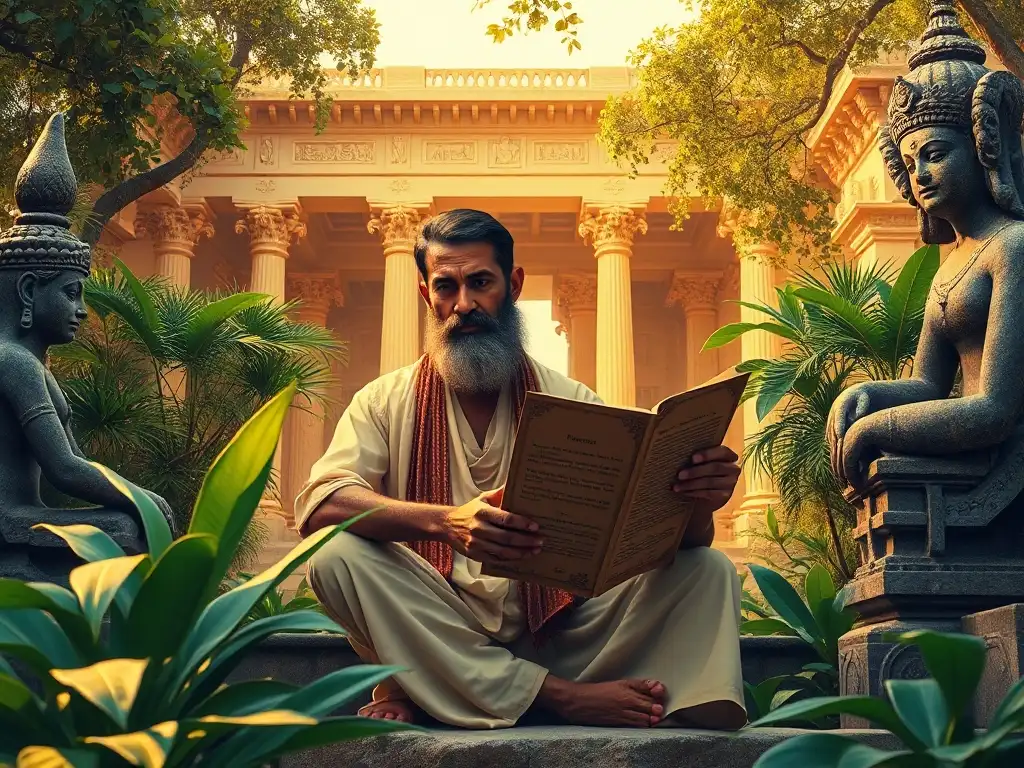
Sankhya Philosophy, one of the six orthodox schools of Indian philosophy, has significantly influenced ancient Indian literature. Its dualistic approach, which distinguishes between the material and the spiritual, has provided a rich thematic and conceptual framework for literary works. This philosophical system emphasizes the importance of knowledge (jnana) and the understanding of reality, which has permeated various literary genres, from poetry to drama.
The influence of Sankhya is evident in the exploration of themes such as existence, consciousness, and the nature of the self. Literature often reflects the philosophical inquiry into the relationship between purusha (the self) and prakriti (nature), leading to narratives that challenge characters to navigate their inner worlds and the external realities. This philosophical underpinning fosters a complex interplay between human emotions and existential dilemmas, enriching the narrative depth of ancient texts.
Themes and Concepts in Literature Inspired by Sankhya
In ancient Indian literature, several themes align with Sankhya Philosophy, notably:
- Dualism: The distinction between the eternal self (purusha) and the transient material world (prakriti) is a recurring theme. This concept prompts characters in literature to reflect on their dual nature and the quest for liberation (moksha).
- The Nature of Suffering: Sankhya’s analysis of suffering and its roots in ignorance (avidya) resonates within literary explorations of human experiences. Characters often grapple with their attachments and desires, which are viewed as sources of suffering—a key idea in both Sankhya and later philosophical developments.
- Self-Realization: The journey toward self-awareness and enlightenment is a prominent motif. Many literary works depict characters undergoing transformations as they seek to understand their true selves, paralleling the philosophical quest for knowledge and liberation.
- Interconnectedness of All Beings: The idea of the universe as a cohesive whole, where each element has its place and purpose, is reflected in narratives that emphasize harmony and balance.
Several ancient texts and authors demonstrate the profound impact of Sankhya Philosophy on Indian literature:
- Mahabharata: This epic integrates philosophical discourses, particularly in the Bhagavad Gita, where concepts of duty (dharma), self (atman), and the eternal nature of the soul are explored. The dialogue between Arjuna and Krishna reflects key Sankhya ideas, especially regarding action and detachment.
- Upanishads: The philosophical texts contain profound insights into the nature of reality and self, echoing Sankhya thought. The exploration of concepts like Brahman (universal consciousness) and Atman (individual self) aligns closely with Sankhya teachings.
- Kalidasa's Works: The renowned poet and playwright Kalidasa, particularly in Shakuntala, reflects Sankhya's themes of love, detachment, and the cyclical nature of life. His portrayal of characters often embodies the philosophical dilemmas derived from Sankhya.
- Vikramorvasiyam by Kalidasa: This play integrates themes of love and separation, mirroring the Sankhya idea of the interplay between the spiritual and the material.
Analysis of Literary Techniques Reflecting Sankhya Thought
The literary techniques employed in ancient texts often mirror Sankhya Philosophy's influence:
- Symbolism: Many literary works utilize symbols to represent dualistic concepts. For example, the use of light and darkness can signify knowledge versus ignorance, reflecting the Sankhya emphasis on the transformative power of knowledge.
- Narrative Structure: The structure of stories often parallels philosophical inquiries, with characters embarking on journeys that symbolize the quest for self-realization. This aligns with the Sankhya view that understanding the self is fundamental to overcoming ignorance and suffering.
- Character Development: Characters in ancient literature frequently undergo profound transformations, embodying the philosophical principles of Sankhya. Their evolution often symbolizes the journey from ignorance to enlightenment.
- Dialogues and Discourses: The use of dialogues, as seen in texts like the Bhagavad Gita, allows for the exploration of Sankhya concepts through conversations that challenge characters to confront their beliefs and understandings.
Sankhya Philosophy's impact on ancient Indian literature is profound and multifaceted, shaping themes, character arcs, and literary techniques. By weaving its philosophical insights into the fabric of storytelling, authors created rich narratives that not only entertained but also encouraged deep reflection on the nature of existence, self, and the universe.
Interconnections Between Art and Literature in the Context of Sankhya
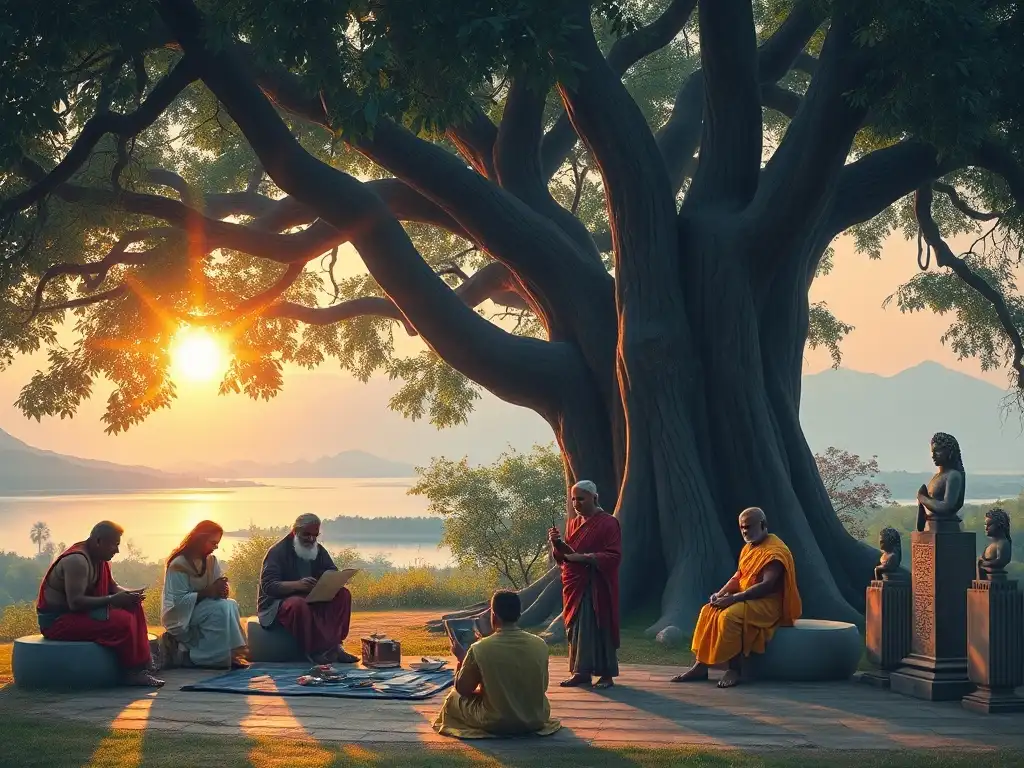
Thematic Crossovers in Art and Literature
The influence of Sankhya Philosophy on ancient Indian art and literature is profound and multifaceted. This philosophical system, which emphasizes dualism and the distinction between Purusha (consciousness) and Prakriti (matter), has provided a rich thematic backdrop for artists and writers throughout history.
In literature, Sankhya's focus on the nature of existence and the interplay between the self and the universe has inspired countless texts. For instance, many classical Sanskrit plays and poetry incorporate themes of liberation ( moksha) and the quest for knowledge, reflecting the Sankhya understanding of the paths to enlightenment.
Similarly, in visual arts, the representation of divine figures often embodies the Sankhya principles. Artists depicted the relationship between the material world and the spiritual realm through intricate iconography, where deities signify different aspects of Prakriti while their actions embody the principles outlined in Sankhya.
Some notable thematic elements include:
- Duality: The contrast between the physical and spiritual realms is often illustrated in both literature and visual narratives.
- Cycles of Creation and Dissolution: The cyclical nature of existence, a core tenet of Sankhya, is frequently represented through motifs of rebirth and transformation in art.
- Hero’s Journey: Many literary works echo the Sankhya idea of overcoming ignorance through knowledge, mirroring the hero’s journey archetype prevalent in epics like the Mahabharata and Ramayana.
The Role of Sankhya in Shaping Cultural Narratives
Sankhya Philosophy has played a crucial role in shaping cultural narratives across various forms of expression in ancient India. By offering a systematic framework for understanding the cosmos and human existence, it laid the groundwork for both artistic expression and literary creation.
- Influence on Storytelling: The narratives crafted in ancient texts often reflect Sankhya concepts, particularly the struggle between the material and spiritual. This duality is vividly portrayed in stories where characters undergo transformations, representing the philosophical journey from ignorance to enlightenment.
- Symbolism in Art: Artistic representations, particularly in sculptures and paintings, often symbolize the Sankhya philosophy. For example, the depiction of figures in meditative poses conveys the idea of Purusha, while the intricate details in the surroundings represent the complexity of Prakriti.
- Philosophical Dialogues in Literature: Several ancient texts, such as the Yoga Sutras and Bhagavad Gita, engage in dialogues that reflect Sankhya principles, discussing the nature of reality, the self, and the universe. These texts not only serve as philosophical treatises but also as literary masterpieces that influence subsequent cultural narratives.
- Art as a Reflection of Philosophy: The relationship between Sankhya and art is reciprocal; while Sankhya informs artistic themes, the aesthetic expressions in art also provide a deeper understanding of Sankhya concepts. This interplay enriches the cultural fabric of ancient India, illustrating how philosophy can be visualized and narrated.
The intricate connections between Sankhya Philosophy and the realms of art and literature underscore a broader cultural dialogue that continues to resonate throughout Indian history. The Sankhya Philosophy in Indian Art thus emerges not just as an intellectual pursuit but as a vital thread weaving together the diverse tapestry of ancient Indian civilization.
Conclusion: The Legacy of Sankhya Philosophy in Indian Art and Literature
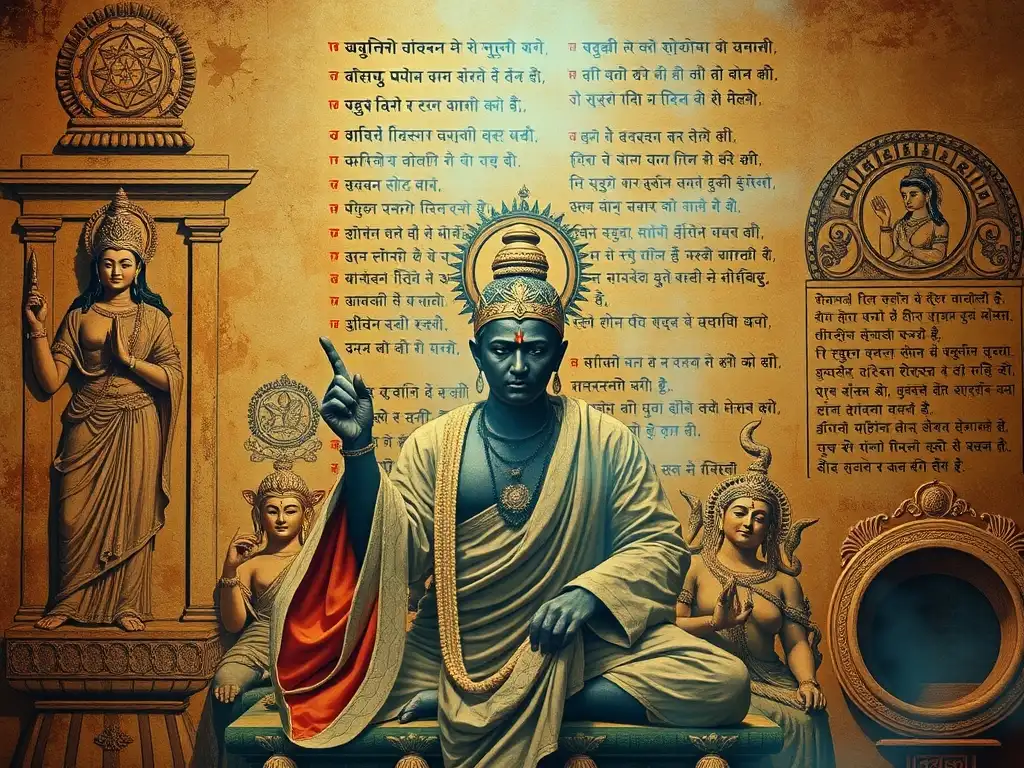
Sankhya Philosophy is a pivotal aspect of ancient Indian thought, serving as a foundation that shaped various dimensions of Indian culture, especially art and literature. Its dualistic framework, which delineates the distinction between the eternal soul (Purusha) and the material world (Prakriti), has left an indelible mark on creative expressions throughout history.
Summary of Key Influences
Sankhya Philosophy has profoundly influenced Indian art and literature in several notable ways:
- Symbolism in Art:
- Representation of Duality: Many artworks reflect the Sankhya concepts of Purusha and Prakriti. For instance, sculptures often depict gods and goddesses embodying the balance between the spiritual and material realms.
- Mythological Narratives: Stories from epics like the Mahabharata and Ramayana are infused with Sankhya ideas, portraying characters' struggles between spiritual pursuits and worldly attachments.
- Literary Themes:
- Philosophical Underpinnings: Literature from the ancient period often incorporates Sankhya principles, exploring themes of self-realization, the nature of reality, and the journey towards enlightenment.
- Poetic Devices: Poets used metaphors and analogies rooted in Sankhya thought to convey deeper philosophical messages, enriching the literary landscape of ancient India.
- Artistic Techniques:
- Focus on Inner Experience: Artists emphasized the internal emotional states of characters, reflecting the Sankhya belief in the importance of self-awareness and introspection.
- Harmonious Composition: The balance between contrasting elements in visual arts resonates with Sankhya's dualistic philosophy, showcasing harmony in diversity.
The Ongoing Relevance of Sankhya Philosophy in Contemporary Art and Literature
Sankhya Philosophy continues to resonate in modern artistic expressions, inspiring contemporary artists and writers to engage with its principles:
- Influence on Modern Literature: Authors explore themes of existentialism and the human condition, often referencing Sankhya concepts to delve into the dualities of life.
- Artistic Movements: Contemporary art movements draw from Sankhya ideas, using abstract forms to represent the interplay between the material and spiritual worlds.
- Cultural Revivals: There is a growing interest in reviving ancient philosophies, including Sankhya, as artists and writers seek to reconnect with India's rich intellectual heritage.
The enduring legacy of Sankhya Philosophy in Indian Art transcends time, continuing to shape the cultural narratives and artistic expressions of both ancient and contemporary India. Its influence remains a vital thread woven into the fabric of Indian civilization, inviting ongoing exploration and interpretation.
Frequently Asked Questions
What is Sankhya Philosophy?
Sankhya Philosophy is a dualistic school of Indian philosophy that emphasizes the distinction between consciousness (Purusha) and matter (Prakriti), influencing various aspects of Indian thought, including art and literature.
How did Sankhya Philosophy impact ancient Indian art?
The principles of Sankhya Philosophy inspired symbolism and representation in ancient Indian art, reflecting the interplay between the material and spiritual realms, often depicted through iconography in sculptures and paintings.
What are some examples of artworks influenced by Sankhya Philosophy?
Notable examples include Buddhist and Hindu sculptures that embody the balance between Prakriti and Purusha, portraying deities and cosmic motifs that illustrate the philosophical concepts of self and existence.
How does Sankhya Philosophy manifest in ancient Indian literature?
In literature, Sankhya Philosophy shapes narratives that explore themes of self-realization and duality, influencing classical texts such as the Bhagavad Gita, where philosophical dialogues reflect its core tenets.
Is Sankhya Philosophy still relevant in modern Indian culture?
Yes, Sankhya Philosophy continues to influence modern Indian culture, particularly in areas like psychology, spirituality, and art, as people explore its teachings on the nature of reality and consciousness.
Final Reflection: The Enduring Legacy of Sankhya Philosophy in Indian Art
Sankhya Philosophy's profound influence on ancient Indian art and literature remains strikingly relevant today. As we navigate a world increasingly defined by complexity and duality, the principles of Sankhya offer a lens through which we can understand the interplay between the material and the spiritual. This ancient philosophy not only shaped the artistic expressions of its time but continues to resonate in contemporary discussions about the nature of existence and creativity.
Cultural landscapes are often reflections of the philosophies that underpin them, and Sankhya Philosophy has indelibly marked the canvas of Indian art and literature. Its emphasis on the duality of Purusha (consciousness) and Prakriti (matter) has inspired countless artists and writers to explore the depths of human experience. Art is the most beautiful of all lies.
This quote encapsulates the idea that art, much like Sankhya, seeks to reveal deeper truths about our existence, transcending the surface to connect with the essence of life itself.
As you reflect on the insights from this exploration of Sankhya Philosophy, consider how these ancient teachings can inform your own creative pursuits and understanding of the world. Embrace the dualities in your life, and let them guide your artistic expression or personal growth. In doing so, you not only honor the legacy of Sankhya but also contribute to the ongoing dialogue between philosophy and art, enriching both your life and the lives of those around you.
Unveil the Rich Legacy of Sankhya in Art and Literature
Thank you for diving into the fascinating world of Sankhya Philosophy and its influence on ancient Indian art and literature! We hope this exploration has deepened your appreciation for the interconnectedness of philosophy and creativity throughout history. Now, let’s put this newfound knowledge into action!
Here are some ways you can further engage and contribute to this rich legacy:
- Dive Deeper: Explore more about Sankhya Philosophy by reading classic texts or accessible commentaries to uncover its profound meanings.
- Share Your Thoughts: Discuss the impact of Sankhya on modern art and literature with friends or on social media. Consider how this philosophy can inspire contemporary creativity.
- Join a Community: Participate in local workshops or online groups dedicated to ancient Indian philosophy and art. Engaging with others can enhance your understanding and spark new ideas!
As you reflect on this philosophy, ponder this question: How can the principles of Sankhya be applied to today’s artistic expressions? We invite you to share your insights below!