
The Influence of Ancient Indian Economic Practices on Neighboring Civilizations


Welcome to Ancient India History, where we journey through the vibrant tapestry of rich traditions, cultural legacies, and remarkable achievements of ancient Indian civilizations. In today's exploration, we delve into the ancient Indian economic practices that not only shaped the subcontinent but also left a profound impact on neighboring civilizations. What secrets do these practices hold, and how did they influence trade routes and economies beyond their borders? Join us as we uncover the fascinating connections that echo through time, inviting you to dive deeper into the captivating world of ancient Indian trade and economy.

Introduction to Ancient Indian Economic Practices
The economic practices of ancient India not only shaped the domestic landscape of the subcontinent but also left a profound impact on neighboring civilizations. From the early agrarian societies of the Indus Valley to the flourishing trade networks established during the Gupta Empire, the economic systems developed in ancient India were complex and multifaceted.
These practices encompassed a variety of sectors, including agriculture, trade, and banking, which collectively contributed to the prosperity of the region and facilitated interactions with other cultures. Understanding these ancient Indian economic practices provides valuable insights into how they influenced the economies of adjacent civilizations, fostering cultural exchanges and economic collaborations that have echoed through history.
Overview of Economic Systems in Ancient India
Ancient India's economy was predominantly agrarian, with agriculture serving as the backbone of society. The fertile plains of the Indus River and the Ganges facilitated the cultivation of essential crops such as rice, wheat, and barley. As societies evolved, so did their economic practices, leading to the emergence of specialized crafts and trade.
- Key Features of Economic Systems:
- Agricultural Base: Reliance on crop farming and livestock.
- Craft Specialization: Development of artisan crafts, including textiles, metallurgy, and pottery.
- Trade Networks: Extensive trade routes connecting India with Central Asia, the Middle East, and beyond.
These systems were characterized by innovation and adaptation, allowing ancient Indian civilizations to thrive and engage in extensive trade with neighboring cultures.
Importance of Trade in Ancient Indian Society
Trade played a crucial role in the economic framework of ancient India, serving as a catalyst for cultural and economic exchange. The bustling markets of cities like Pataliputra and Taxila were not just centers of commerce; they were melting pots of ideas, cultures, and technologies.
- Trade Dynamics:
- Domestic Trade: Local markets facilitated the exchange of goods within various regions.
- International Trade: Trade routes, such as the Silk Road, connected India to distant lands, promoting the exchange of spices, textiles, and precious stones.
- Cultural Exchange: Trade interactions led to the dissemination of ideas, religions, and innovations across borders.
The significance of trade in ancient Indian society underscores its role as a pillar of economic stability and cultural richness.
Key Features of Ancient Indian Economic Practices
Ancient Indian economic practices were marked by several distinctive features that not only defined its internal economy but also enriched its interactions with neighboring civilizations.
Agricultural Techniques and Innovations
Agriculture in ancient India was characterized by a variety of innovative techniques that enhanced productivity and sustainability.
- Irrigation Systems: The development of sophisticated irrigation systems allowed for year-round farming, significantly increasing crop yields.
- Crop Rotation: Farmers practiced crop rotation to maintain soil fertility and reduce the risk of crop failure.
- Use of Fertilizers: Organic fertilizers were utilized to enrich the soil, showcasing an early understanding of sustainable agricultural practices.
These advancements not only ensured food security within ancient Indian societies but also positioned them as agricultural leaders in the region.
Trade Routes and Commercial Networks
The establishment of extensive trade routes was pivotal in facilitating commerce and cultural exchange between ancient India and its neighbors.
- Major Trade Routes:
- Silk Road: Linked India to Central Asia and facilitated the exchange of goods and ideas.
- Maritime Trade Routes: Sea routes connected the Indian subcontinent with the Arabian Peninsula and Southeast Asia, promoting the trade of spices and textiles.
These routes fostered a network of commercial cities that became hubs of trade, contributing significantly to the wealth of ancient Indian civilizations.
Currency and Banking Systems in Ancient India
The evolution of currency and banking in ancient India was crucial for the development of its economy.
- Currency Systems: The introduction of metal coins, such as those made from silver and gold, facilitated trade and commerce, allowing for standardized exchanges.
- Banking Practices: Ancient Indian societies developed banking systems that included the practice of loans and interest, showcasing an early understanding of financial systems.
These innovations in currency and banking not only streamlined trade but also laid the foundation for modern economic practices, influencing neighboring civilizations in their own economic developments.
Influence on Neighboring Civilizations
Ancient Indian economic practices significantly influenced neighboring civilizations through trade, cultural exchange, and the diffusion of agricultural techniques. As a hub of commerce and innovation, ancient India developed sophisticated economic systems that not only catered to its diverse population but also set the stage for interactions with surrounding regions. The establishment of trade routes, both land and maritime, facilitated the exchange of goods, ideas, and technologies, leading to mutual growth and development.
Impact on the Economic Systems of Southeast Asia

The economic practices of ancient India profoundly shaped the economies of Southeast Asia, particularly through the spread of trade networks. Indian merchants traveled extensively to regions such as present-day Indonesia, Malaysia, and Thailand, introducing a variety of goods, including textiles, spices, and metalwork. The establishment of Indian trading posts in these areas led to the integration of local economies into a broader market system that valued Indian products.
Moreover, the influence of Indian agricultural practices, such as rice cultivation and irrigation techniques, transformed the agrarian landscapes of Southeast Asia. The adoption of these methods contributed to increased agricultural productivity, which in turn supported population growth and urbanization in these regions. This agricultural boom laid the groundwork for the rise of powerful kingdoms, such as Srivijaya and Majapahit, which further solidified the economic ties with India.
Influence on Trade Practices in Central Asia
Central Asia also felt the impact of ancient Indian economic practices, particularly through the Silk Road trade routes. Indian goods, including silk, ivory, and gemstones, were highly sought after in Central Asian markets. The integration of Indian merchants into Central Asian trade networks facilitated not only the exchange of commodities but also the sharing of cultural and technological advancements.
The Indian numeral system and advancements in mathematics significantly influenced trade practices in Central Asia. The adoption of these systems enabled more efficient calculations in commerce, fostering an environment conducive to economic growth. Additionally, the spread of Buddhist philosophy through trade routes further connected the economic and cultural landscapes between India and Central Asian states, creating a rich tapestry of interaction.
Contributions to the Economy of the Middle East
Ancient Indian economic practices also made notable contributions to the economies of the Middle East. Indian spices, textiles, and precious stones became highly valuable in markets such as those in Persia and Mesopotamia. The demand for these goods led to the establishment of trade links that enhanced economic interdependence and cultural exchange.
The Indian influence can also be seen in the development of banking and financial systems in the Middle East. Indian methods of trade credit and accounting practices were adopted by Middle Eastern merchants, which facilitated more complex economic transactions. This interaction not only enriched the local economies but also laid the groundwork for the future development of trade practices in the region.
Comparative Analysis of Economic Practices
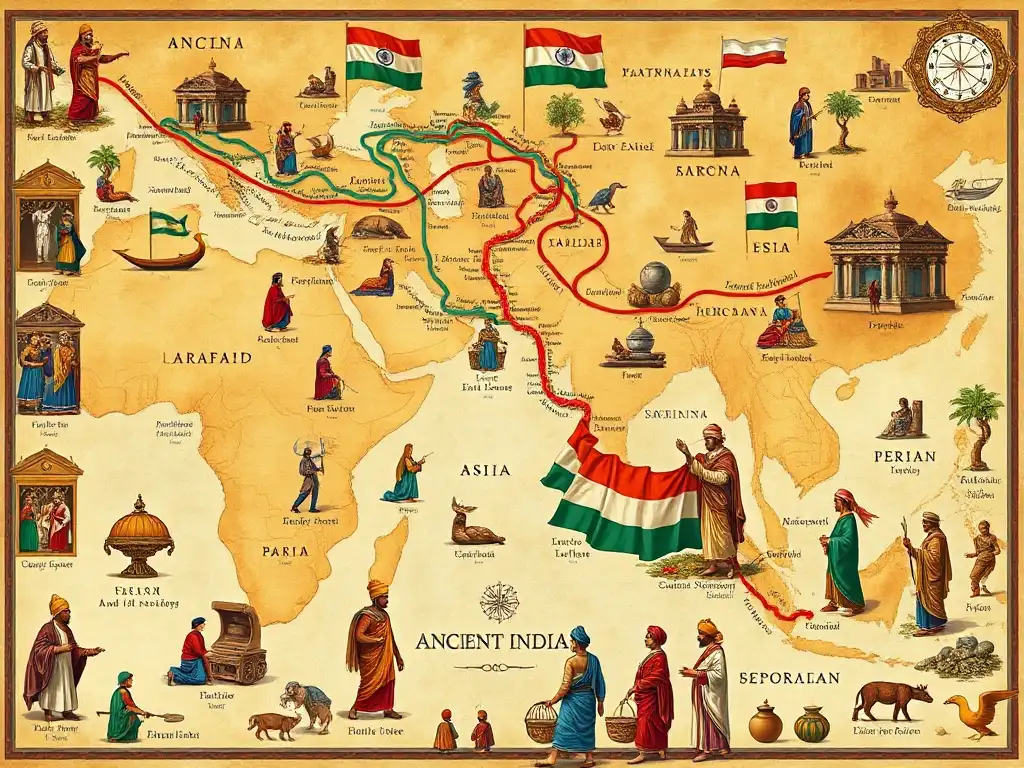
Similarities between Ancient Indian and Neighboring Economies
Ancient Indian economic practices shared several similarities with those of neighboring civilizations. For instance, both emphasized agriculture as the backbone of their economies, leading to the development of various farming techniques adapted to regional climates. The importance of trade also resonated across borders, with both Indian and neighboring economies relying on commerce for wealth accumulation and cultural exchange.
Additionally, the use of barter systems and the gradual transition to currency-based transactions were common trends. This economic evolution mirrored similar developments in surrounding regions, where the introduction of standardized weights and measures facilitated trade efficiency.
Differences in Economic Strategies and Practices
Despite the similarities, significant differences existed in the economic strategies and practices of ancient India and its neighbors. For example, while ancient India had a well-organized guild system that regulated various trade practices and ensured quality control, many neighboring economies operated on a more informal basis, lacking such structured organizations.
Moreover, the approach to resource management varied; ancient India often practiced sustainable agricultural techniques, while some neighboring civilizations exploited resources more aggressively. This difference in resource management strategies could be attributed to cultural values and environmental conditions, leading to diverse economic outcomes in the long run.
Case Studies of Economic Influence
Ancient Indian economic practices significantly impacted neighboring civilizations, shaping trade routes, cultural exchanges, and economic systems across regions. By examining specific case studies, we can better understand how these practices influenced the economic structures of other societies.
Trade Relations with the Persian Empire
The trade relations between ancient India and the Persian Empire were characterized by the exchange of goods and cultural influences, primarily facilitated by the Silk Road and maritime routes. Indian merchants exported spices, textiles, and precious stones, which were highly coveted in Persia. In return, India received silver, gold, and luxury items from Persia, enhancing its own economy.
The presence of Indian traders in Persian markets not only contributed to economic prosperity but also led to cultural assimilation. For instance, the introduction of Indian numerals and concepts of mathematics into Persian education can be traced back to these trade interactions. The Persian Empire, with its vast network, served as a bridge for Indian goods to reach Europe and beyond, further amplifying the impact of ancient Indian economic practices.
Economic Exchanges with the Greco-Roman World
The economic exchanges between ancient India and the Greco-Roman world were pivotal in establishing a robust trade network. Indian goods, such as silk, spices, and medicinal herbs, found their way into Roman markets through ports on the western coast of India. The flourishing trade routes not only enriched the economies of both regions but also facilitated the transfer of knowledge and culture.
Roman historians, such as Pliny the Elder, documented the high demand for Indian products, emphasizing the significance of these exchanges. Additionally, the introduction of Indian agricultural practices, like the cultivation of sugarcane and various spices, had a lasting impact on Roman agriculture and cuisine. This economic interdependence illustrates how ancient Indian economic practices extended beyond borders, influencing agricultural and trading practices in the Greco-Roman world.
The Role of Indian Merchants in Maritime Trade
Indian merchants played a crucial role in maritime trade across the Indian Ocean, connecting various civilizations, including Southeast Asia, Africa, and the Middle East. Their knowledge of navigation and trade routes enabled them to transport goods efficiently and safely, fostering economic ties with distant lands.
The establishment of trading ports, such as Calicut and Kochi, became vital centers for commerce, where Indian merchants exchanged textiles, spices, and precious metals for goods from other regions. This maritime trade not only enriched the Indian economy but also facilitated cultural exchanges, introducing new ideas, religions, and technologies to the Indian subcontinent and beyond. The legacy of these maritime routes continues to influence global trade patterns today.
Conclusion: Lasting Legacy of Ancient Indian Economic Practices
The ancient Indian economic practices laid the groundwork for complex trade networks and economic systems that influenced neighboring civilizations and beyond. Their impact can still be felt in various aspects of global economic history.
Summary of Influences on Global Economic History
The influences of ancient Indian economic practices on global economic history are profound. By establishing trade routes that connected diverse civilizations, ancient India contributed to the exchange of goods, ideas, and cultures. The adoption of Indian agricultural techniques and the integration of Indian numerals into various economic systems showcase the lasting effects of these practices.
The rich tapestry of trade relations with the Persian Empire, Greco-Roman exchanges, and maritime trade exemplifies how ancient Indian economic practices shaped not only regional economies but also global economic dynamics.
Reflection on the Relevance of Ancient Economic Practices Today
Today, the relevance of ancient Indian economic practices can be seen in modern trade theories and systems. Concepts such as barter trade, market dynamics, and the importance of cultural exchanges in commerce can be traced back to these early economic activities. Moreover, the spirit of entrepreneurship and trade that characterized ancient Indian merchants continues to inspire contemporary business practices.
As globalization continues to reshape economies around the world, understanding the historical context of ancient Indian economic practices offers valuable insights into developing sustainable and culturally inclusive economic systems. The legacy of these practices serves as a reminder of the interconnectedness of civilizations and the importance of trade in fostering mutual growth and understanding.
- Introduction to Ancient Indian Economic Practices
- Key Features of Ancient Indian Economic Practices
- Influence on Neighboring Civilizations
- Impact on the Economic Systems of Southeast Asia
- Influence on Trade Practices in Central Asia
- Contributions to the Economy of the Middle East
- Comparative Analysis of Economic Practices
- Case Studies of Economic Influence
- Conclusion: Lasting Legacy of Ancient Indian Economic Practices
- What were some key ancient Indian economic practices?
- How did trade influence ancient Indian civilizations?
- What role did the Indus Valley play in ancient Indian economy?
- How did the Gupta Empire impact economic practices in ancient India?
- In what ways did ancient Indian economic practices influence neighboring civilizations?
Frequently Asked Questions
What were some key ancient Indian economic practices?
Ancient Indian economic practices included trade, agriculture, and craftsmanship. These practices not only supported local economies but also facilitated cultural exchange with neighboring civilizations.
How did trade influence ancient Indian civilizations?
Trade played a crucial role in the development of ancient Indian civilizations, allowing them to export goods such as spices, textiles, and gems, which led to increased wealth and cultural interactions with other regions.
What role did the Indus Valley play in ancient Indian economy?
The Indus Valley Civilization was known for its advanced urban planning and agricultural techniques, significantly contributing to the economic stability and growth of the region through efficient resource management.
How did the Gupta Empire impact economic practices in ancient India?
The Gupta Empire introduced standardized currency and expanded trade networks, enhancing economic prosperity and promoting cultural and technological advancements during its reign.
In what ways did ancient Indian economic practices influence neighboring civilizations?
Ancient Indian economic practices, especially in trade and agriculture, influenced neighboring civilizations by introducing new technologies, trade routes, and cultural practices, fostering economic ties and mutual growth.
Final Reflection: The Enduring Legacy of Ancient Indian Economic Practices
The influence of ancient Indian economic practices on neighboring civilizations remains profoundly relevant today, as it highlights the interconnectedness of cultures and economies throughout history. In a world increasingly defined by globalization, understanding how these ancient practices shaped trade, commerce, and cultural exchanges can provide valuable insights into our current economic systems. The intricate web of relationships established by ancient Indian merchants not only facilitated the flow of goods but also fostered the exchange of ideas and innovations that resonate in modern economies.
The impact of these practices is evident in the cultural and social landscapes of many countries that were once influenced by Indian trade routes. From the spread of spices to the introduction of unique textiles, ancient Indian economic practices have left an indelible mark on the culinary and artistic traditions of neighboring civilizations. As historian Romila Thapar once said, Trade is not merely a transaction; it is a bridge that connects cultures and fosters mutual understanding.
This observation underscores the importance of recognizing and appreciating the historical roots of our contemporary economic interactions.
As we reflect on the lessons from ancient Indian economic practices, let us consider how we can apply these insights in our own lives. I invite you to explore the ways in which trade and cultural exchange can foster unity and collaboration in our increasingly divided world. By embracing the spirit of cooperation and mutual respect that characterized ancient economic practices, we can work towards building a more interconnected and harmonious global community. Let the legacy of these ancient practices inspire us to create pathways for understanding and collaboration in our own economic endeavors.
Unveil the Legacy of Ancient Indian Economic Wisdom!
Thank you for dedicating your time to explore how ancient Indian economic practices shaped neighboring civilizations. You've unearthed valuable insights that highlight the profound influence of these practices on trade, culture, and prosperity. Now, it's time to take action based on what you've learned!
- Dive deeper into this fascinating history by reading our in-depth articles on the economic systems of ancient India.
- Share your thoughts and insights with others by commenting below or discussing them with friends who share your interest in history.
- Join our community: Subscribe to our newsletter and connect with fellow enthusiasts to continue exploring the rich tapestry of ancient civilizations.
What aspect of these ancient practices fascinates you the most, and how do you believe they can inspire modern economic decisions?