
The Cultural Impact of Pali on Ancient Indian Art and Iconography


Welcome to Ancient India History, where the echoes of time reveal the profound and intricate tapestry of ancient Indian civilizations! In our exploration today, we delve into the Cultural Influence of Pali Art, a fascinating journey that unveils how this ancient language shaped the artistic expressions and iconography of its era.
As we uncover the rich legacies and contributions of the Indus Valley to the Gupta Empire, prepare to be captivated by the stories that define cultural evolution. Join us as we embark on this enlightening voyage and discover the enduring impact of Pali on the artistic heritage of India.
- Introduction to the Cultural Influence of Pali Art
- Historical Context of Pali in Ancient Indian Civilization
- Key Elements of Pali's Cultural Influence on Ancient Indian Art
- Pali Influence on Sculpture and Architecture
- The Impact of Pali on Painting and Decorative Arts
- Comparative Analysis: Pali vs. Other Prakrit Languages in Art
- Conclusion: The Lasting Legacy of Pali on Ancient Indian Art and Culture
- Frequently Asked Questions
- Final Reflection: The Enduring Legacy of Pali Art
- Unveil the Cultural Legacy of Pali!
Introduction to the Cultural Influence of Pali Art
The cultural influence of Pali art is a fascinating subject that reflects the intricate interplay between language, religion, and visual expression in ancient India. As a language rooted in the religious and philosophical texts of Buddhism, Pali served not only as a medium for sacred literature but also as a catalyst for artistic development.
This article delves into the significant role that Pali played in shaping the artistic landscape of ancient Indian civilizations, highlighting how this language influenced diverse forms of art and iconography from the time of the Maurya Empire through the Gupta period. By examining the relationship between Pali and art, we can gain deeper insights into the cultural dynamics of ancient India and the lasting legacies of its artistic traditions.
Overview of Pali Language in Ancient India
The Pali language emerged as a vital mode of communication in ancient India, particularly during the time of the Buddha in the 5th century BCE. As the language of the Theravada Buddhist scriptures, Pali became instrumental in disseminating Buddhist teachings across the Indian subcontinent and beyond. Its accessibility—being a vernacular language as opposed to the more scholarly Sanskrit—allowed it to reach a broader audience, facilitating the spread of Buddhist philosophy and ethics.
The significance of Pali extended beyond mere communication; it shaped the cultural and religious landscape of ancient India. The language's connection to Buddhist texts fostered a unique artistic expression that was often depicted in sculptures, paintings, and architectural designs. For instance, many stupas and monasteries were adorned with intricate carvings that illustrated Buddhist narratives and concepts articulated in Pali, thus creating a visual dialogue between the sacred texts and the art forms.
Importance of Art and Iconography in Cultural Expression
Art and iconography have always played a crucial role in expressing the values, beliefs, and narratives of societies. In ancient India, visual arts served as a medium for storytelling, particularly in religious contexts. The use of art to convey spiritual themes and moral lessons was prevalent, with Pali language texts providing the foundational narratives that artists drew upon.
Key points regarding the importance of art and iconography include:
- Cultural Identity: Art forms were essential in creating and maintaining a sense of identity among various communities in ancient India. They reflected local traditions and beliefs while also incorporating influences from neighboring cultures.
- Religious Narratives: The iconography associated with Pali texts often depicted significant events in Buddha's life, the Jataka tales, and various Buddhist symbols, which served to educate and inspire devotees.
- Socio-Political Commentary: Artistic expressions were not only religious but also reflected contemporary socio-political themes, utilizing Pali language texts to critique or celebrate the ruling elites and their patronage of the arts.
The interplay between Pali language and art is a testament to the rich tapestry of ancient Indian culture, showcasing how language can profoundly influence artistic expression and cultural identity. As we explore the nuances of Pali art further, we will uncover the intricate connections that have shaped the visual heritage of ancient India.
Historical Context of Pali in Ancient Indian Civilization
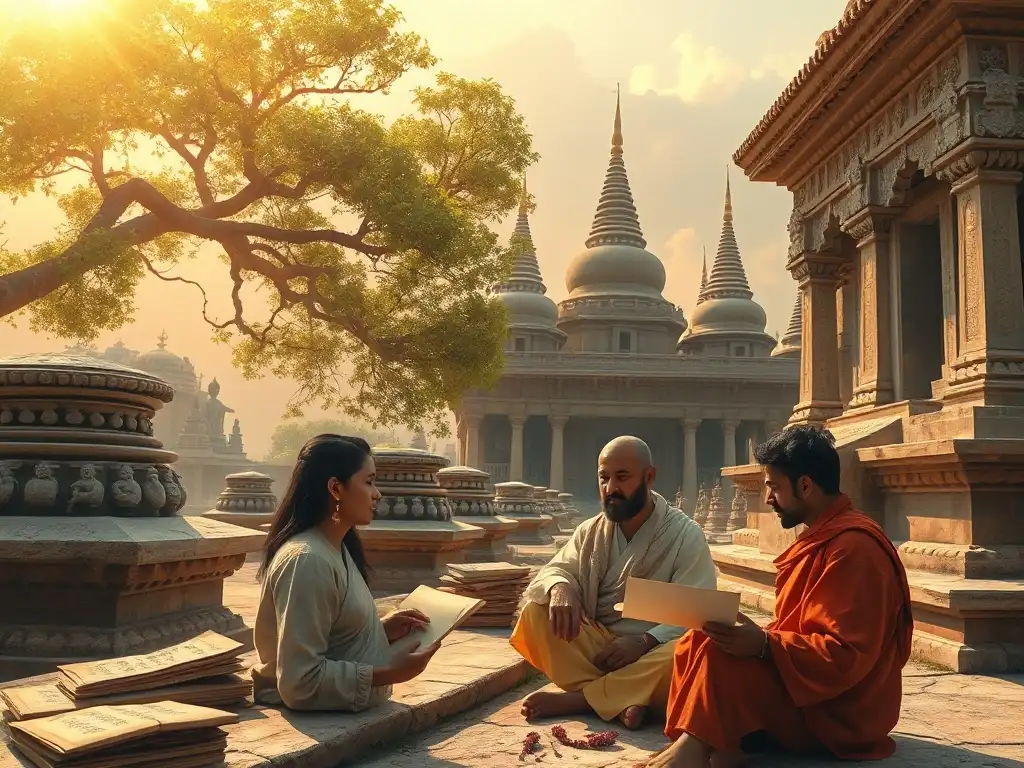
The Pali language, recognized for its simplicity and clarity, emerged as a significant vehicle for the transmission of Buddhist teachings in ancient India. Its origins trace back to the Indo-Aryan languages, making it a close relative of Sanskrit. The historical context of Pali is deeply intertwined with the rise of Buddhism around the 5th century BCE, during a period marked by profound cultural and philosophical transformations in India.
Pali was primarily utilized in the Theravada school of Buddhism, which spread across various regions, including Sri Lanka, Southeast Asia, and beyond. The language's accessibility enabled a broader audience to engage with its texts, contrasting with the more elitist Sanskrit that often appealed to the higher echelons of society. As a result, Pali became a crucial medium for disseminating Buddhist doctrines, ethics, and practices, influencing art and iconography in ways that are still evident today.
The Theravada canon, known as the Tipitaka or "Three Baskets," consists of the Vinaya Pitaka (rules for monastic discipline), the Sutta Pitaka (discourses of the Buddha), and the Abhidhamma Pitaka (philosophical and doctrinal analysis). This extensive body of literature not only solidified Pali's status as a sacred language but also laid the groundwork for the cultural and artistic expressions that would flourish throughout ancient Indian civilization.
The Role of Pali in Religious Texts and Philosophy
The pivotal role of Pali in religious texts significantly shaped the philosophical landscape of ancient India. The Pali Canon, written in Pali, comprises some of the earliest records of the Buddha's teachings. These texts emphasize core Buddhist principles such as the Four Noble Truths, the Eightfold Path, and the concept of Anatta (non-self).
The clarity and directness of Pali allowed for nuanced interpretations of complex philosophical ideas, making them accessible to a wider audience. The following aspects illustrate Pali's influential role in religious texts and philosophy:
- Accessibility of Teachings: Unlike Sanskrit, which was primarily used by the Brahmin class, Pali's straightforward nature made Buddhist teachings more approachable for laypersons, thus facilitating the spread of Buddhism across different strata of society.
- Textual Preservation: The oral tradition of recitation and the establishment of monastic communities helped preserve Pali texts through generations. This preservation allowed for the continuity of Buddhist thought and practice, influencing subsequent artistic representations of Buddhist themes.
- Philosophical Discourse: Pali literature includes not just religious texts but also philosophical treatises that delve into ethics, metaphysics, and psychology. These texts influenced the development of art, particularly in the representation of Buddhist symbols and motifs in sculptures and paintings.
The cultural influence of Pali art can be observed in numerous ancient artifacts that depict Buddhist narratives, figures, and symbols, showcasing the synthesis of religious philosophy and artistic expression.
The cultural influence of Pali extended beyond religious texts, permeating political and social structures in ancient India. The language played a vital role in the administration of early Buddhist kingdoms, shaping governance and societal organization in several ways:
- Royal Patronage: Many rulers, notably Emperor Ashoka during the 3rd century BCE, embraced Buddhism and promoted Pali as a language of administration and communication. Ashoka's edicts, inscribed in Pali, emphasized moral governance and social welfare, solidifying Buddhism's place in political discourse.
- Cultural Integration: The adoption of Pali in various regions facilitated cultural integration among diverse communities. As Buddhism spread, local dialects absorbed Pali vocabulary and expressions, leading to a rich tapestry of linguistic and cultural exchanges.
- Social Reform: Pali texts often addressed social issues, advocating for ethical conduct and compassion towards all living beings. These teachings inspired social reforms that challenged rigid caste systems and promoted a sense of equality among followers, influencing the societal structure of ancient India.
The interplay between Pali, political authority, and social change fostered an environment where art flourished. The artistic representations of Buddhist narratives often reflected the socio-political climate, encapsulating the essence of Pali's cultural influence on ancient Indian art and iconography.
Pali's historical context and its role in both religious and political spheres rendered it a cornerstone of ancient Indian civilization, leaving an indelible mark on the cultural landscape that continues to resonate in contemporary discussions of art and iconography.
Key Elements of Pali's Cultural Influence on Ancient Indian Art
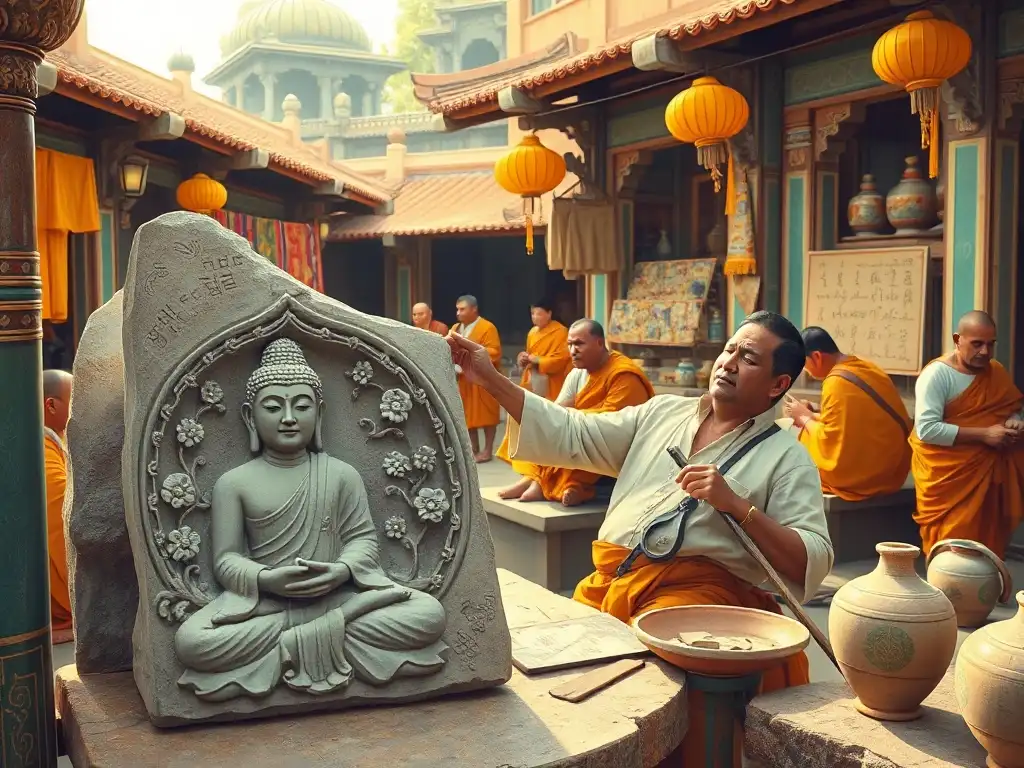
Pali, as one of the earliest recorded languages in India, has had a profound impact on the cultural landscape of ancient Indian art. Its influence is particularly evident in various forms of art and iconography that emerged during the periods when Pali literature flourished. The key elements of this cultural influence can be analyzed through two significant aspects: iconographic representations and the symbolism and themes derived from Pali texts.
Iconographic Representations in Pali Literature
Pali literature, particularly the Theravada Buddhist texts, provided a wealth of narratives and teachings that inspired numerous artistic representations. The iconography associated with these texts often includes:
- Buddha Images: The representation of the Buddha in various postures (mudras) is a direct reflection of Pali teachings. For instance, the Dhyana Mudra symbolizes meditation and is frequently found in sculptures dating back to the 1st century CE.
- Jataka Tales: These stories depict the previous lives of the Buddha and are richly illustrated in ancient art forms. The visual narratives of these tales, such as the story of the "Bamboo Grove," can be seen in the reliefs at sites like Sanchi and Bharhut, showcasing the moral lessons encapsulated in Pali literature.
- Stupas and Viharas: Architectural achievements such as stupas were inspired by Pali texts, which emphasized the importance of relics and the veneration of the Buddha. The Great Stupa at Sanchi, adorned with intricate carvings, reflects the significant role of Pali in shaping religious architecture.
Symbolism and Themes Derived from Pali Texts
The themes and symbolism found in Pali texts not only influenced the visual arts but also enriched the cultural narratives of ancient India. Some of the prominent themes include:
- Impermanence and Suffering: Central concepts in Buddhism, such as anicca (impermanence) and dukkha (suffering), are often symbolized in art. For example, the imagery of the Wheel of Dharma (Dharmachakra) represents the cyclical nature of life and the path to enlightenment.
- Compassion and Enlightenment: The portrayal of bodhisattvas and enlightened beings in various art forms illustrates the Pali emphasis on compassion. Statues depicting Avalokiteshvara, the embodiment of compassion, are prevalent in many ancient Indian temples.
- Moral and Ethical Teachings: The principles outlined in the Pali Canon, such as the Noble Eightfold Path, are often represented through symbolic motifs in art. For instance, the lotus flower symbolizes purity and moral integrity, appearing frequently in sculptures and paintings.
The cultural influence of Pali art on ancient Indian iconography is deeply rooted in the narratives, teachings, and themes expressed in Pali literature. The integration of these elements into art not only reflects the religious beliefs of the time but also serves as a testament to the enduring legacy of Pali as a language that shaped the cultural identity of ancient India.
Pali Influence on Sculpture and Architecture
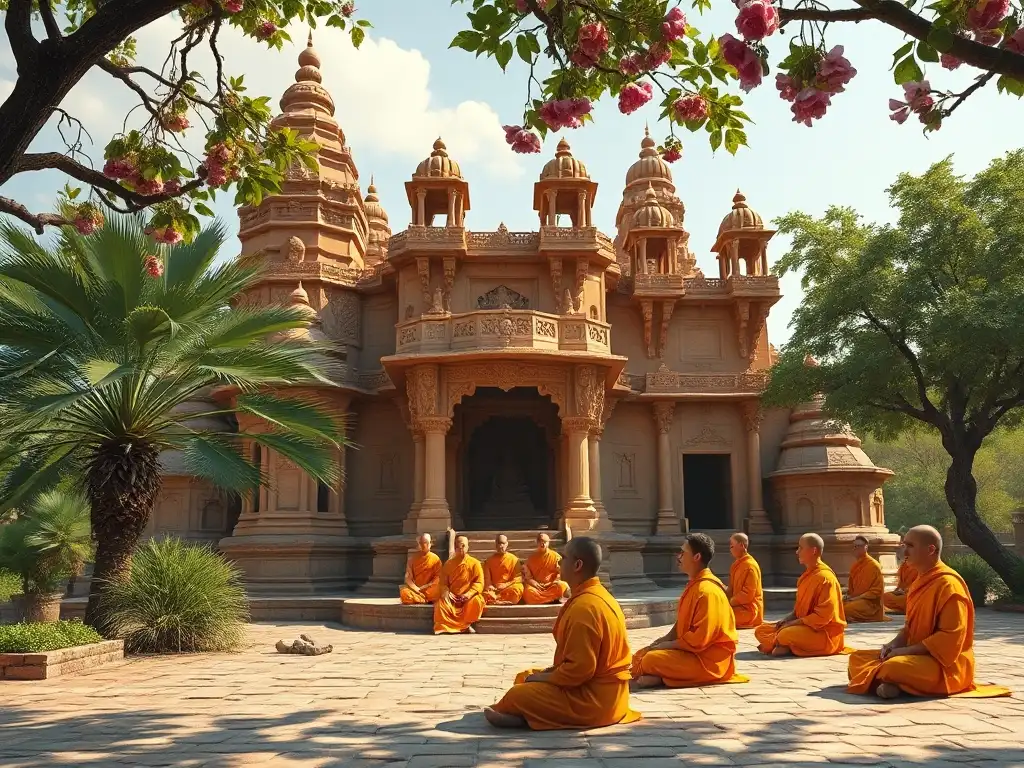
Characteristics of Pali-Inspired Sculptures
Pali art, deeply intertwined with the philosophical and religious tenets of Buddhism, showcases a unique aesthetic that significantly influenced ancient Indian sculpture. This influence is marked by several distinctive characteristics:
- Naturalism: Pali-inspired sculptures exhibit a remarkable emphasis on naturalism, capturing the intricate details of human figures, facial expressions, and drapery. This realism not only enhances the visual appeal but also conveys emotional depth and spiritual significance.
- Iconography: The iconography in Pali art often features specific symbols and motifs associated with Buddhist teachings. Common elements include the lotus flower, which represents purity and enlightenment, and the dharma wheel (Dharmachakra), symbolizing the teachings of Buddha.
- Posture and Gesture: Sculptures typically depict figures in meditative or dynamic poses, showcasing the importance of mudras (hand gestures) that convey various meanings in the context of meditation and teachings. The Abhaya Mudra, for instance, symbolizes fearlessness and protection.
- Materials and Techniques: Artists utilized a variety of materials, including stone, bronze, and terracotta, reflecting the local resources and traditions. The mastery of carving techniques is evident in the smooth finishes and intricate details that characterize Pali sculptures.
- Narrative Elements: Many Pali sculptures serve a storytelling purpose, depicting scenes from the life of Buddha or Jataka tales that illustrate moral lessons. This narrative aspect not only enriches the visual experience but also educates the viewers about Buddhist principles.
The fusion of these characteristics in Pali art not only evolved the standards of sculpture in ancient India but also laid the groundwork for the artistic expressions that followed, influencing subsequent generations of artists.
Notable Examples of Pali Influence in Ancient Indian Architecture
The architectural landscape of ancient India reflects the profound impact of Pali art, particularly in structures associated with Buddhism. Here are some notable examples that highlight this cultural influence:
- Sanchi Stupa: The Great Stupa at Sanchi, a UNESCO World Heritage site, exemplifies Pali influence through its intricate carvings and reliefs depicting various aspects of Buddha's life. The toranas (gateways) are adorned with elaborate sculptures that narrate Buddhist teachings, showcasing the harmonious blend of architecture and art.
- Ajanta Caves: The rock-cut caves of Ajanta house some of the most exquisite examples of Pali-inspired frescoes and sculptures. The intricate carvings of Buddhist figures and scenes in the chaityas and viharas reflect the naturalism and iconographic richness characteristic of Pali art.
- Nalanda University: As one of the ancient seats of learning, Nalanda's architectural remains showcase the Pali influence in its monastic complexes. The layout and design of the structures reflect the integration of art and functionality, with numerous sculptures adorning the walls that depict Buddhist iconography.
- Kushan Period Temples: The temples built during the Kushan dynasty, such as those found at Mathura, display a synthesis of Indian and Hellenistic influences, with Pali art serving as a crucial link. The depiction of deities and bodhisattvas in these temples often follows Pali artistic conventions, emphasizing their spiritual significance.
- Bodh Gaya: The Mahabodhi Temple, marking the site of Buddha's enlightenment, is adorned with sculptures that reflect Pali stylistic elements. The temple's architectural design, with its towering spire and intricate carvings, serves as a testament to the pervasive influence of Pali art in shaping sacred spaces.
These examples illustrate how the cultural influence of Pali art permeated ancient Indian architecture, creating a lasting legacy that continues to be celebrated today.
The Impact of Pali on Painting and Decorative Arts
The influence of Pali on ancient Indian painting and decorative arts is a testament to the interconnectedness of language, religion, and artistic expression. Pali, as the language of many Buddhist texts, played a crucial role in shaping the iconography and stylistic elements of artworks during the time of the Maurya and Gupta empires. The teachings and narratives conveyed through Pali literature were often translated into visual forms, allowing for a richer cultural tapestry that reflected the values and beliefs of the society.
Techniques and Styles Influenced by Pali
The incorporation of Pali into the artistic realm led to the development of unique techniques and styles that were distinctively Buddhist. These styles can be observed in various forms of art, including frescoes, sculptures, and decorative motifs.
- Fresco Painting: One of the most significant techniques influenced by Pali is fresco painting, which became prominent in ancient monasteries. The depiction of Jataka tales (stories of the Buddha's previous lives) in vibrant frescoes demonstrates the narrative power of Pali literature. Artists utilized a palette of natural pigments and employed techniques that allowed for intricate detailing and depth.
- Sculptural Art: Sculptures from the early centuries AD often featured themes and figures derived from Pali texts. The use of mudras (hand gestures) in Buddhist iconography, such as the Abhaya Mudra (gesture of fearlessness), can be traced back to the written traditions in Pali. These sculptures not only served religious purposes but also conveyed philosophical teachings.
- Decorative Motifs: The decorative arts also saw an infusion of Pali influence. Patterns and symbols often found in Buddhist art, such as the lotus flower and the dharmachakra (wheel of dharma), were inspired by Pali teachings. These motifs were used extensively in textiles, pottery, and architectural embellishments, adding layers of meaning to the aesthetic experience.
Case Studies of Pali-Inspired Artwork
Examining specific examples of Pali-inspired artwork reveals the depth of its cultural influence on ancient Indian art.
- Ajanta Caves: The frescoes in the Ajanta Caves, dating back to the 2nd century BCE to the 6th century CE, offer a compelling case study. These murals illustrate various Jataka tales and are deeply embedded in Pali literature. The artists employed sophisticated techniques of shading and perspective, creating dynamic compositions that bring the narratives to life.
- Sanchi Stupa: The Sanchi Stupa, a UNESCO World Heritage Site, is adorned with intricately carved gateways (toranas) that depict scenes from the life of the Buddha. Many of these scenes are based on Pali texts, showcasing moments such as the Buddha's enlightenment and his first sermon. The symbolism conveyed through these carvings reflects the core teachings of Buddhism as articulated in the Pali Canon.
- Nalanda University Ruins: The ruins of Nalanda University, an ancient center of learning, provide insight into the intersection of Pali and art. The remnants of sculptures and decorative elements found in these ruins often depict Buddhist figures and symbols intricately linked to Pali literature. These works serve as a bridge between the academic pursuit of knowledge and the artistic representation of spiritual concepts.
Through these case studies, it is evident that the Cultural Influence of Pali Art transcended mere aesthetics, shaping the spiritual and philosophical landscape of ancient India. The legacy of this influence continues to be felt in contemporary interpretations of Indian art and culture.
Comparative Analysis: Pali vs. Other Prakrit Languages in Art
Similarities and Differences in Artistic Expression
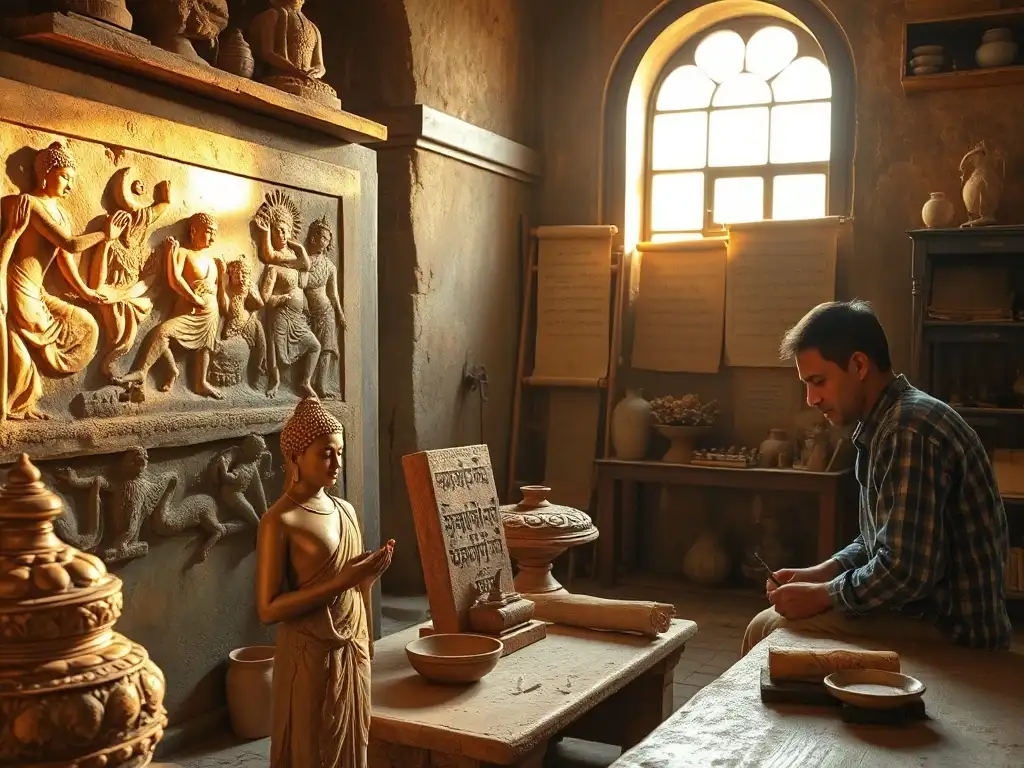
The Cultural Influence of Pali Art is significant when compared to other Prakrit languages, such as Ardhamagadhi and Maharashtri. While all these languages share a common heritage rooted in the early forms of Indian vernaculars, their artistic expressions exhibit both similarities and distinct characteristics that reflect their unique cultural contexts.
- Thematic Elements:
- Pali Art often emphasizes themes of Buddhism, focusing on the life of the Buddha, Jataka tales, and depictions of the Sangha. This thematic concentration is evident in sculptures and murals found in ancient stupas and monasteries, where the narratives are rendered with clarity and reverence.
- Other Prakrit Languages, like Maharashtri, may also depict religious themes but often intertwine Hindu and local deities, presenting a more syncretic view of spirituality and iconography. This results in a richer variety of motifs that can include local folklore and legends alongside mainstream religious narratives.
- Stylistic Features:
- Pali artistic expressions typically showcase a more austere and restrained style, reflecting the ascetic nature of Buddhism. The figures are often depicted in serene poses, emphasizing tranquility and meditation.
- In contrast, art influenced by other Prakrit languages can display a more dynamic and elaborate style, with intricate adornments and more expressive figures. This may be attributed to the different cultural and religious influences that shape these artistic traditions.
- Materials and Techniques:
- The Pali artistic tradition predominantly utilized stone and terracotta for sculptures, emphasizing durability and permanence, mirroring the enduring nature of Buddhist teachings.
- Other Prakrit languages might have employed a broader range of materials, including metal and wood, leading to varied techniques and finishes that showcase local craftsmanship.
Influence of Other Prakrit Languages on Ancient Indian Iconography
The interaction between Pali and other Prakrit languages has led to a fascinating cross-pollination of artistic ideas and iconographic practices. This influence can be observed in several key areas:
- Iconographic Development:
- The iconography of Buddhist art in Pali is enriched by motifs and symbols from other Prakrit traditions. For instance, while Pali art focuses on the Buddha and Bodhisattvas, elements from Ardhamagadhi may introduce local deities into the visual narrative, creating a unique fusion of iconography that appeals to a broader audience.
- Narrative Techniques:
- Storytelling in art is a crucial aspect of iconography. The narrative styles found in artworks from languages like Maharashtri have influenced Pali art, especially in the depiction of Jataka tales. The incorporation of local styles of storytelling has added layers of meaning and engagement, making the narratives more relatable to the viewers.
- Regional Variations:
- As Pali spread across regions, it interacted with local dialects and artistic traditions, leading to regional variations in iconography. For example, the art in the regions where Ardhamagadhi was prevalent may exhibit unique stylistic features that differ from those in predominantly Pali-speaking areas, showcasing the adaptability and evolution of art influenced by linguistic diversity.
- Cultural Syncretism:
- The blending of cultures through trade, migration, and conquest allowed Pali art to absorb influences from other Prakrit languages, resulting in a rich tapestry of artistic expression. This cultural syncretism is especially evident in the decorative arts, where motifs from various traditions coexist and complement each other.
The Cultural Influence of Pali Art is not only significant in its own right but also as a part of a larger dialogue among the Prakrit languages. This interplay has resulted in a diverse and vibrant artistic heritage that continues to be explored and celebrated today.
Conclusion: The Lasting Legacy of Pali on Ancient Indian Art and Culture
Summary of Cultural Influence of Pali Art
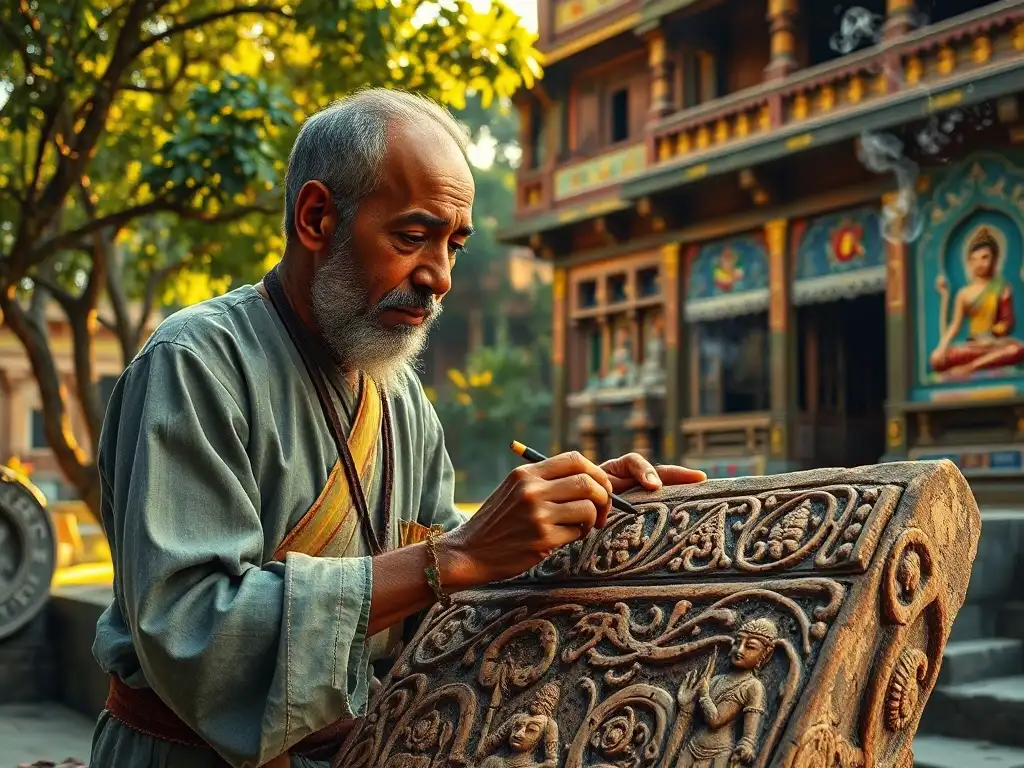
The cultural influence of Pali art is profoundly woven into the tapestry of ancient Indian civilization. Originating from the sacred texts of Buddhism, Pali language served as a medium for philosophical and spiritual discourse, shaping not only religious practices but also artistic expression. The emergence of Pali art can be traced back to the 3rd century BCE, with the proliferation of Buddhist stupas and monastic complexes that adorned the Indian landscape.
Key elements of Pali art include:
- Sculptural Representations: The intricate carvings found at sites like Sanchi and Bharhut demonstrate a unique blend of Indian motifs and the iconography of the Buddha. These sculptures often depict scenes from the Jataka tales, highlighting moral lessons and the virtues of the Buddha.
- Stupas and Monuments: The architectural designs of stupas, such as the Great Stupa at Sanchi, embody the principles of Pali teachings, representing the path to enlightenment through their circular forms and symbolic gateways (toranas).
- Influence on Regional Art: The spread of Pali language and Buddhism influenced various regional art forms across Asia, from the Gandhara art of northwest India to the cave paintings of Ajanta. These variations illustrate the adaptability and the enduring legacy of Pali art across different cultures.
The convergence of Pali language and artistic expression not only enriched the visual landscape of ancient India but also facilitated the dissemination of Buddhist teachings, thus cementing its place in the cultural history of the subcontinent.
Reflection on Pali's Role in Shaping Indian Artistic Heritage
Pali's role in shaping Indian artistic heritage is both significant and multifaceted. As the language of the Buddha's teachings, Pali provided a linguistic foundation for the spiritual narratives that permeated ancient Indian art. This connection between language and art can be explored through several critical dimensions:
- Spiritual Narratives: The use of Pali in Buddhist texts allowed for the codification of spiritual narratives that artists interpreted visually. For instance, the depiction of the Buddha's life, as articulated in Pali scriptures, inspired countless murals and sculptures, creating a cohesive artistic lexicon that transcended regional boundaries.
- Symbolic Imagery: Pali art often employs symbolic imagery that resonates with Buddhist principles. For example, the lotus flower, frequently depicted in sculptures, symbolizes purity and enlightenment, reflecting core teachings found in Pali literature. This symbolism not only enriched the aesthetic appeal of the artworks but also deepened their spiritual significance.
- Cultural Exchange: The artistic legacy of Pali transcended geographical confines, fostering cultural exchange between India and other regions influenced by Buddhism, such as Southeast Asia. The adaptation of Pali iconography in local art forms highlights the fluidity of cultural influences and the enduring impact of Pali on global artistic traditions.
The cultural influence of Pali art is a testament to its profound impact on ancient Indian civilization. By intertwining language, spirituality, and artistic expression, Pali has left an indelible mark on the artistic heritage of India, shaping not only the visual arts but also the philosophical underpinnings of a civilization that continues to inspire and resonate with people today.
Frequently Asked Questions
What is Pali art?
Pali art refers to the artistic expressions and iconography associated with the Buddhist culture that flourished in ancient India, particularly during the Maurya and Gupta periods.
How did Pali influence ancient Indian art?
Pali art significantly influenced ancient Indian art by introducing Buddhist themes and motifs, which were then incorporated into various forms of sculpture, architecture, and painting across India.
What are some key features of Pali art?
Key features of Pali art include symbolic representations of the Buddha, bodhisattvas, and other religious figures, characterized by ornate designs and detailed iconography that reflect the spiritual ideals of Buddhism.
What is the significance of the Gupta Empire in relation to Pali art?
The Gupta Empire is known for its golden age of art and culture, where Pali art reached new heights, influencing the development of Indian aesthetics and the spread of Buddhist iconography throughout the region.
How does the cultural influence of Pali art manifest today?
The cultural influence of Pali art can still be seen in modern times through the continuation of Buddhist practices, the preservation of ancient art forms, and the representation of Buddhist themes in contemporary art and architecture.
Final Reflection: The Enduring Legacy of Pali Art
The cultural influence of Pali art remains a vital thread in the tapestry of ancient Indian heritage, shaping not only artistic expression but also spiritual and philosophical thought. Today, as we navigate a world increasingly defined by globalization and cultural exchange, the profound impact of Pali art serves as a reminder of the rich narratives that inform our identities and beliefs. The intricate designs and iconography of Pali art resonate with timeless themes of enlightenment and morality, compelling us to reflect on our own cultural narratives and their relevance in contemporary society.
The legacy of Pali art continues to inspire artists, scholars, and spiritual seekers alike, bridging the past with the present. The intricate depictions of Buddhist teachings and the reverence for nature found in Pali iconography invite us to explore deeper connections to our own cultural roots. As the renowned art historian John Berger once said, "> The way we see things is affected by what we know or what we believe." This observation underscores the importance of understanding the cultural influences that shape our perspectives, encouraging us to appreciate the diverse artistic expressions that enrich our world.
As we conclude our exploration of the cultural influence of Pali art, I invite you to reflect on how these ancient teachings and artistic expressions can inform your own life. Consider how the values embodied in Pali art—compassion, mindfulness, and interconnectedness—can guide your actions and interactions in today's fast-paced world.
Let the legacy of Pali art inspire you to seek beauty in the ordinary, to honor your cultural heritage, and to contribute to a more compassionate and understanding society. Embrace the lessons of the past as you forge your own path forward, enriching not only your life but also the lives of those around you.
Unveil the Cultural Legacy of Pali!
Thank you for diving into the fascinating world of Pali and its cultural impact on ancient Indian art and iconography. Your interest in this rich history not only enhances your knowledge but also deepens our collective appreciation for how language shapes artistry. Now, let’s take the next steps to connect further with this impactful culture!
- Explore further: Visit local museums or online galleries that showcase ancient Indian art influenced by Pali. Immerse yourself in the visuals that narrate these incredible stories.
- Share your insights: Discuss your newfound knowledge with friends or in online communities. Consider writing a brief article about your favorite Pali artwork.
- Join a community: Connect with like-minded enthusiasts on social media or at local cultural events to share resources and experiences related to ancient Indian art.
Which piece of Pali-influenced art resonates with you the most, and how do you believe it reflects the culture of its time?