
Understanding the Notion of Reality in Advaita Vedanta Philosophy


Welcome to Ancient India History, where we embark on a fascinating journey through time to uncover the rich tapestry of ancient Indian civilizations. In this exploration, we delve into the profound concepts that shaped their culture and philosophy. Today, we invite you to unravel the mysteries of Advaita Vedanta philosophy explained. This intriguing philosophical framework invites you to question the very nature of reality and existence. Are you ready to discover how this ancient wisdom continues to resonate in our lives today? Join us as we dive deeper into the essence of non-duality and its transformative insights.
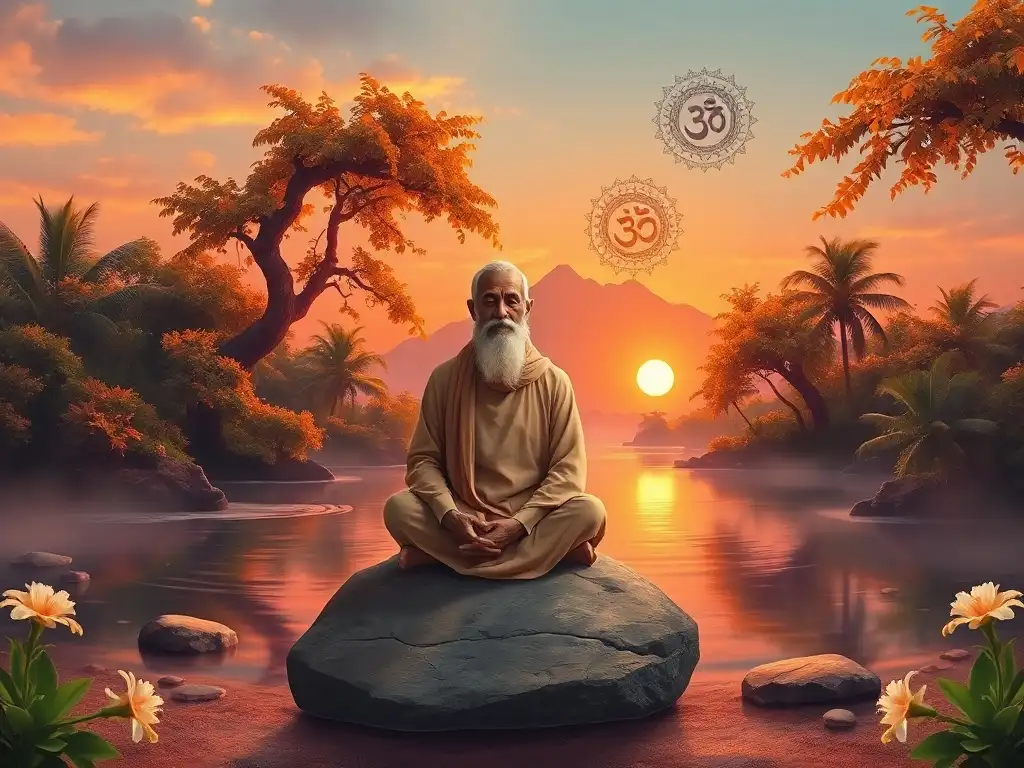
Advaita Vedanta philosophy, a profound and intricate school of thought within Indian philosophy, offers a unique perspective on the nature of reality. Rooted in the ancient texts of the Upanishads, this non-dualistic doctrine emphasizes the oneness of the individual soul (Atman) with the ultimate reality (Brahman).
As we delve into the intricacies of Advaita Vedanta, it becomes essential to explore not only its core concepts but also its historical evolution and significance in shaping philosophical discourse. This article aims to provide a comprehensive explanation of Advaita Vedanta philosophy, unraveling its rich teachings and illuminating its contributions to our understanding of reality.
Introduction to Advaita Vedanta Philosophy
Definition of Advaita Vedanta
Advaita Vedanta, which translates to "non-dualism" (Advaita) and "the end of the Vedas" (Vedanta), posits that there is no fundamental distinction between the self and the divine. This philosophy asserts that the apparent multiplicity of the universe is an illusion (Maya) and that true knowledge reveals the singular, unchanging reality of Brahman. The teachings advocate that realization of this non-duality is key to liberation (Moksha) from the cycle of birth and rebirth (Samsara).
Historical Context and Development
The origins of Advaita Vedanta can be traced back to the early Vedic texts, but it was the philosopher Adi Shankaracharya (788–820 CE) who significantly systematized and popularized its doctrines. Shankaracharya's commentaries on the Upanishads, the Bhagavad Gita, and the Brahma Sutras established a framework for understanding Advaita Vedanta and addressing various philosophical challenges of his time. Throughout history, Advaita Vedanta has influenced various religious and philosophical movements, promoting introspection and inquiry into the nature of existence.
The Concept of Reality in Advaita Vedanta
What is Reality According to Advaita Vedanta?
In Advaita Vedanta, reality is perceived as non-dual, meaning that there is no distinction between the observer and the observed. This philosophy posits that the ultimate reality (Brahman) is the only truth, while the empirical world, filled with diversity and change, is an illusion. This perspective encourages individuals to transcend their limited perceptions and recognize their unity with the cosmos.
The Nature of Brahman: The Ultimate Reality
Brahman is described as the infinite, eternal, and formless essence that underlies all existence. It is beyond attributes (Nirguna), transcending dualities such as existence and non-existence. Understanding Brahman is crucial in Advaita Vedanta, as it represents the ultimate goal of spiritual practice—realizing one's identity with this fundamental reality.
The Role of Maya in Understanding Reality
Maya, in Advaita Vedanta, is the concept that explains the illusory nature of the physical world. It creates a veil that obscures the perception of Brahman, causing individuals to identify with their transient forms and experiences. By comprehending the nature of Maya, seekers can begin to lift the veil and gain insights into the true nature of reality, ultimately leading to spiritual awakening and liberation.
In this exploration of Advaita Vedanta philosophy, we will unravel these concepts further, providing a comprehensive understanding of how this ancient wisdom addresses the fundamental questions about the nature of reality, existence, and the self.
Key Principles of Advaita Vedanta Philosophy Explained
Advaita Vedanta philosophy, rooted in ancient Indian texts, particularly the Upanishads and the teachings of Adi Shankaracharya, presents a profound understanding of reality that has intrigued scholars and spiritual seekers alike. At its core, Advaita Vedanta articulates a non-dualistic worldview where the ultimate reality is seen as a unified whole, transcending the apparent diversity of the material world. This philosophy emphasizes that the essence of all existence is Brahman, the ultimate reality, and that human beings can realize their true nature through spiritual practice and understanding.
The principles of Advaita Vedanta can be distilled into several key concepts, including non-dualism, the illusory nature of the material world, and the intimate relationship between Atman (the individual self) and Brahman (the universal self). These principles form the foundation for a deeper exploration of existence and consciousness, offering insights into the nature of reality itself.
Non-Dualism: The Oneness of Existence
At the heart of Advaita Vedanta lies the concept of non-dualism, which posits that there is no fundamental separation between the individual self (Atman) and the universal reality (Brahman). This oneness signifies that all distinctions we perceive in the world—between subjects and objects, self and other—are ultimately illusory.
The teaching of non-dualism challenges the conventional understanding of duality, which divides existence into conflicting pairs such as good and evil, pleasure and pain, or life and death. In Advaita Vedanta, these dualities are seen as part of Maya, the cosmic illusion that obscures our perception of reality. By recognizing the oneness of existence, practitioners aim to transcend this illusion, leading to a profound realization that all beings and phenomena are manifestations of the same underlying reality.
The Illusory Nature of the Material World
Advaita Vedanta holds that the material world is not as it appears; rather, it is a transient and illusory manifestation of Brahman. This doctrine, known as Maya, suggests that the physical universe, with all its forms and phenomena, is subject to change and is therefore not the ultimate reality.
The concept of Maya serves to explain why ordinary perception can be misleading. Just as a mirage deceives the thirsty traveler, the material world can distract individuals from realizing their true nature. Understanding this illusory aspect allows practitioners to cultivate detachment and discernment, enabling them to see beyond superficial appearances and recognize the eternal truth of Brahman.
The Relationship Between Atman and Brahman
In Advaita Vedanta, the relationship between Atman and Brahman is central to the philosophical inquiry into the nature of self and reality. Atman, often described as the innermost essence of an individual, is not separate from Brahman, the ultimate reality. Instead, they are fundamentally the same.
This non-dual relationship is encapsulated in the famous Mahavakya, "Tat Tvam Asi," which translates to "That Thou Art." This assertion emphasizes the identity of the individual self with the universal self. Realizing this connection is the ultimate goal of spiritual practice in Advaita Vedanta, leading to liberation (Moksha) from the cycle of birth and rebirth (Samsara).
The Process of Realization in Advaita Vedanta
The path to realizing the principles of Advaita Vedanta is a transformative journey that involves both intellectual understanding and experiential insight. This process is not merely theoretical; it requires active engagement in various spiritual practices aimed at fostering self-awareness and connection with the ultimate reality.
Spiritual Practices Leading to Enlightenment
Advaita Vedanta encourages several spiritual practices that facilitate the realization of the self’s true nature. These include:
- Self-Inquiry (Atma Vichara): A method popularized by Ramana Maharshi, it involves questioning the nature of the self by asking "Who am I?" This practice leads to a direct experience of the self beyond the ego.
- Meditation (Dhyana): Regular meditation cultivates inner stillness and concentration, allowing practitioners to transcend thoughts and emotions and connect with the deeper self.
- Contemplation (Jnana Yoga): This involves reflecting on the teachings of the scriptures and engaging in philosophical inquiry to deepen understanding of non-dualism.
- Surrender (Bhakti): Devotion to a personal deity or the guru helps cultivate humility and openness to spiritual truths.
Each of these practices serves to dissolve the ignorance that binds individuals to the material world, paving the way for enlightenment.
The Role of Guru in Advaita Vedanta
In Advaita Vedanta, the role of the guru (spiritual teacher) is pivotal. The guru acts as a guide, imparting wisdom and providing personal instruction tailored to the seeker’s needs. The relationship between the guru and disciple is often likened to a light illuminating the path, helping to dispel the darkness of ignorance.
A guru not only transmits knowledge but also embodies the teachings of non-dualism, serving as a living example of the realization of Atman as Brahman. Through the guru’s grace, disciples can receive the necessary insights and encouragement to undertake their spiritual journey, ultimately realizing their true self.
Realization of the Self: A Step-by-Step Approach
The realization of the self in Advaita Vedanta is often systematized into a step-by-step approach, which can be summarized as follows:
- Study of Scriptures (Shravana): Engaging with sacred texts to understand the philosophy and principles of Advaita Vedanta.
- Reflection (Manana): Contemplating the teachings to internalize and clarify understanding.
- Meditation (Nididhyasana): Practicing meditation to experience the truth of non-dualism directly.
- Self-Realization: Experiencing the profound recognition of the self as non-different from Brahman, leading to liberation.
This structured approach serves to systematically dismantle ignorance, guiding practitioners towards the ultimate realization of their own eternal nature and the interconnectedness of all existence.
Comparing Advaita Vedanta with Other Philosophical Systems
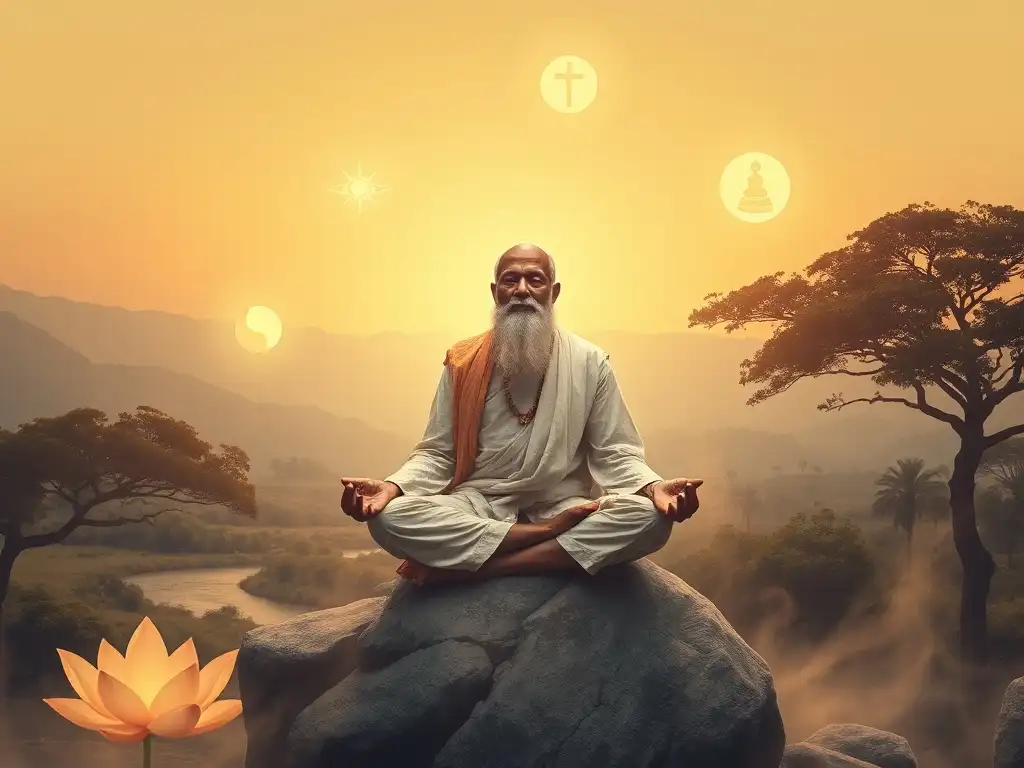
Advaita Vedanta stands as a unique system within the broader landscape of philosophical thought. To appreciate its depth and significance, it is essential to compare it with other philosophical systems, particularly those that address the nature of reality and existence. This comparison reveals both the distinctive features of Advaita Vedanta and its commonalities with other philosophies.
One of the key contrasts can be drawn between Advaita Vedanta and Dvaita, or dualism. While Advaita asserts the non-duality of existence and the ultimate unity of Atman (the self) and Brahman (the ultimate reality), Dvaita posits a fundamental distinction between the individual soul and the divine. This foundational difference shapes their respective views on liberation, the nature of the divine, and the individual's relationship with reality.
Additionally, comparing Advaita Vedanta with Western philosophical perspectives provides further insights. Western traditions, particularly those influenced by Cartesian dualism, often underscore a separation between mind and body, or subject and object. In contrast, Advaita Vedanta emphasizes a holistic understanding of reality, wherein the perceived dualities are ultimately illusory. This distinction raises important questions about the nature of perception, existence, and the ultimate goal of philosophical inquiry.
Advaita Vedanta vs. Dvaita: Dualism Explained
The contrast between Advaita Vedanta and Dvaita forms a central theme in Indian philosophy. Advaita Vedanta, attributed to the sage Adi Shankaracharya, is rooted in the idea of non-duality. It teaches that all distinctions—between the self and the universe, or between the individual and the divine—are ultimately illusory (Maya). According to this view, liberation (moksha) is achieved through the realization that Atman and Brahman are one and the same. This realization transcends intellectual understanding, requiring direct experiential insight into the nature of reality.
On the other hand, Dvaita philosophy, founded by Madhvacharya, posits a clear distinction between the individual souls (jivas) and God (Vishnu). Dvaita maintains that the soul is eternally different from the divine, and liberation is achieved through devotion and grace. In this framework, the plurality of existence is acknowledged, and the relationship between the soul and the divine is one of eternal difference. This dualistic perspective highlights the importance of personal devotion and moral conduct in the pursuit of spiritual goals.
The debate between these two schools has significant implications for understanding the dynamics of spirituality in India, reflecting broader themes of unity, diversity, and the nature of existence itself.
Western Philosophical Perspectives on Reality
Western philosophy has long grappled with the nature of reality, often through the lens of metaphysics and epistemology. Influential figures such as Plato, Descartes, and Kant have contributed to the discourse on how reality is perceived and understood. For example, Plato's theory of forms suggests that the material world is a shadow of a higher reality composed of ideal forms, contrasting sharply with Advaita Vedanta’s notion of ultimate unity.
In modern philosophy, existentialists like Jean-Paul Sartre and phenomenologists such as Edmund Husserl further explore the subjective experience of reality. They emphasize individual consciousness and perception, which can resonate with Advaita's focus on self-realization but diverge in their conclusions regarding the nature of existence. While Advaita Vedanta sees the ultimate reality as non-dual and singular, many Western philosophies embrace a plurality of realities shaped by human perception and experience.
Moreover, the rise of scientific inquiry in the Western tradition has led to a more materialistic understanding of reality. This contrasts with Advaita Vedanta, which integrates spiritual and metaphysical dimensions, proposing that the ultimate reality transcends empirical observation.
Common Misunderstandings of Advaita Vedanta
Advaita Vedanta, despite its profound insights, is often subject to misconceptions. One prevalent misunderstanding is the notion that it promotes nihilism or a disregard for the material world. In reality, Advaita Vedanta acknowledges the existence of the phenomenal world while asserting that it is transient and ultimately illusory. This perspective encourages individuals to engage with the world responsibly while seeking deeper spiritual truths.
Another common misconception is the belief that Advaita Vedanta denies individuality. While it teaches that the ultimate self (Atman) is identical to Brahman, it does not imply that individual experiences and identities are unimportant. Instead, Advaita emphasizes the journey of self-realization, where understanding one's true nature leads to greater compassion and connection with others.
Additionally, some interpret Advaita Vedanta as a doctrine advocating for inaction or detachment from life. However, the philosophy encourages active engagement in the world, advocating for ethical living and compassionate action as integral to spiritual growth. The realization of non-duality does not negate the responsibilities and relationships inherent in human existence.
Contemporary Relevance of Advaita Vedanta Philosophy
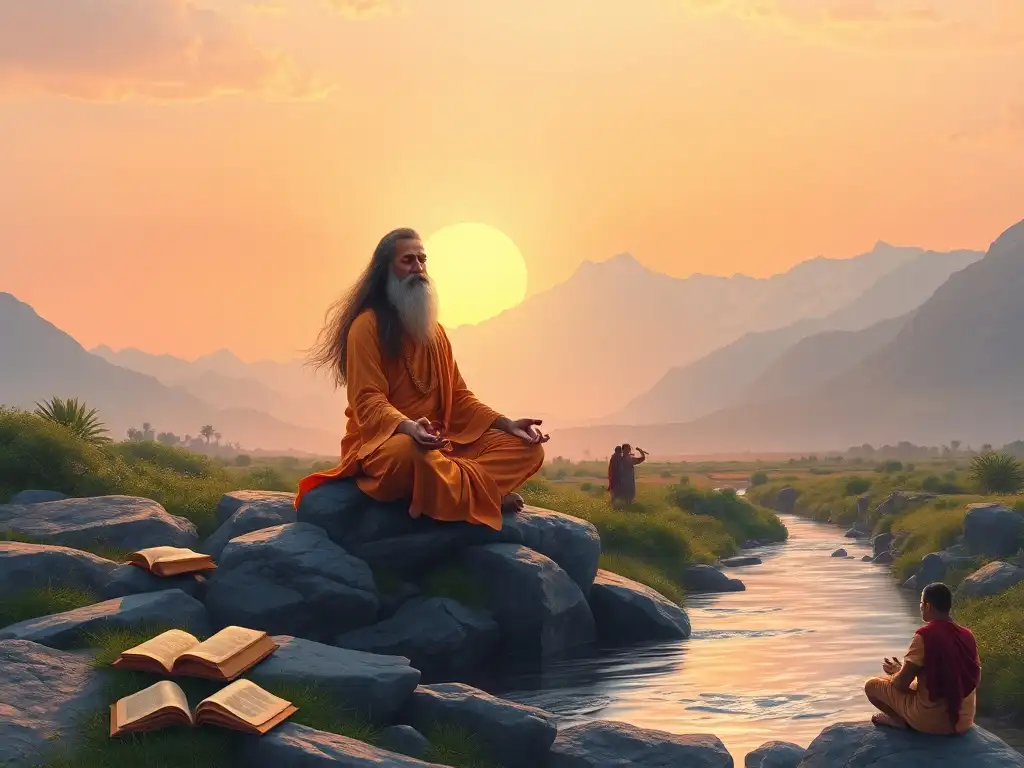
Advaita Vedanta continues to resonate in contemporary discussions, offering valuable insights into spirituality, psychology, and cultural identity. Its teachings on the nature of reality and the self are increasingly relevant in a world grappling with existential questions and searching for deeper meaning.
Applications in Modern Spirituality
In modern spiritual practices, Advaita Vedanta is often integrated into mindfulness and meditation techniques. The emphasis on self-inquiry and the exploration of consciousness aligns with contemporary interests in personal growth and well-being. Many spiritual seekers find solace in its teachings, using them as a framework for understanding their experiences and navigating life's challenges.
Furthermore, the philosophy's non-dual perspective encourages individuals to transcend divisions based on race, religion, and nationality, promoting a sense of universal connectedness that is crucial in today's globalized world. This message of unity and inclusivity appeals to those seeking a holistic spiritual path.
Impact on Psychology and Consciousness Studies
Advaita Vedanta has significantly influenced modern psychology, particularly in areas related to consciousness studies and transpersonal psychology. Its exploration of consciousness as a fundamental aspect of reality resonates with contemporary debates on the nature of mind and self. The philosophy's emphasis on direct experience mirrors modern psychological practices focused on self-awareness and emotional intelligence.
Research in consciousness studies often reflects themes present in Advaita, such as the nature of perception and the illusion of separateness. The philosophy's insights into the nature of the self contribute to ongoing discussions about identity, mental health, and the pursuit of happiness.
Advaita Vedanta in Popular Culture
Advaita Vedanta has also found its way into popular culture, influencing literature, film, and art. Its themes of non-duality and self-realization resonate with narratives that explore the human condition and the quest for meaning. Many contemporary authors and filmmakers draw on Advaita's insights to address existential themes, creating works that inspire audiences to reflect on their understanding of reality.
Additionally, the increasing popularity of yoga and meditation in the West has brought Advaita Vedanta principles to a broader audience, fostering a growing interest in Eastern philosophies. This cross-cultural exchange enriches the global dialogue on spirituality and the nature of existence, highlighting the timeless relevance of Advaita Vedanta in understanding the complexities of life.
Conclusion: The Importance of Understanding Reality in Advaita Vedanta Philosophy
Understanding reality within the framework of Advaita Vedanta philosophy is crucial for grasping the profound insights it offers into the nature of existence. Advaita, meaning "non-duality," posits that the ultimate reality (Brahman) is singular and that the perceived diversity of the world is an illusion (Maya). This understanding encourages individuals to transcend the limitations imposed by the ego and the material world. By recognizing the interconnectedness of all beings and the underlying unity of existence, practitioners can cultivate a deeper sense of peace, purpose, and spiritual fulfillment.
Moreover, the insights derived from Advaita Vedanta challenge conventional notions of self and reality, prompting a reevaluation of personal beliefs and societal norms. This philosophical framework fosters an environment where one can explore the essence of consciousness and existence beyond mere intellectual understanding. Embracing these teachings can lead to transformative experiences, ultimately guiding individuals toward self-realization and enlightenment.
Summary of Key Insights
- Non-Duality: At the heart of Advaita Vedanta is the idea that there is no separation between the individual self (Atman) and the ultimate reality (Brahman). This realization can lead to liberation (Moksha) from the cycle of birth and rebirth (Samsara).
- Illusion of Maya: Advaita Vedanta teaches that the physical world and its multiplicity are illusions. Understanding this helps individuals detach from transient experiences and seek a deeper, more lasting truth.
- Self-Realization: The philosophy emphasizes the importance of self-exploration and introspection, leading to the profound realization of one's true nature as Brahman.
- Ethical Living: By recognizing the unity of all existence, adherents are encouraged to live ethically and compassionately, fostering harmony with others and the environment.
The Continuing Influence of Advaita Vedanta on Philosophy and Spirituality
Advaita Vedanta has left an indelible mark on both Eastern and Western philosophical traditions. Its principles have inspired a myriad of thinkers and spiritual leaders. In contemporary times, the philosophy continues to resonate with those seeking deeper meaning in life and understanding of consciousness.
Many modern spiritual movements and practices, including mindfulness and non-dual awareness, draw heavily from Advaita Vedanta teachings. The appeal of this philosophy lies in its ability to address fundamental questions about existence, consciousness, and the nature of reality, making it a vital part of ongoing philosophical and spiritual discourse.
Further Reading and Resources on Advaita Vedanta Philosophy
To deepen your understanding of Advaita Vedanta, a variety of resources are available, including texts, online courses, and insights from notable scholars and practitioners.
Recommended Texts and Scriptures
- "Upanishads": The foundational texts of Vedanta that explore the nature of reality and self.
- "Bhagavad Gita": This sacred scripture addresses the relationship between the individual and the divine, incorporating key Advaita concepts.
- "Advaita Vedanta: A Philosophical Introduction" by K. R. S. Iyengar: A comprehensive overview of Advaita Vedanta philosophy.
- "The Crest Jewel of Discrimination" (Vivekachudamani) by Adi Shankaracharya: A seminal text that outlines the principles of Advaita Vedanta.
Online Courses and Lectures
- Coursera and edX: Platforms offering courses on Indian philosophy and Advaita Vedanta specifically.
- YouTube Channels: Various scholars and practitioners share lectures and discussions, making the philosophy accessible to a broader audience.
Notable Scholars and Practitioners in Advaita Vedanta
- Adi Shankaracharya: The most prominent figure in Advaita Vedanta, known for his commentaries on the Upanishads and the Bhagavad Gita.
- Swami Vivekananda: A key figure in bringing the teachings of Advaita Vedanta to the West in the late 19th century.
- Sri Ramana Maharshi: A modern saint whose teachings focused on self-inquiry and the nature of reality, deeply rooted in Advaita principles.
- Swami Dayananda Saraswati: A contemporary teacher who has contributed significantly to the understanding and dissemination of Advaita Vedanta.
By engaging with these resources, readers can further explore the rich tapestry of Advaita Vedanta philosophy and its implications for understanding reality and consciousness.
- Introduction to Advaita Vedanta Philosophy
- The Concept of Reality in Advaita Vedanta
- Key Principles of Advaita Vedanta Philosophy Explained
- The Process of Realization in Advaita Vedanta
- Comparing Advaita Vedanta with Other Philosophical Systems
- Advaita Vedanta vs. Dvaita: Dualism Explained
- Western Philosophical Perspectives on Reality
- Common Misunderstandings of Advaita Vedanta
- Contemporary Relevance of Advaita Vedanta Philosophy
- Conclusion: The Importance of Understanding Reality in Advaita Vedanta Philosophy
- Further Reading and Resources on Advaita Vedanta Philosophy
Frequently Asked Questions
What is Advaita Vedanta philosophy?
Advaita Vedanta is a non-dualistic school of Indian philosophy that teaches the unity of the individual soul (Atman) with the ultimate reality (Brahman). It emphasizes that the perceived duality of existence is an illusion.
How does Advaita Vedanta explain the concept of reality?
According to Advaita Vedanta, reality is fundamentally one and unchanging. The distinction between the self and the universe is seen as illusory, with true knowledge revealing the oneness of all existence.
Who were the key figures in Advaita Vedanta philosophy?
Adi Shankaracharya is a prominent figure in Advaita Vedanta, known for his commentaries on the Upanishads and Brahma Sutras. His work laid the foundation for much of the philosophical discourse in this tradition.
What role do the Upanishads play in Advaita Vedanta?
The Upanishads are considered the core texts of Advaita Vedanta, providing insights into the nature of reality, the self, and the ultimate purpose of life. They are essential for understanding the philosophical concepts of this tradition.
How has Advaita Vedanta influenced modern thought?
Advaita Vedanta has significantly influenced various fields, including spirituality, psychology, and philosophy. Its teachings on the nature of reality and self-awareness resonate with many contemporary philosophical discussions.
Final Reflection: Embracing the Depth of Reality in Advaita Vedanta Philosophy
In exploring the intricate layers of reality as presented in Advaita Vedanta philosophy, we uncover profound insights that resonate deeply with our contemporary lives. The teachings of this ancient philosophy remind us that our understanding of reality is often clouded by illusion and duality. As we navigate a world filled with distractions and competing narratives, the essence of Advaita Vedanta serves as a guiding light, urging us to seek the unity that lies beneath the surface of our experiences.
The influence of Advaita Vedanta extends far beyond its historical roots; it continues to shape our cultural and social landscapes today. This philosophy invites us to reflect on our interconnectedness and the nature of our existence. As we grapple with the complexities of modern life, the wisdom of Advaita Vedanta encourages us to transcend our individual identities and embrace a more holistic view of reality. The ultimate truth is not a concept but an experience of oneness.
This quote encapsulates the essence of Advaita Vedanta, reminding us that our journey toward understanding reality is both personal and universal.
As we conclude this exploration, I invite you to reflect on your own perceptions of reality and consider how Advaita Vedanta can enrich your understanding. Take a moment to contemplate the unity that underlies all existence and how embracing this perspective can transform your interactions and experiences. Let the teachings of Advaita Vedanta inspire you to seek deeper truths in your life, fostering a sense of connection and purpose that transcends the ordinary.
Unveil the Depths of Reality Today!
Thank you for engaging with our exploration of Advaita Vedanta philosophy! We hope you’ve gained valuable insights into the profound understanding of reality that this ancient tradition offers. Now, it’s time to take the next steps in your journey toward deeper knowledge and self-discovery.
- Dive Deeper: Begin by reading a classic text on Advaita Vedanta, such as "The Crest Jewel of Discrimination," to experience the teachings firsthand.
- Join a Community: Participate in a local or online discussion group centered around philosophical exploration to connect with like-minded individuals.
- Share Your Insights: Discuss what you’ve learned with friends or on social media to inspire others to reflect on their own understanding of reality.
As you embark on this journey, we invite you to reflect: How has your perception of reality shifted after learning about Advaita Vedanta? We would love to hear your thoughts!