
The Role of Astronomy in Ancient Indian Agriculture and Seasons

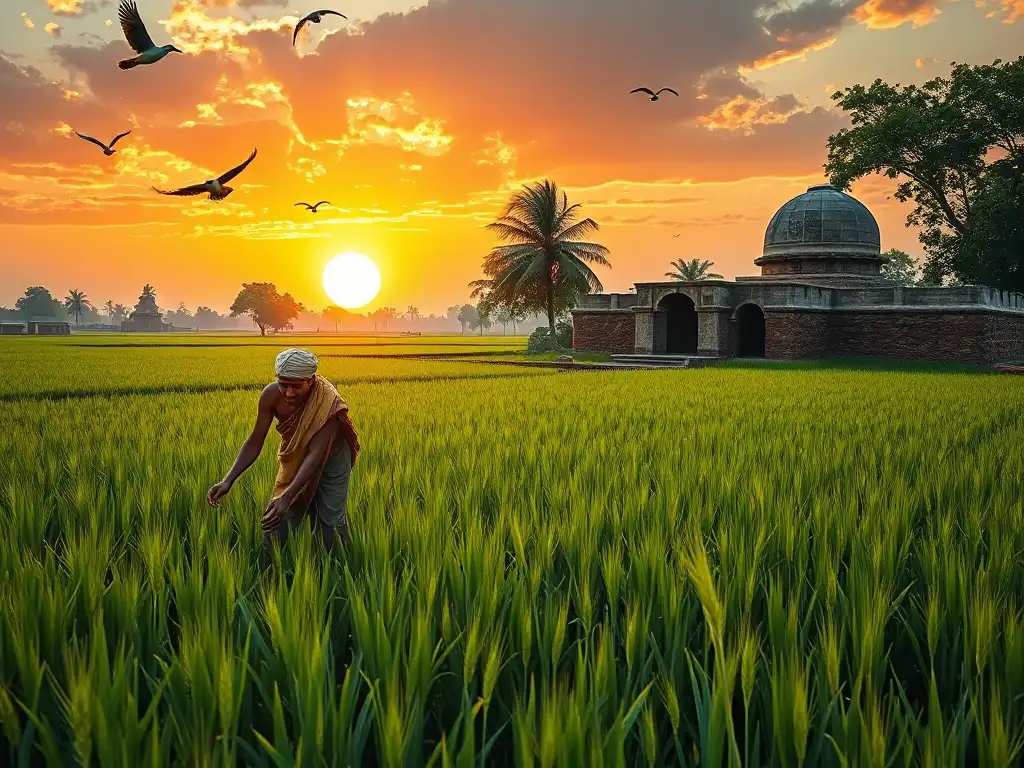
Welcome to Ancient India History, where we embark on an enlightening journey through the rich tapestry of ancient Indian civilizations. Today, we delve into the fascinating intersection of astronomy and agriculture, uncovering how the stars and celestial events shaped the agricultural practices and seasonal rhythms of the time. Have you ever wondered how ancient farmers navigated the complexities of their environment with the guidance of the cosmos? Join us as we explore the profound contributions of ancient Indian astronomy to agriculture, revealing insights that will deepen your appreciation for this remarkable period in history. Your exploration starts here!
- Introduction to Ancient Indian Astronomy and Agriculture
- Historical Background of Astronomy in Ancient India
- Seasonal Changes and Their Impact on Agriculture
- Techniques and Tools Used in Ancient Indian Astronomy
- Case Studies of Agricultural Practices Guided by Astronomy
- Myths and Realities of Astronomy in Ancient Indian Agriculture
- Conclusion: The Legacy of Ancient Indian Astronomy in Agriculture
-
Frequently Asked Questions
- What was the significance of astronomy in ancient Indian agriculture?
- How did ancient Indians use celestial bodies to influence their farming practices?
- What were the main astronomical tools used by ancient Indian farmers?
- How did seasons affect agricultural practices in ancient India?
- What contributions did ancient Indian scholars make to the field of astronomy?
- Final Reflection: The Timeless Connection Between Ancient Indian Astronomy and Agriculture
- Unlock the Secrets of Ancient Astronomy in Agriculture!
Introduction to Ancient Indian Astronomy and Agriculture
The intersection of ancient Indian astronomy and agriculture presents a fascinating study of how celestial observations influenced agricultural practices and seasonal cycles in historical Indian civilizations. Ancient India, with its rich tapestry of cultures and scientific advancements, utilized astronomy not merely as a means to navigate the skies but also as a vital tool to enhance agricultural productivity.
This article delves into the intricate relationships between ancient Indian astronomy and agriculture, exploring the methods used by farmers to ensure bountiful harvests, the alignment of agricultural activities with celestial events, and the profound understanding of seasonal changes that shaped the agrarian societies of the time.
Overview of Ancient Indian Astronomy
Ancient Indian astronomy was a sophisticated system that combined observational techniques with theoretical frameworks. Scholars such as Aryabhata and Varahamihira made significant contributions, establishing principles that were foundational not only in India but also across the world.
- Key Contributions:
- Aryabhata (476–550 CE) introduced concepts of zero and place value, which were instrumental in calculations related to celestial movements.
- Varahamihira (505–587 CE) compiled extensive astronomical knowledge in his work "Brihat Samhita," covering topics from planetary motions to eclipses.
The ancient Indian astronomers meticulously recorded celestial bodies' positions and movements, developing calendars that were crucial for agricultural planning. They recognized the importance of lunar cycles and solar positions, which directly impacted agricultural activities throughout the year.
Importance of Agriculture in Ancient India
Agriculture was the backbone of ancient Indian society, providing sustenance and economic stability. The agrarian lifestyle shaped social structures, cultural practices, and religious beliefs.
- Crops Cultivated:
- Rice, Wheat, and Barley: These staples formed the basis of the diet and were cultivated extensively across various regions.
- Pulse Crops: Lentils and chickpeas were vital for nutritional balance and soil health.
Agricultural practices were deeply intertwined with the seasons, necessitating a profound understanding of weather patterns and climatic changes. This dependency on agriculture led to the development of rituals and festivals aligned with sowing and harvesting, further emphasizing the significance of agricultural cycles in everyday life.
Connection Between Astronomy and Agriculture
The link between astronomy and agriculture in ancient India can be seen in how farmers relied on celestial observations to determine the best times for planting and harvesting crops.
- Lunar Phases and Planting:
- Farmers often planted seeds during specific lunar phases, believing that the moon's gravitational pull affected plant growth.
- Solar Events:
- The solstices and equinoxes marked critical points in the agricultural calendar, serving as indicators for seasonal transitions.
- Astrological Practices:
- Many agricultural decisions were guided by astrological beliefs, as celestial bodies were thought to influence crop yields and fertility.
Ancient Indian astronomy provided essential insights that helped shape agricultural practices, ensuring that communities thrived in harmony with their environment. Understanding this connection reveals not only the ingenuity of ancient civilizations but also their profound respect for the cosmos and its impact on daily life.
Historical Background of Astronomy in Ancient India

The ancient civilization of India has a rich heritage, with astronomy playing a pivotal role in shaping agricultural practices and seasonal understanding. The roots of Indian astronomy can be traced back to the early Vedic texts, which reflect a deep connection between celestial observation and terrestrial activities, particularly agriculture. This relationship highlights how ancient Indian scholars were not only keen observers of the skies but also adept at applying their knowledge to enhance farming techniques and seasonal planning.
Early Astronomical Texts and Observations
The journey of ancient Indian astronomy began with texts like the Rigveda, which contains hymns referencing celestial bodies and their movements. The Vedanga Jyotisha, composed around 600 BCE, serves as one of the earliest astronomical treatises, providing guidelines on the calculation of time, seasons, and lunar cycles. It emphasizes the importance of observing the positions of the sun and moon to determine auspicious timings for agricultural activities.
Key observations included:
- Lunar and Solar Cycles: The lunar calendar was crucial for timing agricultural activities. Farmers relied on the phases of the moon to sow and harvest crops.
- Constellations: The Nakshatras (lunar mansions) were utilized to predict seasonal changes, facilitating better planning for planting and harvesting.
The meticulous observations by ancient astronomers laid the groundwork for future advancements in both astronomy and agricultural practices, showcasing an intricate relationship between the two fields.
Key Astronomers and Their Contributions
Several notable astronomers greatly advanced the field of astronomy in ancient India, contributing significantly to the understanding of celestial phenomena and their practical applications in agriculture.
- Aryabhata (476-550 CE): His seminal work, the Aryabhatiya, introduced concepts such as the rotation of the Earth and provided methods for calculating the positions of celestial bodies. His calculations helped farmers understand the optimal times for sowing and harvesting based on celestial events.
- Brahmagupta (598-668 CE): In his work, the Brahmasphutasiddhanta, he elaborated on planetary motions and eclipses, further refining the methods used to determine agricultural timelines.
- Varahamihira (505-587 CE): The author of the Brihat Samhita, he integrated astrology with astronomy, emphasizing how planetary positions influenced agricultural success. His insights into weather patterns and seasonal changes were invaluable for farmers.
These astronomers not only advanced theoretical knowledge but also established practical methodologies that directly impacted agricultural efficiency and productivity.
Influence of Astronomy on Agricultural Practices
The influence of ancient Indian astronomy on agriculture was profound, as it provided a framework for understanding natural cycles and optimizing farming practices.
- Seasonal Planning: The alignment of agricultural activities with celestial movements allowed farmers to maximize yields. For example, the arrival of specific constellations indicated the best times for sowing certain crops.
- Calendar Systems: The development of calendars based on lunar and solar cycles facilitated better management of agricultural activities. The Saka calendar, for instance, was aligned with the agricultural year, ensuring that farmers could plan their activities accordingly.
- Weather Prediction: Ancient texts often linked astronomical phenomena with weather patterns. For example, specific planetary alignments were believed to predict the onset of monsoons, which were critical for crop cultivation.
The integration of ancient Indian astronomy and agriculture not only highlights the advanced understanding of celestial phenomena by ancient scholars but also underscores the practical applications of this knowledge in enhancing agricultural productivity. This intricate relationship laid the foundation for sustainable agricultural practices that thrived in harmony with the natural world.
Seasonal Changes and Their Impact on Agriculture
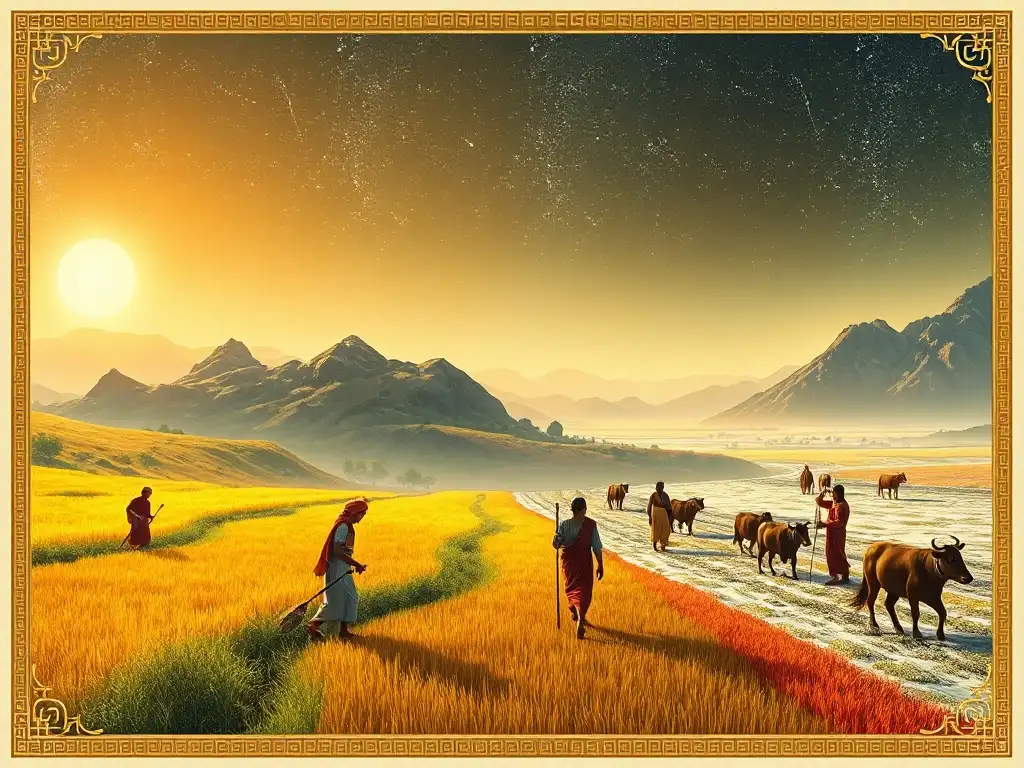
Understanding Seasons in Ancient Indian Context
In ancient India, the agricultural practices were deeply intertwined with the changing seasons. The Indian subcontinent experiences distinct seasonal variations, primarily categorized into four main seasons: Vasanta (spring), Grishma (summer), Varsha (monsoon), and Sharad (autumn). Each of these seasons played a pivotal role in determining the types of crops that could be cultivated and the timing of agricultural activities.
- Vasanta: This season marked the end of winter and the beginning of the sowing period. Farmers prepared the fields and sowed seeds for crops like wheat and barley.
- Grishma: Characterized by rising temperatures, this season required farmers to ensure adequate irrigation for their crops. The focus shifted towards crops that could withstand heat, such as millet.
- Varsha: The monsoon season brought heavy rains, crucial for replenishing soil moisture. Crops like rice and pulses thrived during this time, as the abundance of water facilitated growth.
- Sharad: This season involved the harvesting of the monsoon crops, as well as sowing for the rabi season, which included barley and chickpeas.
Understanding these seasonal cycles was essential for maximizing agricultural yield and ensuring food security in ancient India.
Role of Astronomy in Predicting Seasonal Changes
Ancient Indian civilizations utilized astronomy as an indispensable tool in predicting seasonal changes. The alignment of celestial bodies, particularly the sun and moon, provided farmers with valuable insights into the timing of agricultural activities. Key astronomical observations included:
- Solar Cycle: The sun's position was monitored through solstices and equinoxes, which indicated the changing seasons. For instance, the summer solstice signaled the onset of the Grishma season, prompting farmers to prepare for the heat.
- Lunar Calendar: The lunar phases were critical in determining auspicious days for sowing and harvesting. Each phase of the moon was associated with specific agricultural tasks, with full moons often viewed as favorable for planting.
- Planetary Movements: The movements of planets, particularly Venus and Jupiter, were also observed for their influence on weather patterns. These observations helped predict rainfall and other climatic conditions vital for agriculture.
By closely observing these celestial phenomena, ancient Indian farmers could optimize their agricultural practices, leading to enhanced productivity and sustainability.
Agricultural Calendar Based on Astronomical Events
The ancient Indian agricultural calendar was intricately linked to astronomical events, forming a comprehensive guide for farmers. This calendar was not only practical but also reflected the profound understanding of astronomy possessed by ancient Indian scholars.
| Event | Astronomical Indicator | Agricultural Activity |
|---|---|---|
| Uttarayana | Sun's transition to the northern hemisphere | Start of sowing winter crops like wheat |
| Dakshinayana | Sun's transition to the southern hemisphere | Preparation for monsoon crops |
| Chaturmasya | Period of four months marked by monsoon | Cultivation of rice and pulses |
| Sharad Purnima | Full moon in autumn | Harvesting of monsoon crops and preparation for rabi |
Each month in the lunar calendar also corresponded to specific festivals, which were often linked to agricultural cycles. For instance, Makar Sankranti, celebrated during the winter solstice, marked the end of the harvest season and the beginning of new sowing.
By aligning their agricultural practices with these celestial events, ancient Indian farmers not only optimized their yields but also fostered a cultural connection between astronomy and agriculture. This relationship underscored the importance of celestial bodies in guiding agricultural life, a legacy that continues to influence agricultural practices in India today.
Techniques and Tools Used in Ancient Indian Astronomy
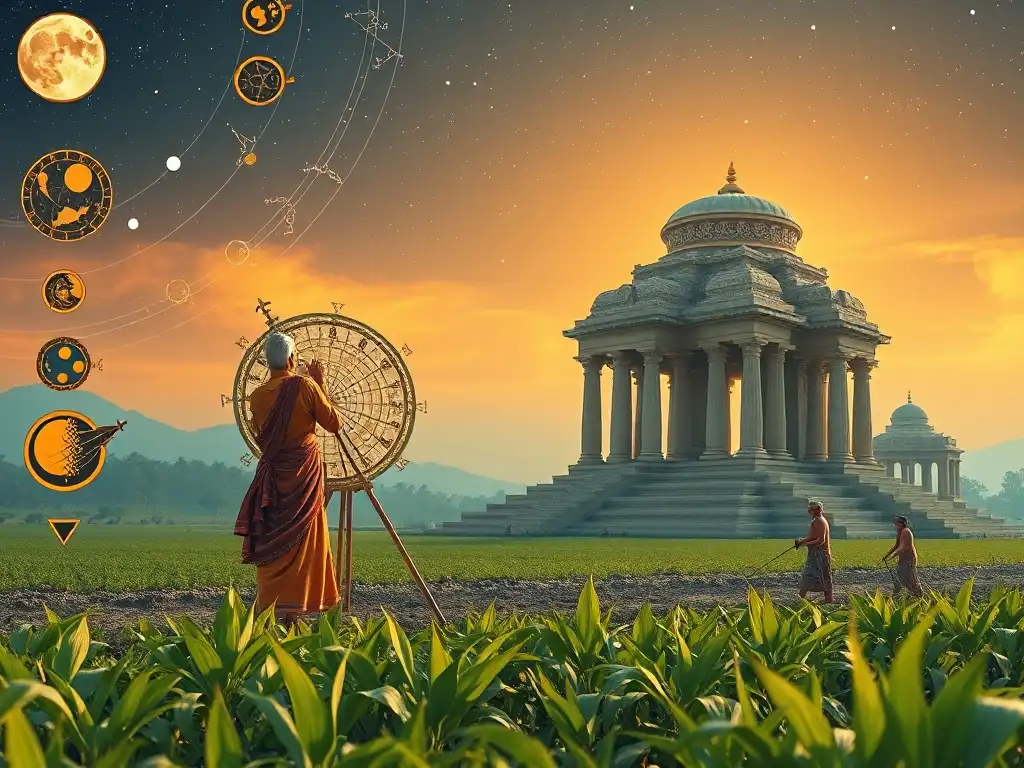
Instruments for Astronomical Observations
Ancient Indian astronomers utilized a variety of sophisticated instruments to observe celestial bodies and phenomena. These tools were integral to their understanding of astronomy and played a vital role in agricultural practices. Some of the most notable instruments included:
- Gnomon: A simple yet effective device, the gnomon was used to observe the sun's position. It consisted of a vertical stick or pole fixed into the ground, casting a shadow that helped determine the time of day and seasonal changes.
- Yasti: This instrument, similar to a gnomon, was a vertical rod used to measure the angles and positions of celestial bodies. It allowed astronomers to record the movements of stars and planets with remarkable precision.
- Shankh and Chakra: Often used in ritualistic practices, these conch and wheel-shaped instruments also had astronomical significance. They were employed to mark celestial positions and timings, linking religious practices with astronomical observations.
- Siddhantic Instruments: These included various tools developed by ancient Indian mathematicians and astronomers, such as the Kāṭaka (a circular instrument) and Dronapāṭa (a flat instrument), which aided in calculating the positions of celestial bodies.
The precision of these instruments enabled ancient Indian astronomers to create detailed astronomical tables and calendars, essential for agricultural planning.
Methods for Tracking Celestial Bodies
To effectively track celestial bodies, ancient Indian astronomers employed several methods that integrated mathematical principles with observational techniques. Key methods included:
- Zodiacal System: Ancient Indian astronomy utilized a zodiac system, dividing the sky into twelve segments, each associated with specific constellations. This division helped in predicting seasonal changes and agricultural cycles.
- Lunar Calendars: The lunar calendar played a crucial role in agricultural planning. Astronomers tracked the phases of the moon to determine the optimal times for planting and harvesting crops. Each month was linked to specific agricultural activities.
- Solar Observations: By observing the sun's path throughout the year, astronomers could predict solstices and equinoxes. This knowledge was vital for understanding seasonal changes, which directly impacted agricultural practices.
- Planetary Movements: The movements of planets were meticulously recorded. Astronomers noted their positions and transitions, which were believed to influence agricultural productivity and timing.
These methods provided a comprehensive framework for understanding the cosmos, allowing ancient Indian civilizations to align their agricultural activities with celestial events.
Relationship Between Astronomy Tools and Agricultural Planning
The interplay between astronomy and agriculture in ancient India is a fascinating aspect of its civilization. The tools and methods developed for astronomical observations were not merely for academic interest; they had practical applications in agriculture. Here’s how they were interconnected:
- Seasonal Planning: The ability to predict seasonal changes allowed farmers to plant and harvest crops at optimal times, enhancing yield and sustainability. For example, the onset of the monsoon season was anticipated based on solar and lunar observations.
- Calendar Creation: Astronomical observations led to the development of detailed calendars that governed agricultural cycles. These calendars, based on lunar phases and solar patterns, were essential for synchronizing farming activities with natural cycles.
- Cultural Integration: The relationship between astronomy and agriculture was also evident in cultural practices. Festivals and rituals were often timed according to astronomical events, reinforcing the significance of celestial observations in agricultural life.
- Innovative Practices: Techniques such as crop rotation and seasonal fallowing were informed by astronomical insights, as farmers learned to adapt their practices to the rhythms of the cosmos.
The tools of ancient Indian astronomy were fundamental not only for understanding the universe but also for shaping agricultural practices. The rich knowledge of celestial phenomena allowed ancient civilizations to thrive, demonstrating the profound connection between astronomy and agriculture in their daily lives.
Case Studies of Agricultural Practices Guided by Astronomy
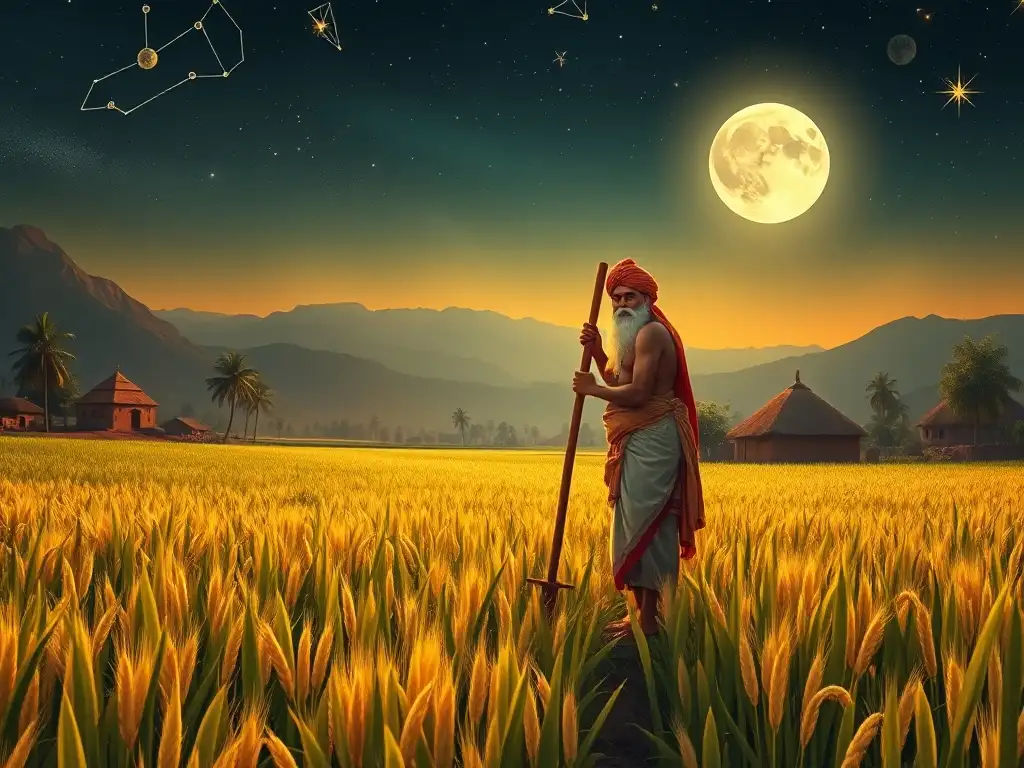
The intersection of ancient Indian astronomy and agriculture is a fascinating subject that reveals how celestial observations influenced agricultural practices across various regions in India. The ancient Indian civilizations meticulously observed the movements of celestial bodies, which played a crucial role in determining agricultural cycles, ensuring timely planting and harvesting. Below are significant case studies illustrating the strong link between astronomy and agricultural practices in ancient India.
Example of Harvesting Seasons Aligned with Celestial Events
Ancient Indian farmers closely monitored celestial bodies, particularly the sun and the moon, to establish optimal harvesting times. For instance, the harvest of rice, a staple crop, was often aligned with the lunar calendar. The waxing phase of the moon was considered an auspicious time for planting, while the waning phase marked the ideal time for harvesting.
- Solar Calendar Influence:
- The summer solstice (around June 21) marked the onset of monsoon rains, crucial for rice cultivation. Farmers would initiate land preparation in anticipation of these rains.
- The winter solstice (around December 21) indicated the end of the harvest season, with farmers gathering their produce in alignment with the sun's position.
This celestial guidance not only maximized crop yield but also minimized risks associated with unpredictable weather patterns.
Regional Variations in Astronomy-Driven Agriculture
Different regions in ancient India exhibited unique agricultural practices influenced by local celestial observations. These variations were shaped by geographical, climatic, and cultural factors, resulting in distinct agricultural calendars.
- North India:
- In the Punjab region, farmers relied on the position of the Pleiades constellation to determine the right time for sowing wheat. The rising of this constellation in the early morning was a significant indicator for planting.
- South India:
- In Tamil Nadu, the Karthigai festival, celebrated in November, coincided with the sighting of the Pleiades. This event was a cue for farmers to begin their harvest of the paddy crop.
| Region | Celestial Indicator | Crop Type |
|---|---|---|
| Punjab | Rising of Pleiades | Wheat |
| Tamil Nadu | Karthigai festival | Paddy |
| Maharashtra | Full Moon in Shravan month | Jowar |
These regional practices underscore the adaptability of ancient Indian agriculture to local conditions while remaining intricately tied to astronomical events.
Influence of Festivals on Agricultural Cycles
Festivals in ancient India were often directly linked to agricultural cycles, serving as indicators for planting, harvesting, and seasonal changes. These celebrations were not only cultural but also practical, providing a communal framework for agricultural activities.
- Makar Sankranti:
- Celebrated in January, this festival marks the transition of the sun into the zodiac sign of Capricorn. It signifies the end of the harvest season for many crops and is associated with the beginning of new agricultural cycles. Farmers would offer thanks and participate in rituals to ensure a bountiful harvest in the coming year.
- Pongal:
- In Tamil Nadu, the Pongal festival is dedicated to the sun god and marks the harvest of rice. This festival is celebrated in January, coinciding with the sun’s northward journey (Uttarayana), reinforcing the connection between celestial events and agricultural success.
- Holi:
- The festival of colors, celebrated in March, also marks the end of the winter harvest and the beginning of spring planting. This transition is significant for various crops, including lentils and barley.
Through these festivals, ancient Indian societies cultivated a deep-seated respect for celestial rhythms that guided their agricultural practices, illustrating the profound relationship between astronomy and agriculture in ancient India.
Myths and Realities of Astronomy in Ancient Indian Agriculture
Common Myths About Ancient Indian Astronomy
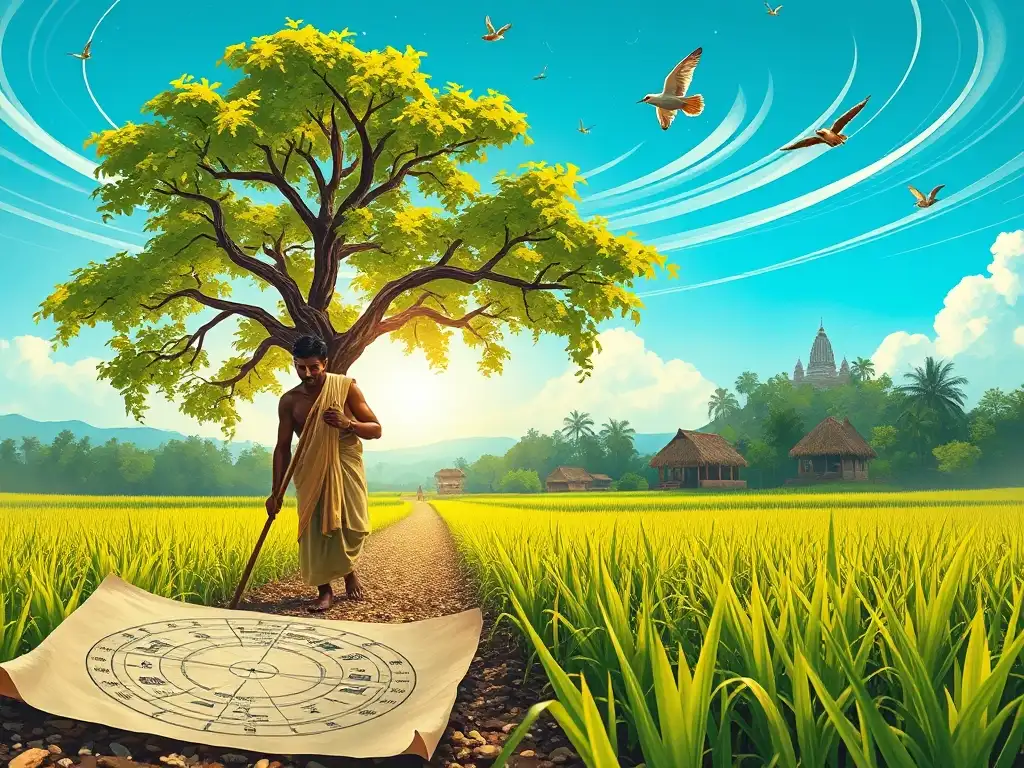
Ancient Indian astronomy has long been surrounded by various myths and misconceptions. One prevalent myth is that ancient Indian astronomers primarily focused on celestial bodies for religious purposes rather than practical applications like agriculture. While it's true that religious practices were intertwined with astronomical observations, this perception undermines the sophisticated understanding that these scholars had of celestial cycles and their impact on agricultural activities.
Another common myth is that ancient Indians lacked advanced astronomical tools. In reality, Indian astronomers, particularly during the Vedic and post-Vedic periods, utilized various instruments such as gnomon, armillary spheres, and water clocks. These tools enabled them to observe and predict celestial events, facilitating agricultural planning.
Moreover, many believe that ancient Indian farmers were solely dependent on empirical knowledge passed down through generations. However, texts like the Surya Siddhanta and the Aryabhatiya showcase a comprehensive blend of observational astronomy and mathematical calculations that informed agricultural practices. This demonstrates that ancient Indian astronomy was not merely anecdotal but rather a systematized field of study that greatly impacted farming.
Realities of Agricultural Practices Influenced by Astronomy
The relationship between ancient Indian astronomy and agriculture is profound and multifaceted. One of the key contributions of astronomy to agriculture was the establishment of a calendar system that aligned agricultural activities with celestial cycles. The lunar calendar, for instance, played a vital role in determining the optimal times for planting and harvesting.
Key Agricultural Practices Influenced by Astronomy:
- Seasonal Planting: Farmers relied on the lunar phases to decide when to sow seeds. For example, the new moon was often considered an auspicious time to plant crops.
- Monsoon Predictions: Astronomical observations of constellations helped predict the onset of monsoons, crucial for planning agricultural activities in a predominantly agrarian society.
- Crop Rotation: Understanding the seasonal changes influenced crop rotation practices, allowing farmers to maximize yield and maintain soil fertility.
The alignment of agricultural practices with astronomical events was not merely a coincidence. The movements of planets and stars were meticulously recorded, and these records informed farmers about the best times to engage in various agricultural tasks, ensuring a sustainable approach to farming.
Lessons Learned from Ancient Practices
The agricultural wisdom of ancient Indian civilizations offers valuable lessons that remain relevant today. One significant lesson is the importance of sustainable farming practices. Ancient Indians understood the need to respect natural cycles and worked in harmony with the environment. This holistic approach ensured that agriculture thrived without depleting resources.
Additionally, the integration of astronomy into agricultural practices teaches modern societies the value of data-driven decision-making. By observing celestial patterns, ancient farmers made informed choices that optimized their yields. This practice resonates with contemporary agricultural techniques that utilize technology and data analytics to enhance productivity.
Furthermore, the ancient emphasis on community knowledge-sharing underscores the significance of collaboration in agriculture. By passing down astronomical knowledge through generations, communities fostered resilience and adaptability, qualities that are essential in today's rapidly changing agricultural landscape.
The interplay between ancient Indian astronomy and agriculture is a testament to the ingenuity of early civilizations. By debunking myths and acknowledging the realities of their practices, we can appreciate the profound contributions of ancient Indian astronomy to agricultural sustainability and efficiency. This understanding not only enriches our historical perspective but also inspires current and future agricultural methodologies.
Conclusion: The Legacy of Ancient Indian Astronomy in Agriculture
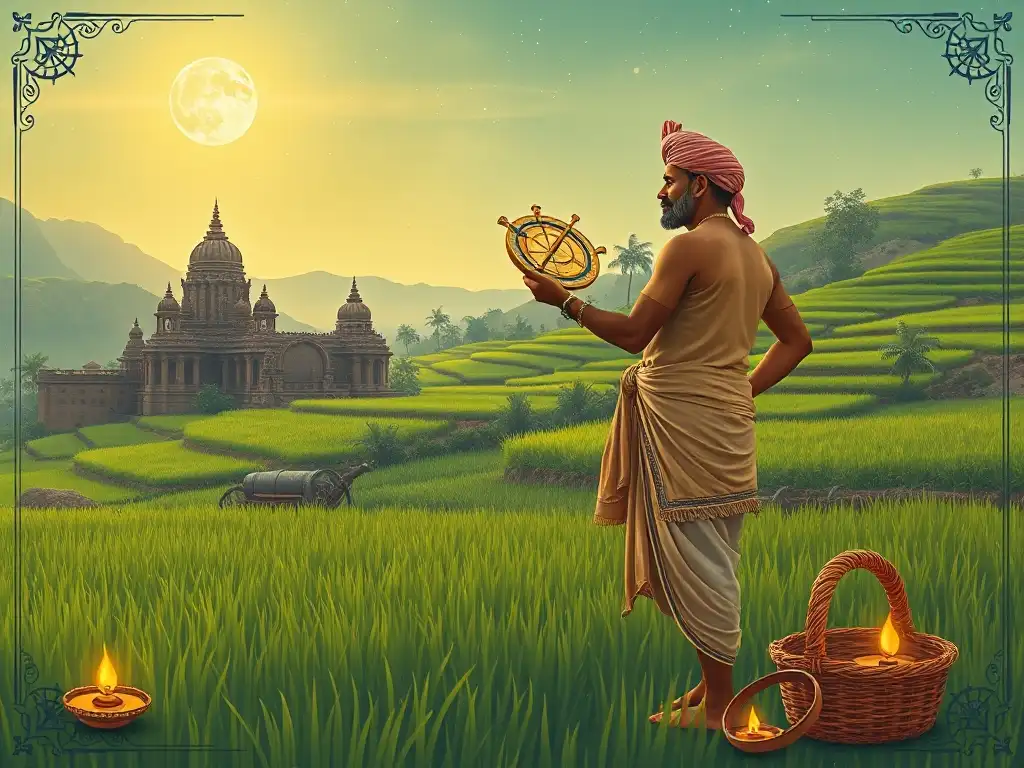
The legacy of ancient Indian astronomy in agriculture is profound and multifaceted, woven deeply into the fabric of agrarian societies. The meticulous observations of celestial bodies not only facilitated agricultural planning but also enriched cultural practices and societal norms. Ancient Indian astronomers, such as Aryabhata and Brahmagupta, contributed significantly to the understanding of celestial movements, which in turn played a crucial role in optimizing farming practices.
Summary of Key Contributions
The integration of astronomy into agriculture is exemplified by several key contributions:
- Lunar Calendar Systems: Ancient Indian civilizations utilized lunar calendars to determine auspicious planting and harvesting times. The phases of the moon were believed to influence the growth of crops, which led to the establishment of timing systems that aligned agricultural activities with lunar cycles.
- Siddhanta Texts: Works such as the Surya Siddhanta provided critical astronomical data, including the calculations of solar and lunar eclipses, which were essential in planning agricultural activities. These texts emphasized the importance of aligning agricultural practices with celestial events.
- Seasonal Changes: Ancient Indians were acutely aware of the seasonal shifts, partly derived from astronomical observations. They recognized the importance of the monsoon and the positions of stars and planets in predicting seasonal changes, ensuring that sowing and harvesting activities were performed at optimal times.
- Astronomical Observatories: Structures such as the Jantar Mantar in Jaipur served not only as astronomical observatories but also as agricultural calendars. They provided farmers with accurate data on solstices and equinoxes, which were critical for timing agricultural operations.
Continuing Influence of Ancient Indian Agricultural Practices
The principles laid down by ancient Indian astronomy continue to influence modern agricultural practices in several ways:
- Traditional Farming Cycles: Many rural communities in India still adhere to traditional farming cycles that are rooted in ancient astronomical knowledge. Rituals surrounding planting and harvesting often align with celestial events, ensuring a connection to historical practices.
- Organic Farming Methods: The holistic approach of ancient Indian agriculture, which integrated astronomy with ecological awareness, is experiencing a revival in contemporary organic farming movements. Farmers are increasingly looking toward sustainable practices that honor the rhythms of nature, similar to those of their ancient counterparts.
- Cultural Festivals: Agricultural festivals such as Makar Sankranti and Pongal are celebrated based on astronomical events, reflecting the enduring legacy of ancient Indian astronomy. These festivals mark specific agricultural milestones, reinforcing the connection between the cosmos and agricultural cycles.
Future Research Directions in Ancient Indian Astronomy and Agriculture
As interest in ancient Indian astronomy and agriculture continues to grow, several research directions can be explored:
- Interdisciplinary Studies: Combining archaeology, history, and astronomy to uncover the depth of ancient agricultural practices can provide insights into the societal structures and sustainability of ancient civilizations.
- Technological Advances: Utilizing modern technology to analyze ancient texts and archaeological sites can yield new understanding of the sophisticated astronomical knowledge possessed by ancient Indians, potentially revealing lost techniques or practices.
- Cultural Significance: Exploring how ancient astronomical knowledge influenced social, religious, and cultural practices will enrich the understanding of the holistic worldview of ancient Indian societies.
- Sustainability Lessons: Investigating ancient sustainable agricultural practices could provide valuable lessons for contemporary challenges related to food security and environmental sustainability.
The interplay between ancient Indian astronomy and agriculture is an area ripe for further exploration, promising to illuminate both the scientific advancements of the past and their relevance to contemporary issues. The wisdom of ancient astronomers has left an indelible mark on agricultural practices, reflecting a profound understanding of the cosmos and its influence on earthly life.
Frequently Asked Questions
What was the significance of astronomy in ancient Indian agriculture?
Astronomy played a crucial role in ancient Indian agriculture by helping farmers determine the best planting and harvesting times based on celestial events and seasonal changes.
How did ancient Indians use celestial bodies to influence their farming practices?
Ancient Indians observed the positions of celestial bodies to create calendars that guided agricultural activities, ensuring they aligned with seasonal variations and monsoon patterns.
What were the main astronomical tools used by ancient Indian farmers?
Farmers utilized tools like the gnomon, water clocks, and shadow-casting devices to measure time and track the movement of celestial bodies, which informed their agricultural decisions.
How did seasons affect agricultural practices in ancient India?
The changing seasons, influenced by astronomical observations, dictated when to sow and harvest crops, thus ensuring optimal yields and sustaining agricultural productivity.
What contributions did ancient Indian scholars make to the field of astronomy?
Ancient Indian scholars, such as Aryabhata and Brahmagupta, made significant advancements in astronomy, including calculations of planetary motions and the development of calendar systems that directly benefited agriculture.
Final Reflection: The Timeless Connection Between Ancient Indian Astronomy and Agriculture
The intricate relationship between ancient Indian astronomy and agriculture remains profoundly relevant today, as it underscores the importance of celestial knowledge in understanding seasonal cycles and agricultural practices. In a world increasingly driven by technology, the wisdom of our ancestors serves as a reminder that nature's rhythms are fundamental to sustaining life. The insights gleaned from ancient Indian astronomy not only shaped agricultural practices but also fostered a deep respect for the cosmos that continues to resonate in contemporary discussions about sustainability and environmental stewardship.
The influence of ancient Indian astronomy on agriculture is a testament to the profound interconnectedness of culture, science, and the natural world. This legacy is not merely historical; it continues to inspire modern agricultural techniques and ecological awareness. As we navigate the challenges of climate change and food security, we can draw from the wisdom of the past to inform our future. To know the stars is to know ourselves,
a reminder that understanding celestial patterns can lead to a more harmonious existence with our environment.
As you reflect on the lessons of ancient Indian astronomy and agriculture, consider how these insights can be applied in your own life. Embrace the rhythms of nature, cultivate a deeper awareness of your surroundings, and seek to integrate sustainable practices into your daily routine. By honoring the wisdom of the past, you can contribute to a future that respects the delicate balance between humanity and the cosmos, ensuring that the lessons of ancient civilizations continue to guide us toward a more sustainable and harmonious existence.
Unlock the Secrets of Ancient Astronomy in Agriculture!
Thank you for diving into this fascinating exploration of how ancient Indian astronomy shaped agricultural practices and our understanding of the seasons. Your curiosity about the cosmos and its connections to our everyday lives is invaluable! Now, let’s take that knowledge further and discover how you can apply these insights in contemporary contexts.
- Explore traditional agricultural techniques influenced by celestial patterns in your area. Consider incorporating some of these time-tested methods into your gardening or farming practices.
- Share your newfound knowledge with friends or on social media to ignite discussions about the fascinating relationship between astronomy and agriculture!
- Join a local gardening or astronomy club to connect with others who share your passion for these subjects, and collaborate on projects that honor ancient wisdom.
In what ways do you think modern agriculture could benefit from the practices of ancient astronomers?