
The Life of Chand Bibi: A Queen's Struggle for Independence


Welcome to Ancient India History, where we embark on a fascinating journey through time, uncovering the rich tapestry of ancient Indian civilizations. In this exploration, we shine a spotlight on an extraordinary figure: Chand Bibi, Queen of India. Her remarkable story of resilience and leadership during turbulent times not only highlights the pivotal roles women played in shaping history but also invites you to ponder the broader implications of her struggle for independence.
As you delve into The Life of Chand Bibi: A Queen's Struggle for Independence, prepare to be inspired by her courage and determination, and discover how her legacy continues to resonate in the annals of history. Join us as we unravel the captivating narrative of this remarkable queen and explore the profound impact of her contributions!

Introduction to Chand Bibi: Queen of India
Chand Bibi, a remarkable figure in Indian history, stands out as an emblem of courage and resilience in a time when women's voices were often silenced. As the queen of the Deccan region during the late 16th century, she not only ruled but also fought valiantly to protect her kingdom from external threats, notably the Mughal Empire.
Her life encapsulates the struggles faced by women in positions of power and the pivotal roles they played in shaping the course of history. This article delves into Chand Bibi's life, exploring her significant contributions and her enduring legacy as a symbol of female empowerment in ancient India.
Overview of Chand Bibi's Historical Significance
Chand Bibi is often celebrated for her audacious stand against the Mughals during the siege of Ahmednagar in 1595. Her strategic acumen and leadership were instrumental in rallying her troops and defending her territory. Despite the overwhelming odds, she displayed a tenacity that not only inspired her soldiers but also challenged the prevailing norms regarding women's roles in governance and warfare. Chand Bibi's legacy is not merely that of a queen; she represents the strength and determination of women throughout Indian history to assert their rights and influence.
Importance of Women in Ancient Indian History
Women in ancient India played multifaceted roles that extended beyond the domestic sphere. Figures like Chand Bibi exemplify the significant contributions women made as rulers, warriors, and scholars. The recognition of their roles is crucial in understanding the complexities of India's past, as it reflects the societal structures and cultural dynamics of the time. By examining the lives of influential women, we can gain insights into the broader narratives of resistance, power, and identity that shaped ancient Indian civilizations.
Early Life of Chand Bibi
Birth and Family Background
Chand Bibi was born into a royal lineage, the daughter of the Sultan of Bijapur, which positioned her within the intricate web of political alliances characteristic of the Deccan sultanates. Her family was known for its strategic marriages and political maneuvering, which were crucial in maintaining influence and power in a fragmented political landscape. This noble heritage provided Chand Bibi with both the privilege and the responsibility that came with royal blood, setting the stage for her future as a formidable queen.
Education and Upbringing of a Future Queen
Raised in a court that valued education, Chand Bibi received training in various disciplines, including military strategy, administration, and literature. Her upbringing was marked by the teachings of renowned scholars and warriors, equipping her with the knowledge and skills essential for leadership. This comprehensive education not only empowered her but also instilled in her a sense of duty to her kingdom, shaping her into a queen who would later navigate the challenges of governance and warfare with remarkable prowess.
By exploring these facets of her life, we can appreciate the complexities and challenges that Chand Bibi faced, allowing us to understand her legacy as the Chand Bibi, queen of India—a beacon of hope and strength in a tumultuous era.
Chand Bibi's Rise to Power
Chand Bibi, often celebrated as a formidable ruler and a symbol of resistance, rose to prominence in the late 16th century amidst a backdrop of political strife and dynastic conflicts in India. Born into the influential Barid Shahi dynasty, she was the daughter of Sultan Ali Adil Shah I of Bijapur. Her early life was steeped in the complexities of court politics, where she received a robust education in administration, warfare, and diplomacy—skills that would later prove crucial in her reign.
Chand Bibi's ascent was significantly influenced by her marriage alliances, which were common practices among royals to forge political connections. Her marriage to the Sultan of Ahmednagar, Hussain Nizam Shah I, not only solidified ties between the two kingdoms but also positioned her as a key player in the regional power dynamics. Following her husband's death, she assumed the regency for her stepson, which marked the beginning of her involvement in governance and military affairs. Her leadership qualities, sharp intellect, and unwavering determination distinguished her as a prominent figure in a male-dominated political landscape.
Marriage Alliances and Political Context
Marriage alliances played a pivotal role in Chand Bibi's rise to power. The strategic union with Hussain Nizam Shah I of Ahmednagar was not merely a personal bond but a calculated move to secure political stability in an era rife with conflict. The Deccan region was characterized by the power struggles among various Sultanates, including Bijapur, Ahmednagar, and Golconda, each vying for supremacy.
Through her marriage, Chand Bibi gained access to the political apparatus of Ahmednagar, providing her with invaluable experience in governance. When Hussain Nizam Shah I died, the political landscape was tumultuous, with rival factions seeking control over the throne. Chand Bibi’s ability to navigate these treacherous waters highlighted her political acumen. Her gender, rather than being a hindrance, became an asset, allowing her to form alliances with various factions and maintain a delicate balance of power.
Ascending to the Throne: The Role of Women in Governance
The ascension of Chand Bibi to a position of power was emblematic of the evolving role of women in governance during the late medieval period in India. Although traditionally, women were often relegated to the domestic sphere, figures like Chand Bibi challenged these norms. Her regency over her stepson was a significant political maneuver, and she effectively wielded power in a sphere typically dominated by men.
Chand Bibi's governance style was characterized by a blend of diplomacy and militarism. She demonstrated that women could not only influence but also lead, actively participating in military campaigns and decision-making processes. Her leadership during this era served as a precursor to later women leaders in Indian history, setting a precedent for female authority in a predominantly patriarchal society.
Chand Bibi's Leadership and Military Strategies
Chand Bibi's reign is marked by her exceptional leadership and innovative military strategies. As a queen facing external threats from the Mughal Empire and internal dissent, she employed a multifaceted approach to governance and warfare. Her ability to inspire loyalty among her troops and her strategic foresight were key components of her leadership style.
Overview of Chand Bibi's Reign as Queen
Chand Bibi ruled during a volatile period, facing challenges from both the Mughal Empire under Emperor Akbar and the neighboring Sultanates. Her reign was characterized by her efforts to maintain the sovereignty of Ahmednagar and protect her kingdom from external invasions.
She adeptly navigated political alliances, often acting as a diplomat, negotiating with rival powers to secure peace whenever possible. Her resilience and determination were further evident in her efforts to fortify the kingdom's defenses, ensuring that Ahmednagar remained a formidable power in the Deccan. Chand Bibi's reign was not just a fight for survival; it was a testament to her vision for her kingdom, where she sought to uphold its legacy and prosperity.
Key Battles Led by Chand Bibi
One of the most notable moments in Chand Bibi's military career was her leadership during the siege of Ahmednagar by Mughal forces in 1595. With her kingdom under threat, she took command of her forces, demonstrating her strategic prowess and unwavering resolve. Chand Bibi's ability to rally her troops and implement effective defensive strategies was crucial during this challenging period.
Another significant battle was the defense of Ahmednagar against the siege led by Mughal general Mirza Aziz Koka. Chand Bibi's tactics included guerrilla warfare, using the terrain to her advantage, and employing hit-and-run strategies that disrupted the Mughal siege efforts. Her leadership during these battles not only showcased her capabilities as a military strategist but also solidified her reputation as a formidable queen of India.
Military Tactics and Innovations: A Queen's Approach
Chand Bibi's military tactics were innovative for her time, combining traditional warfare methods with her unique strategies. She understood the importance of morale and often took personal involvement in the training and motivation of her troops. Under her command, Ahmednagar’s army was equipped with modern artillery, which was crucial in countering the Mughal forces.
Her approach to warfare also included forming alliances with other regional powers, leveraging diplomacy alongside military might. Chand Bibi's ability to adapt to changing circumstances, whether through negotiation or confrontation, exemplified her dual role as both a queen and a military leader. Her legacy as a queen who fought for independence remains a significant chapter in the history of women’s contributions to India's past, illustrating the strength and resilience of Chand Bibi, the queen of India.
The Struggle for Independence
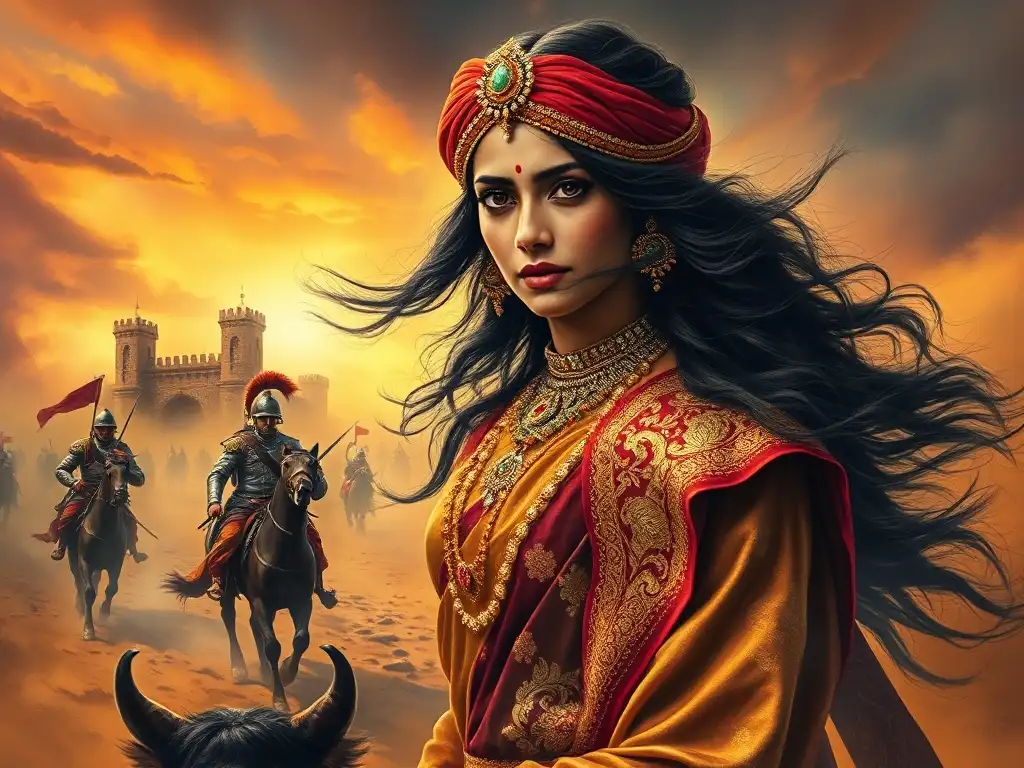
Chand Bibi, the remarkable queen of India, epitomizes the spirit of resistance and independence during a tumultuous period in Indian history. Her life was marked by a fierce determination to protect her kingdom from external threats while advocating for the rights and dignity of women. In her struggle for independence, Chand Bibi emerged not only as a warrior queen but also as a symbol of resilience, courage, and leadership in a patriarchal society.
The Political Landscape of the Time
The late 16th century was characterized by significant political upheaval in India, particularly with the rise of the Mughal Empire. The regional kingdoms were often embroiled in power struggles, alliances, and conflicts, which created a volatile environment. Chand Bibi ruled the Deccan region, particularly the kingdoms of Ahmednagar and Berar, during a time when the Mughal emperor Akbar sought to expand his dominion over the subcontinent.
Chand Bibi was a skilled political strategist who navigated these treacherous waters with astuteness. She inherited the throne after the death of her husband, and her reign was marked by her ability to maintain alliances with neighboring rulers while resisting Mughal expansion. Her leadership was crucial in rallying her people against invasions, showcasing her diplomatic acumen and understanding of the political landscape of the time.
Invasions and Threats: Challenges Faced by Chand Bibi
Chand Bibi faced numerous challenges during her reign, most notably the invasions led by the Mughal forces under Akbar and later his successor, Jahangir. The Mughal Empire aimed to consolidate power over the Deccan and viewed Chand Bibi as a significant obstacle to their ambitions.
Her kingdom was besieged multiple times, beginning with Akbar’s attempts to annex Ahmednagar. During these invasions, she showed extraordinary bravery and resilience. The challenges were compounded by internal dissent, as some nobles within her court were tempted to align with the Mughals, seeking personal gain rather than loyalty to the queen. Despite these adversities, Chand Bibi's determination to protect her kingdom and its sovereignty remained unwavering.
Chand Bibi's Resistance Against Mughal Forces
In the face of overwhelming odds, Chand Bibi mounted a fierce resistance against the Mughal forces. One of the most notable instances of her defiance occurred during the Siege of Ahmednagar in 1595. Demonstrating exceptional military prowess, she took command of her troops and organized a strategic defense, inspiring her soldiers with her courage and leadership.
Chand Bibi’s tactical skills were evident as she employed guerrilla warfare techniques, utilizing the terrain to her advantage. She was not merely a figurehead; she actively participated in battles, leading her forces from the front. Her efforts were recognized by her contemporaries, and she became a symbol of hope and resilience for her people. Although ultimately the Mughal forces would overpower her, her determination and bravery left a lasting impression on Indian history.
Legacy of Chand Bibi: A Symbol of Women's Empowerment
Chand Bibi’s legacy transcends her military achievements; she is celebrated as a pioneering figure in the fight for women's rights and empowerment in ancient India. Her life story serves as an inspiration, illustrating the capabilities of women in leadership roles during a time when their contributions were often overlooked.
Contributions to Indian Culture and Society
Beyond her role as a warrior queen, Chand Bibi made significant contributions to Indian culture and society. She was known for her patronage of the arts and literature, fostering an environment where creativity thrived. Her court became a hub for poets, scholars, and artists, promoting cultural exchange and intellectual discourse.
Moreover, Chand Bibi's reign challenged traditional gender roles, as she assumed responsibilities typically reserved for men. Her actions inspired women in her kingdom and beyond to seek roles in governance and society, paving the way for future generations to advocate for their rights and independence.
How Chand Bibi Influenced Future Generations of Women
Chand Bibi's life and struggles had a profound impact on subsequent generations of women in India. Her story has been retold in various forms, from folklore to literature, serving as a beacon of strength and resilience. She is often cited as an example of female empowerment, encouraging women to stand up against oppression and strive for equality.
As a historical figure, Chand Bibi challenged the norms of her time, demonstrating that women could wield power and influence. Her legacy continues to inspire feminist movements in India and serves as a reminder of the important roles women have played throughout history. By embodying the spirit of resistance and leadership, Chand Bibi remains a timeless symbol of courage and empowerment for women everywhere.
Myths and Realities Surrounding Chand Bibi
Chand Bibi, often celebrated as a symbol of resistance and strength, has been enveloped in a tapestry of myths and historical truths. These narratives vary significantly, leading to confusion about her life and contributions. Many stories portray her as a warrior queen, emphasizing her military prowess and strategic acumen, but these accounts often gloss over the complexities of her reign and the socio-political context of her time.
One prevalent myth is that Chand Bibi single-handedly defended Ahmednagar against the Mughal Empire. While she played a crucial role in the defense, it was a collective effort involving her loyal subjects and allies. This embellishment of her story reflects a broader tendency to romanticize historical figures, sometimes at the expense of factual accuracy.
Additionally, the notion that Chand Bibi's life was solely defined by her battles and political maneuvers overlooks her contributions to governance, culture, and the arts. In reality, she was not only a warrior but also a diplomatic figure and a patron of culture, which adds layers to her legacy that should not be ignored.
Common Misconceptions About Chand Bibi
Several misconceptions about Chand Bibi have persisted over time, often fueled by folklore and literary interpretations. One major misconception is the belief that she ruled as an absolute monarch. In fact, her reign was marked by challenges, including external threats and internal dissent, which necessitated collaboration with other noble families and clans.
Another misconception is the portrayal of Chand Bibi as merely a tragic heroine. While her life did encompass significant struggles, framing her solely through a lens of victimhood undermines her agency and strategic brilliance. She was not merely surviving but actively engaging in the political landscape of her time, making decisions that impacted her kingdom and its people.
Moreover, the idea that Chand Bibi's story is purely a regional narrative is misleading. Her influence and legacy extend beyond the borders of Maharashtra, impacting narratives of resistance and women's empowerment throughout India. Recognizing her as a national figure is crucial for understanding her role in the broader history of women's contributions in ancient India.
The Historical Reality of Chand Bibi's Life and Legacy
The historical reality of Chand Bibi's life reveals a figure who navigated the intricate dynamics of power during a tumultuous time. Born in the late 16th century, she was the daughter of the Sultan of Ahmednagar and married into the royal family of Bijapur, strategically aligning her dynasty with others in the Deccan. This interconnectedness illustrates her role as a political player who understood the importance of alliances.
Chand Bibi's reign was fraught with challenges, particularly from the Mughal Empire, which sought to expand its territories. Her leadership during the siege of Ahmednagar in the late 1590s is a testament to her resilience and tactical acumen. She not only defended her city but also negotiated with her adversaries, showcasing her diplomatic skills.
In terms of legacy, Chand Bibi has become an enduring symbol of women's empowerment in India. Her story resonates with themes of courage, resilience, and strategic intelligence. As a ruler, she laid the groundwork for future generations to view women not just as passive figures but as active participants in the political landscape.
Conclusion: The Enduring Impact of Chand Bibi, Queen of India
Chand Bibi’s life and legacy continue to inspire discussions about women's roles in history. Her multifaceted identity as a queen, warrior, and diplomat challenges conventional narratives that often marginalize women’s contributions. By examining her life, we can appreciate the complexities of female leadership in ancient societies.
Reflection on Women's Roles in Ancient History
Chand Bibi's story invites reflection on the roles that women played in ancient history beyond the boundaries of their households. Women like her were not only influential in familial settings but also in political arenas, often making significant decisions that shaped their kingdoms. The exploration of Chand Bibi's life highlights the necessity of re-evaluating historical narratives to acknowledge and celebrate the contributions of women in governance, warfare, and culture.
The Continued Relevance of Chand Bibi's Story Today
The relevance of Chand Bibi's story extends to contemporary discussions on gender equality and women's empowerment. As societies strive for greater inclusivity, her narrative serves as a reminder of the strength and agency women have historically possessed. It encourages modern audiences to reclaim the stories of influential women from history and recognize their enduring impact on contemporary culture. Chand Bibi's legacy is not just a tale of the past; it is a call to action for future generations to honor the struggles and triumphs of women throughout history.
- Introduction to Chand Bibi: Queen of India
- Early Life of Chand Bibi
- Chand Bibi's Rise to Power
- Chand Bibi's Leadership and Military Strategies
- The Struggle for Independence
- Legacy of Chand Bibi: A Symbol of Women's Empowerment
- Myths and Realities Surrounding Chand Bibi
- Conclusion: The Enduring Impact of Chand Bibi, Queen of India
Frequently Asked Questions
What was Chand Bibi's role in Indian history?
Chand Bibi was a prominent queen known for her leadership and military prowess during the late 16th century, particularly in the Deccan region of India.
How did Chand Bibi contribute to the struggle for independence?
She played a crucial role in defending her kingdom against foreign invasions, notably leading the resistance against the Mughal Empire during her reign.
What challenges did Chand Bibi face as a female ruler?
Chand Bibi confronted gender biases and political challenges, often navigating a male-dominated society while striving to maintain her kingdom’s sovereignty.
What legacy did Chand Bibi leave behind?
Her courage and resilience have made her a symbol of empowerment for women in India, inspiring countless stories and a growing recognition of her contributions to Indian history.
Is Chand Bibi celebrated in modern India?
Yes, Chand Bibi is celebrated as a historical figure in India, with her life story serving as an inspiration for literature, art, and discussions on women's empowerment in history.
Final Reflection: The Enduring Legacy of Chand Bibi, Queen of India
Chand Bibi's story is not just a tale of a queen's struggle; it is a powerful reminder of the resilience and courage that define the fight for independence. In today's world, where the quest for equality and justice continues, her legacy resonates deeply. The challenges she faced and the battles she fought against overwhelming odds serve as a beacon of hope and inspiration for those who strive to reclaim their rights and identities.
The impact of Chand Bibi's life extends far beyond her reign; it has woven itself into the fabric of cultural and social narratives that celebrate female empowerment and leadership. Her story encourages us to reflect on the roles women have played throughout history, often overlooked yet profoundly influential. As we navigate contemporary issues of gender equality and representation, we can draw strength from her words and actions. A woman’s strength lies in her ability to rise against the tide, to lead with courage, and to inspire others to follow.
As we conclude this exploration of Chand Bibi, I invite you to reflect on her legacy and consider how her spirit of defiance and determination can inspire your own journey. Embrace the lessons of her life, and let them guide you in your pursuit of justice and equality. Stand tall in the face of adversity, and remember that every struggle contributes to the greater narrative of freedom and empowerment. Together, we can honor her memory by continuing the fight for a world where every voice is heard and valued.
Unveil the Strength of Chand Bibi’s Legacy!
Thank you for taking the time to explore the incredible story of Chand Bibi and her fierce struggle for independence. Her courage and determination are not just historical footnotes but powerful inspirations for all of us today. Now that you've gained insights into her legacy, you have the opportunity to connect further with her story and contribute to the dialogue around **women's empowerment** and **resistance**.
Here are some actionable steps you can take right now:
- Dive deeper into Chand Bibi's life by reading biographies or historical accounts that capture the essence of her reign and resistance. Discover the broader context of her battles and the lasting impact she had on future generations.
- Share her story! Utilize your social media platforms to raise awareness about Chand Bibi’s contributions. Create a post or thread that highlights her significance and inspires others to learn about remarkable figures in history.
- Join or start a discussion group centered on historical women leaders. Whether online or in person, engaging with others can lead to enriching conversations and new insights.
What aspect of Chand Bibi’s journey resonates with you the most? How do you believe her story can inspire today's fight for independence and equality?