
Understanding the Nyaya Philosophical System: Key Concepts Explained


Welcome to Ancient India History, where we embark on a fascinating journey through the rich tapestry of India's past! In this exploration, we uncover the profound ideas that shaped ancient civilizations, from the architectural marvels of the Indus Valley to the intellectual heights of the Gupta Empire. Today, we invite you to delve into the Nyaya philosophy, a cornerstone of Indian thought.
What are its key concepts, and how do they influence our understanding of logic and epistemology? Prepare to satisfy your curiosity as we unravel these intriguing ideas and their significance in the grand narrative of philosophy. Join us as we explore the depths of Nyaya philosophy and its enduring legacy!
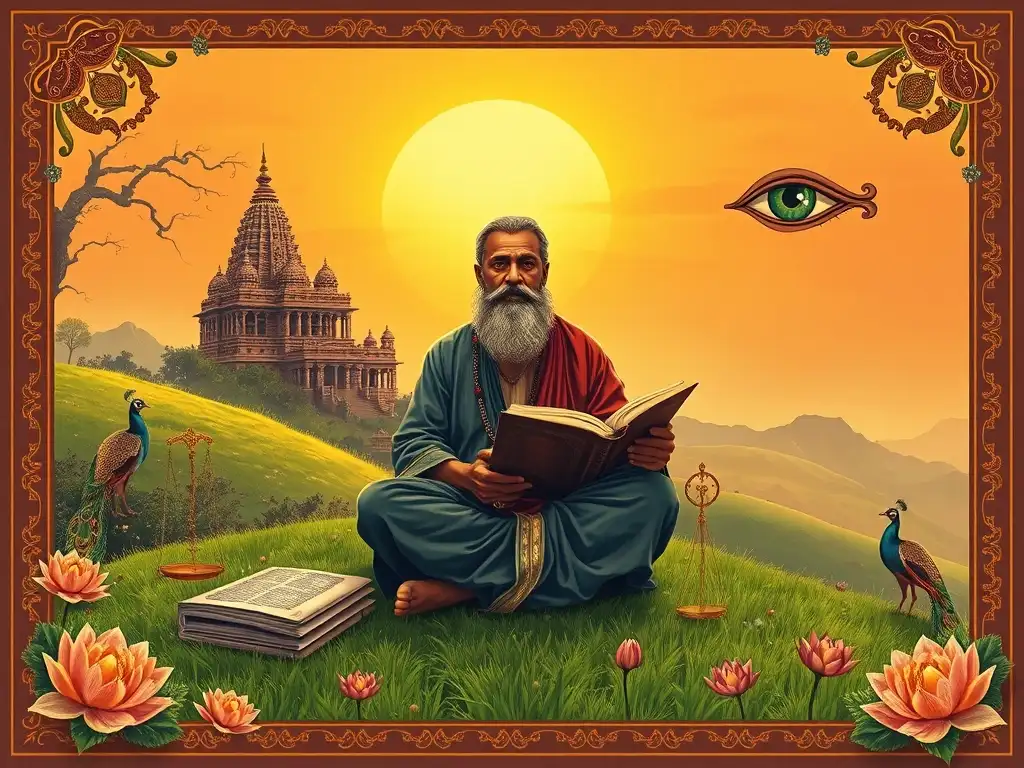
Introduction to Nyaya Philosophy
Nyaya philosophy, a pivotal school of thought within Indian philosophy, offers profound insights into the nature of knowledge, logic, and epistemology. Emerging from the rich tapestry of ancient Indian intellectual tradition, it serves as a critical framework for understanding the mechanisms of reasoning and the pursuit of truth. As we delve deeper into the Nyaya philosophy key concepts, we uncover the intricate layers that define this philosophical system, illuminating its relevance not only in historical contexts but also in contemporary discussions on logic and reasoning.
What is Nyaya Philosophy?
At its core, Nyaya philosophy is grounded in the analysis of perception, inference, and testimony as valid means of obtaining knowledge. The term "Nyaya" itself translates to "justice" or "rule," reflecting its foundational emphasis on logical reasoning and debate. This school is primarily concerned with establishing a systematic approach to gaining knowledge through rigorous analysis, ensuring that beliefs are justified and based on sound reasoning.
The Nyaya Sutras, attributed to the sage Gautama, outline the principles of this philosophical system. The text meticulously categorizes various means of knowledge and defines the methods of reasoning that are essential for arriving at valid conclusions. In essence, Nyaya serves as both a philosophical and a methodological guide to discerning truth amidst the complexities of perception and belief.
Significance of Nyaya in Ancient Indian Thought
Nyaya philosophy holds a distinguished position in ancient Indian thought, influencing not just philosophical discourse but also practical applications in law, ethics, and epistemology. Its rigorous analytical framework laid the groundwork for subsequent philosophical developments, particularly in the realm of logic.
- Critical Thinking: The emphasis on reasoning and debate fostered a culture of critical thinking, encouraging scholars to question assumptions and seek evidence.
- Interdisciplinary Influence: Nyaya's principles permeated various fields, including ethics, metaphysics, and epistemology, establishing a cohesive intellectual environment.
- Dialogue with Other Schools: The interactions between Nyaya and other philosophical systems, such as Mimamsa and Vedanta, contributed to a richer understanding of complex philosophical questions.
Historical Context of Nyaya Philosophy
Origins of the Nyaya School
The Nyaya school of philosophy traces its roots back to approximately the 6th century BCE, during a period marked by significant philosophical inquiry in ancient India. It emerged as a reaction to the earlier Upanishadic thought, which focused predominantly on metaphysical issues. In contrast, Nyaya emphasized logical reasoning and the pursuit of knowledge through empirical means. The foundational text, the Nyaya Sutras, was pivotal in codifying the teachings and methodologies that would define this school.
Influential Figures in Nyaya Philosophy
Several key figures have shaped the development of Nyaya philosophy over the centuries:
- Gautama (Aksapada): The founder of the Nyaya school, he is credited with the Nyaya Sutras, which serve as the primary text for the school.
- Vatsyayana: A notable commentator whose works expanded on Gautama's teachings and clarified complex concepts, making them more accessible to scholars.
- Uddyotakara: Known for his contributions to logic and epistemology, he further refined Nyaya's methodologies and arguments.
These thinkers not only advanced the philosophical discourse within Nyaya but also engaged with other schools of thought, enriching the overall landscape of Indian philosophy.
Relationship Between Nyaya and Other Indian Philosophical Systems
The Nyaya school did not develop in isolation; rather, it interacted dynamically with various other philosophical systems, creating a rich intellectual dialogue.
- Nyaya and Vaisheshika: This relationship is particularly significant since both schools share a focus on logic and epistemology. While Nyaya emphasizes the process of reasoning, Vaisheshika explores the nature of reality and categorization of substances.
- Nyaya and Advaita Vedanta: The debates between Nyaya philosophers and proponents of Advaita Vedanta enhance our understanding of metaphysical concepts and the nature of knowledge.
- Nyaya and Mimamsa: The interplay between these schools illustrates the significance of ritual and epistemology in the context of dharma and ethical living.
Through these interactions, Nyaya philosophy has not only contributed to the understanding of logic but has also played a vital role in shaping the philosophical landscape of ancient India, establishing a foundation for future discourse in the realm of philosophy and beyond.
Key Concepts in Nyaya Philosophy

Nyaya philosophy, one of the six orthodox schools of Hindu thought, emphasizes logic and epistemology as essential components of understanding reality. Rooted in the ancient Indian context, Nyaya provides systematic methods for acquiring knowledge and establishing truth. The key concepts in Nyaya philosophy revolve around the nature of knowledge, the means of acquiring it, and the processes of reasoning. Understanding these concepts is vital not only for scholars of Indian philosophy but also for anyone interested in the broader implications of logical reasoning and epistemology.
Pramaṇa: Means of Knowledge in Nyaya
In Nyaya, pramaṇa refers to the valid means of knowledge. The school identifies four primary pramaṇas:
- Pratyaksha (Perception): The direct experience of objects through the senses.
- Anumana (Inference): Knowledge derived from reasoning and logical deductions based on perceptual data.
- Upamana (Comparison): Knowledge obtained through analogy or comparison with known entities.
- Shabda (Testimony): Knowledge acquired from authoritative sources, particularly scriptures and credible individuals.
Each pramaṇa serves as a pathway to truth and is crucial for establishing the validity of knowledge claims. The rigorous examination of these means helps to form a comprehensive understanding of reality.
Prameya: Objects of Knowledge in Nyaya
Prameya refers to the objects of knowledge that Nyaya seeks to understand through its epistemological framework. It encompasses various categories, including:
- Substance (Dravya): The fundamental entities of reality, such as earth, water, fire, air, and space.
- Quality (Guna): The attributes or characteristics of substances, like color, taste, and texture.
- Action (Karma): The activities or processes that substances undergo, such as movement or transformation.
- Relation (Samavaya): The inherent connection between substances and their qualities.
Understanding prameya is essential for comprehending the Nyaya approach to knowledge, as it defines what can be known and explored through the means of knowledge.
Nyaya's Theory of Inference (Anumana)
Nyaya's theory of inference, or anumana, is a core element of its logical framework. It involves deriving conclusions from premises based on established relationships. The process typically follows a fivefold structure known as the hetvabhasa:
- Pratijna (Proposition): The statement that one wishes to prove.
- Hetu (Reason): The underlying reason that supports the proposition.
- Udaharana (Example): An illustrative example that reinforces the connection between the reason and the proposition.
- Upanaya (Application): The application of the example to the specific case at hand.
- Nigamana (Conclusion): The final assertion that solidifies the argument.
This systematic approach to inference allows for the rigorous examination of arguments and enhances the clarity of reasoning in philosophical discourse.
The Role of Perception (Pratyaksha) in Nyaya
Pratyaksha, or perception, is considered the most direct and reliable means of knowledge in Nyaya philosophy. It is divided into two types:
- External Perception: Gained through the five senses, it provides immediate awareness of the external world.
- Internal Perception: Involves self-awareness and introspection, allowing individuals to perceive their own thoughts and feelings.
Nyaya emphasizes the importance of perception as the foundation for constructing knowledge. It acts as the starting point for various logical deductions, ensuring that knowledge remains grounded in observable reality.
Definition and Importance of Doubt (Samsaya)
In Nyaya, samsaya refers to the state of doubt or uncertainty regarding a particular knowledge claim. It plays a crucial role in the philosophical process, serving as a precursor to inquiry and investigation. Doubt prompts individuals to seek clarification and justification for their beliefs, ultimately leading to a more refined understanding of truth.
The significance of samsaya in Nyaya philosophy lies in its ability to stimulate critical thinking and logical analysis. By recognizing and addressing doubts, scholars and practitioners can engage in deeper exploration of concepts, enhancing their grasp of complex philosophical issues.
Nyaya's View on Error (Bhrama)
Bhrama, or error, is an important concept in Nyaya philosophy that pertains to the misapprehension of knowledge. Nyaya categorizes bhrama into two types:
- Mistaken Identity: Confusing one object for another, leading to inaccurate conclusions.
- Misinterpretation: Incorrectly interpreting the properties or nature of an object.
Nyaya philosophy meticulously analyzes the causes of error, emphasizing the need for clarity and precision in reasoning. By understanding the nature of bhrama, philosophers can develop strategies to minimize misconceptions and enhance the reliability of knowledge acquisition.
Nyaya Logic and Its Applications
Nyaya logic is a sophisticated system of reasoning that serves as a foundational aspect of the Nyaya philosophical tradition. Its structured approach to logic enables practitioners to engage in rigorous debates, analyze arguments, and seek truth effectively.
Structure of Nyaya Logic
The structure of Nyaya logic is highly systematic, characterized by its emphasis on clarity and precision. It includes various components, such as:
- Pratyaksha: The basis of knowledge through perception.
- Anumana: Logical reasoning and inference.
- Vada: The process of constructive debate aimed at discovering truth.
This hierarchical organization allows for the systematic evaluation of arguments and ensures that conclusions are well-supported by evidence and reasoning.
Practical Implications of Nyaya Logic in Debates
Nyaya logic has significant practical implications, particularly in the context of philosophical debates. It provides a framework for:
- Constructive Dialogue: Encouraging participants to engage in reasoned discussions rather than emotional arguments.
- Critical Evaluation: Allowing debaters to assess the validity of claims and counterclaims systematically.
- Resolution of Conflicts: Facilitating the identification of errors and misconceptions, leading to more effective resolutions.
Through its structured approach, Nyaya logic fosters a culture of rational inquiry and intellectual rigor, essential for meaningful philosophical discourse.
Comparison of Nyaya Logic with Western Logical Systems
When comparing Nyaya logic with Western logical systems, several distinctions and similarities emerge:
- Foundational Principles: Both systems prioritize the importance of reasoning and evidence. However, Nyaya incorporates a more comprehensive view of knowledge acquisition, integrating perception and testimony into its framework.
- Dialectical Approach: Nyaya emphasizes dialectical reasoning, focusing on debate as a means to uncover truth, while many Western systems tend to prioritize formal logic and analytical methods.
- Holistic Perspective: Nyaya philosophy maintains a holistic view of reality, considering the interplay between various forms of knowledge, whereas Western logic often compartmentalizes different areas of inquiry.
This comparative analysis highlights the unique contributions of Nyaya logic to the broader landscape of philosophical thought, illustrating its relevance and applicability in contemporary discussions.
Conclusion
The Nyaya philosophical system stands as a cornerstone of Indian philosophy, offering profound insights into logic, epistemology, and the nature of reality. By meticulously analyzing how knowledge is acquired, classified, and validated, Nyaya philosophy provides a framework for critical thinking and rational discourse. Its emphasis on logical reasoning and debate not only enriched ancient Indian scholarly traditions but also laid the groundwork for various philosophical inquiries that continue to resonate in contemporary discussions.
Understanding the key concepts of Nyaya philosophy allows individuals to appreciate the depth of Indian philosophical traditions. Concepts such as pramana (means of knowledge), prameya (objects of knowledge), and the intricate system of inference serve as vital tools for engaging with philosophical questions across various disciplines. The analytical tools developed by Nyaya thinkers encourage rigorous examination of beliefs, fostering a culture of intellectual inquiry.
The Relevance of Nyaya Philosophy Today
In an era characterized by rapid information exchange and diverse worldviews, the relevance of Nyaya philosophy is more pronounced than ever. Its systematic approach to logic and reasoning equips individuals with the skills necessary to navigate complex arguments and discern truth amidst a sea of misinformation. As critical thinking becomes increasingly essential in education, politics, and daily life, the principles laid out by Nyaya philosophers provide a valuable resource.
Moreover, the analytical rigor of Nyaya philosophy can be applied to various fields, including law, science, and ethics. For instance, in legal reasoning, the principles of inference and evidence evaluation that Nyaya espouses can enhance judicial processes and promote fairer outcomes. Similarly, the emphasis on clarity and precision in argumentation is crucial for scientific discourse, where hypotheses must be rigorously tested and validated.
Final Thoughts on the Importance of Understanding Nyaya Philosophy Key Concepts
Grasping the key concepts of Nyaya philosophy is not merely an academic exercise; it is an essential endeavor for anyone interested in the foundations of rational thought and ethical reasoning. The Nyaya system encourages a methodical approach to philosophical inquiry, emphasizing the importance of clarity in definitions and consistency in argumentation. This approach can lead to a more profound understanding of various philosophical traditions, including those that may differ from one's own.
Furthermore, engaging with Nyaya philosophy fosters a greater appreciation of the diverse intellectual heritage of India. By exploring its key concepts, individuals can uncover the interconnectedness of ideas that span across cultures and epochs. As we delve deeper into the nuances of Nyaya thought, we not only enrich our own understanding but also contribute to a broader dialogue about the significance of philosophy in shaping human thought and society. In essence, the study of Nyaya philosophy allows us to cultivate a more informed and reflective worldview, making its key concepts timeless and universally applicable.
- Introduction to Nyaya Philosophy
- What is Nyaya Philosophy?
- Significance of Nyaya in Ancient Indian Thought
- Historical Context of Nyaya Philosophy
- Key Concepts in Nyaya Philosophy
- Nyaya Logic and Its Applications
- Conclusion
Frequently Asked Questions
What is Nyaya philosophy?
Nyaya philosophy is an ancient Indian system of logic and epistemology that emphasizes reasoning and debate to arrive at truth and knowledge.
What are the key concepts of Nyaya philosophy?
The key concepts include prama, which refers to valid knowledge, prameya, the objects of knowledge, and the process of anumana, or inference, to achieve understanding.
How does Nyaya differ from other philosophical systems in India?
Unlike other systems, Nyaya focuses on logical reasoning and the analysis of arguments, making it a foundational aspect of Indian philosophy.
What role does logic play in Nyaya philosophy?
Logic is central to Nyaya, as it provides the methodology for assessing the validity of arguments and distinguishing between true and false knowledge.
Why is Nyaya philosophy significant in the study of ancient Indian civilization?
Nyaya philosophy is significant because it represents the intellectual achievements of ancient India, influencing other systems like Buddhism and Vedanta, and shaping the discourse on epistemology and metaphysics.
Final Reflection: Embracing the Wisdom of Nyaya Philosophy
Understanding the Nyaya philosophical system is not just an academic pursuit; it is a vital exploration of how we seek truth and knowledge in our lives today. In a world filled with misinformation and rapid technological advancements, the principles of Nyaya philosophy offer a framework for critical thinking and logical reasoning that is more relevant than ever. The emphasis on clarity, precision, and the pursuit of valid knowledge serves as a beacon for those navigating the complexities of modern life.
Cultural and social landscapes are continually shaped by the philosophies we embrace, and Nyaya philosophy is no exception. Its focus on epistemology and logic has influenced various fields, from science to ethics, encouraging a more analytical approach to understanding the world around us. As we engage with these key concepts, we are reminded of the words of the ancient philosopher: The path to knowledge is paved with inquiry and reason.
This timeless wisdom urges us to question, analyze, and seek deeper truths in our daily experiences.
As you reflect on the insights gained from the Nyaya philosophical system, I invite you to consider how these principles can be integrated into your own life. Challenge yourself to think critically, question assumptions, and engage in meaningful discourse. By embodying the essence of Nyaya philosophy, you not only enrich your understanding but also contribute to a more enlightened society. Let the pursuit of knowledge and truth guide your actions and interactions, paving the way for a future grounded in reason and clarity.
Unlock the Wisdom of Nyaya Philosophy Today!
Thank you for taking the time to explore the intriguing world of the Nyaya philosophical system! We hope you’ve gained valuable insights into its key concepts and how they shape understanding in Ancient Indian thought. Now, let’s take the next step in your philosophical journey!
Here’s how you can dive deeper and make the most of what you’ve learned:
- Reflect on your understanding: Consider writing a personal essay or journal entry that articulates how Nyaya concepts can apply to your daily life or modern dilemmas.
- Join the conversation: Share this article with friends or on social media to inspire others to discover the beauty of Nyaya philosophy.
- Dive deeper: Explore more articles on our site! Seek out discussions on contemporary applications of Nyaya thought to further expand your knowledge base.
As you ponder these actions, consider this: How can integrating the principles of Nyaya transform your perspective on reasoning and debate in today’s world? Your thoughts and insights are valuable—let’s engage in a meaningful discussion!