
The Historical Impact of Animal Husbandry on Ancient Indian Economy

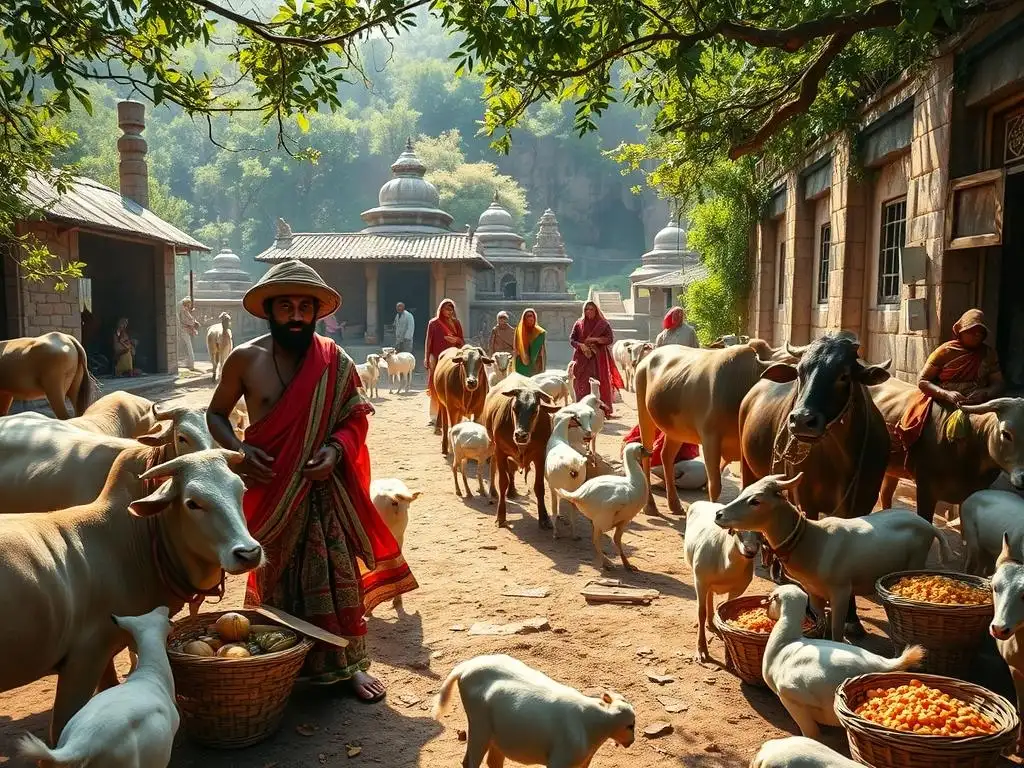
Welcome to Ancient India History! Dive into the fascinating world of ancient Indian animal husbandry economy, where the livestock not only shaped the agrarian landscape but also influenced trade and cultural practices across civilizations. Discover how these early practices laid the groundwork for economic prosperity and social structures that defined ancient India. As you journey through our detailed exploration, you'll unravel the intricate connections between animal husbandry and the thriving economies of the Indus Valley and Gupta Empire. Ready to uncover the historical impact of these vital practices? Let’s begin!
- Introduction to Ancient Indian Animal Husbandry Economy
- The Role of Animal Husbandry in Ancient Indian Society
- Key Components of the Ancient Indian Animal Husbandry Economy
- Economic Contributions of Animal Husbandry
- The Relationship Between Animal Husbandry and Ancient Indian Trade
- Case Studies of Animal Husbandry Impact on Specific Ancient Indian Civilizations
- Challenges and Changes in Ancient Indian Animal Husbandry
- Conclusion: The Legacy of Animal Husbandry in Ancient Indian Economy
-
Frequently Asked Questions
- What role did animal husbandry play in the ancient Indian economy?
- Which animals were primarily domesticated in ancient India?
- How did animal husbandry contribute to social structure in ancient India?
- What were the economic benefits of animal husbandry in ancient India?
- How did ancient Indian civilizations view animal husbandry?
- Final Reflection: The Enduring Legacy of Ancient Indian Animal Husbandry
- Ignite Your Journey into Ancient Indian Livestock Wisdom!
Introduction to Ancient Indian Animal Husbandry Economy
Animal husbandry played a pivotal role in shaping the economy of ancient India, influencing both agricultural practices and trade systems. This intricate relationship between livestock and economic stability laid the groundwork for numerous advancements in various fields, including agriculture, trade, and cultural development.
By examining the historical impact of animal husbandry on the ancient Indian economy, we can gain a deeper understanding of how these practices contributed to the prosperity of civilizations ranging from the Indus Valley to the Gupta Empire. This exploration reveals not only the significance of livestock in everyday life but also the broader implications for trade and industry in ancient Indian societies.
Overview of Animal Husbandry in Ancient India
Animal husbandry in ancient India encompassed a wide array of practices involving the breeding and rearing of animals for multiple purposes, including agriculture, transportation, and food production. Key animals involved in this practice included:
- Cattle: Primarily used for plowing fields, providing milk, and as a source of manure.
- Sheep and Goats: Raised for wool, meat, and milk; they were vital in semi-arid regions.
- Horses: Essential for transportation and warfare, horses contributed significantly to trade and military prowess.
- Camels: Particularly in arid regions, camels were crucial for transport and trade across long distances.
Archaeological findings, such as those from the Indus Valley Civilization, indicate that animal husbandry was a well-established practice as early as 2500 BCE. Remnants of cattle bones and artifacts related to livestock management suggest a sophisticated understanding of breeding and animal care. Furthermore, ancient texts like the Vedas and the Arthashastra provide insights into the methods of animal husbandry and its integration into economic systems.
Importance of Animal Husbandry in Economic Practices
The significance of animal husbandry in ancient Indian economic practices cannot be overstated. It served as a foundation for many aspects of daily life and contributed to the overall economic structure in several ways:
- Agricultural Enhancement: The use of oxen for plowing increased agricultural productivity, enabling the cultivation of larger areas and diverse crops. This led to surplus production, which was critical for trade.
- Trade and Commerce: Livestock served as a valuable commodity in trade. The barter system often involved the exchange of animals for goods, facilitating economic interactions between communities.
- Cultural Significance: Animals held cultural and religious importance in ancient Indian society. Cattle, for example, were not only economic assets but also revered in various religious beliefs, influencing societal norms and practices.
- Economic Diversification: The products derived from animals—such as milk, wool, and leather—provided additional sources of income and fostered the development of various crafts and industries.
Animal husbandry was a cornerstone of the ancient Indian economy, intricately woven into the fabric of social, agricultural, and trade practices. Understanding its historical impact offers valuable insights into the economic systems that shaped one of the world's oldest civilizations.
The Role of Animal Husbandry in Ancient Indian Society
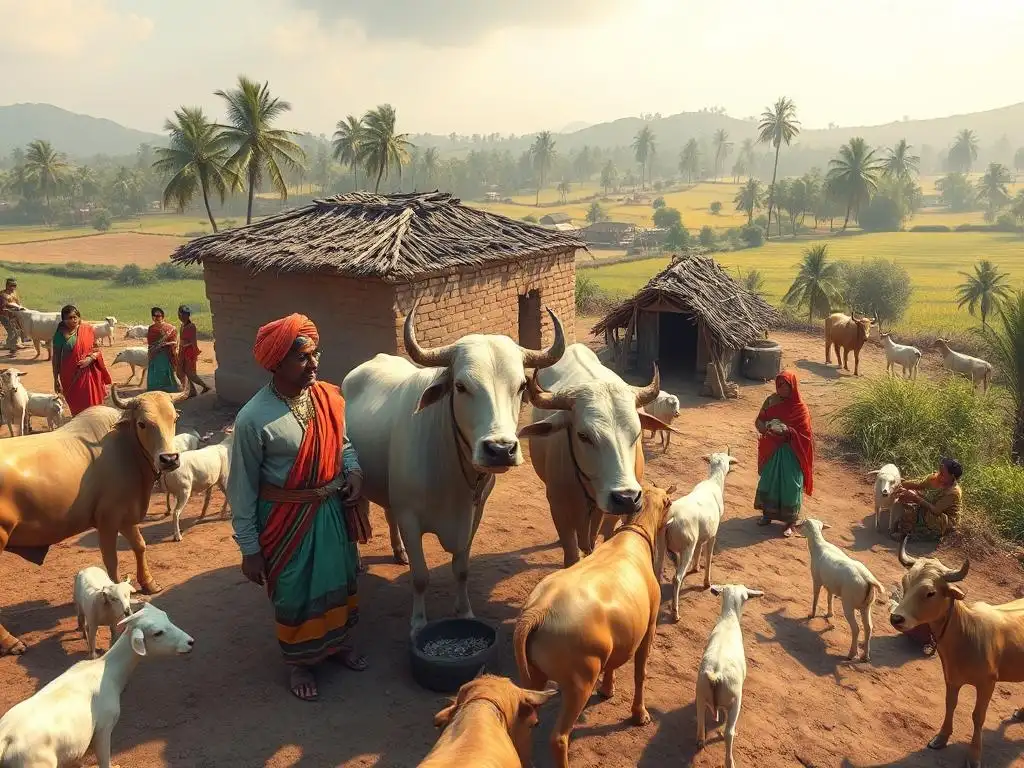
Animal husbandry played a crucial role in shaping the economy and social fabric of ancient India. It was not merely an economic activity; it influenced various aspects of daily life, culture, and social organization. The domestication of animals such as cattle, goats, sheep, and poultry provided sustenance, labor, and various materials that were essential for survival and trade.
The practice of animal husbandry was intricately linked to the social structure of ancient Indian communities. Livestock ownership often indicated social status and wealth, creating a hierarchy based on the number and types of animals one possessed.
- Caste System and Livestock: Different castes had specific roles concerning animal husbandry. For instance:
- Pastoralists: Communities such as the Gwalas and Raikas were primarily engaged in herding and breeding animals.
- Agriculturalists: Farmers depended on livestock for plowing fields and producing manure, which enhanced soil fertility.
- Artisans and Traders: They engaged in the trade of animal products, such as milk, wool, and leather, integrating animal husbandry into the broader economic framework.
- Community Organization: Many societies formed cooperative arrangements for managing livestock, ensuring mutual benefit. Such arrangements fostered communal bonds and improved resource management.
- Gender Roles: In many instances, women played a significant role in animal husbandry, taking charge of milking, feeding, and caring for animals. This involvement not only contributed to the household economy but also empowered women within their communities.
The social implications of animal husbandry extended beyond mere economic transactions; it helped to solidify social networks and cultural practices that defined ancient Indian society.
Cultural Significance of Livestock in Ancient India
Livestock held profound cultural significance in ancient India, influencing art, religion, and rituals. The reverence for animals can be observed in various texts and practices.
- Religious Symbolism: Cattle, particularly cows, are often regarded as sacred in Hindu culture. They symbolize wealth, strength, and abundance. The Vedas and other ancient scriptures mention the importance of cows in rituals and sacrifices, emphasizing their role beyond economic utility.
- Festivals and Rituals: Livestock played a central role in numerous festivals, such as:
- Gudi Padwa: Celebrated in Maharashtra, involving the worship of cattle.
- Pongal: In Tamil Nadu, where cattle are honored during the harvest festival.
- Art and Literature: Ancient Indian art frequently depicted animals, showcasing their importance in daily life and spirituality. Literature from ancient texts often includes references to livestock, illustrating their role in myths, legends, and moral stories.
- Sustainable Practices: The ethical treatment of animals was also a concern, with ancient texts advocating for sustainable practices in animal husbandry. This aspect reflects an understanding of environmental stewardship that was prevalent in various ancient Indian societies.
Animal husbandry was a cornerstone of the ancient Indian economy, intricately woven into the social and cultural tapestry of the time. Its impact is evident not only in economic practices but also in the broader cultural and spiritual life of ancient Indian civilizations, marking it as a vital area of study for understanding the complexity of ancient Indian society.
Key Components of the Ancient Indian Animal Husbandry Economy
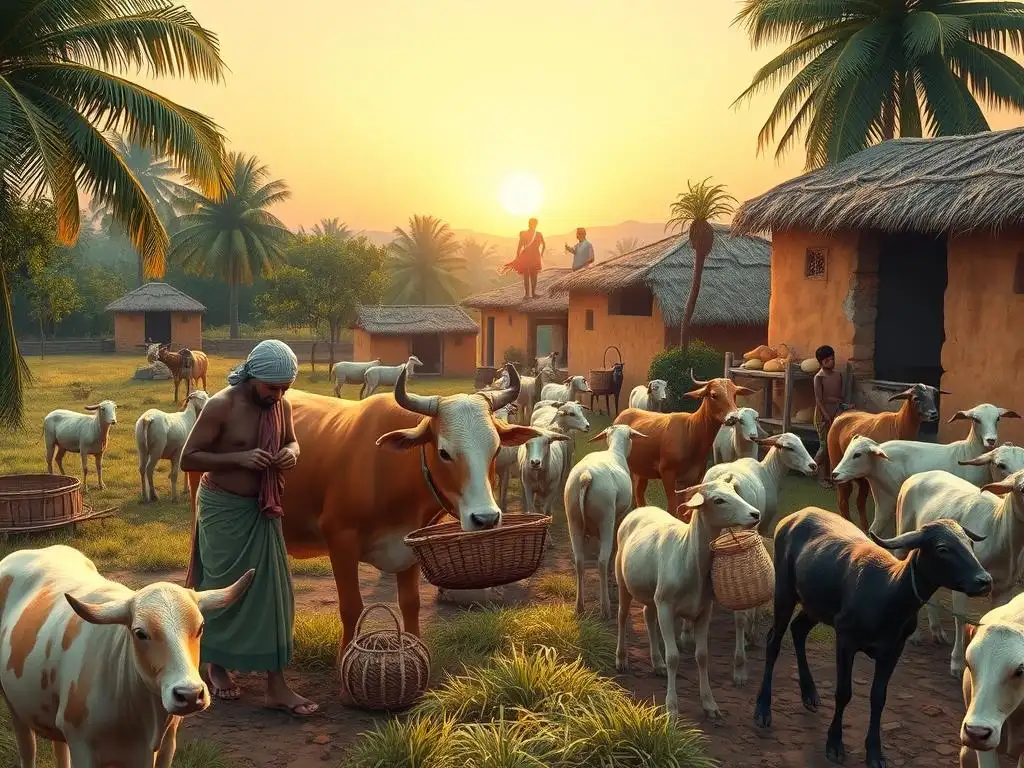
The ancient Indian animal husbandry economy was a crucial pillar of sustenance and trade, significantly influencing social structures and economic practices. This economy was not only about the domestication of animals but also involved intricate relationships with agriculture, trade, and cultural practices. The following sections delve into the types of animals domesticated, the techniques and practices employed, and the geographic distribution of these practices in ancient India.
Types of Animals Domesticated in Ancient India
Ancient India saw the domestication of a diverse range of animals, each serving specific purposes in the economy. The primary types included:
- Cattle
- Zebu Cattle (Bos indicus): Known for their adaptability to the Indian climate, zebu cattle were primarily used for plowing fields and providing milk.
- Bulls: Besides labor, bulls were vital for social and ceremonial functions, often associated with agricultural rites.
- Goats and Sheep
- Goats: Valued for their meat, milk, and hides, goats were especially significant in regions with arid climates.
- Sheep: Primarily raised for wool and meat, sheep farming contributed to textiles, enhancing trade.
- Buffalo
- Water buffaloes played a significant role in agriculture, particularly in wetland farming, due to their strength and ability to work in flooded fields.
- Poultry
- Chickens and ducks were domesticated for their eggs and meat, contributing to the protein sources for ancient Indian diets.
- Horses
- Although less prevalent than in other cultures, horses were sometimes used for transportation and military purposes, especially in the northern regions.
This variety of domesticated animals not only catered to subsistence needs but also supported trade, with livestock often being a commodity exchanged in markets.
Techniques and Practices in Animal Husbandry
The techniques and practices of animal husbandry in ancient India reflect a deep understanding of the animals and their environments. Key practices included:
- Breeding Techniques
- Selective breeding was practiced to enhance desirable traits such as milk production in cows or wool quality in sheep, ensuring a steady supply of resources.
- Pastoral Nomadism
- Many communities practiced pastoral nomadism, moving with their herds in search of grazing land, which allowed them to utilize diverse ecosystems effectively.
- Mixed Farming
- The integration of crop cultivation with animal husbandry created a symbiotic relationship. For instance, livestock manure was used as fertilizer, enriching the soil for crops.
- Health Management
- Ancient texts, such as the Ayurveda, indicate that health management practices for animals were in place, focusing on diet, hygiene, and treatment of ailments.
- Use of Traditional Knowledge
- Knowledge passed down through generations played a crucial role in determining feeding practices, breeding cycles, and seasonal movements to optimize resources.
These practices illustrate the sophistication and adaptability of ancient Indian animal husbandry, which was vital for sustaining the economy.
Geographic Distribution of Animal Husbandry Practices
The geographic distribution of animal husbandry practices in ancient India varied significantly based on regional climates, landscapes, and cultural traditions.
- Indus Valley Civilization
- Evidence from archaeological sites like Harappa and Mohenjo-Daro indicates advanced animal husbandry, with cattle and goats being predominant.
- Northern Plains
- The fertile alluvial plains of the Ganges supported extensive cattle and goat farming, integrating these with intensive agriculture.
- Western India
- Regions such as Gujarat and Rajasthan saw significant sheep and goat farming, with wool production becoming an important economic activity.
- Southern India
- The Deccan plateau was characterized by the prevalence of cattle and buffalo, with a focus on agriculture in wetland areas.
- Himalayan Regions
- Pastoralism thrived in the higher altitudes, where communities relied on yaks and sheep for sustenance, adapting to the rugged terrain.
The geographic diversity of ancient Indian animal husbandry practices highlights the adaptability of communities in response to their environment and resources, shaping the overall economy.
In summary, ancient Indian animal husbandry economy was marked by a rich tapestry of domesticated animals, innovative practices, and geographic adaptability. These components not only supported the livelihoods of ancient communities but also facilitated trade and cultural exchanges, underscoring the importance of animal husbandry in the broader economic landscape of ancient India.
Economic Contributions of Animal Husbandry
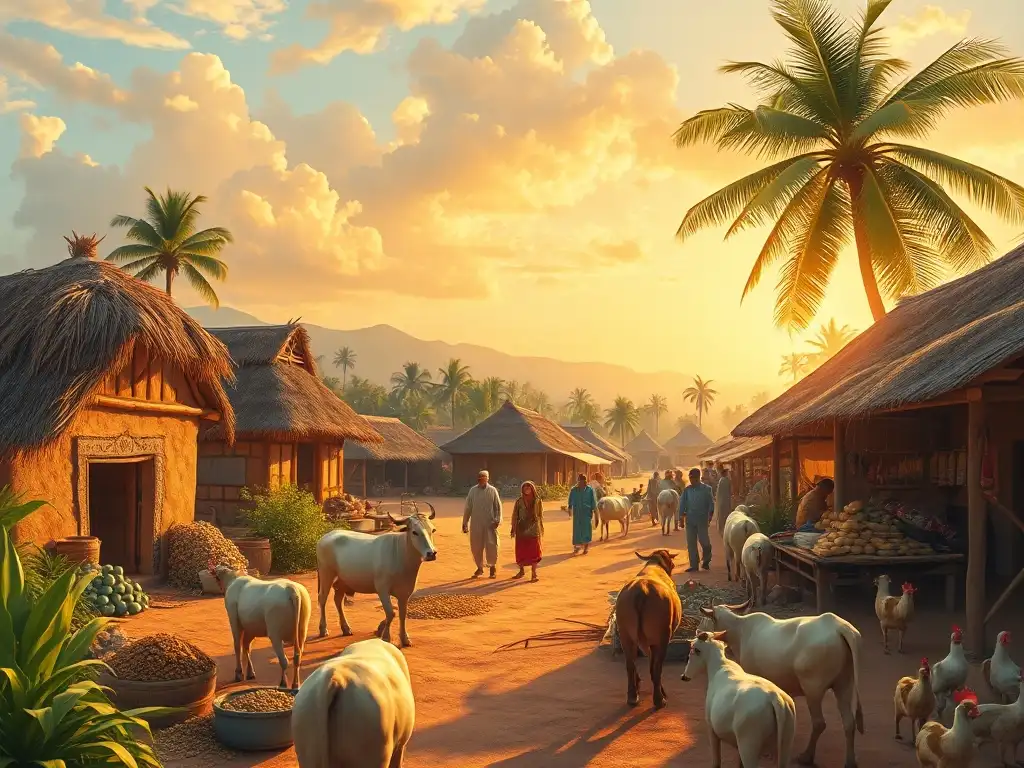
Animal husbandry played a pivotal role in shaping the ancient Indian economy, serving as a fundamental aspect of agricultural practices and trade systems. The domestication and management of livestock not only provided sustenance through meat, milk, and other animal products, but also contributed to the overall economic stability of various ancient Indian civilizations. The presence of livestock significantly influenced agricultural productivity, trade dynamics, and socio-economic structures in these societies.
Livestock as Economic Assets
In ancient India, livestock was considered a vital economic asset, often reflecting wealth and social status. Livestock included a variety of animals such as cattle, sheep, goats, and camels, each contributing uniquely to the economy:
- Cattle: Primarily used for plowing fields and as a source of dairy products, cattle were essential for both agricultural work and nutrition. Cow dung, another byproduct, was utilized as fertilizer and fuel.
- Sheep and Goats: These animals provided wool, meat, and milk, supporting both local consumption and trade. Their adaptability to various environments made them crucial for pastoral communities.
- Camels: Especially in arid regions, camels served as pack animals for transporting goods, which was vital for trade, enhancing the mobility of products across long distances.
The ownership of livestock not only ensured food security but also acted as a form of savings and investment. The barter of livestock for goods and services was commonplace, further embedding these animals into the economic fabric of ancient Indian society.
Trade and Barter Systems Involving Livestock
Animal husbandry significantly influenced the trade and barter systems of ancient India. Livestock became an integral part of the economic exchange mechanisms, with various regions specializing in different types of animals based on local climatic and geographical conditions:
- Barter Transactions: Farmers and herders commonly engaged in barter, trading livestock for crops, tools, and other necessities. This system fostered community relationships and interdependence among different social groups.
- Regional Trade: Certain areas became known for specific livestock breeds. For instance, the use of hardy breeds of cattle in the plains contrasted with the specialized breeds of goats in mountainous regions. This specialization facilitated trade routes that connected diverse cultures and economies.
- Marketplaces: Livestock markets emerged as important centers for economic activity, where animals were bought and sold. These markets also served as platforms for the exchange of agricultural products, contributing to a vibrant local economy.
The integration of livestock into trade systems not only enhanced economic diversification but also stimulated cultural exchanges, as different communities interacted through commerce.
Impact on Agriculture and Crop Production
The relationship between animal husbandry and agriculture in ancient India was symbiotic, with each influencing the other's productivity:
- Draft Power: The use of oxen and bulls for plowing significantly increased the efficiency of agricultural operations. This allowed for the cultivation of larger areas, contributing to higher yields and surplus production.
- Nutrient Cycling: Animal manure played a crucial role in maintaining soil fertility. The practice of integrating livestock into cropping systems helped in nutrient recycling, essential for sustainable agriculture in the long term.
- Diversification of Crops: With the availability of livestock, farmers could diversify their agricultural practices, incorporating fodder crops alongside food crops. This not only ensured a steady food supply for animals but also improved overall soil health and crop resilience.
The enhancement of agricultural productivity through animal husbandry laid the groundwork for surplus generation, which eventually facilitated trade and economic complexity in ancient Indian societies. The interdependence of crop production and animal husbandry thus played a fundamental role in shaping the ancient Indian animal husbandry economy, ensuring its significance in the broader context of economic practices and systems.
The Relationship Between Animal Husbandry and Ancient Indian Trade
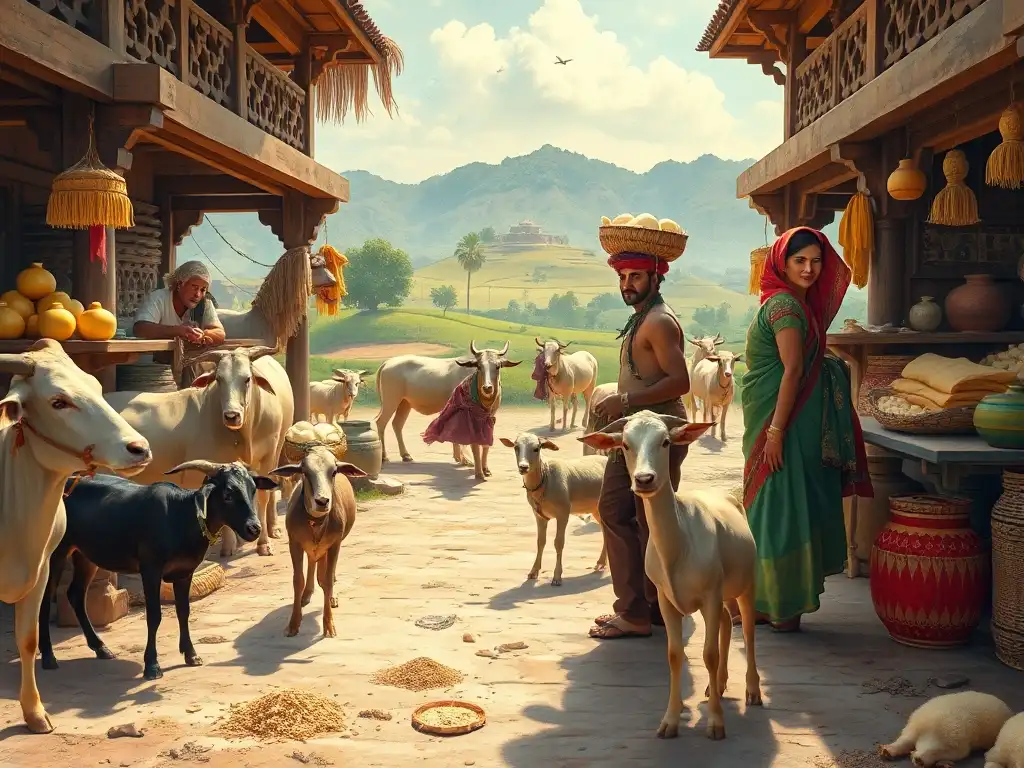
Animal husbandry played a pivotal role in shaping the economic landscape of ancient India, intertwining closely with trade practices and enhancing the overall economy. The domestication of animals not only provided essential resources but also facilitated trade networks that connected various regions. Livestock such as cattle, sheep, goats, and camels were integral to both agricultural productivity and economic exchanges.
Livestock Trade Routes in Ancient India
The trade of livestock in ancient India was organized along established routes that spanned vast geographical areas. Key trade routes facilitated the movement of animals across regions, allowing for the exchange of livestock and related products such as milk, wool, and leather. These routes were often integral parts of the larger trade networks that connected India with other regions, including Central Asia and the Middle East.
- Major Trade Routes:
- The Silk Road: This ancient trade route enabled the exchange of not just goods but also livestock, particularly horses and camels, which were essential for transportation and military purposes.
- The Grand Trunk Road: Connecting eastern and western India, this route facilitated the movement of cattle and other livestock, enhancing trade opportunities between various local markets.
The significance of these routes is evident from archaeological findings and ancient texts, which highlight the movement of livestock as a critical economic activity. Livestock not only served as a source of food and materials but also emerged as a form of currency, enhancing trade relations and economic stability.
Influence of Animal Husbandry on Local and Regional Markets
The practice of animal husbandry significantly influenced both local and regional markets in ancient India. By providing essential resources such as meat, milk, and hides, animal husbandry contributed to the sustenance of communities and spurred economic growth.
- Local Market Dynamics:
- Substance Economy: Villages relied heavily on livestock for daily needs. Cattle provided milk and labor for plowing fields, while goats and sheep supplied meat and wool, forming the backbone of local economies.
- Barter System: Livestock often served as a unit of trade within local markets. Farmers would trade surplus livestock for crops or other goods, creating a barter economy that fostered community interdependence.
- Regional Market Expansion:
- Trade Centers: Regions with rich pastoral lands developed into trade centers where livestock could be bought and sold. These centers became hubs of economic activity, attracting traders from various regions.
- Cultural Exchange: The movement of livestock not only facilitated economic exchanges but also led to cultural interactions among different communities, enriching the social fabric of ancient India.
The interplay between animal husbandry and trade in ancient India illustrates a sophisticated economic system where livestock was not just a means of sustenance but also a vital component of economic exchange. This intricate relationship laid the groundwork for the development of a robust and diverse economy that thrived on the contributions of animal husbandry.
Case Studies of Animal Husbandry Impact on Specific Ancient Indian Civilizations
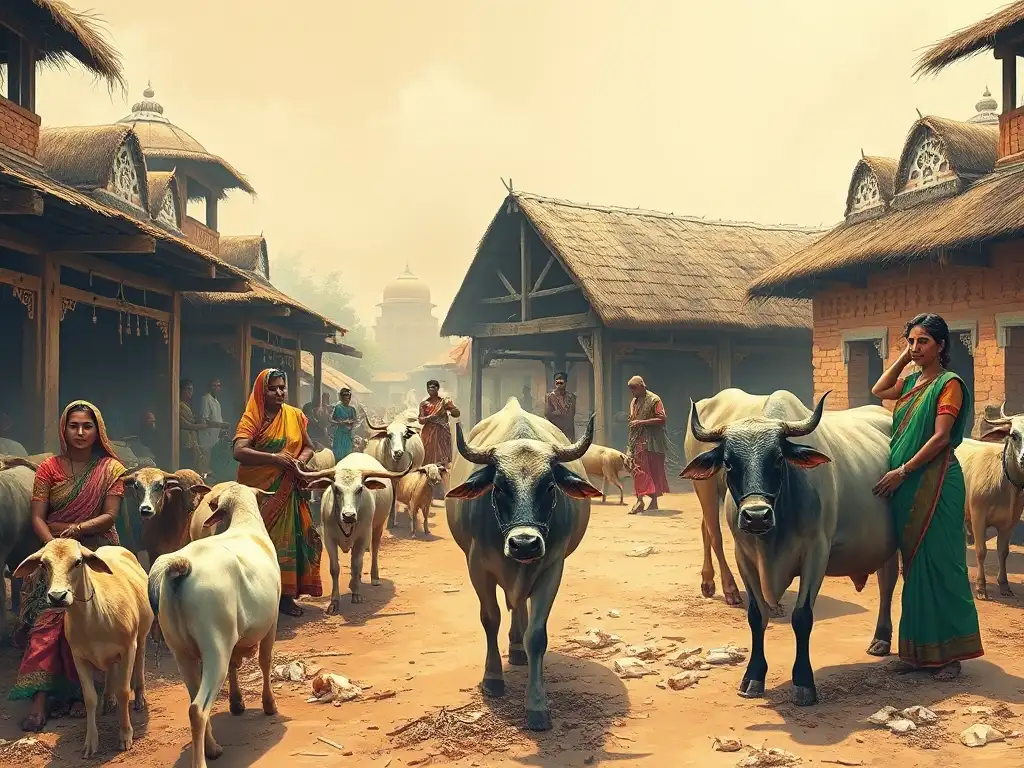
The Indus Valley Civilization and Animal Husbandry Economy
The Indus Valley Civilization (IVC), flourishing between 3300 and 1300 BCE, is often cited as one of the earliest examples of organized urban life in ancient India. Evidence suggests that animal husbandry played a pivotal role in their economy, fundamentally shaping agricultural practices and trade systems.
Key Aspects of Animal Husbandry in the IVC
- Domesticated Animals: The IVC was known for the domestication of various animals, including cattle, sheep, goats, and pigs. Archaeological findings, such as terracotta figurines and seals, depict these animals, indicating their significance in everyday life.
- Economic Contributions: Livestock provided essential materials like milk, wool, and labor. The presence of large herds not only facilitated agricultural production but also contributed to the local economy through trade, as surplus products were likely exchanged with neighboring regions.
- Urban Planning and Infrastructure: The cities of the IVC, such as Harappa and Mohenjo-Daro, showcased advanced urban planning, which included facilities for managing livestock. The layout of these cities suggests an integrated approach to animal husbandry, incorporating animal pens and storage areas for feed.
The economic foundation of the Indus Valley Civilization was significantly bolstered by animal husbandry, which influenced agricultural productivity and trade dynamics, thereby shaping the overall economy of this remarkable civilization.
Contributions of the Vedic Period to Animal Husbandry Practices
The Vedic period (c. 1500 to 500 BCE) marked a significant evolution in the practices and cultural significance of animal husbandry within ancient Indian society. This era not only saw advancements in livestock management but also the integration of animals into the cultural and religious fabric of the time.
Key Contributions to Animal Husbandry
- Sacred Cattle: Cattle, particularly cows, became symbols of wealth and prosperity in Vedic society. References in the Vedas highlight the importance of cows in rituals, with their milk serving as a staple in the diet and a key ingredient in religious offerings.
- Herding Techniques: The Vedic texts suggest that herding techniques were refined during this period. The use of specific breeds for various purposes, such as plowing and milk production, indicates a more systematic approach to animal husbandry.
- Economic Implications: Livestock ownership was a measure of wealth and status. The practice of gifting cattle, known as "go-dana," was common and reflected the economic exchanges that occurred within and between communities.
This period's advancements in animal husbandry significantly impacted the ancient Indian animal husbandry economy, enhancing agricultural productivity and establishing a framework for trade and social structures.
The Gupta Empire and its Advancements in Livestock Management
The Gupta Empire (c. 320 to 550 CE) is often referred to as the Golden Age of India, characterized by significant cultural, scientific, and economic developments. During this era, advancements in animal husbandry played a crucial role in bolstering the economy and supporting the burgeoning population.
Innovations in Livestock Management
- Selective Breeding: The Guptas introduced selective breeding practices to enhance the quality and productivity of livestock. This innovation not only improved milk yields but also led to the development of more robust breeds suited for agricultural labor.
- Agricultural Integration: The integration of animal husbandry with agriculture became more pronounced. Livestock was essential for plowing fields and fertilizing crops, thus enhancing agricultural output. The relationship between farming and animal husbandry was firmly established, creating a symbiotic economic model.
- Trade Expansion: The prosperity of the Gupta Empire facilitated trade routes that included livestock and animal products. The thriving markets for wool, dairy, and meat products contributed to a diversified economy, with livestock becoming an integral part of commercial exchanges.
The advancements in animal husbandry during the Gupta Empire significantly influenced the ancient Indian animal husbandry economy, fostering agricultural productivity and expanding trade networks that would impact the subcontinent for centuries to come.
Challenges and Changes in Ancient Indian Animal Husbandry
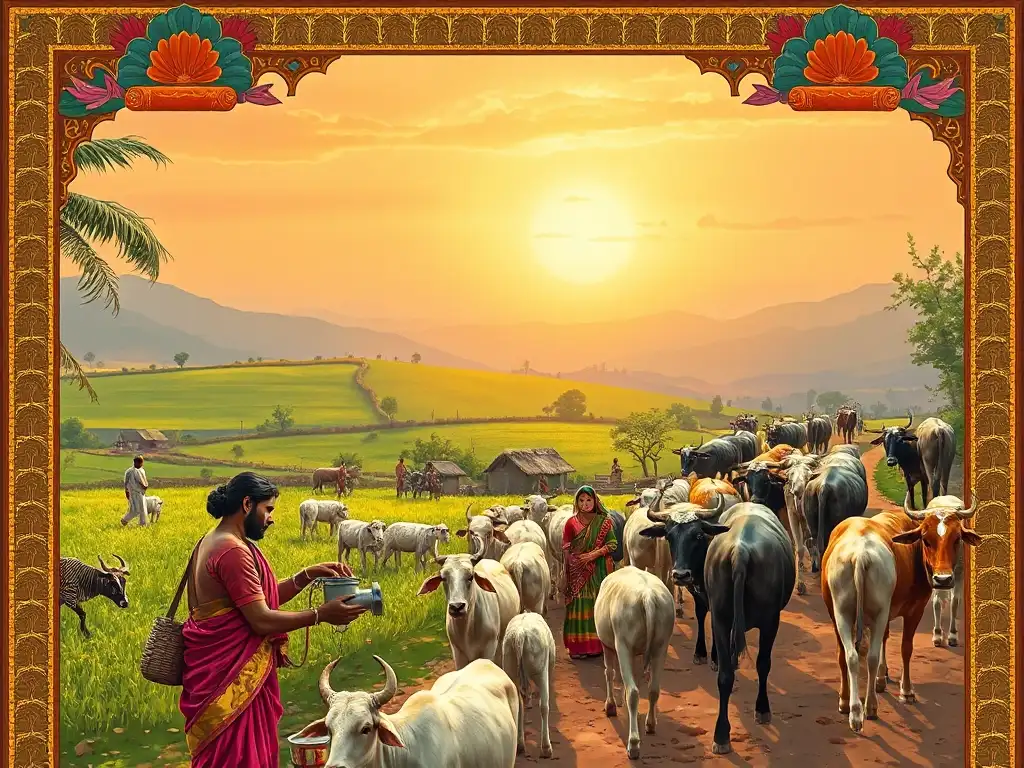
Environmental Factors Affecting Animal Husbandry
The practice of animal husbandry in ancient India was significantly influenced by various environmental factors. Geographic and climatic conditions played a pivotal role in determining the types of animals that could be domesticated and the methods of husbandry employed.
- Climate Variability:
- The diverse climate across ancient India, ranging from the arid deserts of Rajasthan to the fertile plains of the Ganges, dictated the species of animals that could thrive. For instance, cattle were predominantly raised in the northern regions where water and grass were abundant, while goats and camels were more suited to the drier areas.
- Seasonal changes, such as the monsoon, impacted grazing patterns and, consequently, the health and productivity of livestock. Farmers often had to adapt their herding and feeding strategies based on these seasonal shifts.
- Resource Availability:
- The availability of water sources was crucial. Regions with sufficient water supply supported larger herds and more intensive husbandry practices. Conversely, areas with limited water resources faced challenges such as overgrazing and soil degradation, requiring farmers to implement sustainable practices.
- Pastureland quality also influenced animal husbandry. Nutrient-rich pastures promoted healthier livestock, while poor-quality land could lead to malnutrition and increased vulnerability to disease.
- Natural Disasters:
- Floods, droughts, and other natural disasters could devastate animal populations and disrupt traditional husbandry practices. For example, severe flooding in the Indus Valley could lead to loss of livestock and damage to grazing fields, forcing communities to adapt quickly to ensure survival.
- Communities developed resilience through mobility; nomadic tribes and pastoralists migrated in search of better grazing lands during adverse conditions, which directly influenced their economic practices.
Adaptations in Practices over Time
The evolution of animal husbandry in ancient India reflects a series of adaptations in response to changing environmental conditions, social structures, and technological advancements.
- Selective Breeding:
- Over time, ancient Indian farmers began to practice selective breeding of livestock to enhance desirable traits such as size, milk production, and disease resistance. This practice not only improved the quality of herds but also contributed to the economy by increasing milk and meat yields.
- Archaeological evidence suggests that specific breeds of cattle, such as the Zebu, were cultivated for their adaptability to the hot climate and for their ability to perform agricultural tasks.
- Integration with Agriculture:
- The rise of agricultural practices led to a symbiotic relationship between crop cultivation and animal husbandry. Livestock provided essential manure for fertilizing fields, while crop residues served as feed. This integration enhanced soil fertility and contributed to higher agricultural outputs, fostering a more robust economy.
- The use of animals for plowing and transportation further advanced agricultural efficiency, directly impacting the economic landscape of ancient India.
- Trade and Exchange:
- As animal husbandry practices evolved, so did the trade of livestock and animal products. Regions specialized in different types of animal husbandry, leading to trade networks that facilitated the exchange of cattle, sheep, goats, and products such as wool, milk, and leather.
- This not only enriched local economies but also fostered cultural exchanges between communities, as animal husbandry practices were shared and adapted across different regions.
- Cultural Significance:
- Animals held significant cultural and religious importance in ancient Indian society. Cattle, for instance, were revered in Hinduism and viewed as symbols of wealth and prosperity. This reverence influenced husbandry practices, leading to careful management and protection of livestock.
- Rituals and festivals centered around livestock further underscored the deep connections between animal husbandry and the socio-economic fabric of ancient Indian civilization.
Through these adaptations, ancient Indian animal husbandry not only shaped the economy but also contributed to the cultural and social dynamics of its time, leaving a lasting legacy in the history of the region.
Conclusion: The Legacy of Animal Husbandry in Ancient Indian Economy
Summary of Economic Impact
Animal husbandry played a pivotal role in shaping the ancient Indian economy, intertwining with agricultural practices and trade systems. By providing essential resources such as milk, meat, wool, and hides, livestock became a cornerstone of sustenance and economic stability. The domestication of animals like cattle, goats, sheep, and buffalo not only enhanced agricultural productivity through plowing and transportation but also diversified the food supply.
The impact of animal husbandry can be summarized through the following key aspects:
- Economic Diversification: Livestock raised in ancient India allowed for a diversified economy. Farmers could engage in both crop cultivation and animal rearing, providing multiple sources of income.
- Trade Enhancement: The surplus of animal products fostered trade networks, both locally and across regions. Markets thrived on the exchange of livestock and animal-derived products, contributing to the overall economic growth.
- Cultural Significance: Beyond economics, animals held cultural and religious significance, often featured in rituals and beliefs, thereby integrating economic practices with societal values.
Overall, the ancient Indian animal husbandry economy laid the groundwork for a sustainable economic model that resonated through the ages.
Relevance to Modern Economic Practices in India
The legacy of animal husbandry in ancient India continues to resonate in contemporary economic practices. Today, livestock farming remains a vital component of India's rural economy, supporting millions of households and contributing significantly to the national GDP. The following points illustrate this ongoing relevance:
- Sustainable Livelihoods: Modern animal husbandry practices reflect ancient methodologies, emphasizing sustainable approaches that enhance productivity while preserving animal welfare. Farmers increasingly adopt integrated farming systems that combine crop and livestock production, echoing ancient practices.
- Economic Resilience: Livestock serves as a financial asset for many rural families, providing a buffer against economic shocks. In times of drought or crop failure, animals can be sold or used for subsistence, showcasing the enduring importance of animal husbandry in economic resilience.
- Cultural Heritage: The traditions and practices linked to animal husbandry are celebrated in various festivals and rituals, highlighting the cultural continuity from ancient to modern times. This connection reinforces community bonds and promotes local economies through agro-tourism and heritage preservation.
The ancient Indian animal husbandry economy not only laid a robust foundation for agricultural and trade practices but also continues to influence modern economic systems in India. Understanding this legacy is essential for appreciating the depth and continuity of economic practices that have evolved over millennia.
Frequently Asked Questions
What role did animal husbandry play in the ancient Indian economy?
Animal husbandry was a critical component of the ancient Indian economy, providing food, labor, and trade resources. It supported agricultural practices and helped sustain growing populations.
Which animals were primarily domesticated in ancient India?
Ancient Indians primarily domesticated cattle, buffaloes, sheep, and goats. These animals were important for milk production, agricultural work, and trade.
Animal husbandry influenced the social hierarchy by creating different roles within communities, such as herders, traders, and farmers, which shaped the economic interactions and cultural practices of the time.
What were the economic benefits of animal husbandry in ancient India?
The economic benefits included increased agricultural productivity, the provision of livestock products like milk and wool, and the facilitation of trade routes, which helped local economies thrive.
How did ancient Indian civilizations view animal husbandry?
Ancient Indian civilizations viewed animal husbandry as an essential part of their sustenance and culture, often integrating it into their rituals and daily life, reflecting the deep connection between humans and animals.
Final Reflection: The Enduring Legacy of Ancient Indian Animal Husbandry
The historical significance of ancient Indian animal husbandry economy resonates profoundly in today's world, as it laid the foundation for agricultural practices that continue to shape our societies. The intricate relationship between humans and animals in ancient India not only fostered economic growth but also cultivated a sense of community and sustainability that is increasingly relevant in our modern discussions about food security and environmental stewardship. As we navigate contemporary challenges, the lessons from this ancient practice remind us of the importance of harmonious coexistence with nature.
The influence of ancient Indian animal husbandry extends far beyond its economic contributions; it has woven itself into the cultural and social fabric of Indian society. The traditions and practices surrounding animal husbandry have shaped identities, rituals, and even spiritual beliefs, fostering a deep respect for the animals that have supported human livelihoods for centuries. As Mahatma Gandhi once said, The greatness of a nation and its moral progress can be judged by the way its animals are treated.
This sentiment underscores the ongoing relevance of animal husbandry in promoting ethical considerations and sustainable practices in our current agricultural systems.
As we reflect on the lessons of the past, I invite you to consider how the principles of ancient Indian animal husbandry can inspire your own life and choices. Think about the ways you can contribute to a more sustainable future, whether through supporting local farmers, adopting ethical consumption practices, or advocating for animal welfare. By embracing the wisdom of our ancestors, we can forge a path that honors the interconnectedness of all living beings and ensures a thriving planet for generations to come.
Ignite Your Journey into Ancient Indian Livestock Wisdom!
Thank you for exploring the captivating world of animal husbandry in ancient India! You've discovered how these practices shaped economies and influenced cultures. Now, it's time to take that knowledge and turn it into action!
- Explore modern sustainable farming methods inspired by ancient techniques. Begin by looking for local workshops or online courses that focus on these practices.
- Share your insights with friends or on social media to encourage discussions about the relevance of historical animal husbandry in today's world.
- Join a community dedicated to permaculture or traditional farming techniques to connect with others who are passionate about preserving these ancient practices.
What lessons can you draw from ancient animal husbandry that could transform your modern lifestyle or community? Let’s discuss in the comments below!