
Astronomical Instruments of Ancient India: Tools for Celestial Observation


Welcome to Ancient India History, where we embark on an enthralling journey through time to uncover the rich tapestry of civilization that shaped the subcontinent. In this exploration, we delve into the fascinating world of astronomical tools in ancient India, revealing how these remarkable instruments were not just tools for celestial observation, but gateways to understanding the cosmos. What secrets did the stars hold for our ancestors, and how did their observations influence science and medicine? Join us as we unravel these intriguing mysteries and celebrate the genius of ancient Indian ingenuity. Prepare to be captivated!
- Introduction to Astronomical Tools in Ancient India
- Historical Context of Astronomy in Ancient India
- Major Astronomical Instruments Used in Ancient India
- Techniques and Methods of Celestial Observation
- Notable Astronomers and Their Contributions
- The Influence of Ancient Indian Astronomy on Modern Science
- Conclusion: The Significance of Astronomical Tools in Ancient India
-
Frequently Asked Questions
- What were the primary astronomical tools used in ancient India?
- How did ancient Indian astronomers contribute to astronomy?
- What role did the Gupta Empire play in the advancement of astronomy?
- How were astronomical tools related to cultural practices in ancient India?
- Are there any surviving examples of ancient astronomical instruments today?
- Final Reflection: The Enduring Legacy of Astronomical Tools in Ancient India
- Unveil the Stars: Take Your Celestial Journey!
Introduction to Astronomical Tools in Ancient India
The exploration of astronomical tools in ancient India unveils a fascinating aspect of the civilization's scientific and cultural heritage. From the sophisticated observatories of the Indus Valley to the intricate instruments developed during the Gupta Empire, ancient Indian astronomers made significant contributions to our understanding of celestial phenomena.
These tools not only facilitated the accurate observation of the stars and planets but also played a crucial role in the development of timekeeping and calendar systems. In this article, we will delve into the various astronomical instruments used in ancient India, their applications, and the cultural significance of celestial observation within this remarkable civilization.
Overview of Ancient Indian Astronomy
Ancient Indian astronomy is characterized by its rich tradition of observation and theoretical advancements. Scholars such as Aryabhata and Varahamihira were pivotal in establishing a systematic approach to celestial studies. They developed numerous astronomical texts, such as the Aryabhatiya and the Brahmasphutasiddhanta, which outlined methodologies for calculating planetary positions, eclipses, and other celestial events.
The tools used in this field varied widely, including:
- Gnomons: Simple devices for measuring the angle of the sun's shadow, aiding in timekeeping.
- Astrolabes: Complex instruments for determining the altitude of celestial bodies.
- Armillary Spheres: Models representing the celestial sphere, used to demonstrate the movements of stars and planets.
These instruments were not merely scientific tools; they reflected the philosophical and spiritual beliefs of the time, intertwining mathematics, astronomy, and astrology in a holistic understanding of the universe.
Importance of Celestial Observation in Ancient Indian Culture
Celestial observation held a profound significance in ancient Indian culture, influencing various aspects of daily life, religion, and governance. The movement of celestial bodies was often linked to agricultural cycles, with astronomers providing essential information for planting and harvesting.
In addition to its practical applications, astronomy was deeply embedded in religious practices. Many temples and structures were aligned with celestial events, such as solstices and equinoxes, reflecting a belief in the divine connection between the cosmos and earthly life.
Moreover, celestial phenomena were integral to various cultural narratives and mythology, often symbolizing the cyclical nature of existence. The ability to predict eclipses or major planetary alignments was viewed as a mark of scientific prowess and spiritual insight, reinforcing the status of astronomers within society.
The astronomical tools of ancient India were not just instruments for observation; they were vital components of a broader cultural framework that integrated science, philosophy, and spirituality, leaving a lasting legacy that continues to inspire modern astronomical endeavors.
Historical Context of Astronomy in Ancient India
The Evolution of Astronomical Knowledge
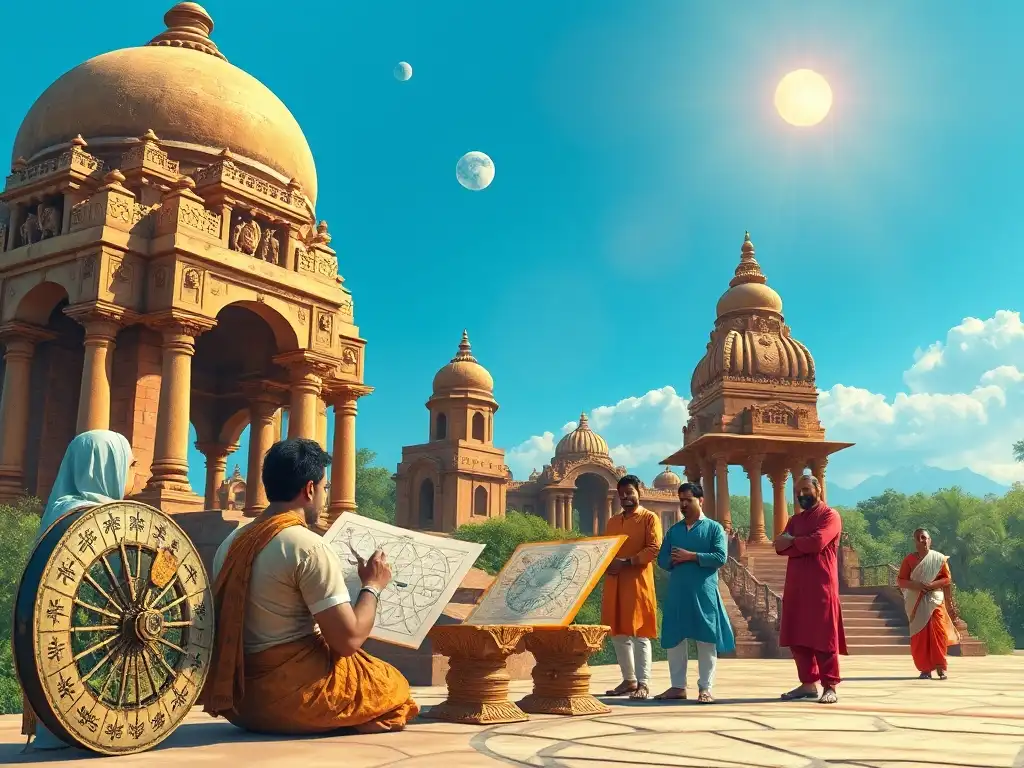
Astronomy in ancient India evolved through a rich tapestry of cultural, religious, and scientific influences spanning thousands of years. The roots of astronomical tools in ancient India can be traced back to the Indus Valley Civilization (c. 3300–1300 BCE), where evidence of early celestial observation practices is evident. Archaeological findings suggest that the people of this civilization may have tracked celestial bodies, which laid the groundwork for future astronomical advancements.
As we move into the Vedic period (c. 1500–500 BCE), astronomy began to take a more systematic form. The Vedas, particularly the Rigveda and Yajurveda, contain hymns and references that indicate an understanding of celestial phenomena. The concept of time, crucial for agricultural and societal organization, was closely tied to celestial cycles. The Vedic scholars developed mathematical tools, such as the Kāla Chakra (wheel of time), to describe these cycles.
By the classical period (c. 500 BCE–1200 CE), astronomy became a formalized discipline. The work of scholars like Aryabhata (476–550 CE) marked a significant milestone. Aryabhata's treatise, the Aryabhatiya, introduced concepts such as the rotation of the Earth and the calculation of the circumference of the Earth, showcasing the sophisticated level of astronomical knowledge. His use of astronomical tools, such as the gola (sphere), allowed for precise calculations and observations.
The evolution of astronomical knowledge continued with the advent of the Siddhantic period (c. 500–1200 CE). Scholars like Brahmagupta and Bhaskara I further refined astronomical calculations and tools, leading to more accurate representations of celestial phenomena. Brahmagupta's Brahmasphutasiddhanta is particularly noteworthy for its contributions to the understanding of planetary motion and eclipses.
Key Civilizations and Their Contributions to Astronomy
Ancient India was home to several key civilizations, each contributing uniquely to the field of astronomy.
- Indus Valley Civilization
- Key Contributions: Possible early celestial observations and timekeeping practices.
- Tools Used: Simple gnomons and other rudimentary instruments for tracking celestial bodies.
- Vedic Era
- Key Contributions: Establishment of time measurement systems based on celestial cycles.
- Tools Used: Early calendars and mathematical models, including the concept of ayans and yugas to track celestial movements.
- Maurya Empire (c. 322–185 BCE)
- Key Contributions: Integration of astronomy into governance and navigation.
- Tools Used: Sundials and water clocks to measure time, supporting agricultural and religious practices.
- Gupta Empire (c. 240–550 CE)
- Key Contributions: Flourishing of mathematics and astronomy, leading to the development of advanced astronomical instruments.
- Notable Figures: Aryabhata and Brahmagupta introduced sophisticated tools such as the shanku (gnomon) and yukti-bhasha (explanatory texts), which detailed methods for celestial measurement.
- Post-Gupta Period
- Key Contributions: Continuation of astronomical studies and the compilation of astronomical texts.
- Tools Used: Instruments like the astrolabe and armillary sphere, which were adapted and improved by Indian astronomers for accurate celestial observations.
The journey of astronomical tools in ancient India reflects a profound understanding of celestial phenomena, revealing the intricate relationship between science, culture, and spirituality. The contributions of various civilizations laid the foundation for future astronomical advancements, influencing not only local practices but also the broader scientific discourse across the globe.
Major Astronomical Instruments Used in Ancient India

The Gnomon: A Simple Yet Effective Tool
The gnomon, one of the earliest astronomical tools in ancient India, is a simple yet remarkably effective instrument for measuring time and understanding the movement of celestial bodies. Traditionally, it consists of a vertical stick or pillar placed in a horizontal plane. As the sun moves across the sky, the shadow cast by the gnomon changes in length and direction, providing vital information about solar time.
Key Features of the Gnomon
- Design: Typically constructed from wood or stone, the gnomon could vary in height and thickness depending on its intended precision.
- Usage: Ancient Indian astronomers utilized the gnomon to determine the time of day and the position of the sun, which was critical for agricultural planning and ritualistic practices.
- Calendar System: The measurements taken with a gnomon contributed to the development of sophisticated calendars, integrating lunar and solar cycles.
The effectiveness of the gnomon lies in its simplicity. By observing the shadow's movement, astronomers could estimate noon and track seasonal changes, thus playing a crucial role in ancient Indian society.
The astrolabe is another significant astronomical tool in ancient India, renowned for its versatility in observational astronomy. This intricate instrument allowed astronomers to measure the altitude of stars and planets above the horizon, thereby aiding in navigation and timekeeping.
Components of the Astrolabe
- Mater: The main body of the astrolabe, often made of brass or wood, which holds various scales and components.
- Alidade: A sighting device used to align the astrolabe with celestial bodies for accurate readings.
- Horizon Plane: A circular plate that represents the horizon, allowing astronomers to track the movement of celestial objects.
Functions of the Astrolabe
- Timekeeping: By measuring the position of celestial bodies, the astrolabe enabled astronomers to determine local time.
- Navigational Aid: It was crucial for maritime navigation, helping sailors chart their course by the stars.
- Calendar Calculations: The astrolabe facilitated the calculation of important dates, including festivals and agricultural events.
The astrolabe's design and functionality reflect the advanced understanding of astronomy in ancient India, showcasing the civilization’s contributions to the science.
The Armillary Sphere: Understanding Celestial Motions
The armillary sphere, a complex model of the celestial sphere, served as an essential tool for ancient Indian astronomers to visualize and understand the movements of celestial bodies. This instrument consisted of a series of rings, each representing different celestial circles, including the equator, ecliptic, and tropics.
Structure of the Armillary Sphere
- Rings: Made from metal or wood, the rings are arranged around a central axis, representing the earth at the center.
- Celestial Bodies: Models of the sun, moon, and planets could be attached to the rings, illustrating their relative positions and movements.
Applications of the Armillary Sphere
- Astronomical Education: The armillary sphere was used as a teaching tool, helping students and scholars visualize complex celestial motions.
- Astrological Predictions: Astrologers utilized the armillary sphere to create horoscopes and predict celestial events based on planetary positions.
- Time Measurement: By aligning the sphere with the sun and stars, astronomers could refine their methods for measuring time, enhancing accuracy in their observations.
The armillary sphere exemplifies the sophistication and depth of knowledge in ancient Indian astronomy, highlighting how these astronomical tools played a pivotal role in the civilization's understanding of the universe.
The Water Clock: Timekeeping and Astronomy
The water clock, known as ghati or udakabhaṭṭika, was one of the earliest timekeeping devices used in ancient India, with its origins tracing back to the Indus Valley Civilization. This ingenious instrument utilized the steady flow of water to measure time, demonstrating the advanced understanding of hydrodynamics possessed by ancient Indian scholars.
Design and Functionality
The water clock typically consisted of a vessel with a small hole at the bottom, through which water would escape at a consistent rate. As the water level decreased, the passage of time could be gauged. Some designs incorporated graduated markings on the vessel's side, allowing for more precise measurement. The simplicity and reliability of this tool made it invaluable for various purposes, including religious rituals, agricultural activities, and astronomical observations.
- Materials Used: Water clocks were commonly made from clay, metal, or stone.
- Types of Water Clocks: Different variations existed, including the nalanda water clock, which was known for its intricate design.
Role in Astronomy
In addition to its role as a timekeeping device, the water clock played a significant part in the development of astronomical studies in ancient India. By providing accurate time measurements, it allowed astronomers to track celestial events and improve their understanding of the cosmos.
- Celestial Navigation: Ancient Indian astronomers utilized the water clock to observe the movements of celestial bodies, such as the sun and moon, which was essential for calendar-making and agricultural planning.
- Integration with Other Instruments: The water clock often complemented other astronomical tools, such as the shanku (gnomon) and the yantra (instrument), facilitating a more comprehensive study of celestial phenomena.
Legacy
The innovation of the water clock reflects the profound impact of ancient Indian civilization on the field of astronomy. Its principles influenced later timekeeping methods and inspired various cultures across the globe. The water clock's design and functionality set the stage for the development of more sophisticated astronomical instruments, highlighting the ingenuity and scientific advancement of ancient Indian scholars.
The water clock stands as a testament to the blend of practical timekeeping and astronomical observation in ancient India, showcasing the civilization's remarkable contributions to science and technology.
Techniques and Methods of Celestial Observation

Observational Practices in Ancient Indian Astronomy
Ancient Indian astronomers employed various observational practices that were deeply intertwined with their cultural and religious beliefs. The fundamental techniques included:
- Naked-eye Astronomy: Most observations were made without telescopes, relying on the naked eye to track celestial bodies. This included the observation of planetary movements, lunar phases, and solar cycles.
- Lunar Calendars: The lunar calendar was pivotal in ancient India, influencing agricultural cycles and religious festivals. Astronomers meticulously recorded lunar phases to predict eclipses and determine auspicious days.
- Star Clusters: The identification of constellations, such as the Nakshatras (lunar mansions), played a significant role in navigation and astrology. Each Nakshatra was associated with specific deities and had its own significance.
- Sun's Shadow: Techniques like gnomons (vertical sticks used to cast a shadow) were employed to measure the sun's position, helping in the understanding of solar movements and the length of days.
The methods of celestial observation were often recorded in texts such as the Surya Siddhanta and the Aryabhatiya, which provided guidelines on how to carry out these observations systematically.
Mathematical Calculations and Their Application in Astronomy
The mathematical prowess of ancient Indian astronomers is remarkable, particularly in their use of geometry and trigonometry to enhance celestial observations. Key aspects include:
- Sine and Cosine Functions: Ancient mathematicians developed sine tables, which allowed for accurate calculations of angles and distances. Aryabhata, for instance, utilized these functions to make precise astronomical predictions.
- Quadrivium: The application of arithmetic, geometry, music, and astronomy formed a comprehensive approach to mathematics. This interdisciplinary method allowed astronomers to calculate planetary positions and eclipses with remarkable accuracy.
- Time Measurement: The concept of time was meticulously calculated using various methods, including the division of the day into smaller units. The ancient texts introduced sophisticated techniques for determining the length of shadows and the angles of celestial bodies.
- Eclipses Prediction: Astronomers created algorithms to predict solar and lunar eclipses, often using observational data to refine their calculations. The Aryabhatiya famously included rules for predicting eclipses, demonstrating a blend of observation and mathematical calculation.
These mathematical applications not only facilitated accurate celestial navigation but also provided a foundation for later developments in astronomy.
The Role of Observatories in Ancient India
Observatories, or Yantras, were crucial to the advancement of astronomical knowledge in ancient India. Some significant aspects include:
- Jantar Mantar: Built in the 18th century, the Jantar Mantar observatories in Jaipur and Delhi are prime examples of how ancient Indian astronomers constructed large-scale instruments for precise astronomical measurements. These structures included instruments like the Samrat Yantra (a giant sundial) and the Jai Prakash, which helped in determining celestial positions.
- Architecture and Alignment: The design of observatories was often aligned with celestial events, which enabled astronomers to observe phenomena such as solstices and equinoxes. The architectural intricacies of these observatories showcased a deep understanding of both mathematics and astronomy.
- Community of Astronomers: Observatories served as centers for the collaboration of scholars and astronomers. They were places for teaching and sharing knowledge, contributing to the development of a rich astronomical tradition.
- Cultural Significance: Beyond their scientific purposes, observatories were integral to the cultural practices of ancient India, often associated with rituals and festivals that celebrated celestial events.
The techniques and methods of celestial observation in ancient India exemplify a sophisticated integration of observation, mathematics, and cultural practices, laying the groundwork for many astronomical principles still relevant today.
Notable Astronomers and Their Contributions
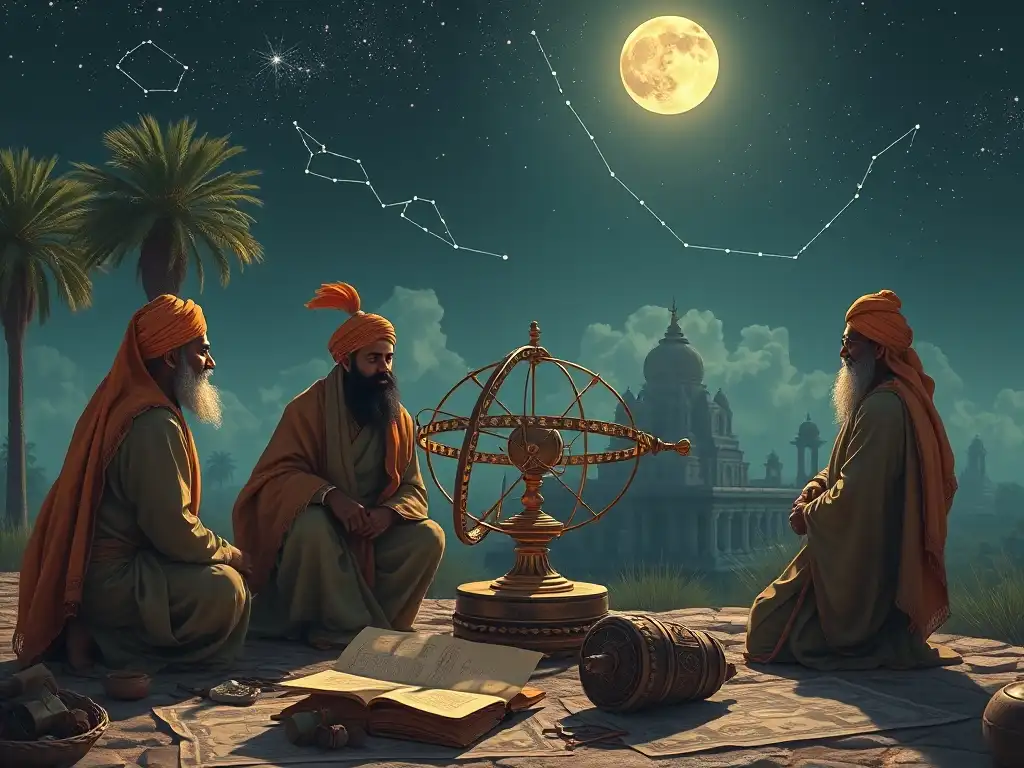
Ancient India was home to several remarkable astronomers who made significant contributions to the field of astronomy, laying the foundation for future scientific endeavors. Their work not only advanced the understanding of celestial phenomena but also influenced various aspects of mathematics and astrology. Below, we delve into the contributions of three of the most notable astronomers in ancient India: Aryabhata, Varahamihira, and Brahmagupta.
Aryabhata: The Pioneer of Indian Astronomy
Aryabhata (476–550 CE) is often regarded as the first significant mathematician and astronomer in ancient India. His seminal work, the Aryabhatiya, composed in verse form, addresses various aspects of mathematics and astronomy.
- Key Contributions:
- Heliocentric Model: Aryabhata proposed a revolutionary idea that the Earth rotates on its axis, which was a departure from the prevailing geocentric models of his time. This insight laid the groundwork for future astronomers.
- Accurate Calculation of Pi (\(\pi\)): He approximated \(\pi\) as 3.1416, demonstrating a remarkable understanding of geometry.
- Length of the Solar Year: Aryabhata calculated the length of the solar year to be approximately 365.358 days, a figure very close to the modern value.
- Sine Function: He introduced the concept of sine in trigonometry, which was crucial for astronomical calculations.
Aryabhata’s innovative ideas and methodologies not only influenced Indian astronomy but also had a lasting impact on the global scientific community.
Varahamihira: Bridging Astronomy and Astrology
Varahamihira (505–587 CE) was a renowned scholar who made significant strides in both astronomy and astrology. His work reflects a synthesis of empirical observations and astrological beliefs, illustrating the interconnectedness of these fields in ancient India.
- Key Contributions:
- Panchanga: Varahamihira compiled the Panchanga, an almanac that included details about the solar and lunar calendars, eclipses, and planetary positions. This work became essential for agricultural planning and religious observances.
- Brihat Samhita: In his comprehensive text, the Brihat Samhita, Varahamihira discussed various topics, including meteorology, astrology, and architecture, linking celestial phenomena to earthly events.
- Predictive Astrology: He emphasized the importance of astrological predictions, arguing that understanding celestial movements could provide insights into human affairs.
Varahamihira’s integration of astronomy with astrology exemplifies the holistic approach of ancient Indian science, where celestial observation was often intertwined with daily life.
Brahmagupta: Innovations in Astronomical Calculations
Brahmagupta (598–668 CE) was an influential mathematician and astronomer whose works had a profound impact on the field of astronomy in ancient India and beyond. His treatise, the Brahmasphutasiddhanta, is a critical text that addresses both mathematical and astronomical concepts.
- Key Contributions:
- Rules for Zero: Brahmagupta established rules for arithmetic operations involving zero, a groundbreaking achievement that revolutionized mathematics.
- Celestial Mechanics: He provided detailed explanations of the movements of celestial bodies, including the calculation of planetary positions and eclipses.
- Equations of Motion: Brahmagupta introduced methods for solving quadratic equations, which could be applied to astronomical problems, enhancing the accuracy of celestial predictions.
- Lunar Phases and Eclipses: He outlined methods for predicting lunar phases and solar eclipses, showing a sophisticated understanding of celestial cycles.
Brahmagupta's work not only strengthened the foundation of astronomy in ancient India but also influenced later scholars in both the Islamic world and Europe, showcasing the far-reaching impact of Indian astronomical tools and calculations.
The contributions of these notable astronomers highlight the advanced understanding of astronomical tools in ancient India. Their groundbreaking ideas and methodologies not only shaped the history of astronomy but also laid the groundwork for future developments in science and mathematics.
The Influence of Ancient Indian Astronomy on Modern Science
Legacy of Astronomical Tools in Contemporary Astronomy
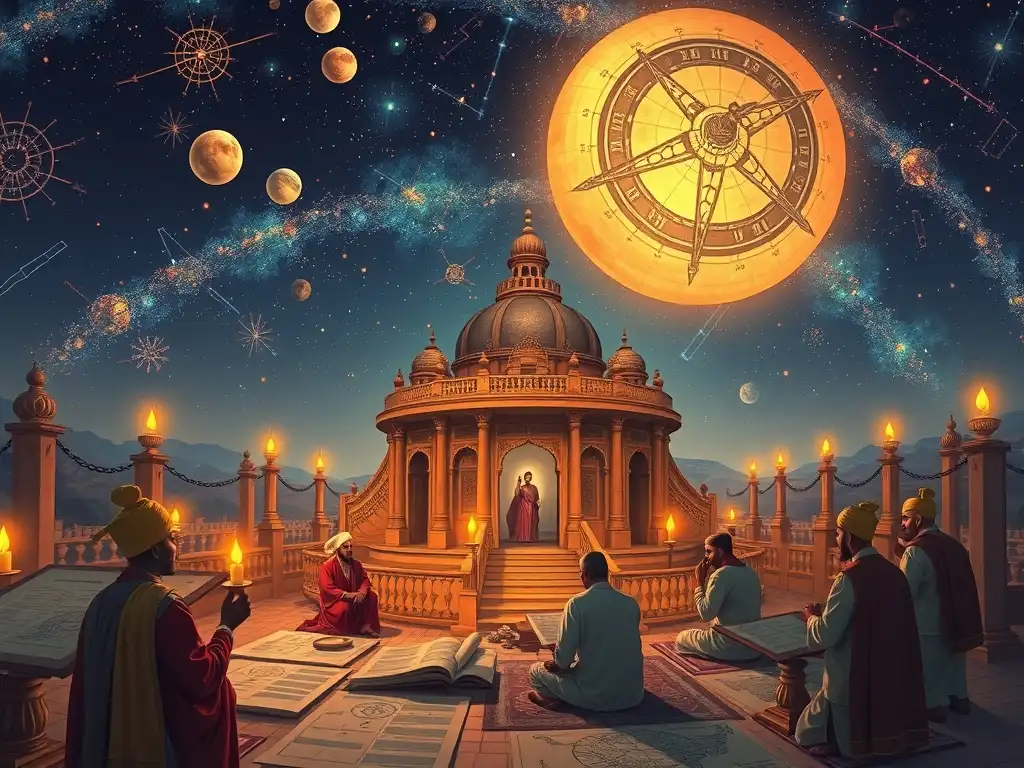
Ancient Indian astronomers developed a variety of astronomical tools that laid the groundwork for many modern celestial observation techniques. Instruments such as the shanku (a type of gnomon) and the yasti (a calibrated rod) were used to measure angles and determine time based on the position of celestial bodies. Their precision and innovative design were so advanced that they influenced subsequent civilizations, including those in the Islamic world and Europe.
- Shanku: Primarily used for measuring the altitude of celestial bodies. The ancient Indian texts describe its construction and usage, emphasizing its significance in astronomical calculations.
- Yasti: This tool functioned as a vertical marker for determining the positions of stars during different times of the year, aiding in the development of calendars.
The legacy of these tools is evident in the design of modern astronomical instruments. For instance, the principles behind the sextant (used for navigation) and the theodolite (used for surveying) can be traced back to these ancient inventions. Additionally, the meticulous records maintained by ancient astronomers paved the way for the ephemeris, which is crucial for predicting celestial events.
Contributions to Global Astronomical Knowledge
The astronomical knowledge cultivated in ancient India has had a profound impact on global science. Scholars such as Aryabhata, Brahmagupta, and Bhaskara II were instrumental in advancing mathematical concepts and observational techniques that transcended geographical boundaries.
- Aryabhata: His work, the Aryabhatiya, introduced the concept of zero and provided a model of the solar system that included the Earth's rotation. This challenged prevailing geocentric models and influenced both Indian and Islamic astronomy.
- Brahmagupta: Known for his contributions to the understanding of planetary motion and eclipses, he laid down rules for calculating the positions of celestial bodies, which were later adopted by Arabic astronomers.
- Bhaskara II: His treatise, Siddhanta Shiromani, discussed various astronomical phenomena and presented methods for calculating the time of eclipses, which were critical in developing a more accurate calendar system.
The dissemination of this knowledge occurred through translations and adaptations into Arabic and Latin texts. Consequently, ancient Indian astronomical tools and principles became part of the broader scientific dialogue, influencing thinkers like Copernicus and Galileo. Today, the historical significance of these contributions is recognized as a vital chapter in the evolution of astronomy, emphasizing the interconnectedness of ancient civilizations in shaping modern science.
Conclusion: The Significance of Astronomical Tools in Ancient India
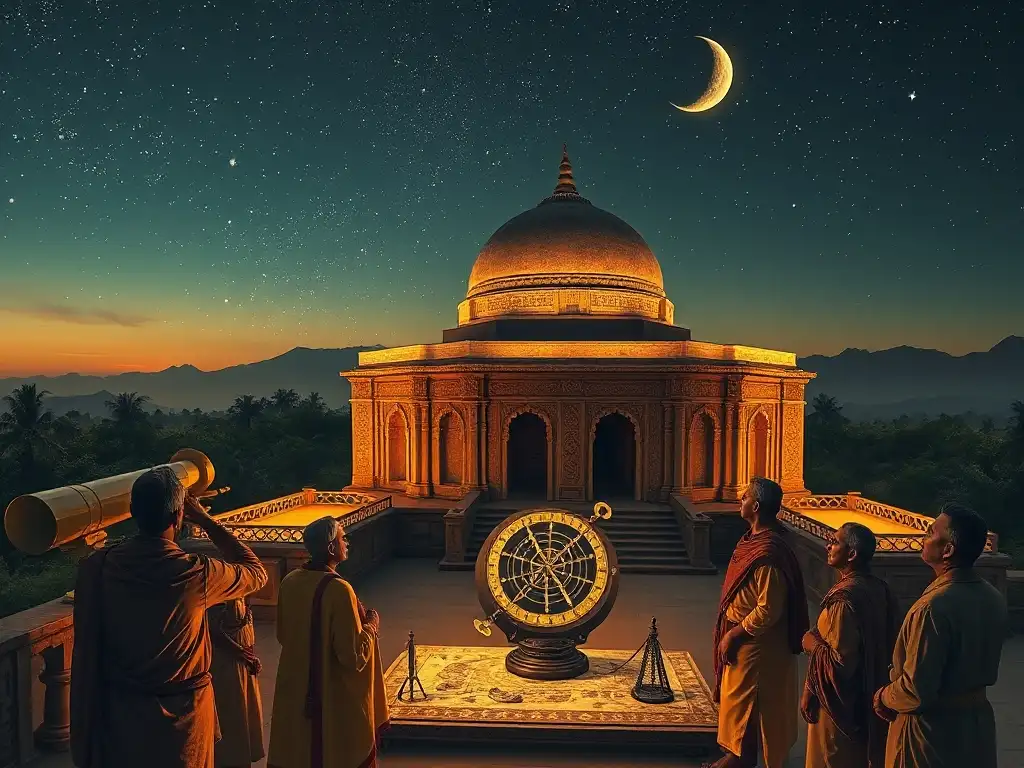
The astronomical tools in ancient India played a crucial role in shaping not only the scientific understanding of the cosmos but also the cultural and philosophical framework of Indian civilization. These instruments were not merely mechanical devices; they represented the fusion of art, science, and spirituality. The advancements made in astronomy were deeply intertwined with religious practices, agricultural planning, and societal organization, reflecting the profound relationship between celestial phenomena and daily life in ancient India.
Reflection on the Cultural Impact of Astronomy
Ancient Indian astronomers made significant contributions to the field of celestial observation, utilizing various astronomical tools such as the gola, yasti, and shanku to track celestial bodies. These instruments enabled scholars to create sophisticated calendars, predict eclipses, and understand planetary motions.
Key Contributions:
- Calendrical Systems: The precision in astronomical calculations contributed to the development of accurate calendars, which were essential for agricultural cycles and religious festivals.
- Philosophical Insights: The observations of celestial bodies led to philosophical inquiries about the nature of the universe, influencing schools of thought such as Vedanta and Jainism.
- Cultural Practices: Many Hindu rituals and festivals are timed according to celestial events, underscoring the integration of astronomy into the cultural fabric of society.
The use of astronomical tools also sparked a sense of wonder and curiosity about the cosmos, fostering a culture of inquiry that persisted through subsequent generations. This curiosity would eventually pave the way for future explorations in both science and philosophy.
Future Directions for Research in Ancient Indian Astronomy
The study of astronomical tools in ancient India is still an evolving field with many avenues to explore. Current research may uncover new insights into the technological advancements of ancient Indian astronomers and the broader implications of their work.
Potential Areas of Investigation:
- Archaeological Discoveries: Continued excavations in historical sites may yield additional artifacts and inscriptions that could provide new information about the instruments used and their applications.
- Comparative Studies: Analyzing ancient Indian astronomical practices alongside those of other civilizations, such as the Greeks and Chinese, can reveal cross-cultural exchanges and influences.
- Technological Innovations: Researching the materials and construction techniques of astronomical tools may uncover how ancient Indian craftsmen achieved remarkable precision and functionality.
The integration of interdisciplinary approaches, such as combining history, archaeology, and astronomy, will enhance our understanding of the significance of astronomical tools in ancient India. By delving deeper into this rich legacy, scholars can illuminate how these instruments not only advanced scientific knowledge but also shaped the very essence of ancient Indian culture.
Frequently Asked Questions
What were the primary astronomical tools used in ancient India?
Ancient Indian civilizations utilized various astronomical tools such as the shanku (gnomon), yasti, and yantra, which were essential for celestial observations and timekeeping.
How did ancient Indian astronomers contribute to astronomy?
Ancient Indian astronomers made significant contributions by developing mathematical techniques and instruments that aided in calculating planetary positions and predicting eclipses, influencing both Indian and global astronomy.
What role did the Gupta Empire play in the advancement of astronomy?
During the Gupta Empire, there was a notable flourishing of astronomical studies, with scholars like Aryabhata and Brahmagupta making groundbreaking discoveries and advancements in astronomical tools and theories.
Astronomical tools were often integrated into cultural practices, aiding in the determination of timing for festivals, agricultural activities, and astrological predictions, reflecting the interconnectedness of science and culture.
Are there any surviving examples of ancient astronomical instruments today?
Yes, some ancient astronomical instruments, like the Jantar Mantar observatories built in the 18th century, showcase the legacy of astronomical tools from ancient India, demonstrating their advanced understanding of celestial phenomena.
Final Reflection: The Enduring Legacy of Astronomical Tools in Ancient India
The astronomical tools in ancient India not only reflect the ingenuity of their creators but also underscore the profound connection between humanity and the cosmos. Today, as we navigate an era dominated by technology and scientific advancement, the significance of these ancient instruments resonates even more. They remind us that the quest for knowledge about the universe is timeless, and our ancestors laid the groundwork for the astronomical discoveries we celebrate today.
The impact of these tools extends far beyond their physical form; they have shaped cultural narratives and scientific thought throughout history. The meticulous observations made with these instruments fostered a deep understanding of celestial phenomena that continues to inspire modern astronomers. As noted by the renowned astrophysicist Carl Sagan, "> The cosmos is within us. We are made of star-stuff. We are a way for the universe to know itself." This connection between ancient practices and contemporary science highlights the importance of preserving and honoring the contributions of our predecessors in the field of astronomy.
As we reflect on the astronomical tools of ancient India, let us embrace the spirit of curiosity and exploration they embody. I invite you to look up at the night sky and consider how the same stars that guided ancient astronomers still shine brightly today.
Take a moment to appreciate the legacy of knowledge passed down through generations and consider how you can contribute to this ongoing journey of discovery. Whether through study, observation, or simply sharing your fascination with the cosmos, each of us has a role to play in continuing the exploration of the universe that began long ago.
Unveil the Stars: Take Your Celestial Journey!
Thank you for joining us on this celestial exploration of the astronomical instruments of ancient India! You've gained insight into the remarkable ingenuity and knowledge of our ancestors. Now, it’s time to put that knowledge into action and further ignite your passion for astronomy!
Here’s how you can dive deeper into this fascinating world:
- Explore your own cosmos: Grab a telescope or a pair of binoculars and start observing the night sky! Join local astronomy clubs to enhance your experience and connect with fellow enthusiasts.
- Share your discoveries: Document your observations and share them on social media or in dedicated astronomy forums. Inspire others to look up and appreciate the beauty of the universe!
- Dive into ancient manuscripts: Seek out books or online resources that explore ancient Indian astronomical texts. Understanding the methods and theories from the past can deepen your knowledge and appreciation of modern astronomy.
What celestial wonders do you hope to uncover during your stargazing adventures? Join the discussion below!