
The Legacy of Ancient Indian Astronomers in Today’s Scientific Community


Welcome to Ancient India History, where we embark on a captivating journey through time to uncover the rich tapestry of ancient Indian civilizations. In this article, we delve into the fascinating realm of ancient Indian astronomy contributions, revealing how the brilliance of ancient astronomers has shaped today's scientific community. Prepare to be amazed as we explore the innovative ideas and discoveries that transcended their era, inviting you to uncover the legacy that continues to inspire modern science. Join us as we bridge the past with the present and ignite your curiosity about the wonders of ancient Indian knowledge!
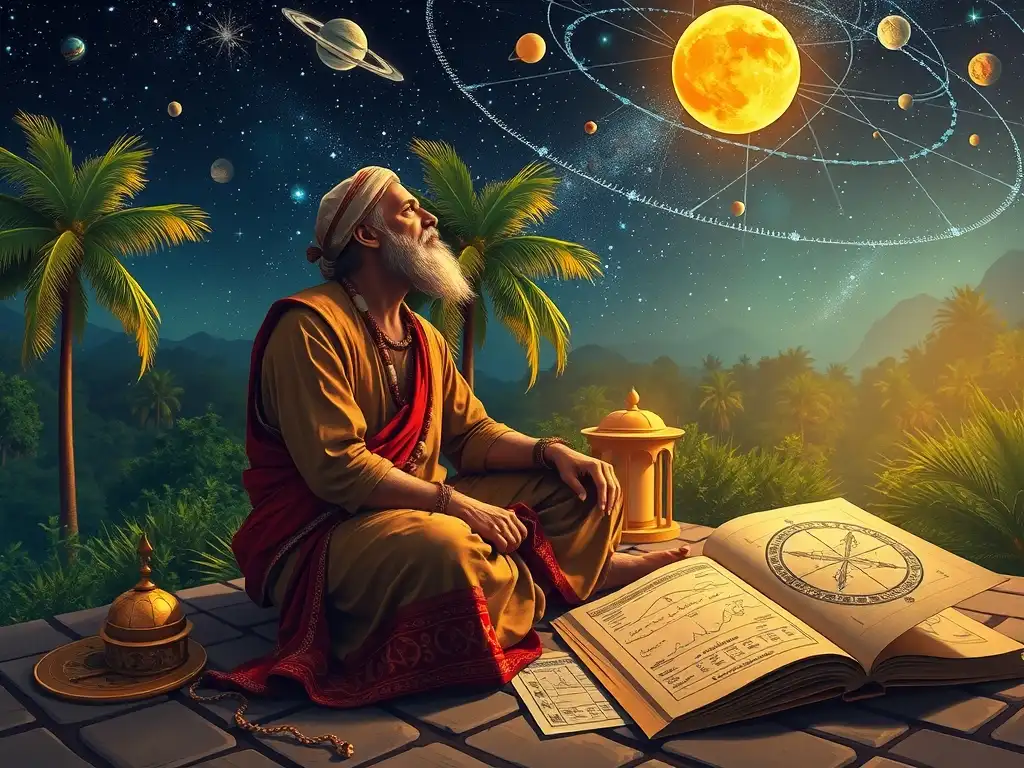
Ancient Indian astronomy stands as a testament to the remarkable intellectual pursuits of one of the world's earliest civilizations. This field not only reflects the profound understanding of celestial phenomena by ancient Indian astronomers but also highlights their significant contributions to mathematics and science as a whole. From the meticulous observations of the night sky to the development of complex mathematical models, the work of these scholars has left an indelible mark on contemporary scientific thought.
This article delves into the rich legacy of ancient Indian astronomy, shedding light on its contributions that resonate within today’s scientific community. By exploring the foundational practices, key figures, and their groundbreaking discoveries, we can appreciate how ancient Indian astronomers laid the groundwork for future advancements in science and technology.
Introduction to Ancient Indian Astronomy Contributions
Ancient Indian astronomy was not merely an academic pursuit; it was intertwined with various aspects of life, including agriculture, religion, and timekeeping. The meticulous nature of their astronomical practices allowed ancient Indian scholars to observe and document celestial events with remarkable precision. This understanding was not only theoretical but also practical, as it informed agricultural practices and religious rituals, making it integral to the daily lives of people.
Overview of Ancient Indian Astronomical Practices
The astronomical practices of ancient India encompassed a wide range of activities, including:
- Observation of celestial bodies: Ancient astronomers identified and cataloged stars, planets, and constellations.
- Calendar systems: They developed sophisticated lunar and solar calendars to track time and seasons.
- Mathematical calculations: Advanced mathematical techniques were employed to calculate planetary positions and eclipses.
These practices showcased a blend of empirical observation and mathematical reasoning, highlighting the innovative spirit of ancient Indian scholars.
Significance of Astronomical Studies in Ancient India
The significance of astronomical studies in ancient India extended beyond mere observation. It played a crucial role in:
- Cultural development: Astronomy influenced art, literature, and religious practices, enriching the cultural landscape of ancient India.
- Scientific advancements: The rigorous methodologies established by astronomers laid the groundwork for future scientific inquiry.
- Global influence: The contributions of ancient Indian astronomers reached far beyond their borders, influencing Islamic and European astronomy during the Middle Ages.
Key Figures in Ancient Indian Astronomy
The legacy of ancient Indian astronomy is marked by several key figures whose contributions continue to inspire modern science.
Aryabhata: The Pioneer of Indian Astronomy
Aryabhata, often regarded as the father of Indian astronomy, made groundbreaking contributions in the 5th century CE. His key achievements include:
- The concept of zero: Aryabhata's introduction of zero as a numeral revolutionized mathematics.
- Mathematical astronomy: He accurately calculated the circumference of the Earth and the length of the solar year.
- Planetary motion: Aryabhata proposed that the Earth revolves around its axis, a concept ahead of its time.
Brahmagupta: The Mathematician and Astronomer
Brahmagupta, a prominent astronomer of the 7th century CE, expanded upon Aryabhata's work. His contributions include:
- Rules for calculating eclipses: Brahmagupta provided systematic methods for predicting solar and lunar eclipses.
- Work on mathematics: He authored "Brahmasphutasiddhanta," a seminal text that combined astronomical and mathematical ideas.
- Negative numbers: He made significant strides in understanding negative numbers and their applications in calculations.
Varahamihira: The Scholar of the Stars
Varahamihira, a contemporary of Brahmagupta, was another monumental figure in ancient Indian astronomy. His notable contributions are:
- Astrological texts: Varahamihira authored several influential texts on astrology, blending astronomy with religious significance.
- The Panchasiddhantika: This work collated the knowledge of five major astronomical treatises, preserving and transmitting ancient wisdom.
- Meteorology: His studies extended to weather patterns, showcasing a holistic approach to celestial studies.
The combined work of these scholars not only advanced the field of astronomy but also laid a foundation for future generations to build upon. The legacy of ancient Indian astronomers is a testament to the intellectual prowess and innovative spirit that continues to influence scientific discourse today.
Major Contributions of Ancient Indian Astronomers
Ancient Indian astronomers made significant strides in the field of astronomy, laying the groundwork for many modern scientific principles. Their contributions were not limited to theoretical knowledge but also encompassed practical applications that have influenced contemporary astronomy and mathematics. Key advancements include the development of complex astronomical instruments, innovative celestial calculations, and the introduction of concepts that are integral to modern mathematical practices.
Development of Astronomical Instruments
The ingenuity of ancient Indian astronomers is evident in their creation of various astronomical instruments designed for accurate celestial observations. Instruments such as the Gnomon, used to measure the angles of celestial bodies, and the Shanku (a type of sundial) exemplify this innovation. These tools allowed astronomers to track the movement of celestial bodies with remarkable precision.
Additionally, the Yantra, a type of astronomical observatory, facilitated larger-scale observations and played a crucial role in the calculations of celestial phenomena. The precision of these instruments laid the foundation for future advancements in astronomy, demonstrating the sophistication of ancient Indian science.
Innovations in Celestial Calculations
Ancient Indian astronomers developed several innovative methods for calculating celestial events, such as eclipses and planetary positions. Aryabhata, one of the most prominent figures in this domain, introduced systematic calculations that significantly improved the accuracy of astronomical predictions. His methods included the use of sine tables and the understanding of the Earth's rotation, which was revolutionary for his time.
Moreover, the work of Brahmagupta further advanced celestial calculations through his formulation of rules for arithmetic operations involving negative numbers and zero. This laid the groundwork for subsequent generations of astronomers and mathematicians both in India and beyond.
The Concept of Zero and Its Astronomical Implications
One of the most groundbreaking contributions of ancient Indian astronomy is the concept of zero. This mathematical innovation, attributed to Indian mathematicians, is not only foundational to arithmetic but also has profound implications for astronomy. The use of zero allowed for the representation of large numbers and the simplification of calculations, which were essential for tracking celestial movements and making accurate predictions.
The introduction of zero into calculations enabled astronomers to express time intervals and angular measurements more efficiently, facilitating the complex calculations necessary for understanding planetary motions and eclipses. This conceptual leap was integral to the advancements in both mathematics and astronomy and has had lasting effects on scientific thought worldwide.
Texts and Treatises on Ancient Indian Astronomy

The legacy of ancient Indian astronomy is preserved in a wealth of texts and treatises that document the knowledge and discoveries of early astronomers. These works serve as crucial references for understanding the methodologies and theories that shaped the field.
Aryabhata’s Aryabhatiya: A Milestone in Astronomy
The Aryabhatiya, composed by Aryabhata in the 5th century CE, is considered one of the most significant texts in Indian mathematics and astronomy. This work encompasses a wide range of topics, including arithmetic, algebra, and geometry, alongside detailed astronomical theories. Aryabhata's approach to calculating the circumference of the Earth, as well as his explanations of planetary motion, were groundbreaking at the time and remain influential in modern astronomy.
The text also introduced the concept of the Earth's rotation on its axis, which was a radical idea that contradicted the geocentric models prevalent in other cultures. Aryabhata's contributions laid the foundation for future astronomical studies in India and beyond.
Brahmagupta’s Brahmasphutasiddhanta: A Comprehensive Guide
Brahmagupta’s Brahmasphutasiddhanta, written in the 7th century CE, is a comprehensive treatise that covers various aspects of astronomy and mathematics. This text is notable for its systematic treatment of arithmetic operations, including rules for dealing with zero and negative numbers. Brahmagupta's work on the calculation of eclipses and planetary positions is considered a significant advancement in the field.
The treatise also includes practical applications of astronomy, such as calendars and the timing of rituals, demonstrating the integration of astronomical knowledge into daily life in ancient India. This work has been influential in shaping subsequent astronomical thought and practice.
Surya Siddhanta: Foundations of Indian Astronomy
The Surya Siddhanta is another cornerstone of ancient Indian astronomy, traditionally attributed to the sage Aryabhata and later expanded upon by other scholars. This text provides detailed methodologies for calculating celestial phenomena, including eclipses, planetary positions, and the timing of the seasons.
The Surya Siddhanta also discusses the construction of astronomical instruments and the principles underlying their use. Its emphasis on empirical observations and mathematical rigor established a framework that would guide Indian astronomers for centuries. The text remains a vital resource for understanding the astronomical theories of ancient India and their enduring legacy in the scientific community.
The Influence of Ancient Indian Astronomy on Global Knowledge
Ancient Indian astronomy has profoundly shaped the trajectory of global scientific understanding. The foundational texts, such as the Surya Siddhanta and the Aryabhatiya, provided systematic frameworks for celestial observations and mathematical calculations. These texts not only detailed methods for predicting eclipses and planetary positions but also introduced innovative concepts like the rotation of the Earth on its axis. The rigorous methods developed by astronomers such as Aryabhata and Brahmagupta laid the groundwork for subsequent astronomical advancements across cultures.
Indian astronomers emphasized empirical observation and mathematical rigor, distinguishing their work from that of their contemporaries. The use of zero as a placeholder and the decimal system, both contributions from ancient Indian mathematics, set a precedent for arithmetic operations essential for astronomical calculations. This intellectual heritage eventually permeated through various cultures, influencing astronomical studies far beyond the Indian subcontinent.
Transmission of Astronomical Knowledge to the Islamic World
The transmission of astronomical knowledge from ancient India to the Islamic world was facilitated by trade, cultural exchanges, and scholarly interactions. During the early medieval period, texts on astronomy were translated into Arabic, notably during the Abbasid Caliphate. This period saw scholars like Al-Khwarizmi and Al-Battani incorporating Indian astronomical techniques and concepts into their work.
The Indian influence is particularly evident in the adoption of the sine function and sophisticated methods for calculating the positions of celestial bodies. The astronomical tables developed in this era, such as the Zij al-Sindhind, were heavily reliant on Indian methodologies. This cross-cultural exchange not only enriched Islamic astronomy but also laid the groundwork for further developments in Europe during the Renaissance.
Impact on European Renaissance Astronomy
The insights gained from ancient Indian astronomy significantly impacted the European Renaissance, a period marked by a resurgence of interest in classical knowledge. The translation of Arabic texts into Latin made Indian astronomical concepts accessible to European scholars. Notably, the works of Copernicus, Tycho Brahe, and Kepler reflect the influence of Indian mathematical techniques and observational methods.
The introduction of Indian numerical systems and astronomical calculations into Europe facilitated advancements in navigational techniques and calendar reforms. This convergence of ideas played a critical role in shaping modern astronomy, illustrating how ancient Indian contributions were instrumental in the evolution of European scientific thought.
Comparative Analysis with Other Ancient Civilizations
When comparing ancient Indian astronomy with that of other civilizations, such as the Greeks and the Babylonians, distinct differences and similarities emerge. While the Babylonians excelled in observational astronomy and the Greeks in theoretical frameworks, Indian astronomers synthesized these approaches, emphasizing both empirical observation and mathematical precision.
For instance, Indian texts like the Surya Siddhanta provided systematic methodologies for celestial predictions that were not only accurate but also systematic. This comprehensive approach contrasts with the more fragmented knowledge of other civilizations, showcasing India's unique contributions to the field. Additionally, while the Greeks focused on philosophical interpretations of celestial phenomena, Indian astronomers were more pragmatic, often addressing practical applications in agriculture and timekeeping.
Modern Scientific Community and Ancient Indian Astronomy
The modern scientific community continues to recognize the contributions of ancient Indian astronomy. Research into historical texts and methodologies has provided valuable insights that are being integrated into contemporary scientific practices. The ancient techniques and knowledge systems are increasingly viewed as relevant tools for addressing modern astronomical challenges.
Reviving Ancient Techniques in Contemporary Research
Researchers today are reviving ancient Indian astronomical techniques, particularly in the fields of navigation and timekeeping. The precision of ancient astronomical calculations, such as those found in the Aryabhatiya, is being explored for their applications in modern technologies. For example, the concept of calculating time based on celestial positions is being adapted for use in satellite navigation systems.
Furthermore, the meticulous observational methods of ancient Indian astronomers are being examined for their relevance in contemporary astrophysical research. By understanding and incorporating these traditional techniques, scientists hope to enhance the accuracy and reliability of current astronomical models.
The Role of Ancient Knowledge in Modern Astrophysics
Ancient Indian astronomy has also influenced modern astrophysics, particularly in areas related to cosmology and the study of celestial phenomena. The philosophical inquiries and mathematical formulations from ancient texts offer frameworks that resonate with current scientific theories about the universe's structure and dynamics.
For instance, concepts of time and space in ancient Indian astronomy parallel modern discussions in theoretical physics. The integration of these ancient perspectives into contemporary scientific discourse highlights the timelessness and universality of these ideas, suggesting that the foundations laid by ancient Indian astronomers continue to inform and inspire current research.
Case Studies: Applications of Ancient Indian Astronomy Today
Several case studies illustrate the practical applications of ancient Indian astronomy in today's scientific landscape. One notable example is the use of traditional Indian calendars, which incorporate astronomical observations to determine auspicious dates for agricultural activities. This practice demonstrates the continued relevance of ancient knowledge in modern agriculture.
Another example is the application of ancient mathematical techniques in data analysis. Researchers are employing algorithms derived from ancient Indian texts to process large astronomical datasets, enhancing our understanding of celestial phenomena. These case studies underscore the enduring legacy of ancient Indian astronomers and their contributions to the modern scientific community.
Conclusion: The Enduring Legacy of Ancient Indian Astronomy Contributions
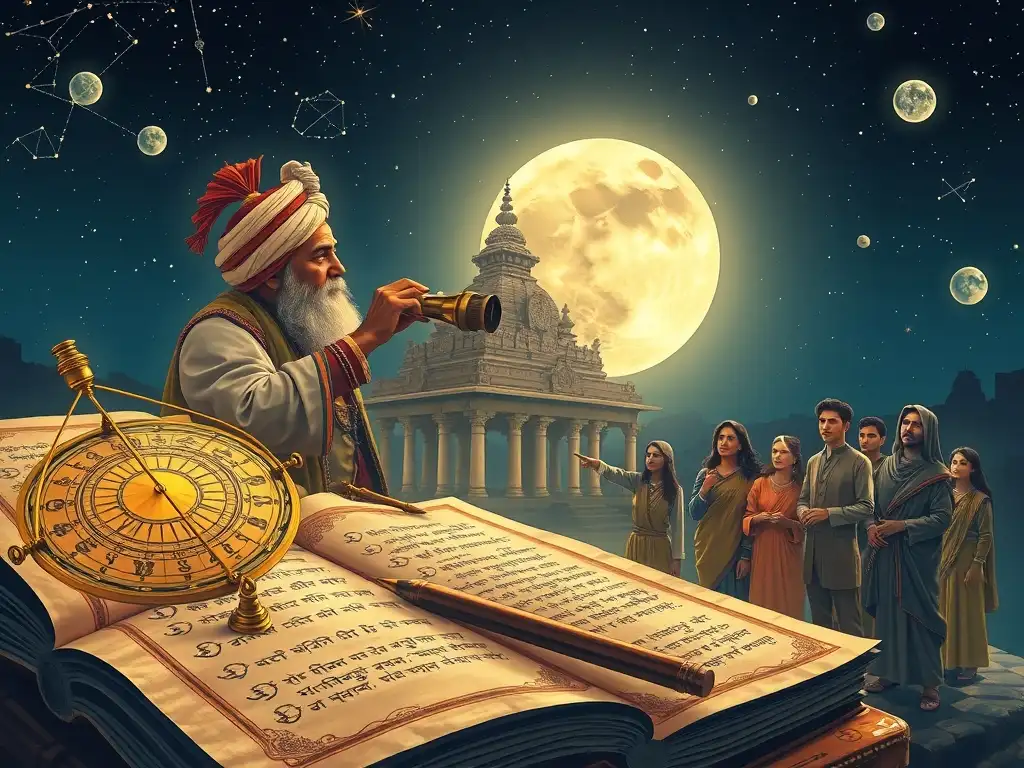
The contributions of ancient Indian astronomers have left an indelible mark on the field of astronomy and continue to resonate in today's scientific community. Techniques, methodologies, and astronomical concepts developed in ancient India laid foundational principles that have influenced modern scientific thought. The precision in calculations, the formulation of astronomical models, and the philosophical implications of celestial observations from ancient Indian texts underscore a profound understanding of the cosmos that transcends time.
The legacy of figures such as Aryabhata, Varahamihira, and Brahmagupta is not merely historical; it serves as a bridge connecting ancient wisdom with contemporary scientific inquiry. Their work not only contributed to the advancement of astronomy in India but also enriched global knowledge, fostering cross-cultural exchanges that have shaped the trajectory of scientific progress.
Reflection on the Relevance of Ancient Knowledge
Ancient Indian astronomy offers a treasure trove of insights that remain relevant in today's world. The methods used to measure time, predict eclipses, and understand planetary motion reflect a sophisticated comprehension of celestial mechanics that was advanced for its time. For instance, Aryabhata's introduction of the concept of zero and positional notation was revolutionary, laying groundwork for mathematics that is integral to modern astronomy.
Moreover, the holistic approach of ancient Indian scholars, who often integrated astronomy with philosophy, spirituality, and agriculture, sheds light on the interconnectedness of knowledge systems. This perspective encourages a reevaluation of how we view modern science in relation to historical practices. By recognizing the value of ancient knowledge, contemporary researchers can explore new methodologies and frameworks that may lead to innovative discoveries.
Future Directions in Research on Ancient Indian Astronomy
The future of research in ancient Indian astronomy holds great promise, particularly as the world increasingly values interdisciplinary approaches to knowledge. There is a growing interest in exploring ancient texts, manuscripts, and tools that have yet to be fully understood or appreciated. Scholars are encouraged to utilize modern technology, such as digital imaging and computational analysis, to uncover hidden insights within these ancient works.
Further, collaboration between historians, astronomers, and archaeologists can foster a more comprehensive understanding of ancient astronomical practices and their societal implications. Engaging with indigenous knowledge systems and traditional practices in contemporary contexts can also lead to a richer understanding of how ancient astronomy shaped cultural identities.
As research progresses, it is crucial to disseminate findings widely, ensuring that the legacy of ancient Indian astronomy is celebrated and integrated into educational curricula. By doing so, future generations can appreciate the profound contributions of ancient Indian astronomers and recognize their role in the ongoing evolution of scientific thought.
- Introduction to Ancient Indian Astronomy Contributions
- Key Figures in Ancient Indian Astronomy
- Major Contributions of Ancient Indian Astronomers
- Texts and Treatises on Ancient Indian Astronomy
- The Influence of Ancient Indian Astronomy on Global Knowledge
- Modern Scientific Community and Ancient Indian Astronomy
- Conclusion: The Enduring Legacy of Ancient Indian Astronomy Contributions
- Reflection on the Relevance of Ancient Knowledge
- Future Directions in Research on Ancient Indian Astronomy
Frequently Asked Questions
What are some key contributions of ancient Indian astronomers?
Ancient Indian astronomers made significant contributions to mathematics and astronomy, including the concepts of zero, the decimal system, and the calculation of planetary positions.
How did ancient Indian astronomy influence modern science?
The observational techniques and mathematical principles developed by ancient Indian astronomers laid the groundwork for modern astronomical practices and theories, influencing scientists worldwide.
Who were some notable ancient Indian astronomers?
Prominent figures include Aryabhata, who proposed the heliocentric model of the solar system, and Brahmagupta, known for his work on algebra and astronomy.
What ancient texts cover astronomy in Indian history?
Key texts include the Aryabhatiya by Aryabhata and the Brahmasphutasiddhanta by Brahmagupta, which detail astronomical observations and calculations.
How did the Indus Valley Civilization contribute to astronomy?
The Indus Valley Civilization demonstrated early knowledge of astronomy through their urban planning, which is thought to be aligned with celestial bodies, indicating an understanding of astronomical events.
Final Reflection: Embracing the Cosmic Wisdom of Ancient Indian Astronomy
The contributions of ancient Indian astronomy resonate profoundly in today's scientific community, reminding us that the pursuit of knowledge transcends time and culture. As we delve into the remarkable achievements of astronomers like Aryabhata and Brahmagupta, we uncover a legacy that not only laid the groundwork for modern astronomy but also inspires contemporary scientists to explore the cosmos with curiosity and reverence. The intricate understanding of celestial phenomena demonstrated by these scholars is a testament to the enduring power of human inquiry.
The influence of ancient Indian astronomy extends far beyond historical significance; it shapes our cultural and scientific landscapes today. From the precision of calculations in modern astrophysics to the philosophical inquiries that drive our understanding of the universe, the wisdom of these ancient thinkers continues to guide us. As Carl Sagan once said, We are made of star-stuff. We are a way for the universe to know itself.
This profound connection between our existence and the cosmos underscores the importance of acknowledging and celebrating the contributions of our ancestors in the field of astronomy.
As we reflect on the legacy of ancient Indian astronomers, let us embrace the invitation to explore the universe with open minds and hearts. Consider how you can incorporate the spirit of inquiry and respect for knowledge into your own life. Whether through studying the stars, engaging in scientific discussions, or simply appreciating the beauty of the night sky, each of us has the potential to contribute to the ongoing journey of discovery. Together, let us honor the past while forging a brighter future in the realm of science and beyond.
Unveil the Cosmic Wisdom of Ancient India!
Thank you for journeying through the fascinating legacy of ancient Indian astronomers! We've explored how their groundbreaking work shapes modern science and inspires our understanding of the cosmos. Now, it's time to embrace this rich heritage and take meaningful steps toward exploring it further.
Here’s how you can connect with this incredible legacy:
- Dive Deeper: Read a book or watch a documentary about ancient Indian astronomy to uncover more insights and stories that have significantly influenced our understanding of the universe.
- Share Your Discoveries: Discuss intriguing facts with friends or on social media to spark conversations about the profound impact of ancient astronomy on contemporary scientific thought.
- Join a Community: Engage with local astronomy clubs or online forums to share your interest and connect with others who are equally passionate about exploring the stars.
As you reflect on the innovations of the past, we invite you to consider: What aspect of ancient Indian astronomy has inspired you the most, and how will you share that inspiration with others?