
The Significance of Alankara in Sanskrit Poetry: A Guide to Poetic Devices


Welcome to Ancient India History, where we invite you to embark on an enlightening journey through the rich tapestry of ancient Indian civilizations. From the grandeur of the Indus Valley to the intellectual blossoming of the Gupta Empire, our exploration spans the diverse cultures and profound contributions that have shaped India’s heritage. In this edition, we delve into the fascinating world of Alankara in Sanskrit poetry, uncovering the intricate poetic devices that elevate the art of verse.
Are you ready to discover how these literary embellishments not only enhance aesthetics but also convey deeper meanings? Dive in to explore the significance of Alankara and witness the beauty of language in ancient Indian literature!
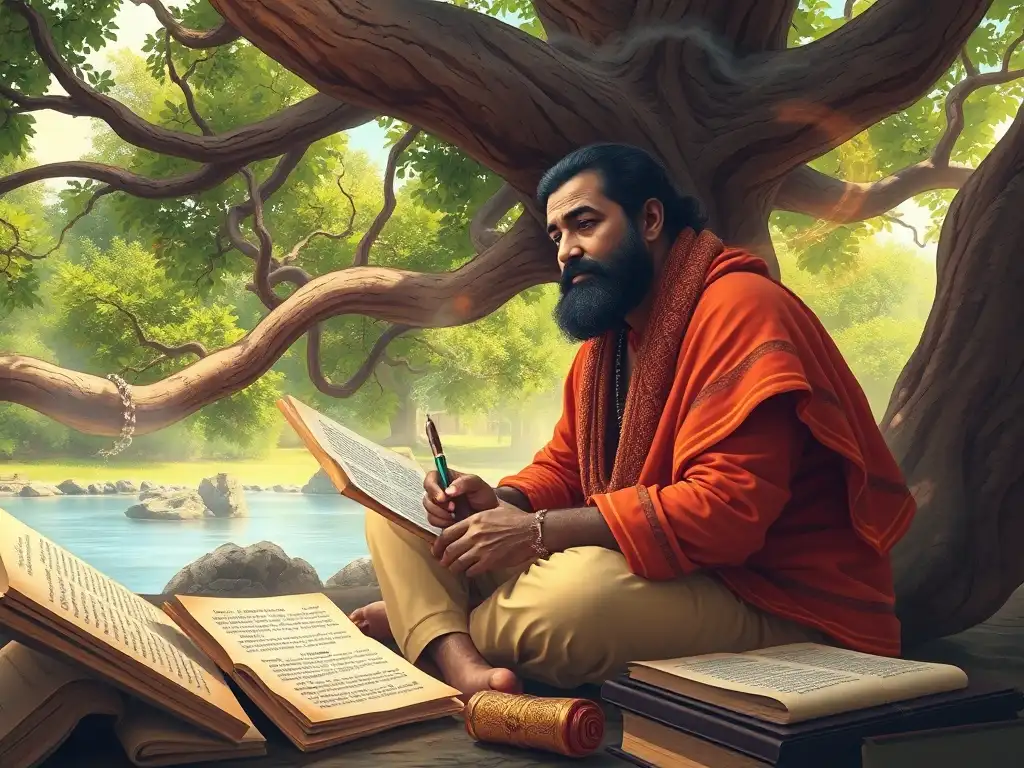
Exploring the rich tapestry of ancient Indian literature reveals a profound appreciation for the art of poetry, particularly evident in the concept of Alankara. This term, which translates to "ornamentation," embodies a vital aspect of Sanskrit poetry, serving as a cornerstone for poetic devices that enhance expression and evoke emotions.
Alankara in Sanskrit poetry is not merely a stylistic choice but a significant device that enriches the narrative, enabling poets to convey deeper meanings and resonate with readers on multiple levels. In this article, we will delve into the intricacies of Alankara, its historical roots, and its pivotal role in transforming poetic language into a vehicle of emotional and aesthetic experience.
Understanding Alankara in Sanskrit Poetry
Definition of Alankara
Alankara can be defined as the embellishments or figures of speech that poets employ to enhance the beauty and meaning of their work. In Sanskrit poetics, Alankara encompasses a variety of devices, including metaphors, similes, personification, and hyperbole, among others. These devices not only contribute to the aesthetic quality of poetry but also serve to engage the reader's imagination and emotions.
The concept of Alankara is deeply intertwined with the Rasa theory, which emphasizes that poetry should evoke specific emotions (rasa) in the reader. This intricate relationship between Alankara and Rasa highlights the significance of poetic devices in creating an immersive literary experience.
Historical Context of Alankara in Ancient Indian Literature
The roots of Alankara can be traced back to ancient Indian treatises on poetics, notably the Natyashastra by Bharata Muni and Kavyadarsha by Dandin. These texts outline the principles of poetic composition and the importance of stylistic devices in achieving artistic expression.
During the Gupta period, a golden age for Sanskrit literature, poets like Kalidasa and Bhasa extensively utilized Alankara to create works that are celebrated for their lyrical beauty and emotional depth. This era marked a significant evolution in the understanding and application of Alankara, establishing it as an essential element in the crafting of poetry that resonates across generations.
The Role of Alankara in Enhancing Poetic Expression
How Alankara Transforms Language in Poetry
Alankara serves as a transformative force in language, elevating simple expressions to profound artistic statements. By employing various Alankara devices, poets can manipulate language to create vivid imagery and evoke sensory experiences.
For example, the use of metaphor allows a poet to draw parallels between seemingly unrelated concepts, enriching the text with layers of meaning. Similarly, alliteration and assonance enhance the musicality of verses, making them more memorable and impactful.
This transformation of language through Alankara not only captivates the reader but also encourages a deeper engagement with the text, prompting readers to explore the underlying themes and emotions woven into the poetry.
The Emotional Impact of Alankara on Readers
The emotional resonance of poetry is largely attributed to the effective use of Alankara. By skillfully employing poetic devices, poets can elicit a range of emotions from joy and sorrow to nostalgia and longing. The ability of Alankara to evoke emotions is rooted in its capacity to create vivid imagery and relatable experiences for the reader.
For instance, a well-crafted simile can transport the reader to a specific moment in time, allowing them to feel the weight of nostalgia or the thrill of love. The emotional impact of Alankara is not merely an enhancement of the text; it fosters a connection between the poet and the reader, bridging the gap across time and space.
In essence, the significance of Alankara in Sanskrit poetry lies in its ability to transcend mere words, transforming poetry into a powerful medium of emotional expression and cultural legacy.
Types of Alankara in Sanskrit Poetry
Alankara, a central concept in Sanskrit poetry, refers to the various aesthetic embellishments that enhance the beauty and expressiveness of poetic compositions. It encompasses a wide range of devices that poets employ to evoke emotions, create imagery, and convey deeper meanings. Understanding the types of Alankara is crucial for appreciating the intricacies of Sanskrit literature. Generally, Alankara can be categorized into two broad types: Sambhavana (embellishments that enhance meaning) and Vibhavana (embellishments that enhance beauty). Within these categories, there are several specific types, each with its unique characteristics and applications.
Major Categories of Alankara
- Sambhavana: This category focuses on the significance of the expressions used in poetry. It includes:
- Upama: A simile that draws a comparison between two dissimilar objects, highlighting their similarities.
- Rupaka: A metaphor where one object is described as another, thus creating a more profound connection.
- Anuprasa: The repetition of consonant sounds to create a musical quality in the verse.
- Vibhavana: This category emphasizes the aesthetic appeal of poetic language. It includes:
- Shlesha: A pun or double meaning that adds layers of interpretation to the text.
- Virodhaka: A device that uses contradictory statements to provoke thought or illustrate complexity.
- Vaikharī: The use of sound and rhythm to enhance the emotional experience of the reader.
These categories highlight how Alankara contributes to both the meaning and beauty of poetry, making it an essential element of Sanskrit literature.
Examples of Each Type in Classical Works
To illustrate the various types of Alankara, consider the following examples from classical Sanskrit literature:
- Upama: In Kalidasa's "Meghaduta," the poet compares the beauty of a cloud to that of a beloved, creating a vivid image that evokes longing and desire. For instance, he writes about the cloud as a messenger, likening its form to that of a beautiful maiden.
- Rupaka: In "Kumarasambhava," Kalidasa employs metaphors to describe the divine love between Shiva and Parvati, painting an intricate picture of their relationship that transcends mere words.
- Anuprasa: Bhasa's plays often employ alliteration to create musicality in dialogue, enhancing the dramatic effect and emotional resonance of the characters' expressions.
- Shlesha: In "Bhagavad Gita," the use of puns and double meanings enriches the philosophical discourse, allowing for multiple interpretations of the text.
- Virodhaka: In Jayadeva's "Gita Govinda," the interplay of contradictory emotions between Radha and Krishna illustrates the complexity of love, as the characters express both longing and resentment.
- Vaikharī: The rhythmic patterns found in the works of Bhavabhuti create an engaging auditory experience that captivates the audience while conveying deep emotional truths.
Theoretical Framework of Alankara
The framework of Alankara in Sanskrit poetry is deeply rooted in the philosophical and aesthetic theories of ancient India. Scholars like Bharata and Anandavardhana have extensively discussed the principles underlying the use of Alankara in poetic expression. Their theories emphasize that Alankara serves not merely as ornamental language but as a vital component that enriches the meaning and emotional impact of poetry.
In this context, Alankara is viewed as a bridge between the poet's intent and the reader's perception, facilitating a deeper engagement with the text. The careful selection and application of poetic devices allow poets to convey complex ideas and emotions succinctly and powerfully.
Key Texts Discussing Alankara
Several seminal texts explore the theory and application of Alankara in Sanskrit poetry:
- Natyashastra by Bharata Muni: This foundational text on drama and performance art includes discussions on poetic devices and their role in enhancing the emotional experience of the audience.
- Dhvanyaloka by Anandavardhana: This work delves into the concept of "suggestion" (dhvani) in poetry, illustrating how Alankara plays a critical role in evoking deeper meanings beyond literal interpretation.
- Kavyalamkara by Bhamaha: In this treatise, Bhamaha categorizes various Alankara and discusses their aesthetic significance, providing insights into the poetic techniques of his time.
These texts serve as critical resources for understanding the theoretical underpinnings of Alankara and its significance in the broader context of Sanskrit literature.
Influence of Alankara on Poetic Theory
The influence of Alankara extends beyond individual poetic works; it has shaped the very foundations of poetic theory in ancient Indian literature. The recognition of Alankara as a crucial aspect of poetry has led to a more nuanced understanding of aesthetic experience and literary expression. This recognition has fostered a rich tradition of literary criticism, where scholars analyze and interpret the layers of meaning embedded in poetic devices.
Furthermore, Alankara's emphasis on the interplay between form and content has inspired numerous poets and playwrights throughout history. By employing these devices, they have been able to explore complex themes such as love, beauty, and the human condition in innovative ways. The enduring legacy of Alankara is evident in contemporary discussions of poetry and aesthetics, where its principles continue to inform literary practices and critical analysis.
Alankara serves as a foundational element in Sanskrit poetry, influencing both the creation and interpretation of poetic works, and its significance remains vital to the study of ancient Indian literature.
Alankara and Its Cultural Significance
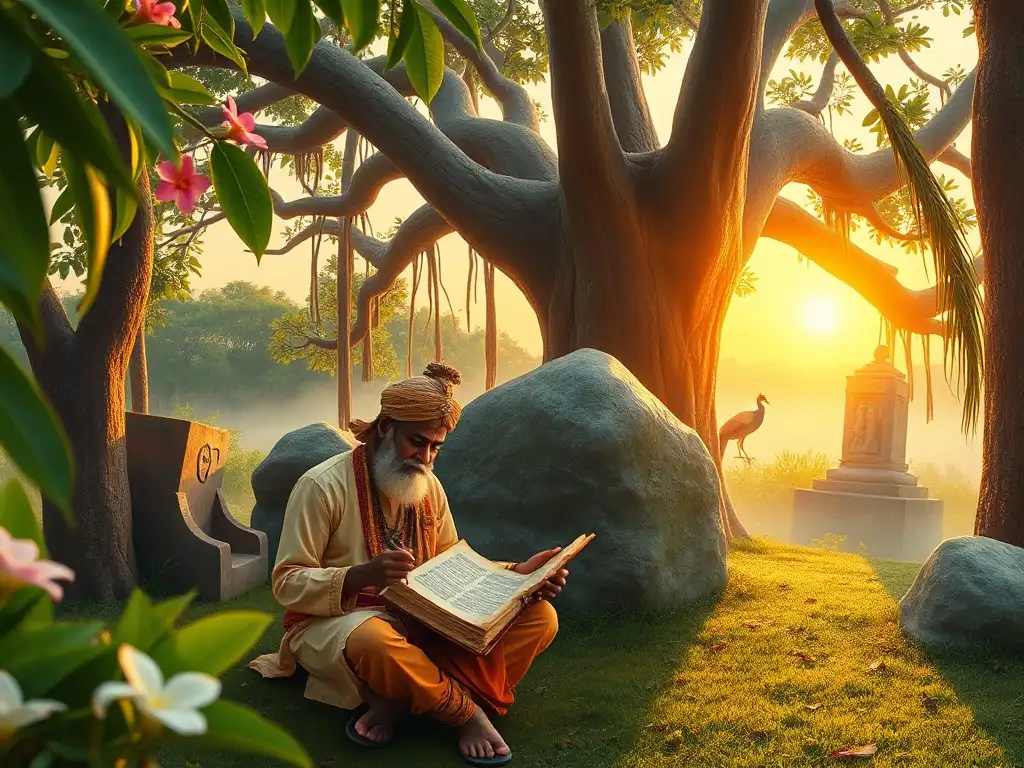
Alankara, a term derived from the Sanskrit word for "ornamentation," plays a pivotal role in Sanskrit poetry, emphasizing the aesthetic beauty and emotional depth of poetic expressions. It refers to various poetic devices and figures of speech that enhance the meaning and impact of a poem. The significance of Alankara extends beyond mere embellishment; it embodies the essence of art in ancient Indian culture, where beauty and emotional resonance were paramount.
In ancient Indian thought, Alankara was not just a stylistic choice but a tool for achieving rasa, or aesthetic experience. The integration of Alankara into poetry reflects the cultural belief that art should evoke emotional responses and connect with the audience on a deeper level. This perspective is evident in the works of revered poets, where the use of metaphors, similes, and other devices transforms simple narratives into profound explorations of human experience.
Moreover, Alankara's cultural significance is intertwined with the philosophical traditions of India, particularly in relation to Bharata's Natya Shastra, which outlines the principles of drama and aesthetics. The meticulous categorization of various Alankaras in ancient literary texts illustrates the sophistication of Indian literary criticism and its focus on the interplay between form, content, and emotional impact.
Connection Between Alankara and Indian Aesthetics
The connection between Alankara and Indian aesthetics is deeply rooted in the philosophical underpinnings of ancient Indian art forms. Indian aesthetics, particularly articulated in texts like Natya Shastra and Kavyadarsha, emphasizes the role of Alankara as a means to evoke rasa, the fundamental emotional experience that art seeks to convey.
Different types of Alankara, such as upama (simile) and metaphor, are employed to create vivid imagery that resonates with the audience’s emotions. This practice aligns with the Indian belief in the transformative power of art, wherein the beauty and depth of poetic language serve to elevate the mundane to the realm of the sublime. As poets skillfully maneuver through various Alankaras, they not only enhance the aesthetic quality of their work but also invite readers to engage with the text on multiple levels, fostering a rich interpretative experience.
Furthermore, Alankara's role in Indian aesthetics is also reflected in the traditional understanding of samskara, the refinement of one's sensibilities through exposure to beauty and artistry. The intricate use of Alankara in poetry promotes a culture of appreciation for nuanced expressions of beauty, influencing not only poetry but also other art forms, such as music and dance.
The Influence of Alankara on Other Art Forms (Music, Dance)
Alankara's influence extends beyond the realm of poetry, permeating other classical Indian art forms, particularly music and dance. In music, the use of lyrical embellishments mirrors the poetic devices found in Sanskrit poetry, enhancing the emotional expressiveness of the compositions. Just as poets employ Alankara to create evocative imagery, musicians use melodic ornamentation, or alankara, to embellish their performances, leading to a richer auditory experience.
Similarly, in classical dance forms such as Bharatanatyam and Kathak, the principles of Alankara manifest through intricate gestures (mudras) and facial expressions (abhinaya) that convey emotions and narratives. The dancers, much like poets, utilize these devices to create a visual poetry that resonates with the audience, often invoking the same emotional responses as found in poetic texts.
This cross-pollination between poetry, music, and dance highlights the holistic nature of Indian art, where Alankara serves as a bridge connecting different forms of creative expression. Through this interconnectedness, Alankara not only enriches individual art forms but also contributes to a broader cultural tapestry, celebrating the unity of aesthetics across various mediums.
Analyzing Famous Works Utilizing Alankara
The use of Alankara in notable literary works demonstrates its versatility and significance in enhancing poetic expression. By analyzing famous pieces, one can appreciate how poets have skillfully employed these devices to evoke emotions and create lasting impressions.
Case Study: Kalidasa's "Shakuntala"
Kalidasa's "Shakuntala" is a quintessential example of the effective use of Alankara. The play is rich with metaphors and similes that paint vivid pictures of nature and emotions. For instance, Kalidasa beautifully describes the longing of Shakuntala through the imagery of blooming flowers and the changing seasons, using upama to draw parallels between her feelings and the natural world. Such Alankaras not only enhance the narrative but also evoke rasa, allowing the audience to feel the depth of Shakuntala's emotions.
Moreover, Kalidasa's use of anupama (unlike comparison) further elevates the themes of love and loss, showcasing the intricacies of relationships and the human experience. By weaving together various Alankaras, Kalidasa creates a tapestry of emotions that resonates deeply with readers and audiences alike, underscoring the significance of Alankara in his poetic craft.
Case Study: Bhasa's Plays
Bhasa, another luminary in Sanskrit literature, demonstrates the power of Alankara in his plays. His works often feature exaggerated metaphors and vivid descriptions that enhance character emotions and situational contexts. In plays like "Svapnavasavadattam," Bhasa employs shlesha (pun) and anvitā (suggestive expressions) to add layers of meaning to dialogues, inviting the audience to engage actively with the text.
The clever use of Alankara allows Bhasa to explore complex themes such as love, betrayal, and identity, all while maintaining a sense of humor and playfulness. These devices not only contribute to the richness of the narrative but also reflect the cultural significance of Alankara in facilitating a deeper understanding of human emotions and relationships.
The Legacy of Alankara in Later Literary Traditions
The legacy of Alankara in later literary traditions is profound, influencing a myriad of Indian literary forms and styles. As the appreciation for Alankara continued to flourish, poets and writers from various regions and cultural backgrounds incorporated these devices into their works, leading to a rich tapestry of literature characterized by diverse expressions of beauty and emotion.
In the medieval period, the devotional poetry of saints like Kabir and Mirabai showcased a simplified yet impactful use of Alankara, emphasizing devotion and spirituality. Their works retained the essence of Alankara while adapting it to new themes and audiences, bridging the classical with the contemporary.
Moreover, the influence of Alankara can be observed in the modern Indian literary scene, where writers often draw upon classical traditions to enrich their narratives. The continued relevance of Alankara underscores its foundational role in shaping not only Sanskrit poetry but also the broader literary landscape of India.
Alankara serves as a testament to the enduring legacy of Sanskrit poetry and its profound impact on the cultural and artistic expressions of ancient and modern India. Through its intricate and nuanced application, Alankara continues to inspire poets, artists, and scholars, ensuring its place in the rich tapestry of Indian literature.
Conclusion: The Enduring Legacy of Alankara in Sanskrit Poetry
Alankara, or poetic ornamentation, has played a pivotal role in shaping the landscape of Sanskrit poetry. Its intricate use of figures of speech and stylistic devices not only enhances the aesthetic quality of poetry but also deepens the emotional resonance and intellectual engagement of the reader. This rich tradition has significantly influenced various literary forms, leaving a lasting imprint on subsequent generations of poets and writers.
The appreciation of Alankara in Sanskrit poetry extends beyond mere embellishment; it embodies a philosophical approach to language and expression. By employing metaphors, similes, alliteration, and other devices, poets create layered meanings that invite readers to explore the subtleties of human experience and the natural world. This complexity and depth are what make Sanskrit poetry not just a form of artistic expression but a profound exploration of existence itself.
Summary of Alankara's Importance in Literary Heritage
The significance of Alankara in Sanskrit poetry cannot be overstated. It serves as a foundational element that enriches the literary heritage of ancient India. Poets like Kalidasa and Bhasa have masterfully utilized these devices to weave narratives that are not only aesthetically pleasing but also intellectually stimulating. Alankara facilitates the connection between the poet's intent and the reader's interpretation, creating a dialogue that transcends time and cultural boundaries.
Key aspects of Alankara's importance include:
- Aesthetic Enhancement: The use of Alankara elevates the beauty of poetry, making it more engaging and memorable.
- Emotional Depth: Poetic devices evoke feelings and emotions, allowing readers to connect with the text on a personal level.
- Cultural Reflection: Alankara reflects the values, beliefs, and aesthetics of ancient Indian society, offering insights into its cultural fabric.
- Philosophical Exploration: The intricacies of Alankara often lead to deeper philosophical inquiries, encouraging readers to ponder profound questions about life and existence.
Through these dimensions, Alankara remains a cornerstone of literary study, preserving the richness of Sanskrit poetry for future generations.
Future Perspectives on Alankara in Contemporary Literature
As we look to the future, the principles of Alankara continue to resonate in contemporary literature, both within and outside the realm of Sanskrit. Modern poets and writers draw inspiration from these ancient devices, adapting them to reflect current themes and issues. The enduring nature of Alankara suggests that its application is not confined to historical texts but can be reinterpreted to address contemporary societal narratives.
In a globalized world where diverse literary forms intersect, the essence of Alankara can be observed in various art forms, including prose, music, and visual arts. The following trends can be anticipated regarding Alankara's future influence:
- Interdisciplinary Approaches: The fusion of Alankara with other literary traditions can lead to innovative forms of expression, enhancing the richness of contemporary poetry.
- Digital Platforms: The rise of digital media allows for broader dissemination and experimentation with Alankara, reaching wider audiences and encouraging new interpretations.
- Cultural Revitalization: There may be a resurgence of interest in traditional forms of poetry, leading to a revival of Alankara in both academic and popular contexts.
Alankara not only remains a vital aspect of Sanskrit poetry but also holds the potential to inspire future generations of writers and poets, enriching the literary landscape with its timeless beauty and depth.
- Understanding Alankara in Sanskrit Poetry
- The Role of Alankara in Enhancing Poetic Expression
- Types of Alankara in Sanskrit Poetry
- Theoretical Framework of Alankara
- Alankara and Its Cultural Significance
- Analyzing Famous Works Utilizing Alankara
- Conclusion: The Enduring Legacy of Alankara in Sanskrit Poetry
Frequently Asked Questions
What is Alankara in Sanskrit poetry?
Alankara refers to poetic devices or embellishments used in Sanskrit literature to enhance the aesthetic quality of poems. It plays a crucial role in conveying emotions and meaning.
Why is Alankara important in poetry?
Alankara enriches the expressiveness of poetry, allowing poets to convey complex ideas and emotions in a more engaging manner. It adds depth and beauty to literary works.
Can you give examples of Alankara?
Common examples of Alankara include metaphor, simile, and alliteration. These devices create vivid images and enhance the reader's experience.
How did Alankara influence ancient Indian literature?
In ancient Indian literature, Alankara was essential in shaping poetic forms and styles. It contributed to the development of various genres and the overall richness of the cultural narrative.
Where can I learn more about Alankara and its applications?
For an in-depth understanding of Alankara, consider exploring academic resources, books on Sanskrit poetry, or reputable websites dedicated to ancient Indian literature and culture.
Final Reflection: The Enduring Beauty of Alankara in Sanskrit Poetry
The exploration of Alankara in Sanskrit poetry reveals its profound relevance in today's literary landscape. As we navigate a world increasingly saturated with digital communication, the artistry of poetic devices like Alankara reminds us of the power of language to evoke emotion and create vivid imagery. In a time when brevity often overshadows depth, the intricate layers of meaning found in Alankara stand as a testament to the beauty and complexity of human expression.
Cultural appreciation for Alankara continues to flourish, influencing not only poets but also readers and scholars alike. The rich tapestry of metaphors, similes, and other devices invites us to engage more deeply with texts, fostering a connection that transcends time and place. Poetry is the language of the soul, and Alankara is its most exquisite ornament.
This ongoing influence encourages us to appreciate the nuances of language and the artistry involved in crafting poetry, reminding us that every word carries weight and significance.
As we reflect on the lessons of Alankara, let us embrace the challenge of incorporating these poetic devices into our own lives. I invite you to explore the beauty of language in your daily interactions, to find joy in the art of expression, and to recognize the power of words to inspire and connect. By doing so, we not only honor the legacy of Sanskrit poetry but also enrich our own narratives, creating a world where beauty and creativity flourish.
Unleash Your Creativity with Alankara!
Thank you for diving into the rich world of Alankara and its role in Sanskrit poetry! Your curiosity and willingness to explore poetic devices will surely enhance your appreciation for these beautiful literary forms. Now, it’s time to take your newfound knowledge and put it into action!
Here are some inspiring steps you can take to deepen your connection with Alankara:
- Experiment with your own poetry: Try incorporating various Alankara devices into your writing. Start with a specific poetic technique and compose a short poem to observe the impact it creates!
- Join a poetry community: Share your creations and learn from others. Engaging with fellow poetry enthusiasts can provide motivation and inspiration. Look for workshops or online forums that focus on poetic techniques!
- Explore further: Read more about different poetic forms from various cultures. Discover how Alankara compares to similar devices in other literary traditions!
Before you go, ponder this: How can embracing the art of Alankara transform your own writing style and expression? Share your thoughts below!