
The Art of Astronomy: Ancient Indian Paintings and Their Celestial Themes

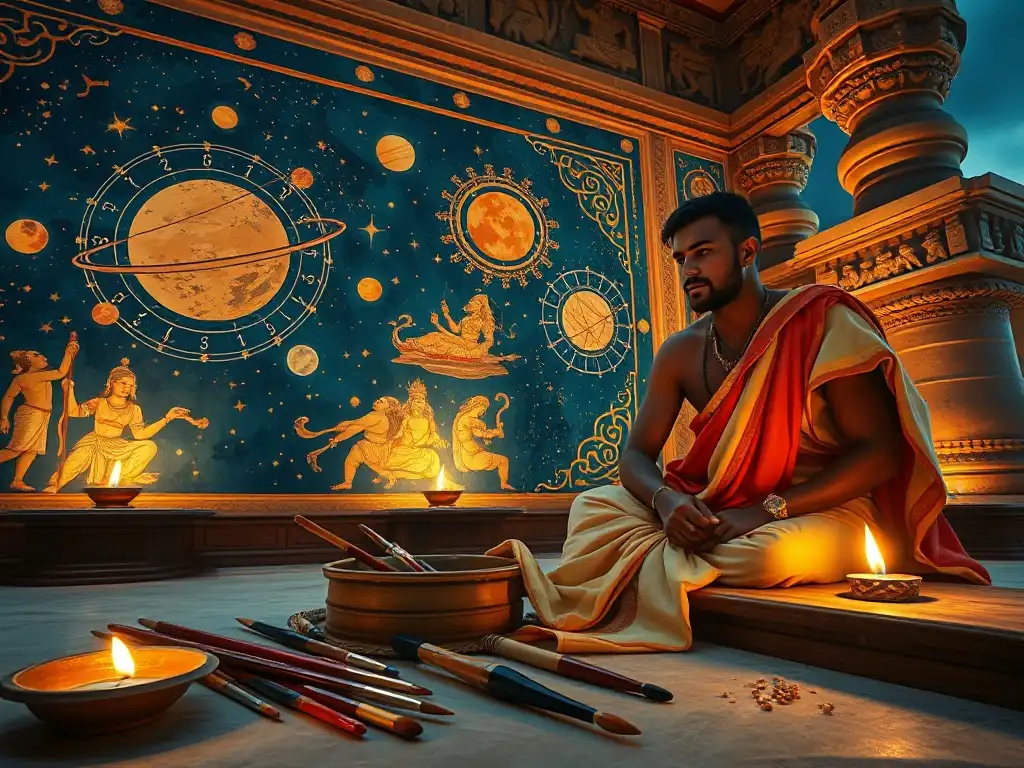
Welcome to Ancient India History, where we embark on a mesmerizing journey through the rich tapestry of India's past! Here, we unravel the profound contributions of ancient Indian civilizations, from the enigmatic Indus Valley to the illustrious Gupta Empire. Today, we invite you to delve into the captivating world of Ancient Indian astronomy art.
Discover how celestial themes inspired exquisite paintings that not only reflect the scientific prowess of their time but also the deep cultural reverence for the cosmos. Get ready to uncover the secrets behind these artistic masterpieces and their significant role in the realms of science and medicine. Your exploration begins now!
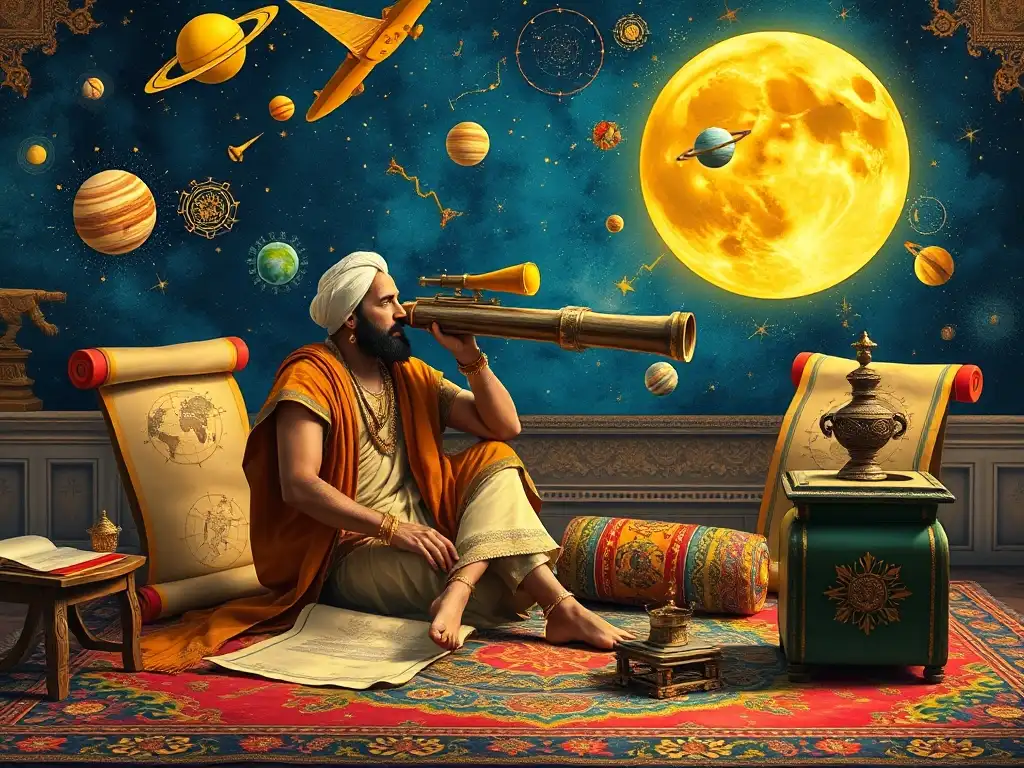
Introduction to Ancient Indian Astronomy Art
The exploration of Ancient Indian astronomy art reveals a fascinating intersection between artistic expression and celestial observation. Ancient Indian civilizations, from the enigmatic Indus Valley to the intellectually vibrant Gupta Empire, integrated their understanding of astronomy into various art forms, notably paintings. These artworks not only reflect the aesthetic values of their time but also serve as a visual record of astronomical knowledge and celestial phenomena that were revered and studied. This article delves into the significance of these artistic representations, uncovering how they document and celebrate the cosmos, and their lasting impact on the cultural heritage of India.
Overview of Astronomy in Ancient India
Ancient Indian astronomy is characterized by its meticulous observations and sophisticated theories that date back thousands of years. The ancient texts, such as the Vedas and the Surya Siddhanta, highlight an advanced understanding of celestial bodies and their movements. Scholars of the time were not merely stargazers; they were mathematicians and philosophers who sought to comprehend the universe’s workings, leading to significant advancements in both astronomy and mathematics.
- Key Contributions:
- Development of zero and the decimal system.
- Accurate calculations of planetary positions.
- Understanding of eclipses and lunar phases.
This profound knowledge laid the groundwork for subsequent generations, influencing not only Indian culture but also spreading to other civilizations through trade and cultural exchanges.
Importance of Art in Documenting Celestial Themes
Art has always played a vital role in documenting human experiences and beliefs, and ancient Indian paintings are no exception. These artworks often encapsulated celestial themes, illustrating not only the beauty of the night sky but also the philosophical and religious significance attributed to celestial phenomena.
- Functions of Astronomy Art:
- Cultural Transmission: Paintings served as a medium to transmit complex astronomical concepts to a broader audience.
- Spiritual Significance: Many artworks depicted deities associated with celestial bodies, reflecting the spiritual connection between the heavens and human existence.
- Educational Tool: The representation of astronomical events in art provided an engaging way for scholars and students to learn about the cosmos.
Through these paintings, we gain insight into how ancient Indians perceived their universe, blending science, mythology, and artistry into a cohesive worldview.
Historical Context of Astronomy in Ancient India
Early Astronomical Practices in the Indus Valley
The seeds of astronomical observation can be traced back to the Indus Valley Civilization (c. 3300–1300 BCE), where archaeological findings suggest an early interest in celestial events. Structures such as the Great Bath and other public edifices indicate a society that valued order and possibly aligned their architectural designs with solar and lunar cycles.
- Evidence of Astronomical Awareness:
- Alignment of settlements with cardinal directions.
- Potential use of celestial bodies for agricultural calendars.
These early practices laid the foundation for more sophisticated astronomical studies in subsequent periods.
Development of Astronomical Knowledge During the Vedic Period
The Vedic Period (c. 1500–500 BCE) marked a significant advancement in astronomical knowledge. The Vedas, particularly the Rigveda and Atharvaveda, contain hymns that reflect a deep understanding of cosmic phenomena. Scholars began to compile systematic observations, leading to the formulation of early astronomical models.
- Key Developments:
- Introduction of Yogas and Nakshatras (lunar mansions).
- Basic calculations of solar and lunar calendars.
These developments not only enriched the scientific discourse but also influenced artistic representations that emerged during this time.
The Role of Astronomy in Ancient Indian Culture
In ancient Indian culture, astronomy was deeply intertwined with religion, philosophy, and daily life. Celestial events were often viewed as omens or divine messages, influencing festivals, rituals, and agricultural practices.
- Cultural Significance:
- Festivals: Celebrations like Makar Sankranti and Diwali were linked to astronomical events.
- Rituals and Calendars: The timing of rituals was often determined by lunar phases and solar positions.
This profound relationship with astronomy is vividly captured in artworks, showcasing how celestial themes permeated various aspects of life and culture in ancient India. Through the lens of art, we can appreciate the intricate connections between the heavens and human experiences in this rich historical tapestry.
Key Elements of Ancient Indian Astronomy Art
Ancient Indian astronomy art is characterized by its intricate depictions of celestial themes, intertwining scientific observation with religious and cultural motifs. The art often features a variety of visual elements, including celestial bodies, mythological figures, and symbolic representations that highlight the significance of the cosmos in daily life and spiritual beliefs.
Key elements often found in this art include:
- Celestial Bodies: Stars, planets, and the moon are frequently illustrated, showcasing their importance in timekeeping and navigation.
- Geometric Patterns: Many artworks incorporate complex geometric designs that reflect mathematical precision and the intricate relationship between art and science.
- Color Symbolism: Colors are not only aesthetic but also carry meanings; for instance, blue may represent the sky or the divine, while gold often symbolizes the sun.
- Integration of Text: Some paintings include inscriptions or verses that explain the depicted celestial phenomena, linking visual art with literary tradition.
This unique blend of artistry and astronomy reflects the advanced understanding of celestial movements held by ancient Indian scholars and their cultural reverence for the cosmos.
Depictions of Celestial Bodies in Ancient Indian Paintings
The depictions of celestial bodies in ancient Indian paintings are rich and varied, often showcasing the sun, moon, and stars in elaborate compositions. These illustrations serve both an artistic and an educational purpose, often aiming to convey astronomical knowledge through visual means.
- Sun and Moon: The sun is frequently represented as a radiant circle, symbolizing energy and life, while the moon may be depicted in phases, emphasizing its cyclical nature.
- Star Patterns: Artists often illustrated constellations, providing insight into how ancient Indians perceived the night sky. These star patterns were not merely decorative; they played a crucial role in navigation and agricultural practices.
- Planetary Representation: Each planet was often symbolized with specific colors and attributes, embodying their distinct qualities as understood in ancient Indian astronomy.
The artistic representation of these celestial bodies reflects a deep appreciation and understanding of the cosmos, showcasing the fusion of art and science in ancient Indian culture.
Symbolism of Stars and Planets in Indian Art
The symbolism of stars and planets in ancient Indian art extends beyond their physical characteristics; they embody deeper philosophical and spiritual meanings. Each celestial entity is often associated with various deities, attributes, and cosmic principles that reflect the interconnection of the universe.
- Stars as Guides: Stars were seen as navigational tools, guiding travelers and symbolizing hope and guidance in life.
- Planets and Deities: Each planet was often associated with a specific deity, such as Surya (the Sun) and Chandra (the Moon). This connection illustrates the cultural significance of celestial bodies in religious practices and rituals.
- Cosmic Cycles: Many artworks depict the cyclical nature of stars and planets, symbolizing the eternal rhythms of life and the universe, representing concepts such as rebirth and the flow of time.
These symbolic representations reveal the intricate relationship between astronomy, spirituality, and the cultural practices of ancient India.
Influence of Mythology on Astronomical Representations
Mythology plays a pivotal role in shaping the astronomical representations found in ancient Indian art. The stories and legends associated with celestial bodies inform the artistic motifs and themes prevalent in this genre of art.
- Mythical Narratives: Many paintings narrate mythological stories involving celestial beings, such as the churning of the ocean (Samudra Manthan), which illustrates the birth of celestial entities, including the moon and various deities.
- Astrological Significance: The positions of celestial bodies were believed to influence human fate and were often depicted in relation to astrological charts and diagrams.
- Cultural Integration: Mythology and astronomy are intertwined in ancient Indian society, where celestial events were often linked to divine actions or cosmic battles, thereby enriching the artistic representation of these themes.
This influence of mythology on astronomical art emphasizes the cultural significance of the cosmos as a source of inspiration and a subject of reverence.
Prominent Examples of Ancient Indian Astronomy Art
Numerous artworks across ancient India stand as testaments to the rich tradition of astronomy art. These prominent examples not only highlight the aesthetic qualities but also the scientific knowledge of the time.
The Ajanta Caves: Artistic Expressions of Astronomy
The Ajanta Caves, a UNESCO World Heritage site, are renowned for their exquisite murals and sculptures that reflect ancient Indian artistic prowess. Among these artworks, several depict celestial themes, showcasing the significance of astronomy in the cultural landscape.
- Celestial Figures: Many of the paintings include celestial beings and divine figures, often set against a backdrop of starry skies, illustrating the connection between the divine and the cosmos.
- Astronomical Events: Certain murals capture significant astronomical events, such as eclipses, which were important for calendrical calculations and religious observances.
- Narrative Elements: The storytelling aspect of these paintings often incorporates themes of destiny and the divine influence of celestial bodies on human affairs.
The Ajanta Caves serve as a vital source of insight into ancient Indian beliefs about the cosmos and its artistic expressions.
Contributions of the Gupta Empire to Astronomical Art
The Gupta Empire, often referred to as the "Golden Age" of India, made significant contributions to various fields, including astronomy and art. This period saw a flourishing of artistic endeavors that prominently featured celestial themes.
- Scientific Texts and Illustrations: Scholars from this era, such as Aryabhata, not only advanced astronomical knowledge but also influenced artistic representations through their texts, which often included diagrams and illustrations of celestial phenomena.
- Religious Art: Many temples built during the Gupta period feature intricate carvings and sculptures of celestial bodies, reflecting the integration of scientific understanding with spiritual beliefs.
- Cultural Revival: The Gupta Empire's patronage of the arts led to the creation of numerous artworks that celebrated the cosmos, blending aesthetics with scientific inquiry.
These contributions underscore the importance of astronomy in Gupta art, illustrating how the empire's achievements in science and culture were closely intertwined.
Regional Variations in Astronomical Themes Across India
Ancient Indian astronomy art exhibits remarkable diversity across different regions, reflecting local beliefs, traditions, and interpretations of celestial phenomena.
- North India: In regions like Kashmir, celestial motifs often blend with floral designs, emphasizing the aesthetic beauty of the night sky.
- South India: Temples in South India frequently depict intricate carvings of planetary deities, showcasing the region's unique approach to integrating astronomy with architecture.
- Eastern and Western India: In the eastern states, folk art often incorporates celestial themes with vibrant colors and patterns, while western Indian art may reflect a more abstract interpretation of astronomical concepts.
These regional variations highlight the multifaceted nature of ancient Indian astronomy art, revealing how diverse cultural contexts influenced artistic expression and celestial representation.
Techniques and Materials Used in Ancient Indian Astronomy Art
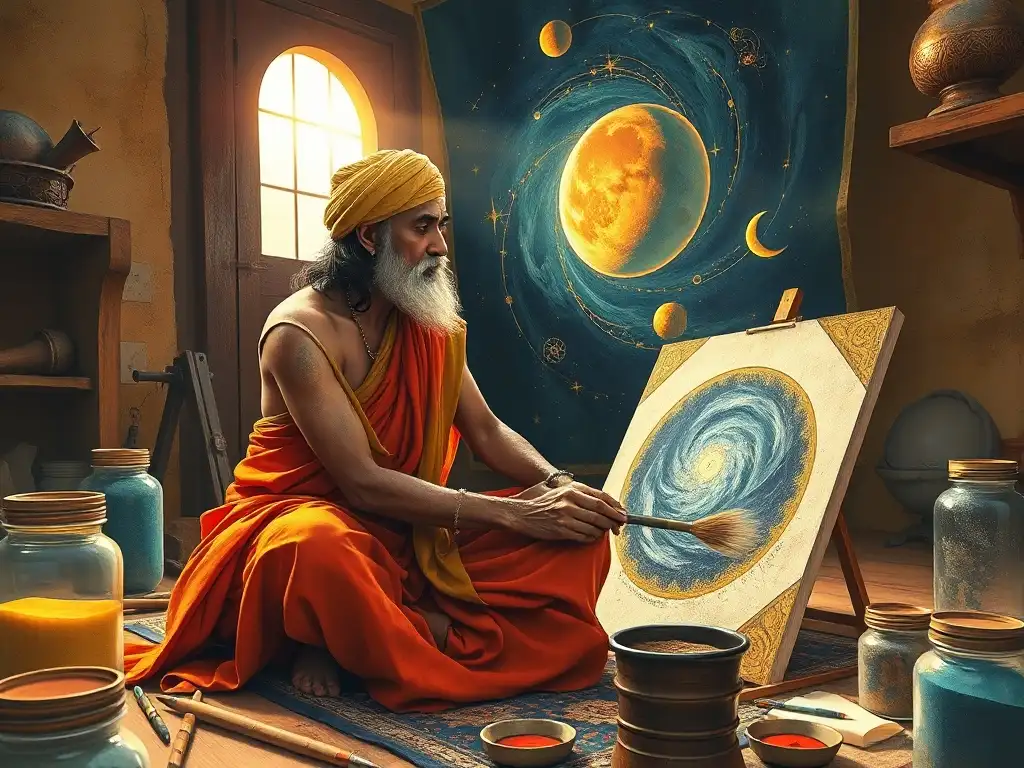
The artistry of ancient Indian astronomy is characterized by a variety of techniques and materials that reflect the cultural and scientific advancements of the time. Artists utilized intricate methods to depict celestial themes, often merging scientific observations with rich artistic expression. The result was a body of work that not only illustrated astronomical phenomena but also served as a visual record of the knowledge and beliefs of ancient Indian civilizations.
Traditional Painting Methods in Ancient India
Traditional painting methods in ancient India were diverse and region-specific, often influenced by local customs and available resources. Notable techniques included:
- Mural Painting: Large-scale frescoes adorned temples and palaces, depicting celestial bodies alongside mythological narratives. This method allowed for the integration of astronomy into religious and cultural contexts.
- Miniature Painting: Smaller, detailed works on paper or cloth showcased celestial themes with precision. Artists used fine brushes to capture the intricate details of constellations and heavenly bodies.
- Block Printing: This method involved carving designs into wooden blocks, which were then inked and pressed onto surfaces. While primarily used for textiles, this technique also found application in the reproduction of celestial maps and astronomical charts.
These painting methods exemplified the sophisticated artistic practices of ancient Indian civilizations and their commitment to documenting their understanding of the cosmos.
Use of Natural Pigments and Materials in Astronomical Art
Ancient Indian artists employed a range of natural pigments and materials to create vibrant astronomical art. These materials not only enhanced the visual appeal but also indicated the artists' deep connection with nature. Key pigments included:
- Mineral-Based Pigments: Colors like red ochre, lapis lazuli, and malachite were derived from minerals and used to depict planets, stars, and cosmic events. These pigments offered durability and vividness.
- Organic Pigments: Derived from plants and insects, colors such as indigo and saffron contributed to the palette of celestial themes. Organic pigments were often used for more delicate details in miniature paintings.
- Gold and Silver Leaf: Used to accentuate important celestial features, gold and silver leaf added a sense of divinity and grandeur to astronomical art, symbolizing the heavenly nature of the subjects.
The use of these materials reflects the ancient Indians' knowledge of chemistry and their ability to manipulate natural resources for artistic purposes.
Preservation Techniques for Ancient Astronomical Artworks
Preserving ancient astronomical artworks was essential for maintaining the cultural heritage of India. Various techniques were employed to ensure the longevity of these pieces:
- Use of Durable Materials: Artists often chose robust surfaces like wood, stone, or plaster for murals, which helped withstand the test of time compared to more fragile materials.
- Protective Coatings: Natural oils and resins were applied to protect paintings from environmental damage, such as moisture and sunlight, which could fade colors and deteriorate surfaces.
- Climate-Controlled Environments: Many artworks were housed in temples or caves that provided natural insulation and protection from extreme weather, contributing to their preservation over centuries.
These preservation techniques highlight the ancient Indians’ foresight in safeguarding their artistic and astronomical legacies for future generations.
The Influence of Ancient Indian Astronomy on Later Cultures
The astronomical art of ancient India had a profound influence on various cultures that followed, illustrating the far-reaching impact of Indian civilization in the realm of science and art. This influence manifested through the dissemination of knowledge and artistic styles across borders.
Spread of Astronomical Knowledge Through Art
Ancient Indian astronomical art served as a medium for transmitting complex astronomical concepts to both scholars and the general populace. Celestial paintings and charts illustrated intricate theories of planetary motion, eclipses, and constellations, making them accessible to a broader audience. As these artworks spread beyond India, they facilitated:
- Cross-Cultural Exchanges: Artworks were often traded or gifted, leading to the sharing of astronomical knowledge between Indian and neighboring civilizations, including Persia and the Arab world.
- Educational Tools: Astronomical paintings became integral to educational institutions, helping to teach students about the cosmos in an engaging and visually appealing manner.
This exchange of ideas fostered a collaborative spirit in the pursuit of astronomical understanding.
Impact of Indian Astronomical Art on Neighboring Civilizations
The influence of ancient Indian astronomical art extended to various neighboring cultures, enriching their artistic traditions and scientific practices. Key impacts included:
- Integration Into Islamic Art: The intricate designs and themes from Indian astronomical works found their way into Islamic art, particularly during the Mughal era, where artists blended Indian styles with Persian techniques.
- Adoption of Astronomical Models: Neighboring civilizations adopted and adapted Indian astronomical models and theories, such as the concept of zero and decimal notation, which were crucial for mathematical calculations in astronomy.
This cross-pollination of ideas exemplifies the interconnectedness of ancient cultures and their collective advancements in science and art.
Modern Interpretations of Ancient Indian Astronomy Art
In contemporary times, the legacy of ancient Indian astronomy art continues to inspire modern artists and scholars. These interpretations often blend traditional techniques with modern sensibilities, leading to:
- Revival of Traditional Techniques: Artists are increasingly exploring ancient methods of painting, using natural pigments and traditional styles, to create new works that pay homage to the past.
- Digital Art and Astronomy Visualization: Modern technology allows artists to reinterpret celestial themes in digital formats, enhancing the accessibility and reach of ancient concepts. This includes the creation of interactive apps and virtual galleries that showcase ancient astronomical art.
- Educational Initiatives: Museums and educational institutions are developing programs that highlight the significance of ancient Indian astronomy art, fostering a renewed appreciation for its historical and cultural context.
These modern interpretations highlight how ancient wisdom continues to resonate in today's artistic and scientific landscapes, ensuring that the contributions of ancient Indian astronomers and artists are not forgotten.
Conclusion: The Legacy of Ancient Indian Astronomy Art
The legacy of ancient Indian astronomy art is a testament to the profound relationship between celestial phenomena and cultural expression in historical India. These artworks not only serve as visual representations of astronomical concepts but also embody the philosophical and spiritual insights of their time. The intricate depictions of celestial bodies, constellations, and cosmic events found in ancient manuscripts and paintings reflect a sophisticated understanding of the universe, showcasing the advanced knowledge of astronomers and artists alike.
Moreover, this artistic tradition has influenced not just the visual arts but also literature, architecture, and even contemporary scientific thought. As we delve into the rich tapestry of these celestial themes, we uncover the ways in which they have shaped societal beliefs, rituals, and the very fabric of ancient Indian civilization. The integration of astronomy in art symbolizes a holistic worldview where science and spirituality coexist, emphasizing the importance of observation and interpretation of the cosmos.
Reflection on the Importance of Celestial Themes in Cultural Heritage
Celestial themes in ancient Indian art serve as a crucial link between astronomy and cultural heritage. The portrayal of planets, stars, and celestial events in paintings and sculptures illustrates how deeply intertwined the observation of the heavens was with daily life and religious practices. Artists used these themes not merely for aesthetic purposes but as a way to communicate complex ideas about the universe, time, and existence.
For instance, the depiction of the zodiac in traditional Indian art reflects not only an understanding of astrological concepts but also a belief in the influence of celestial bodies on human affairs. This connection to the skies can be seen in various art forms, including frescoes, temple carvings, and illuminated manuscripts. Each work encapsulates the collective wisdom of ancient civilizations, offering insights into their understanding of cosmic order and natural phenomena.
The legacy of these celestial themes continues to resonate today, as they remind us of the unbroken lineage of curiosity and reverence for the cosmos that characterizes human history. Preserving and studying these artistic expressions is essential for appreciating the rich cultural heritage of ancient India, fostering a deeper understanding of how our ancestors viewed their place in the universe.
Future Research Directions in Ancient Indian Astronomy and Art
Future research directions in ancient Indian astronomy and art can pave the way for a richer understanding of how these disciplines intersected historically. There are several areas ripe for exploration:
- Interdisciplinary Studies: Scholars can benefit from collaborations between art historians, astronomers, and archaeologists to analyze ancient artifacts and texts. This interdisciplinary approach can yield new insights into the astronomical knowledge embedded in art.
- Digital Humanities: Utilizing digital technology to create databases of ancient artworks can facilitate comparative studies across regions and time periods. This can help identify patterns in celestial representation and their cultural significance.
- Field Studies: Investigating lesser-known sites that house astronomical art can uncover regional differences in artistic expression and astronomical understanding. Fieldwork can also engage local communities in preserving their heritage.
- Translation and Interpretation: Ongoing efforts to translate ancient texts, including astronomical treatises and associated artworks, can enhance our understanding of the scientific concepts they convey. This can also shed light on the cultural narratives surrounding these themes.
Through these avenues, researchers can continue to unravel the complexities of ancient Indian astronomy art, contributing to a more comprehensive understanding of its significance within the broader context of global scientific heritage.
References
Key Texts and Resources on Ancient Indian Astronomy Art
- Brahmagupta's Brahmasphutasiddhanta: A foundational text that discusses mathematics and astronomy, including celestial calculations.
- Aryabhata's Aryabhatiya: This treatise offers insights into the astronomical theories of one of India's most renowned mathematicians and astronomers.
- The Surya Siddhanta: An ancient text that provides precise calculations of celestial movements and has been a critical reference for scholars studying ancient Indian astronomy.
Suggested Further Reading on Related Topics
- "Astronomy in Ancient India" by S. R. Sarma: This book explores the development of astronomical concepts and their artistic representations.
- "Cosmos and Culture: The Universe in the Mind of Ancient India" by N. R. Bhatt: A comprehensive analysis of the philosophical implications of celestial observations in Indian thought.
- "Indian Astronomical Instruments: A History" by K. S. Shukla: This text delves into the tools and methods used by ancient Indian astronomers, providing context for their artistic representations.
- Introduction to Ancient Indian Astronomy Art
- Historical Context of Astronomy in Ancient India
- Key Elements of Ancient Indian Astronomy Art
- Prominent Examples of Ancient Indian Astronomy Art
- Techniques and Materials Used in Ancient Indian Astronomy Art
- The Influence of Ancient Indian Astronomy on Later Cultures
- Conclusion: The Legacy of Ancient Indian Astronomy Art
- References
- What is the significance of ancient Indian astronomy art?
- How did ancient Indian artists depict celestial themes?
- What impact did astronomy have on ancient Indian culture?
- Are there specific examples of ancient Indian paintings that focus on astronomy?
- How does ancient Indian astronomy art compare to other cultures?
Frequently Asked Questions
What is the significance of ancient Indian astronomy art?
The art of astronomy in ancient India reflects the civilization's deep understanding of celestial bodies and their movements, influencing both cultural practices and scientific inquiry.
How did ancient Indian artists depict celestial themes?
Artists used a variety of vibrant colors and intricate designs to represent planets, constellations, and mythical stories, showcasing their appreciation for both art and science.
What impact did astronomy have on ancient Indian culture?
Astronomy played a crucial role in agricultural practices, religious ceremonies, and calendar systems, demonstrating its integration into the daily lives of ancient Indians.
Are there specific examples of ancient Indian paintings that focus on astronomy?
Yes, notable works like Mughal miniatures and temple murals often feature celestial elements, emphasizing the relationship between art and astronomical knowledge.
How does ancient Indian astronomy art compare to other cultures?
While similar celestial themes appear globally, ancient Indian art uniquely combines spiritual beliefs, scientific inquiry, and aesthetic expression, highlighting its distinct cultural identity.
Final Reflection: The Celestial Legacy of Ancient Indian Astronomy Art
The exploration of ancient Indian astronomy art reveals a profound connection between culture and the cosmos that remains relevant today. As we navigate an increasingly technology-driven world, the intricate celestial themes depicted in these ancient paintings remind us of our enduring fascination with the universe. The artistry and knowledge embedded in these works not only celebrate the scientific achievements of our ancestors but also challenge us to reflect on our place within the vast expanse of space.
The influence of ancient Indian astronomy art extends beyond mere aesthetics; it serves as a bridge between generations, inspiring contemporary artists and scientists alike. The vibrant depictions of celestial bodies and cosmic events in these paintings continue to spark curiosity and wonder, encouraging us to look up and ponder the mysteries of the universe. Art is the most beautiful of all lies.
This quote encapsulates the essence of how these ancient artworks blend creativity with scientific inquiry, inviting us to explore the depths of our imagination while grounding us in the realities of our existence.
As we conclude our journey through the celestial themes of ancient Indian paintings, I invite you to reflect on the lessons they impart. Consider how the art of the past can inform our understanding of the present and shape our aspirations for the future. Let the beauty and wisdom of these ancient works inspire you to cultivate a deeper appreciation for the cosmos and to seek your own connection with the stars. Embrace the legacy of ancient Indian astronomy art, and allow it to guide you in your quest for knowledge and creativity.
🌌 Unveil the Celestial Wonders of Ancient India!
Thank you for taking the time to explore the fascinating connections between art and astronomy in ancient Indian culture. You've uncovered how celestial themes enriched artistic expression and shaped the understanding of the universe. Now, it’s time to take your appreciation further!
Here are a few engaging ways you can connect with this captivating topic:
- Dive Deeper: Visit a local museum or an online gallery showcasing ancient Indian art. Pay special attention to celestial themes and consider how they relate to your newfound knowledge.
- Engage with Others: Share this article with friends or participate in an online discussion to exchange insights about ancient astronomy and its reflections in art.
- Create Your Own Star Art: Challenge yourself to produce artwork inspired by celestial themes. This could be a painting, drawing, or digital piece that blends modern interpretations with ancient motifs.
Which celestial theme in ancient Indian paintings resonates with you the most, and how does it inspire your perspective on art today?