
The Cultural Exchange Between Southern India and Southeast Asia: A Historical Insight

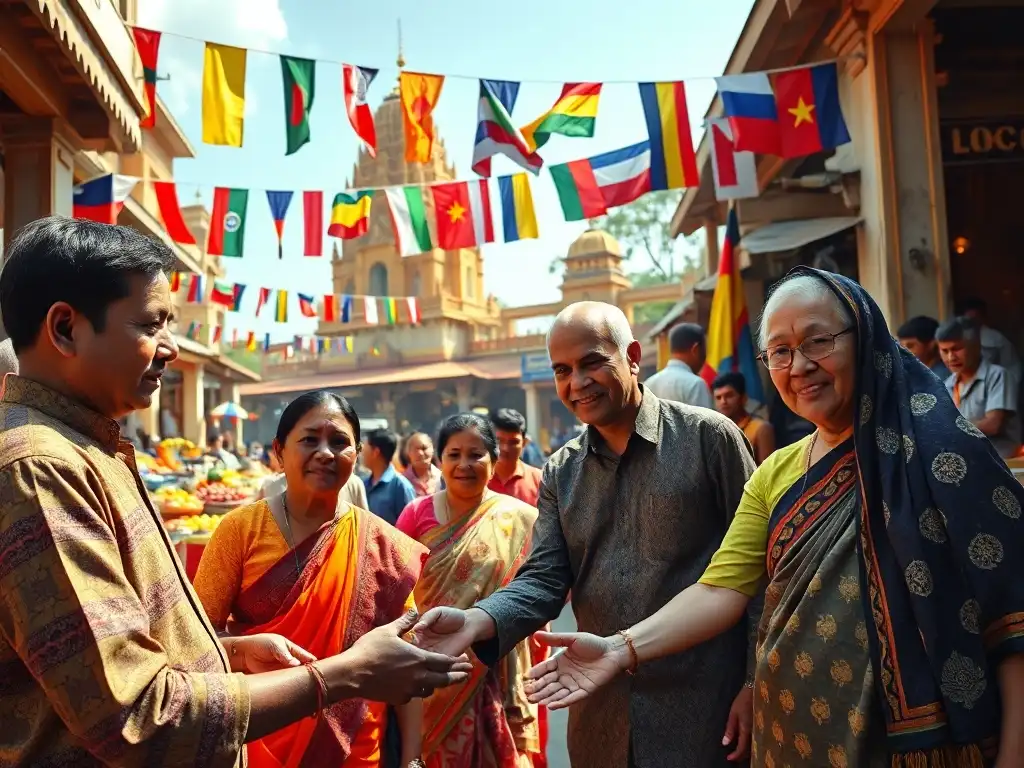
Welcome to Ancient India History, where we embark on a captivating journey through time to uncover the rich tapestry of India's ancient civilizations. In our feature article, “The Cultural Exchange Between Southern India and Southeast Asia: A Historical Insight,” we delve into the dynamic interactions that shaped the cultures of these regions. What secrets lie within the connections forged by trade, religion, and art?
Join us as we explore the profound impacts of these exchanges and discover how they continue to resonate in today's world. Prepare to be intrigued and inspired by the stories of our past—let's dive deeper together!
Introduction to Cultural Exchange
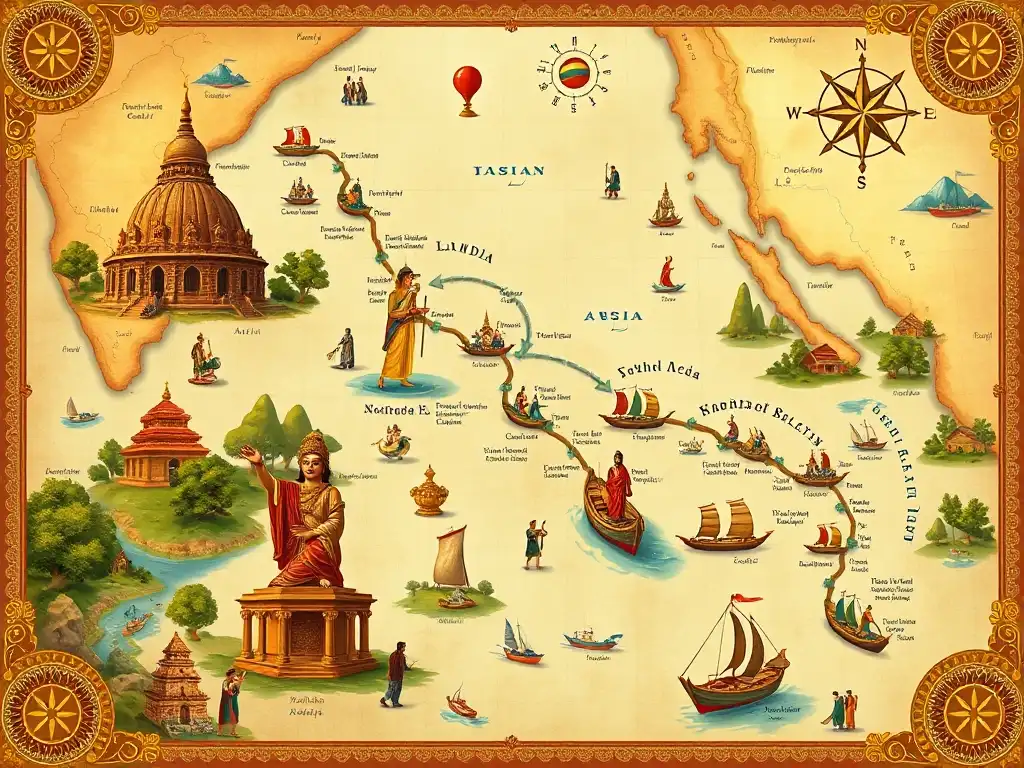
The phenomenon of cultural exchange between Southern India and Southeast Asia is a fascinating aspect of historical study that reveals the intricate and interconnected nature of ancient civilizations. This exchange encompasses a variety of elements, including trade, religion, art, and language, significantly influencing the development of societies in both regions.
The interactions between Southern India and Southeast Asia, particularly during the early centuries of the Common Era, laid the groundwork for enduring relationships that shaped cultural identities. Understanding this cultural interplay is essential for grasping the historical narratives of both Southern India and Southeast Asia, as it highlights how these regions influenced each other's social structures, traditions, and artistic expressions.
Definition of Cultural Exchange
Cultural exchange refers to the process through which two or more cultures share and adopt elements from one another. This can occur through various means, such as trade, migration, conquest, or the spread of ideas and technologies. In the context of Southern India and Southeast Asia, cultural exchange involved the sharing of:
- Religious beliefs (e.g., Hinduism and Buddhism)
- Artistic expressions (e.g., sculpture, dance, and architecture)
- Language and literature
- Agricultural practices and technology
This interplay not only enriched the cultures involved but also fostered a greater sense of connectivity and mutual influence.
Importance of Cultural Exchange in History
The significance of cultural exchange in history cannot be overstated. It plays a crucial role in:
- Promoting Understanding: Cultural exchange fosters tolerance and appreciation between different societies, leading to more harmonious relationships.
- Driving Innovation: The fusion of ideas can lead to new inventions and artistic forms, enriching the cultural heritage of both regions.
- Building Economies: Trade routes established through cultural exchanges often stimulate economic growth, benefiting both parties involved.
In the case of Southern India and Southeast Asia, the rich tapestry of cultural interactions has left a lasting legacy, underscoring the importance of these exchanges in shaping the historical landscape.
Overview of Southern India
Southern India is a region characterized by its diverse cultures, languages, and rich historical background. Its geographical location has facilitated interactions with various civilizations, marking it as a significant player in the ancient world.
Historical Context of Southern India
The historical context of Southern India is marked by several prominent periods, including:
- The Indus Valley Civilization: One of the earliest urban cultures, which laid the foundation for subsequent societies.
- The Chola, Chera, and Pandya dynasties: Major kingdoms that emerged around the 1st century BCE and were known for their trade networks and cultural contributions.
- The Vijayanagara Empire: A later powerful empire that further enhanced the region's cultural and economic status.
These periods witnessed substantial developments in governance, architecture, and trade, establishing Southern India as a crucial hub in the region.
Major Civilizations and Kingdoms of Southern India
Southern India has been home to various influential civilizations and kingdoms, each contributing to the region's rich heritage:
- Chola Dynasty: Renowned for its naval power and extensive trade networks, the Cholas played a critical role in cultural exchanges with Southeast Asia.
- Chera Dynasty: Known for their trade in spices and textiles, the Cheras established strong maritime connections with various regions.
- Pandya Dynasty: Their contributions to literature and arts significantly influenced cultural exchanges in the region.
These kingdoms facilitated interactions not only within India but also with Southeast Asia, leading to a dynamic flow of ideas and goods.
Cultural Contributions of Southern India
Southern India has made remarkable cultural contributions that resonate beyond its borders:
- Religious Practices: The spread of Hinduism and Buddhism was significantly influenced by Southern Indian missionaries and traders.
- Art and Architecture: Distinct styles, such as Dravidian architecture, emerged and inspired architectural developments in Southeast Asia.
- Literature and Language: The Tamil language and literature, particularly in poetry, have influenced regional languages across Southeast Asia.
These contributions highlight the profound impact of Southern India's cultural heritage on the broader Southeast Asian context, illustrating the depth and richness of their historical exchange.
Southeast Asia: A Historical Perspective
Historical Overview of Southeast Asia
Southeast Asia has a rich and complex history that has been shaped by various factors, including geography, trade, and cultural interactions. The region comprises a diverse range of countries, including Indonesia, Malaysia, Thailand, Vietnam, and the Philippines, each with its unique historical trajectory. From ancient times, Southeast Asia was a crucial hub for maritime trade, connecting the Indian Ocean to the Pacific, which facilitated not only the exchange of goods but also ideas and cultural practices.
The early historical period saw the emergence of powerful kingdoms such as Srivijaya and Majapahit, which dominated trade routes and influenced the region's cultural landscape. These kingdoms played a significant role in the exchange of commodities like spices, textiles, and precious metals, attracting traders from as far as India, China, and the Middle East. The intermingling of cultures due to these trade activities laid the foundation for a vibrant cultural synthesis that would define Southeast Asia for centuries to come.
Key Civilizations in Southeast Asia
Among the notable civilizations in Southeast Asia, the Srivijaya Empire (7th to 13th centuries) stands out as a maritime power that controlled trade routes in the region. It was predominantly located in what is now Indonesia and was a center for the spread of Buddhism. Srivijaya's influence extended to Southern India, where cultural and commercial exchanges flourished.
The Khmer Empire (9th to 15th centuries), with its capital at Angkor in modern-day Cambodia, was another significant civilization known for its monumental architecture, including the famous Angkor Wat temple complex. The Khmer were instrumental in the dissemination of Hinduism and Buddhism across the region, which further intertwined the cultural fabric of Southeast Asia with that of Southern India.
In addition to these empires, the arrival of the Malay states and the rise of the Thai kingdoms also contributed to the rich tapestry of Southeast Asian civilization, each bringing their indigenous traditions and practices that complemented the influences from Southern India.
Cultural Diversity in Southeast Asia
The cultural diversity of Southeast Asia is one of its most defining features, shaped by centuries of migration, trade, and the exchange of ideas. The region is home to a multitude of ethnic groups, languages, and religions, reflecting a complex interplay of indigenous beliefs and foreign influences.
For instance, the animistic traditions of many indigenous peoples coexist with the major religions of Islam, Buddhism, and Hinduism. This coexistence is evident in various cultural practices, such as festivals, rituals, and art forms, which often blend elements from different traditions. The influence of Southern India is particularly notable in the adoption of Hindu and Buddhist motifs in architecture and sculpture, as well as in the rich traditions of dance and music that have evolved over time.
The cultural exchanges between Southern India and Southeast Asia have led to the creation of hybrid cultures, where local customs and practices have been enriched by foreign elements, resulting in a unique and dynamic cultural landscape.
The Nature of Cultural Exchange Between Southern India and Southeast Asia
Trade Routes and Maritime Links
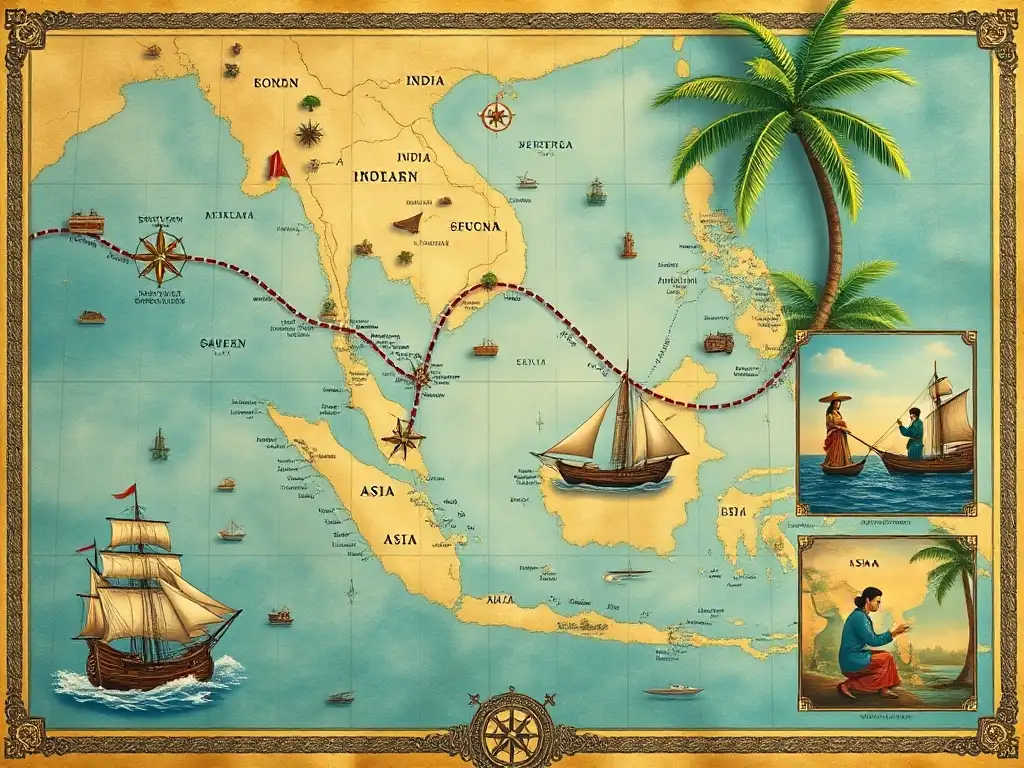
Trade routes have historically served as conduits for cultural exchange between Southern India and Southeast Asia. The maritime trade networks that emerged in the early centuries of the Common Era facilitated the movement of goods, people, and ideas across the waters of the Indian Ocean and the South China Sea.
Southern Indian ports such as Kochi, Calicut, and Nagapattinam became bustling centers of trade, exporting spices, textiles, and other commodities to Southeast Asia. In return, Southeast Asian traders brought products like gold, ivory, and exotic woods, creating a reciprocal relationship that fostered economic interdependence.
The establishment of these maritime links not only boosted trade but also promoted the exchange of cultural practices. Artisans, scholars, and religious leaders traveled between regions, sharing knowledge and traditions that would enrich both Southern India and Southeast Asia.
Migration Patterns and Their Impact
Migration has played a significant role in the cultural exchange between Southern India and Southeast Asia. Various waves of migration, driven by trade, conquest, and exploration, resulted in the movement of peoples and ideas across the region.
Indian traders and settlers, particularly during the early medieval period, established communities in Southeast Asia. Their presence contributed to the introduction and dissemination of Hindu and Buddhist beliefs, as well as cultural practices such as art, architecture, and cuisine. These migratory patterns not only facilitated the spread of Indian culture but also led to the assimilation of indigenous customs, resulting in a rich, hybrid cultural identity.
Moreover, the migration of Southeast Asians to Southern India, although less documented, also contributed to cultural exchanges. This bidirectional movement allowed for a continuous flow of ideas and traditions, further solidifying the interconnections between the two regions.
Influence of Religion: Hinduism and Buddhism
Religion has been one of the most profound areas of cultural exchange between Southern India and Southeast Asia. The transmission of Hinduism and Buddhism from Southern India to Southeast Asia significantly influenced the religious landscape of the region.
Hinduism, with its intricate pantheon and rich philosophical teachings, found a fertile ground in Southeast Asia, particularly in the kingdoms of Srivijaya and Majapahit. Temples dedicated to Hindu deities, such as Shiva and Vishnu, were constructed, and the epics of the Ramayana and Mahabharata were integrated into local literature and performance art.
Buddhism, which also spread from Southern India, became a dominant religion in many parts of Southeast Asia. The establishment of Buddhist monasteries and the patronage of kings played critical roles in propagating Buddhist teachings and practices. The influence of Southern Indian art and architecture is vividly reflected in the intricate carvings and stupas found in regions like Cambodia and Java.
The shared religious heritage between Southern India and Southeast Asia has fostered enduring ties, underscoring the importance of cultural exchange in shaping the spiritual and cultural identity of both regions.
Key Aspects of Cultural Exchange
Cultural exchange between Southern India and Southeast Asia has been a dynamic and multifaceted interaction that spans centuries. This exchange has significantly influenced various aspects of life, including language, religion, art, and trade. The maritime routes connecting the two regions facilitated not only the movement of goods but also the sharing of ideas and cultural practices.
Key features of this exchange include the migration of peoples, the establishment of trade networks, and the interchange of religious beliefs, particularly Hinduism and Buddhism. The vibrant interactions led to the syncretism of cultures, which is evident in the cultural landscapes of both Southern India and Southeast Asia today.
Linguistic Influences and Language Exchange
The linguistic exchange between Southern India and Southeast Asia is a notable aspect of their interaction. Languages such as Tamil, which is one of the oldest living languages, played a significant role in this cultural diffusion. As Tamil traders journeyed to Southeast Asia, they not only brought goods but also their language, which influenced local dialects.
- Loanwords and Vocabulary: Many Southeast Asian languages, such as Malay and Indonesian, incorporated Tamil words, particularly in trade and everyday life.
- Script and Writing: The introduction of writing systems like the Pallava script influenced local scripts in regions like Java and Bali, facilitating literacy and cultural expression.
This linguistic exchange has made a lasting impact, creating a tapestry of languages that reflect the shared history of these regions.
Artistic and Architectural Influences
Artistic and architectural influences between Southern India and Southeast Asia are profound and visible in many historical sites. The architectural styles of temples and monuments in Southeast Asia often exhibit characteristics that trace back to Southern Indian aesthetics.
- Temple Architecture: The Dravidian style of temple architecture, characterized by intricate carvings and towering gopurams (gateway towers), found its way into regions such as Cambodia and Indonesia, where local adaptations emerged.
- Sculptural Art: The sculptures in the ancient temples of Angkor Wat, for instance, display influences of Indian iconography and mythology, particularly those related to Hindu deities like Vishnu and Shiva.
These artistic exchanges not only reflect the shared religious beliefs but also highlight the craftsmanship and aesthetic sensibilities of the cultures involved.
Culinary Exchange Between Southern India and Southeast Asia
The culinary exchange between Southern India and Southeast Asia is another significant aspect of their cultural interaction. The movement of spices, ingredients, and cooking techniques contributed to the rich culinary heritage of both regions.
- Spices and Ingredients: Southern Indian spices such as black pepper, cardamom, and turmeric became integral to Southeast Asian cuisines, enhancing flavors and culinary practices.
- Cooking Techniques: The introduction of rice cultivation and various cooking methods influenced local food traditions, leading to the creation of dishes that are now staples in both regions.
This culinary melding continues to be celebrated today, with dishes reflecting the historical ties and shared flavors that emerged from centuries of interaction.
Case Studies of Cultural Exchange
The Influence of Chola Dynasty in Southeast Asia
The Chola Dynasty (c. 300 BCE to 1279 CE) stands as a monumental example of cultural exchange between Southern India and Southeast Asia. The Cholas, known for their naval prowess, established trade links with regions such as Indonesia, Malaysia, and beyond.
- Expansion of Hinduism: The Chola expeditions facilitated the spread of Hinduism, leading to the establishment of temples and cultural practices that mirrored those of Southern India.
- Artistic Contributions: The Chola influence is evident in the art and architecture of Southeast Asian temples, particularly through the introduction of bronze sculptures that depict Hindu deities.
This case study illustrates how political and economic motivations drove cultural exchange, leaving a lasting legacy in Southeast Asia.
The Role of Tamil Traders in Cultural Exchange
Tamil traders played a pivotal role in fostering cultural exchange between Southern India and Southeast Asia. Their maritime trade networks were crucial for the dissemination of goods, ideas, and cultural practices.
- Trade Routes: Tamil merchants established routes that connected ports in Southern India with those in Southeast Asia, facilitating the exchange of textiles, spices, and precious stones.
- Cultural Ambassadors: Beyond trade, these merchants acted as cultural ambassadors, sharing Tamil literature, music, and traditions, which enriched the cultural tapestry of the regions they frequented.
The activities of Tamil traders underscore the importance of commerce as a vehicle for cultural exchange.
The Spread of Indian Textiles and Art Forms
The spread of Indian textiles and art forms significantly shaped the aesthetic landscape of Southeast Asia. Southern India, particularly the Tamil Nadu region, emerged as a hub for textile production.
- Textile Trade: Indian textiles, renowned for their quality and intricate designs, gained popularity in Southeast Asian markets, influencing local textile production.
- Art Forms: Indian art forms such as dance and drama, particularly Bharatanatyam, influenced local performing arts, leading to the development of unique cultural expressions that blended Indian and local elements.
These exchanges highlight how trade in textiles and art played a crucial role in fostering cultural relationships between Southern India and Southeast Asia, resulting in vibrant and diverse artistic traditions.
Challenges and Misunderstandings in Cultural Exchange
Cultural exchanges between Southern India and Southeast Asia have a long and intricate history, marked by periods of flourishing interaction as well as significant challenges and misunderstandings. The complexities inherent in these exchanges stem from various factors, including language barriers, differing belief systems, and the misinterpretation of cultural practices. While trade routes facilitated the movement of goods and ideas, they also brought about misunderstandings that could strain relations between these regions.
A notable challenge in cultural exchange has been the imposition of one culture's values over the other. For instance, the arrival of Hinduism and Buddhism in Southeast Asia often led to the appropriation and reinterpretation of local customs, which sometimes resulted in resistance from indigenous populations. Furthermore, the nuances of language can lead to miscommunication, where the subtleties of one culture's expressions may not be fully appreciated or understood by another. Such misunderstandings can hinder the development of genuine cultural appreciation and integration.
Misconceptions About Cultural Exchange
One of the prevalent misconceptions about cultural exchange is that it implies a one-way transfer of ideas and practices. However, cultural exchange is inherently reciprocal; it involves the sharing and adaptation of traditions from both Southern India and Southeast Asia. Many believe that the influence was predominantly from India to Southeast Asia, overlooking the significant contributions and influences that Southeast Asian cultures have had on Southern India.
Additionally, there is a tendency to romanticize the past interactions as entirely harmonious, ignoring the conflicts and resistance that were part of the process. These misconceptions can lead to oversimplified narratives that fail to capture the rich tapestry of influences and exchanges that define the relationship between these regions.
The Impact of Colonialism on Cultural Relations
Colonialism significantly altered the dynamics of cultural exchange between Southern India and Southeast Asia. European powers often imposed their own cultural frameworks and disrupted traditional trade routes, leading to a deterioration of the previously flourishing exchanges. During this period, many local customs were suppressed or marginalized, resulting in a loss of cultural heritage and identity.
Moreover, colonial rule fostered a sense of division among the peoples of Southern India and Southeast Asia, as colonial authorities often preferred to emphasize differences to maintain control. This strategy undermined the centuries-old relationships built on trade, religion, and shared cultural practices. The legacies of colonialism still resonate today, as many countries in the region continue to grapple with the ramifications of these historical disruptions.
Conclusion: The Legacy of Cultural Exchange
The cultural exchange between Southern India and Southeast Asia has left an indelible mark on both regions, shaping their histories, religions, and social structures. This legacy is evident in the shared architectural styles, religious practices, and artistic expressions that emerged from their interactions over the centuries.
Lasting Impacts on Modern Southern India and Southeast Asia
Today, the influences of this historical exchange continue to manifest in various aspects of life in both Southern India and Southeast Asia. For example, the prevalence of Hindu temples in countries like Indonesia and Thailand showcases the deep-rooted connections that have persisted over time. Culinary practices, traditional attire, and even languages reflect the blending of cultures that has occurred as a result of this historical interaction.
Moreover, contemporary movements in art, dance, and music often draw inspiration from these traditional exchanges, highlighting the enduring legacy of shared cultural heritage.
Continuing Cultural Connections Today
In the modern context, cultural connections between Southern India and Southeast Asia are being revitalized through globalization and technology. Increased travel and communication have enabled greater cultural dialogue and exchange, fostering a renewed interest in the rich histories and traditions of both regions. Festivals, art exhibitions, and academic collaborations are just a few examples of how these cultural ties are being strengthened today.
Furthermore, the shared historical narratives and experiences continue to bring communities together, emphasizing the importance of understanding and appreciating one another's cultures. As Southern India and Southeast Asia navigate the challenges of the contemporary world, the legacy of their past interactions reminds us of the value of cultural exchange in fostering unity and collaboration.
References for Further Reading
Understanding the cultural exchange between Southern India and Southeast Asia requires delving into a variety of resources that explore historical, archaeological, and anthropological perspectives. Here are some valuable references that provide deeper insights into this fascinating topic.
Recommended Books and Articles on Cultural Exchange
-
"India and Southeast Asia: A History of Cultural Exchange" by K. K. Gupta
This book provides an in-depth analysis of the historical ties between India and Southeast Asia, exploring trade routes, migration patterns, and the spread of religions and languages. The author meticulously documents the mutual influences that shaped the cultural landscapes of both regions.
-
"The Cultural Heritage of India: Volume 1 - The Art and Architecture of Southern India" by R. Nagaswamy
Focusing on Southern India, this volume delves into the artistic expressions and architectural achievements that have influenced Southeast Asian cultures. It discusses significant temple architectures and sculptures that illustrate the cultural connections.
-
"Cultural Interactions Between India and Southeast Asia: Historical Perspectives" edited by N. R. Chandran
This collection of essays by various scholars investigates specific instances of cultural exchange, including the spread of Hinduism and Buddhism, art forms, and linguistic influences, providing a comprehensive view of the interactions between these regions.
-
"Maritime Networks in the Indian Ocean World" by A. F. J. L. Van Meurs
This book examines the maritime trade routes that linked Southern India with Southeast Asia. It highlights how these networks facilitated not only commercial exchanges but also cultural and religious interactions.
-
"The Indian Influence on Southeast Asia: A Study of Cultural Exchange" by R. S. Sharma
In this scholarly article, Sharma discusses the impact of Indian civilization on the cultures of Southeast Asia, particularly in terms of religion, language, and governance structures.
Online Resources for Exploring Southern India and Southeast Asia
-
Digital South Asia Library
An extensive online repository that provides access to a wide range of primary sources, maps, and scholarly articles related to Southern India and its interactions with Southeast Asia.
-
Southeast Asian Studies Program at the University of Hawaii
This program offers a wealth of resources, including research papers, articles, and links to relevant conferences and workshops focused on the cultural connections between India and Southeast Asia.
-
The Asia Society
The Asia Society hosts various articles and multimedia content that explore the rich histories and cultural exchanges across Asia, including Southern India and Southeast Asia.
-
Project MUSE
A leading provider of digital humanities and social science content, Project MUSE offers access to numerous academic journals that include studies on cultural exchanges between Southern India and Southeast Asia.
-
YouTube Channels on Indian and Southeast Asian History
Channels such as "History with Hilbert" and "The Indian Subcontinent" feature documentaries and expert discussions that delve into the cultural interplay between these regions, providing visual and narrative insight.
These resources will enrich your understanding of the historical and cultural connections between Southern India and Southeast Asia, highlighting the significance of their exchanges throughout history.
- Introduction to Cultural Exchange
- Overview of Southern India
- Southeast Asia: A Historical Perspective
- The Nature of Cultural Exchange Between Southern India and Southeast Asia
- Key Aspects of Cultural Exchange
- Case Studies of Cultural Exchange
- Challenges and Misunderstandings in Cultural Exchange
- Conclusion: The Legacy of Cultural Exchange
- References for Further Reading
- What was the significance of cultural exchange between Southern India and Southeast Asia?
- How did trade routes influence the cultural exchange?
- What were some key contributions of Southern India to Southeast Asia?
- How did the Gupta Empire contribute to cultural exchanges?
- What role did language play in the cultural exchange?
Frequently Asked Questions
What was the significance of cultural exchange between Southern India and Southeast Asia?
The cultural exchange facilitated the spread of religion, art, and trade between the regions, enriching both societies and contributing to their historical development.
How did trade routes influence the cultural exchange?
Trade routes, such as the Maritime Silk Route, were vital for the movement of goods and ideas, allowing Southern India to interact closely with Southeast Asian cultures.
What were some key contributions of Southern India to Southeast Asia?
Southern India contributed religious practices, especially Hinduism and Buddhism, along with artistic styles and architectural techniques, influencing the cultural landscape of Southeast Asia.
How did the Gupta Empire contribute to cultural exchanges?
The Gupta Empire played a pivotal role by promoting trade, establishing diplomatic relationships, and facilitating the transfer of knowledge across regions, enhancing cultural interactions.
What role did language play in the cultural exchange?
Language served as a crucial medium for the transmission of literature, philosophy, and scripts, enabling deeper understanding and collaboration between Southern India and Southeast Asia.
Final Reflection: Embracing the Tapestry of Cultural Exchange
The intricate tapestry of cultural exchange between Southern India and Southeast Asia is not merely a relic of the past; it is a living testament to the interconnectedness of human societies. As we navigate an increasingly globalized world, understanding these historical interactions sheds light on contemporary cultural dynamics and the shared heritage that binds us. The rich exchanges of art, language, and philosophy that flourished centuries ago continue to resonate today, reminding us that cultural boundaries are often fluid and porous.
The legacy of this cultural exchange has profoundly shaped the identities and traditions of both regions. From culinary influences to artistic expressions, the ongoing dialogue between Southern India and Southeast Asia exemplifies how cultures can enrich one another. As historian R. Champakalakshmi noted, Cultural exchanges are not just about the transfer of ideas; they are about the transformation of identities.
This transformation is evident in the vibrant festivals, shared languages, and even the architectural marvels that stand as monuments to this enduring connection.
As we reflect on the lessons of this historical insight, I invite you to consider how you can contribute to the ongoing narrative of cultural exchange in your own life. Engage with diverse cultures, seek to understand their histories, and celebrate the richness they bring to our global community. By fostering curiosity and openness, we can honor the legacy of Southern India and Southeast Asia while paving the way for future exchanges that enrich our collective human experience.
Embrace the Journey: Connect Cultures Today!
Thank you for diving into the rich tapestry of cultural exchange between Southern India and Southeast Asia. By gaining insights into these historical connections, you've uncovered the beauty of shared heritage. Now, let’s transform that knowledge into action!
- Explore a local museum or cultural center that showcases the art and history of South India or Southeast Asia. Immerse yourself in the vibrant narratives that shaped these regions!
- Share what you've learned with friends or family. Consider hosting a small gathering to discuss the significance of cultural exchange – you never know who you might inspire!
- Engage online with communities interested in Indian or Southeast Asian cultures. Join discussions and share your thoughts on various forums or social media platforms. Your voice matters!
What aspects of this cultural exchange fascinate you the most, and how will you share them with others?