
Centralization vs. Regional Autonomy: The Political Balancing Act of the Maurya Empire


Welcome to Ancient India History, where we embark on a captivating journey through the rich tapestry of ancient Indian civilizations! As we dive into the intricate political structure of the Maurya Empire, prepare to uncover the delicate balance between centralization and regional autonomy that defined this powerful dynasty. What strategies did they employ to maintain control over such a vast territory? Join us as we unravel these fascinating dynamics and explore the lasting impact they had on India's historical landscape. Your exploration of the past starts here!
- Centralization in the Maurya Empire Political Structure
- Regional Autonomy in the Maurya Empire Political Structure
- The Balance Between Centralization and Regional Autonomy
- Impacts of Centralization and Regional Autonomy on Governance
- Lessons from the Maurya Empire Political Structure
- Conclusion
-
Frequently Asked Questions
- What was the political structure of the Maurya Empire?
- How did the Maurya Empire balance centralization and regional autonomy?
- Who were the key figures in the political structure of the Maurya Empire?
- What role did administrative divisions play in the Maurya Empire?
- How did the Maurya Empire's political structure influence later Indian governance?
- Final Reflection: The Enduring Legacy of the Maurya Empire's Political Structure
- Unveil the Lessons of Political Balance!
Centralization in the Maurya Empire Political Structure
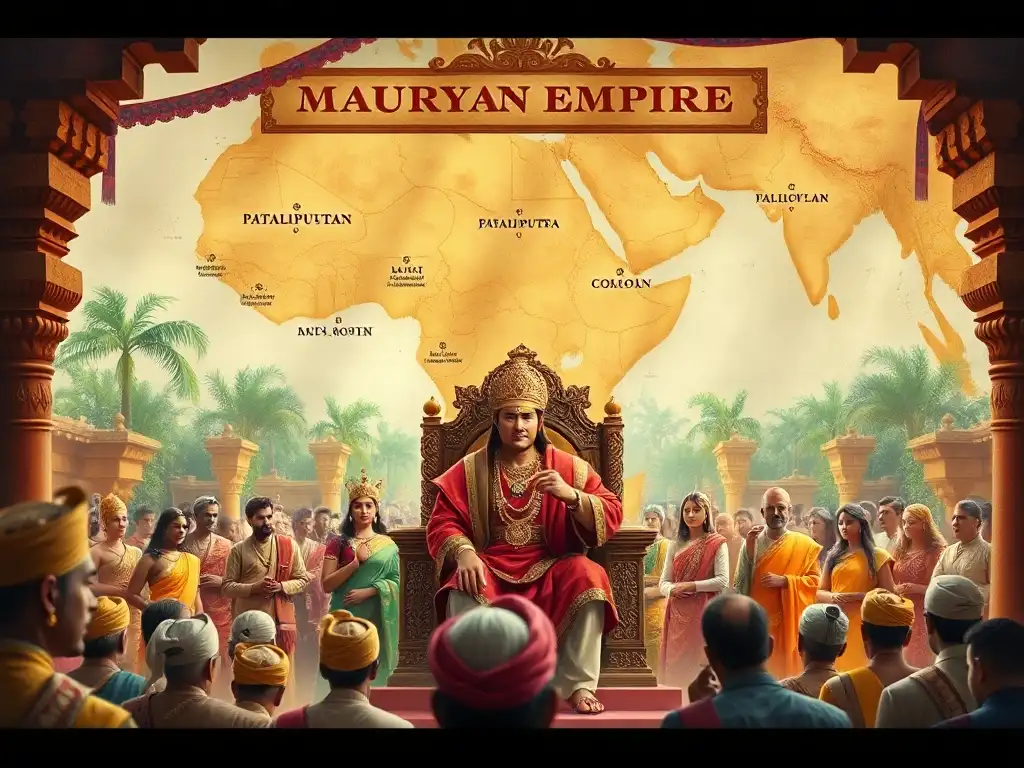
The Maurya Empire, one of the most significant and expansive empires in ancient India, exemplifies a complex interplay between centralization and regional autonomy in its political structure. Established in the 4th century BCE by Chandragupta Maurya, the empire reached its zenith under Ashoka the Great.
Understanding the Maurya Empire political structure is crucial for grasping how this ancient civilization managed to govern a vast territory that included diverse cultures and ethnicities. This article delves into the centralization characteristic of the Maurya Empire, exploring its definition, key features, and the notable institutions that played pivotal roles in maintaining authority and governance across the empire.
Definition of Centralization in Ancient Indian Governance
Centralization refers to the concentration of political power and authority in a central governing body, which makes decisions that apply to the entire state. In the context of ancient Indian governance, centralization was often a response to the challenges of ruling diverse populations and maintaining order across vast territories.
In the Maurya Empire, centralization manifested through a hierarchical administrative structure, where the emperor held supreme power and delegated authority to appointed officials. This approach enabled the Mauryan rulers to implement uniform policies, collect taxes, and enforce laws consistently across the empire, ensuring stability and cohesion.
The political structure of the Maurya Empire was characterized by several key features that underpinned its centralized authority:
- Strong Monarchical Rule: The emperor was the ultimate authority, with absolute power over military, judicial, and administrative functions. This strong central authority was crucial for unifying the diverse regions within the empire.
- Bureaucratic Administration: A well-organized bureaucracy supported the emperor, with officials appointed to various levels of governance. These officials were responsible for implementing the emperor's directives and managing local affairs, ensuring that policies were uniformly applied.
- Standardized Taxation: The central government established a standardized system of taxation that applied across the empire. This not only facilitated revenue collection but also contributed to economic cohesion.
- Legal Uniformity: The Mauryan rulers implemented a codified legal system that provided a uniform set of laws applicable to all subjects, promoting justice and reducing regional disparities.
- Military Centralization: A centralized army, commanded directly by the emperor, was instrumental in maintaining order and responding to external threats, reinforcing the authority of the central government.
Notable Centralized Institutions and Their Roles
Several institutions played critical roles in the centralized governance of the Maurya Empire:
- The Royal Council (Mantriparishad): This council comprised the emperor's trusted advisors and ministers who assisted in decision-making and governance. Their collective expertise ensured that the emperor was well-informed on various matters.
- Provincial Governors (Uparikas): Appointed by the emperor, these governors were responsible for managing the provinces, enforcing the empire's laws, and collecting taxes. They acted as the emperor's representatives, maintaining the link between the central authority and regional administrations.
- Intelligence Network: A sophisticated intelligence system gathered information on local conditions, potential rebellions, and threats to the empire. This network enabled the emperor to make informed decisions and maintain control over the vast territories.
- Law Courts: Established to administer justice uniformly, these courts facilitated the enforcement of laws and provided a mechanism for resolving disputes, thereby reinforcing the central authority.
The political structure of the Maurya Empire exemplified a sophisticated model of centralization, effectively managing the complexities of governance across a vast and diverse empire. Understanding these dynamics is essential for appreciating how the Mauryan rulers navigated the challenges of their time, ensuring stability and continuity in ancient Indian history.
Regional Autonomy in the Maurya Empire Political Structure
Definition and Importance of Regional Autonomy
Regional autonomy within the Maurya Empire political structure refers to the degree of self-governance and independence granted to local provinces or regions. This concept was pivotal for the Mauryan rulers, allowing them to maintain control over a vast and diverse territory while accommodating local customs and governance practices.
The importance of regional autonomy lies in its ability to foster loyalty among local populations. By allowing regions some measure of control, the Maurya Empire could effectively integrate various cultures and ethnic groups, thereby promoting stability and reducing the risk of rebellion. Furthermore, regional governors, or Uparikas, played a crucial role in managing local affairs, ensuring that the central authority's directives were implemented while also respecting regional traditions.
Mechanisms of Regional Governance in the Maurya Empire
The Maurya Empire employed several mechanisms to facilitate regional governance, maintaining a delicate balance between central authority and local autonomy:
- Provincial Administration: The empire was divided into several provinces, each governed by a Uparika. These governors were responsible for the administration, law enforcement, and tax collection within their regions.
- Local Councils: In addition to the governors, local councils comprised of influential citizens assisted in governance. These councils served as advisory bodies, helping to bridge the gap between the central government and local populations.
- Legal Framework: The Arthashastra, an ancient Indian treatise on statecraft, emphasized the importance of regional governance. It provided guidelines for the appointment of officials, tax collection, and justice administration, ensuring that local governance adhered to the empire's overarching laws while allowing for regional adjustments.
- Military Presence: A contingent of the Mauryan military was often stationed in key provinces to ensure compliance with central authority. This presence acted as a deterrent against potential insurrections while reinforcing the legitimacy of the governors.
Examples of Regional Governors and Their Responsibilities
- Uparika Dhananjoy: Serving in the eastern provinces, Dhananjoy was responsible for implementing agrarian policies that promoted crop diversity and improved irrigation. His governance led to increased agricultural output, contributing to the empire's economic stability.
- Uparika Chandragupta: Governing the western territories, Chandragupta focused on trade and commerce. He developed trade routes and established marketplaces, facilitating economic exchanges between regions and enhancing the prosperity of the empire.
- Uparika Ashoka: Before becoming emperor, Ashoka governed the province of Ujjain. His administration was marked by religious tolerance and the promotion of Buddhism. Ashoka’s policies encouraged local customs and practices while aligning with the broader ideological framework of the Mauryan Empire.
- Uparika Samudragupta: Tasked with overseeing the northern frontiers, Samudragupta was instrumental in managing relations with local tribes. His diplomatic efforts ensured peace and stability, allowing for the safe movement of trade caravans.
Through these examples, it becomes evident that regional governors not only managed local affairs but also played a critical role in the political structure of the Maurya Empire. Their ability to navigate the complexities of regional autonomy while adhering to central authority was key to the empire's success.
The Balance Between Centralization and Regional Autonomy
The Maurya Empire, one of the largest and most powerful empires in ancient India, presents a fascinating case study of the political balancing act between centralization and regional autonomy. Established by Chandragupta Maurya in the late 4th century BCE, the empire's political structure was marked by a strong centralized authority, yet it also accommodated significant regional autonomy. This duality played a crucial role in the empire's administration, governance, and longevity.
Historical Context of the Maurya Empire Political Structure
The Maurya Empire emerged in a period marked by political fragmentation and regional kingdoms. The unification of various territories under a centralized rule was a groundbreaking achievement. Chandragupta Maurya, advised by the sage Chanakya, established a bureaucratic governance system that allowed for efficient administration across vast regions.
- Key Features of the Political Structure:
- Central Authority: The Emperor wielded supreme power, supported by a well-organized bureaucracy.
- Provincial Governance: The empire was divided into provinces, each led by a governor (Uparika) who had considerable autonomy to manage local affairs while remaining accountable to the central government.
- Legal Framework: The Arthashastra, authored by Chanakya, provided a philosophical and practical guide for governance, emphasizing the need for a balance between the ruler's power and the welfare of the subjects.
The Maurya Empire's political structure demonstrated a sophisticated understanding of governance, where central authority coexisted with local self-governance, allowing for both unity and diversity within the empire.
Factors Influencing the Balance of Power
Several factors influenced the delicate balance between centralization and regional autonomy in the Maurya Empire:
- Geographical Diversity: The vast and varied landscape of the empire necessitated local governance. Different regions had distinct cultures, languages, and needs, influencing the extent of autonomy granted to local rulers.
- Economic Considerations: The economic prosperity of regions often dictated their autonomy. Wealthier provinces could afford more independence, allowing them to contribute significantly to the empire's treasury while adhering to central policies.
- Military Strategy: The need for a strong military presence to protect the empire from external threats led to a centralized command. However, regional governors often maintained their own local militias, creating a dual military structure that supported both central and local interests.
- Cultural Integration: The Maurya Empire was characterized by religious and cultural diversity. The ability to accommodate various local customs and traditions allowed for greater regional autonomy, fostering loyalty to the empire rather than mere submission to central authority.
Case Studies of Successful Centralization and Regional Autonomy
The Maurya Empire provides several case studies that illustrate the successful implementation of both centralization and regional autonomy:
- Chandragupta Maurya's Administration: Under Chandragupta, the establishment of a centralized bureaucratic framework enabled effective tax collection and law enforcement. His direct oversight ensured loyalty among regional governors, who were often former local rulers.
- Ashoka's Reforms: Emperor Ashoka, known for his commitment to Dharma (moral law), exemplified a shift towards benevolent governance. He promoted local autonomy by encouraging regional assemblies (Mahajanapadas) to participate in decision-making processes, while he maintained central oversight through his edicts.
- Provincial Governance: The province of Taxila is a notable example where the Uparika exercised considerable autonomy, managing local trade and governance effectively while still contributing to the empire’s overall stability and prosperity.
The Maurya Empire's political structure exemplifies a nuanced approach to governance that balanced central authority with regional autonomy. This flexibility allowed the empire to thrive for centuries, adapting to the needs of its diverse population while maintaining a cohesive political identity. The lessons learned from the Maurya Empire's political structure continue to resonate in discussions of governance and administration today.
Impacts of Centralization and Regional Autonomy on Governance
The political structure of the Maurya Empire is characterized by a delicate balance between centralization and regional autonomy. This balance had significant impacts on governance, shaping the administration, economic policies, and cultural dynamics of the empire.
Effects on Administration and Law Enforcement
The Maurya Empire’s political structure was primarily centralized, with a strong emphasis on a unified administrative system. The Chandragupta Maurya, the empire's founder, established a detailed bureaucratic framework that facilitated effective governance across vast territories.
- Central Authority: The emperor held supreme power, and the administration was divided into various departments, each overseen by appointed officials. This arrangement ensured that law enforcement and administrative decisions were consistent across regions.
- Regional Governors: While the central authority was predominant, regional governors (known as Mahamatras) played a crucial role in local governance. They were responsible for implementing the emperor's policies, collecting taxes, and maintaining law and order. This regional governance allowed for localized adaptations of laws and practices, reflecting the diverse needs of different communities.
- Legal Framework: The establishment of a codified legal system, such as the Arthashastra, provided a foundation for law enforcement. The centralized legal framework facilitated uniformity, while regional autonomy allowed for certain local customs to be integrated into law, creating a more adaptable legal environment.
This dual structure fostered a balance that enhanced administrative efficiency while respecting local traditions, ultimately contributing to the stability of the Maurya Empire.
Economic Implications of Centralized vs. Autonomous Regions
The economic landscape of the Maurya Empire was significantly influenced by its political structure. Centralization allowed for extensive infrastructure development and trade regulation, while regional autonomy enabled localized economic strategies.
- Centralized Economic Policies: The Mauryan rulers implemented standardized weights and measures, which facilitated trade and commerce across the empire. This centralization led to the creation of a robust taxation system, ensuring that state revenues were maintained for public projects and military expenditures.
- Regional Economic Autonomy: While major economic policies were decided at the center, regional governors had the flexibility to adapt tax rates and economic practices to suit local conditions. For example, agrarian regions could implement policies that directly addressed agricultural production needs, leading to increased local productivity and wealth.
- Trade Networks: The Maurya Empire’s centralization fostered the development of trade routes, both overland and maritime. This allowed for the exchange of goods, ideas, and cultural practices among diverse regions, enriching the economic fabric of the empire. Regions with access to valuable resources, such as spices and textiles, could leverage their autonomy to negotiate better trade terms.
The interplay between centralized economic policies and regional autonomy created a dynamic economic environment that supported growth and stability throughout the Maurya Empire.
The political structure of the Maurya Empire had profound implications for its cultural and social fabric. The balance between centralization and regional autonomy influenced the dissemination of culture, religion, and social practices.
- Cultural Integration: Central governance promoted a sense of unity and identity among the diverse populations of the empire. However, regional autonomy allowed local traditions and customs to flourish. This blend resulted in a rich cultural tapestry where regional festivals, languages, and practices coexisted with overarching Mauryan cultural elements.
- Religious Tolerance: The Maurya Empire is often noted for its policies of religious tolerance, particularly under Emperor Ashoka. His promotion of Buddhism and respect for other faiths exemplified how centralized authority could support a pluralistic society. Regional leaders often adopted local religious practices, which further encouraged cultural exchanges and interactions among different religious communities.
- Social Mobility: The administrative structure provided avenues for social mobility within the empire. While the central authority laid down laws, regional governance allowed for local adaptations that could benefit diverse social groups. This flexibility contributed to a more inclusive society, where individuals from various backgrounds could rise to positions of influence in both local and central administrations.
The Maurya Empire's political structure, characterized by a blend of centralization and regional autonomy, significantly influenced its governance, economy, and cultural dynamics. This intricate balance enabled the empire to thrive and maintain cohesion while allowing for the rich diversity that defined ancient Indian civilization.
Lessons from the Maurya Empire Political Structure
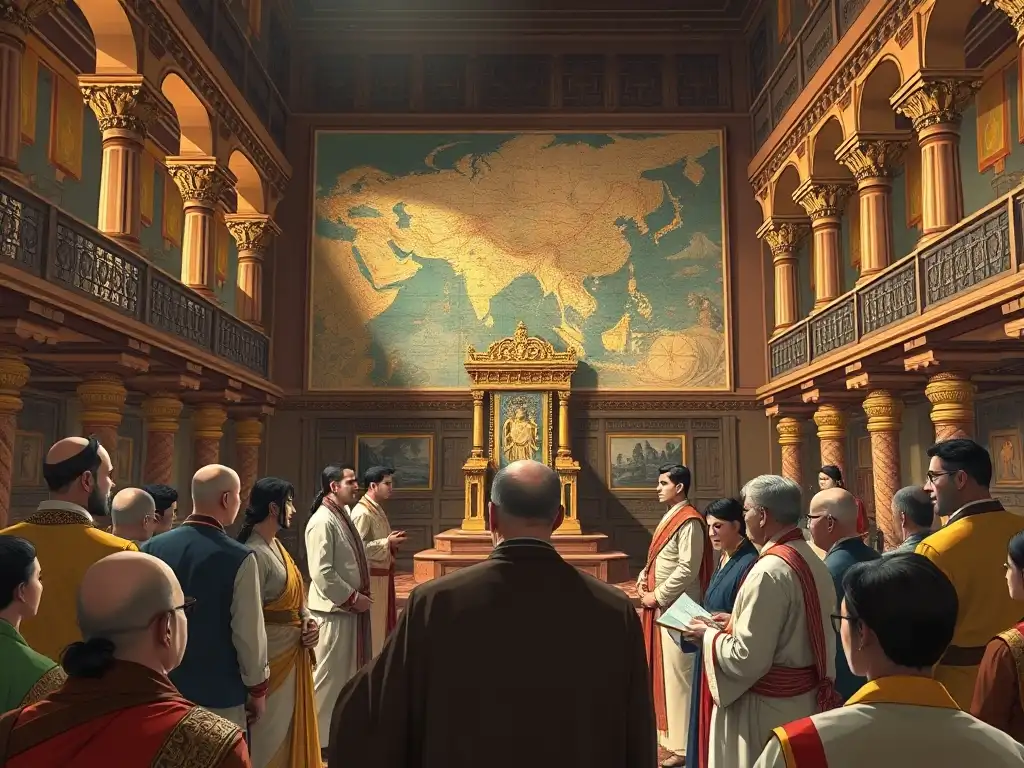
Insights into Effective Governance for Modern States
The political structure of the Maurya Empire offers profound lessons for contemporary governance. Centralization and regional autonomy were not mutually exclusive in this vast empire; instead, they worked in tandem to create a robust administrative framework.
- Central Authority and Local Governance:
- The Mauryan rulers established a strong central authority under the reign of Chandragupta Maurya, which was crucial for maintaining order across diverse territories. This central power was complemented by local governors, or Uparikas, who managed regional affairs. This dual structure illustrates how a balance between centralized power and localized governance can lead to effective administration.
- For modern states, this can translate into the importance of a strong federal system where the central government retains key powers while allowing states or provinces the autonomy to address local issues effectively.
- Bureaucratic Efficiency:
- The Maurya Empire developed a sophisticated bureaucracy that was crucial for governance. The use of trained officials and a clear hierarchy ensured that laws and policies were implemented uniformly across the empire.
- Modern states can draw inspiration from this bureaucratic model by investing in the training and development of civil servants who are capable of managing complex administrative tasks. An efficient bureaucracy can enhance service delivery and promote accountability.
- Adaptability to Regional Differences:
- The Maurya Empire encompassed various cultures, languages, and traditions. The political structure allowed for adaptations that respected local customs while maintaining the overarching authority of the empire.
- This adaptability is vital for contemporary governance, especially in multicultural societies. Policymakers must recognize and incorporate regional identities into the national framework to foster unity and inclusivity.
- Legal Framework and Justice System:
- The Mauryan legal system, under the guidance of figures like Kautilya, emphasized justice and order. The establishment of a codified legal framework ensured that laws were clear and enforced uniformly.
- Modern governments can learn from this by creating transparent legal systems that uphold the rule of law and protect the rights of citizens. Ensuring access to justice is a cornerstone of effective governance.
Relevance of Centralization vs. Regional Autonomy Today
The debate between centralization and regional autonomy remains a pressing issue in contemporary political discourse. Lessons from the Maurya Empire's political structure highlight the significance of this balance in various contexts.
- Global Trends in Governance:
- Many countries today grapple with the challenge of decentralization as they seek to empower local governments while maintaining effective national governance. The Mauryan experience illustrates that both approaches can coexist and yield beneficial outcomes.
- For example, nations like India and Brazil have adopted federal systems that allow for regional autonomy while ensuring national coherence, mirroring the Mauryan model.
- Crisis Management:
- Centralized structures can be effective during national crises, such as natural disasters or pandemics, where swift decision-making is crucial. Conversely, regional autonomy allows for tailored responses that consider local conditions and needs.
- The Maurya Empire’s ability to respond to diverse regional challenges reinforces the importance of flexibility in governance structures, allowing for both centralized decisions and localized implementations.
- Cultural Preservation:
- As globalization advances, preserving local cultures and traditions becomes vital. A political structure that recognizes regional autonomy can help maintain cultural identities while integrating them into a broader national narrative.
- The Maurya Empire successfully managed a multitude of cultural identities, providing a historical precedent for contemporary states that strive to balance national unity with cultural diversity.
- Political Stability and Unity:
- Centralization can promote political stability and unity by creating a strong national identity, while regional autonomy can prevent alienation and foster local engagement in governance.
- The Maurya Empire exemplifies how a well-defined political structure can lead to a stable and prosperous society, serving as a model for modern nations seeking to achieve similar goals.
The Maurya Empire's political structure serves as a rich source of insights for modern governance. By examining the balance of centralization and regional autonomy, contemporary states can develop governance frameworks that are not only effective but also reflective of their diverse populations.
Conclusion

Summary of Key Points on Maurya Empire Political Structure
The Maurya Empire, one of the most significant empires in ancient Indian history, exhibited a unique political structure that balanced centralization and regional autonomy. Here are the key points that encapsulate this intricate political framework:
- Central Authority: The Maurya Empire was characterized by a strong central authority, primarily established by its founder, Chandragupta Maurya. This centralization was crucial for unifying the diverse and culturally rich regions of India under a single governance system.
- Administrative Divisions: The empire was divided into several provinces, known as Mahajanapadas, each governed by a local ruler or governor. This decentralization allowed for effective administration while ensuring that regional issues were addressed promptly. The provinces reported directly to the emperor, maintaining a connection with central leadership.
- Legal System: The Maurya Empire implemented a standardized legal system that applied uniformly across its vast territories. This helped in reducing regional disparities in law enforcement and maintaining order, thus reinforcing the central authority.
- Taxation and Revenue: A well-structured taxation system was developed to support both central and local governance. Taxes were collected at the regional level, which allowed provincial leaders some degree of autonomy while also contributing to the empire’s treasury.
- Military Organization: The Mauryan military was centralized under the emperor, yet regional commanders were often appointed to lead local troops. This strategy ensured loyalty to the central command while allowing local commanders to manage military affairs specific to their regions.
- Cultural Integration: The Maurya Empire promoted cultural integration through policies that encouraged local customs and traditions. This recognition of regional identities helped maintain stability and allegiance to the central government.
Final Thoughts on the Political Balancing Act of the Maurya Empire
The political structure of the Maurya Empire serves as a fascinating case study in governance, showcasing how a powerful central authority can coexist with regional autonomy. This balance was pivotal in sustaining the empire's longevity and facilitating its expansion across a diverse landscape.
By integrating local governance with a strong central administration, the Maurya Empire not only achieved political stability but also fostered an environment where various cultures could thrive. The lessons learned from the Maurya Empire's political balancing act continue to resonate in contemporary discussions of governance and administrative strategies in diverse societies.
The Maurya Empire's political structure exemplifies the complexity and effectiveness of managing a vast empire through a blend of centralization and regional autonomy, establishing a framework that influenced subsequent Indian empires and continues to be studied by historians and political scientists alike.
Frequently Asked Questions
What was the political structure of the Maurya Empire?
The Maurya Empire had a highly centralized political structure, allowing for efficient administration and control over vast territories, while also providing some regional autonomy to local rulers.
How did the Maurya Empire balance centralization and regional autonomy?
The empire implemented a balancing act by enforcing centralized policies while granting local leaders the authority to manage day-to-day affairs, ensuring both control and local governance.
Who were the key figures in the political structure of the Maurya Empire?
Key figures included Chandragupta Maurya, the founder, and Ashoka, his grandson, who played pivotal roles in establishing and consolidating the empire's governance.
What role did administrative divisions play in the Maurya Empire?
The Maurya Empire was divided into provinces known as Mahajanapadas, each governed by appointed officials who ensured the central authority was maintained while addressing local needs.
How did the Maurya Empire's political structure influence later Indian governance?
The centralized and regional governance model established by the Maurya Empire laid the groundwork for subsequent Indian empires, influencing their administrative practices and political organization.
Final Reflection: The Enduring Legacy of the Maurya Empire's Political Structure
The political structure of the Maurya Empire serves as a profound reminder of the delicate balance between centralization and regional autonomy that continues to resonate in today's governance. As we navigate an increasingly interconnected world, the lessons drawn from the Maurya Empire's approach to political organization highlight the importance of adaptability and responsiveness to local needs within a broader framework of authority. The interplay of centralized power and regional autonomy not only shaped the Maurya Empire's success but also offers a blueprint for contemporary political systems grappling with similar challenges.
The Maurya Empire's political structure has left an indelible mark on the cultural and social landscape of governance, influencing various political ideologies and practices throughout history. As we reflect on the complexities of power dynamics, we can see how the balance struck by the Maurya rulers continues to inform discussions on federalism and decentralization in modern states. The greatest power is not the power of the sword, but the power of the mind to govern wisely.
This quote encapsulates the essence of the Maurya Empire's legacy, reminding us that effective governance requires not just authority, but also wisdom in understanding the needs of diverse populations.
As we conclude this exploration of the Maurya Empire's political structure, I invite you to reflect on the implications of centralization and regional autonomy in your own life and community. Consider how the lessons of the past can inform your understanding of governance today. Whether you are involved in local decision-making or simply a concerned citizen, your engagement in the political process can contribute to a more balanced and equitable society. Embrace the opportunity to learn from history, and let the Maurya Empire's legacy inspire you to advocate for a political landscape that honors both unity and diversity.
Unveil the Lessons of Political Balance!
Thank you for diving into the intricate world of the Maurya Empire with us! By exploring the dynamics of centralization and regional autonomy, you’ve gained valuable insights into how these forces shaped one of ancient India's most powerful empires. Now, it's time to take that knowledge beyond the page!
Here are a few practical actions you can take next:
- Join our community: Share your thoughts on how the balance of power influences modern governance by commenting below or participating in our discussion forum!
- Explore further: Delve deeper into the governance strategies of other ancient civilizations. Check out our latest articles to compare their models of leadership.
- Spread the knowledge: Share this article with friends and family who have a passion for history. You never know who might find inspiration in exploring these themes!
How do you think the principles of centralization and autonomy can be applied to today's political landscape? Your perspective could spark a fascinating discussion!