
The Maurya Empire and the Evolution of Political Thought in Ancient India

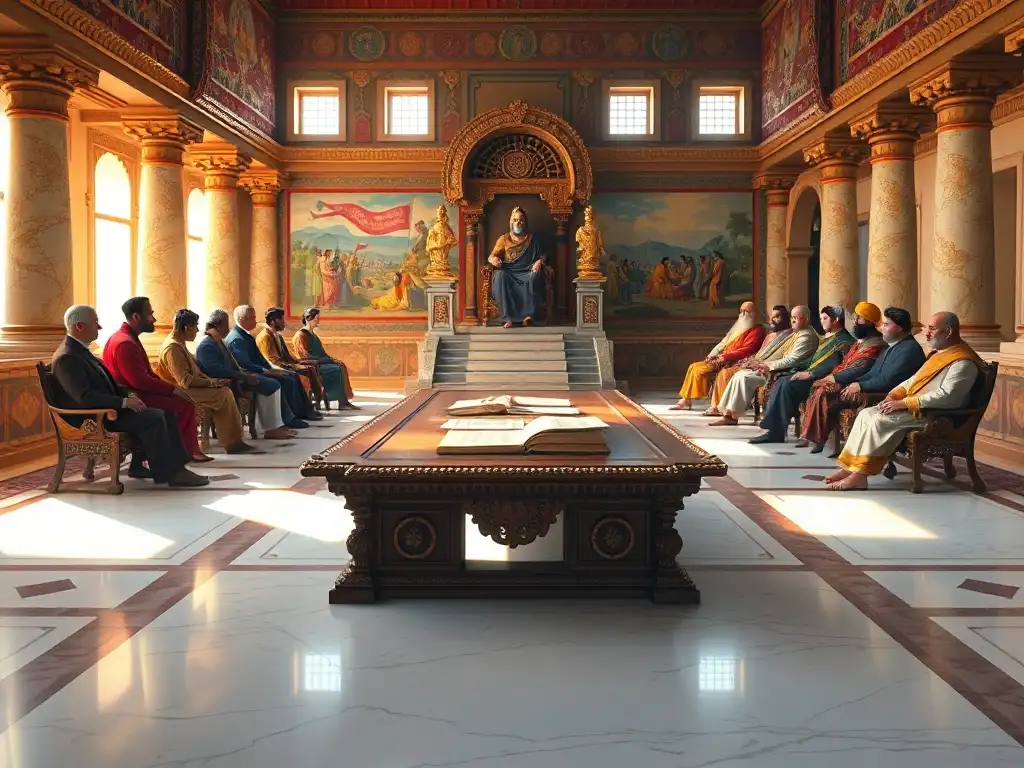
Welcome to Ancient India History, where we embark on a fascinating journey through the rich tapestry of ancient Indian civilizations. From the awe-inspiring achievements of the Indus Valley to the intellectual brilliance of the Gupta Empire, our exploration unveils the myriad contributions that shaped India's past. In our featured article, "The Maurya Empire and the Evolution of Political Thought in Ancient India," we delve into the profound insights of Maurya Empire political thought, a cornerstone of governance that echoes through the ages.
Prepare to ignite your curiosity and deepen your understanding as we unravel the complexities of a civilization that laid the groundwork for modern political ideologies. Your adventure into the depths of history begins here—read on to discover more!
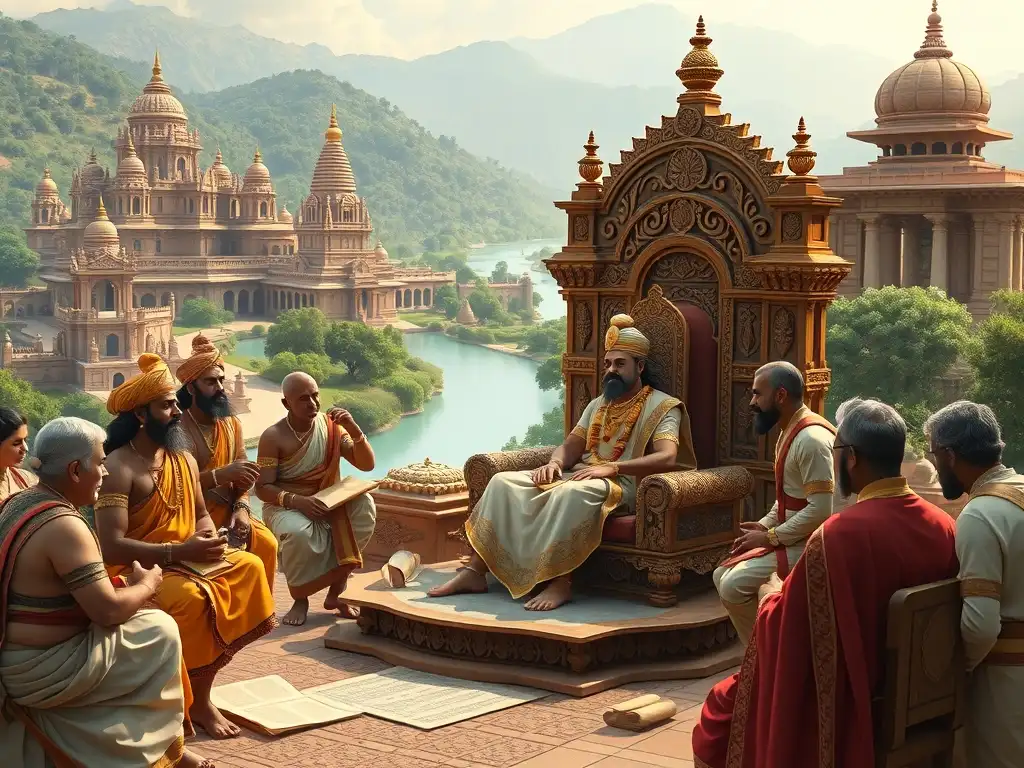
The Maurya Empire stands as one of the most significant and influential empires in ancient Indian history, marking a pivotal moment in the evolution of political thought. Spanning from approximately 322 BCE to 185 BCE, this empire not only unified a vast territory but also laid the groundwork for the political ideologies that would shape governance in the region for centuries to come.
The meticulous organization of governance, coupled with philosophical insights, presents a rich tapestry of political thought that deserves exploration. In this article, we will delve into the intricate dynamics of the Maurya Empire, examining the contributions of its leaders and thinkers, particularly in the realms of political philosophy and governance.
Introduction to the Maurya Empire
Overview of the Maurya Empire's Historical Context
The Maurya Empire emerged during a time of significant socio-political upheaval in ancient India. Following the decline of the fragmented kingdoms of the region, Chandragupta Maurya rose to power, establishing a centralized authority that unified diverse cultures and regions. The empire reached its zenith under Ashoka the Great, known for his remarkable transformation from conquest to compassion, particularly after the Kalinga War. This historical context not only set the stage for the emergence of sophisticated political structures but also influenced the philosophical underpinnings of governance.
Significance of Political Thought in Ancient India
Political thought in ancient India was deeply intertwined with philosophy, ethics, and practical governance. The Maurya Empire, in particular, showcased the evolution of political ideologies, emphasizing the importance of dharma (duty/righteousness) and artha (prosperity) in statecraft. The discussions surrounding authority, power, and the role of the ruler were pivotal in shaping not only the empire's administrative framework but also the broader Indian political landscape. Understanding these concepts is crucial for appreciating the legacy of the Maurya Empire and its impact on subsequent Indian civilizations.
Foundations of Maurya Empire Political Thought
The Influence of Chandragupta Maurya
Chandragupta Maurya, the founder of the empire, was instrumental in establishing a strong centralized government. His strategies for governance emphasized realpolitik, focusing on pragmatic approaches to maintain order and stability. By consolidating power and implementing a bureaucratic system, he set the foundation for political thought that prioritized effective administration over mere territorial expansion. His legacy paved the way for future rulers to adopt similar principles in governance.
Role of Kautilya and the Arthashastra
No discussion of Maurya political thought would be complete without acknowledging Kautilya, also known as Chanakya, the empire's chief advisor and author of the Arthashastra. This ancient treatise on statecraft and military strategy offers profound insights into political theory, emphasizing the significance of diplomacy, espionage, and strategic warfare. Kautilya's ideas on governance, particularly his views on the ruler's responsibilities and the importance of ethics in politics, have had a lasting impact on Indian political thought.
Key Philosophies in Maurya Political Thought
The political philosophies that emerged during the Maurya Empire were characterized by a blend of ethical considerations and practical governance. Key concepts included:
- Dharma: The moral and ethical duties of rulers, emphasizing just governance.
- Artha: The importance of economic prosperity as a foundation for a stable state.
- Rajadharma: The responsibilities of a king towards his subjects, highlighting the ruler’s duty to ensure welfare and justice.
These philosophies not only influenced the Maurya Empire but also set precedents for future Indian political thought, making the exploration of this era essential for understanding the broader narrative of ancient Indian civilizations.
Characteristics of Maurya Empire Political Structure
The Maurya Empire, which flourished from 322 to 185 BCE, is noted for its sophisticated and centralized political structure. This empire was one of the largest in ancient India and set a precedent for subsequent Indian kingdoms. The key characteristics of its political structure included a highly organized bureaucracy, a strong military presence, and a focus on law and order. The Mauryan rulers utilized a blend of traditional Indian governance styles and innovative approaches to administration, which significantly influenced the political landscape of ancient India.
One of the most striking features of the Maurya Empire was its centralized authority. The emperor wielded immense power and was seen as the ultimate source of law and justice. This centralization enabled the empire to maintain control over a vast territory that included diverse cultures and languages. Furthermore, the Mauryan administration was marked by a complex hierarchy that ensured effective governance, with officials appointed to oversee various regions and functions of the state.
Centralized Governance in the Maurya Empire
Central to the Maurya Empire's political thought was the concept of centralized governance. The emperor, often referred to as "Chakravartin," embodied the state and was considered a divine ruler. This central authority was essential for maintaining order and unity in an empire that spanned much of the Indian subcontinent.
Chandragupta Maurya, the founder of the empire, established a strong administrative framework that included a council of ministers known as the "Mantriparishad." This council provided counsel to the emperor on various matters, including governance, taxation, and law enforcement. The central government was responsible for the formulation and implementation of policies that addressed the needs of the empire's diverse population.
Administrative Divisions and Local Governance
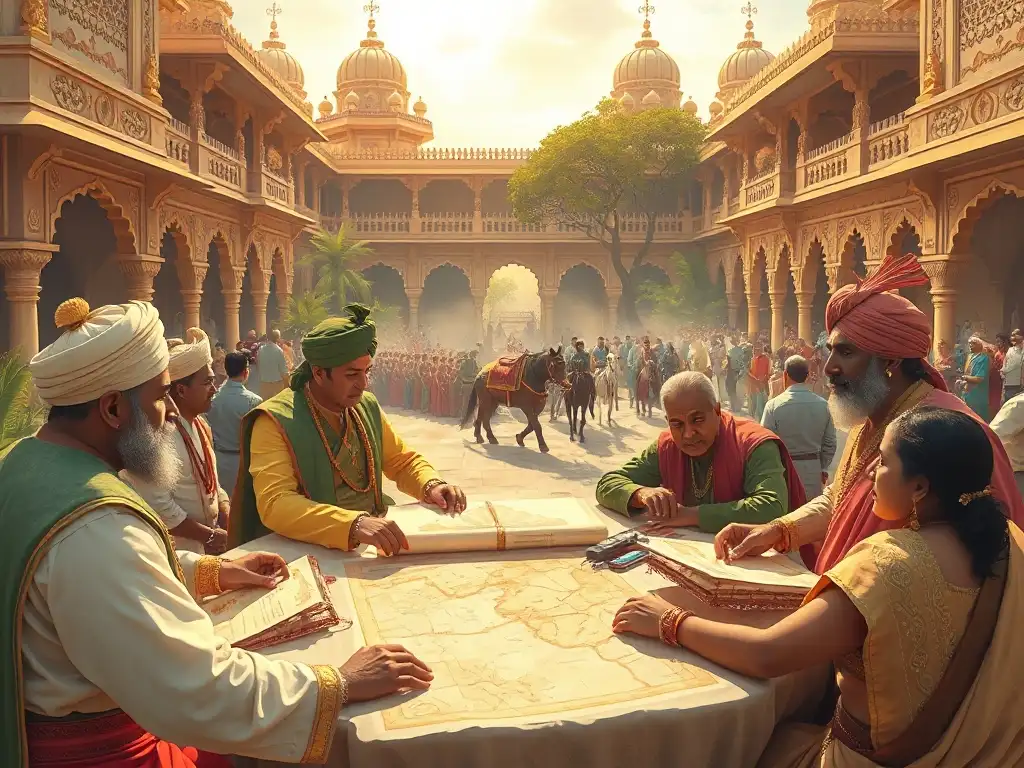
To manage the vast territories effectively, the Maurya Empire was divided into several provinces, each headed by a governor or "Uparika." These governors were appointed by the emperor and were responsible for maintaining law and order, collecting taxes, and overseeing local administration. The provinces were further subdivided into smaller units, such as districts and villages, each with its own local leaders.
This hierarchical structure allowed for efficient local governance while still maintaining a strong connection to the central authority. The local leaders acted as intermediaries between the people and the emperor, ensuring that the needs and grievances of the populace were communicated upwards. This system not only promoted stability but also encouraged civic participation in governance, as local leaders were often chosen from within the community.
Military and Diplomatic Strategies
The military strategies of the Maurya Empire played a crucial role in its political thought and governance. A strong military presence was essential for protecting the empire's borders and maintaining internal stability. The Mauryan army was well-organized and equipped, with a focus on both infantry and cavalry. The use of war elephants also provided a significant tactical advantage in battles.
Diplomatically, the Maurya Empire employed various strategies to expand its influence and maintain peace. This included forming alliances with neighboring kingdoms and employing espionage to gather intelligence on potential threats. Chandragupta and his grandson Ashoka are known for their diplomatic acumen, which allowed the empire to thrive both militarily and politically.
The Evolution of Political Thought Under Ashoka
Ashoka the Great, who ruled from 268 to 232 BCE, significantly transformed the political thought of the Maurya Empire. His reign marked a departure from the militaristic ambitions of his predecessors toward a more humanitarian approach to governance. Ashoka's commitment to non-violence and ethical rule had a lasting impact on Indian political philosophy.
Ashoka's Edicts and Political Philosophy
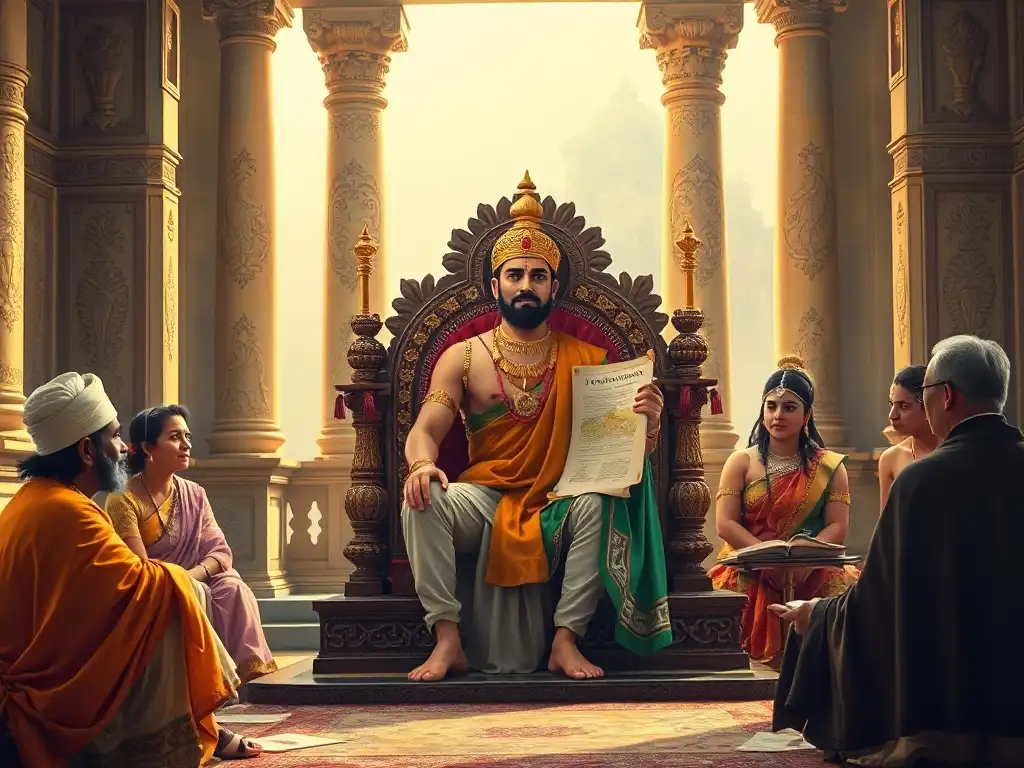
One of the most notable features of Ashoka's reign was his use of edicts to communicate his political philosophy to his subjects. These inscriptions, carved on pillars and rocks throughout the empire, conveyed messages of moral and ethical governance. Ashoka emphasized the importance of justice, compassion, and the welfare of all living beings, which marked a significant evolution in the Mauryan political thought.
His edicts served not only as laws but also as moral guidelines for the people, demonstrating an early understanding of the relationship between governance and ethical conduct. This approach fostered a sense of unity and shared values within the diverse empire.
The Concept of Dhamma in Governance
Central to Ashoka's political philosophy was the concept of "Dhamma," which can be understood as righteousness or moral law. Dhamma was not merely a religious tenet but was integral to governance. Ashoka believed that rulers should govern with compassion and promote the welfare of their subjects, transcending mere political power.
Under Ashoka's rule, the concept of Dhamma became a guiding principle for administration. He established a network of officials known as "Dhamma Mahamatras," who were tasked with promoting ethical behavior and ensuring that the principles of Dhamma were upheld across the empire. This innovative approach to governance left a profound legacy on the subsequent political structures in India.
Impact of Buddhism on Political Thought
The spread of Buddhism during Ashoka's reign greatly influenced the political thought of the Maurya Empire. Ashoka embraced Buddhism after the Kalinga War, which resulted in significant loss of life and suffering. This transformation led him to advocate for peace, tolerance, and non-violence, which became fundamental aspects of his rule.
Buddhism's emphasis on ethical conduct, compassion, and social responsibility resonated with Ashoka's vision of governance. The integration of Buddhist principles into statecraft marked a significant shift in political thought, prioritizing the welfare of the people over traditional conquest and aggression. This legacy of ethical governance continued to shape Indian political philosophy long after the decline of the Maurya Empire.
Comparison of Maurya Political Thought with Other Ancient Indian Civilizations
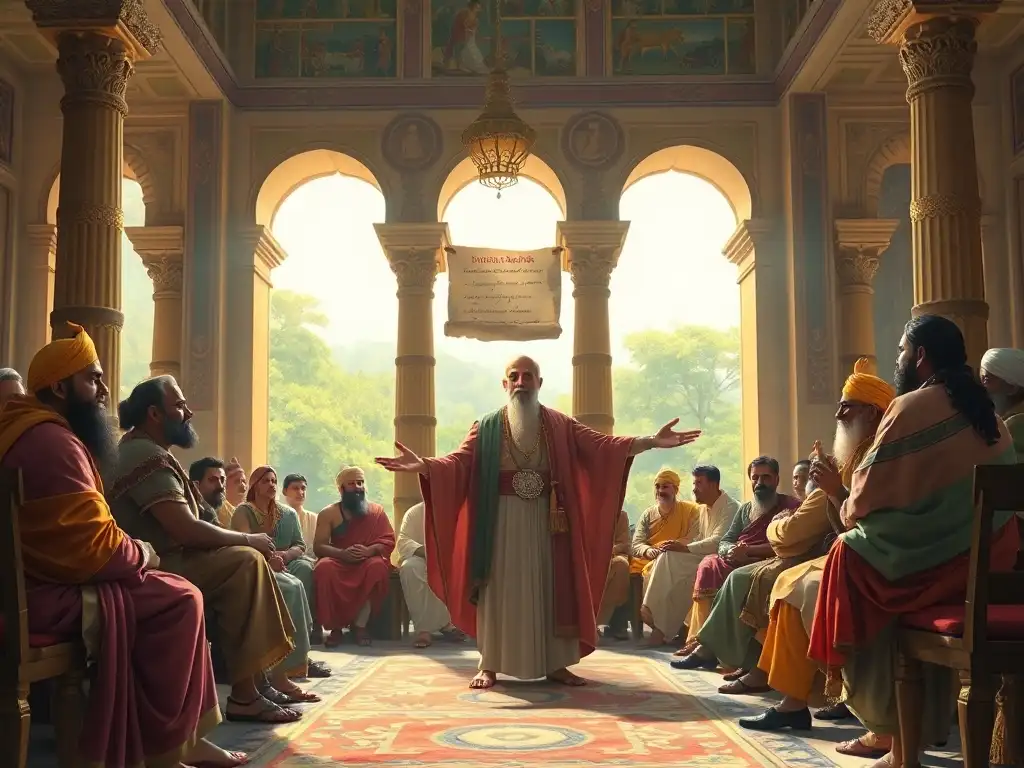
The political thought of the Maurya Empire presents a distinctive evolution when compared to earlier and later civilizations in ancient India. Each civilization had its own unique political frameworks, ideologies, and governance structures that were shaped by their cultural, social, and economic contexts.
Political Thought in the Indus Valley Civilization
The Indus Valley Civilization (approximately 3300–1300 BCE) is known for its advanced urban planning and sophisticated drainage systems, suggesting a high degree of social organization. However, the political thought of this civilization remains somewhat ambiguous due to the scarcity of written records. The governance structure likely revolved around a centralized authority, possibly embodied by priest-kings. The emphasis on trade and agriculture indicates a pragmatic approach to governance, focusing on economic stability and social order rather than ideological underpinnings.
Contrasts with Gupta Empire Political Structures
In contrast to the Maurya Empire, which flourished from 322 to 185 BCE, the Gupta Empire (approximately 320 to 550 CE) exhibited a more decentralized political structure. The Maurya political thought emphasized a strong central authority under the emperor, as articulated in texts like Arthashastra by Kautilya, which advocated for realpolitik and statecraft.
The Gupta Empire, on the other hand, allowed for regional autonomy and a feudal system of governance, which encouraged local rulers to maintain order in exchange for loyalty and tribute. This shift reflects a broader ideological transition from centralized power to a more diversified governance approach, highlighting the evolution of political thought throughout ancient Indian history.
Influence of Vedic Texts on Maurya Governance
The Maurya Empire's political thought was significantly influenced by Vedic texts, particularly the concepts of dharma (righteousness) and rajadharma (the duty of a king). These texts provided philosophical foundations for governance, emphasizing the moral responsibilities of rulers. The Mauryan rulers, including Chandragupta Maurya and his grandson Ashoka, incorporated these principles into their rule, promoting welfare and ethical governance. Ashoka's transformation after the Kalinga War serves as a prominent example of how Vedic philosophy shaped political thought, leading to policies of non-violence and social welfare that were unprecedented in the history of Indian governance.
Legacy of Maurya Empire Political Thought
The Maurya Empire's political thought left an indelible mark on both contemporary and future governance in India. Its influence can be traced through various dynasties and even into modern political theory.
Lasting Impacts on Subsequent Indian Dynasties
The administrative and military strategies developed during the Maurya Empire set a benchmark for subsequent Indian dynasties. The emphasis on a strong central authority and sophisticated bureaucratic systems was adopted by later rulers, including those of the Gupta and Mughal empires. The political ideologies rooted in the Maurya era, particularly concerning the relationship between the state and its subjects, continued to resonate, shaping governance models for centuries to come.
Influence on Modern Political Theories in India
The Maurya Empire's political thought has also influenced modern political discourse in India. Concepts of secularism, social justice, and governance based on ethical principles can trace their origins back to the principles that were consolidated during the Mauryan period. The application of Kautilya's strategies in contemporary political analysis showcases the enduring relevance of Maurya political thought in understanding statecraft and governance today.
The Relevance of Maurya Political Thought Today
In today's context, the political thought of the Maurya Empire remains relevant, particularly in discussions surrounding effective governance, state responsibility, and ethical leadership. Scholars and political theorists often reference Mauryan principles to advocate for a balanced approach to power, where rulers prioritize the welfare of their people while maintaining authority. The legacy of the Maurya Empire serves as a reminder of the importance of integrating moral considerations into political frameworks, highlighting how ancient philosophies continue to inform modern governance and societal values.
Conclusion
The Maurya Empire stands as a significant chapter in the annals of ancient Indian history, particularly in shaping political thought that has reverberated through centuries. The complexities of its administration, the philosophical underpinnings from thinkers like Chanakya, and the implementation of governance models provided a robust framework that influenced not only contemporary states but also future generations. The empire's political doctrines emphasized a blend of pragmatism, ethics, and strategic governance, which remains relevant in today's discussions of political theory and statecraft.
Summary of the Maurya Empire's Contributions to Political Thought
The Maurya Empire, which thrived from 322 to 185 BCE, made remarkable contributions to political thought that were characterized by several key elements:
- Centralized Administration: The Mauryan rulers, particularly Chandragupta Maurya and his grandson Ashoka, established a centralized system that allowed for efficient governance over vast territories. This model set a precedent for future Indian empires and influenced the structure of governance in South Asia.
- Legal Framework: The codification of laws, as seen in Ashoka's edicts, highlighted the importance of legalism in governance. These edicts not only dictated moral and ethical behavior but also promoted social welfare, reflecting a sophisticated understanding of civic responsibility.
- Political Philosophy: The teachings of Chanakya, particularly in his treatise "Arthashastra," laid the groundwork for political strategy and statecraft. His insights into diplomacy, warfare, and economics have been studied for their depth and practicality, establishing principles that are still relevant in modern political discourse.
- Promotion of Dharma: Ashoka's advocacy for Dharma (moral law) emphasized the role of ethics in governance. His commitment to non-violence and social justice transformed the political landscape, encouraging rulers to consider the welfare of their subjects.
These contributions formed a cohesive political ideology that influenced not only the Maurya Empire but also subsequent dynasties and political thought in the Indian subcontinent.
The Importance of Understanding Ancient Indian Political Structures
Understanding the ancient Indian political structures, particularly during the Maurya Empire, is crucial for several reasons:
- Historical Context: Grasping the political frameworks of the Maurya Empire provides insights into the evolution of governance in India. It helps historians and scholars trace the lineage of political systems and their adaptations over time.
- Cultural Influence: The political ideologies developed during the Maurya period have significantly influenced Indian culture and social systems. Acknowledging these contributions allows for a deeper appreciation of India's rich cultural heritage and its philosophical underpinnings.
- Relevance in Modern Governance: Many principles established during the Maurya Empire, such as the importance of ethics in governance and the necessity of a strong central authority, resonate with contemporary political challenges. Understanding these ancient practices can inform modern governance and policy-making.
- Global Political Thought: The Maurya Empire's contributions to political thought are not confined to Indian history; they offer a comparative perspective on governance that can enrich global discussions on political philosophy and statecraft.
The study of the Maurya Empire's political thought provides a comprehensive understanding of the intricate tapestry of ancient Indian civilization, revealing the profound impact of its governance structures on both historical and contemporary contexts.
- Introduction to the Maurya Empire
- Foundations of Maurya Empire Political Thought
- Characteristics of Maurya Empire Political Structure
- Centralized Governance in the Maurya Empire
- Administrative Divisions and Local Governance
- Military and Diplomatic Strategies
- The Evolution of Political Thought Under Ashoka
- Ashoka's Edicts and Political Philosophy
- The Concept of Dhamma in Governance
- Impact of Buddhism on Political Thought
- Comparison of Maurya Political Thought with Other Ancient Indian Civilizations
- Legacy of Maurya Empire Political Thought
- Conclusion
- What was the significance of the Maurya Empire in ancient Indian history?
- How did the Maurya Empire influence political thought in ancient India?
- Who were the key figures associated with political thought during the Maurya Empire?
- What role did Ashoka play in shaping political ideology during the Maurya Empire?
- How does the political thought of the Maurya Empire compare to other ancient civilizations?
Frequently Asked Questions
What was the significance of the Maurya Empire in ancient Indian history?
The Maurya Empire was a pivotal state that unified much of India, promoting political stability and cultural development during its reign, particularly under Ashoka the Great.
How did the Maurya Empire influence political thought in ancient India?
The Maurya Empire introduced concepts of centralized governance and administrative efficiency, which laid the groundwork for later political philosophies and practices in India.
Who were the key figures associated with political thought during the Maurya Empire?
Chanakya (Kautilya) is a prominent figure, known for his work, the Arthashastra, which discusses statecraft, economics, and military strategy, greatly influencing Indian political thought.
What role did Ashoka play in shaping political ideology during the Maurya Empire?
Ashoka emphasized Buddhist principles in governance, promoting non-violence, tolerance, and the welfare of his subjects, marking a shift towards a more ethical political thought.
How does the political thought of the Maurya Empire compare to other ancient civilizations?
The political thought of the Maurya Empire uniquely blended pragmatism with moral philosophy, contrasting with other civilizations that often prioritized military conquest and authoritarian rule.
Final Reflection: The Enduring Legacy of Maurya Empire Political Thought
The exploration of the Maurya Empire's political thought reveals not only the sophistication of ancient governance but also its profound relevance in today's political landscape. As we navigate complex global challenges, the principles established during the Maurya Empire—such as statecraft, justice, and ethical leadership—continue to resonate. The insights from this era remind us that the foundations of political thought are timeless, urging us to reflect on how historical frameworks can inform contemporary governance.
The impact of the Maurya Empire on political thought has shaped cultural and social dynamics throughout history and continues to influence modern political discourse. The emphasis on moral governance and the welfare of the populace echoes in today's calls for ethical leadership. As Chanakya famously stated, There is some self-interest behind every friendship. There is no friendship without self-interests.
This observation underscores the intricate balance between personal ambition and the greater good, a theme that remains relevant as we confront the complexities of modern politics.
As we conclude this exploration, I invite you to reflect on the lessons of the Maurya Empire and consider how they can be applied in your own life and community. Embrace the principles of ethical leadership and civic responsibility that emerged from this ancient civilization. By doing so, you can contribute to a more just and equitable society, ensuring that the wisdom of the past continues to guide us toward a brighter future.
Unveil the Depths of Ancient Political Wisdom!
Thank you for diving into the rich history of the Maurya Empire and its influence on political thought in ancient India. We hope this journey has sparked your curiosity and provided valuable insights!
Now, take the next step in exploring this fascinating topic. Here are some engaging actions you can take:
- Delve deeper into the political philosophies of the Maurya Empire by reading primary texts or engaging with scholarly articles. Start with Kautilya's Arthashastra for a profound understanding of ancient strategies and governance!
- Share your thoughts with friends or on social media! Initiate a discussion about how ancient political strategies can inform modern governance using the hashtag #AncientIndiaWisdom.
- Participate in local history events or online seminars to connect with fellow history enthusiasts and broaden your perspective on the evolution of political thought.
What insights from the Maurya Empire could reshape our understanding of politics today? We invite you to share your thoughts with us in the comments below!