
The Story Behind Zero: Ancient India's Gift to the World of Mathematics


Welcome to Ancient India History, where we embark on a fascinating journey through the rich tapestry of civilization that shaped the world. In this exploration, we dive deep into the intriguing story of ancient India mathematics history, uncovering how this remarkable era gifted the world the concept of zero—a revolutionary idea that transformed mathematical thought. What secrets does the past hold about the minds that crafted these groundbreaking advancements?
Join us as we unravel the legacy of ancient Indian mathematicians and their enduring impact on our understanding of numbers and calculations. Prepare to be captivated by the untold tales that await you!

Introduction to Ancient India Mathematics History
Ancient India boasts a profound and rich history of mathematical innovations that have significantly shaped the world as we know it today. Among these remarkable contributions, the concept of zero stands out as a groundbreaking invention, revolutionizing not only mathematics but also the entire field of science and technology. This article explores the intricate journey of zero, delving into its origins, significance, and the lasting impact it has had on mathematical development across the globe. By understanding the context of ancient Indian mathematics, we can appreciate how this civilization laid the groundwork for contemporary numerical systems and mathematical theories.
Overview of Ancient Indian Contributions to Mathematics
The mathematical advancements of ancient India are a testament to the civilization's intellectual prowess. From the sophisticated urban planning of the Indus Valley Civilization to the intricate astronomical calculations by scholars in the Gupta Empire, India has made remarkable strides in various fields of mathematics. Key contributions include:
- Decimal System: The development of the base-10 numeral system, which is the foundation of modern mathematics.
- Algebra: Early Indian mathematicians made significant contributions to algebra, emphasizing the use of symbols and equations.
- Geometry: The principles of geometry were applied in architecture and astronomy, showcasing India's understanding of shapes and spaces.
- Trigonometry: Ancient Indian texts like the Surya Siddhanta introduced concepts of sine and cosine, influencing later mathematical developments.
These contributions reflect a rich tapestry of knowledge that has influenced not only India but also the world at large.
Importance of Zero in Mathematical Development
The invention of zero is often regarded as one of the most significant breakthroughs in the history of mathematics. It serves as a placeholder in the decimal system, enabling the representation of large numbers and facilitating complex calculations. The importance of zero can be summarized as follows:
- Place Value System: Zero allows for the distinction between numbers such as 10 and 100, establishing clarity in numerical representation.
- Mathematical Operations: Zero plays a critical role in arithmetic operations, especially in addition and subtraction, where it acts as an identity element.
- Algebraic Concepts: The introduction of zero has paved the way for advancements in algebra, allowing for the formulation of equations and facilitating the understanding of negative numbers.
The advent of zero not only transformed mathematical practice but also laid the groundwork for future innovations.
The Concept of Zero in Ancient India
Definition and Significance of Zero
In ancient Indian mathematics, zero was defined not merely as a numeral but as a concept representing the absence of quantity. This abstract understanding of zero was revolutionary and differentiated it from other numbers. The significance of zero can be highlighted through its:
- Role in Calculations: Zero enabled mathematicians to perform complex calculations with ease and precision.
- Philosophical Implications: The concept of void or nothingness found in Indian philosophy parallels the mathematical interpretation of zero, showcasing a profound intellectual tradition.
Evolution of Numerical Systems in Ancient India
The evolution of numerical systems in ancient India reflects a continuous journey toward sophistication. Key milestones include:
- Indus Valley Civilization: Early use of counting systems, including symbols for numbers.
- Vedic Period: Development of arithmetic and geometry, with texts such as the Sulbasutras providing rules for construction and measurement.
- Gupta Period: Flourishing of mathematics, where scholars like Aryabhata and Brahmagupta formalized the use of zero and developed algorithms for arithmetic operations.
This historical progression highlights the dynamic nature of mathematical thought in ancient India, culminating in the monumental invention of zero that continues to influence mathematics today.
Historical Context of Zero's Invention
The invention of zero is a pivotal moment in the history of mathematics and is deeply rooted in the intellectual traditions of ancient India. Prior to the introduction of zero, mathematical systems relied heavily on counting numbers without a symbol to represent the concept of 'nothingness'. This limitation posed challenges in arithmetic operations and the representation of large numbers.
In ancient India, the need for a more sophisticated numerical system arose from various practical applications, such as trade, astronomy, and land measurement. By the 5th century CE, Indian mathematicians began to systematically explore the concept of zero, which would eventually revolutionize mathematics globally. The development of zero was not merely an invention; it was a conceptual leap that allowed for the representation of large numbers and simplified calculations, paving the way for more complex mathematical theories.
The philosophical and cultural environment of ancient India also played a significant role in the acceptance and proliferation of zero. The influence of religious and philosophical thought encouraged abstract reasoning, which facilitated the understanding of the concept of 'nothing' in both mathematical and spiritual terms. This interplay of culture and mathematics set the stage for zero to become an integral part of the numerical system that we use today.
Timeline of Mathematical Developments in Ancient India
- c. 3000 BCE: The emergence of the Indus Valley Civilization, where early mathematical concepts such as geometry and measurements are believed to have been practiced.
- c. 500 BCE: The development of early arithmetic and algebraic ideas as seen in texts like the Sulbasutras, which laid the groundwork for later mathematical advancements.
- c. 400 CE: Aryabhata's work marks a significant turning point in Indian mathematics, showcasing advanced concepts in arithmetic and the introduction of zero as a placeholder.
- c. 628 CE: Brahmagupta's seminal texts further develop the concept of zero, providing rules for arithmetic involving both positive and negative numbers.
- c. 1130 CE: Bhaskara II's contributions integrate mathematics and astronomy, enhancing the understanding and application of zero in various fields.
This timeline highlights the progressive nature of mathematical thought in ancient India, where the invention of zero stands as a key milestone that influenced subsequent developments in mathematics worldwide.
Influential Civilizations Contributing to Mathematics
Ancient India was not the only civilization contributing to the evolution of mathematics, but its unique innovations had lasting impacts. The following civilizations also played significant roles:
- Mesopotamia: Early developments in number systems, particularly base-60 and base-10 systems, influenced later mathematical thought.
- Ancient Greece: The Greeks introduced rigorous proofs and geometry, which complemented Indian mathematical theories.
- China: Chinese mathematicians developed their own systems for computation, which paralleled Indian advancements and later merged with them through cultural exchanges.
These civilizations interacted with Indian scholars, leading to a rich tapestry of mathematical ideas that promoted the growth of concepts like zero, ultimately shaping the global mathematical landscape.
Key Figures in Ancient Indian Mathematics
The story of zero in ancient India cannot be told without acknowledging the key mathematicians whose contributions were crucial in developing and formalizing its use.
Aryabhata: The Pioneer of Indian Mathematics
Aryabhata, often regarded as one of the first significant mathematicians and astronomers in ancient India, lived around 476–550 CE. His work, the Aryabhatiya, is a seminal text that laid the foundation for Indian mathematics. Aryabhata introduced the concept of zero as a placeholder in positional notation and emphasized the importance of calculations involving large numbers.
His contributions also included:
- Methods for calculating the area of a triangle.
- The introduction of sine functions in trigonometry.
- An approximation of π (pi) and the calculation of the length of the solar year.
Aryabhata's innovative approaches and systematic methods established a framework that influenced subsequent generations of mathematicians in India and beyond.
Brahmagupta: Expanding the Concept of Zero
Brahmagupta, who flourished in the 7th century CE, significantly advanced the mathematical understanding of zero in his text Brahmasphutasiddhanta. He is credited with articulating formal rules for arithmetic operations involving zero, including its use in subtraction and division. His notable contributions include:
- Establishing rules for negative numbers and their interactions with zero.
- Providing solutions to quadratic equations.
- Developing methods for calculating the area of cyclic quadrilaterals.
Brahmagupta’s work was groundbreaking, as it not only expanded the concept of zero but also laid the groundwork for algebra, making him a pivotal figure in ancient Indian mathematics.
Bhaskara II: Contributions to Mathematics and Astronomy
Bhaskara II, also known as Bhaskara the Great, lived in the 12th century CE and made substantial contributions to both mathematics and astronomy. His influential work, Lilavati, covers a wide range of mathematical topics, including arithmetic, algebra, and geometry, all while emphasizing practical applications.
Key contributions include:
- A detailed treatment of the rules for arithmetic operations involving zero and negative numbers.
- An exploration of concepts such as permutations, combinations, and the foundations of calculus.
- The introduction of the concept of 'infinitesimals', indicating early ideas leading towards calculus.
Bhaskara II’s legacy highlights the continued evolution of mathematical thought in ancient India, demonstrating how the concept of zero was not only a number but also a gateway to more advanced mathematical theories.
Through their collective efforts, these mathematicians shaped the course of mathematics, defining the significance of zero and setting the stage for future innovations across the globe.
The Role of Zero in Mathematical Innovations
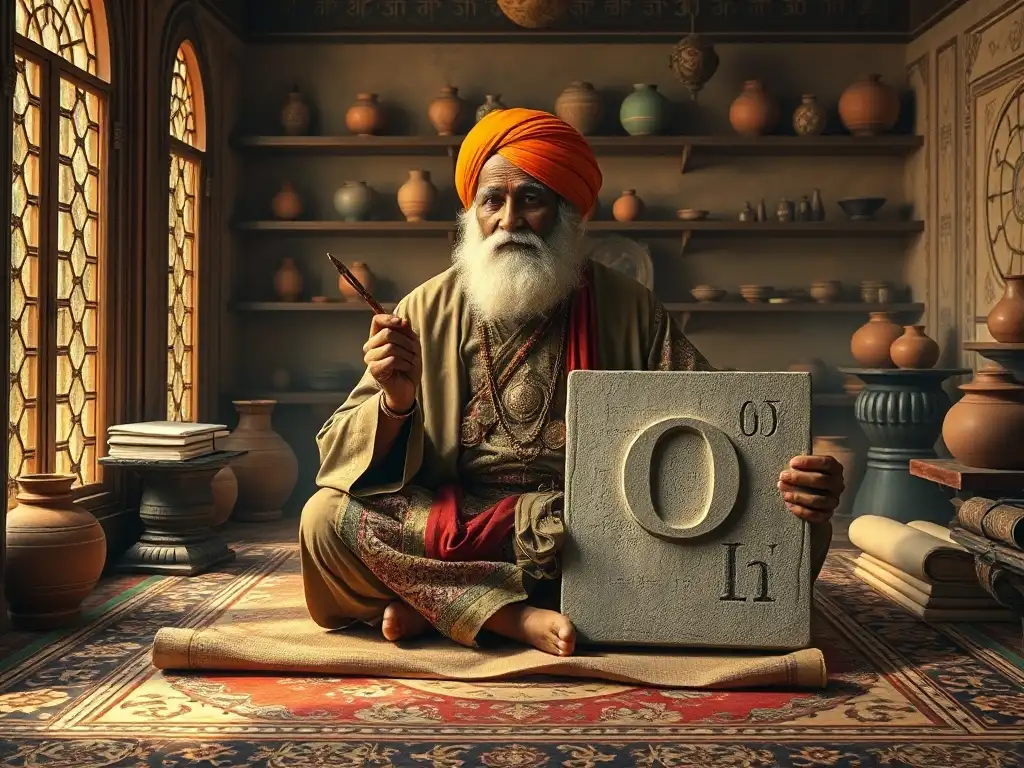
Zero, a seemingly simple concept, plays a monumental role in the evolution of mathematics. Its introduction and subsequent integration into mathematical systems transformed how numbers are understood, manipulated, and used in calculations. The ancient Indian civilization, particularly through the work of mathematicians like Brahmagupta, established zero not just as a number but as a pivotal element in arithmetic operations. This innovation laid the groundwork for advanced mathematical concepts and greatly enhanced the efficiency of calculations, allowing for more complex problem-solving and the development of algebra.
The advent of zero enabled a more sophisticated understanding of the number system, allowing for the representation of large numbers in a compact form. It ushered in a new era of mathematical thought that fostered innovations not only in arithmetic but also in geometry and calculus. The implications of zero's introduction were far-reaching, ultimately influencing various fields such as astronomy, finance, and engineering.
Zero as a Placeholder: Revolutionizing Numerical Representation
One of the most significant contributions of zero in ancient Indian mathematics was its role as a placeholder. In traditional numeral systems without zero, numbers were cumbersome and often ambiguous. For example, the numbers 205 and 25 would be represented without distinction, leading to confusion in calculations and record-keeping. The introduction of zero allowed for clear differentiation between numbers, enabling a more precise and efficient numeral system.
This placeholder function was revolutionary, as it allowed for the representation of large numbers without extensive notation. The positional value system, where the value of a digit is determined by its position relative to zero, became foundational in mathematics. This system not only simplified calculations but also formed the basis for the decimal system that we use today.
The Impact of Zero on Arithmetic Operations
The incorporation of zero into arithmetic operations had profound implications. It allowed for the formulation of rules that govern addition, subtraction, multiplication, and division. For instance, the identity property of addition states that any number plus zero remains unchanged, while subtracting a number from itself yields zero. These fundamental properties facilitated the development of algebraic formulas and equations, transforming mathematics into a more systematic discipline.
Moreover, zero's role in multiplication and division further enhanced its importance. Multiplying any number by zero results in zero, establishing a clear understanding of nullity in calculations. This concept was essential for the development of mathematical theories and the solving of equations, paving the way for later advancements in mathematics.
Zero's Influence on Global Mathematics
The influence of zero extended far beyond the borders of ancient India, shaping mathematical practices around the globe. Its transmission to other cultures marked a significant turning point in the history of mathematics, leading to widespread adoption and adaptation.
Transmission of Zero to the Arab World
The journey of zero from India to the Arab world is a remarkable chapter in mathematical history. Arab mathematicians encountered the concept through trade and scholarly exchanges during the 7th and 8th centuries. They recognized the transformative potential of zero and integrated it into their own mathematical systems. Prominent figures like Al-Khwarizmi were instrumental in propagating the use of zero, leading to the development of algebra. The Arabic numeral system, which included zero, became widely adopted across the Islamic empire, facilitating advancements in various scientific fields.
This cultural exchange laid the foundation for a broader understanding of mathematics, blending Indian concepts with Greek and Roman ideas. The resulting synthesis significantly enhanced mathematical practices in the region, influencing scholars and mathematicians for centuries to come.
The Spread of Zero in Europe and Its Mathematical Significance
Zero eventually made its way to Europe, primarily through translations of Arabic mathematical texts during the Middle Ages. The introduction of zero into European mathematics challenged existing numerical systems and contributed to a paradigm shift in mathematical thought. By the 12th century, the adoption of the Hindu-Arabic numeral system—including zero—began to replace the cumbersome Roman numeral system.
The significance of zero in Europe cannot be overstated. It facilitated the development of advanced mathematics, including calculus and number theory, and became integral to the scientific revolution. Mathematicians such as Fibonacci, who introduced the Hindu-Arabic numeral system to Europe in his work "Liber Abaci," underscored zero's importance as a foundational building block for modern mathematics. This integration ultimately laid the groundwork for the mathematical advancements that would shape the modern world, emphasizing how ancient India's contribution of zero was a gift that transcended time and geography.
Myths and Realities Surrounding the Invention of Zero
The invention of zero is often shrouded in myths that obscure its historical significance. Many people mistakenly believe that zero simply represents the absence of quantity, neglecting its profound impact on mathematics and science. In reality, zero is a pivotal element in the number system, serving both as a placeholder and a number in its own right. Its introduction revolutionized arithmetic and laid the groundwork for more advanced mathematical concepts.
Historically, the journey of zero began long before it was formally recognized in India. However, its most significant advancements occurred in ancient Indian mathematics, where scholars not only defined zero but also explored its properties and applications in depth. This rich history is often overlooked, leading to misconceptions about where and how zero truly emerged in the mathematical landscape.
Common Misconceptions about Zero's Origin
One prevalent misconception is that zero was invented in the Middle Ages or later, often attributing it to European mathematicians. While it is true that the concept of zero gained prominence in Europe during the Renaissance, its origins can be traced back to ancient Indian civilizations, particularly the work of mathematicians like Brahmagupta in the 7th century CE. He was among the first to formulate rules for using zero in calculations, demonstrating its importance in arithmetic operations.
Another myth is that zero was merely an afterthought or an arbitrary symbol. In actuality, zero was a revolutionary concept that changed the way numbers were understood and utilized. It enabled the development of positional numeral systems, which are crucial for representing large numbers and performing complex calculations. This understanding of zero as a foundational element of mathematics is often underappreciated in popular narratives.
Clarifying the Historical Truth of Ancient India's Role
Ancient India played a critical role in the formalization and dissemination of zero. The earliest known use of a symbol for zero dates back to the 5th century CE in Indian inscriptions, where it appeared as a dot. However, it was Brahmagupta's seminal work, "Brahmasphutasiddhanta," that systematically described zero's properties and its operational rules. He established guidelines for arithmetic operations involving zero, including addition, subtraction, multiplication, and division.
Additionally, the influence of Indian mathematics extended beyond its borders. The transmission of knowledge along trade routes facilitated the spread of zero to the Islamic world and subsequently to Europe. This journey underscores the global significance of zero, originating from ancient Indian scholarship and eventually reshaping the mathematical practices of civilizations worldwide.
Conclusion: The Legacy of Zero in Modern Mathematics
The legacy of zero is profound and far-reaching, affecting not only mathematics but also science, engineering, and technology. It serves as a fundamental building block for modern computational systems, enabling everything from basic arithmetic to complex algorithms in computer science. The concept of zero has facilitated advancements in various fields, demonstrating its essential role in fostering innovation and understanding in the modern world.
Reflections on Ancient India’s Influence on Contemporary Mathematics
The contributions of ancient Indian mathematicians extend beyond the invention of zero; they laid the groundwork for numerous mathematical principles still used today. Concepts such as negative numbers, the decimal system, and algebra were all significantly influenced by the work done in ancient India. The intellectual legacy of these mathematicians continues to inspire contemporary scholars and practitioners in mathematics, emphasizing the importance of cross-cultural exchanges in the evolution of mathematical thought.
The Ongoing Relevance of Zero in Today's Mathematical Practices
In today’s mathematical practices, zero remains a vital element. It serves as a crucial component in various mathematical operations and concepts, including limits in calculus, the definition of functions, and the representation of null values in data science. The understanding and application of zero are essential in fields ranging from economics to computer programming, highlighting its ongoing relevance in an ever-evolving mathematical landscape. The story of zero is not just a chapter in history; it is a continuing narrative that underscores the importance of ancient contributions to modern science and mathematics.
- Introduction to Ancient India Mathematics History
- The Concept of Zero in Ancient India
- Historical Context of Zero's Invention
- Key Figures in Ancient Indian Mathematics
- The Role of Zero in Mathematical Innovations
- Zero's Influence on Global Mathematics
- Myths and Realities Surrounding the Invention of Zero
- Conclusion: The Legacy of Zero in Modern Mathematics
- What is the significance of zero in ancient Indian mathematics?
- Who were the key contributors to the development of mathematics in ancient India?
- How did ancient Indian mathematics influence other cultures?
- What role did the Gupta Empire play in the history of mathematics?
- How did ancient Indian mathematics differ from that of other civilizations?
Frequently Asked Questions
What is the significance of zero in ancient Indian mathematics?
Zero was a revolutionary concept introduced by ancient Indian mathematicians, fundamentally changing how numbers and calculations were understood and used globally.
Who were the key contributors to the development of mathematics in ancient India?
Prominent figures such as Aryabhata and Brahmagupta made significant contributions, including advancements in algebra, geometry, and the concept of zero.
How did ancient Indian mathematics influence other cultures?
The mathematical innovations from ancient India, particularly the decimal system and the concept of zero, greatly influenced mathematics in the Middle East and later in Europe.
What role did the Gupta Empire play in the history of mathematics?
The Gupta Empire is often regarded as a golden age for mathematics, where scholars made remarkable progress in mathematics, astronomy, and scientific theories.
How did ancient Indian mathematics differ from that of other civilizations?
Ancient Indian mathematics focused heavily on practical applications such as astronomy and commerce, distinguishing it from other civilizations that emphasized theoretical mathematics.
Final Reflection: The Enduring Legacy of Zero in Ancient Indian Mathematics
In a world that thrives on innovation and technological advancement, the concept of zero stands as a testament to the brilliance of ancient Indian mathematics. This revolutionary idea not only transformed mathematical practices but also laid the groundwork for modern computational systems. Today, as we navigate an increasingly digital landscape, the importance of zero resonates more than ever, reminding us that even the smallest concepts can have monumental impacts on our understanding of the universe.
The influence of zero extends far beyond its numerical value; it has reshaped our cultural and social landscapes, fostering a deeper appreciation for the intellectual contributions of ancient civilizations. As we reflect on the rich tapestry of mathematical history, we recognize the profound connection between past innovations and contemporary thought. Mathematics is the language in which God has written the universe.
— Galileo Galilei. This quote encapsulates the essence of how ancient Indian mathematicians, through their pioneering work, have provided us with the tools to decipher the complexities of existence, urging us to honor their legacy in our pursuit of knowledge.
As we conclude this exploration of ancient India's gift to the world, I invite you to reflect on the lessons embedded in the story of zero. Consider how this seemingly simple concept can inspire you to embrace challenges and think creatively in your own life. Let the legacy of ancient Indian mathematics motivate you to seek out the hidden potential in your endeavors, reminding you that every great achievement begins with a single idea, no matter how small. Embrace the journey of discovery, and allow the wisdom of the past to guide your future.
Unveil the Power of Zero in Your Life!
Thank you for diving into the captivating story of zero and its monumental impact on mathematics! You've unlocked a deeper understanding of this ancient gift from India, showcasing the brilliance of Indian scholars. Now, let's take this knowledge and make it actionable!
- Explore how zero influences modern technology and calculations—consider enrolling in a course that focuses on practical applications of mathematics in everyday life.
- Share this article with friends and family to spark discussions about the beauty of mathematics and its rich history.
- Engage with your local community by attending or organizing a math-themed event or workshop to celebrate the legacy of ancient Indian contributions to mathematics.
How has the concept of zero changed your perspective on mathematics or everyday problem-solving? We invite you to share your thoughts with us below!