
The Influence of Nagarjuna: His Role in the Development of Emptiness

Welcome to Ancient India History, where we embark on a fascinating journey through the rich tapestry of ancient Indian civilizations. Dive deep into the profound teachings and transformative influence of Nagarjuna on Buddhism, a pivotal figure whose philosophical insights reshaped the very foundations of this ancient religion. Ready to unravel the mysteries of emptiness and discover how Nagarjuna's thoughts continue to resonate in spiritual practices today? Join us as we explore the intricate connections between philosophy and faith in our in-depth article. Your adventure into the captivating world of ancient India starts here!
Introduction to Nagarjuna's Influence on Buddhism
Nagarjuna, one of the most pivotal figures in the history of Buddhism, has made profound contributions that continue to shape Buddhist philosophy and practice today. His exploration of the concept of emptiness (śūnyatā) has not only influenced Mahayana Buddhism but has also provided a critical framework for understanding the nature of reality.
By articulating the interdependence of all phenomena and challenging essentialist views, Nagarjuna's teachings encourage a deeper inquiry into the self and the universe. This article delves into Nagarjuna's influence on Buddhism, examining his philosophical innovations, the historical context of his work, and the lasting impact of his ideas on subsequent Buddhist thought.
Overview of Nagarjuna’s Life and Context
Nagarjuna was born around the 2nd to 3rd century CE in South India, during a time when Buddhism was transitioning and expanding across various regions. His life is shrouded in a mix of historical fact and legend, but he is widely recognized as the founder of the Madhyamaka school of Mahayana Buddhism.
- Historical Background:
- The period of Nagarjuna's life was characterized by significant developments in Indian philosophy, including the rise of various schools of thought that debated metaphysical concepts.
- This era saw the flourishing of trade routes and cultural exchanges, which allowed for the transmission of ideas across regions.
- Philosophical Context:
- Nagarjuna's work emerged in response to both the earlier Buddhist teachings and the philosophical challenges posed by rival schools, particularly the Brahmanical traditions.
- His critique of inherent existence and the establishment of the concept of emptiness were revolutionary, offering a middle path that avoided the extremes of nihilism and eternalism.
Nagarjuna's philosophical contributions, especially as articulated in his seminal text, the Mūlamadhyamakakārikā (Fundamental Verses on the Middle Way), laid the groundwork for a profound understanding of the nature of reality. His influence extends beyond Buddhism, impacting various fields such as logic, epistemology, and metaphysics, marking him as a key figure in the broader landscape of ancient Indian philosophy.
The Concept of Emptiness in Buddhism
The concept of emptiness, or śūnyatā, is a fundamental aspect of Buddhist philosophy that plays a crucial role in understanding the nature of reality. Emptiness transcends mere nihilism; it articulates that all phenomena are devoid of intrinsic existence and are instead interdependent and contingent. This principle reshapes the perception of self and the universe, leading to a profound understanding of suffering and the path to enlightenment.
At its core, emptiness suggests that nothing possesses a permanent, unchanging essence. Instead, everything is in a constant state of flux, influenced by various conditions and causes. This understanding encourages practitioners to let go of attachment and the illusion of self-identity, facilitating a journey toward liberation.
Definition of Emptiness (Śūnyatā)
Emptiness (śūnyatā) is defined as the lack of inherent existence in all phenomena. This concept implies that objects, thoughts, and even perceptions do not exist independently but arise in dependence on other factors. For instance, a chair is not merely a chair; it is a product of wood, craftsmanship, and the context in which it exists. Thus, when we say something is empty, we mean it is devoid of an independent, permanent essence.
In Buddhist thought, understanding emptiness is crucial for overcoming ignorance, which perpetuates suffering. By recognizing that all things are interdependent, practitioners can cultivate compassion and wisdom, moving closer to enlightenment.
Historical Context of Emptiness before Nagarjuna
Before Nagarjuna's contributions, the idea of emptiness existed within early Buddhist teachings but was not fully articulated. The foundational teachings of the Buddha, primarily the Four Noble Truths and the concept of anatta (non-self), laid the groundwork for understanding emptiness. However, these ideas were often inadequately explored regarding their implications for the nature of reality.
In the early schools of Buddhism, particularly the Theravada tradition, the emphasis was on the realization of non-self and the impermanence of phenomena. The Abhidharma texts presented a more systematic categorization of experience but fell short of a comprehensive philosophical examination of emptiness. Thus, while the seeds of the understanding of emptiness were present, it was Nagarjuna who would later refine and elevate this concept to a central philosophical tenet in Mahayana Buddhism.
Nagarjuna's Philosophical Contributions
Nagarjuna, a pivotal figure in Buddhist philosophy, is credited with systematizing the concept of emptiness and establishing its significance in Mahayana Buddhism. His work profoundly influenced the direction of Buddhist thought and practice, particularly through the development of Madhyamaka philosophy, which emphasizes the middle way between existence and non-existence.
Nagarjuna's arguments and methodologies provided a robust framework for understanding the complexities of reality, leading to deeper insights into the nature of suffering and liberation. His philosophical contributions continue to resonate within contemporary Buddhist practice and scholarship.
Development of Madhyamaka Philosophy
The Madhyamaka philosophy, founded by Nagarjuna, centers around the idea of the middle way, which avoids the extremes of eternalism (the belief in a permanent self) and nihilism (the belief in non-existence). Nagarjuna argued that all phenomena lack inherent existence and that they are only real in terms of their dependent origination.
This philosophical stance is articulated through Nagarjuna's famous doctrine of two truths: the conventional truth (the reality of everyday experiences) and the ultimate truth (the emptiness of all phenomena). By navigating these two truths, practitioners can cultivate a deeper understanding of reality, leading to the alleviation of suffering.
Nagarjuna’s works, such as the Mūlamadhyamakakārikā (Fundamental Verses on the Middle Way), articulate his views logically and rigorously, challenging prevailing notions of existence and non-existence. This development marked a significant shift in Buddhist philosophy, positioning emptiness as a central theme in the path toward enlightenment.
Key Texts by Nagarjuna
Nagarjuna authored several influential texts that form the cornerstone of Mahayana Buddhist philosophy. Among the most notable are:
| Text Title | Description |
|---|---|
| Mūlamadhyamakakārikā | This foundational text articulates the principles of Madhyamaka philosophy, exploring the nature of reality and the concept of emptiness. |
| Vigrahavyāvartanī | A work that addresses and refutes various philosophical positions, solidifying Nagarjuna's arguments regarding the emptiness of all phenomena. |
| Yuktiṣaṣṭika | This text focuses on reasoning and logic, demonstrating how analysis and critical thought can lead to understanding the nature of emptiness. |
| Suhrllekha | A series of verses that elaborate on the practice of compassion and the application of emptiness in daily life and spiritual practice. |
These texts not only elucidate Nagarjuna's philosophical ideas but also serve as essential resources for practitioners seeking to deepen their understanding of emptiness and its implications for Buddhist practice. Through his writings, Nagarjuna left an indelible mark on the evolution of Buddhism, shaping its trajectory and enriching its philosophical discourse.
Nagarjuna's Influence on Buddhist Thought
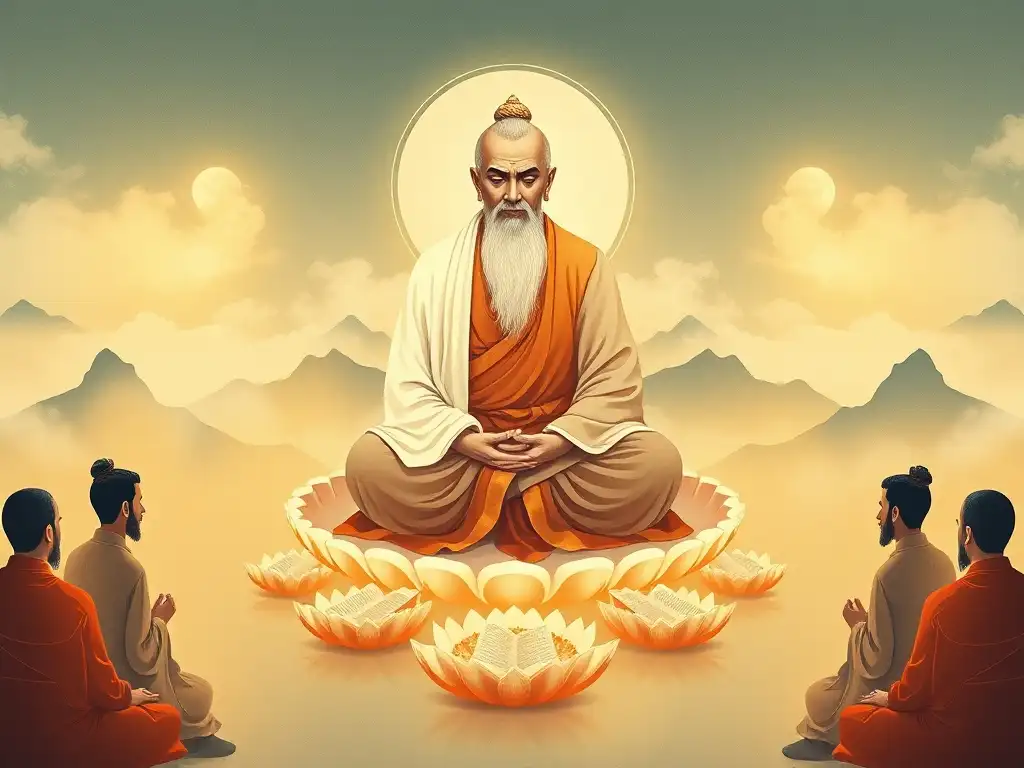
Nagarjuna, a prominent philosopher of the second century CE, is often regarded as one of the most significant figures in the evolution of Buddhist thought. His contributions led to the establishment of the Madhyamaka school of philosophy, which emphasizes the concept of śūnyatā, or emptiness. This foundational principle not only reshaped the understanding of reality within Buddhism but also influenced various schools of thought, leading to new interpretations and practices that are still relevant today. Nagarjuna's dialectical method challenged existing notions of permanence and identity, encouraging deeper inquiry into the nature of existence, suffering, and liberation.
Through his seminal works, particularly the Mūlamadhyamakakārikā (Fundamental Verses on the Middle Way), Nagarjuna articulated the idea that all phenomena are empty of inherent existence. This radical perspective shifted the focus of Buddhist philosophy from a dualistic understanding of reality to a more nuanced appreciation of interdependence and relativity. As a result, Nagarjuna's influence extends beyond his time, inspiring countless scholars and practitioners to explore the depths of Buddhist teachings.
Impact on Mahayana Buddhism
Nagarjuna's philosophical insights played a crucial role in the development of Mahayana Buddhism, which emerged as a significant movement within the tradition. Central to Mahayana thought is the notion of compassion and the aspiration to attain Buddhahood for the benefit of all sentient beings. Nagarjuna's teachings on emptiness reinforced this ideal by illustrating that all beings and phenomena are interconnected and lack an independent essence. By understanding emptiness, practitioners can cultivate compassion and wisdom, realizing that their suffering is not separate from the suffering of others.
Moreover, Nagarjuna's interpretation of the Two Truths—the conventional and the ultimate—provided a framework for Mahayana practitioners to navigate the complexities of existence. The conventional truth acknowledges the everyday experiences of life, while the ultimate truth reveals the emptiness of all phenomena. This dualistic approach allows followers to engage in the world compassionately while maintaining a profound understanding of the nature of reality. Consequently, Nagarjuna's influence is deeply embedded in Mahayana texts and practices, shaping the spiritual landscape of Buddhism for centuries.
Influence on Later Buddhist Philosophers
Nagarjuna's impact on subsequent Buddhist philosophers cannot be overstated. His dialectical method and emphasis on emptiness inspired a lineage of thinkers such as Bhāviveka, Candrakīrti, and Shantideva, who further developed and expanded upon his ideas. These philosophers built upon Nagarjuna's framework, refining concepts related to emptiness, the nature of consciousness, and the path to enlightenment.
For instance, Candrakīrti, a pivotal figure in the Madhyamaka tradition, elaborated on Nagarjuna's teachings by emphasizing the importance of logic and reasoning in understanding emptiness. His works often focused on defending Nagarjuna's views against critiques while advocating for a compassionate approach to the practice of Buddhism. Similarly, Shantideva's Bodhicaryāvatāra (A Guide to the Bodhisattva's Way of Life) reflects the essence of Nagarjuna's teachings by demonstrating how the understanding of emptiness can lead to profound ethical and compassionate action.
In this way, Nagarjuna's philosophical contributions established a rich intellectual tradition that shaped the development of Buddhist thought across cultures, continuing to resonate in contemporary discourse.
Global Influence of Nagarjuna's Teachings
Nagarjuna's teachings have transcended geographical and cultural boundaries, significantly influencing Buddhism as it spread throughout Asia and beyond. His ideas on emptiness found resonance in various Buddhist traditions, including Tibetan Buddhism, Zen, and even the modern interpretations of Buddhism practiced in the West.
In Tibetan Buddhism, for example, Nagarjuna's writings are revered and studied extensively, with Tibetan philosophers like Tsongkhapa further elaborating on his concepts. The integration of emptiness into Tibetan practices highlights the universality of Nagarjuna's insights, demonstrating their applicability across different contexts and spiritual lineages.
Furthermore, in the West, Nagarjuna's philosophy has attracted attention from scholars and practitioners interested in comparative philosophy, existentialism, and even contemporary psychology. His emphasis on the impermanent and interconnected nature of reality aligns with modern scientific understandings of the universe, fostering dialogues that bridge ancient wisdom and contemporary thought. Through these various pathways, Nagarjuna's influence continues to enrich the global discourse on spirituality and philosophy.
The Role of Emptiness in Buddhist Practice
Emptiness, or śūnyatā, is not merely a philosophical concept but a practical tool in Buddhist practice. It serves as a lens through which practitioners can gain insight into the nature of existence, leading to profound transformations in their understanding of themselves and the world around them. By contemplating emptiness, one can cultivate a sense of detachment from fixed identities and rigid beliefs, fostering a more open and compassionate mindset.
In meditation, the concept of emptiness allows practitioners to observe their thoughts and emotions without clinging to them. This detachment is crucial for developing insight into the transient nature of experiences and the illusory nature of self. The realization of emptiness can lead to a significant reduction in suffering, as it helps individuals to release attachments and aversions that contribute to their emotional turmoil.
Emptiness and its Implications for Meditation
In the context of meditation, understanding emptiness can lead to deeper states of awareness and tranquility. Practitioners often engage in vipassanā (insight) meditation, focusing on the impermanence of thoughts and sensations. By recognizing that all experiences are fleeting and devoid of inherent existence, meditators can cultivate a profound sense of peace and acceptance.
Furthermore, the practice of zazen in Zen Buddhism emphasizes the direct experience of emptiness. By sitting in stillness and observing the mind, practitioners can awaken to the reality of non-duality, where the distinction between subject and object dissolves. This experiential understanding of emptiness can lead to transformative insights and a deeper connection with the world.
The implications of emptiness for meditation extend beyond personal tranquility; they also encourage a compassionate engagement with the world. As practitioners realize the interconnectedness of all beings, they are inspired to embody compassion and altruism in their daily lives.
Practical Applications of Emptiness in Daily Life
The teachings on emptiness have practical applications that extend into everyday life, influencing how individuals relate to themselves, others, and their experiences. By recognizing the impermanent and interdependent nature of all phenomena, practitioners can develop greater resilience and adaptability in the face of challenges.
Practically, the understanding of emptiness encourages individuals to let go of rigid expectations and attachments. This flexibility can lead to healthier relationships, as one learns to approach interactions with an open heart and mind, free from preconceived notions and judgments.
Additionally, applying the principle of emptiness can foster a sense of gratitude and appreciation for life. By seeing the beauty in impermanence and the interconnectedness of existence, individuals can cultivate a deeper sense of fulfillment and joy.
Ultimately, the practical applications of emptiness enrich daily experiences, fostering a mindful approach to life that is rooted in compassion, understanding, and a profound appreciation for the present moment.
Conclusion: The Lasting Legacy of Nagarjuna on Buddhism
Nagarjuna's profound contributions to Buddhist philosophy, particularly through his development of the concept of śūnyatā or emptiness, have left an indelible mark on the tradition. His dialectical approach not only challenged existing philosophical paradigms but also paved the way for new interpretations of Buddhist teachings. By articulating the interconnectedness of all phenomena, Nagarjuna emphasized that understanding emptiness is crucial for enlightenment and liberation from suffering.
The implications of his teachings extend beyond academic discourse; they have influenced various schools of Buddhism, including Mahayana and Vajrayana. Nagarjuna's work remains a cornerstone in Buddhist philosophy, encouraging practitioners to engage deeply with the nature of reality and the self. His legacy endures in contemporary discussions about the nature of existence, ethics, and the path to spiritual awakening, showcasing the timeless relevance of his insights.
Further Reading on Nagarjuna's Influence on Buddhism
To fully grasp the depth of Nagarjuna’s role in shaping Buddhist thought, a variety of texts and resources are available. These works provide essential perspectives on his philosophy, contextualize his contributions, and explore the impact of his ideas on later Buddhist traditions.
Recommended Texts and Resources
-
"Nagarjuna: The Philosophy of the Middle Way" by David Kalupahana
This text offers a comprehensive analysis of Nagarjuna's philosophy, particularly his views on emptiness and the Middle Way.
-
"The Fundamental Wisdom of the Middle Way" (Mūlamadhyamakakārikā) by Nagarjuna, translated by Jay Garfield
This essential work is a direct engagement with Nagarjuna's thoughts, providing readers with firsthand insight into his philosophical arguments.
-
"The Emptiness of Emptiness: An Introduction to Early Indian Madhyamaka" by C. W. Huntington and Gail Hinich
This book explores the nuances of emptiness in Nagarjuna's work and its implications for the broader Buddhist tradition.
-
"Nagarjuna in Context: Mahayana Buddhism and the Philosophy of the Middle Way" by Steven M. Emmanuel
This resource situates Nagarjuna within the historical and philosophical landscape of Mahayana Buddhism, offering valuable context for understanding his influence.
Online Lectures and Courses on Nagarjuna and Emptiness
-
"Introduction to Nagarjuna's Philosophy" – This online course provides a foundation in Nagarjuna's major concepts and their relevance in modern Buddhist thought.
-
YouTube Lecture Series by Robert Thurman
Renowned scholar Robert Thurman offers a series of engaging lectures discussing Nagarjuna’s philosophy and its impact on contemporary Buddhism.
-
Coursera Course: "Buddhist Philosophy"
This course includes sections specifically focused on Nagarjuna, allowing participants to delve into his teachings and their applications in practice.
-
Podcast: "Buddhism in the Modern World"
Episodes featuring discussions on Nagarjuna’s influence provide a contemporary lens through which to view his teachings and their ongoing significance.
These resources and lectures serve as gateways to deeper understanding, encouraging further exploration into the rich tapestry of Nagarjuna's philosophical legacy within Buddhism.
- Introduction to Nagarjuna's Influence on Buddhism
- Overview of Nagarjuna’s Life and Context
- The Concept of Emptiness in Buddhism
- Nagarjuna's Philosophical Contributions
- Nagarjuna's Influence on Buddhist Thought
- The Role of Emptiness in Buddhist Practice
- Conclusion: The Lasting Legacy of Nagarjuna on Buddhism
- Further Reading on Nagarjuna's Influence on Buddhism
- What was Nagarjuna's primary contribution to Buddhism?
- How did Nagarjuna's teachings impact Mahayana Buddhism?
- What is the significance of the concept of emptiness in Nagarjuna's philosophy?
- How did Nagarjuna's work influence later Buddhist thinkers?
- In what ways is Nagarjuna's influence still felt in contemporary Buddhism?
Frequently Asked Questions
What was Nagarjuna's primary contribution to Buddhism?
Nagarjuna's primary contribution was the development of the concept of emptiness (śūnyatā), which profoundly influenced Buddhist philosophy and practice.
How did Nagarjuna's teachings impact Mahayana Buddhism?
Nagarjuna's teachings provided a philosophical foundation for Mahayana Buddhism, emphasizing the importance of emptiness and the interdependence of all phenomena.
What is the significance of the concept of emptiness in Nagarjuna's philosophy?
The concept of emptiness in Nagarjuna's philosophy signifies that all things lack inherent existence, promoting a middle way between nihilism and eternalism.
How did Nagarjuna's work influence later Buddhist thinkers?
Nagarjuna's work laid the groundwork for many later Buddhist thinkers, leading to the development of various schools and interpretations within Mahayana Buddhism.
In what ways is Nagarjuna's influence still felt in contemporary Buddhism?
Nagarjuna's influence is evident in contemporary Buddhist practices and teachings, where the understanding of emptiness continues to play a crucial role in meditation and philosophical discussions.
Final Reflection: The Enduring Legacy of Nagarjuna's Influence on Buddhism
Nagarjuna's profound insights into the concept of emptiness remain incredibly relevant today, as they challenge us to reconsider our perceptions of reality and existence. In a world increasingly defined by materialism and rigid beliefs, his teachings invite us to embrace a more fluid understanding of life. This exploration of emptiness not only reshapes our spiritual practices but also encourages a deeper inquiry into the nature of suffering and attachment, reminding us that liberation lies in transcending our fixed notions.
The influence of Nagarjuna extends far beyond the confines of ancient texts; it resonates deeply within contemporary discussions on philosophy and mindfulness. His ideas have sparked a cultural shift, prompting individuals to engage with the complexities of existence and the interconnectedness of all beings. As the Dalai Lama aptly stated, Nagarjuna's philosophy teaches us that our perceptions can often be misleading, and that true wisdom lies in understanding the nature of reality.
This ongoing dialogue around emptiness continues to shape Buddhist thought and practice, fostering a more compassionate and insightful approach to life.
As you reflect on Nagarjuna's teachings, consider how his insights can inspire you to cultivate a deeper awareness of your own attachments and beliefs. Take a moment to explore the spaces of emptiness in your life—where can you let go of rigid views and embrace a more fluid perspective? By applying these lessons, you can embark on a transformative journey towards greater understanding and compassion, not only for yourself but for others as well. Let Nagarjuna's influence guide you in navigating the complexities of existence with wisdom and grace.
Unlock the Profound Insights of Nagarjuna!
Thank you for dedicating your time to explore the remarkable influence of Nagarjuna and his pivotal role in the concept of emptiness. By delving into his teachings, you've likely uncovered a wealth of inspiration and understanding that can enhance your journey of knowledge. Now, let's turn that insight into action!
Here are some steps you can take to deepen your engagement with Nagarjuna’s philosophy:
- Dive deeper: Choose a substantial text or a scholarly resource related to Nagarjuna's philosophy and set aside time each week to reflect on its teachings.
- Join a community: Engage with online forums or local discussion groups focused on Buddhist philosophy to share your insights and learn from others.
- Share your journey: Document what you’ve learned in a blog post or a social media update to inspire friends and fellow learners to explore this rich topic.
As you continue your exploration of emptiness and its implications, consider this: How can understanding emptiness transform your perspective on daily challenges in life?