
The Influence of Upanishads on Modern Spiritual Thought

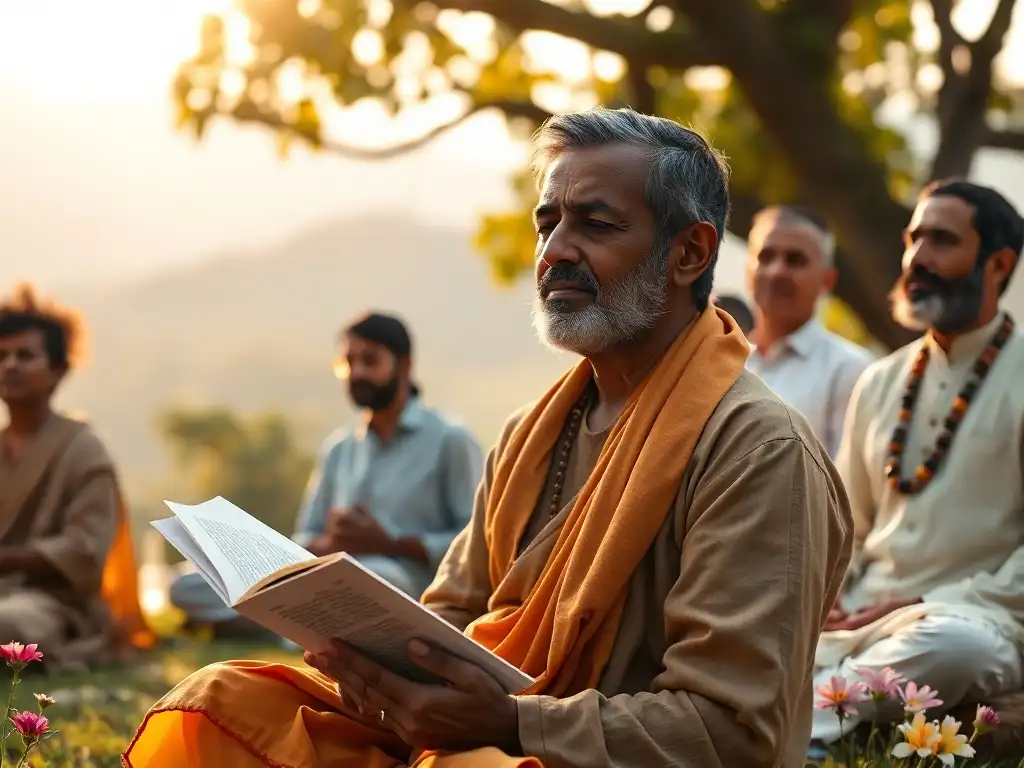
Welcome to Ancient India History, where we invite you to journey through the rich tapestry of ancient civilizations that shaped the spiritual and cultural landscape of the world. In today's featured article, we delve into the profound influence of the Upanishads on modern spiritual thought, revealing how these ancient texts continue to resonate in contemporary discussions of spirituality. Prepare to uncover timeless wisdom and explore the transformative power of ideas that have transcended centuries.
Join us as we unlock the secrets of the past and illuminate the path to a deeper understanding of spiritual heritage. What insights will you discover?

The Upanishads, a collection of ancient Indian texts, serve as a cornerstone of Hindu philosophical thought and have significantly shaped modern spiritual practices across the globe. As we delve into the essence of these texts, we uncover their profound influence on contemporary spirituality, which transcends geographical and cultural boundaries. This article aims to explore the intricate relationship between the Upanishads and modern spiritual thought, highlighting their philosophical concepts and historical significance.
The Upanishads encourage a deep inquiry into the nature of reality and the self, prompting seekers to explore spiritual dimensions beyond mere ritualistic practices. By understanding the Upanishadic teachings, we can appreciate their enduring legacy and the way they continue to inspire spiritual seekers today.
Introduction to Upanishads
The Upanishads are a collection of philosophical texts that form the concluding part of the Vedas, the oldest scriptures of Hinduism. Composed between 800 BCE and 400 BCE, these texts mark a significant evolution in Indian thought, transitioning from ritualistic practices to introspective inquiry about the nature of existence and the ultimate reality, known as Brahman.
Overview of Upanishadic Texts
The Upanishads consist of over 200 texts, though traditionally only 108 are recognized. Among the most prominent are:
- Isha Upanishad
- Kena Upanishad
- Katha Upanishad
- Mundaka Upanishad
- Taittiriya Upanishad
These texts explore themes such as the nature of the self (Atman), the relationship between Atman and Brahman, and the importance of meditation and knowledge in attaining liberation (Moksha). Each Upanishad presents unique insights and philosophical discourses, contributing to the holistic understanding of spiritual concepts in Hinduism.
Historical Context and Significance in Hinduism
The Upanishads emerged during the later Vedic period, a time characterized by significant social and intellectual transformations in ancient India. The shift from ritualistic practices to philosophical reflection was a response to the growing complexity of spiritual life and the quest for deeper understanding.
The significance of the Upanishads in Hinduism is profound. They emphasize personal experience and introspection over prescribed rituals, encouraging a direct relationship with the divine. This transformation laid the foundation for various schools of thought within Hindu philosophy, including Advaita (non-dualism) and Dvaita (dualism), which continue to influence spiritual discourse today.
Upanishads and Spirituality
The Upanishads have not only shaped Hindu spirituality but have also resonated with various spiritual movements worldwide, including Buddhism, Jainism, and even modern New Age practices. Their teachings promote a universal quest for truth and self-realization, bridging gaps between different spiritual traditions.
Defining Spirituality in the Context of Upanishads
In the context of the Upanishads, spirituality is defined as the journey towards self-knowledge and understanding the interconnectedness of all beings. It is characterized by:
- Introspection: Encouraging individuals to look within themselves for answers.
- Meditation: Practicing mindfulness and concentration to attain higher states of consciousness.
- Non-attachment: Cultivating a sense of detachment from material possessions and desires to achieve inner peace.
This holistic approach to spirituality emphasizes personal growth, ethical living, and the pursuit of truth as pathways to understanding the self and the universe.
Key Concepts in Upanishadic Philosophy
Several key concepts within Upanishadic philosophy contribute to its enduring influence on modern spirituality:
- Brahman: The ultimate, unchanging reality that pervades the universe.
- Atman: The individual soul or self that is ultimately one with Brahman.
- Moksha: Liberation from the cycle of birth and rebirth, achieved through knowledge and self-realization.
- Tat Tvam Asi: A fundamental teaching meaning "That Thou Art," highlighting the unity of Atman and Brahman.
These concepts form the bedrock of Upanishadic thought and continue to inspire seekers on their spiritual journeys, offering profound insights into the nature of existence and consciousness.
The Influence of Upanishads on Western Spiritual Thought
The Upanishads, ancient texts that form the philosophical foundation of Hinduism, have significantly influenced Western spiritual thought. Rooted in profound metaphysical concepts, these texts have not only shaped Indian philosophy but also touched the hearts and minds of many Western thinkers, mystics, and spiritual leaders. The core themes of the Upanishads—ultimate reality (Brahman), the nature of the self (Atman), and the quest for liberation (moksha)—have transcended cultural boundaries, inspiring a rich tapestry of modern spiritual exploration.
Early Western Engagement with Upanishadic Ideas
The engagement of Western thinkers with the Upanishads began in earnest during the 19th century. Key events, such as the translation of the Upanishads into European languages, paved the way for their introduction to the Western intellectual landscape. Notably, German philosopher Arthur Schopenhauer was one of the first to recognize the depth of these texts, referring to the Upanishads as “the most profounding and grandest books ever written.” His appreciation for the writings underscored their existential themes and the quest for universal truth.
Moreover, the publication of translations by figures like Max Müller in the late 1800s brought the Upanishadic concepts of non-duality and the nature of reality to a wider audience. This growing interest in Eastern philosophies coincided with an increasing disillusionment with materialism in the West, prompting many to explore spiritual alternatives that the Upanishads offered.
Key Figures and Their Interpretations
Several key figures have played pivotal roles in interpreting and disseminating Upanishadic teachings to the Western audience:
- Ralph Waldo Emerson: As a transcendentalist, Emerson integrated Upanishadic ideas into his philosophy, emphasizing the interconnectedness of all beings and the divine essence within humanity. His essay "The Over-Soul" reflects the Upanishadic notion of Brahman as the universal spirit.
- Swami Vivekananda: A significant advocate for the Upanishads in the West, Vivekananda introduced the concepts of yoga and Vedanta at the Parliament of Religions in Chicago in 1893. His teachings emphasized the practical application of Upanishadic wisdom in daily life, contributing to the rise of interest in Hindu philosophy in America.
- Aldous Huxley: In his book "The Perennial Philosophy," Huxley drew parallels between the insights of the Upanishads and various mystical traditions worldwide. He highlighted the universal themes of love, unity, and the pursuit of higher consciousness, further establishing the Upanishads as a bridge between Eastern and Western spiritual thought.
Contemporary Applications of Upanishadic Teachings
In recent decades, the teachings of the Upanishads have found renewed relevance within various contemporary spiritual movements. Their emphasis on self-realization and the exploration of consciousness resonates strongly with individuals seeking deeper meaning in life.
Modern Spiritual Movements Inspired by Upanishads
The Upanishads have inspired numerous modern spiritual movements, each integrating their teachings in unique ways:
- New Age Spirituality: Many New Age practitioners draw directly from the Upanishadic concepts of interconnectedness and the divine essence within all beings. Practices such as meditation, mindfulness, and holistic healing often echo the teachings found in these ancient texts.
- Transcendental Meditation: Founded by Maharishi Mahesh Yogi, this meditation technique incorporates principles derived from the Upanishads. The focus on transcending ordinary thought to reach higher states of consciousness reflects the texts' teachings on self-discovery and spiritual awakening.
- Integral Yoga: Pioneered by Sri Aurobindo, this movement emphasizes the synthesis of various spiritual paths, including those outlined in the Upanishads. By blending philosophy, meditation, and active engagement with the world, Integral Yoga embodies the Upanishadic ideal of realizing the divine in everyday life.
The Upanishads continue to influence modern spiritual thought profoundly, offering timeless wisdom that resonates across cultures and eras. Their teachings inspire individuals to embark on a journey of self-discovery, ultimately leading to a deeper understanding of the self and the universe.
Comparative Analysis: Upanishads and Other Spiritual Traditions
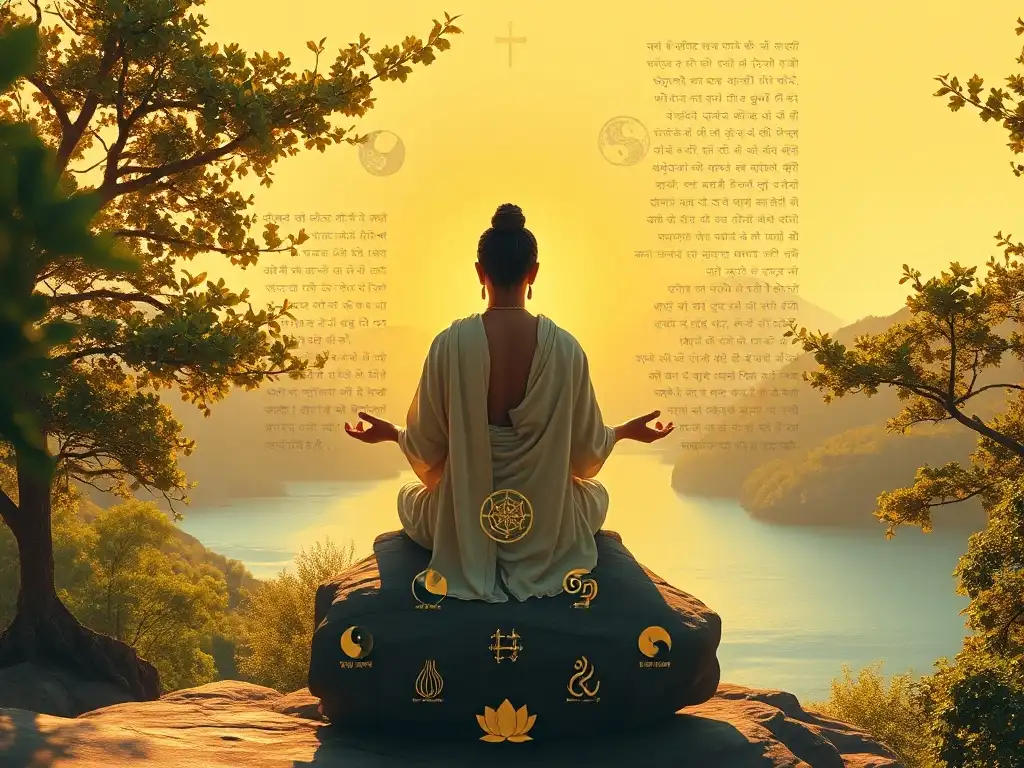
The Upanishads, a collection of ancient Indian texts that form the philosophical backbone of Hinduism, have significantly influenced various spiritual traditions across the globe. By examining their core concepts and comparing them with other spiritual philosophies, we can better understand their universal appeal and relevance in modern spirituality.
Similarities with Buddhist Thought
The Upanishads and Buddhist thought share several philosophical tenets, particularly in their emphasis on introspection and the nature of reality. Both traditions advocate for:
- Meditation and Mindfulness: Central to both the Upanishads and Buddhism is the practice of meditation as a means to attain deeper understanding and inner peace. In the Upanishads, meditation (dhyana) is essential for realizing the self's unity with Brahman, the ultimate reality. Similarly, Buddhism emphasizes mindfulness and meditation as pathways to enlightenment (nirvana).
- Transience of Life: Both philosophies recognize the impermanence of worldly existence. The Upanishads speak of the fleeting nature of the material world, urging practitioners to seek the eternal truth. Likewise, Buddhism teaches the concept of anatta (non-self) and impermanence (anicca), encouraging followers to detach from worldly desires.
- The Quest for Liberation: At the heart of both traditions is the quest for liberation from the cycle of birth and rebirth (samsara). The Upanishads delineate the journey to moksha (liberation), while Buddhism outlines the path to nirvana, both representing ultimate freedom from suffering.
These similarities highlight a shared philosophical landscape, offering rich ground for interfaith dialogue and exploration of spiritual practices.
Contrasts with Abrahamic Religions
While the Upanishads share commonalities with various spiritual philosophies, they also present distinct contrasts, particularly with Abrahamic religions such as Judaism, Christianity, and Islam:
- Concept of God: In the Upanishads, the concept of Brahman transcends personal deities, embodying an impersonal and abstract ultimate reality. In contrast, Abrahamic religions generally emphasize a personal, anthropomorphic God who engages directly with humanity and provides moral laws.
- Nature of the Soul: The Upanishads teach that the individual soul (atman) is identical to Brahman, suggesting a non-dualistic view of existence. Conversely, Abrahamic traditions maintain a dualistic separation between God and humans, where the soul is seen as a distinct entity created by God.
- Path to Salvation: The Upanishads emphasize self-realization and knowledge (jnana) as pathways to liberation, focusing on individual experience and enlightenment. In contrast, Abrahamic faiths often underscore faith, obedience, and adherence to prescribed rituals and moral codes as routes to salvation.
These contrasts illustrate the unique philosophical frameworks that shape each tradition's understanding of spirituality, morality, and human existence.
Challenges and Critiques of Upanishadic Influence
Despite the profound influence of the Upanishads on modern spiritual thought, several challenges and critiques have emerged, prompting deeper reflection on their interpretation and application.
Misinterpretations and Misappropriations
The Upanishads have often been misinterpreted or oversimplified in contemporary discourse, leading to distortions of their original teachings. Common issues include:
- Reductionist Approaches: Some modern interpretations tend to reduce the complex philosophical ideas of the Upanishads to mere self-help maxims, stripping away their profound metaphysical insights.
- Cultural Misunderstanding: Without a nuanced understanding of the cultural and historical contexts of the Upanishads, practitioners may adopt these teachings superficially, leading to misapplications in spiritual practices.
- Commercialization of Spirituality: The rising trend of commodifying spiritual practices derived from the Upanishads risks diluting their essence, as they become packaged for mass consumption rather than genuine exploration of deep philosophical truths.
These misinterpretations can hinder a comprehensive understanding of Upanishadic teachings and their relevance to modern spirituality.
The Risks of Cultural Appropriation in Spiritual Practices
The adoption of Upanishadic concepts in Western spiritual practices raises concerns about cultural appropriation. Key risks include:
- Disconnection from Roots: When Upanishadic philosophies are practiced without an understanding of their cultural significance and historical roots, they risk becoming mere trends rather than genuine spiritual paths.
- Overshadowing Indigenous Voices: The appropriation of Upanishadic teachings can overshadow the voices of those within the tradition, diminishing their cultural heritage and the significance of their spiritual practices.
- Ethical Considerations: Engaging with the Upanishads requires a respectful approach that honors their origins. Failure to do so can lead to ethical dilemmas, where spiritual seekers may inadvertently exploit these teachings for personal gain.
Awareness and sensitivity towards these issues are crucial for fostering a respectful and authentic engagement with the rich philosophical legacy of the Upanishads.
Conclusion: The Legacy of Upanishads in Shaping Spiritual Thought
The Upanishads, as ancient texts at the heart of Hindu philosophy, have profoundly influenced modern spiritual thought across various cultures and traditions. Their teachings emphasize self-realization, the nature of reality, and the interconnectedness of all beings, which resonate not only within Hinduism but also in the broader context of global spirituality. This legacy is evident in contemporary practices such as meditation, yoga, and holistic healing, which draw heavily from the principles outlined in these texts. The Upanishads challenge individuals to explore their inner selves, thereby fostering a sense of universal consciousness that transcends individual identities.
Moreover, the Upanishadic quest for knowledge and truth has inspired modern thinkers, philosophers, and spiritual leaders, encouraging a dialogue between ancient wisdom and contemporary spiritual practices. As we navigate the complexities of modern life, the teachings of the Upanishads offer timeless insights that continue to inspire seekers on their paths to enlightenment.
Summary of Key Influences on Modern Spirituality
The influence of the Upanishads on modern spirituality can be summarized through several key themes:
- Self-Realization: The Upanishadic emphasis on understanding one's true self (Atman) as a reflection of the universal spirit (Brahman) has led to a greater focus on personal spiritual journeys in contemporary practices.
- Meditation and Mindfulness: Techniques derived from Upanishadic teachings have become foundational in modern meditation practices, promoting mindfulness and inner peace.
- Interconnectedness: The Upanishads advocate for the idea that all beings are interconnected, a principle that underlies many modern spiritual movements that emphasize unity and compassion.
- Ethical Living: The moral and ethical teachings found in the Upanishads encourage modern practitioners to lead lives that are aligned with spiritual principles, fostering a sense of responsibility towards oneself and society.
- Philosophical Inquiry: The Upanishads encourage questioning and philosophical inquiry, which has influenced modern spiritual seekers to critically engage with their beliefs and practices.
These themes collectively illustrate how the Upanishads have shaped modern spiritual thought, integrating ancient wisdom into contemporary life.
Future Directions for Upanishadic Studies in Spiritual Contexts
As interest in spirituality continues to grow, the study of the Upanishads presents new avenues for exploration and understanding. Future directions for research and engagement can include:
- Interdisciplinary Approaches: Integrating insights from psychology, sociology, and comparative religion to explore how Upanishadic concepts can enrich modern spiritual practices and mental health initiatives.
- Cross-Cultural Studies: Examining the influence of the Upanishads on various global spiritual movements, including New Age spirituality and secular mindfulness practices, to understand their universal appeal.
- Digital Humanities: Utilizing technology to make Upanishadic texts more accessible through translations, commentaries, and online courses, fostering a wider engagement with these ancient teachings.
- Education and Workshops: Developing educational programs that focus on the practical applications of Upanishadic philosophies in daily life, thereby bridging the gap between ancient wisdom and contemporary spirituality.
- Critical Reinterpretation: Encouraging scholars and practitioners to reinterpret Upanishadic themes in light of modern issues such as environmental sustainability, social justice, and personal well-being.
By pursuing these directions, the legacy of the Upanishads will not only endure but also continue to evolve, enriching the spiritual landscape of the future.
- Introduction to Upanishads
- Upanishads and Spirituality
- The Influence of Upanishads on Western Spiritual Thought
- Contemporary Applications of Upanishadic Teachings
- Comparative Analysis: Upanishads and Other Spiritual Traditions
- Challenges and Critiques of Upanishadic Influence
- Conclusion: The Legacy of Upanishads in Shaping Spiritual Thought
Frequently Asked Questions
What are the Upanishads?
The Upanishads are ancient Indian texts that form the philosophical basis of Hinduism, focusing on the nature of reality and the self.
How did the Upanishads influence modern spirituality?
The Upanishads have profoundly shaped modern spiritual thought by introducing concepts like meditation, self-realization, and the unity of existence.
What themes are explored in the Upanishads?
Key themes include Brahman (the ultimate reality), Atman (the self), and the relationship between the two, emphasizing spiritual knowledge.
Are the Upanishads relevant today?
Yes, the Upanishads remain relevant as they offer timeless insights into consciousness, meditative practices, and the quest for spiritual truth.
How do the Upanishads compare to other spiritual texts?
Unlike many other spiritual texts, the Upanishads focus on philosophical inquiry and personal experience rather than dogma, promoting a universal approach to spirituality.
Final Reflection: The Enduring Legacy of the Upanishads on Modern Spirituality
The Upanishads, with their profound insights into the nature of existence and consciousness, continue to resonate powerfully in today’s spiritual landscape. As we navigate an increasingly complex world, the teachings of these ancient texts remind us of the timeless quest for self-realization and understanding of the universe. Their influence on modern spirituality is not just a historical footnote; it is a vibrant thread woven into the fabric of contemporary thought, urging us to explore deeper truths about ourselves and our connection to the cosmos.
The Upanishads have shaped not only individual spiritual journeys but also broader cultural movements that seek to bridge the gap between Eastern and Western philosophies. Their teachings encourage introspection, mindfulness, and a recognition of the interconnectedness of all beings. As we witness a growing interest in holistic practices and meditation, we can see the Upanishads' principles reflected in the ways people seek meaning and purpose today. The ultimate aim of the Upanishads is to realize the oneness of the individual soul with the universal soul.
This quote encapsulates the essence of their teachings and their relevance in fostering a more compassionate and aware society.
As you reflect on the insights shared in this article, consider how the Upanishads can inspire your own spiritual journey. Embrace the opportunity to delve into these ancient teachings and apply their wisdom to your daily life. Whether through meditation, self-inquiry, or simply being present in the moment, let the influence of the Upanishads guide you toward a deeper understanding of yourself and your place in the universe. The path to spiritual awakening is a personal one, and the timeless wisdom of the Upanishads can illuminate your way forward.
Unveil the Profound Wisdom of the Upanishads Today!
Thank you for exploring the rich tapestry of influence the Upanishads have woven into modern spiritual thought. By delving into their teachings, you’ve opened a door to deeper understanding and reflection. Now, it’s time to carry that inspiration forward and take meaningful steps in your spiritual journey.
Here are some actionable suggestions to help you deepen your connection with these ancient teachings:
- Engage with a Daily Reflection: Set aside just 10 minutes each day to meditate on a verse from the Upanishads, allowing its wisdom to resonate in your life.
- Join a Local Study Group: Connect with others who share your interest by seeking out or starting a study group focused on the Upanishads or similar spiritual texts.
- Share Your Insights: Write a brief post or blog entry about what you’ve learned from the Upanishads and how it has influenced your perspective—your reflections can inspire others to explore this profound wisdom.
As you continue on this path, consider this question: How can the teachings of the Upanishads guide you in living a more purposeful and connected life today?