
The Decline of External Trade in Late Ancient India: Causes and Consequences

Welcome to Ancient India History, where we delve deep into the rich tapestry of India's past, uncovering the remarkable civilizations that shaped a nation. In our featured article, "The Decline of External Trade in Late Ancient India: Causes and Consequences," we explore the intricate factors that led to the diminishing trade routes that once flourished from the Indus Valley to the Gupta Empire. What were the repercussions of this decline on society and culture?
Join us on this journey through time to discover the profound impacts of trade on ancient Indian civilization and how they resonate even today. Let your curiosity guide you as you navigate through the fascinating stories of a bygone era!
Introduction to the Decline of Ancient Indian Trade
The decline of ancient Indian trade marks a significant turning point in the history of the subcontinent, reflecting broader changes in economic, social, and political landscapes. During the late ancient period, particularly from the 6th century CE onward, the robust trade networks that once flourished throughout India began to deteriorate.
This decline was not merely an economic issue; it had profound implications for the cultural and social fabric of Indian society. Understanding the causes and consequences of this decline is crucial, as it provides insights into the resilience and adaptability of ancient Indian civilizations in the face of shifting dynamics both internally and externally.
Overview of Ancient Indian Trade Dynamics
Ancient India was known for its vibrant trade activities, both within its borders and with distant lands. Trade routes traversed the Indian subcontinent, facilitating the exchange of goods, ideas, and cultures. The Indus Valley Civilization laid the groundwork for early trade practices, which evolved over centuries into a sophisticated network that connected India to regions as far as the Mediterranean, Southeast Asia, and China.
- Key Features of Ancient Indian Trade:
- Diverse Commodities: Spices, textiles, precious stones, and metals were among the primary exports.
- Cultural Exchange: Trade fostered not only economic interactions but also the exchange of philosophies, religions, and innovations.
- Urban Centers: Trade led to the growth of major urban centers, such as Pataliputra and Taxila, which became cultural and economic hubs.
Importance of External Trade in Ancient India
The significance of external trade for ancient Indian civilizations cannot be overstated. It played a critical role in:
- Economic Growth: External trade enriched local economies, creating jobs and wealth.
- Cultural Integration: It facilitated the blending of diverse cultures and ideas, which enriched Indian civilization.
- Political Power: Control over trade routes often translated to political influence and stability.
Historical Context of Trade in Ancient India
To fully comprehend the decline of trade, it is essential to consider the historical context in which ancient Indian trade flourished and later waned.
Trade Routes and Networks in Ancient India
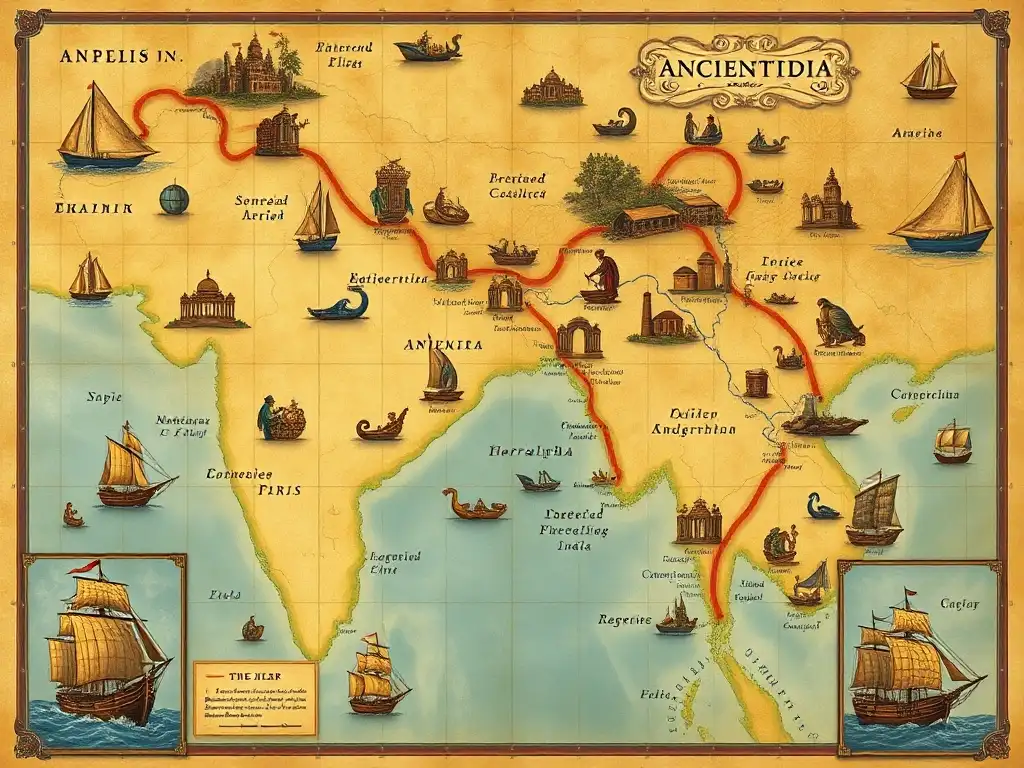
Ancient India was crisscrossed by a multitude of trade routes, both overland and maritime. These routes were vital for commerce and cultural exchange.
- Overland Trade Routes:
- The Silk Road connected India with Central Asia and beyond, facilitating the exchange of silk, spices, and other goods.
- The Southern routes linked India with Arabian markets, enhancing trade in spices and textiles.
- Maritime Trade:
- India's extensive coastline enabled maritime trade with regions such as Africa and Southeast Asia.
- Ports like Cochin and Lothal served as key points for maritime commerce.
Key Commodities Traded by Ancient Indian Civilizations
Ancient Indian trade was characterized by a variety of key commodities that were highly sought after both domestically and internationally.
- Spices: India was renowned for its spices, which were essential for culinary and medicinal purposes.
- Textiles: Cotton and silk textiles were prized throughout the ancient world for their quality and craftsmanship.
- Precious Stones: India was a significant supplier of gemstones, including diamonds, rubies, and sapphires.
Through this exploration of trade dynamics, historical context, and key commodities, we can better understand the factors contributing to the decline of ancient Indian trade and its lasting consequences on the civilization.
Factors Contributing to the Decline of Ancient Indian Trade
The decline of ancient Indian trade was a multifaceted issue influenced by various factors, both internal and external. Understanding these elements provides insight into the broader implications for society, economy, and culture during this period.
Political Instability and Its Impact on Trade
Political instability played a significant role in the decline of trade in ancient India. The fragmentation of powerful empires, such as the Gupta Empire, led to increased regional conflicts and the rise of smaller kingdoms. As dynasties fell and new ones rose, the lack of a unified political structure made trade routes less secure. Merchants faced heightened risks from banditry and local conflicts, which discouraged long-distance trade ventures.
Additionally, shifts in political power often resulted in changes to trade policies, tariffs, and regulations, further complicating trade dynamics. For instance, the imposition of heavy taxes by local rulers could deter merchants from engaging in trade. Consequently, the instability created an environment where trade could not thrive, leading to its decline.
Economic Factors Leading to Trade Decline
Several economic factors contributed to the decline of ancient Indian trade. One significant issue was the deterioration of infrastructure, including roads and ports, which had previously facilitated commerce. As these essential trade networks fell into disrepair, the cost and risk of transporting goods increased.
Moreover, the late ancient period saw a significant shift in agricultural productivity. With changes in climate and agricultural practices, food surpluses diminished, which in turn affected the availability of goods for trade. The reliance on agriculture for economic stability meant that any disruption could have cascading effects on trade. The decline in demand for luxury goods, once highly sought after by foreign markets, further exacerbated this situation, leading to a decrease in overall trade activity.
Cultural and Social Influences on Trade
Cultural and social influences also played a critical role in the decline of trade. The rise of regional identities and localism often overshadowed previously established trade networks that connected diverse cultures across the region. This shift led to a preference for local goods over imported ones, diminishing the appeal of long-distance trade.
Furthermore, changes in social structures, such as the rise of the caste system, impacted merchant classes and their ability to operate freely. As social mobility was restricted, fewer individuals could engage in trade, which resulted in a decrease in the overall trading population. The intertwining of culture and commerce meant that as societal values shifted, so did the nature of trade, ultimately contributing to its decline.
Consequences of the Decline of External Trade
The decline of external trade in ancient India had profound and lasting consequences across various aspects of society, economy, and culture.
Economic Ramifications of Reduced Trade Activity
The most immediate economic ramifications of reduced trade activity included a decline in wealth accumulation and economic diversification. Regions that once thrived on trade saw their economies stagnate, leading to increased poverty levels and decreased access to goods that were once readily available.
With fewer merchants engaged in trading activities, the circulation of currency diminished, impacting local economies. The decrease in trade revenue also meant that governments had fewer resources to fund public projects, leading to deteriorating infrastructure and services. These economic challenges created a feedback loop that further entrenched the decline of trade.
Societal Effects of Trade Decline
The societal effects of trade decline were equally significant. As trade diminished, so did cultural exchanges between regions and with foreign powers. This stagnation resulted in a less diverse cultural landscape, limiting the sharing of ideas, art, and technology that had flourished during periods of robust trade.
Additionally, the decline in merchant activity led to a loss of status for the trading class. As the economic power of merchants waned, their influence in society diminished, altering the social fabric of ancient Indian life. This shift contributed to greater class divisions and a focus on agrarian lifestyles, which further isolated communities from one another.
Long-Term Historical Consequences
In the long term, the decline of external trade had significant historical consequences for ancient India. It marked a transition towards more insular economic practices, which would influence trade dynamics for centuries. This period set the stage for the eventual emergence of regional powers that focused on local rather than international trade.
Moreover, the decline contributed to the eventual vulnerability of Indian civilizations to external forces, such as invasions and colonialism in later centuries. The loss of trade not only weakened the economic foundations of these societies but also diminished their ability to respond to external threats. Thus, the decline of ancient Indian trade reshaped the trajectory of the subcontinent's history, with ramifications that extended far beyond its immediate effects.
Conclusion: The Significance of Understanding Trade Decline
The decline of ancient Indian trade is a multifaceted phenomenon that shaped the socio-economic landscape of the subcontinent during its twilight years. Understanding this decline is crucial for several reasons, as it not only highlights the intricate connections between trade and cultural exchanges but also sheds light on the broader implications for the civilization as a whole. The ramifications of trade decline extended beyond mere economic factors; they influenced social structures, political dynamics, and cultural exchanges that had lasting impacts on the region.
By studying the causes of trade decline, scholars can better appreciate the complex interplay of internal and external factors that contributed to this shift. This knowledge provides insights into how ancient civilizations adapt to changing circumstances, and how these adaptations can lead to both decline and transformation. Furthermore, a comprehensive understanding of the trade decline can inform contemporary discussions about economic resilience, sustainability, and the importance of maintaining robust trade networks in an increasingly interconnected world.
Reflection on the Importance of External Trade in Ancient Indian History
External trade played a pivotal role in the prosperity and cultural richness of ancient India. The subcontinent was strategically located along key trade routes, facilitating commerce with distant lands such as the Roman Empire, Southeast Asia, and the Middle East. This trade not only brought wealth but also fostered cultural exchanges that enriched Indian civilization, introducing new ideas, technologies, and goods.
The importance of trade is evident in the flourishing cities of ancient India, where marketplaces buzzed with activity and merchants engaged in vibrant exchanges. The spread of goods such as textiles, spices, and precious stones helped establish India as a major player in the global economy of the time. Additionally, trade facilitated the spread of religions, philosophies, and innovations, contributing to an enriched cultural tapestry.
As trade networks expanded, they also led to the establishment of urban centers that served as hubs of economic and cultural activity. The decline of these trade routes, therefore, not only crippled the economy but also stunted cultural and intellectual growth, leading to a more isolated and less dynamic society.
Lessons Learned from the Decline of Ancient Indian Trade
The decline of ancient Indian trade offers several critical lessons that remain relevant today. One of the foremost lessons is the vulnerability of economies to geopolitical shifts and internal strife. As external threats and internal discord rose, the once-thriving trade networks began to crumble, highlighting the importance of stability for sustained economic growth.
Moreover, the decline illustrates the necessity of adaptability in trade practices. Ancient India’s reliance on established trade routes without diversifying its connections left it vulnerable when those routes became threatened or less viable. Modern economies can learn from this by recognizing the importance of maintaining diverse trade relationships and the ability to pivot in response to changing global dynamics.
Additionally, the decline of trade underscores the importance of infrastructure in facilitating commerce. The deterioration of trade routes and urban centers in ancient India reflects how essential infrastructure is to economic health. Investing in robust infrastructure—be it roadways, ports, or digital networks—is crucial for fostering trade and economic resilience in any society.
Ultimately, the decline of ancient Indian trade serves as a poignant reminder of the interconnectedness of economic health, cultural vitality, and political stability. Understanding these dynamics can help current and future societies navigate the complexities of trade and commerce in an ever-evolving global landscape.
- Introduction to the Decline of Ancient Indian Trade
- Overview of Ancient Indian Trade Dynamics
- Importance of External Trade in Ancient India
- Historical Context of Trade in Ancient India
- Factors Contributing to the Decline of Ancient Indian Trade
- Consequences of the Decline of External Trade
- Conclusion: The Significance of Understanding Trade Decline
- What were the primary causes of the decline of ancient Indian trade?
- How did the decline of external trade affect ancient Indian society?
- Were there any specific empires that experienced significant trade decline?
- What were the consequences of trade decline on ancient Indian civilizations?
- Did ancient India have any measures to counteract trade decline?
Frequently Asked Questions
What were the primary causes of the decline of ancient Indian trade?
The decline of ancient Indian trade was primarily caused by political instability, foreign invasions, and the shifts in trade routes that diminished economic connections with other regions.
How did the decline of external trade affect ancient Indian society?
The decline led to a decrease in economic prosperity, which further resulted in reduced cultural exchanges, impacting the overall development of art and science in ancient India.
Were there any specific empires that experienced significant trade decline?
Yes, the Gupta Empire saw a notable decline in trade due to internal conflicts and the rise of regional powers, which disrupted established trade networks.
What were the consequences of trade decline on ancient Indian civilizations?
The consequences included a reduction in wealth, a decrease in urbanization, and an eventual economic downturn that affected various sectors of society.
Did ancient India have any measures to counteract trade decline?
Ancient India attempted to counteract the decline by exploring new trade routes and fostering diplomatic relations with neighboring regions, though these efforts yielded limited success.
Final Reflection: Understanding the Decline of Ancient Indian Trade
The decline of ancient Indian trade serves as a poignant reminder of the intricate web of economic, political, and social factors that shape civilizations. Today, as we navigate a global economy that is more interconnected than ever, the lessons from ancient India's trade decline resonate deeply. The shifts in trade dynamics during that era illustrate how external influences, internal strife, and changing priorities can lead to significant economic downturns. This historical perspective urges us to reflect on our current trade practices and the vulnerabilities they may harbor.
Culture and commerce have always been intertwined, and the decline of trade in ancient India significantly altered its cultural landscape. The repercussions of this decline were not merely economic; they rippled through society, affecting art, religion, and daily life. As the historian Romila Thapar noted, Trade is not just about the exchange of goods; it is a conduit for cultural interaction and the sharing of ideas.
This observation underscores the importance of trade as a vehicle for cultural exchange, reminding us that the impacts of economic shifts are felt far beyond the marketplace.
As we contemplate the lessons from the decline of ancient Indian trade, let us take a moment to reflect on our own roles in the global economy. How can we ensure that our trade practices foster resilience and cultural exchange rather than isolation? I invite you to consider the interconnectedness of our actions and the broader implications they hold for future generations. By learning from the past, we can strive to create a more sustainable and inclusive economic landscape that honors the rich tapestry of human culture and commerce.
Uncover the Secrets of Ancient Trade: Take Action Now!
Thank you for exploring the fascinating world of late ancient India's external trade! Your interest in understanding the causes and consequences of this historical decline provides a valuable perspective on economic transformations. Now, let’s turn this knowledge into action!
- Explore related articles on ancient trade routes and their cultural impacts to deepen your understanding.
- Join the conversation! Share your thoughts on how external trade has influenced your community's history in the comments below.
- Challenge yourself: Create a mini-project where you research a specific ancient trade route and its effects on local societies. You may uncover surprising connections!
What are your thoughts on how the decline of external trade has shaped the historical narrative of your region?