
The Wonders of Ancient Indian Geometry: Shapes, Patterns, and Numerical Relationships

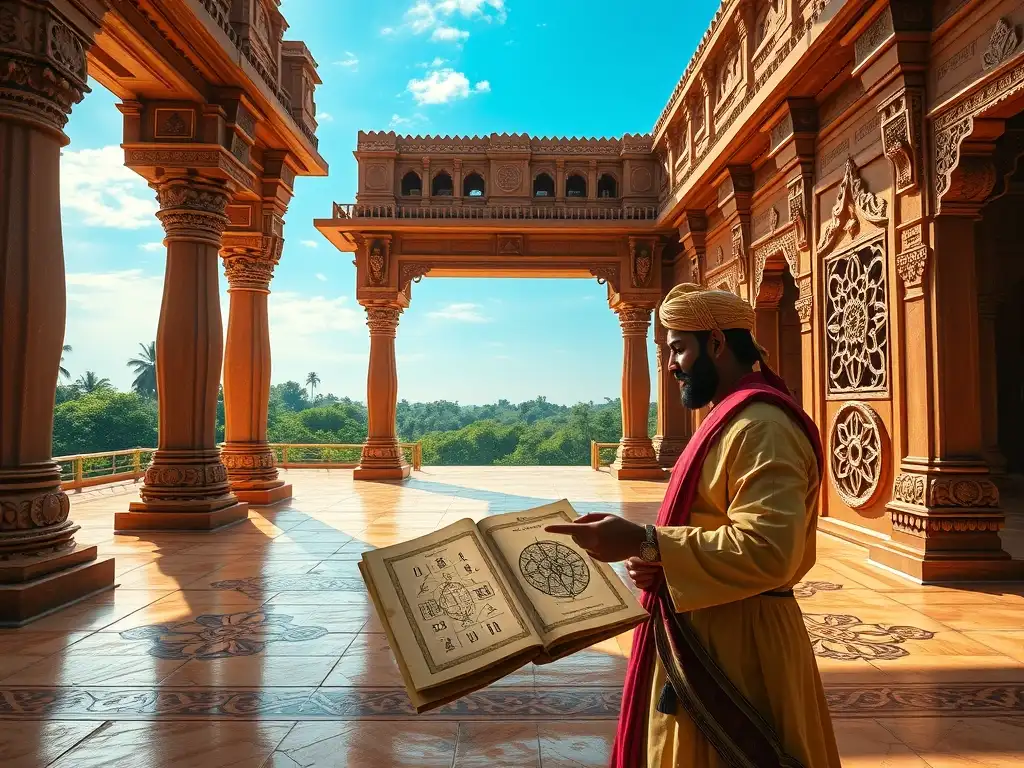
Welcome to Ancient India History, where we embark on an enlightening journey through the rich tapestry of ancient Indian civilizations. In this captivating exploration, we delve into the remarkable geometric contributions that have shaped the world of mathematics, particularly through the lens of shapes, patterns, and numerical relationships. Prepare to uncover the wonders of ancient Indian geometry and discover how these early innovations continue to influence our understanding today. Join us as we unravel the intricacies of this fascinating topic and reveal the brilliance of a culture that thrived thousands of years ago!

Introduction to Ancient Indian Geometric Contributions
Ancient India stands as a beacon of rich intellectual tradition, where mathematics, particularly geometry, flourished and made significant contributions that resonate through time. The exploration of ancient Indian geometric contributions reveals a tapestry of shapes, patterns, and numerical relationships that not only advanced mathematical thought but also influenced various fields such as architecture, art, and astronomy.
From the meticulous designs of the Indus Valley Civilization to the sophisticated mathematical treatises of the Gupta Empire, the journey through ancient Indian geometry is both fascinating and enlightening. This article aims to delve into the intricate world of geometry in ancient India, uncovering the principles that governed their understanding of space and form.
Overview of Ancient Indian Mathematics
The mathematical landscape of ancient India was multifaceted, showcasing a profound understanding of numbers and their applications. Key works, such as the Sulba Sutras, served as foundational texts detailing geometric principles applied in constructing altars and other sacred structures. The emphasis on precision and symmetry in these constructions highlights the cultural significance of geometry, intertwining it with spirituality and daily life. Furthermore, ancient Indian mathematicians introduced innovative concepts such as zero and the decimal system, laying the groundwork for future mathematical exploration.
Importance of Geometry in Ancient Indian Culture
Geometry in ancient India transcended mere calculations; it was steeped in cultural, religious, and philosophical significance. The shapes and patterns created were not arbitrary but were often imbued with symbolic meanings, reflecting the beliefs and values of the society. For instance, the mandala, a geometric design representing the cosmos, played a crucial role in rituals and meditation practices. Additionally, geometric patterns were prevalent in temple architecture, serving both aesthetic and functional purposes. Understanding these contributions provides insight into how ancient Indians viewed the world around them and their quest for harmony through mathematics.
Historical Context of Geometric Developments in India
The Indus Valley Civilization and Early Geometry
The Indus Valley Civilization, dating back to approximately 2500 BCE, is one of the earliest examples of advanced urban planning and architecture, showcasing remarkable geometric design. Archaeological findings reveal the use of grid patterns in city layouts, with streets intersecting at right angles, demonstrating an early understanding of spatial organization. The precise dimensions of their brick structures further indicate a sophisticated grasp of measurement and proportion, laying the groundwork for future geometric developments in the region.
Contributions during the Vedic Period
The Vedic period, spanning from around 1500 to 500 BCE, marked a significant evolution in mathematical thought with the emergence of texts like the Sulba Sutras. These texts provided detailed rules for constructing altars using geometric shapes such as squares, rectangles, and circles. The emphasis on accuracy in construction required a thorough understanding of geometric principles, including the Pythagorean theorem, predating its recognition in Greece. The meticulous nature of these constructions highlights the intersection of religious practices and mathematical precision during this era.
Advancements in Geometry during the Gupta Empire
The Gupta Empire (approximately 320 to 550 CE) is often referred to as the Golden Age of India, characterized by remarkable advancements in various fields, including mathematics. Mathematicians like Aryabhata and Brahmagupta made significant contributions to geometry, exploring the properties of shapes and their applications in astronomy and architecture. Aryabhata's work, particularly in trigonometry and computation of areas, showcased a sophisticated understanding of geometric relationships that would influence mathematicians for centuries. The Gupta period represents a pinnacle in the evolution of ancient Indian geometry, reflecting a profound synthesis of knowledge that would leave an indelible mark on the world.
Key Geometric Concepts in Ancient India
Ancient Indian geometry is a fascinating field that reflects the mathematical sophistication of its time. The contributions made by Indian mathematicians not only laid the groundwork for future developments in mathematics but also influenced various aspects of art, architecture, and science. Key concepts in ancient Indian geometry include the study of shapes, the interplay of patterns, and the exploration of numerical relationships that were integral to both practical applications and philosophical inquiries.
Basic Shapes and Their Significance
In ancient Indian geometry, basic shapes such as circles, squares, triangles, and rectangles were studied extensively. Each shape was imbued with symbolic significance:
- Circle: Often represented the cosmos and eternity, reflecting the belief in a cyclical universe.
- Square: Symbolized stability and order, frequently used in temple architecture and city planning.
- Triangle: Associated with the divine and often used in religious and spiritual contexts.
These shapes were not merely geometric forms but were deeply interwoven with cultural and philosophical meanings, influencing art and architecture throughout ancient Indian civilizations.
Patterns in Ancient Indian Art and Architecture
Patterns play a crucial role in ancient Indian design, particularly in art and architecture. The intricate geometric patterns found in temples, stupas, and sculptures demonstrate a sophisticated understanding of symmetry and proportion. The use of mandalas, which are geometric designs representing the universe, showcases how geometry was employed to convey spiritual concepts.
- Temple Architecture: Temples often featured geometric motifs in their carvings, showcasing the balance between aesthetics and mathematical precision.
- Textiles and Decorations: Patterns in textiles reflected geometric principles, often used to convey cultural narratives.
These patterns served not only as decorative elements but also as a means of expressing complex philosophical ideas through visual representation.
Numerical Relationships in Indian Geometry
Numerical relationships were foundational in ancient Indian geometry, enabling mathematicians to derive formulas and theorems. The exploration of ratios, proportions, and spatial relationships allowed for advancements in measurement and construction.
- Pythagorean Theorem: Although known primarily in the West, ancient Indian texts such as the Sulba Sutras contained early formulations of this theorem, illustrating a sophisticated grasp of right triangles.
- Ratios and Proportions: The concept of ratios was essential in architectural design, allowing architects to create harmonious proportions in structures.
These numerical relationships not only facilitated practical applications in construction and surveying but also contributed to a deeper philosophical understanding of the cosmos.
Prominent Figures in Ancient Indian Geometry
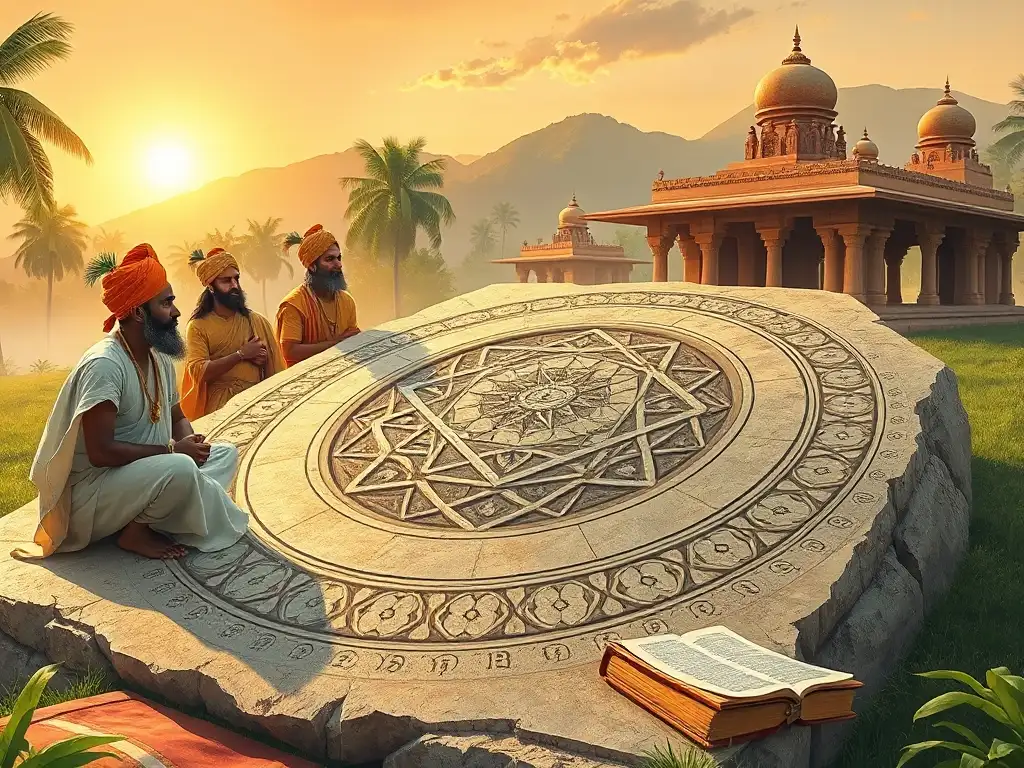
The legacy of ancient Indian geometry is profoundly shaped by the contributions of several key mathematicians, each of whom made significant advancements in geometric principles.
Aryabhata: The Pioneer of Geometry
Aryabhata, one of the earliest and most influential mathematicians in ancient India, made groundbreaking contributions to geometry. His seminal work, the Aryabhatiya, covers a wide range of mathematical topics, including geometry. Aryabhata introduced methods for calculating the area of triangles and the circumference of circles, laying the groundwork for future geometric exploration. His approach emphasized a systematic methodology that combined practical application with theoretical insights.
Brahmagupta and His Contributions to Geometric Principles
Brahmagupta, another towering figure in ancient Indian mathematics, expanded upon Aryabhata's work in his treatise, Brahmasphutasiddhanta. He is particularly known for formalizing rules for the calculation of areas and volumes, including the area of cyclic quadrilaterals. His work also included solutions to quadratic equations, which had geometric interpretations. Brahmagupta's contributions were significant in bridging arithmetic and geometry, showcasing the interconnectedness of these fields.
Bhaskara II: Innovations in Geometric Understanding
Bhaskara II, also known as Bhaskara the Elder, further advanced the field of geometry in his influential work, Siddhanta Shiromani. He made substantial contributions to trigonometry, particularly in the development of sine and cosine functions, which have direct applications in understanding geometric relationships. His innovative approach included practical applications of geometry in astronomy and navigation, emphasizing the importance of geometry in everyday life.
Through their profound insights and innovations, these prominent figures of ancient Indian geometry not only enhanced mathematical knowledge but also enriched the cultural and scientific heritage of their time.
Applications of Geometry in Ancient Indian Society
Ancient Indian society extensively utilized geometry across various domains, showcasing a deep understanding of shapes, patterns, and spatial relationships. This mathematical discipline was not merely an abstract concept but was infused into daily life, religious practices, and scientific endeavors. From architecture to art, geometry served as a foundational element that shaped the cultural and intellectual landscape of ancient India.
One of the most prominent applications of geometry was in the field of astronomy. Ancient Indian astronomers employed geometric principles to develop calendars that accurately tracked celestial movements. This understanding was also reflected in agricultural practices, where geometry aided in land division and irrigation systems. Furthermore, geometry played a significant role in trade, where merchants used geometric measurements to calculate distances and manage resources effectively.
Geometry in Astronomy and Calendar Making
The ancient Indians were pioneers in astronomy, and their geometric contributions were vital in creating sophisticated calendars. They meticulously observed celestial bodies, leading to the formulation of calendars that reflected the cyclical nature of time. The use of geometric shapes facilitated the calculation of lunar and solar months, which were crucial for agricultural planning and religious festivals.
For instance, the Aryabhatiya, authored by Aryabhata in the 5th century CE, showcases intricate mathematical concepts that demonstrate the application of geometry in astronomy. The work includes methods for calculating the circumference of the Earth and predicting eclipses, both of which relied on geometric principles.
Additionally, Indian astronomers devised instruments such as the Gnomon and Sundial, which required a keen understanding of angles and shadows. These tools were essential for measuring time and aligning agricultural activities with seasonal changes, illustrating the practical applications of geometric knowledge.
The Role of Geometry in Temple Architecture
Temple architecture in ancient India is a testament to the advanced understanding of geometry possessed by its builders. The design of temples often adhered to precise geometric patterns, reflecting both aesthetic beauty and spiritual significance. The layout of temples was typically based on the principles of Vaastu Shastra, a traditional Indian architectural science that emphasizes harmony and proportion through geometric shapes.
The intricate carvings and sculptures found in temples, such as those in Khajuraho and Hampi, also display complex geometric patterns. Architects utilized symmetry, proportions, and geometric motifs to create visually stunning edifices that served as places of worship and cultural expression. The use of geometric ratios, such as the Golden Ratio, can be observed in the proportions of temple towers, ensuring balance and harmony in design.
Moreover, the mandapas (pillared halls) and sanctum sanctorum (inner sanctum) of temples often followed geometric layouts that facilitated the flow of energy, enhancing the spiritual experience of devotees. This integration of geometry in religious architecture illustrates its significance in both the practical and metaphysical realms of ancient Indian society.
Geometric Patterns in Textiles and Crafts
Ancient Indian artisans displayed remarkable skill in creating geometric patterns in textiles and crafts, which were not only functional but also rich in cultural symbolism. The use of geometric motifs in fabrics such as sarees, shawls, and carpets can be traced back to ancient times, showcasing complex weaves and designs that reflect geometric principles.
The art of block printing and embroidery often incorporated geometric shapes, including triangles, circles, and diamonds, which were arranged in intricate patterns. These designs carried meanings related to nature, spirituality, and community, highlighting the connection between geometry and cultural identity.
Furthermore, crafts such as pottery and metalwork also exhibited geometric patterns. The Indus Valley Civilization, for example, is renowned for its terracotta seals that featured geometric designs, indicating the importance of geometry in their artistic expressions. This rich tradition of geometric patterns continues to influence contemporary Indian handicrafts, underscoring the enduring legacy of ancient Indian geometric contributions.
Influence of Ancient Indian Geometry on Later Civilizations
The geometric knowledge developed in ancient India significantly influenced other civilizations, particularly during the medieval period. The transmission of geometric concepts across cultures facilitated advancements in mathematics and science, highlighting the interconnectedness of global knowledge.
Spread of Geometric Knowledge to the Middle East
The trade routes established during ancient times served as conduits for the exchange of ideas, including geometric knowledge. Indian mathematicians interacted with scholars from the Middle East, leading to the dissemination of geometric principles that would later be integrated into Islamic mathematics.
One notable figure in this exchange was Brahmagupta, whose works on geometry and mathematics were translated into Arabic. His treatises influenced prominent Islamic scholars, such as Al-Khwarizmi and Al-Biruni, who further developed these concepts. The adoption of Indian geometric techniques contributed to significant advancements in algebra and trigonometry within the Islamic Golden Age.
Additionally, the use of the Indian numeral system, which included the concept of zero, was instrumental in the evolution of mathematical thought in the Middle East. This system facilitated complex calculations and geometric explorations, laying the groundwork for future mathematical innovations.
The Impact of Indian Geometry on European Mathematics
The influence of ancient Indian geometry extended to Europe, particularly during the Renaissance, when scholars began to rediscover classical knowledge. The translations of Arabic texts that contained Indian mathematical principles introduced European mathematicians to advanced geometric concepts. This exchange was pivotal in shaping the mathematical landscape of Europe.
The works of Indian mathematicians, such as Brahmagupta and Bhaskara, were particularly influential in the development of algebra and geometry in Europe. Their methods for solving quadratic equations and calculating areas of geometric shapes found resonance in European mathematical thought.
Moreover, the introduction of the decimal system and the concept of zero transformed European mathematics, enabling a more sophisticated understanding of geometry and numerical relationships. This exchange of knowledge ultimately contributed to the advancements of the Scientific Revolution and the emergence of modern mathematics.
The geometric contributions of ancient India have left an indelible mark on various fields and civilizations, illustrating the profound legacy of this ancient knowledge.
Conclusion: The Legacy of Ancient Indian Geometric Contributions
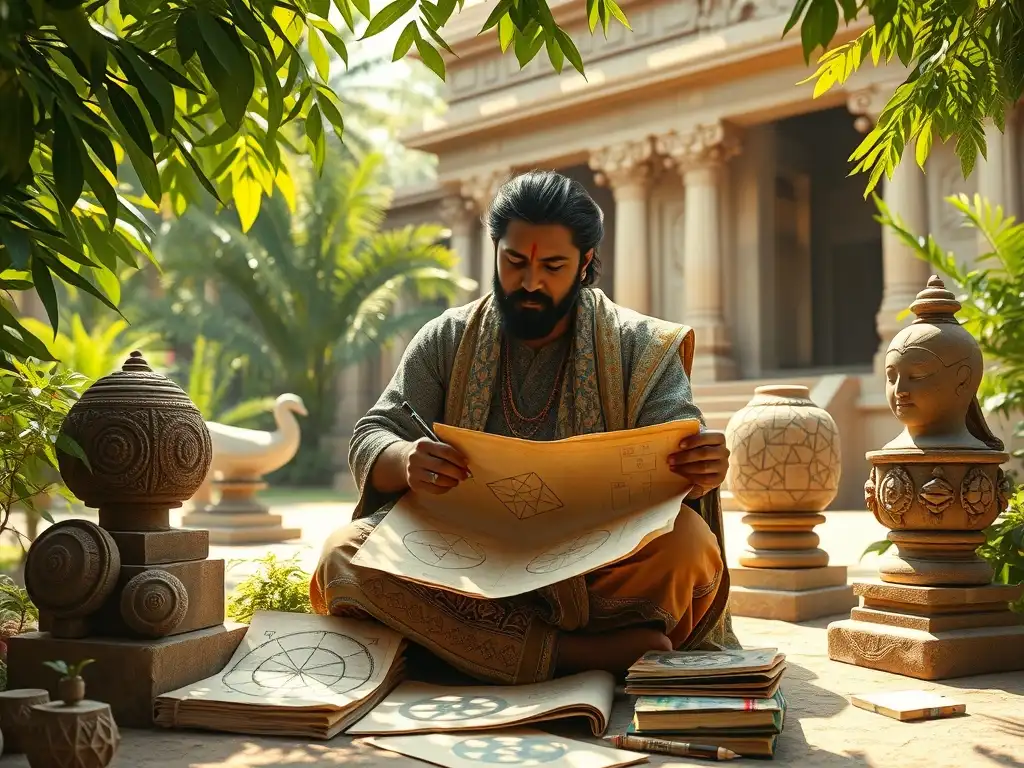
The legacy of ancient Indian geometric contributions is profound and far-reaching. As one of the earliest civilizations to explore geometric principles, ancient India laid the groundwork for a mathematical tradition that has influenced not just its own culture but also the world at large. The intricate designs found in temples, the advanced architectural techniques, and the systematic study of shapes and patterns reflect a deep understanding of geometry that was ahead of its time. This knowledge was not only practical but also philosophical, integrating mathematics with cosmology and spirituality.
The works of mathematicians such as Aryabhata, Brahmagupta, and Bhaskara illustrate the rich tapestry of geometric thought in ancient India. Their writings encompass a range of topics, from the calculation of areas and volumes to the properties of circles and triangles, showcasing a sophisticated grasp of mathematical concepts. These contributions laid the foundation for future generations, influencing both Islamic and European mathematicians during the Middle Ages and beyond.
Reflection on the Importance of Geometric Knowledge
Geometric knowledge served as a crucial tool in ancient Indian society, aiding in various practical applications such as architecture, astronomy, and land measurement. The precise geometrical layouts of cities and temples, exemplified by the geometric intricacies in the designs of the Brihadeeswarar Temple and the Sun Temple at Konark, reveal a society that valued mathematical precision.
Moreover, geometry played a significant role in the spiritual and philosophical dimensions of ancient Indian culture. The use of geometric patterns in art and architecture often symbolized cosmic harmony and the interconnectedness of the universe. For instance, mandalas, intricate geometric designs used in spiritual rituals, reflect the profound link between geometry, nature, and spirituality in ancient Indian thought.
The Continuing Relevance of Ancient Indian Geometry Today
The principles of ancient Indian geometry continue to resonate in modern times, influencing various fields such as architecture, design, and even computer graphics. The techniques developed by ancient Indian mathematicians are still applicable in solving contemporary problems, particularly in fields requiring spatial reasoning and design precision.
Furthermore, the resurgence of interest in traditional Indian crafts and architectural styles has brought attention to the geometric foundations of these art forms. Contemporary architects and designers often draw inspiration from ancient geometric principles to create sustainable and harmonious structures that echo the wisdom of the past.
In education, the teachings of ancient Indian geometry can enrich modern mathematical curricula, offering students a diverse perspective on geometric concepts. By exploring these historical contributions, learners can appreciate the depth and breadth of mathematical knowledge that transcends cultures and time periods, fostering a more inclusive understanding of mathematics as a universal language.
Overall, the exploration of ancient Indian geometric contributions not only highlights the sophistication of past civilizations but also serves as a reminder of the continuous journey of knowledge that shapes our understanding of the world today.
- Introduction to Ancient Indian Geometric Contributions
- Historical Context of Geometric Developments in India
- Key Geometric Concepts in Ancient India
- Prominent Figures in Ancient Indian Geometry
- Applications of Geometry in Ancient Indian Society
- Influence of Ancient Indian Geometry on Later Civilizations
- Conclusion: The Legacy of Ancient Indian Geometric Contributions
- Reflection on the Importance of Geometric Knowledge
- The Continuing Relevance of Ancient Indian Geometry Today
- What are the key contributions of ancient Indian geometry?
- How did the Indus Valley Civilization contribute to geometry?
- What role did the Gupta Empire play in the development of geometry?
- How is geometry reflected in ancient Indian architecture?
- What resources can I explore to learn more about ancient Indian geometric contributions?
Frequently Asked Questions
What are the key contributions of ancient Indian geometry?
Ancient Indian geometry made significant advancements in concepts such as shapes, patterns, and numerical relationships, influencing mathematics and architecture for centuries.
How did the Indus Valley Civilization contribute to geometry?
The Indus Valley Civilization showcased advanced urban planning and geometric layouts, evident in their cities' grid patterns, which reflected a sophisticated understanding of geometry.
What role did the Gupta Empire play in the development of geometry?
During the Gupta Empire, scholars like Brahmagupta and Aryabhata made remarkable contributions, including the formulation of geometric principles and the introduction of zero as a number, enhancing mathematical calculations.
How is geometry reflected in ancient Indian architecture?
Ancient Indian architecture, especially in temples, exhibits intricate geometric designs and symmetrical patterns, showcasing the integration of mathematics and aesthetics in their construction.
What resources can I explore to learn more about ancient Indian geometric contributions?
Books on ancient Indian mathematics, academic journals, and online resources like the Ancient India History website provide valuable insights into the geometric advancements and their cultural significance.
Final Reflection: The Enduring Legacy of Ancient Indian Geometry
The exploration of ancient Indian geometric contributions reveals a profound connection between mathematics and culture that remains relevant today. As we navigate a world increasingly driven by technology and innovation, the foundational principles established by ancient Indian scholars remind us of the timeless nature of knowledge and its ability to transcend generations. The intricate shapes, patterns, and numerical relationships they developed not only shaped their society but also laid the groundwork for modern mathematical thought.
The influence of ancient Indian geometry extends far beyond historical significance; it continues to inspire contemporary artists, architects, and mathematicians alike. The patterns and principles discovered centuries ago resonate in various fields, from design to computer science, showcasing the universal language of geometry. Mathematics is the language in which God has written the universe.
– Galileo Galilei. This quote encapsulates the essence of how ancient Indian geometric contributions serve as a bridge between the past and the present, illustrating the interconnectedness of all knowledge.
As we reflect on the wonders of ancient Indian geometry, let us embrace the lessons of creativity, precision, and harmony that these contributions offer. I invite you to explore these geometric principles in your own life, whether through art, architecture, or even in the patterns of nature around you. By doing so, you not only honor the legacy of those ancient scholars but also enrich your understanding of the world and your place within it. Let us carry forward this rich heritage, allowing it to inspire our future endeavors and innovations.
Unveil the Secrets of Geometry: Take Your Knowledge to New Heights!
Thank you for diving into the fascinating world of ancient Indian geometry with us! We hope you uncovered insights into the intricate shapes and patterns that shaped mathematics as we know it. Now, let's take the next step together in exploring this remarkable legacy!
Here are a few engaging actions you can take right now:
- Explore further by visiting our curated list of ancient texts and resources that delve deeper into the mathematical marvels of India.
- Share your newfound knowledge with friends or fellow history enthusiasts—start a discussion about how ancient geometry influences modern design!
- Create your own geometric artwork inspired by ancient practices and showcase it within our community on social media using the hashtag #AncientGeometryArt.
Which geometric concept from ancient Indian history resonates with you the most, and how do you see its influence in today’s world?