
The Role of Ancient Indian Mathematics in Global Trade Routes


Welcome to Ancient India History, where we embark on a fascinating journey through the rich tapestry of ancient Indian civilizations. As we delve into the intriguing realm of ancient Indian mathematics history, you'll uncover how these brilliant minds not only advanced mathematical concepts but also played a pivotal role in shaping global trade routes. This journey promises to unveil the profound connections between mathematics and commerce, sparking your curiosity about the enduring legacy of ancient Indian scholars. Join us as we explore the remarkable contributions that continue to influence our world today!
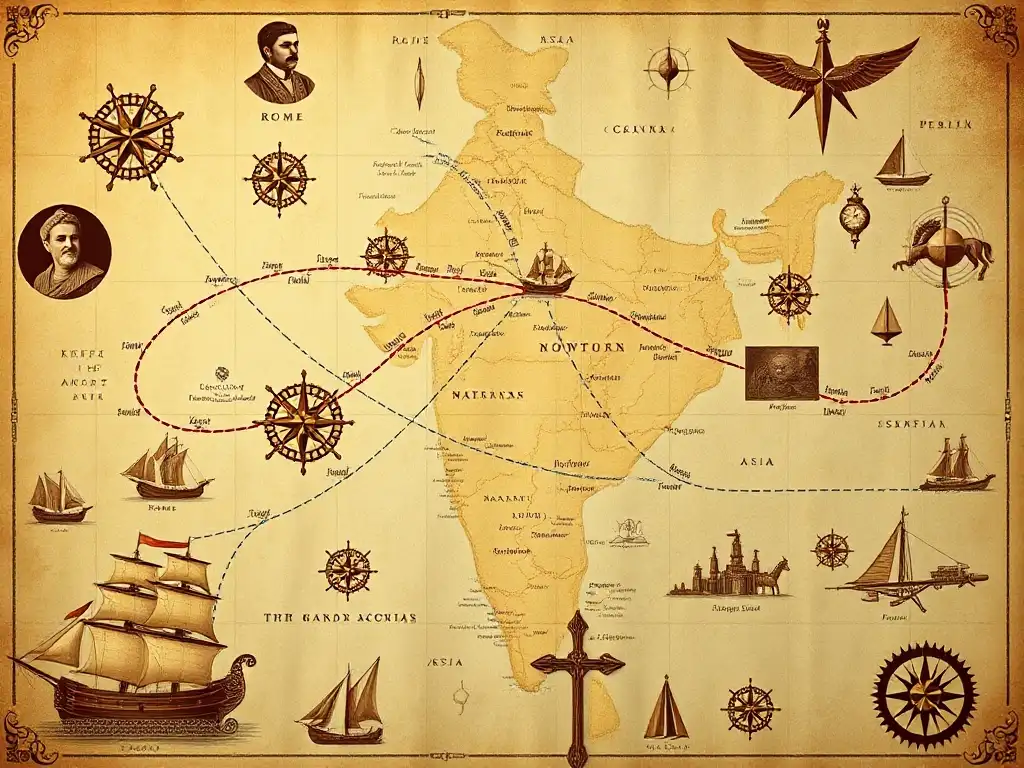
Introduction to Ancient Indian Mathematics History
The history of ancient Indian mathematics is a profound tapestry woven with intricate theories, innovative practices, and remarkable contributions that have significantly influenced the development of mathematics worldwide. From the early calculations of the Indus Valley civilization to the sophisticated theories of the Gupta Empire, ancient Indian mathematics not only laid the groundwork for various mathematical concepts but also played a pivotal role in facilitating trade across vast distances.
As trade routes expanded, the need for accurate measurements, calculations, and record-keeping became paramount, reflecting how mathematics was intricately linked to commerce and cultural exchange. This article delves into the rich history of ancient Indian mathematics and its indelible impact on global trade routes, highlighting its significance in shaping mathematical thought and practice that transcended geographical boundaries.
Overview of Ancient Indian Mathematics
Ancient Indian mathematics is characterized by a unique approach that merged practical applications with profound theoretical insights. Rooted in the early Vedic texts, mathematical concepts evolved through various dynasties, each contributing its distinct innovations and methodologies.
- Early Developments: The earliest references to mathematics appear in the Vedas, where rituals required precise calculations.
- Number Systems: Ancient Indians introduced the decimal system and the concept of zero, which revolutionized mathematics globally.
- Geometry and Astronomy: The mathematical understanding of geometry was advanced through the needs of architecture and astronomy, aiding in navigation and timekeeping.
These elements collectively provided the foundation for a sophisticated mathematical tradition that would later influence numerous cultures along the trade routes.
Significance of Mathematics in Trade
Mathematics played a crucial role in the flourishing trade of ancient India. It was essential for:
- Measurement: Accurate measurements of land, goods, and distances were vital for trade agreements and transactions.
- Currency Calculations: The development of mathematical systems allowed for efficient currency exchange and pricing strategies.
- Navigation: Mathematics aided in maritime navigation, allowing traders to explore and establish connections with distant lands.
As such, ancient Indian mathematics not only served practical purposes but also facilitated cultural exchanges and economic growth along trade routes, establishing India as a center of commerce in the ancient world.
The Development of Mathematics in Ancient India
The evolution of mathematics in ancient India was marked by significant discoveries and advancements that laid the groundwork for future generations. The interplay between practical needs and theoretical exploration fostered a rich mathematical environment.
Key Contributions of Ancient Indian Mathematicians
Several mathematicians from ancient India made landmark contributions that shaped the field:
- Aryabhata (476–550 CE): Recognized for his work in number theory, trigonometry, and astronomy, Aryabhata's concepts of sine and cosine were revolutionary.
- Brahmagupta (598–668 CE): He formulated rules for arithmetic operations involving zero and negative numbers, crucial for mathematical calculations.
- Bhaskara I and II: They expanded on earlier works, contributing to calculus and algebra, and made significant strides in astronomical calculations.
These figures not only advanced mathematical concepts but also influenced trade practices through their innovative methods and theories.
Major Mathematical Texts and Their Influence
The mathematical heritage of ancient India is encapsulated in several key texts that have endured through the ages:
- Aryabhatiya: Aryabhata's seminal work that covers arithmetic, algebra, and astronomy, establishing foundational principles for future scholars.
- Brahmasphutasiddhanta: Brahmagupta's treatise, which elaborated on arithmetic, geometry, and rules for calculating with zero and negative numbers.
- Lilavati: Written by Bhaskara II, this text presents arithmetic and algebraic problems in a poetic format, making mathematics accessible and engaging.
These texts not only served as educational resources but also helped disseminate mathematical knowledge along trade routes, influencing various cultures and civilizations globally.
Mathematical Innovations and Their Impact on Trade
Ancient Indian mathematics made significant contributions that facilitated trade, both within the subcontinent and with foreign cultures. The innovations in mathematics not only enhanced trade efficiency but also allowed for more complex financial transactions that were crucial for expanding trade networks. One of the most profound impacts was the development of numerical systems and mathematical concepts that were essential for accounting and commerce.
The introduction of sophisticated mathematical methods allowed traders to calculate profits, losses, and expenses more accurately. Furthermore, the use of these mathematical principles helped in standardizing weights and measures, which was vital for fair trade practices. As traders began to traverse longer distances, the need for precise calculations became increasingly important, leading to the application of mathematics in logistics and inventory management. This integration of mathematics into trade practices laid the groundwork for subsequent developments in commerce and finance in ancient India.
The Concept of Zero and Its Importance in Calculations
The invention of zero is one of the most remarkable contributions of ancient Indian mathematics. This concept revolutionized calculations and is fundamental to the numerical system used globally today. Before the introduction of zero, calculations were cumbersome, often relying on complex methods that were not efficient for trade.
Zero allowed for the representation of large numbers and the execution of arithmetic operations with unprecedented ease. For instance, it enabled traders to represent and calculate values that were previously difficult to manage, simplifying transactions and bookkeeping. The ability to perform operations such as addition, subtraction, multiplication, and division using zero not only streamlined commerce but also facilitated the development of more advanced mathematical concepts, such as the decimal system. This innovation significantly enhanced trade efficiency, allowing merchants to engage in complex financial dealings without the fear of error.
Development of Arithmetic and Its Role in Commerce
The development of arithmetic in ancient India played a crucial role in commerce and trade. The establishment of systematic methods for addition, subtraction, multiplication, and division provided traders with the tools necessary to manage their business operations effectively. The use of algorithms, or step-by-step procedures for calculations, became standard in business practices.
Additionally, the creation of mathematical tables, such as multiplication and division tables, simplified the process of calculating costs and profits. These tables became essential for merchants, who needed to quickly assess prices and make transactions on the go. The emphasis on arithmetic not only helped in day-to-day trading but also in the assessment of taxes and duties, which were vital for the economic structure of ancient Indian states.
Ancient Indian Trade Routes and Mathematical Applications
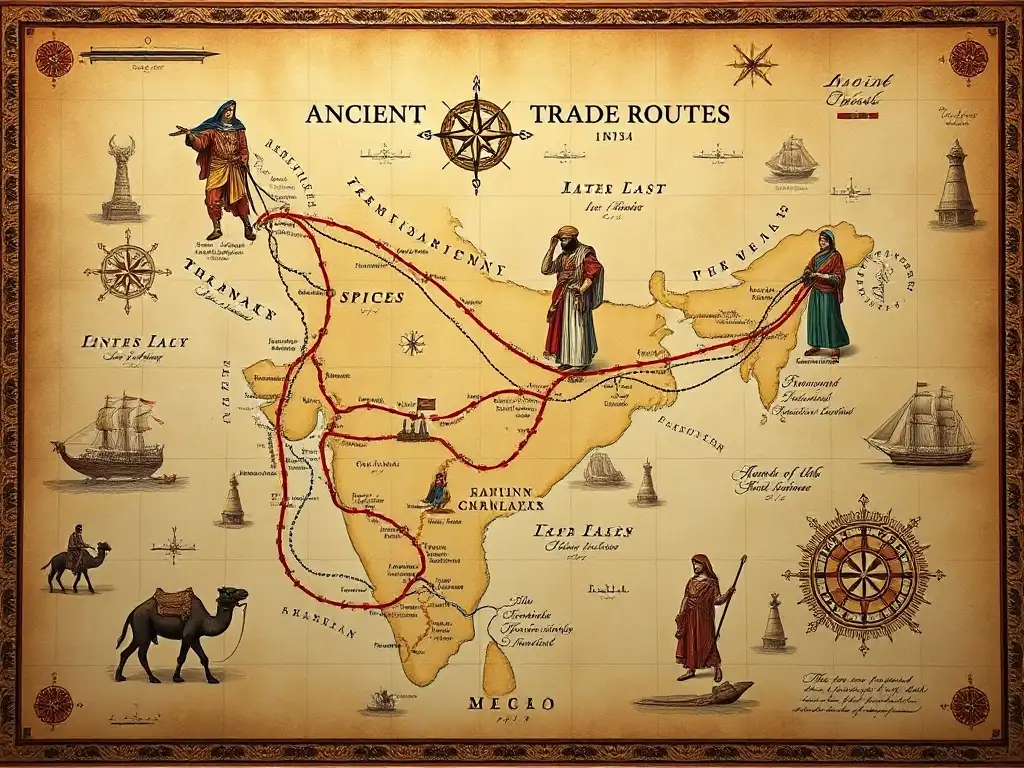
The trade routes of ancient India were vital arteries that facilitated the exchange of goods, culture, and ideas. As these routes expanded, so did the complexity of trade operations, which necessitated the application of advanced mathematical concepts. Traders relied on mathematical calculations to optimize their routes, manage inventory, and ensure profitability.
Overview of Ancient Trade Routes in India
Ancient India was characterized by a network of trade routes that connected various regions of the subcontinent and extended to neighboring countries. These routes included both overland paths, such as the famous Silk Road, and maritime routes along the Indian Ocean. Key cities like Taxila, Ujjain, and Pataliputra emerged as thriving trade centers, facilitating the movement of goods such as spices, textiles, and precious metals.
The bustling trade along these routes not only contributed to economic prosperity but also encouraged interactions between diverse cultures. As traders navigated these routes, they encountered different systems of measurement and currency, necessitating a solid understanding of mathematical principles to ensure successful transactions.
Role of Mathematical Calculations in Navigating Trade Routes
Mathematical calculations were pivotal in navigating the ancient trade routes of India. Merchants employed mathematics to determine distances, estimate travel times, and calculate the cost of transportation. For instance, understanding geometry helped traders to chart their courses effectively, ensuring that they could navigate through various terrains and climatic conditions.
Moreover, the ability to calculate and manage logistics was paramount for maintaining supply chains. Traders utilized mathematical formulas to determine the optimal quantities of goods to carry, ensuring that they maximized profits while minimizing losses. This reliance on mathematics not only improved trade efficiency but also laid the foundation for later developments in navigation and cartography, which were crucial for the expansion of global trade networks.
Case Studies of Ancient Indian Mathematics in Trade
Ancient Indian mathematics played a pivotal role in the development of trade routes that connected India with other civilizations. This intricate web of commerce not only facilitated the exchange of goods but also allowed for the transfer of mathematical knowledge and techniques. By examining specific case studies, we can better understand how ancient Indian mathematics influenced trade practices and interactions with other cultures.
Example 1: Trade with the Roman Empire
The trade relationship between ancient India and the Roman Empire is a notable example of the influence of Indian mathematics in global commerce. During the first few centuries CE, Indian merchants engaged in extensive trade with Roman counterparts, exchanging spices, textiles, and precious stones for Roman wine, glassware, and other luxury items.
Mathematical concepts were vital for calculating weights, measures, and distances in this trade. Indian traders utilized decimal systems and sophisticated arithmetic to ensure fair transactions and avoid disputes. The use of the place-value system, which originated in India, allowed for efficient accounting practices that were crucial in managing the complexities of long-distance trade. Additionally, Indian mathematicians developed techniques for calculating interest rates, which were necessary for assessing the profitability of trade ventures.
These mathematical practices not only streamlined trade negotiations but also impressed Roman traders, leading to the gradual adoption of Indian mathematical techniques in Roman commerce.
Example 2: The Silk Road and Indian Mathematicians
The Silk Road, a vast network of trade routes connecting the East and West, was another significant context in which ancient Indian mathematics flourished. Indian scholars and merchants played an essential role in this exchange, bringing their mathematical knowledge along with goods like cotton, spices, and silk.
Indian mathematicians contributed to various fields, including astronomy and geometry, which were highly valued for navigation and land surveying—crucial for successful trading expeditions. For instance, the concept of zero and the decimal system developed in India facilitated easier calculations for traders traversing the challenging terrains along the Silk Road.
Moreover, Indian mathematicians such as Aryabhata and Brahmagupta became renowned figures in the broader mathematical community, influencing not just trade but also the scientific understanding of various cultures along the Silk Road. Their works were translated and integrated into the mathematical practices of other civilizations, further enhancing the global trading network.
Influence of Ancient Indian Mathematics on Global Trade
The impact of ancient Indian mathematics extended far beyond the confines of its own borders, influencing global trade practices and economic systems. The mathematical knowledge developed in ancient India provided a foundation for trade methods that shaped interactions among various cultures.
Transfer of Mathematical Knowledge to Other Civilizations
The transfer of mathematical knowledge from ancient India to other civilizations is a key aspect of its influence on global trade. As Indian merchants traveled along trade routes, they shared their mathematical advancements, which included sophisticated methods of calculation and record-keeping.
For example, the concept of zero was adopted by Arab mathematicians, who later transmitted it to Europe. This knowledge was instrumental in improving trade efficiency and accounting practices across diverse cultures. Furthermore, the introduction of the Hindu-Arabic numeral system allowed for easier computations compared to Roman numerals, which proved cumbersome for trade.
In addition, Indian works on arithmetic, geometry, and astronomy were translated into Arabic and subsequently into Latin, creating a ripple effect throughout Europe and the Middle East. This exchange of knowledge not only enhanced local trading practices but also laid the groundwork for the mathematical advancements that would emerge in the Renaissance.
Long-term Effects on Global Trade and Economics
The long-term effects of ancient Indian mathematics on global trade and economics are profound. By providing robust mathematical tools, Indian mathematicians contributed significantly to the evolution of trade systems that became increasingly complex over time.
As trade expanded, the need for accurate measurements, calculations, and record-keeping became essential for managing transactions. The adoption of Indian mathematical techniques not only promoted fair trade practices but also enabled merchants to navigate and exploit new markets effectively.
Over centuries, these advancements facilitated the growth of commercial networks across Asia, Europe, and Africa, leading to increased economic interdependence. The legacy of ancient Indian mathematics is thus evident in the modern global economy, where the principles of trade established centuries ago continue to influence economic activities and methodologies.
Conclusion: The Legacy of Ancient Indian Mathematics in Global Trade
The legacy of ancient Indian mathematics significantly shaped the development of global trade routes, facilitating not just commerce but also cultural exchanges across continents. The mathematical innovations of ancient Indian scholars laid the groundwork for complex calculations involving weights, measures, and currency, which were crucial for trade. The use of the decimal system and the concept of zero, attributed to ancient Indian mathematicians, revolutionized calculations and accounting practices, enhancing the efficiency of trade operations.
Moreover, trade routes like the Silk Road and maritime pathways facilitated the spread of these mathematical concepts beyond India, influencing regions such as the Middle East, Southeast Asia, and even Europe. The integration of ancient Indian mathematics into various cultures underscores its universal relevance and adaptability, illustrating how knowledge transcends borders. This exchange of ideas and practices not only enriched the societies involved but also contributed to the overall advancement of mathematics as a discipline.
Summary of Key Points
- Decimal System and Zero: Ancient Indian mathematicians introduced the decimal system and the concept of zero, which transformed mathematical computations and trade practices.
- Trade Facilitation: Mathematical techniques enabled accurate calculations of weights, measures, and currency, which were essential for efficient trade operations.
- Cultural Exchange: The mathematical knowledge from India was disseminated along global trade routes, influencing other cultures and enhancing intercultural interactions.
- Legacy in Global Mathematics: The contributions of ancient Indian mathematics left a lasting impact on global mathematics, laying the foundation for future developments in the field.
- Historical Significance: The role of mathematics in ancient Indian trade showcases how interconnectedness and knowledge-sharing propelled economic and cultural growth.
Final Thoughts on the Importance of Ancient Indian Mathematics History
The history of ancient Indian mathematics is not merely a tale of numbers and equations; it is a narrative that highlights the profound influence of mathematics on society, trade, and culture. Understanding this history provides insight into how mathematical innovations can drive progress and foster connections between diverse civilizations.
As we explore the legacy of ancient Indian mathematics, it becomes clear that its significance extends far beyond the borders of India. The principles and systems developed by ancient Indian scholars have shaped modern mathematics and continue to inspire contemporary thinkers. By appreciating this rich history, we not only honor the contributions of our ancestors but also recognize the importance of mathematics as a universal language that unites people across time and space.
- Introduction to Ancient Indian Mathematics History
- Overview of Ancient Indian Mathematics
- The Development of Mathematics in Ancient India
- Mathematical Innovations and Their Impact on Trade
- Ancient Indian Trade Routes and Mathematical Applications
- Case Studies of Ancient Indian Mathematics in Trade
- Influence of Ancient Indian Mathematics on Global Trade
- Conclusion: The Legacy of Ancient Indian Mathematics in Global Trade
- What is the significance of ancient Indian mathematics in global trade routes?
- Which mathematical concepts from ancient India were influential in trade?
- How did ancient Indian mathematicians contribute to global knowledge?
- What were the primary trade goods influenced by ancient Indian mathematics?
- How does the history of ancient Indian mathematics reflect its culture?
Frequently Asked Questions
What is the significance of ancient Indian mathematics in global trade routes?
Ancient Indian mathematics played a crucial role in enhancing trade efficiency along global routes, providing merchants with sophisticated tools for calculation and navigation.
Which mathematical concepts from ancient India were influential in trade?
Key concepts such as decimal systems, arithmetic, and geometry were instrumental in trade, enabling accurate measurements and financial transactions.
How did ancient Indian mathematicians contribute to global knowledge?
Ancient Indian mathematicians, like Aryabhata and Brahmagupta, contributed important theorems and algorithms that influenced later scholars in Europe and the Middle East.
What were the primary trade goods influenced by ancient Indian mathematics?
Mathematics facilitated the trade of spices, textiles, and metals, as precise measurements were essential for ensuring fair trade practices.
How does the history of ancient Indian mathematics reflect its culture?
The history of ancient Indian mathematics reflects a rich cultural heritage, emphasizing intellectual pursuit and practical applications in everyday life and commerce.
Final Reflection: The Enduring Legacy of Ancient Indian Mathematics
The profound influence of ancient Indian mathematics on global trade routes underscores its vital role in shaping economic interactions across cultures. Today, as we navigate an increasingly interconnected world, the principles and innovations of ancient Indian mathematicians remind us of the power of knowledge to transcend borders and foster collaboration. The intricate systems of calculation and measurement developed centuries ago continue to resonate in our modern economic practices, illustrating that the past is not merely a backdrop but a foundation upon which we build our present and future.
The legacy of ancient Indian mathematics is woven into the very fabric of our global society, influencing everything from commerce to technology. As we reflect on this rich history, we recognize that the contributions of these early mathematicians laid the groundwork for advancements that have shaped our world. Their work exemplifies the idea that knowledge is a shared treasure, transcending time and geography. Mathematics knows no races or geographic boundaries; for mathematics, the cultural world is one country.
- David Hilbert. This quote encapsulates the universal nature of mathematical knowledge, highlighting how ancient Indian mathematics serves as a bridge connecting diverse cultures through trade and intellectual exchange.
As we contemplate the lessons from ancient Indian mathematics, let us embrace the spirit of inquiry and collaboration that characterized these early scholars. I invite you to reflect on how the principles of mathematics and trade can inspire your own journey. Consider how you can apply the lessons of innovation and cross-cultural exchange in your life, whether in your professional endeavors or personal pursuits. By honoring the legacy of ancient Indian mathematics, we not only celebrate its historical significance but also pave the way for a future where knowledge continues to unite us across the globe.
Unleash the Power of Ancient Wisdom Today!
Thank you for exploring the fascinating intersection of ancient Indian mathematics and global trade routes with us! Your interest helps bring to light the incredible contributions of this knowledge to our modern world. Now that you’ve gained insights into this rich history, it’s time to take action.
Here are some exciting ways to connect further with this topic:
- Dive deeper: Explore reputable books or documentaries that delve into ancient Indian mathematics and its profound impact on trade.
- Share your knowledge: Engage in discussions with friends or in online forums to inspire others about the significance of mathematics throughout history.
- Join a community: Become involved with local or online groups that focus on the history of mathematics and its essential role in global development; you may discover valuable connections!
What aspect of ancient Indian mathematics do you believe has the most significant potential to shape our modern world? We invite you to share your thoughts below!