
Geometry and Architecture: The Mathematical Brilliance of Ancient India


Welcome to Ancient India History, where we embark on a captivating journey through the rich tapestry of ancient civilizations that shaped the Indian subcontinent. Prepare to uncover the mathematical brilliance that defined the realms of geometry and architecture in our featured article, "Geometry and Architecture: The Mathematical Brilliance of Ancient India." Delve into the intricacies of design and innovation that not only reflect the ingenuity of ancient architects but also their profound understanding of geometry that continues to influence modern science and art.
Join us as we explore how these ancient masterpieces were not merely structures, but a testament to a vibrant culture that celebrated knowledge and creativity. Your adventure into the past awaits!
- Introduction to Ancient Indian Geometry and Architecture
- The Foundations of Geometry in Ancient India
- Architectural Marvels of Ancient India
- The Role of Geometry in Urban Planning
- Symbolism and Aesthetics in Ancient Indian Architecture
- Innovations and Techniques in Ancient Indian Architecture
- Comparative Analysis: Ancient Indian Geometry vs. Other Civilizations
- Conclusion: The Enduring Impact of Ancient Indian Geometry and Architecture
- References and Further Reading on Ancient Indian Geometry and Architecture
-
Frequently Asked Questions
- What are the key features of ancient Indian geometry?
- How did ancient Indian architecture influence modern design?
- What are some notable examples of geometry in ancient Indian structures?
- How did the Gupta Empire contribute to the field of geometry?
- Why is the study of ancient Indian geometry and architecture important today?
- Final Reflection: The Enduring Legacy of Ancient Indian Geometry and Architecture
- Unleash Your Curiosity: Dive Deeper into Geometry and Ancient Architecture!
Introduction to Ancient Indian Geometry and Architecture
The rich tapestry of ancient Indian history is woven with the threads of remarkable mathematical achievements and architectural brilliance. Among these, geometry and architecture stand out as significant pillars that not only reflect the ingenuity of ancient Indian civilizations but also their profound understanding of the universe.
From the meticulously planned cities of the Indus Valley to the intricate carvings of medieval temples, ancient Indian geometry and architecture reveal a sophisticated grasp of spatial relationships, proportion, and aesthetics. This article delves into the mathematical brilliance behind these ancient structures, exploring how geometry shaped architectural practices and contributed to the grandeur of India's cultural heritage.
Overview of Ancient Indian Contributions to Geometry
Ancient India made significant strides in the field of geometry, which can be traced back to texts such as the Sulbasutras. These ancient scriptures, dated around 800 to 500 BCE, laid down the principles of geometry primarily for the construction of altars and ritual spaces. The Sulbasutras introduced several important concepts, including:
- Pythagorean theorem: Although known in the West as a Greek discovery, this theorem was articulated in Indian texts centuries earlier, demonstrating the mathematical sophistication of ancient Indian scholars.
- Geometric constructions: Techniques for creating precise shapes, including squares, circles, and various polygons, were extensively documented, showcasing a deep understanding of spatial dimensions.
- Measurement systems: Ancient Indian mathematicians developed systematic approaches to measuring land and constructing buildings, which were integral to urban planning and architecture.
The contributions of ancient Indian geometry extend far beyond mere calculations; they demonstrate a holistic approach to mathematics interwoven with cultural and spiritual practices.
Significance of Architecture in Ancient Indian Civilizations
Architecture in ancient India was not just about aesthetic appeal; it was a manifestation of the civilization's philosophical and religious beliefs. The architectural marvels of ancient India, from the grand stupas to the intricate temples, serve multiple purposes that reflect the society's values and priorities. Key aspects include:
- Religious symbolism: Many structures were designed with geometrical precision to embody cosmic principles, representing the connection between the earthly and the divine. For instance, the layout of temples often followed specific geometric patterns that aligned with astronomical phenomena.
- Urban planning: Cities such as Mohenjo-Daro and Harappa exemplified advanced urban planning, featuring grid layouts, drainage systems, and public spaces, all rooted in geometric principles. This thoughtful organization facilitated efficient living and trade.
- Cultural expressions: The intricate carvings and sculptures found in temples and palaces reveal not only artistic mastery but also the application of geometric principles to enhance visual impact, demonstrating how architecture served as a canvas for cultural narratives.
In essence, the significance of architecture in ancient Indian civilizations goes beyond mere construction; it encapsulates a profound understanding of geometry as a tool for expressing cultural identity and spiritual beliefs.
The Foundations of Geometry in Ancient India
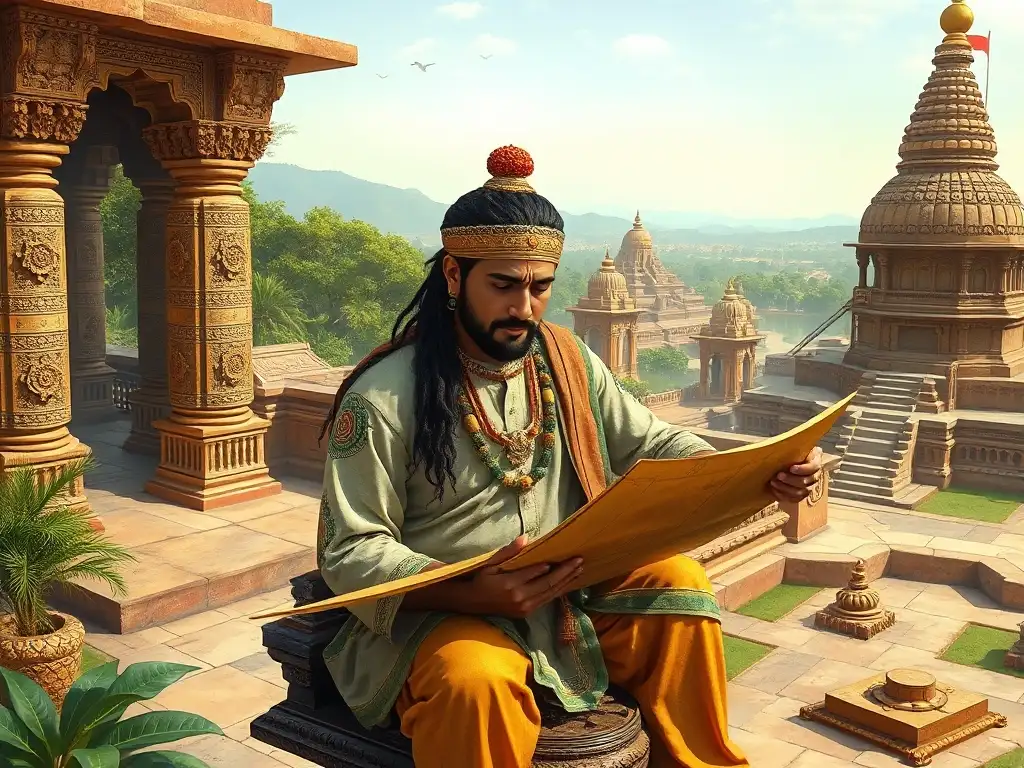
Early Mathematical Texts and Treatises
Ancient India boasts a rich tradition of mathematical texts that laid the groundwork for geometry as a discipline. Among the earliest and most significant works is the Sulbasutras, a collection of texts dating back to around 800 BCE to 200 BCE. These texts were essentially manuals for constructing altars for Vedic rituals and include detailed instructions on geometric principles.
- Sulbasutra Highlights:
- Construction Techniques: The texts provide methods for constructing various geometric shapes, such as squares, rectangles, and circles, using basic tools like ropes and pegs.
- Pythagorean Theorem: Remarkably, the Sulbasutras contain early formulations of the Pythagorean theorem, showcasing the ability of Indian mathematicians to understand and apply geometric relationships long before they were documented in the West.
- Area Calculations: They also describe how to calculate areas and volumes, which were essential for altar construction.
Another notable text is Aryabhata's Aryabhatiya, written in the 5th century CE. Aryabhata's work not only delves into arithmetic and algebra but also presents significant geometric concepts:
- Key Contributions:
- Trigonometry: Aryabhata introduced sine functions, which were critical for astronomical calculations.
- Circle Geometry: He explored properties of circles, including circumference and area calculations, contributing significantly to the field of geometry.
Key Mathematicians and Their Contributions
Several prominent mathematicians made invaluable contributions to ancient Indian geometry, shaping the discipline and influencing future generations.
-
Brahmagupta (598–668 CE):
- Known for his work Brahmasphutasiddhanta, he provided rules for solving quadratic equations and discussed geometric concepts related to cyclic quadrilaterals.
- Brahmagupta's formula for finding the area of a cyclic quadrilateral, given the lengths of its sides, is still recognized today:
\[
A = \sqrt{(s-a)(s-b)(s-c)(s-d)}
\]Where \(s\) is the semiperimeter, and \(a, b, c, d\) are the lengths of the sides.
-
Bhaskara I (c. 600 CE):
- A prominent follower of Aryabhata, he translated Aryabhata’s work into Sanskrit and expanded on it. He introduced new methods for calculating areas and volumes.
-
Bhaskara II (1114–1185 CE):
- His seminal work, Siddhanta Shiromani, contains extensive discussions on geometry, including the relationships between different shapes.
- He also made significant advancements in calculus, which further enriched the understanding of geometric principles.
Fundamental Principles of Ancient Indian Geometry
Ancient Indian geometry is characterized by its practical applications and theoretical foundations, which collectively contributed to the rich tapestry of mathematical knowledge. Some fundamental principles include:
- Sacred Geometry: Geometry was often intertwined with religious and cultural practices. The construction of temples and altars adhered to specific geometric rules believed to align with cosmic principles. This is seen in the design of the Mandala, a geometric figure symbolizing the universe.
- Geometric Constructs:
- Squares and Rectangles: These shapes were fundamental in both architecture and geometry, as they were used for altar construction and layout planning.
- Circles: The circle held significant importance, often associated with the celestial sphere. Ancient texts describe methods for constructing circles and understanding their properties.
- Mathematical Rigor: Ancient Indian geometers emphasized logical reasoning and proofs, often using inductive and deductive reasoning to establish geometric truths. This approach laid the foundation for later developments in mathematics and geometry.
The study of ancient Indian geometry and architecture reveals a sophisticated understanding of mathematical principles, deeply rooted in cultural practices and scientific inquiry. The contributions of early mathematicians and the formulation of foundational geometric principles underscore the brilliance of ancient Indian civilizations in the realm of mathematics.
Architectural Marvels of Ancient India

Notable Structures: Temples and Palaces
Ancient India is renowned for its architectural marvels, particularly its temples and palaces that exemplify intricate design and mathematical precision. These structures not only served religious and royal functions but also stood as symbols of the artistic and scientific achievements of their time.
- Temples: The temples of ancient India, such as those in Khajuraho and Hampi, showcase a blend of religious significance and architectural innovation.
- Khajuraho Temples: Famous for their intricate sculptures and carvings, these temples were built between 950 and 1050 CE and demonstrate the use of geometry in creating complex forms and harmonious proportions.
- Brihadeeswarar Temple: Located in Thanjavur, this temple is a UNESCO World Heritage Site. Its massive dome and meticulous layout exemplify advanced engineering techniques, including the application of geometric principles to achieve stability and aesthetic appeal.
- Palaces: The palaces of ancient Indian kingdoms were embodiments of grandeur and sophistication, often designed with intricate layouts and gardens.
- Mysore Palace: Renowned for its Indo-Saracenic architecture, this palace features a blend of Hindu, Muslim, Gothic, and Rajput styles, showcasing an understanding of geometric symmetry and balance.
- City Palace of Jaipur: This palace complex reflects a striking synthesis of Mughal and Rajput architectural styles, with its courtyards and gardens arranged according to principles of geometric symmetry.
These structures not only highlight the artistic capabilities of ancient Indian architects but also reflect a deep understanding of geometry and spatial organization.
The Influence of Geometry on Architectural Design
Geometry played a pivotal role in shaping the architectural landscape of ancient India. The application of geometric principles allowed architects to create structures that were not only visually appealing but also structurally sound.
- Sacred Geometry: Many ancient Indian temples were designed using sacred geometry, which involved specific shapes and proportions believed to have spiritual significance.
- The use of the Mandala pattern, a geometric design representing the cosmos, was common in temple layouts, symbolizing the universe's harmony and balance.
- Proportional Systems: Ancient Indian architects employed proportional systems, often based on ratios, to determine the dimensions of various architectural elements.
- For example, the ratio of the height to the width of temple spires was carefully calculated to achieve the desired aesthetic and structural integrity.
- Mathematical Techniques: Techniques such as symmetry, perspective, and the use of angles were integral in the design process.
- Architects utilized trigonometry to calculate angles for roofs and walls, ensuring stability and aesthetic precision in structures like the elaborate arches and domes found in many monuments.
The influence of geometry is evident not only in the design of individual structures but also in the overall urban planning of ancient cities, which often incorporated geometric layouts for streets and public spaces.
Case Study: The Great Stupa at Sanchi
The Great Stupa at Sanchi, one of the oldest stone structures in India, serves as an exemplary case study of ancient Indian geometry and architecture. Built during the Mauryan period around the 3rd century BCE, it is a significant architectural achievement that reflects the advanced mathematical understanding of the time.
- Geometric Design: The stupa is constructed in a hemispherical shape, symbolizing the universe's dome. Its circular base and the ascending circular paths symbolize the spiritual journey of Buddhism.
- The stupa's structure incorporates precise proportions, with the height of the dome ideally related to its diameter, a testament to the geometric principles employed by its architects.
- Symbolic Elements: The four gateways (toranas) of the stupa are adorned with intricate carvings that depict scenes from the life of Buddha and various Jataka tales.
- The toranas are positioned at cardinal points, demonstrating an understanding of both geometry and astronomy, as they align with the solstices and equinoxes.
- Cultural Significance: The Great Stupa not only served as a religious monument but also as a center for the community, showcasing the social and cultural life of ancient India. Its design reflects the integration of architectural brilliance with spiritual significance, making it a landmark of ancient Indian geometry and architecture.
The Great Stupa at Sanchi exemplifies how ancient Indians harnessed geometry to create structures that were not only functional but also deeply imbued with cultural and spiritual meaning. This architectural marvel continues to inspire awe and admiration for its mathematical brilliance and historical significance.
The Role of Geometry in Urban Planning

Geometry played a crucial role in the urban planning of ancient Indian civilizations, particularly in the design and layout of cities and settlements. The application of geometric principles facilitated not only the aesthetic appeal of these urban centers but also their functionality and sustainability. Ancient Indian architects and urban planners utilized geometric shapes, patterns, and alignments to create organized spaces that accommodated various aspects of daily life, including residential, commercial, and religious activities.
The use of geometry in urban planning also reflects a deep understanding of the natural environment. By aligning cities with cardinal directions and incorporating natural features into their designs, ancient planners ensured both harmony with the landscape and optimal conditions for living. This thoughtful integration of geometric principles into urban design exemplifies the sophistication of ancient Indian civilization in terms of both mathematics and architecture.
Planning of Ancient Cities and Settlements
The planning of ancient cities in India, particularly during the Indus Valley Civilization, showcases the advanced geometric knowledge of the time. Cities such as Mohenjo-Daro and Harappa were meticulously designed with a grid pattern that emphasized order and efficiency. The streets were laid out in a precise north-south and east-west orientation, allowing for easy navigation and accessibility.
- Key Features of Urban Planning:
- Grid Layout: Streets intersected at right angles, creating a network that facilitated movement and trade.
- Public and Private Spaces: Distinct separation of residential areas from public spaces, such as baths and marketplaces, demonstrated an understanding of community organization.
- Drainage Systems: Advanced drainage systems, which included covered drains running along the streets, showcased not only geometric ingenuity but also an awareness of sanitation.
The careful planning of these cities indicates a significant degree of urban sophistication, which was rare in other contemporary civilizations.
Examples of Geometric Layouts in Indus Valley Civilization
The Indus Valley Civilization is renowned for its remarkable use of geometry in urban layouts. Some notable examples include:
- Mohenjo-Daro:
- The city featured a well-planned grid layout with streets measuring approximately 9 meters wide, which were lined with brick houses.
- The site also contained the Great Bath, a large public water tank that exemplified advanced engineering and geometric design.
- Harappa:
- Similar to Mohenjo-Daro, Harappa was characterized by its systematic arrangement of streets and buildings.
- The use of standard-sized bricks (approximately 28 x 14 x 7 cm) ensured uniformity and precision in construction, reflecting geometric principles in material choice.
- Dholavira:
- This site exhibited an ingenious water conservation system integrated into its geometric layout.
- It featured a series of reservoirs and channels that utilized the natural slope of the land, demonstrating a blend of environmental awareness and mathematical planning.
These examples illustrate the application of geometric principles in creating functional and sustainable urban environments.
The Significance of Vastu Shastra in Architecture
Vastu Shastra, an ancient Indian system of architecture and design, emphasizes the significance of geometry and spatial orientation in building structures. This traditional philosophy is rooted in the belief that the arrangement of spaces can influence the well-being and prosperity of its inhabitants.
- Key Aspects of Vastu Shastra:
- Directional Alignments: Buildings are oriented based on cardinal directions, aligning with cosmic energies to promote harmony.
- Geometric Shapes: The use of specific geometric shapes, such as squares and rectangles, is believed to enhance positive energy flow and stability.
- Elemental Considerations: Vastu Shastra incorporates the five elements (earth, water, fire, air, and space) into its designs, promoting a balanced and harmonious living environment.
The principles of Vastu Shastra reflect a deep understanding of geometry and its applications in creating spaces that resonate with both aesthetic and functional qualities. This ancient knowledge continues to influence modern architectural practices in India, demonstrating the lasting impact of ancient Indian geometry and architecture on contemporary design.
Symbolism and Aesthetics in Ancient Indian Architecture
Ancient Indian architecture is renowned for its intricate designs and profound symbolism, often reflecting the values, beliefs, and cosmological perspectives of the civilizations that created them. The use of geometry in this architectural tradition is not merely functional but is imbued with spiritual significance, enhancing both the aesthetic appeal and the spiritual resonance of the structures.
Buildings such as temples, palaces, and forts were designed with a keen understanding of geometry, which served as a visual language that communicated complex philosophical ideas. For instance, the layout of many temples follows a precise geometric pattern that reflects the cosmos, representing the connection between the divine and the earthly realm.
Geometric Patterns in Sacred Architecture
Geometric patterns are a hallmark of ancient Indian architecture, particularly in religious and sacred structures. These patterns often consist of elaborate designs that include:
- Circles: Representing wholeness and unity, circles are frequently found in the designs of temple plans and sacred sites.
- Squares: Symbolizing the earthly realm, squares are used to create the floor plans of many temples, signifying stability and structure.
- Triangles: Often representing the divine, triangles are utilized in the roofs of temples and in decorative motifs.
The Mandala, a spiritual and ritual symbol in Hinduism and Buddhism, exemplifies the intricate use of geometry. Mandalas are typically circular, incorporating various geometric shapes that represent the universe and the connection between the microcosm and macrocosm.
The Interplay of Geometry and Spirituality
The relationship between geometry and spirituality in ancient Indian architecture is profound. The architectural designs were not only created for visual beauty but also to facilitate a deeper spiritual experience. This interplay can be observed in several ways:
- Cosmic Alignment: Many ancient temples are aligned with celestial bodies, reflecting the importance of astronomy in ancient Indian culture. The positioning of structures often corresponds with solstices and equinoxes, emphasizing the connection between the earth and the cosmos.
- Symbolic Representations: Various geometric shapes symbolize different spiritual concepts. For example, the lotus, often depicted in temple art, represents purity and enlightenment, while its geometric forms can be seen in the layout of temples.
- Ritualistic Significance: The geometric designs often play a crucial role in rituals. For instance, during ceremonies, the patterns on the ground or within the temple can dictate the flow of energy and the conduct of rituals, enhancing the overall spiritual experience.
Artistic Techniques: Mandalas and Yantras
Mandalas and yantras are two artistic techniques that further highlight the importance of geometry in ancient Indian culture:
- Mandalas: As previously mentioned, mandalas serve as spiritual diagrams that represent the universe. They often incorporate complex geometric patterns that guide meditation practices. The process of creating a mandala is as important as the final product, as it embodies the journey toward enlightenment.
- Yantras: A yantra is a mystical diagram used for worship and meditation, often featuring geometric shapes such as triangles and circles arranged in a specific manner. The Sri Yantra, one of the most famous yantras, consists of nine interlocking triangles that represent the cosmos and human body, illustrating the connection between the divine and the material world.
The rich tradition of ancient Indian geometry and architecture is intricately tied to symbolism and spirituality. The geometric patterns and artistic techniques not only enhanced the aesthetic qualities of buildings but also served as a means to connect the physical and spiritual realms, reflecting the profound understanding of mathematics and its significance in ancient Indian civilization.
Innovations and Techniques in Ancient Indian Architecture

The architectural landscape of ancient India showcases a profound understanding of geometry and mathematics, reflecting the innovative spirit of its civilizations. Ancient Indian architects and builders employed various techniques and materials that not only defined their structures but also demonstrated a mastery of mathematical principles.
Use of Materials and Structural Techniques
Ancient Indian architecture was characterized by the clever use of locally available materials, which were integral to the durability and aesthetic appeal of their constructions. The primary materials included:
- Stone: Used for temples and monuments, stone was chosen for its longevity and ability to withstand the elements. For instance, the intricate carvings of the Khajuraho temples are a testament to the skillful use of sandstone.
- Brick: The Indus Valley Civilization is noted for its advanced use of kiln-fired bricks, which allowed for standardized dimensions and enhanced structural integrity.
- Wood: Employed in various forms, from beams to intricate carvings, wood added a dynamic element to the architectural styles, especially in southern Indian temple architecture.
Structural techniques such as the corbel arch and the vault were prevalent, allowing for larger and more stable roofs. The use of precise measurements and geometric principles in the layout of temples, such as the Vimanas of South Indian temples, exemplifies the advanced understanding of proportions and symmetry.
Advancements in Construction Methods
Ancient Indian architects utilized several innovative construction methods that were ahead of their time. Notable advancements include:
- Geometric Planning: The layout of cities like Mohenjo-Daro displayed a grid pattern, demonstrating sophisticated urban planning. The careful alignment of buildings and streets suggests a deep understanding of geometry.
- Modular Construction: Techniques like modular design facilitated the systematic construction of temples and public structures, ensuring consistency and efficiency. This method is evident in the repetitive motifs and columns of the Great Stupa at Sanchi.
- Water Management Systems: The engineering prowess of ancient India is exemplified in the construction of stepwells and tanks, which not only served practical purposes but also showcased intricate designs that harmonized with the surrounding landscape.
The Influence of Mathematics on Architectural Stability
Mathematics played a crucial role in ensuring the stability and aesthetic harmony of ancient Indian structures. Key mathematical influences included:
- Golden Ratio: Many ancient Indian temples embody the principles of the golden ratio, resulting in visually pleasing proportions. This mathematical concept was applied in the design of both the layout and elevation of structures.
- Geometric Symmetry: The use of symmetrical designs in temples and palaces reflects a deep understanding of geometric properties, enhancing both the stability and visual appeal of these buildings. For example, the Brihadeeswarar Temple showcases perfect symmetry in its layout.
- Load Distribution: Ancient Indian builders expertly calculated load distribution to ensure the stability of large structures, utilizing arch and dome techniques that minimized stress on the materials.
The innovations and techniques in ancient Indian architecture were deeply intertwined with mathematical principles, which not only facilitated the construction of enduring monuments but also highlighted the civilization's rich intellectual heritage in geometry and architecture.
Comparative Analysis: Ancient Indian Geometry vs. Other Civilizations

When examining the mathematical brilliance of ancient India, particularly in the context of geometry and architecture, a comparative analysis with other civilizations reveals both unique characteristics and shared principles. Ancient Indian geometry, characterized by its practical applications and spiritual significance, stands in contrast to the more theoretical approach seen in other cultures, such as the Greeks. This section delves into the similarities and differences between ancient Indian geometry and that of other civilizations, highlighting the influence of these mathematical concepts on global architecture and the enduring legacy of architectural practices.
Similarities and Differences with Greek Geometry
Ancient Indian geometry shares several foundational principles with Greek geometry, yet notable differences exist in their applications and philosophies.
- Foundational Concepts: Both civilizations utilized fundamental geometric shapes, such as circles, triangles, and quadrilaterals. For instance, Pythagorean Theorem, which was extensively documented by the Greeks, also finds roots in ancient Indian texts like the Sulba Sutras, which detail geometric constructions for altars and rituals.
- Practical Applications: While Greek geometry often focused on theoretical aspects of mathematics, ancient Indian geometry was more practical and integrative, influencing diverse fields such as architecture, astronomy, and even rituals. The Indian texts emphasized precise measurements and constructions, reflecting a deep connection between geometry and religious practices.
- Cultural Significance: In contrast to the Greek perspective, which often regarded geometry as a pure intellectual pursuit, ancient Indian geometry was intertwined with spirituality and daily life. Architectural marvels like the Brahmasthan in Hindu temples illustrate this blend, where geometric principles were employed to create spaces that were not only functional but also sacred.
While there are parallels between ancient Indian and Greek geometrical practices, the distinct cultural and practical applications of geometry in ancient India set it apart, revealing a rich tapestry of mathematical thought.
The Influence of Ancient Indian Geometry on Global Architecture
Ancient Indian geometry has left an indelible mark on global architectural traditions, influencing various cultures across Asia and beyond. Key elements of this influence include:
- Architectural Designs: The use of geometric patterns in temple architecture is a hallmark of ancient Indian design. Structures like the Kandariya Mahadeva Temple showcase intricate carvings and symmetrical layouts that inspired later architectural styles in Southeast Asia, particularly in the construction of temples in Cambodia and Indonesia.
- Urban Planning: Ancient Indian cities, such as Mohenjo-Daro and Harappa, exemplified advanced urban planning based on geometric principles. The grid layout of these cities served as a model for later urban developments in the Islamic world and beyond, demonstrating the applicability of ancient Indian geometric concepts to city design.
- Symbolism in Architecture: The practice of embedding geometric symbolism in architectural design has transcended cultures. For instance, the mandala, a geometric figure representing the universe in Hindu and Buddhist traditions, has influenced the layouts of religious structures worldwide, including in Tibetan and Japanese architecture.
As a result, ancient Indian geometry not only enriched local architectural practices but also facilitated cross-cultural exchanges that shaped global architectural heritage.
The Legacy of Ancient Indian Architectural Practices
The architectural practices of ancient India have left a profound legacy that continues to resonate through modern engineering and design.
- Innovative Techniques: Ancient Indian builders employed advanced techniques, such as corbel arching and intricate stone masonry. These methods laid the groundwork for future architectural innovations and are evident in structures like the Ajanta Caves, where precision in geometry allowed for the creation of stunning frescoes and sculptures.
- Integration of Nature and Geometry: The harmonious relationship between nature and geometry seen in ancient Indian architecture is a practice that modern architects strive to emulate. The principles of vastu shastra, which govern spatial arrangements and alignments in architecture, reflect an understanding of the natural world that continues to inform contemporary sustainable design practices.
- Cultural Resilience: The enduring quality of ancient Indian architecture is evident in modern constructions that draw inspiration from historical styles. Temples, forts, and palaces across India retain geometric designs and motifs, reminding us of the rich architectural lineage that has shaped the cultural landscape.
The legacy of ancient Indian architectural practices is not only a testament to the mathematical ingenuity of the civilization but also a source of inspiration for future generations of architects and mathematicians alike. The continued relevance of these practices showcases the timeless nature of ancient Indian geometry and architecture, highlighting their significance in the broader narrative of human achievement.
Conclusion: The Enduring Impact of Ancient Indian Geometry and Architecture

The legacy of ancient Indian geometry and architecture is a testament to the ingenuity and creativity of civilizations that thrived thousands of years ago. These contributions have not only shaped the built environment of India but have also left an indelible mark on global architectural practices. The mathematical brilliance evident in the design of ancient temples, the precise alignment of structures with celestial bodies, and the intricate geometric patterns that adorn various edifices showcase a profound understanding of geometry that was ahead of its time.
The principles of symmetry, proportion, and spatial relationships employed in ancient Indian architecture resonate in contemporary architectural thought and practice. Buildings designed with these mathematical concepts not only serve functional purposes but also create spaces that inspire awe and reverence, connecting the physical and spiritual worlds. The integration of geometry and architecture highlights a harmonious relationship between science, art, and culture, which continues to influence modern architectural designs.
Summary of Key Contributions
- Indus Valley Civilization:
- The urban planning of cities like Mohenjo-Daro and Harappa, featuring grid layouts and advanced drainage systems, exemplifies early applications of geometry in city design.
- Sacred Architecture:
- Temples such as the Brihadeeswarar Temple in Thanjavur showcase intricate carvings and precise proportions, reflecting a deep understanding of geometry and its spiritual significance.
- Astronomical Alignments:
- Structures like the Jantar Mantar observatories demonstrate the application of geometric principles to astronomical observations, indicating a blend of science and architecture.
- Mathematical Texts:
- Ancient texts like the "Sulba Sutras" provide insights into the mathematical techniques used in construction and rituals, illustrating the role of geometry in ancient Indian culture.
- Influence on Neighboring Cultures:
- The architectural innovations of ancient India influenced neighboring regions, spreading geometric and aesthetic principles beyond the subcontinent.
Reflection on the Importance of Mathematics in Cultural Heritage
Mathematics serves as a foundational element in understanding the cultural heritage of ancient India. The interplay between geometry and architecture reflects not only technical expertise but also philosophical and spiritual beliefs. The meticulous attention to mathematical precision in construction practices reveals a culture that revered order and harmony in both the cosmos and human creations.
Moreover, the mathematical achievements of ancient Indian civilizations offer a rich context for exploring cultural identity and continuity. The techniques and principles developed during this era have been preserved in various forms, influencing later generations and contributing to the global narrative of mathematics and architecture.
In contemporary times, revisiting these ancient practices can inspire modern architects and mathematicians to draw from historical wisdom, blending it with modern innovations. This reflection on the importance of ancient Indian geometry and architecture is not merely an academic exercise; it is an invitation to appreciate the profound connections between mathematics, culture, and the built environment that continue to shape our world today.
References and Further Reading on Ancient Indian Geometry and Architecture
Recommended Texts and Resources
The exploration of Ancient Indian geometry and architecture reveals a wealth of knowledge that has been documented through various texts and resources. Here are some recommended readings that provide deep insights into the mathematical brilliance of ancient Indian civilizations:
-
"Indian Mathematics: A Historical Survey" by C. Kumaravel
This comprehensive book traces the development of mathematical concepts in ancient India, including geometry's role in architecture.
-
"The History of Indian Mathematics" by C. V. D. Sharma
This text delves into the contributions of ancient Indian mathematicians and their influence on geometry, with specific references to architectural practices.
-
"Vedic Mathematics" by Bharati Krishna Tirthaji
Tirthaji's work presents a unique perspective on mathematical concepts found in Vedic texts, emphasizing their applications in geometry.
-
"The Indian Astronomical Tradition" by B. V. Subbarayappa
This book explores the intersection of astronomy and mathematics in ancient India, highlighting its architectural implications.
-
"Geometric Concepts in Indian Architecture" by R. S. Sharma
A focused study on how geometric principles were implemented in the design of ancient Indian structures, including temples and palaces.
Online Archives and Research Papers
The digital age has made a plethora of resources available for scholars and enthusiasts interested in Ancient Indian geometry and architecture. Here are some valuable online archives and research papers that can enhance your understanding:
-
Digital Library of India
A vast collection of ancient texts and manuscripts related to Indian mathematics and architecture, providing primary sources for research.
-
JSTOR
Numerous scholarly articles on the interplay between mathematics and architecture in ancient India can be found here. Notable papers include:
- "Geometry and Art in Ancient Indian Temples"
- "Mathematical Patterns in Indian Architecture"
-
Academia.edu
This platform hosts various research papers authored by scholars focusing on ancient Indian mathematics, geometry, and their architectural applications.
-
ResearchGate
A community of researchers where you can find articles and papers discussing the mathematical techniques used in ancient Indian architecture, including studies on structural designs.
-
Google Scholar
Use keywords like "Ancient Indian geometry" and "architecture" to find a wide range of academic publications and theses that explore the mathematical foundations in ancient Indian building practices.
By leveraging these texts and online resources, readers can gain a deeper appreciation of the sophisticated geometry and architectural techniques employed by ancient Indian civilizations. The integration of mathematics into their structures serves as a testament to their advanced understanding of spatial relationships and design principles.
Frequently Asked Questions
What are the key features of ancient Indian geometry?
Ancient Indian geometry is characterized by its systematic approach to measurement and construction, emphasizing practical applications in architecture and urban planning.
How did ancient Indian architecture influence modern design?
The innovative techniques and principles developed in ancient Indian architecture, such as the use of symmetry and proportionality, continue to inspire modern architectural practices and aesthetics.
What are some notable examples of geometry in ancient Indian structures?
Prominent examples include the stepwells, temples, and the Ajanta and Ellora caves, where precise geometric patterns and proportions are evident in their design.
How did the Gupta Empire contribute to the field of geometry?
The Gupta Empire fostered advancements in mathematics, leading to significant developments in geometry, including the concept of zero and trigonometric functions, which were essential for architectural precision.
Why is the study of ancient Indian geometry and architecture important today?
Studying ancient Indian geometry and architecture provides insights into the cultural values and technological advancements of the time, informing current architectural practices and enriching our understanding of historical contexts.
Final Reflection: The Enduring Legacy of Ancient Indian Geometry and Architecture
The brilliance of ancient Indian geometry and architecture continues to resonate in our modern world, showcasing the profound connection between mathematics and artistry. As we explore the intricate designs and mathematical principles that shaped ancient structures, we realize that these achievements are not merely historical artifacts; they are a testament to the ingenuity and creativity of a civilization that understood the harmony between form and function. The legacy of ancient Indian geometry and architecture serves as a reminder of the timeless nature of human innovation.
The influence of ancient Indian geometry and architecture extends far beyond its historical context, shaping contemporary design and inspiring a new generation of architects and mathematicians. The principles of symmetry, proportion, and spatial awareness that were meticulously applied in ancient structures can be seen in modern architectural practices, reflecting a continuous thread of knowledge that transcends time. Architecture is the learned game, correct and magnificent, of forms assembled in the light.
– Le Corbusier. This quote encapsulates the essence of how ancient Indian architects mastered the interplay of light and geometry, leaving an indelible mark on the architectural landscape.
As we conclude our exploration of this fascinating topic, I invite you to reflect on the lessons embedded in the geometry and architecture of ancient India. Consider how these principles can inspire your own creative endeavors, whether in art, design, or everyday problem-solving. Embrace the idea that mathematics is not just a set of rules but a language that can express beauty and innovation. Let the brilliance of ancient Indian geometry and architecture inspire you to seek harmony in your own creations and to appreciate the profound connections between culture, mathematics, and artistry.
Unleash Your Curiosity: Dive Deeper into Geometry and Ancient Architecture!
Thank you for exploring the fascinating intersection of geometry and architecture in ancient India with us! We hope you’ve gained insights into the remarkable mathematical brilliance that shaped architectural wonders. Now, let’s keep this momentum going – here’s how you can take the next step in your journey of discovery:
- Explore a historical site: Plan a visit to a temple or monument that showcases the intricate designs of ancient Indian architecture. Immerse yourself in the beauty and craftsmanship of these structures!
- Engage with others: Share your newfound knowledge on social media or with friends. Join discussions about the significance of mathematics in historical architecture in various online forums.
- Delve into resources: Read a book or watch a documentary that focuses on the contributions of ancient Indian science and architecture to deepen your understanding.
What is one architectural wonder from ancient India that leaves you in awe, and why do you think it holds significance in the context of mathematics?