
Silk, Spices, and Textiles: The Goods that Shaped Ancient Indian Trade

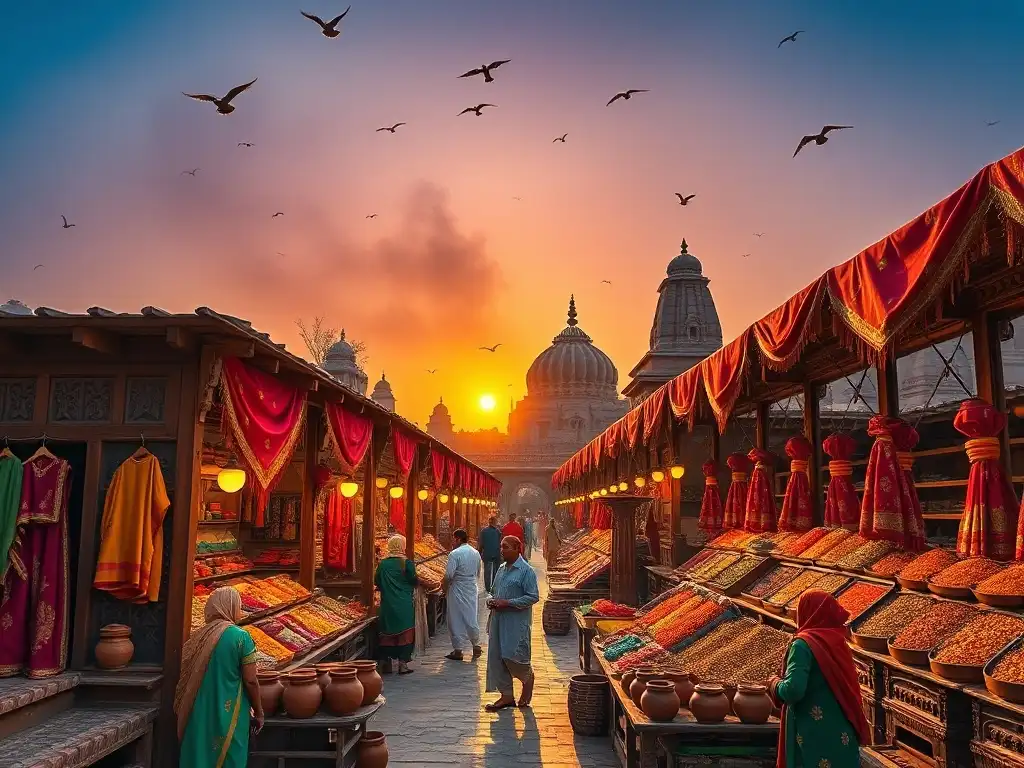
Welcome to Ancient India History, where we embark on a captivating journey through the rich tapestry of India's past. Here, you will uncover the intriguing tales of ancient Indian trade goods that not only shaped the economy but also connected diverse cultures across the globe. In our featured article, "Silk, Spices, and Textiles: The Goods that Shaped Ancient Indian Trade," we delve into the vibrant world of trade routes that flourished from the Indus Valley to the Gupta Empire.
What secrets lie within these ancient commodities? Join us as we explore the fascinating interplay of culture and commerce that defined a civilization. Your journey into the depths of ancient Indian history begins now!
Ancient Indian trade was a vibrant tapestry woven from the rich threads of silk, spices, and textiles, forming a crucial part of the economic and cultural fabric of the subcontinent. Spanning thousands of years, this trade not only facilitated the exchange of goods but also fostered interactions between diverse cultures and civilizations.
The significance of these trade goods extends beyond mere commerce; they played pivotal roles in shaping the social, political, and economic landscapes of ancient India. From the bustling marketplaces of the Indus Valley Civilization to the thriving trade routes of the Gupta Empire, the trade of goods such as silk, spices, and textiles became emblematic of India's influence on global trade networks.
As we delve into the intricate world of ancient Indian trade goods, we will explore various aspects, including the goods themselves, the trade routes that enabled their exchange, and the impact these goods had on both local and international economies. Understanding this multifaceted history allows us to appreciate the depth of ancient India's contributions to global commerce and cultural exchange.
The Importance of Silk in Ancient Indian Trade
Silk, often referred to as "the fabric of the gods," was one of the most prized commodities in ancient Indian trade. The production of silk dates back to around 3000 BCE in India, particularly in the region of present-day Bihar and West Bengal. The intricate process of sericulture involved nurturing silkworms and harvesting their cocoons to produce fine silk threads.
- Key Points on Silk Trade:
- Cultural Significance: Silk was not just a luxury item; it was deeply embedded in Indian culture and rituals, often used in wedding attire and religious ceremonies.
- Trade Routes: The Silk Road, connecting India to Central Asia and beyond, facilitated the exchange of silk with various civilizations, including the Chinese and the Romans.
- Economic Impact: The silk trade contributed significantly to India's economy, with cities like Patna becoming hubs for silk production and trade.
Spices: The Flavor of Trade
India's reputation as the "Spice Land" emerged from its vast array of spices, which were highly sought after in ancient markets. Spices such as black pepper, cardamom, and cinnamon were not only used for culinary purposes but also for medicinal and preservative qualities.
- Highlights of Spice Trade:
- Global Demand: The demand for Indian spices reached as far as Europe and the Middle East, often leading traders on perilous journeys to acquire these precious commodities.
- Cultural Exchange: The trade of spices facilitated cultural exchanges, introducing new flavors and cooking techniques across various regions.
- Economic Significance: The spice trade became a vital source of revenue for ancient Indian kingdoms, with rulers often investing in the protection and expansion of trade routes.
Textiles: Weaving a Legacy
Indian textiles have a long-standing history, known for their intricate designs and craftsmanship. From cotton to silk, the variety of textiles produced in ancient India caught the attention of traders worldwide.
- Textile Trade Insights:
- Diverse Fabrics: India produced a wide range of textiles, including muslin, silk, and wool, with each region specializing in different materials and techniques.
- Trade Links: Textiles were traded along various routes, including the Maritime Silk Route, connecting India to Southeast Asia and beyond.
- Cultural Impact: The exchange of textiles not only influenced fashion trends across cultures but also inspired artistic expressions and innovations in weaving techniques.
Through the exploration of these ancient Indian trade goods, we gain insight into the complexity and interconnectedness of historical trade practices, revealing how silk, spices, and textiles shaped not only the economy of ancient India but also its cultural legacy.
- The Importance of Silk in Ancient Indian Trade
- Spices: The Flavor of Trade
- Textiles: Weaving a Legacy
Introduction to Ancient Indian Trade Goods
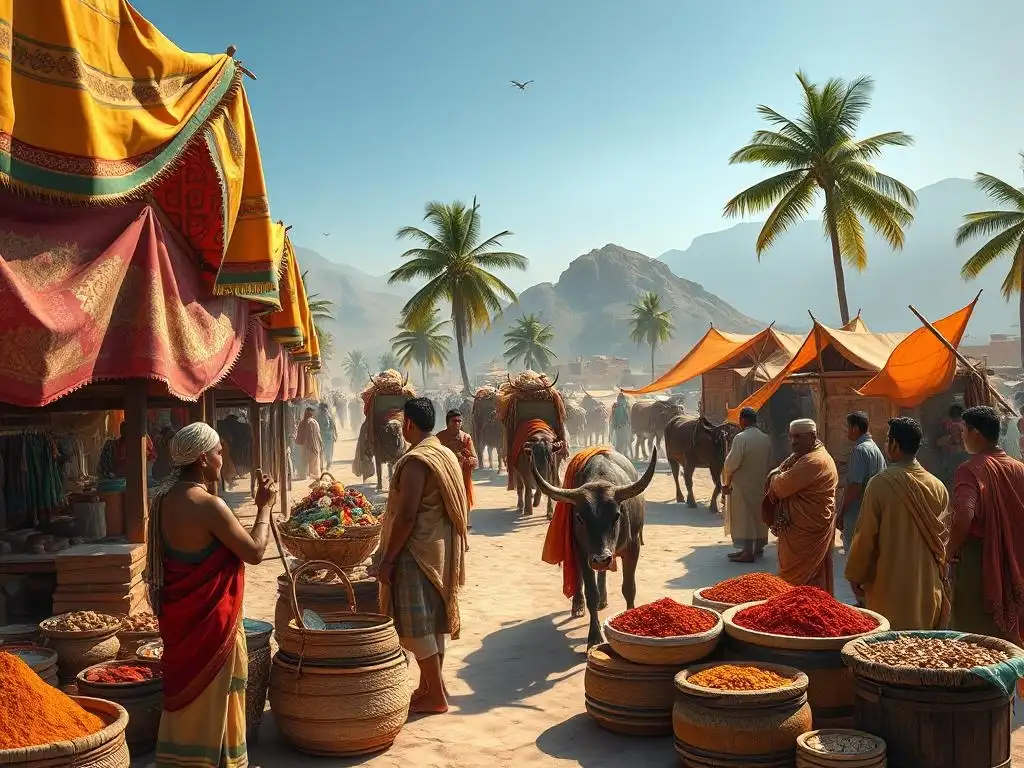
Overview of Ancient Indian Trade
Ancient Indian trade was a crucial aspect of its economy and played a significant role in the cultural exchange between India and other civilizations. The trade routes, both overland and maritime, facilitated the movement of goods, ideas, and cultures. The Indus Valley Civilization (c. 3300-1300 BCE) is one of the earliest examples of organized trade, with evidence of trade links to Mesopotamia, utilizing a sophisticated network of routes.
By the time of the Maurya Empire (c. 322-185 BCE) and later the Gupta Empire (c. 320-550 CE), India had established itself as a dominant trading hub in Asia. The country was strategically positioned between the East and West, which allowed it to serve as a significant link in the Silk Road network and other trade routes.
Key trade goods included:
- Silk: Sourced from the east, it was highly sought after and was a major export.
- Spices: India was known for its rich variety of spices, which were essential for preserving food and enhancing flavors.
- Textiles: Cotton and silk textiles from India became known for their quality and intricate designs, gaining popularity across the globe.
Importance of Trade in Ancient Indian Civilization
Trade in ancient India was not merely an economic activity; it was a driving force behind cultural interactions and the spread of ideas. The exchange of goods helped establish diplomatic relationships and fostered societal advancements. Here are some key points illustrating the importance of trade:
- Economic Prosperity: Trade contributed significantly to the economy of ancient Indian kingdoms, leading to urbanization and the growth of cities like Taxila, Pataliputra, and Kannauj.
- Cultural Exchange: Through trade, Indian merchants interacted with various cultures, leading to a blend of artistic styles, religions, and philosophies. The movement of goods also facilitated the spread of Buddhism and Hinduism across Asia.
- Technological Advancements: The need to transport goods led to improvements in transportation methods, including the development of roads and maritime routes. This included the use of camels for desert transport and ships for maritime trade.
- Political Alliances: Trade was often used as a tool for establishing alliances, as rulers sought to control lucrative trade routes and resources, leading to the rise and fall of various dynasties.
Key Goods in Ancient Trade: Silk, Spices, and Textiles
The ancient Indian economy was characterized by a diverse range of trade goods, with silk, spices, and textiles being the most significant.
Silk
Silk, although primarily associated with China, found its way to Indian markets and was an important commodity in ancient trade. Indian artisans also produced silk fabrics, which were highly prized. The following points highlight the significance of silk in ancient Indian trade:
- Cultural Symbol: Silk was not just a fabric but a status symbol, often used in royal attires and religious ceremonies.
- Trade Routes: The Silk Road facilitated the exchange of silk, connecting India with Central Asia, the Middle East, and beyond.
- Export Value: Indian silk was exported in large quantities, contributing to the wealth of various kingdoms.
Spices
India's spices have been revered since ancient times, making it a hub for spice trade. The diversity of spices produced in India, such as black pepper, cardamom, and turmeric, attracted traders from around the world. The implications of spice trade included:
- Preservation and Flavoring: Spices were essential for food preservation and culinary enhancement, driving demand in both domestic and international markets.
- Cultural Significance: Spices played a role in rituals and traditional medicine, linking them to cultural practices.
- Global Trade Networks: The spice trade significantly impacted global trade routes, leading to the establishment of sea routes connecting India with Europe and the Middle East.
Textiles
India's textile industry was renowned for its quality and craftsmanship. Cotton and silk textiles from India were exported widely and were a major trade good. Key aspects of textile trade include:
- Artisan Skills: The intricate weaving and dyeing techniques developed in India showcased the skill of local artisans, making Indian textiles highly sought after.
- Market Influence: Indian textiles influenced fashion trends in various regions, particularly in the Middle East and Europe.
- Economic Impact: The textile trade not only boosted local economies but also contributed to the wealth of Indian empires.
In conclusion, ancient Indian trade goods such as silk, spices, and textiles were instrumental in shaping the economic landscape of ancient India. The intricate trade networks established helped foster cultural exchanges, technological advancements, and economic prosperity, leaving a lasting impact on the region's history.
The Role of Silk in Ancient Indian Trade
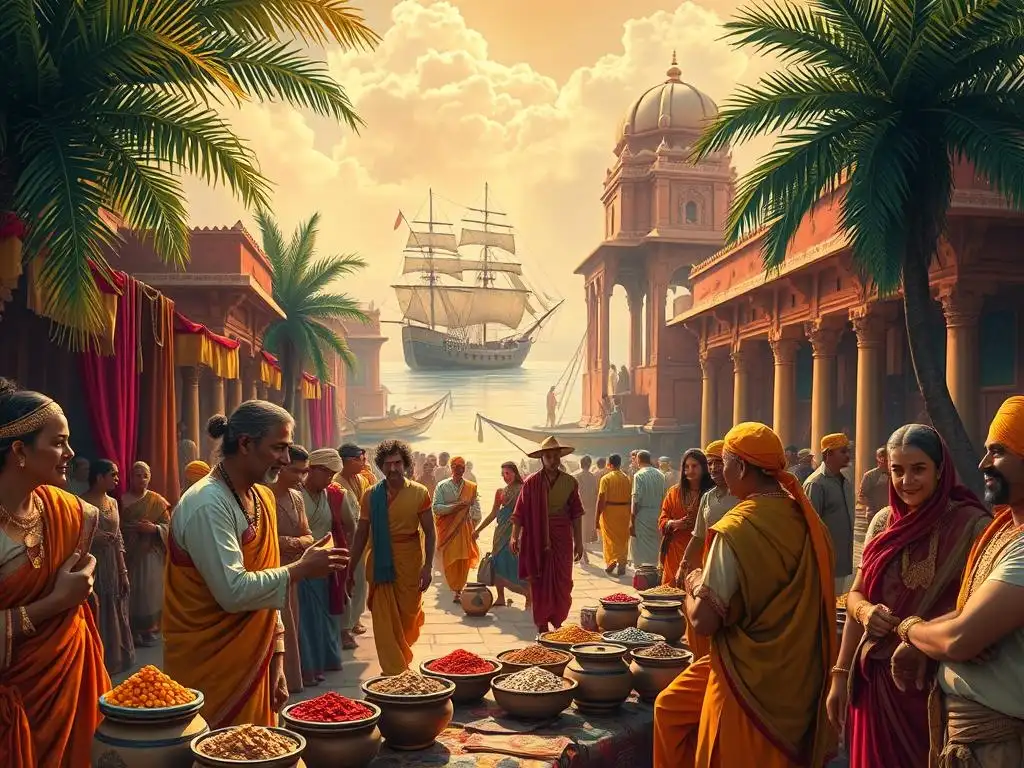
History of Silk Production in India
Silk production in India dates back to ancient times, with evidence suggesting that it was practiced as early as 2500 BCE during the Indus Valley Civilization. The ancient Indians mastered sericulture, the process of cultivating silkworms to produce silk fibers. This skill was not only vital for domestic use but also laid the foundation for trade with neighboring regions.
- Silkworm Species: The primary species involved in Indian silk production is the Bombyx mori, which feeds on mulberry leaves. This species was domesticated in India, leading to the establishment of various silk-producing centers.
- Regions of Production: Major silk-producing regions included:
- Bihar: Known for its Tussar silk.
- West Bengal: Famous for its Murshidabad silk.
- Karnataka: Renowned for its Mysore silk.
By the time of the Maurya Empire (322-185 BCE), silk had become a significant trade good, sought after not only within India but also by other civilizations such as the Greeks and Persians. The demand for silk surged, leading to a flourishing silk trade that would become a critical component of ancient Indian commerce.
Trade Routes for Silk: Connecting India with the World
The trade routes that facilitated the exchange of silk were vital to the economic and cultural interactions between ancient India and other civilizations. The Silk Road, primarily known for linking China to the Mediterranean, also included several routes that connected India to the broader ancient world.
- Western Routes:
- The North-Western route began in the Indian subcontinent and extended through present-day Afghanistan and Persia, reaching as far as the Roman Empire.
- Taxila, a prominent city during the Mauryan and Kushan periods, served as a critical hub for traders.
- Southern Routes:
- The Maritime Silk Route linked Indian ports like Kodungallur and Kaveripattinam to regions in Southeast Asia, the Arabian Peninsula, and beyond.
- Goods exchanged included not only silk but also spices, textiles, and precious stones.
These routes facilitated not only the trade of silk but also the exchange of ideas, cultures, and technologies, significantly impacting the civilizations involved.
Economic Impact of Silk Trade on Ancient Indian Societies
The silk trade had profound economic implications for ancient Indian societies, shaping their economies and societal structures. The influx of wealth from silk trade contributed to the growth of cities, increased urbanization, and the rise of merchant classes.
- Wealth Generation: The trade of silk generated substantial revenue for local economies. Regions specializing in silk production became prosperous, and the wealth they accumulated often translated into increased political power.
- Cultural Exchange: The interaction with foreign traders led to a rich cultural exchange. The introduction of new ideas, art forms, and technologies invigorated local cultures and fostered the growth of a more cosmopolitan society.
- Market Expansion: The demand for silk led to the establishment of organized markets and trade guilds. These entities helped regulate trade practices, ensuring quality and fair pricing, which in turn enhanced the overall economy.
The silk trade was an essential aspect of ancient Indian trade goods, influencing not only economic structures but also the cultural landscapes of the time. The legacy of silk production and trade continues to be felt in contemporary Indian textiles, showcasing the enduring impact of these ancient practices.
Spices: The Aromatic Treasures of Ancient India
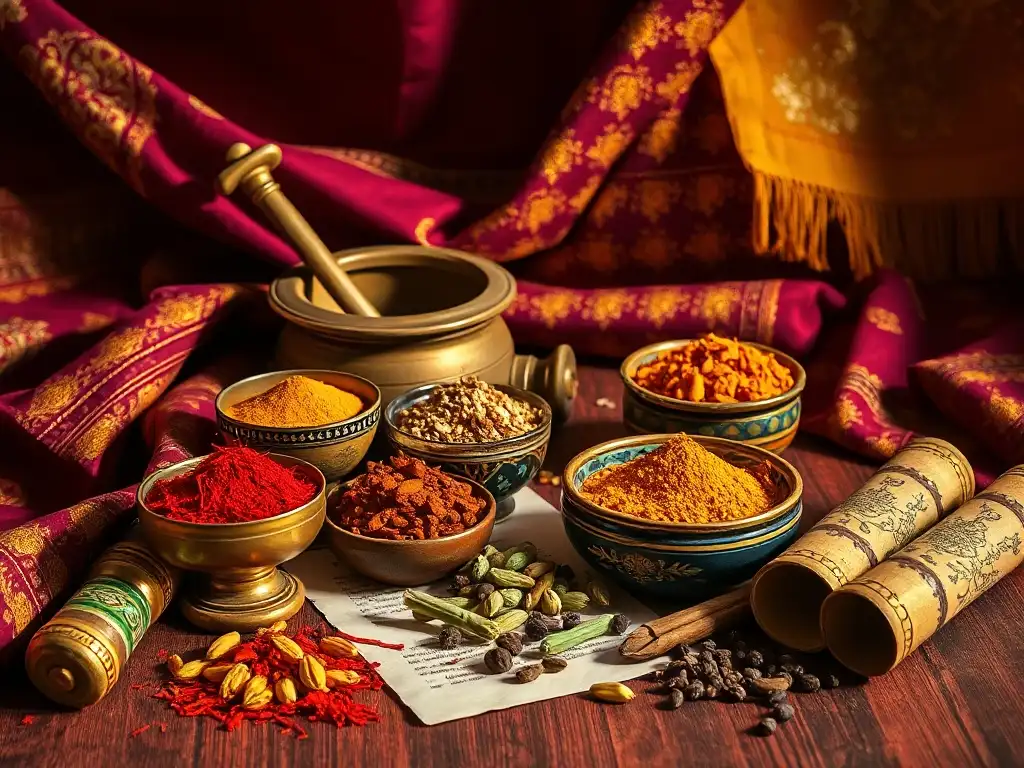
Types of Spices Traded in Ancient India
Ancient India was renowned for its rich variety of spices, which played a crucial role in trade. Among the most notable spices traded were:
- Black Pepper: Often referred to as "black gold," black pepper was highly sought after for its pungency and preservative properties. It was a staple in Roman cuisine and was traded extensively along the spice routes.
- Cardamom: Known for its unique flavor and aromatic qualities, cardamom was prized not only as a spice but also for its medicinal properties. It was used in cooking and as a key ingredient in traditional Ayurvedic medicine.
- Cinnamon: This sweet and fragrant spice was harvested from the bark of cinnamon trees and was used in both culinary and religious contexts. It was one of the most valuable spices, often used in trade exchanges with foreign nations.
- Turmeric: While primarily known today as a coloring agent, turmeric was also used for its flavor and medicinal benefits. Its vibrant yellow color made it a favorite among traders, both for culinary use and in textiles.
These spices were not only integral to Indian cuisine but also highly valued in international markets, making them essential commodities in ancient Indian trade.
The Spice Trade Routes: From India to the World
The spice trade routes were a complex network that connected India to various regions around the world, facilitating the exchange of spices and other goods. Some of the notable routes included:
- The Southern Silk Road: This route connected the Indian subcontinent with Southeast Asia, the Middle East, and eventually to Europe. Spices like pepper and cardamom were transported across deserts and mountains, often changing hands multiple times before reaching their final destinations.
- Maritime Trade Routes: Ancient Indian traders utilized sea routes that connected the coasts of India to ports in East Africa, the Arabian Peninsula, and beyond. The monsoon winds were harnessed to facilitate trade, allowing for the transportation of spices across the Indian Ocean.
- Land Routes Through Persia: Spices were moved through Persia towards the Mediterranean, with important cities like Ctesiphon serving as trade hubs where spices and other goods were exchanged.
These trade routes not only facilitated the movement of spices but also played a key role in cultural exchanges, leading to the blending of traditions and practices across civilizations.
Cultural Significance of Spices in Ancient Indian Trade
Spices held a multifaceted significance in ancient Indian trade, reflecting both economic value and cultural importance.
- Economic Impact: The trade of spices was a significant source of wealth for ancient Indian kingdoms. The demand for Indian spices led to the establishment of thriving trade centers, contributing to urban development and economic growth.
- Culinary Influence: Spices transformed culinary practices, not only in India but across the globe. They were integral to the development of regional cuisines, influencing flavors and cooking techniques.
- Medicinal Use: Many spices were valued for their health benefits. Ancient texts like the Ayurveda emphasize the medicinal properties of various spices, contributing to their high demand in international markets.
- Symbolic Value: Spices also held symbolic significance in rituals and religious practices. For instance, turmeric is often used in Hindu ceremonies, symbolizing purity and prosperity.
The spices of ancient India were not merely trade goods; they were aromatic treasures that enriched cuisines, boosted economies, and fostered cultural connections across continents. The legacy of ancient Indian trade goods continues to resonate in contemporary culinary practices and global commerce.
The Textile Industry: Weaving Prosperity
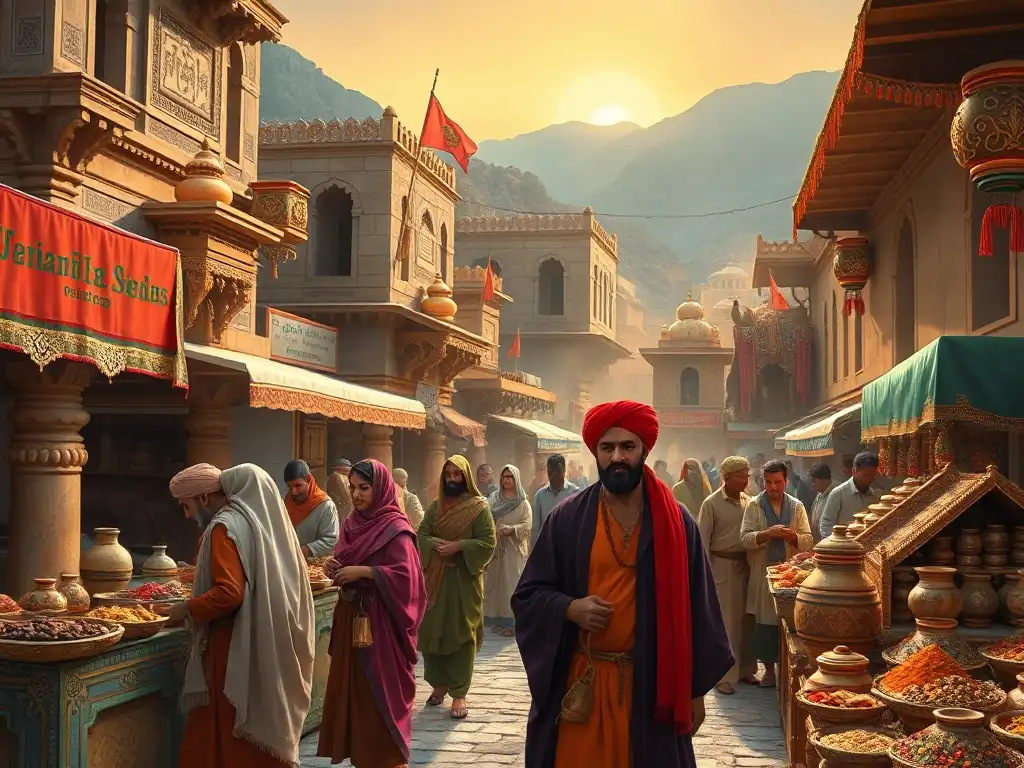
The textile industry in ancient India was a cornerstone of economic prosperity and cultural identity. Renowned for its rich weaving traditions, India produced a vast array of textiles that not only catered to local markets but also found their way to international trade routes. The diversity of raw materials, techniques, and designs made Indian textiles highly sought after, establishing the country as a major player in ancient trade.
The industry thrived due to the availability of natural fibers such as cotton, silk, and wool. Each region specialized in specific textiles, which contributed to a vibrant tapestry of production. For instance, the western regions were famous for their exquisite cotton fabrics, while the northern regions, particularly around Varanasi, were known for their luxurious silk saris.
The intricate craftsmanship involved in textile production, including techniques like tie-dyeing, block printing, and embroidery, further enhanced the appeal of these goods. As a result, textiles became a symbol of wealth and status, both within India and in foreign lands. The flourishing textile industry not only generated substantial income for artisans and traders but also played a crucial role in cultural exchanges along trade routes.
Major Textiles Produced in Ancient India
India's textile industry produced several major types of fabrics that were integral to its economy and culture:
- Cotton Fabrics: India was one of the first countries to cultivate cotton, and its cotton textiles, known for their softness and durability, became immensely popular. The production of muslin, a fine cotton fabric, was particularly notable.
- Silk: The art of silk weaving flourished, especially in regions like Varanasi and Kanchipuram. The vibrant colors and intricate designs of silk sarees made them highly coveted both domestically and internationally.
- Wool: While not as predominant as cotton and silk, woolen textiles were produced in the northern regions, particularly in Kashmir, known for its pashmina shawls that were luxurious and warm.
- Jute and Hemp: These fibers were used for making ropes, mats, and bags, contributing to the functional aspect of textile production.
- Dyes and Prints: The use of natural dyes made Indian textiles unique. Techniques such as block printing and tie-dyeing added distinctive patterns that reflected regional artistry.
The craftsmanship involved in these textiles not only showcased the skills of artisans but also embodied the cultural narratives and traditions of their respective regions.
Trade Dynamics of Indian Textiles
The trade dynamics of Indian textiles were influenced by various factors, including geopolitical relations, demand in foreign markets, and the establishment of trade routes.
- Trade Routes: Indian textiles were traded along significant routes, such as the Silk Road and maritime trade routes to Southeast Asia, the Middle East, and even Europe. These routes facilitated the exchange of goods, culture, and ideas.
- Market Demand: The demand for Indian textiles surged in markets abroad, especially in regions such as the Roman Empire, where Indian silk and cotton were prized commodities. This demand drove the establishment of trade relations with various civilizations.
- Barter System: Initially, trade was conducted through barter, with textiles exchanged for spices, precious metals, and other goods. Over time, coinage became more prevalent, allowing for more extensive trade networks.
- Role of Guilds: Local guilds played a significant role in regulating the textile trade, ensuring quality control, and protecting the interests of artisans and merchants.
The interplay of these dynamics not only resulted in the thriving textile trade but also contributed to the cultural richness of ancient India, as ideas and practices were exchanged alongside goods.
Influence of Textile Trade on Ancient Indian Economy
The textile trade had a profound impact on the ancient Indian economy, contributing to its growth and stability in several ways:
- Economic Growth: The revenue generated from textile exports significantly bolstered the economy, leading to the growth of urban centers and markets where trade flourished.
- Employment Opportunities: The demand for textiles created numerous job opportunities for weavers, dyers, and artisans, fostering a skilled workforce and encouraging craftsmanship.
- Cultural Exchange: As textiles traveled along trade routes, they facilitated cultural exchanges between different civilizations, influencing art, fashion, and social customs in both India and abroad.
- Tax Revenue: The flourishing textile trade contributed to the state's coffers through taxes and tariffs, which were vital for funding public works, military campaigns, and administrative functions.
- Social Mobility: The textile industry provided avenues for social mobility, as successful artisans and traders could accumulate wealth and rise in status within their communities.
The textile industry was not merely an economic sector but a catalyst for cultural and social development in ancient India. Its rich heritage continues to inspire modern textile practices, underscoring the enduring legacy of ancient Indian trade goods.
Comparative Analysis: Silk, Spices, and Textiles
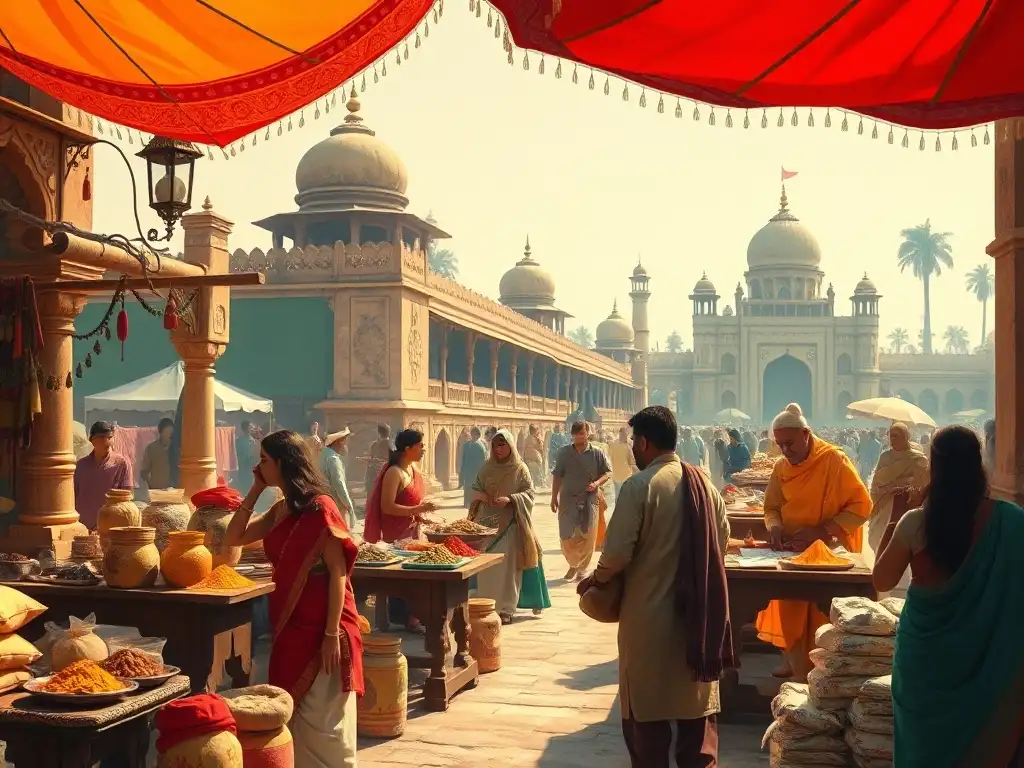
Similarities in Trade Practices for Each Good
The trade of silk, spices, and textiles in ancient India shared several key similarities that contributed to the flourishing of commerce across regions. These goods were not only highly valued but also integral to the economic fabric of ancient Indian society.
- Trade Networks: All three goods were traded along prominent trade routes, such as the Silk Road and maritime pathways. Merchants established extensive networks that facilitated the exchange of these commodities between India, Central Asia, the Middle East, and beyond.
- Cultural Exchange: The trade of silk, spices, and textiles was accompanied by significant cultural interactions. As merchants traveled, they shared not only goods but also ideas, religions, and technologies, enriching the civilizations that participated in this trade.
- Premium Pricing: Due to their rarity and demand, all three goods commanded high prices. This led to the establishment of sophisticated trade practices, including the use of weight systems and bartering, which enhanced the economic complexity of ancient Indian trade.
- Government Regulation: Ancient Indian rulers often imposed regulations on these trades to ensure quality and to collect taxes, indicating the importance of these goods in the economy.
Differences in Production and Trade Techniques
While silk, spices, and textiles shared similarities in trade practices, they differed significantly in their production methods and trade techniques.
- Silk Production: The production of silk was labor-intensive and required specialized knowledge. The process involved sericulture, where silkworms were cultivated, and the silk fibers were meticulously harvested. This method was primarily concentrated in regions like Bihar and parts of southern India, which specialized in high-quality silk production.
- Spice Cultivation: In contrast, spice production involved the cultivation of various plants such as pepper, cardamom, and cinnamon. These spices were often grown in diverse climates across India, particularly in the Western Ghats and coastal regions. The trade of spices required extensive agricultural knowledge and seasonal planning, as the harvests varied by region and climate.
- Textile Weaving: Textile production relied on weaving techniques that varied across the subcontinent. Different regions developed their own styles, such as the intricate patterns of Banarasi silk or the block prints of Rajasthan. The trade of textiles was often conducted through local markets and fairs, in addition to long-distance trade routes.
- Trade Techniques: The trade of silk was typically managed by specialized merchants who transported goods over long distances, often using caravans. Spice traders, on the other hand, utilized both land and maritime routes, adapting their techniques to the geography. Textile trade frequently involved local artisans, who sold directly to consumers as well as to merchants for larger trade.
Impact on the Ancient Indian Economy
The trade of silk, spices, and textiles had a profound impact on the ancient Indian economy, shaping its development in multiple dimensions.
- Economic Prosperity: The lucrative nature of these goods contributed to the wealth of various kingdoms and city-states. The influx of wealth from trade allowed rulers to invest in infrastructure, such as roads and ports, which further stimulated economic growth.
- Job Creation: The demand for silk, spices, and textiles led to the creation of numerous jobs in farming, weaving, and trade. This not only diversified the economy but also provided livelihoods for large segments of the population.
- Cultural Integration: The wealth generated from trade facilitated cultural exchanges that enriched Indian society. Art, literature, and religious practices were influenced by interactions with traders from other cultures, leading to a more integrated and cosmopolitan society.
- Global Influence: Ancient Indian trade goods established India as a significant player in global commerce. The reputation of Indian silk, aromatic spices, and exquisite textiles reached as far as Europe and Africa, shaping international perceptions of Indian craftsmanship and culture.
The trade of silk, spices, and textiles was not merely an economic activity; it was a catalyst for cultural exchange, technological advancement, and the overall prosperity of ancient Indian civilizations. The legacy of these ancient trade goods continues to influence modern perceptions of Indian heritage and craftsmanship.
Conclusion: The Legacy of Ancient Indian Trade Goods
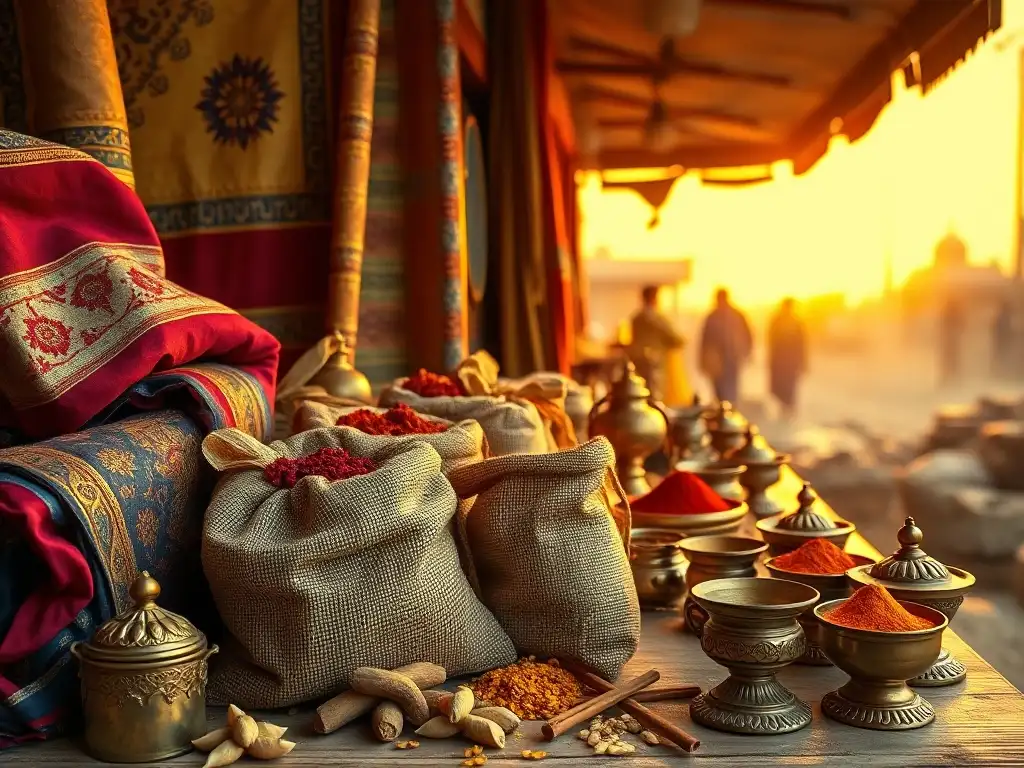
The legacy of ancient Indian trade goods is vast and multifaceted, influencing not only the economic landscape of the time but also the cultural exchanges that shaped civilizations across continents. Ancient Indian trade goods such as silk, spices, and textiles were not merely commodities; they were vessels of cultural exchange, innovation, and interaction between diverse societies. This intricate web of trade routes, including the famed Silk Road, enabled the flow of these goods, fostering relationships that transcended geographical barriers.
The significance of these trade goods extended beyond their immediate economic value. They served as important symbols of status and luxury in various cultures, and their demand contributed to the rise of sophisticated trading cities in ancient India.
The intricate designs of textiles, the aromatic qualities of spices, and the luxurious nature of silk made them highly sought after, not only in neighboring regions but also in far-flung markets like Rome and the Middle East. As a result, ancient Indian trade goods played a pivotal role in establishing India as a central hub in global trade networks, with lasting impacts that can still be observed in contemporary trade practices.
Lasting Effects on Modern Trade Practices
The practices established during the height of ancient Indian trade have left an indelible mark on modern commerce. The intricate systems of trade routes laid the groundwork for today’s globalized economy, where goods traverse continents in complex supply chains. The principles of barter and trade, which were prevalent in ancient India, continue to inform modern economic theories and practices.
Key Effects:
- Cultural Exchange: The trade routes facilitated not just the exchange of goods, but also ideas, religions, and technologies. This cultural exchange continues to influence global interactions today.
- Market Development: Ancient Indian trade practices contributed to the establishment of market systems that are foundational to current economic structures. The concept of specialized markets for specific goods can be traced back to ancient times.
- Innovation in Trade Practices: The necessity for efficient trade led to innovations such as standard weights and measures, which are essential in modern trade transactions.
The enduring influence of ancient Indian trade goods can be seen in current economic models that emphasize the importance of trade relations and cultural diplomacy in fostering economic growth and collaboration.
Continued Relevance of Ancient Indian Goods Today
The relevance of ancient Indian goods persists in contemporary society, manifesting in various forms. Spices, textiles, and even traditional practices associated with these goods continue to hold significant value in global markets.
Modern Implications:
- Spice Trade: The spice trade, which was a major driver of ancient Indian trade, remains robust today. Spices like turmeric, cardamom, and black pepper are staples in international cuisine and are celebrated for their health benefits.
- Textile Industry: Indian textiles, renowned for their intricate designs and craftsmanship, continue to thrive on both domestic and international platforms. Contemporary fashion often draws inspiration from traditional Indian motifs, reflecting the enduring legacy of ancient craftsmanship.
- Cultural Festivals: Many modern cultural festivals and food fairs celebrate the heritage of ancient trade goods, showcasing their importance in identity and tradition.
The ongoing appreciation and demand for ancient Indian goods exemplify their lasting impact on commerce and culture. As consumers increasingly seek authenticity and heritage in their purchases, the significance of ancient Indian trade goods will likely continue to grow, ensuring that their legacy endures for future generations.
References and Further Reading
Suggested Books on Ancient Indian Trade Goods
-
The Silk Road: A New History by Valerie Hansen
This book provides a comprehensive overview of the Silk Road, including its impact on ancient Indian trade. Hansen explores the cultural exchanges facilitated by trade goods and the intricate network of routes that connected India with other civilizations.
-
Ancient India: Culture and Trade by R. S. Sharma
Sharma’s work focuses on the economic and cultural life of ancient India, detailing the various trade goods that flourished during different periods. This book offers insights into the significance of trade in shaping ancient Indian society.
-
The Spice Route: A History by John Keay
Keay delves into the history of the spice trade, highlighting how spices from India influenced global trade dynamics. This book examines the economic and cultural implications of spice trade goods in ancient India.
-
Trade and Traders in the Early Indian Ocean: Power, Profit and Diplomacy by Radhika Seshan
This book provides an in-depth analysis of trade along the Indian Ocean, emphasizing the role of Indian traders and the goods they transported, such as textiles and spices.
-
The History of Indian Textiles by M. R. Bhatia
Bhatia's book is a detailed exploration of textile production and trade in ancient India, showcasing how textiles became a major export and a crucial component of ancient Indian trade goods.
Academic Articles and Journals on Trade in Ancient India
-
“Trade Networks in Ancient India: An Archaeological Perspective”
This article discusses archaeological findings related to trade routes in ancient India, shedding light on the types of goods exchanged and the cultural interactions that occurred.
-
“The Role of Spices in Ancient Indian Trade and Economy”
This journal article explores the significance of spices as a trade good in ancient India, detailing their role in both domestic and international markets.
-
“Textiles and Trade: The Economic History of Early India”
A scholarly examination of how textiles influenced trade patterns in ancient India, this article highlights the craftsmanship and trade practices that contributed to the economy.
-
“The Maritime Trade of Ancient India”
This research paper investigates maritime trade routes, focusing on the goods traded across the Indian Ocean and their impact on ancient Indian civilizations.
-
“Silk Road and Indian Trade: Interactions and Exchanges”
This article analyzes the interactions between Indian traders and those along the Silk Road, emphasizing the flow of goods and cultural exchanges that enriched both regions.
These resources provide valuable insights into the complexities and richness of ancient Indian trade goods, illustrating their profound impact on historical trade networks and cultural exchanges.
Frequently Asked Questions
What were the main trade goods in ancient India?
Ancient India was known for its silk, spices, textiles, and precious stones. These goods were highly sought after in both regional and international markets.
How did trade impact ancient Indian civilizations?
Trade fostered economic growth, facilitated cultural exchange, and strengthened diplomatic relations with other civilizations, significantly shaping the socio-political landscape.
Which regions were involved in ancient Indian trade?
Ancient Indian trade connected various regions, including the Indus Valley, Southeast Asia, and the Roman Empire, highlighting the extensive reach of Indian merchants.
What role did spices play in ancient Indian trade?
Spices were among the most valuable trade goods, sought after for their culinary uses and medicinal properties. They helped establish India as a key player in global trade networks.
How did the Gupta Empire influence trade?
The Gupta Empire (c. 320-550 CE) promoted trade through improved infrastructure, including roads and ports, leading to increased commercial activity and cultural exchanges across Asia.
Final Reflection: The Enduring Legacy of Ancient Indian Trade Goods
The intricate web of ancient Indian trade goods, such as silk, spices, and textiles, continues to resonate in today's global economy. These commodities were not just items of exchange; they were the lifeblood of cultural interaction and economic prosperity. The significance of these goods transcends time, reminding us that trade is not merely a transaction but a powerful connector of civilizations.
The influence of ancient Indian trade goods is palpable in our modern cultural and social landscapes, shaping culinary practices, fashion, and even global diplomacy. The spices that once traveled along the Silk Road are now staples in kitchens worldwide, while the luxurious textiles continue to inspire contemporary fashion designers. As Mahatma Gandhi once said, “A nation's greatness is measured by how it treats its weakest members,” reminding us that the trade of goods also reflects our values and priorities as a society.
As we reflect on the lessons from ancient Indian trade, let us consider how we can apply these insights to our lives today. How can we foster connections through the exchange of ideas and cultures in our increasingly globalized world? I invite you to explore the richness of your own heritage and the goods that shape your community, recognizing that every interaction is an opportunity to build bridges and celebrate diversity. Embrace the spirit of trade, not just as a means of commerce, but as a pathway to understanding and unity in our shared human experience.
Unveil the Secrets of Ancient Indian Trade!
Thank you for taking the time to explore the fascinating world of silk, spices, and textiles in ancient Indian trade. Your journey today has uncovered the vital role these goods played in forging connections across cultures and economies. Now, it’s time to take that knowledge further!
Here’s how you can dive deeper and contribute to the discussion on this enriching topic:
- Explore a Local Market: Visit a nearby spice or textile market to experience the sights, scents, and stories behind these ancient goods firsthand.
- Share Your Insights: Discuss what you’ve learned with friends or on social media—your perspective could spark interest and inspire others to learn more!
- Join Our Community: Engage with fellow history enthusiasts on our forum dedicated to ancient Indian history, where you can share stories, ask questions, and connect over your passion for trade.
What aspect of ancient Indian trade intrigues you the most: the exotic spices, the luxurious silks, or the intricate textiles? We invite you to share your thoughts below!