
Trade and Cultural Exchange: How Ancient India Shaped the World

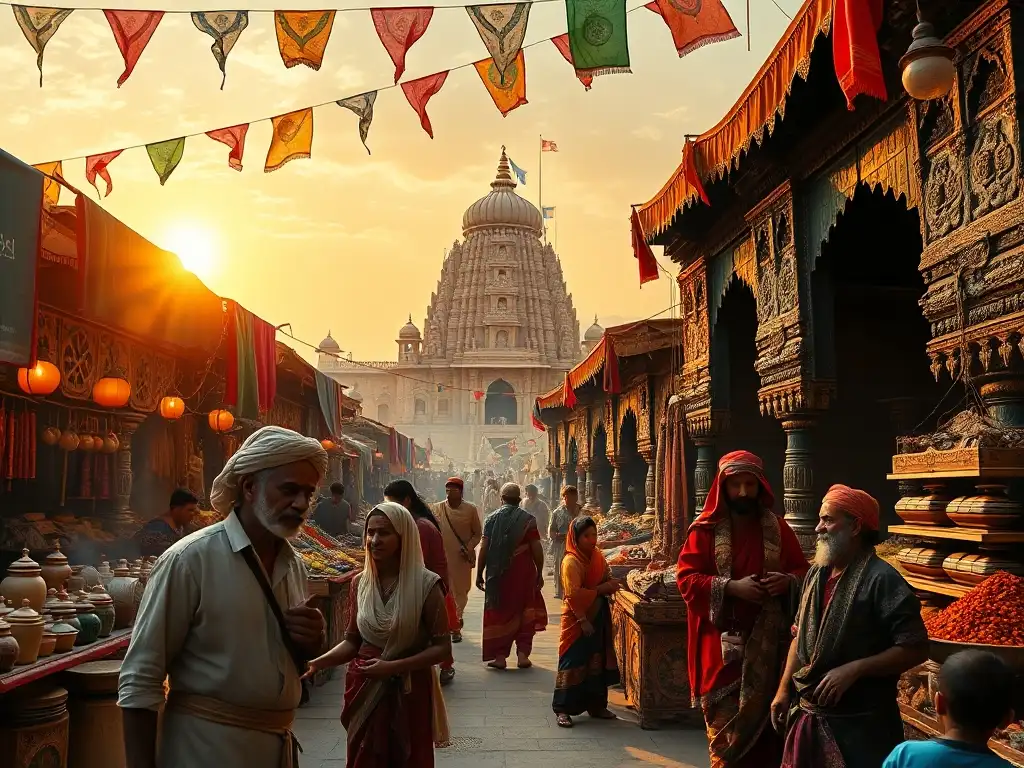
Welcome to Ancient India History, where we embark on a fascinating journey through time to uncover the rich tapestry of ancient Indian civilizations. From the bustling markets of the Indus Valley to the thriving trade routes of the Gupta Empire, our exploration of Ancient India trade cultural exchange reveals how these interactions not only enriched their own society but also shaped the world beyond its borders. Prepare to delve into a captivating narrative that highlights the profound influence of trade on culture, economy, and legacy.
Are you ready to discover the secrets of ancient markets and their lasting impact? Let's dive in!
Introduction to Ancient India Trade and Cultural Exchange
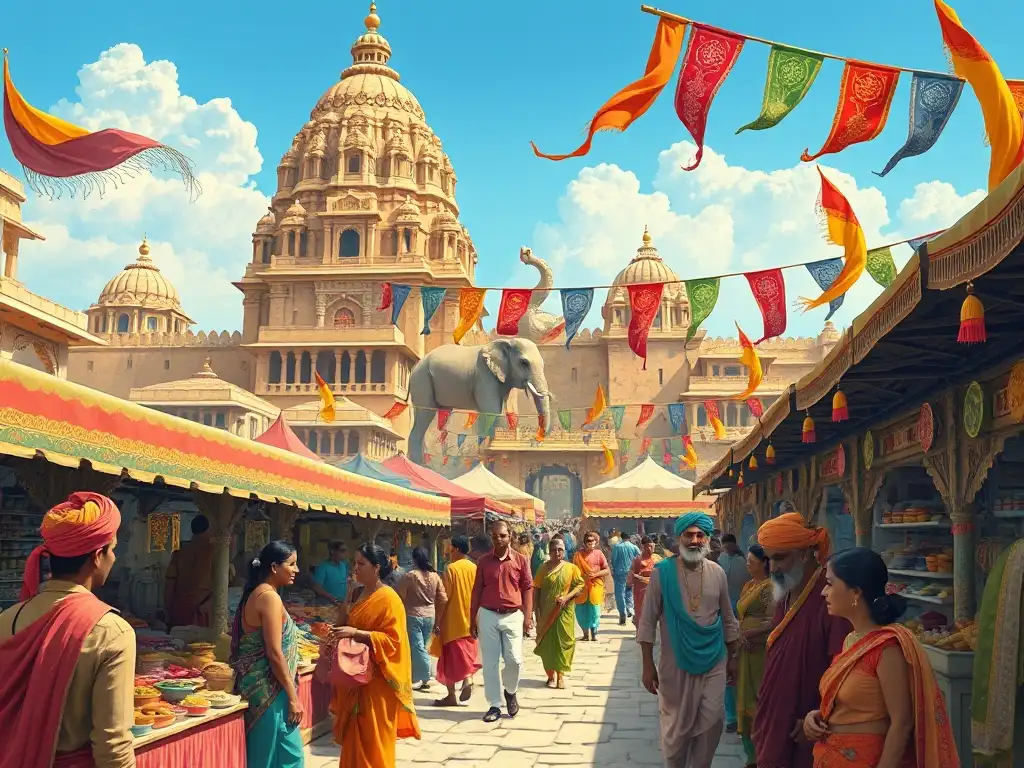
Ancient India was a vibrant tapestry of cultures, religions, and economies, intricately woven together through extensive trade and cultural exchange. This dynamic interaction not only enriched the subcontinent but also left an indelible mark on civilizations around the globe. From the bustling markets of the Indus Valley to the thriving trade hubs of the Gupta Empire, ancient India served as a crucial node in the vast networks of commerce that connected various regions. The exchange of goods, ideas, and knowledge fostered significant cultural integration and innovation, influencing not only neighboring territories but also far-flung societies.
The impact of ancient Indian trade can be observed in various domains, including art, architecture, science, and philosophy. As merchants traversed deserts and sailed across oceans, they carried with them not only commodities but also cultural narratives that shaped the world. In this article, we will delve into the major trade routes that facilitated these exchanges, examining how ancient India was a pivotal player in global trade and cultural interactions.
Overview of Ancient Indian Civilizations
Ancient India was home to a multitude of civilizations, each contributing uniquely to the region's trade and cultural landscape. The Indus Valley Civilization (circa 3300–1300 BCE) is one of the earliest known urban cultures in the world, renowned for its advanced city planning and sophisticated drainage systems. Cities like Harappa and Mohenjo-Daro were pivotal centers for trade, where goods such as textiles, beads, and pottery were exchanged.
Following the decline of the Indus Valley, various dynasties rose to prominence, including the Maurya and Gupta Empires, which further expanded trade networks. The Mauryan Empire (322–185 BCE) is especially notable for its political stability, which fostered economic growth and extensive trade routes. The Gupta Empire (circa 320–550 CE) is often referred to as a golden age of Indian culture, marked by advancements in science, mathematics, and art, which were propelled by thriving trade.
Importance of Trade in Ancient India
Trade played a crucial role in the socio-economic development of ancient India. It facilitated the movement of not only goods but also ideas, philosophies, and technologies. The exchange of commodities such as spices, silk, precious stones, and metals contributed significantly to the wealth of Indian civilizations, enhancing their global standing.
Key benefits of trade in ancient India included:
- Economic Prosperity: Trade led to the accumulation of wealth, enabling the patronage of arts and sciences.
- Cultural Exchange: Interactions with foreign traders introduced new ideas, religions, and cultural practices, enriching Indian society.
- Political Alliances: Trade routes often fostered diplomatic relations between different kingdoms, leading to peaceful coexistence and mutual benefits.
Major Trade Routes of Ancient India
The trade routes of ancient India were vast and varied, facilitating not only economic transactions but also cultural exchanges. These routes can be broadly categorized into land and maritime trade networks, each playing a vital role in connecting India with the rest of the world.
The Silk Road: A Vital Link
The Silk Road was perhaps the most famous of ancient trade routes, connecting the East and West. Spanning thousands of miles, it served as a conduit for silk, spices, and other valuable goods. Indian merchants played a prominent role in this network, trading items such as textiles, gemstones, and medicinal herbs.
- Key features of the Silk Road include:
- Cultural Exchange: The Silk Road facilitated the spread of Buddhism from India to Central Asia and beyond.
- Economic Impact: Indian goods became highly sought after, leading to increased wealth and influence for Indian traders.
- Technological Advancements: The exchange of ideas led to innovations in navigation and trade practices.
The Maritime Trade Routes
In addition to land routes, ancient India was also a key player in maritime trade. The Indian Ocean trade network connected India with regions such as Southeast Asia, Africa, and the Middle East. Indian ports like Lothal, Kaveripattinam, and Sopara became bustling centers of commerce.
- Highlights of maritime trade include:
- Diverse Commodities: Indian spices, textiles, and metalwork were highly valued in foreign markets.
- Cultural Interactions: Trading expeditions led to the exchange of languages, cultures, and religions, profoundly influencing the regions involved.
- Technological Innovations: Advances in shipbuilding and navigation techniques improved maritime trade efficiency.
The Role of the Indus Valley Civilization in Trade
The Indus Valley Civilization set the stage for trade in ancient India with its well-established urban centers and sophisticated economic systems. The strategic location of cities along the Indus River facilitated trade with neighboring regions, including Mesopotamia.
- Trade characteristics of the Indus Valley Civilization:
- Urban Planning: Cities featured advanced infrastructure that supported trade activities.
- Standardized Weights and Measures: This facilitated fair trade and commerce.
- Craftsmanship: The production of high-quality goods, such as jewelry and pottery, positioned the Indus Valley as a leading trade power.
As we explore the intricate tapestry of trade and cultural exchange in ancient India, it becomes evident that these interactions shaped not only the subcontinent but the entire world, laying the groundwork for future civilizations.
Goods and Commodities Traded by Ancient Indian Societies
Ancient Indian societies were integral players in global trade networks, thanks to their diverse goods and commodities. These trade activities were not only pivotal for economic reasons but also facilitated cultural exchanges that shaped civilizations across continents. The variety of products that ancient India exported and imported reflects the richness of its culture and natural resources.
Spices: The Golden Trade of Ancient India
Spices were perhaps the most lucrative commodities traded by ancient Indian merchants. The Indian subcontinent was renowned for its aromatic spices, such as black pepper, cardamom, and cinnamon, which were highly sought after in international markets. These spices not only enhanced culinary experiences but also had medicinal properties, making them valuable for trade.
The demand for Indian spices was so high that it significantly influenced global trade routes, particularly the maritime routes to Europe and the Middle East. Historical records indicate that traders established trade links with distant regions, including the Roman Empire and China, where spices were exchanged for gold and silver. The spice trade ultimately contributed to the establishment of the Spice Route, which became a critical artery of commerce connecting India with various cultures and economies.
Textiles and Dyes: Crafting a Global Market
Indian textiles were celebrated for their quality and intricate designs, making them a staple in international trade. The production of cotton, silk, and woolen fabrics showcased the craftsmanship of ancient Indian weavers. The vibrant dyes used in these textiles, derived from local plants and minerals, added to their appeal.
Indian textiles, particularly muslin and silk, were exported to regions as far as the Middle East and Europe, where they were prized for their elegance. The trade in textiles not only contributed to India's economy but also facilitated the exchange of artistic techniques and styles. This influence is evident in various cultures where Indian textile designs were adopted and adapted, creating a shared heritage of craftsmanship.
Precious Stones and Metals: The Luxury Goods of Ancient India
Ancient India was also a crucial source of precious stones and metals, including diamonds, rubies, sapphires, and gold. The subcontinent's rich mineral resources attracted traders from various parts of the world. India was often referred to as the "land of gems," and its jewellers were renowned for their skill in crafting exquisite jewelry.
The trade in precious stones was not limited to local markets; Indian gems found their way to royal courts and elite circles in Persia, Rome, and beyond. The allure of these luxury goods not only enriched the Indian economy but also positioned India as a key player in global trade networks, influencing fashion and trends across civilizations.
Cultural Exchange Through Trade
The trade routes established by ancient Indian societies served as conduits for cultural exchange, allowing ideas, beliefs, and artistic expressions to traverse borders. This exchange significantly impacted both Indian civilization and its trade partners, fostering a rich tapestry of shared cultural heritage.
The Influence of Indian Philosophy on Trade Partners
As traders traveled along established routes, they carried with them not only goods but also philosophical ideas. Ancient Indian philosophies, particularly those rooted in Hinduism and Buddhism, influenced traders from various cultures. This exchange fostered a dialogue about ethics, morality, and governance.
For instance, the principles of non-violence and tolerance espoused by Indian philosophies resonated with traders in Southeast Asia, leading to a gradual adoption of these ideas across the region. Over time, Indian philosophical concepts became intertwined with local beliefs, enriching the spiritual landscape of various cultures.
The Spread of Religions: Buddhism and Hinduism
Trade routes were instrumental in the dissemination of religions, particularly Buddhism and Hinduism. As Indian merchants traveled to distant lands, they introduced these beliefs, leading to the establishment of Buddhist stupas and Hindu temples in regions like Central Asia and Southeast Asia.
The Silk Road, for example, became a significant pathway for the spread of Buddhism, with monks traveling alongside merchants to share their teachings. This cultural exchange not only influenced local practices but also led to the development of unique syncretic forms of spirituality, blending Indian religious philosophies with local traditions.
Artistic and Scientific Exchange: A Two-Way Street
Trade also facilitated a vibrant exchange of artistic and scientific ideas between ancient India and its trading partners. Indian art, characterized by intricate sculptures and vibrant frescoes, influenced artistic expression in regions such as the Greco-Roman world and Southeast Asia.
Moreover, ancient Indian advancements in mathematics, astronomy, and medicine spread along trade routes, impacting various civilizations. The introduction of concepts like zero and the decimal system from India had profound implications for mathematics globally, demonstrating how trade was not just a vehicle for goods but also a catalyst for intellectual growth and cultural enrichment.
Ancient India's trade networks were pivotal in shaping not only the economy but also the cultural and intellectual landscapes of civilizations around the world. The commodities traded and the cultural exchanges that ensued left a lasting legacy that continues to influence societies today.
Key Players in Ancient Indian Trade
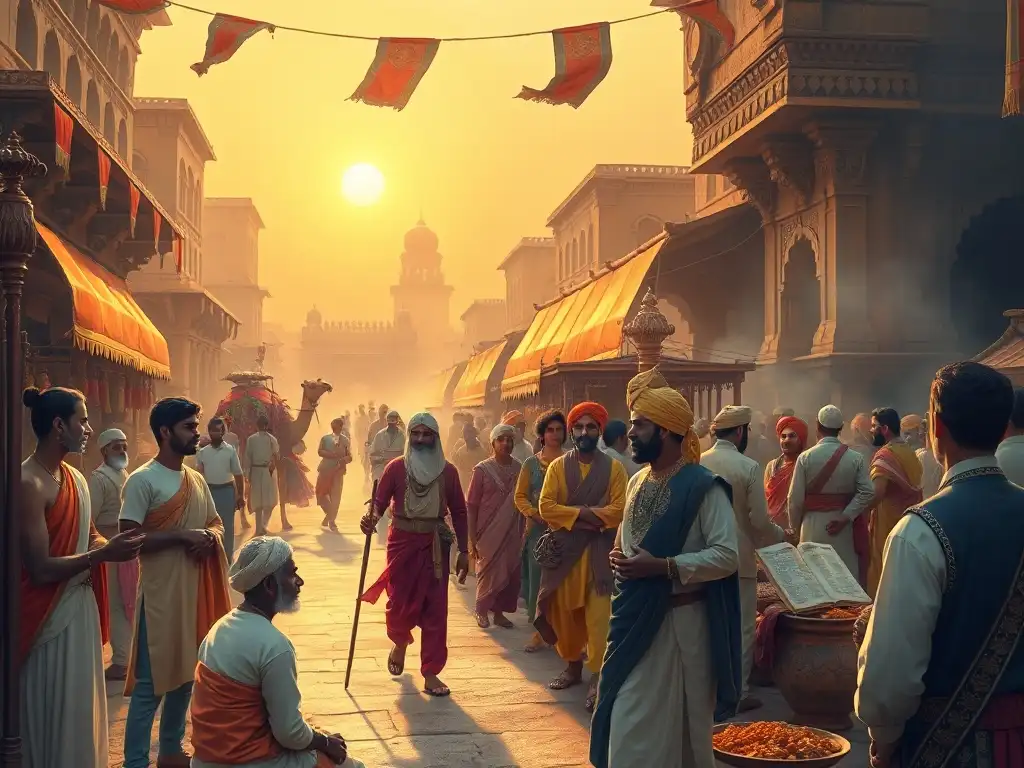
Ancient India's trade network was a complex system involving various key players that contributed to its richness and diversity. These players included merchants, royal patrons, guilds, and international traders. Each group played a significant role in not only facilitating trade but also in the exchange of cultural ideas, practices, and innovations. Understanding these players is crucial to appreciating how ancient Indian trade influenced global cultures and established India as a central hub in the ancient world.
Merchants and Traders: The Backbone of Trade Networks
Merchants and traders were fundamental to the ancient Indian trading system. They were the individuals who physically transported goods, established trade routes, and connected different regions. The most well-known of these were the Sresthins, who operated in urban centers and were often wealthy and influential figures. Their activities weren't limited to the exchange of goods; they also served as intermediaries between diverse cultures, facilitating not only economic transactions but also cultural exchanges.
Merchants engaged in trade across various routes, including the Silk Road and maritime pathways. They dealt in a range of goods such as spices, textiles, precious stones, and metalwork. The trading activities often required extensive networks involving partnerships with local producers and international traders, enhancing the cultural landscape as goods and ideas flowed freely.
Royal Patronage and Trade Policies
Royal patronage played a pivotal role in the growth and stability of ancient Indian trade. Rulers often provided protection and privileges to merchants and traders, which encouraged trade activity. They established trade policies that regulated commerce, imposed taxes, and maintained law and order along trade routes. For instance, during the Maurya and Gupta empires, state support for trade was evident through infrastructure improvements like roads and ports, which facilitated easier and safer transport of goods.
Additionally, royal patronage extended to the promotion of trade fairs and markets, where merchants could gather to exchange goods and ideas. These fairs not only boosted local economies but also attracted international traders, further enriching cultural exchanges among different civilizations.
The Role of Guilds in Promoting Cultural Exchange
Guilds were crucial in promoting trade and cultural exchange throughout ancient India. These organizations were formed by merchants and craftsmen who shared common interests and goals. They regulated trade practices, set quality standards, and provided training for artisans. By doing so, guilds ensured that Indian goods maintained a high level of quality, making them desirable in both domestic and international markets.
Furthermore, guilds functioned as agents of cultural exchange. They organized trade missions that facilitated interactions with foreign traders, leading to the introduction of new ideas, technologies, and cultural practices. For example, the Mochi guild, which specialized in leather goods, not only excelled in craftsmanship but also absorbed influences from various cultures through their trade networks.
Impact of Ancient Indian Trade on Global Cultures
The impact of ancient Indian trade extended far beyond mere economic transactions; it significantly influenced global cultures, economies, and technological advancements. The exchange of goods was accompanied by the transfer of ideas, beliefs, and innovations that shaped various civilizations across continents.
The Adoption of Indian Innovations and Technologies
Ancient Indian trade facilitated the dissemination of numerous innovations and technologies to other regions. For instance, Indian advancements in mathematics, including the concept of zero and the decimal system, were shared with traders from the Middle East and beyond. These mathematical principles later influenced the development of science and commerce in various cultures.
Moreover, Indian agricultural technologies, such as advanced irrigation methods and crop rotation techniques, were exchanged with neighboring civilizations. These innovations contributed to increased agricultural productivity, which was essential for sustaining growing populations in regions like Southeast Asia.
Cultural Syncretism: Blending of Traditions
Cultural syncretism, or the blending of different cultural traditions, was a significant outcome of ancient Indian trade. As merchants and travelers interacted with diverse cultures, they exchanged not only goods but also religious beliefs, artistic expressions, and social practices. For example, the spread of Buddhism along trade routes led to its adoption in various countries, resulting in the fusion of Indian and local traditions.
Art and architecture also experienced profound influences through trade. Indian motifs and styles were incorporated into foreign artworks, while local artisans learned Indian techniques, leading to unique cultural amalgamations. This blending enriched both Indian and global cultures, creating a tapestry of shared heritage.
Long-Term Effects on Modern Trade and Cultural Practices
The legacy of ancient Indian trade continues to influence modern trade and cultural practices. Many contemporary trade routes still follow paths established by ancient traders. The principles of trade practiced by ancient merchants, such as the importance of trust and collaboration, remain relevant today.
Culturally, the exchanges initiated during ancient times laid the groundwork for ongoing interactions between different civilizations. Modern practices in art, cuisine, and philosophy still reflect the rich tapestry of influences that originated from ancient Indian trade. For instance, Indian spices have become integral to cuisines worldwide, and yoga, a practice rooted in ancient Indian philosophy, has gained global popularity.
Ancient Indian trade was a multifaceted system that not only shaped economies but also fostered cultural exchanges that resonate through history and into the present day. The key players in this trade network played vital roles, and their contributions continue to impact our world today.
Conclusion: The Lasting Legacy of Ancient India’s Trade and Cultural Exchange
The trade networks and cultural exchanges established by ancient India have left an indelible mark on the world. From the bustling markets of the Indus Valley Civilization to the vibrant exchanges along the Silk Road, ancient India was a hub of commerce and culture. The interactions between diverse groups not only facilitated trade in goods but also fostered the exchange of ideas, philosophies, and technologies that shaped societies across Asia and beyond.
The legacy of ancient Indian trade is evident in various aspects of modern life. The principles of trade, including negotiation and mutual benefit, have become foundational to contemporary economic practices. Likewise, the cultural exchanges that took place have influenced art, architecture, and religion. Aspects of Indian culture, such as yoga and Ayurveda, continue to thrive globally, showcasing the long-lasting impact of these early interactions.
Summary of Key Points
- Diverse Trade Networks: Ancient India was linked to various trade routes, including the Silk Road and maritime routes, facilitating the exchange of spices, textiles, and precious stones.
- Cultural Exchange: The trade routes acted as conduits for cultural interactions, spreading Indian philosophies, religions, and art forms to different regions.
- Economic Innovations: Ancient India introduced significant economic concepts, including the use of coinage and trade agreements, enhancing trade efficiency.
- Global Impact: The legacy of ancient Indian trade and cultural exchange is reflected in various cultures and economies worldwide, influencing practices that persist today.
Reflections on How Ancient India Shaped the Modern World
The influence of ancient India on the modern world is profound and multifaceted. The synthesis of ideas and customs that occurred through trade has led to a rich tapestry of cultural heritage that various societies continue to appreciate. For instance, the spread of Buddhism from India to East Asia profoundly impacted spiritual practices and cultural developments in countries like China, Japan, and Korea.
Moreover, the culinary contributions of ancient Indian trade, particularly spices, have transformed global cuisine. The quest for Indian spices was a significant driving force behind exploration and trade in the medieval period, leading to the discovery of new trade routes and the eventual globalization of markets.
The trade and cultural exchanges of ancient India not only enriched the subcontinent but also laid the groundwork for interactions that would shape civilizations worldwide. The enduring legacy of these exchanges continues to be felt today, reminding us of the interconnectedness of human history and the importance of shared knowledge and resources.
- Introduction to Ancient India Trade and Cultural Exchange
- Major Trade Routes of Ancient India
- Goods and Commodities Traded by Ancient Indian Societies
- Cultural Exchange Through Trade
- Key Players in Ancient Indian Trade
- Impact of Ancient Indian Trade on Global Cultures
- Conclusion: The Lasting Legacy of Ancient India’s Trade and Cultural Exchange
Frequently Asked Questions
What were the main trade routes in ancient India?
Ancient India had several important trade routes, including the Silk Road and maritime paths, which facilitated trade with regions such as Southeast Asia, the Middle East, and Africa.
How did cultural exchange occur through trade in ancient India?
Trade in ancient India not only involved goods but also the exchange of ideas, religions, and art forms, which significantly influenced neighboring cultures and led to a rich tapestry of cultural diversity.
What were the key commodities traded by ancient Indians?
Ancient Indians traded various commodities, including spices, textiles, jewels, and metals, which were highly sought after in international markets and contributed to India's economic prosperity.
How did ancient Indian trade impact global civilization?
The trade practices of ancient India played a crucial role in the development of global civilization by fostering economic ties and promoting cultural interactions across continents, influencing art, science, and technology.
What role did empires play in facilitating trade in ancient India?
Empires like the Maurya and Gupta facilitated trade by establishing stable governance, improving infrastructure, and promoting commercial activities, which helped enhance cultural exchange and economic growth.
Final Reflection: The Enduring Legacy of Ancient India's Trade and Cultural Exchange
The intricate web of trade and cultural exchange established by ancient India continues to resonate profoundly in today's globalized world. As we explore the historical significance of these exchanges, we realize that they not only facilitated the movement of goods but also ideas, philosophies, and cultural practices that have shaped civilizations across continents. This legacy reminds us that the foundations of our interconnectedness were laid long ago, and the lessons from ancient India remain relevant as we navigate the complexities of modern trade and cultural interactions.
Cultural exchange is not merely a historical footnote; it is an ongoing dialogue that enriches our societies. The influences of ancient Indian trade can be seen in various aspects of contemporary life, from culinary traditions to spiritual practices. As we reflect on this, we are reminded of the words of Mahatma Gandhi: A nation's greatness is measured by how it treats its weakest members.
This perspective encourages us to appreciate the diverse contributions of different cultures and to recognize the importance of fostering inclusivity and understanding in our global community.
As we conclude this exploration of ancient India's trade and cultural exchange, I invite you to reflect on your own role in this ongoing narrative. Consider how you can contribute to the exchange of ideas and cultures in your daily life.
Whether through learning about different traditions, engaging in cross-cultural dialogues, or supporting fair trade practices, each of us has the power to honor the rich legacy of ancient India and promote a more interconnected and compassionate world. Embrace this opportunity to be a part of a larger story that transcends time and geography, and let us work together to build bridges that celebrate our shared humanity.
Embark on Your Journey of Discovery!
Thank you for taking the time to delve into the rich tapestry of how Ancient India shaped our world through trade and cultural exchange. You've uncovered insights that illuminate our shared history! Now, it’s time to put that knowledge into action and explore further.
Here are a few ways you can continue your journey:
- Dive deeper: Explore more articles on our website to enhance your understanding of Ancient Indian civilizations and their remarkable contributions to global heritage.
- Share the knowledge: Discuss your discoveries with friends or family and inspire them to learn about the profound impact of Ancient India on contemporary culture.
- Join our community: Participate in our online forums to connect with fellow history enthusiasts, exchange ideas, and engage in stimulating discussions.
What aspect of Ancient India's cultural exchange intrigues you the most, and how do you believe it influences our modern world?