
How Vaisheshika Philosophy Explains the Concept of Liberation (Moksha)


Welcome to Ancient India History, where we embark on a fascinating journey through the rich tapestry of India's past! In today's exploration, we delve into the intricate world of Vaisheshika philosophy and Moksha, unraveling how this ancient school of thought articulates the profound concept of liberation. What insights does Vaisheshika offer on achieving true freedom?
Prepare to be captivated as we connect the dots between philosophy and the quest for spiritual emancipation, inviting you to discover the wisdom that has shaped generations. Join us as we uncover the layers of understanding that define the essence of existence and enlightenment in ancient Indian traditions!
-
Understanding Vaisheshika Philosophy and Moksha
- Introduction to Vaisheshika Philosophy
- The Concept of Moksha in Indian Philosophy
- Vaisheshika Philosophy's Unique Perspective on Moksha
- Pathways to Moksha According to Vaisheshika Philosophy
- Comparison with Other Philosophical Schools on Moksha
- Practical Implications of Vaisheshika Philosophy on Moksha
- Conclusion
- Frequently Asked Questions
- Final Reflection: Embracing Liberation through Vaisheshika Philosophy
- Unlock Your Path to Liberation: Embrace Vaisheshika Philosophy!
Understanding Vaisheshika Philosophy and Moksha
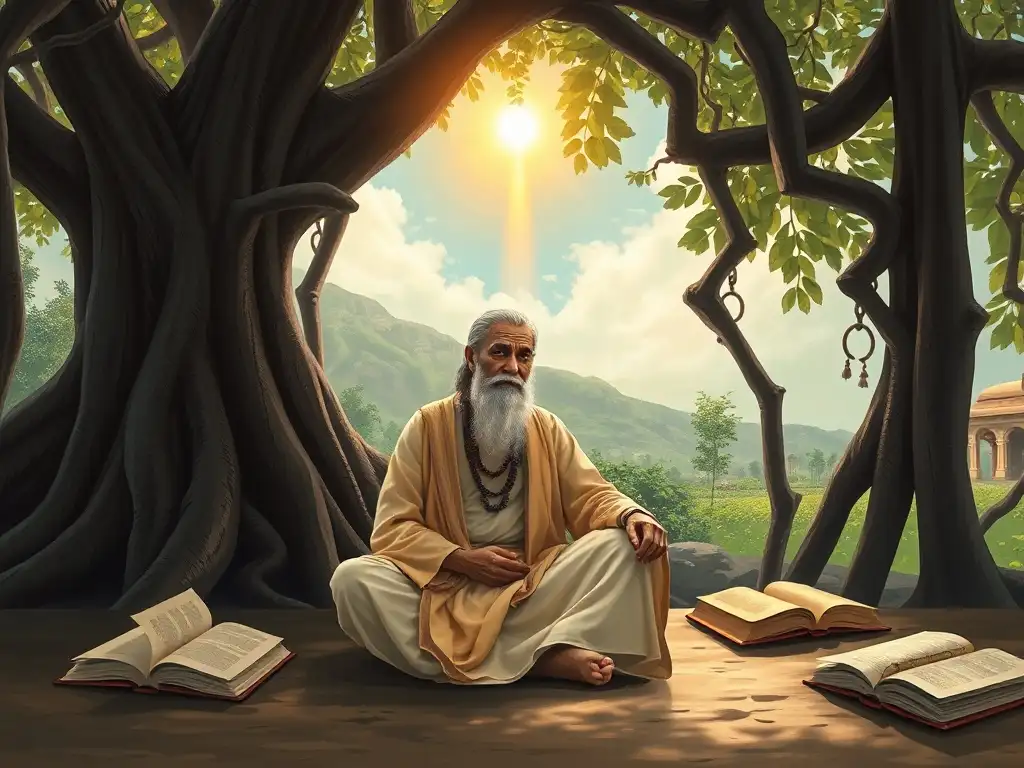
Vaisheshika philosophy, one of the six orthodox schools of Indian philosophy, offers a unique perspective on the nature of reality and the concept of liberation, known as Moksha. Rooted in the ancient texts of India, particularly the works of the sage Kanada, Vaisheshika provides a systematic framework for understanding the universe through its categorization of substances and their properties.
This article delves into how Vaisheshika philosophy elucidates the profound concept of Moksha, the state of liberation from the cycle of birth and rebirth (samsara) that is central to Indian thought. By exploring the historical context, key principles of the Vaisheshika school, and the broader philosophical discourse on Moksha, we aim to shed light on the intricate connections between these two significant aspects of ancient Indian philosophy.
Introduction to Vaisheshika Philosophy
The Vaisheshika school of thought primarily focuses on the nature of reality and the ontology of existence. Established around the 2nd century BCE, it emphasizes the categorization of the universe into various substances, qualities, and actions. The philosophy asserts that understanding the material world is essential for attaining liberation. By recognizing the diversity of substances and their interactions, practitioners of Vaisheshika seek to comprehend the underlying principles of creation and existence.
Historical Context of Vaisheshika School
The roots of Vaisheshika philosophy can be traced back to ancient Indian texts such as the "Vaisheshika Sutras," authored by the sage Kanada. This school emerged during a time when various philosophical discourses were flourishing in India, including the Samkhya and Nyaya schools. Although often studied alongside Nyaya, which focuses more on logic and epistemology, Vaisheshika distinguishes itself through its emphasis on physical reality and the classification of substances.
Key historical figures and events have shaped the development of this school, influencing later philosophical thought and contributing to a rich tradition of inquiry into the nature of existence.
Key Principles and Tenets of Vaisheshika Philosophy
At the heart of Vaisheshika philosophy lies the belief in the existence of fundamental categories, which include:
- Dravya (Substance): The basic entities that make up reality, classified into nine categories, such as earth, water, fire, air, and ether.
- Guna (Quality): The attributes or characteristics of substances that can influence their behavior and interactions.
- Karma (Action): The activities and changes that substances undergo, contributing to the dynamic nature of existence.
Vaisheshika philosophy posits that understanding these categories provides insights into the nature of the universe, ultimately guiding individuals toward spiritual liberation.
The Concept of Moksha in Indian Philosophy
Moksha, often translated as "liberation" or "emancipation," is a central theme in Indian philosophy. It represents the ultimate goal of human existence, signifying the release from the cycle of birth, death, and rebirth. Within this context, Moksha is closely linked to the ethical and spiritual practices that lead to self-realization and understanding of the true nature of reality.
Definition of Moksha: Liberation and Its Importance
In Vaisheshika philosophy, Moksha is viewed as a state of existence that transcends material limitations. It is the realization of the self's true nature, free from the bondage of desires and attachments. Achieving Moksha is considered essential for attaining ultimate peace and fulfillment. This state is not merely the absence of suffering, but rather a profound engagement with the essence of existence.
Different Schools of Thought on Moksha
Various schools of Indian philosophy offer distinct interpretations of Moksha. For instance:
- Advaita Vedanta: Emphasizes non-dualism and the idea that the individual self (Atman) is ultimately identical to the universal self (Brahman).
- Samkhya: Focuses on the distinction between the material world (Prakriti) and the spiritual self (Purusha) and advocates for liberation through knowledge and discernment.
Each school contributes to a rich tapestry of thought regarding Moksha, reflecting the diversity of perspectives within Indian philosophy. Understanding these differences provides a more comprehensive view of how Vaisheshika philosophy interacts with broader philosophical discussions on liberation.
Vaisheshika Philosophy's Unique Perspective on Moksha
Vaisheshika philosophy, one of the six orthodox schools of Indian philosophy, provides a distinctive understanding of Moksha, or liberation. Unlike other philosophical traditions, Vaisheshika emphasizes a realistic and empirical approach to understanding reality. It posits that the universe is composed of paramanus (atoms) and various categories that interact in complex ways. Moksha, in this context, is not merely an escape from the cycle of rebirth (samsara) but a state of ultimate understanding and realization of the true nature of existence.
The Vaisheshika perspective on Moksha is fundamentally tied to knowledge and perception. It asserts that through the correct understanding of the categories of existence – such as substance, quality, action, and relation – individuals can attain a state of liberation. This understanding leads to a profound realization of the self (atman) and its distinction from the material world. Thus, Moksha is seen as the culmination of intellectual and spiritual growth, where the individual transcends ignorance and attains wisdom.
How Vaisheshika Defines Liberation
In Vaisheshika philosophy, liberation (Moksha) is defined as the state where the individual soul (atman) is freed from the cycles of birth and death. This liberation is achieved through the realization of the true nature of the self and its relationship with the material world. The philosophy stipulates that liberation comes when one comprehends the impermanence of worldly phenomena and recognizes the eternal nature of the atman.
The process of attaining Moksha involves the cessation of all desires and the understanding that the atman is distinct from the physical body and the mind. This understanding fosters detachment from material possessions and worldly ties, which are seen as the root causes of suffering and bondage. Therefore, liberation in Vaisheshika is not just a philosophical concept but also a practical goal that entails rigorous intellectual inquiry and self-discipline.
The Role of Atoms and Categories in Achieving Moksha
A cornerstone of Vaisheshika philosophy is the concept of paramanus (atoms) and the nine categories ( padarthas) that describe the universe. These categories include substance (dravya), quality (guna), action (karma), generality (sāmānya), particularity (vishesha), inherence (samavaya), and non-existence (abhava). Understanding these categories is essential for grasping the nature of reality.
In the pursuit of Moksha, comprehending these categories allows individuals to discern the true nature of existence. By recognizing that everything is composed of atoms and that these elements operate within the framework of the categories, individuals can cultivate a deeper insight into the transient nature of worldly experiences. This realization prompts a shift in focus from external attachments to internal wisdom, thereby facilitating the journey toward liberation.
Pathways to Moksha According to Vaisheshika Philosophy
Vaisheshika philosophy outlines several pathways to attain Moksha, emphasizing the importance of knowledge, ethical living, and introspection. These pathways are interrelated and provide a comprehensive approach to achieving liberation.
The Importance of Knowledge (Jnana) in Liberation
Knowledge ( jnana) is regarded as the primary means to achieve Moksha in Vaisheshika philosophy. It is through the acquisition of knowledge that individuals can discern the difference between the eternal self and the ephemeral material world. This understanding is crucial for overcoming ignorance, which binds the soul to the cycle of samsara.
Vaisheshika emphasizes that knowledge should be both theoretical and practical. Theoretical knowledge involves studying the nature of the universe and the categories that define it, while practical knowledge is the application of this understanding to everyday life. By cultivating knowledge through study, reflection, and discourse, individuals can gradually liberate themselves from misconceptions and achieve a state of clarity that leads to Moksha.
Ethical Living and Its Impact on Moksha
In addition to knowledge, ethical living plays a pivotal role in the Vaisheshika approach to Moksha. Adhering to moral principles and living a life of virtue is essential for purifying the mind and soul. The Vaisheshika school advocates for a life characterized by non-violence (ahimsa), truthfulness, and compassion, as these values align the individual with the natural order of the universe.
The practice of ethical living fosters a sense of harmony and balance within oneself, which is conducive to the pursuit of knowledge. As individuals engage in virtuous actions, they cultivate a clearer mind and a more profound understanding of reality. This inner clarity ultimately supports the quest for Moksha, as it allows individuals to transcend worldly attachments and realize their true nature as eternal souls.
Comparison with Other Philosophical Schools on Moksha

Vaisheshika philosophy, one of the six orthodox schools of Indian philosophy, offers a unique perspective on the concept of Moksha (liberation). To appreciate its nuances, it's essential to compare it with other philosophical systems such as Advaita Vedanta and Samkhya. Each school presents a distinctive understanding of the self, reality, and the pathway to liberation, enriching the dialogue surrounding Moksha in ancient Indian thought.
Vaisheshika vs. Advaita Vedanta: Perspectives on Liberation
Vaisheshika philosophy posits that liberation (Moksha) is achieved through the realization of the true nature of reality, which is fundamentally pluralistic. According to Vaisheshika, reality consists of a variety of substances, attributes, and modes, and liberation is attained by understanding the distinctness of these elements. In contrast, Advaita Vedanta advocates for a non-dualistic approach, emphasizing that Moksha is realized through the understanding of the oneness of Atman (the self) and Brahman (the ultimate reality).
While Vaisheshika acknowledges the existence of individual souls (Jivas) that experience bondage due to ignorance, Advaita Vedanta suggests that ignorance is the veil that obscures the realization of one's true identity as Brahman. Therefore, the paths to Moksha diverge significantly: Vaisheshika emphasizes knowledge of particulars, while Advaita Vedanta promotes the realization of universality. This fundamental difference illustrates varied approaches to understanding liberation, reflecting the rich diversity in Indian philosophical thought.
Vaisheshika vs. Samkhya: The Nature of the Self and Liberation
When comparing Vaisheshika with Samkhya, another significant school of Indian philosophy, we encounter different views regarding the nature of the self (Purusha) and liberation. In Samkhya, liberation is achieved through the discernment between Purusha (consciousness) and Prakriti (matter), leading to the understanding that the self is distinct from the material world. This dualistic perspective implies that liberation comes from recognizing one's true nature as an eternal, unchanging consciousness.
In contrast, Vaisheshika offers a more pluralistic understanding, suggesting that liberation involves the realization of the variety of substances and their interrelations. The Vaisheshika view posits that the self is one among many substances, each possessing its own nature, and liberation results from understanding these distinctions. Thus, while both philosophies emphasize the importance of knowledge for Moksha, their interpretations of the self and the mechanisms of liberation introduce unique pathways for seekers.
Practical Implications of Vaisheshika Philosophy on Moksha
The implications of Vaisheshika philosophy extend beyond theoretical discourse, influencing practical approaches to achieving Moksha. The emphasis on empirical observation and logical reasoning fosters a methodical approach to spiritual practice that can be applied in various contexts.
Relevance in Contemporary Spiritual Practices
Vaisheshika philosophy's focus on categorizing and understanding the world resonates with contemporary spiritual practices that encourage individuals to explore their inner selves through self-inquiry and rational thought. Many modern spiritual movements draw on the principles of Vaisheshika by promoting mindfulness and awareness of the interconnectedness of all beings. This approach is particularly relevant in today's context, where individuals seek clarity and understanding in a complex world.
Furthermore, Vaisheshika encourages practitioners to engage with the physical world as a means to attain liberation, promoting a balanced view that harmonizes material existence with spiritual aspirations. This holistic perspective is increasingly valued in modern spirituality, as it empowers individuals to find meaning in their everyday experiences while striving for Moksha.
Vaisheshika Influence on Modern Philosophical Thought
The influence of Vaisheshika philosophy on modern philosophical thought can be observed in various disciplines, including metaphysics, epistemology, and ethics. The emphasis on categorization and the nature of existence has shaped contemporary discussions on the nature of reality and the self. Philosophers interested in the interplay between science and spirituality often reference Vaisheshika principles, particularly its insistence on observation and logical analysis.
Additionally, the Vaisheshika understanding of substances and their properties is echoed in modern scientific inquiry, where classification and empirical evidence form the foundation of knowledge. By bridging the gap between ancient philosophical thought and contemporary scientific practice, Vaisheshika philosophy continues to inspire and inform the quest for knowledge and liberation in the modern age.
The exploration of Moksha through the lens of Vaisheshika philosophy reveals rich comparisons with other philosophical schools and practical implications that resonate with contemporary spiritual seekers. This ongoing dialogue underscores the enduring relevance of ancient Indian thought in understanding liberation and the nature of existence.
Conclusion
In the intricate tapestry of Indian philosophy, Vaisheshika stands out for its unique approach to understanding the universe and the concept of liberation, or Moksha. This philosophical system, founded by the sage Kanada, emphasizes the categorization of reality into substances, qualities, actions, and more, reflecting a meticulous examination of the world. The Vaisheshika philosophy proposes that liberation is attained through knowledge and understanding of the universe, leading to the realization of the self's true nature.
The path to Moksha, in this context, is not merely about metaphysical liberation but involves a profound comprehension of the fundamental elements that constitute existence. By recognizing the interplay of these elements and their transitory nature, practitioners can detach from worldly desires and ultimately achieve a state of liberation.
Thus, the Vaisheshika view provides a structured framework for attaining Moksha, emphasizing the importance of rational thought and empirical observation in the pursuit of spiritual goals.
Summary of Vaisheshika Philosophy and Moksha
Vaisheshika philosophy, a significant school of thought within ancient Indian philosophy, is characterized by its focus on categories of reality and its systematic analysis of the physical world. Central to this philosophy is the belief in the existence of eternal atoms, which combine to form all substances and phenomena. The key elements of Vaisheshika philosophy include:
- Categories of Reality: The six categories—substance, quality, action, generality, particularity, and inherence—serve as foundational concepts that help explain the nature of existence.
- Epistemology: Vaisheshika discusses different means of knowledge, including perception, inference, and testimony, establishing a framework for understanding the world.
- Concept of Liberation (Moksha): Moksha is perceived as the ultimate goal, achieved through the realization of the true nature of the self and the universe, leading to the cessation of suffering and cycle of rebirth.
By comprehensively understanding these principles, one can navigate the path toward Moksha, emphasizing the role of knowledge as a liberating force.
Final Thoughts on the Relevance of Ancient Indian Philosophy Today
The teachings of Vaisheshika philosophy continue to resonate in contemporary philosophical discourse and spiritual practices. In an age characterized by rapid technological advancements and existential dilemmas, the insights offered by ancient Indian philosophies such as Vaisheshika provide valuable perspectives on the nature of reality and the human condition.
The emphasis on rational inquiry and empirical evidence in the pursuit of knowledge aligns with modern scientific approaches, while its exploration of ethical living and the quest for liberation remains profoundly relevant. As individuals grapple with questions of purpose, identity, and fulfillment, the Vaisheshika framework encourages a return to introspection and understanding, fostering a deeper connection with oneself and the universe.
The principles of Vaisheshika philosophy and its approach to Moksha not only enrich our understanding of ancient wisdom but also offer practical guidance for navigating the complexities of modern life. Embracing these teachings can lead to a more profound sense of purpose and an awareness of the interconnectedness of all existence.
Frequently Asked Questions
What is Vaisheshika philosophy?
Vaisheshika philosophy is an ancient Indian school of thought that focuses on the nature of reality and categorizes the elements of existence. It emphasizes atomism and the importance of understanding individual substances.
How does Vaisheshika philosophy relate to Moksha?
In the context of Vaisheshika, Moksha refers to the ultimate state of liberation from the cycle of birth and death. The philosophy provides insights into achieving Moksha through knowledge and understanding of the material world.
What are the key tenets of Vaisheshika philosophy?
The key tenets include the classification of substances, the concept of atoms, and the belief in causation. This framework helps in understanding the nature of existence and the path to liberation.
How did ancient Indian civilizations contribute to the understanding of Moksha?
Ancient Indian civilizations, particularly through texts like the Upanishads and Vaisheshika, explored the concept of Moksha extensively, emphasizing the importance of self-realization and spiritual knowledge.
What is the significance of studying Vaisheshika philosophy today?
Studying Vaisheshika philosophy today helps in grasping the foundational concepts of Indian thought. It offers valuable perspectives on existence, ethics, and the pursuit of liberation (Moksha), which remain relevant in contemporary discussions on spirituality.
Final Reflection: Embracing Liberation through Vaisheshika Philosophy
In exploring how Vaisheshika philosophy elucidates the concept of liberation (Moksha), we uncover profound insights that resonate deeply in today's world. As we navigate the complexities of modern life, the timeless teachings of Vaisheshika offer a pathway to understanding our existence and the ultimate goal of liberation. The quest for Moksha is not merely an ancient pursuit; it is a relevant and pressing need for individuals seeking peace and fulfillment amidst chaos.
The influence of Vaisheshika philosophy extends beyond academic discourse, shaping cultural and social paradigms that encourage introspection and self-realization. This philosophy invites us to examine the nature of reality and our place within it. It emphasizes the importance of knowledge and discernment in achieving liberation, reminding us that our journey towards Moksha is both personal and collective. As the philosopher Udayana once stated, Knowledge is the key that unlocks the door to liberation.
This sentiment resonates today, as we strive to cultivate wisdom in our lives and communities.
As we conclude this exploration, I invite you to reflect on your own journey toward Moksha. Consider how the principles of Vaisheshika philosophy can guide you in seeking deeper understanding and connection with the world around you. Embrace the opportunity to cultivate knowledge, discernment, and ultimately, liberation in your life. Let the teachings of this ancient philosophy inspire you to take meaningful steps toward a more fulfilling existence, where the pursuit of Moksha becomes a shared aspiration for all.
Unlock Your Path to Liberation: Embrace Vaisheshika Philosophy!
Thank you for exploring the profound insights of Vaisheshika philosophy and its enlightening perspective on liberation. We hope you feel inspired to delve deeper into these concepts and apply them to your journey of self-discovery. Now, it's time to take action!
Here are a few practical steps to enhance your understanding and experience:
- Start Your Exploration: Read a book or listen to a lecture on Vaisheshika philosophy to expand your knowledge.
- Join a Discussion Group: Engage with individuals who share an interest in Indian philosophy; exchange insights and learn from diverse perspectives.
- Reflect Daily: Set aside a few minutes each day to meditate on the concept of liberation and how it resonates with your life.
What aspects of Vaisheshika philosophy resonate most with your personal journey toward liberation? We invite you to share your thoughts in the comments below!