
Vaisheshika’s Contribution to Metaphysics: Understanding the Nature of Being


Welcome to Ancient India History, where we embark on a fascinating journey through time to uncover the rich tapestry of ancient Indian civilizations. In this exploration, we delve into the profound depths of Vaisheshika metaphysics and nature, revealing how this ancient philosophical system has shaped our understanding of existence and reality. As we unravel the intricate threads of thought that define the essence of being, prepare to discover how these age-old insights continue to resonate in our modern world.
Join us as we explore the remarkable contributions of the Vaisheshika school and its lasting impact on philosophy, art, and architecture. Your adventure into the heart of ancient wisdom begins here!
- Introduction to Vaisheshika Metaphysics and Nature
- Historical Context of Vaisheshika
- Core Concepts of Vaisheshika Metaphysics
- Vaisheshika’s Influence on Metaphysical Thought
- Vaisheshika Metaphysics and Nature
- Conclusion: The Legacy of Vaisheshika in Metaphysics
- Frequently Asked Questions
- Final Reflection: Embracing the Depths of Vaisheshika Metaphysics
- Unlock the Mysteries of Being: Take Action Today!
Introduction to Vaisheshika Metaphysics and Nature

The Vaisheshika school of philosophy, one of the six orthodox (Astika) schools of Indian thought, has made significant contributions to the field of metaphysics, particularly in understanding the nature of being. Rooted in the ancient texts attributed to the sage Kanada, Vaisheshika emphasizes the importance of categorizing and analyzing the material world, providing a framework that has influenced not only philosophical discourse but also the sciences in ancient India.
By exploring the nuances of Vaisheshika metaphysics and nature, we can gain insights into how this philosophical tradition sought to explain existence, substance, and the interplay of various elements that constitute reality.
This article delves into the core principles of Vaisheshika philosophy, highlighting its foundational concepts and the pivotal role it played in shaping metaphysical inquiries in ancient Indian thought. Through a detailed examination, we will uncover the relevance of Vaisheshika's contributions to modern philosophical discussions and their enduring impact on the understanding of existence itself.
Overview of Vaisheshika Philosophy
Vaisheshika is primarily concerned with the categorization of reality and the identification of its fundamental components. The philosophy posits that the universe is composed of substances, qualities, actions, and their interactions, which can be understood through careful observation and logical reasoning.
Key Concepts of Vaisheshika Philosophy:
- Padārtha (Categories): Vaisheshika identifies seven fundamental categories (padārthas) that describe all entities in the universe:
- Dravya (Substance)
- Guṇa (Quality)
- Karma (Action)
- Sāmānya (Generality)
- Vishesha (Particularity)
- Samavāya (Inherence)
- Abhava (Non-existence)
- Anu (Atoms): Central to Vaisheshika's metaphysical outlook is the concept of anu, or atoms, which are seen as the indivisible building blocks of matter. This atomic theory predates similar concepts in Western thought and illustrates the sophistication of ancient Indian science.
- Sanskrit Texts: The foundational text, Vaisheshika Sutra, composed by Kanada, outlines these principles and serves as a critical reference for understanding the nature of existence and reality.
This philosophical framework not only provides a systematic approach to metaphysics but also lays the groundwork for further developments in various disciplines, including natural sciences and epistemology.
Importance of Metaphysics in Ancient Indian Thought
Metaphysics occupies a central role in ancient Indian philosophy, serving as the foundation for exploring the nature of reality, existence, and consciousness. The Vaisheshika school, alongside its contemporaries such as Nyaya and Sankhya, contributed to a rich tapestry of philosophical inquiry that sought to address profound questions about the universe and our place within it.
Key Contributions of Metaphysics:
- Understanding Reality: Metaphysical investigations helped shape the understanding of both the material and spiritual dimensions of existence, influencing religious and philosophical thought across various schools.
- Logical Analysis: The rigorous logical analysis employed by Vaisheshika scholars paved the way for future philosophical discourse, promoting critical thinking and systematic reasoning.
- Interdisciplinary Influence: The principles established in Vaisheshika metaphysics resonated beyond philosophy, impacting fields such as logic, ethics, and even political theory, thus demonstrating the interconnectedness of knowledge in ancient Indian culture.
The contributions of Vaisheshika to metaphysics are invaluable, offering insights into the nature of being and existence that continue to inspire contemporary philosophical debates and inquiries. By examining these ancient perspectives, we enrich our understanding of not only Indian philosophy but also the broader human quest for knowledge and meaning.
Historical Context of Vaisheshika

The Vaisheshika school of philosophy is one of the oldest philosophical traditions in India, with roots that trace back to the ancient texts and thinkers of the subcontinent. It primarily focuses on metaphysics, particularly the nature of being and existence. Understanding the historical context of Vaisheshika provides insight into how it emerged as a distinct philosophical system and its relevance to the broader landscape of Indian philosophy.
Origins of Vaisheshika Philosophy
Vaisheshika philosophy originated around the 2nd century BCE, attributed to the sage Kanada, also known as Uluka. His teachings were compiled in the Vaisheshika Sutras, which outline its core doctrines. The term "Vaisheshika" translates to "the particular," reflecting its emphasis on the categorization of substances and their properties.
- Influence of Samkhya and Nyaya: The development of Vaisheshika was influenced by earlier philosophical schools, particularly Samkhya, which focused on metaphysical dualism, and Nyaya, known for its logical reasoning. Vaisheshika complements these schools by providing a detailed analysis of the physical world and its constituents.
- Philosophical Objectives: The primary objective of Vaisheshika is to understand the nature of existence through a detailed exploration of the categories of reality, including substances, qualities, actions, and universals. This categorization is essential for comprehending the interrelations between different entities in the universe.
- Dualism and Pluralism: Vaisheshika is characterized by its dualistic nature, positing that ultimate reality consists of two fundamental realities: the eternal, unchanging substance (dravya) and the transient qualities (guna) of these substances. This perspective laid the groundwork for subsequent metaphysical inquiries within Indian philosophy.
Key Texts and Foundational Figures in Vaisheshika Metaphysics
The foundation of Vaisheshika metaphysics is primarily laid out in the Vaisheshika Sutras by Kanada, which serves as both a philosophical and a scientific treatise. The sutras are structured in a concise manner, relying on aphorisms (sutras) that require interpretation by later commentators.
- Vaisheshika Sutras: The text is divided into ten books, addressing various aspects of metaphysics, including the classification of substances, the nature of reality, and the relationship between cause and effect. It emphasizes the importance of empirical observation and logical reasoning in understanding the universe.
- Commentaries: Over the centuries, the Vaisheshika Sutras have been elaborated upon by numerous scholars, including Udayana, Raghunatha Siromani, and Bhaskaracharya. Their commentaries have enriched the original texts, providing deeper insights into the metaphysical concepts presented by Kanada.
- Philosophical Contributions: Vaisheshika metaphysics contributed significantly to the discourse on the nature of being. It introduced the concept of padarthas, or categories of existence, which includes:
- Dravya (Substance): The fundamental entities that exist independently.
- Guna (Quality): The attributes or properties of substances.
- Karma (Action): The activities or processes involving substances.
- Samanya (Universals): Common properties shared by multiple substances.
- Vishesha (Particulars): Unique characteristics that distinguish individual substances.
- Abhava (Non-existence): The absence of a substance, which is also an important concept in understanding reality.
The exploration of these categories not only shaped Vaisheshika metaphysics but also influenced other philosophical traditions in India, fostering a rich dialogue on the nature of existence. Through its analytical approach, Vaisheshika has left a lasting legacy in the realm of Indian philosophy, particularly in metaphysical discussions concerning the nature of being.
Core Concepts of Vaisheshika Metaphysics

Vaisheshika metaphysics, a foundational aspect of Indian philosophy, is primarily concerned with understanding the nature of reality through a systematic classification of substances, qualities, and actions. Emerging around the 2nd century BCE, this philosophical school was significantly influenced by the works of its founder, Kanada, who emphasized a realistic approach to metaphysical inquiry. The core tenets of Vaisheshika revolve around its categorization of reality, which serves as a framework for exploring the nature of being and existence.
At its essence, Vaisheshika metaphysics posits that all entities in the universe can be classified into distinct categories that help elucidate their nature and interrelations. This classification is not only pivotal for metaphysical discourse but also for understanding the broader philosophical implications regarding existence and the natural world. By analyzing substances, qualities, and their interactions, Vaisheshika provides a comprehensive understanding of the material and immaterial realms.
Categories of Reality in Vaisheshika
The Vaisheshika school categorizes reality into six primary categories, known as padarthas:
- Dravya (Substance): The basic entities that exist independently. These include:
- Earth
- Water
- Fire
- Air
- Space
- The self (Atman)
- Guna (Quality): The attributes or characteristics that substances possess. Examples include:
- Color
- Taste
- Smell
- Texture
- Karma (Action): The dynamic aspects of reality, representing the actions or changes that substances undergo. This includes:
- Motion
- Rest
- Samanya (Generality): The concept of universality or commonality among different entities, allowing for classification based on shared characteristics.
- Vishesha (Particularity): This denotes the uniqueness of an individual substance, distinguishing it from others within the same category.
- Abhava (Non-existence): The absence of something, which is essential for understanding the nature of reality, as it highlights what is not present in the world.
These categories serve as a lens through which Vaisheshika metaphysics explores the essence of being, emphasizing a pluralistic view of existence that acknowledges the complexity and diversity of the universe.
The Nature of Being: Dravya, Guna, Karma, and Samanya
In Vaisheshika metaphysics, the nature of being is intricately linked to the concepts of dravya, guna, karma, and samanya. Each category plays a crucial role in understanding how entities exist and interact.
- Dravya refers to the tangible substances that form the foundation of reality. These substances are considered real and eternal, existing independently of human perception. The emphasis on dravya underscores the material aspect of existence, promoting a realistic view that values the physical world.
- Guna, on the other hand, highlights the qualities that dravyas exhibit. Each substance is characterized by an array of qualities, which can change without altering the essential nature of the substance itself. For instance, the color of a flower may change, but it remains the same flower (dravya) at its core.
- Karma introduces the dynamic aspect of reality, illustrating that substances are not static but are in a constant state of change. This notion aligns closely with the concept of causation, where actions lead to transformations within the substances.
- Samanya provides a framework for grouping substances based on shared qualities, allowing for a deeper understanding of the relationships between different entities. This categorization aids in the comprehension of the universe's complexity, enabling philosophers to draw connections between diverse forms of existence.
Through these interrelated categories, Vaisheshika metaphysics endeavors to capture the multifaceted nature of being, laying the groundwork for further philosophical exploration.
The Concept of Substance in Vaisheshika Metaphysics
The concept of substance ( dravya) is central to Vaisheshika metaphysics, serving as the bedrock upon which the entire framework of reality is built. According to Vaisheshika, substances are independent entities that possess a unique identity, distinguishing them from other entities. There are several key characteristics that define the nature of substance in this philosophical system:
- Independence: Substances exist independently of other entities and are not reliant on external factors for their existence. This autonomy underscores their fundamental nature within the metaphysical hierarchy.
- Eternality: Vaisheshika posits that substances are eternal in essence, meaning they do not come into being or perish but rather undergo transformations. This perspective aligns with the idea that the material components of the universe persist over time.
- Multiplicity: The school recognizes a variety of substances, each with its own unique properties and characteristics. This multiplicity reflects the diverse nature of reality, encompassing both physical entities and metaphysical concepts.
- Interaction: Although substances are independent, they can interact with one another through their qualities and actions. This interaction is fundamental to understanding the dynamics of the universe and the relationships between different entities.
The concept of substance in Vaisheshika metaphysics is foundational for understanding the nature of being. By emphasizing the independence, eternality, and multiplicity of substances, Vaisheshika provides a robust framework for exploring the complexities of reality and existence. Through this lens, the school invites further inquiry into the nature of the universe, encouraging a deeper appreciation of its intricate design.
Vaisheshika’s Influence on Metaphysical Thought
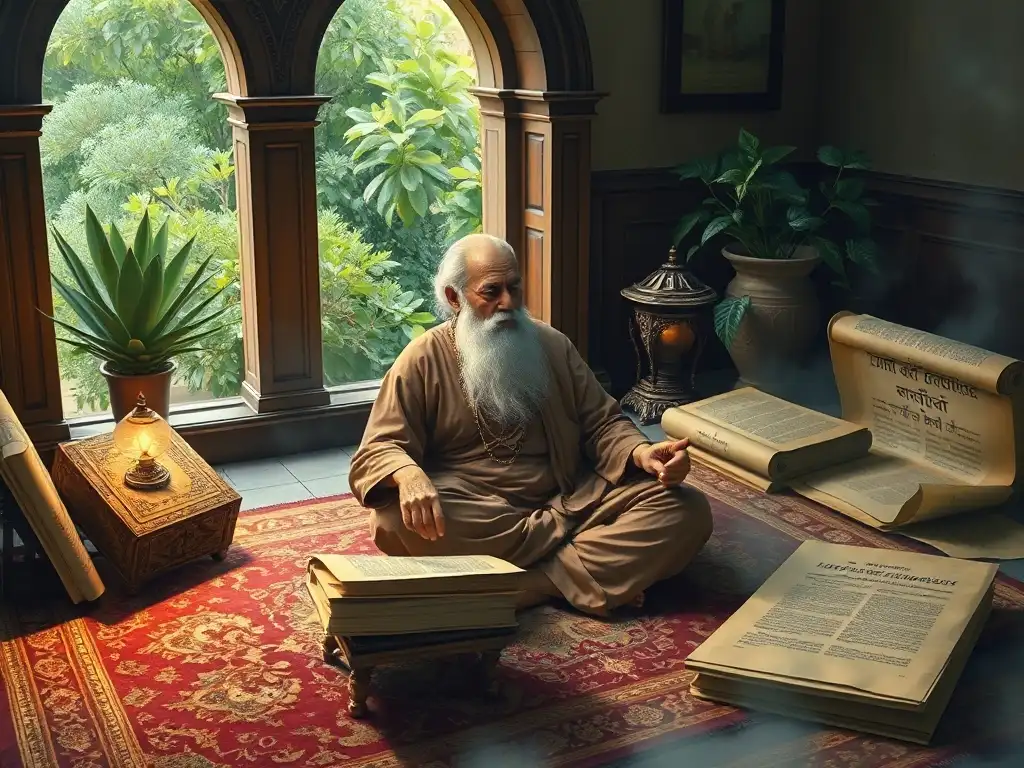
The Vaisheshika school of philosophy, founded by the sage Kanada in the 2nd century BCE, presents a unique framework for understanding the nature of being and reality. This system is primarily concerned with categorizing the world based on its substances and their properties. At its core, Vaisheshika metaphysics posits that all entities can be classified into distinct categories, which include dravya (substance), guna (quality), karma (action), samanya (generality), vishesha (particularity), and abhava (non-existence).
The emphasis on categorization allows for a systematic exploration of reality, highlighting the differences and relationships between various entities. The Vaisheshika perspective is particularly notable for its analysis of dravya, which includes substances like earth, water, fire, air, and ether. Each of these substances is believed to have inherent qualities that define their nature and interaction with one another.
One of the key contributions of Vaisheshika to metaphysical thought is its assertion that the universe is composed of eternal atoms ( anu), which combine in various ways to form the visible world. This atomic theory prefigures modern scientific concepts, illustrating a remarkable depth of understanding of the physical world. The idea that complex forms can arise from the combination of simple, indivisible units reflects a profound insight into the nature of existence.
Comparison with Other Philosophical Schools: Nyaya and Sankhya
The Vaisheshika school is often discussed in conjunction with the Nyaya school, as both share a common interest in epistemology and the nature of reality. However, while Nyaya focuses primarily on logic and the means of obtaining knowledge, Vaisheshika emphasizes categorization and the nature of substances.
In contrast to Vaisheshika's materialistic focus, the Sankhya school introduces a dualistic framework that distinguishes between purusha (consciousness) and prakriti (matter). This dualism leads to a different understanding of reality, where liberation is achieved through knowledge of the distinction between the self and the material world.
While all three schools—Vaisheshika, Nyaya, and Sankhya—contribute to Indian metaphysical thought, they offer distinct approaches that enrich the philosophical landscape. For example, the Nyaya school provides rigorous methods for debate and logic, which can complement the categorizations found in Vaisheshika. Similarly, Sankhya's dualism introduces a layer of complexity to discussions about the nature of being, challenging Vaisheshika's materialistic interpretations.
Impact on Later Indian Philosophical Traditions
The influence of Vaisheshika metaphysics extends beyond its immediate context, shaping later Indian philosophical traditions. Its emphasis on categorization and the nature of being can be seen in the development of later schools, such as the Advaita Vedanta, which incorporates elements of both substance and consciousness in its metaphysical framework.
Moreover, the integration of Vaisheshika principles into Buddhist philosophy is another testament to its enduring impact. The Buddhist concept of dharmas, which can be understood as phenomena or entities, echoes the Vaisheshika categorization of substances and qualities. This cross-pollination of ideas illustrates how Vaisheshika metaphysics has contributed to a broader understanding of reality in Indian philosophy.
Vaisheshika’s contribution to metaphysics not only laid the groundwork for subsequent philosophical inquiries but also fostered a dialogue among various schools of thought. Its systematic approach to understanding the nature of being continues to resonate in contemporary discussions of philosophy and metaphysics in India.
Vaisheshika Metaphysics and Nature

Understanding Reality through Vaisheshika’s Lens
The Vaisheshika school of thought, founded by the sage Kanada in ancient India, offers a profound exploration of metaphysics, centering on the nature of reality. At its core, Vaisheshika metaphysics emphasizes atomism, proposing that all material substances in the universe are composed of indivisible particles called anu (atoms). This atomic theory laid the groundwork for understanding the physical world, asserting that the properties of objects can be traced back to their atomic composition.
Vaisheshika categorizes reality into nine fundamental substances, known as padarthas, which include:
- Dravya (substance)
- Guna (quality)
- Karma (action)
- Samanya (universality)
- Vishesha (particularity)
- Samavaya (inherence)
- Abhava (non-existence)
- Prakriti (nature)
- Kaal (time)
Among these, dravya is considered the most critical, as it encapsulates the essence of all material entities. According to Vaisheshika philosophy, understanding the nature of these substances and their interactions is essential for grasping the complexities of existence. This framework not only elucidates physical phenomena but also offers insights into the metaphysical underpinnings of reality, encouraging a systematic investigation of both the material and immaterial aspects of the universe.
The Relationship Between Being and Non-Being
In Vaisheshika metaphysics, the concepts of being (sat) and non-being (asat) are intricately linked. The school posits that being represents the existence of entities, while non-being signifies the absence or negation of those entities. This duality is crucial for understanding the nature of existence and the transition between different states of being.
The interplay between being and non-being can be summarized as follows:
- Existence of Entities: The Vaisheshika system asserts that all entities possess a unique identity and attributes, contributing to their individual existence.
- Transitional States: The philosophy acknowledges that entities can undergo transformations, leading to states of existence and non-existence. For instance, a substance may cease to exist in one form while emerging in another (e.g., the transformation of wood into ash).
- Perception and Reality: Vaisheshika emphasizes the role of perception in discerning being from non-being. Knowledge arises from the interaction between the observer and the observed, allowing us to navigate the complexities of existence.
This nuanced understanding encourages a deeper contemplation of how entities coexist and interact within the broader framework of reality, ultimately shaping our perception of the natural world.
Implications of Vaisheshika Metaphysics on Nature and Existence
The implications of Vaisheshika metaphysics extend far beyond mere theoretical discourse; they profoundly influence our understanding of nature and existence. By establishing a framework that categorizes and explains the components of reality, Vaisheshika philosophy invites us to reconsider our relationship with the world around us.
- Scientific Inquiry: The emphasis on atomic theory and the systematic classification of substances laid early foundations for scientific exploration. Modern physics reflects many principles found in Vaisheshika, especially in its atomic and materialistic perspectives.
- Ethical Considerations: The recognition of the interconnectedness of all entities leads to ethical reflections on nature. Understanding that all beings possess inherent qualities fosters a sense of responsibility towards the environment and living creatures.
- Philosophical Dialogue: The discourse surrounding being and non-being encourages ongoing philosophical debate, influencing later schools of thought, including Advaita Vedanta and Buddhism, which engage with similar themes of existence and perception.
Vaisheshika metaphysics offers a sophisticated lens through which we can explore the nature of being, the dynamics of existence, and our place within the natural world. Its contributions not only enrich philosophical inquiry but also resonate with contemporary understandings of reality, demonstrating the enduring relevance of ancient Indian thought.
Conclusion: The Legacy of Vaisheshika in Metaphysics

The Vaisheshika school of thought, founded by the sage Kanada, has left an indelible mark on the landscape of Indian philosophy, particularly in the realm of metaphysics. This tradition's systematic approach to categorizing and understanding the nature of reality has influenced not only philosophical discourse in ancient India but also laid foundational concepts that resonate through various philosophical schools and modern thought.
The legacy of Vaisheshika metaphysics rests on its emphasis on the categorization of substances and the exploration of their qualities and relations. By positing that the universe is made up of individual substances (dravyas), qualities (guna), and actions (karma), the Vaisheshika school provided a structured framework that sought to explain the complexities of existence. This meticulous classification enabled philosophers to engage in deeper inquiries into the nature of being, causation, and the interconnectedness of all things.
Summary of Contributions to the Understanding of Being
Vaisheshika metaphysics significantly advanced the understanding of being through several key contributions:
-
Categorization of Reality: The Vaisheshika system identifies seven categories (padarthas) of reality:
- Substance (Dravya): The fundamental entities that exist.
- Quality (Guna): The attributes or characteristics of substances.
- Action (Karma): The activities or processes that substances undergo.
- General (Samanya): The universal characteristics shared by different substances.
- Particularity (Vishesha): The uniqueness of individual substances.
- Inherence (Samavaya): The relationship between substances and their qualities.
- Non-existence (Abhava): The absence of a substance or quality.
This framework allows for a nuanced discussion about the nature of existence, emphasizing both unity and diversity within the universe.
-
Causation and Change: Vaisheshika's exploration of causation is pivotal in understanding how substances interact and transform. The concept of anupravesha, or the entry of a new quality into a substance, illustrates the dynamic nature of being. This perspective on change and causation has implications for metaphysical inquiries into the nature of reality and existence.
-
Atomism: The Vaisheshika school is renowned for its early formulation of atomism, proposing that all physical objects are composed of indivisible particles (paramanu). This notion prefigured modern atomic theory and underscores a materialistic interpretation of being, where the atomic structure serves as the foundation for all existence.
-
Realism: Vaisheshika's commitment to realism, asserting that substances exist independently of perception, challenges idealistic interpretations of reality. This philosophical stance has sparked extensive debates regarding the relationship between mind and matter, further enriching metaphysical discourse.
Relevance of Vaisheshika Metaphysics Today
The relevance of Vaisheshika metaphysics extends beyond its historical context, influencing contemporary philosophical and scientific discussions. Key areas of impact include:
- Philosophy of Science: The atomistic theory developed by Vaisheshika resonates with modern scientific paradigms, particularly in physics and chemistry, where the nature of matter and its interactions are critical topics of study. The principles of causation and change are also foundational in scientific inquiry, making Vaisheshika's insights pertinent today.
- Metaphysical Debates: The discussions surrounding the nature of being, substance, and existence initiated by Vaisheshika continue to inform contemporary metaphysical debates. Philosophers today engage with these concepts, exploring their implications for understanding reality in an increasingly complex and interconnected world.
- Interdisciplinary Dialogue: Vaisheshika metaphysics encourages dialogue between philosophy, science, and spirituality. Its insights on the nature of existence promote a holistic understanding that can bridge gaps between various fields of study, fostering a comprehensive approach to understanding the universe.
Vaisheshika metaphysics not only shaped ancient Indian thought but continues to influence contemporary discussions on the nature of being. Its structured approach to categorization, causation, and the material composition of reality provides a rich foundation for ongoing philosophical exploration. The legacy of Vaisheshika endures, inviting future generations to engage with its profound insights into the essence of existence.
Frequently Asked Questions
What is Vaisheshika metaphysics?
Vaisheshika metaphysics is a school of Indian philosophy that focuses on understanding the nature of reality and the fundamental substances that constitute the universe.
How does Vaisheshika differ from other schools of Indian philosophy?
Unlike other schools, Vaisheshika emphasizes a realist approach, asserting that all objects are made of atoms and their properties can be analyzed through logical reasoning.
What are the key contributions of Vaisheshika to the understanding of nature?
Vaisheshika's contributions lie in its detailed categorization of substances, their qualities, and the relationship between them, which enhances our comprehension of the physical world.
Who was the founder of Vaisheshika philosophy?
The founder of Vaisheshika philosophy is Kanada, who articulated the principles of this school around the 2nd century BCE, laying the groundwork for its metaphysical inquiries.
How does Vaisheshika influence modern metaphysics?
Vaisheshika's concepts of atomism and the nature of substances have influenced contemporary discussions in metaphysics, particularly in areas concerning material composition and existence.
Final Reflection: Embracing the Depths of Vaisheshika Metaphysics
In an era where the quest for understanding the nature of being is more pertinent than ever, the insights offered by Vaisheshika metaphysics resonate profoundly with contemporary philosophical inquiries. The exploration of categories of existence, substance, and the interplay between the material and immaterial realms provides a framework that not only enriches our comprehension of reality but also challenges us to rethink our place within it. The timeless wisdom of Vaisheshika invites us to delve deeper into the essence of existence, urging us to question and reflect upon what it truly means to be.
The influence of Vaisheshika metaphysics extends far beyond its historical context, shaping the cultural and intellectual landscape of both Eastern and Western thought. As we navigate the complexities of modern life, the principles of this ancient philosophy remind us of the interconnectedness of all things. The emphasis on categorization and the nature of substances encourages a holistic view of the universe, fostering a sense of unity amidst diversity. The greatest discovery of my generation is that a human being can alter his life by altering his attitude.
— William James. This quote encapsulates the transformative potential inherent in understanding our existence through the lens of Vaisheshika, highlighting the power of perspective in shaping our reality.
As we reflect on the teachings of Vaisheshika, I invite you to consider how these principles can be woven into the fabric of your own life. Take a moment to ponder your relationship with the nature of being and the substances that compose your reality. How can you apply the insights gained from this ancient philosophy to foster a deeper understanding of yourself and the world around you? Embrace this opportunity for introspection and growth, allowing the wisdom of Vaisheshika metaphysics to guide you toward a more profound appreciation of existence and your role within it.
Unlock the Mysteries of Being: Take Action Today!
Thank you for exploring the fascinating world of Vaisheshika metaphysics with us! We hope you gained valuable insights into the nature of existence and the profound contributions of Ancient Indian thought. Now, let's dive deeper into this subject and enrich your understanding!
Here are some actionable steps to expand your journey:
- Reflect on your understanding of existence and jot down your thoughts inspired by Vaisheshika's principles in a journal.
- Join a discussion group or online forum focused on metaphysics to share ideas and learn from others who are interested in the topic.
- Share this article with friends or on social media platforms to spark conversations about the foundations of being and their relevance in contemporary society.
What insights about the nature of existence have you uncovered that prompt you to rethink your own beliefs? Let's discuss!