
From Zero to Infinity: The Revolutionary Concept of Zero in Ancient India


Welcome to Ancient India History, where we embark on a journey through the captivating tapestry of India's past. Dive into our featured article, “From Zero to Infinity: The Revolutionary Concept of Zero in Ancient India,” and discover how this remarkable numeral not only transformed mathematics but also laid the foundation for modern science.
As we unravel the significance of the history of zero in India, you'll uncover the brilliance of ancient Indian civilizations and their profound contributions to the world. Prepare to be intrigued and inspired as you explore the depths of knowledge that continue to shape our understanding today!

Introduction to the History of Zero in India
The concept of zero is one of the most profound and revolutionary ideas in mathematics, fundamentally altering how we approach calculations, measurements, and the very nature of numbers themselves. While many cultures have contributed to the development of numerical systems, the history of zero in India stands out as a pivotal moment in the evolution of mathematics.
Ancient Indian scholars not only conceptualized zero as a number but also integrated it into a positional decimal system, paving the way for modern mathematics. This article delves into the rich history, significance, and contributions of ancient Indian civilizations in the realm of mathematics, particularly focusing on the groundbreaking concept of zero.
Overview of Zero's Significance in Mathematics
Zero serves multiple critical functions in mathematics, acting as a placeholder in positional numeral systems while representing the absence of quantity. Its introduction allowed for:
- Simplified calculations: By enabling a systematic approach to addition and subtraction.
- Representation of large numbers: Facilitating calculations that involve significant figures.
- Development of algebra: Providing a foundation for representing variables and unknowns.
The implications of zero extend beyond mathematics, influencing fields such as computer science and economics, thus underscoring its monumental importance.
The Role of Ancient Indian Civilization in Mathematical Innovations
Ancient Indian civilization laid the groundwork for numerous mathematical innovations, with scholars from this era making significant strides in various domains, including:
- Arithmetic: Establishing early methods of calculations.
- Geometry: Contributing to land measurement and architectural designs.
- Astronomy: Utilizing mathematical principles to predict celestial events.
These contributions were instrumental in shaping the global understanding of mathematics, particularly through the introduction of zero, which was recorded in texts such as the Bakhshali Manuscript and the works of renowned mathematicians like Aryabhata and Brahmagupta.
The Origins of Zero in Ancient India
The origins of zero can be traced back to ancient Indian numeral systems, where it evolved from the need to represent nothingness in a meaningful way. This section explores the early developments leading to the formalization of zero.
Early Numerical Systems in India
Before the formal concept of zero, ancient Indian civilizations utilized various numerical systems, including:
- The Indus Valley Civilization: With symbols that indicated counting methods.
- Brahmi and Kharosthi scripts: Early scripts that included symbols representing numbers.
These systems laid the foundation for the eventual emergence of zero as a distinct numeral.
Historical Context: The Need for a Concept of Zero
The necessity for a concept of zero arose from practical challenges faced by ancient mathematicians in various contexts, including:
- Trade: The need for accurate accounting methods in commerce.
- Astronomy: Calculating celestial movements required precision that zero could provide.
- Agriculture: Managing agricultural yields and land measurements necessitated an effective numerical system.
This historical backdrop highlights how the history of zero in India is not just an abstract concept but a response to the practical needs of civilization, ultimately leading to one of the most significant developments in mathematics.
The Evolution of Zero: Key Contributions
The evolution of zero as a concept and a numeral has profoundly influenced mathematics, science, and technology. In ancient India, the notion of zero emerged not merely as a placeholder but as a distinct representation of absence, paving the way for advanced mathematical operations and calculations. This evolution was marked by significant contributions from various mathematicians and scholars who recognized the necessity of zero in the numeral system.
Historically, the earliest recorded use of zero can be traced back to the 5th century CE, though its conceptual roots likely extend further into the past. The development of zero was instrumental in transforming the numeral systems used in ancient cultures, allowing for more complex mathematics, such as arithmetic, algebra, and calculus. This section highlights the key contributions that shaped the evolution of zero in ancient India.
The Introduction of the Symbol for Zero
The introduction of the symbol for zero is a landmark event in the history of mathematics. The earliest known symbol for zero, a dot or a small circle, appeared in the Indian numeral system around the 7th century CE. This symbol represented the idea of 'nothingness' or 'void', which was revolutionary at the time, as many civilizations struggled with the concept of absence in numerical terms.
The use of this symbol allowed for the clear distinction between numbers and provided a means to perform calculations without ambiguity. Early inscriptions found in the Bakhshali Manuscript and other ancient texts demonstrate how the symbol for zero was utilized in various mathematical contexts, facilitating the development of arithmetic operations.
The acceptance of zero as a numeral significantly impacted the mathematical discourse of the time, leading to the establishment of a positional decimal system that is foundational in modern mathematics. The simplicity and efficiency of this system exemplified the ingenuity of ancient Indian mathematicians, who recognized the need for a comprehensive numerical representation.
Influential Mathematicians in Ancient India
Several mathematicians played crucial roles in the development and formalization of the concept of zero in ancient India. Among them, Aryabhata, Brahmagupta, and Bhaskara stand out for their substantial contributions to mathematics.
- Aryabhata (476–550 CE) is often credited with introducing the concept of zero in the context of astronomical calculations. His work, Aryabhatiya, emphasized the importance of zero in calculations, particularly in the place-value system.
- Brahmagupta (598–668 CE), another notable mathematician, further developed the concept of zero in his seminal work Brahmasphutasiddhanta. He defined zero as the result of subtracting a number from itself and provided rules for arithmetic operations involving zero, which were groundbreaking for his time.
- Bhaskara II (1114–1185 CE), also known as Bhaskara the Great, expanded on the earlier works and highlighted the significance of zero in algebra. His treatises showcased the practical applications of zero in solving quadratic equations and other mathematical problems.
These mathematicians, along with others, established a framework for understanding and using zero, which was integral to the advancement of mathematics in ancient India and its eventual spread to other cultures.
The Concept of Zero in Ancient Texts
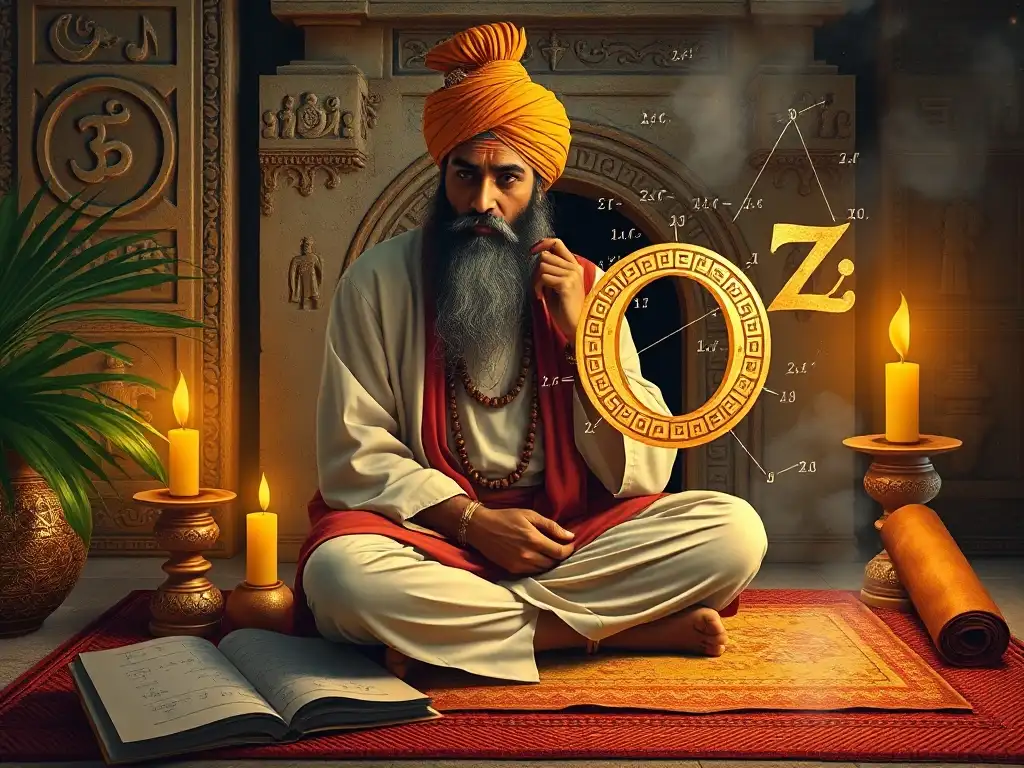
The concept of zero is extensively documented in ancient Indian texts, illustrating its importance in mathematical thought and practice. These writings not only provided insights into numerical systems but also demonstrated how zero was integrated into various mathematical operations.
Examination of the Bakhshali Manuscript
The Bakhshali Manuscript, dated to the 3rd or 4th century CE, is one of the earliest known texts that explicitly records the use of zero. This ancient manuscript, discovered in Bakhshali, Pakistan, contains mathematical problems and solutions that employ the symbol for zero in various contexts.
In this manuscript, zero is represented as a dot, and its use allows for the demonstration of arithmetic operations, including addition, subtraction, and multiplication. The presence of zero as a placeholder in the positional numeral system indicates a sophisticated understanding of mathematics at the time. Scholars believe that the Bakhshali Manuscript served not only as a mathematical guide but also as a teaching tool that contributed to the dissemination of mathematical knowledge in ancient India.
Zero in the Works of Brahmagupta and Others
Brahmagupta's Brahmasphutasiddhanta is another pivotal text in the history of zero. In this comprehensive work, Brahmagupta provided detailed explanations and rules regarding the use of zero in calculations. He articulated the operations involving zero, such as:
- Adding zero to a number yields the number itself.
- Subtracting a number from itself results in zero.
- The product of any number and zero is zero.
Brahmagupta’s insights not only clarified the role of zero in arithmetic but also laid the groundwork for future mathematical explorations. Other mathematicians, such as Bhaskara, built on these foundational ideas, further embedding zero into the mathematical framework of the time.
The documentation of zero in these ancient texts underscores its significance in developing mathematical thought in ancient India, influencing both contemporary and future civilizations in their understanding of numbers and calculations.
Zero as a Philosophical Concept
Zero is not merely a numerical figure; it embodies profound philosophical implications that have shaped Indian thought for centuries. In ancient Indian philosophy, zero represents the concept of śūnyatā, or emptiness, which forms a crucial part of various philosophical traditions, including Buddhism and Jainism. This philosophical discourse around zero emphasizes the notion that nothingness is as significant as existence itself. The paradox of zero illustrates how the absence of value can be just as crucial in understanding the universe and existence as its presence.
Philosophers in ancient India pondered the idea that the universe is a continuum of existence and non-existence, where zero serves as a bridge between the two. This duality encourages deeper reflection on the nature of reality and perception, illustrating that what is perceived as void may hold immense significance and potential. Thus, the philosophical interpretation of zero in ancient Indian culture transcends mere arithmetic, inviting contemplation about the nature of life, reality, and the cosmos.
The Intersection of Mathematics and Philosophy in Ancient India
The relationship between mathematics and philosophy in ancient India is intricate and deeply intertwined. Scholars like Brahmagupta and Aryabhata not only contributed significantly to mathematical concepts but also integrated philosophical ideas into their work. Mathematics was viewed as a pathway to understanding the cosmos, where numerical values and calculations were seen as manifestations of deeper truths.
The development of zero as a number is a prime example of this intersection. In ancient texts, mathematics was not just about solving problems but also about exploring the nature of existence and the universe. This philosophical lens helped ancient mathematicians perceive zero not just as a placeholder but as a concept that could represent the infinite possibilities within the void. The synthesis of mathematical rigor and philosophical inquiry in ancient India laid the foundations for future explorations in both fields, influencing generations of thinkers across the globe.
Zero in Indian Philosophy: Emptiness and Existence
In Indian philosophy, the concept of zero extends beyond mathematics to encompass broader existential themes. The Buddhist concept of śūnyatā (emptiness) reflects the idea that all phenomena are devoid of inherent existence. This philosophical stance suggests that what we perceive as reality is interdependent, transient, and often an illusion. Zero, in this context, symbolizes the absence of a fixed self or essence, promoting a mindset that encourages flexibility and adaptability in thought.
Similarly, in Jain philosophy, the notion of zero resonates with the idea of non-attachment and the transient nature of existence. Jain texts emphasize the importance of understanding the void, which parallels the mathematical abstraction of zero. This philosophical approach encourages individuals to recognize that the essence of existence is often found in the interplay between presence and absence, ultimately fostering a more profound understanding of the self and the universe.
The Spread of Zero Beyond India
The revolutionary concept of zero did not remain confined to the borders of ancient India; it embarked on a remarkable journey across cultures and civilizations. This transmission of knowledge significantly impacted mathematical development in various regions, illustrating the importance of cultural exchange and intellectual collaboration.
Influence on Other Civilizations and Cultures
As the concept of zero spread, it influenced numerous cultures and civilizations, notably within the Islamic world and later in Europe. The translation of ancient Indian texts into Arabic during the medieval period played a critical role in disseminating mathematical knowledge, including the use of zero. Prominent scholars like Al-Khwarizmi incorporated these concepts into their works, facilitating a broader understanding of zero's significance in arithmetic and algebra.
The acceptance of zero in Islamic mathematics led to advancements in numerical systems, allowing for more complex calculations and the development of algebra. This evolution marked a pivotal moment in the history of mathematics, as zero transitioned from an abstract philosophical idea to a practical tool for computation and problem-solving across various cultures.
The Transmission of Zero to the Islamic Golden Age
The Islamic Golden Age, spanning roughly from the 8th to the 14th century, was a period of unparalleled intellectual flourishing, during which the concept of zero gained prominence. Following the translation of Indian mathematical texts into Arabic, scholars such as Al-Khwarizmi and Al-Kindi recognized the utility of zero in enhancing mathematical operations.
The introduction of zero into the Islamic numerical system allowed for more sophisticated mathematical methods, including the development of algorithms that revolutionized calculations. This period also saw the establishment of mathematical institutes and libraries, where scholars from diverse backgrounds gathered to exchange ideas. The transmission of zero during this era not only enriched Islamic mathematics but also laid the groundwork for the eventual introduction of these concepts to Europe, marking an essential milestone in the global history of mathematics.
The Legacy of Zero in Modern Mathematics
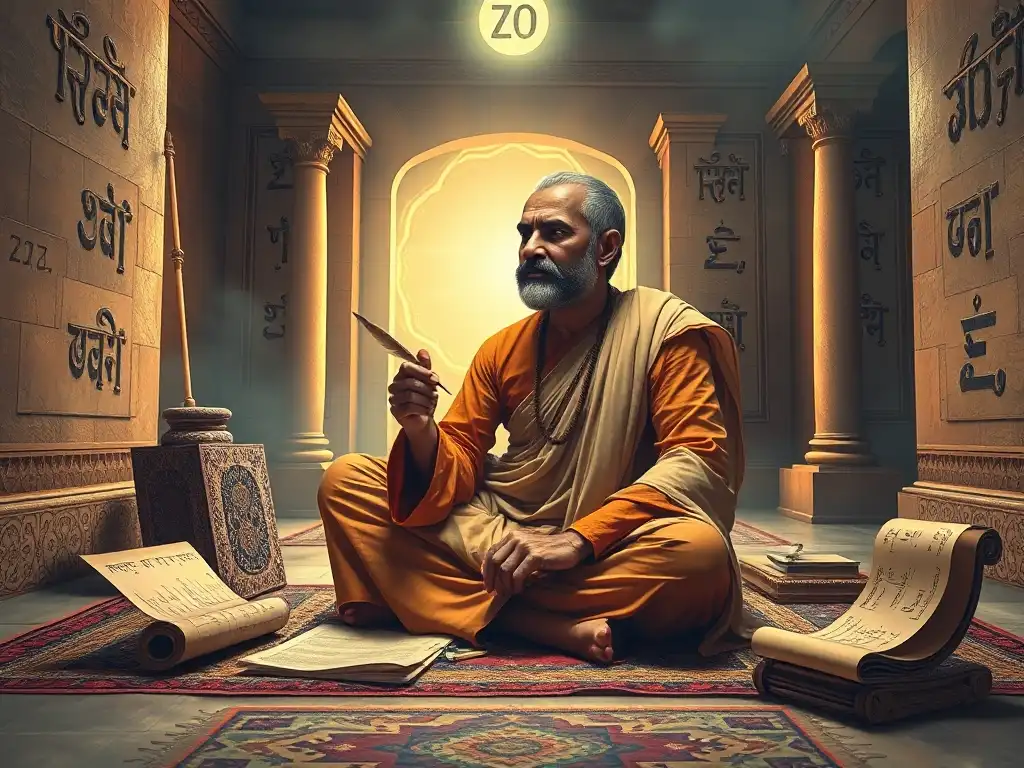
The concept of zero, as developed in ancient India, has left an indelible mark on modern mathematics. It serves not only as a numerical placeholder but also as a vital element in various mathematical operations. The introduction of zero revolutionized computation, allowing for the development of complex mathematical systems that form the backbone of contemporary mathematics.
In today's mathematical framework, zero is integral to the number line, enabling a clear distinction between positive and negative values. Its role as an additive identity, where any number plus zero equals the number itself, is foundational in algebra. Furthermore, zero's incorporation into calculus, particularly in limit processes, has advanced our understanding of mathematical functions and their behaviors.
Moreover, the legacy of zero extends beyond basic arithmetic. It has influenced various branches of mathematics, including algebra, geometry, and even computer science, where binary systems rely heavily on the concept of zero. Thus, the historical journey of zero from ancient India to its current applications illustrates its unparalleled importance in shaping modern mathematical thought.
How Ancient Indian Concepts Shaped Contemporary Mathematics
The ancient Indian mathematicians, particularly during the Gupta period, laid the groundwork for the modern understanding of zero. Prominent scholars like Aryabhata and Brahmagupta were pivotal in formalizing the concept, which was not merely a placeholder but also a number in its own right. They introduced rules for arithmetic operations involving zero, significantly influencing subsequent mathematical developments.
The Indian numeral system, which included zero, was transmitted to the Islamic world and later to Europe. This transmission played a crucial role in the eventual adoption of the decimal system in Western mathematics. The clarity and efficiency that zero provided in calculations allowed for more sophisticated mathematical operations, leading to advancements in algebra and geometry.
This historical context highlights how ancient Indian concepts of zero not only defined a numerical value but also transformed mathematical practices globally. As a result, the methodologies and principles established by these early mathematicians continue to resonate within contemporary mathematical education and practice.
The Importance of Zero in Current Mathematical Systems
Today, zero is fundamental to various mathematical systems. Its presence is critical in fields such as algebra, where it serves to define equations and functions. For instance, the notion of roots and solutions to equations often hinges on the concept of setting a function equal to zero to find its intercepts.
In computer programming and digital systems, zero is equally vital. In binary code, zero represents an off state, while one represents an on state, which is the foundation for all modern computing technologies. The ability to represent complex data through binary systems is a testament to the revolutionary impact of zero.
Moreover, zero facilitates the exploration of mathematical concepts such as limits, derivatives, and integrals in calculus. It allows mathematicians to understand continuity and changes in functions, thereby enabling advancements in physics, engineering, and economics. The importance of zero in these contexts underscores its role as a cornerstone of modern mathematics.
Conclusion: The Enduring Impact of the History of Zero in India
The history of zero in India illustrates a remarkable journey of intellectual achievement that has had lasting implications for mathematics across the globe. The ancient Indian conception of zero as both a number and a concept paved the way for numerous mathematical advancements, influencing generations of mathematicians and scholars.
Reflection on the Revolutionary Concept of Zero
Reflecting on the revolutionary concept of zero invites appreciation for the intellectual spirit of ancient Indian civilization. This breakthrough not only enhanced mathematical computations but also fostered a philosophical understanding of emptiness and potential. The duality of zero—representing both nothingness and a powerful mathematical tool—encapsulates the complexity of existence itself.
As we delve into the historical significance of zero, it becomes clear that it represents more than just a numerical figure; it embodies a significant cultural and intellectual legacy that continues to inspire mathematicians and thinkers worldwide.
Zero's Place in the Narrative of Mathematical History
Zero occupies a pivotal position in the narrative of mathematical history, serving as a bridge between ancient wisdom and modern practices. Its introduction marked a paradigm shift that enabled the transition from rudimentary counting systems to sophisticated mathematical frameworks. The journey of zero—from ancient India to its current status—highlights the interconnectedness of cultures in shaping mathematical thought.
The history of zero in India is not merely a tale of a number; it is a testament to human innovation and the quest for knowledge. The impact of this singular concept resonates throughout history, reminding us of the profound contributions of ancient Indian civilization to the world of mathematics.
Further Reading and Resources on the History of Zero in India
The concept of zero is not only a fundamental aspect of mathematics but also a profound cultural achievement that shaped the course of mathematical thought. For those interested in delving deeper into the history of zero in India, there are several valuable resources available. These include books, articles, and online platforms that provide comprehensive insights into the development and significance of zero in ancient Indian mathematics.
Suggested Books and Articles
-
"The History of Mathematics: A Brief Course" by Roger L. Cooke
This book offers an overview of mathematical developments across cultures, with a dedicated section on Indian mathematics that highlights the significance of the numeral system, including zero.
-
"Mathematics in India" by Kim Plofker
Plofker's work is a detailed examination of mathematical practices in India, covering topics such as arithmetic, algebra, and the pivotal role of zero in these systems.
-
"Zero: The Biography of a Dangerous Idea" by Charles Seife
This engaging narrative explores the history of zero, including its origins in India and its journey through various cultures. It provides context and depth to the understanding of this revolutionary concept.
-
"A History of Indian Literature in Sanskrit" by M. R. Kale
Kale’s book discusses the literary aspects of Indian mathematics, including the historical texts that feature the concept of zero and its mathematical significance.
-
"The Mathematics of India: A Historical Perspective"
This compilation of articles provides insights from various authors on the contributions of Indian mathematicians, with specific emphasis on the emergence of zero.
Online Resources for Exploring Ancient Indian Mathematics
- The MacTutor History of Mathematics Archive: This online resource features a detailed entry on Indian mathematics, including the emergence and significance of zero in ancient texts.
- The Digital Library of India: A vast repository that includes scanned texts, manuscripts, and literature related to ancient Indian mathematics, providing access to primary sources discussing the concept of zero.
- NASA’s Mathematics Education Resource: This educational platform offers materials related to the history of mathematics, including sections dedicated to Indian contributions and the concept of zero.
- The Institute of Mathematical Sciences (IMSc): IMSc provides lectures, research articles, and workshops that delve into the mathematical heritage of India, including studies focused on the role of zero.
- YouTube Channels: Various educational channels focus on the history of mathematics. Channels like "Numberphile" and "TED-Ed" often feature segments on the significance of zero, drawing from Indian history.
These resources collectively provide a rich tapestry of information and perspectives on the history of zero in India, allowing readers to appreciate its profound impact on mathematics and beyond.
- Introduction to the History of Zero in India
- The Origins of Zero in Ancient India
- The Evolution of Zero: Key Contributions
- The Concept of Zero in Ancient Texts
- Zero as a Philosophical Concept
- The Spread of Zero Beyond India
- The Legacy of Zero in Modern Mathematics
- Conclusion: The Enduring Impact of the History of Zero in India
- Further Reading and Resources on the History of Zero in India
- What is the significance of the history of zero in India?
- How did ancient Indian mathematicians contribute to the concept of zero?
- When was zero first documented in ancient Indian texts?
- What impact did the concept of zero have on global mathematics?
- Are there any other notable contributions from ancient Indian civilizations?
Frequently Asked Questions
What is the significance of the history of zero in India?
The history of zero in India is crucial as it represents a revolutionary concept that transformed mathematics and paved the way for advanced calculations and scientific discoveries.
How did ancient Indian mathematicians contribute to the concept of zero?
Ancient Indian mathematicians, particularly during the Gupta Empire, developed the symbol for zero and established its mathematical principles, enabling complex calculations and the decimal system.
When was zero first documented in ancient Indian texts?
Zero was first documented in the 5th century CE in the work of Aryabhata, who recognized its importance in mathematics, leading to further advancements in the history of mathematics.
What impact did the concept of zero have on global mathematics?
The introduction of zero from India to the Islamic world and then to Europe greatly advanced mathematical practices, influencing algebra, calculus, and the overall development of science.
Are there any other notable contributions from ancient Indian civilizations?
Yes, ancient Indian civilizations made significant contributions in various fields such as astronomy, medicine, and architecture, showcasing their rich cultural heritage and innovations.
Final Reflection: The Enduring Legacy of Zero in Ancient India
The revolutionary concept of zero, originating from ancient India, continues to shape our understanding of mathematics and the world today. The journey from a mere placeholder to a fundamental building block of modern mathematics underscores the profound impact that this concept has had on various fields, from science to technology. As we navigate an increasingly complex digital landscape, the significance of zero is more relevant than ever, reminding us that even the smallest ideas can lead to monumental changes.
The history of zero in India is not just a tale of numbers; it is a testament to human ingenuity and the quest for knowledge. This concept has transcended time and culture, influencing countless civilizations and becoming a cornerstone of mathematical thought worldwide. As we reflect on this legacy, we are reminded of the words of the mathematician Carl Friedrich Gauss: Mathematics is the queen of the sciences and number theory is its crown jewel.
The journey of zero exemplifies how a single idea can illuminate the path for future generations, inspiring innovation and discovery.
As we contemplate the lessons from the history of zero in India, let us embrace the spirit of curiosity and exploration that fueled this remarkable journey. I invite you to reflect on the power of ideas, no matter how small, and consider how you can apply this understanding in your own life. Whether it’s in your personal endeavors, professional pursuits, or the way you approach challenges, remember that every great achievement starts with a single thought—sometimes, even a zero.
Unleash the Power of Zero in Your Life!
Thank you for exploring the remarkable journey of zero's invention in ancient India! You've unlocked the secrets of this revolutionary concept that reshaped mathematics and our understanding of the universe. Now, it's time to put that inspiration into action!
Here are a few steps you can take to deepen your connection with this profound idea:
- Embrace the concept of ‘nothingness’ in your daily decisions: Practice mindfulness by appreciating the power of emptiness and how it can enhance your life.
- Share your newfound knowledge: Engage in discussions about the significance of zero with friends or on social media to spark interest in the fascinating history of mathematics.
- Dive deeper into ancient innovations: Explore other remarkable discoveries from history and their impact on modern society, and share your findings with others!
What amazing possibilities do you think a better understanding of ‘zero’ can unlock in your life and in society at large?