
Gupta Astronomy: Predicting Eclipses and Their Cultural Significance


Welcome to Ancient India History, where we embark on a journey through the rich tapestry of ancient Indian civilizations. In this exploration, we shine a light on the Gupta Empire's remarkable advancements in astronomy, particularly their ability to predict eclipses and the profound cultural significance these celestial events held. Prepare to uncover the intricate connections between science and spirituality as we delve into the fascinating world of Gupta astronomy. Join us as we unravel the mysteries and marvels of a civilization that laid the groundwork for future generations. Ready to dive deeper? Discover the wonders that await!
- Gupta Empire Astronomy: Understanding Eclipses and Their Cultural Significance
-
Frequently Asked Questions
- What were the main contributions of the Gupta Empire to astronomy?
- How did ancient Indian astronomers predict eclipses?
- What cultural significance did eclipses hold in the Gupta Empire?
- Who were some prominent astronomers of the Gupta Empire?
- How does the study of Gupta astronomy relate to modern science?
- Final Reflection: The Enduring Legacy of Gupta Astronomy and Eclipses
- Unveil the Wonders of Gupta Astronomy Today!
Gupta Empire Astronomy: Understanding Eclipses and Their Cultural Significance
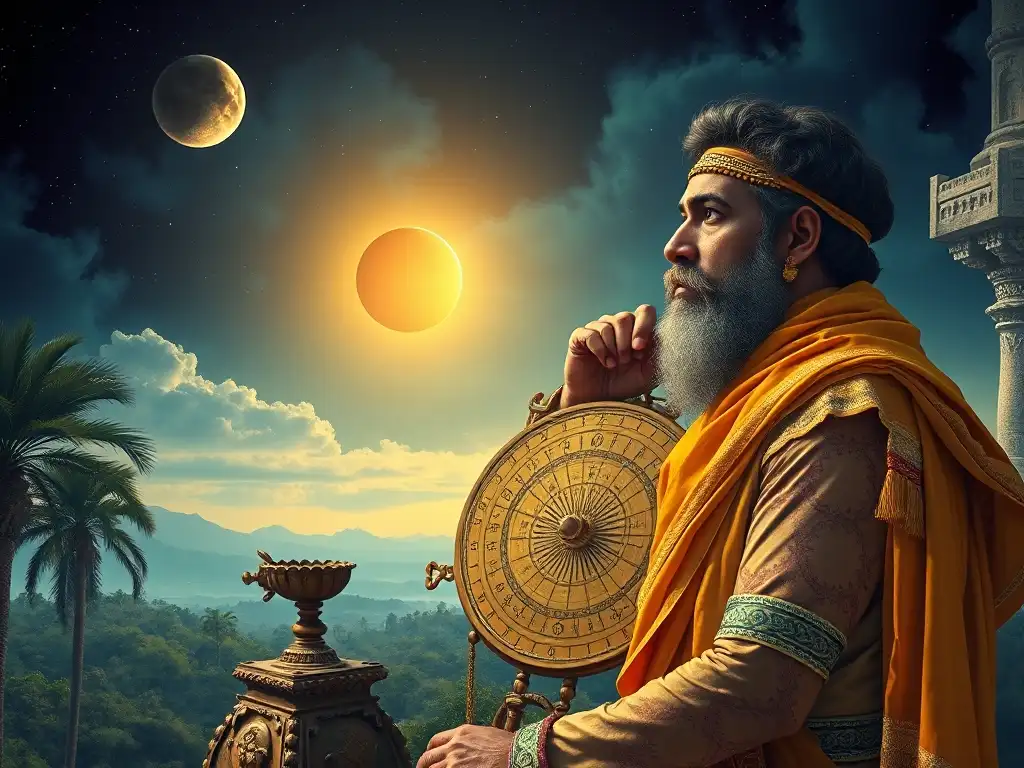
The Gupta Empire, often hailed as the golden age of ancient India, made remarkable strides in various fields, including science and mathematics. Among these, astronomy stands out as a significant area of study, where scholars meticulously observed celestial phenomena and developed sophisticated methods for predicting events such as eclipses.
This article explores the intricate relationship between Gupta astronomy and eclipses, highlighting the scientific achievements of this era and their profound cultural implications. By delving into the methodologies of Gupta astronomers and their contributions to the understanding of eclipses, we will uncover the vital role astronomy played in the lives of ancient Indians and how it shaped their worldview.
Introduction to Gupta Empire Astronomy
Overview of the Gupta Empire's Contributions to Science
The Gupta Empire (approximately 320 to 550 CE) was a period marked by a flourishing of intellectual and cultural advancements. Scholars such as Aryabhata and Varahamihira emerged during this time, contributing significantly to various scientific disciplines, including mathematics and astronomy. The empire's emphasis on education led to the establishment of centers of learning, where scholars could exchange ideas and conduct research.
The Gupta period saw the formulation of astronomical theories that laid the groundwork for future studies. For instance, Aryabhata's work, the Aryabhatiya, presented revolutionary concepts regarding the heliocentric theory, the rotation of the Earth, and the calculation of the circumference of the Earth. His observations were pivotal in enhancing the understanding of celestial bodies and their movements, which directly influenced the methods used to predict eclipses.
Importance of Astronomy in Ancient Indian Culture
Astronomy in ancient India was not solely a scientific pursuit; it was deeply intertwined with religion, agriculture, and daily life. Celestial events such as eclipses were often associated with divine significance, and their predictions were crucial for determining religious observances and agricultural cycles.
The cultural implications of these astronomical phenomena extended beyond mere observation. Eclipses, for example, were viewed as times of spiritual significance, often associated with mythological events and rituals. The ability to predict such events not only showcased the astronomical prowess of the Gupta scholars but also reinforced their status as learned individuals within society.
The Science of Eclipses in Gupta Astronomy
Definition and Types of Eclipses
Eclipses occur when one celestial body moves into the shadow of another, resulting in a temporary obscuration. There are two primary types of eclipses:
- Solar Eclipse: This occurs when the Moon passes between the Earth and the Sun, blocking the Sun's light either partially or totally.
- Lunar Eclipse: This occurs when the Earth passes between the Sun and the Moon, causing the Earth’s shadow to fall on the Moon.
Understanding these phenomena was crucial for Gupta astronomers, as they sought to explain and predict their occurrences.
Historical Texts on Eclipses from the Gupta Period
Several texts from the Gupta period detail the knowledge and methods used to study eclipses. One of the most notable works is the Surya Siddhanta, an ancient Indian astronomical treatise that discusses various astronomical calculations and principles, including those related to eclipses.
This text not only provided mathematical formulas for predicting eclipses but also offered insights into the cosmological views of the time, reflecting the integration of scientific inquiry with philosophical thought.
Methods Used by Gupta Astronomers to Predict Eclipses
Gupta astronomers employed a variety of methods to predict eclipses, combining observational astronomy with mathematical calculations. They utilized:
- Geometric Models: To represent the movements of celestial bodies.
- Mathematical Formulas: For calculating the timings and durations of eclipses based on the positions of the Earth, Moon, and Sun.
- Observational Techniques: To refine their predictions through careful monitoring of celestial events.
These methods were revolutionary for their time and laid the groundwork for future advancements in astronomy, not only in India but also in other parts of the world. The precise predictions of eclipses by Gupta astronomers exemplify their profound understanding of celestial mechanics and their commitment to scientific inquiry.
Cultural Significance of Eclipses in the Gupta Empire
Eclipses held profound cultural significance in the Gupta Empire, reflecting the intricate relationship between astronomy, mythology, and daily life. These celestial events were not merely astronomical phenomena; they were deeply interwoven into the fabric of Gupta society, influencing religious practices, agricultural cycles, and social rituals. The occurrences of solar and lunar eclipses were often perceived as omens or signs from the divine, prompting both awe and fear among the populace.
People believed that eclipses could signify the wrath of the gods or the onset of favorable events. Consequently, these events were closely monitored by astronomers and priests alike, who would interpret their meanings and implications for the kingdom. As such, eclipses were not just scientific observations but pivotal moments that shaped the cultural and spiritual landscape of the time.
Eclipses in Hindu Mythology and Beliefs
In Hindu mythology, eclipses are frequently linked to the legends of powerful deities and cosmic battles. One prominent myth involves the demon Rahu, who is said to swallow the sun or the moon during an eclipse, creating a temporary darkening of these celestial bodies. This story illustrates the belief that eclipses represented a cosmic struggle between good and evil forces.
Furthermore, eclipses were regarded as times when the balance of cosmic energies was disrupted, prompting the need for purification rituals. The significance of these myths was not just limited to storytelling; they shaped the spiritual practices of the Gupta people, who performed various rites to appease the deities and mitigate any negative consequences of an eclipse.
Rituals and Celebrations Associated with Eclipses
The Gupta Empire witnessed a range of rituals and celebrations during eclipses, aimed at harnessing the perceived energies of these celestial events. Festivities often included fasting, prayer, and communal gatherings where people would come together in hopes of securing blessings from the gods. Many believed that taking a holy dip in sacred rivers during an eclipse would cleanse them of sins and bring about spiritual renewal.
Additionally, rituals involving offerings to deities were common, as it was thought that such acts could prevent misfortunes associated with eclipses. The culmination of these activities often fostered a sense of unity within communities, as people collectively engaged in practices that underscored their shared cultural and religious values.
The Role of Eclipses in Agricultural Practices and Calendar Systems
Eclipses also played a crucial role in shaping agricultural practices and calendar systems during the Gupta Empire. Farmers observed these celestial events as indicators of seasonal changes, which could signal the optimal times for planting and harvesting crops. The predictive nature of eclipses provided invaluable insights into agricultural cycles, helping to ensure food security for the population.
Moreover, Gupta astronomers meticulously documented eclipses in their calendars, integrating these occurrences into their broader understanding of time and celestial movements. This knowledge not only facilitated agricultural planning but also reinforced the connection between celestial phenomena and daily life, highlighting the importance of astronomy in the governance and sustenance of the empire.
Notable Gupta Astronomers and Their Contributions

The Gupta Empire was home to several eminent astronomers whose contributions significantly advanced the field of astronomy, particularly in eclipse predictions and calculations. Their works laid the groundwork for future astronomical studies and reflected the empire's commitment to scientific inquiry and intellectual exploration.
Aryabhata: Pioneer of Indian Astronomy
Aryabhata, one of the most renowned figures in ancient Indian astronomy, emerged during the Gupta period. His seminal work, the Aryabhatiya, encompasses a range of topics, including arithmetic, algebra, and astronomy. Aryabhata's innovative approach to calculating the timings of eclipses was groundbreaking; he formulated precise methods for predicting both solar and lunar eclipses based on mathematical principles and observations.
His assertion that the Earth rotates on its axis, leading to the apparent movement of celestial bodies, was revolutionary for its time. Aryabhata's contributions not only enhanced the understanding of astronomical events but also established a legacy that influenced subsequent scholars and astronomers in India and beyond.
Varahamihira: Contributions to Eclipse Predictions
Varahamihira was another prominent astronomer of the Gupta Empire, whose extensive work on astrology and astronomy further advanced the understanding of eclipses. He is best known for his text, the Brihat Samhita, which compiled knowledge from various disciplines, including meteorology, geography, and astrology.
In his writings, Varahamihira detailed methods for predicting eclipses and emphasized the importance of observational accuracy. His insights into the alignment of celestial bodies and the phenomena of eclipses contributed to a more sophisticated understanding of these events, reinforcing their significance within Gupta society and culture.
Brahmagupta: Innovations in Astronomical Calculations
Brahmagupta, a key figure in the study of astronomy during the Gupta period, is celebrated for his pioneering contributions to mathematical astronomy. His work, the Brahmasphutasiddhanta, introduced innovative techniques for calculating eclipses and provided rules for determining the precise timing of these events.
Brahmagupta's approach blended observational astronomy with mathematical rigor, allowing for more accurate predictions of eclipses than previously achieved. He also explored the implications of eclipses for astrological practices, thereby intertwining astronomy with the spiritual beliefs of the Gupta people. His contributions laid a foundation that would be built upon by later astronomers, solidifying the Gupta Empire's status as a center of scientific excellence in ancient India.
The Legacy of Gupta Astronomy on Modern Science
The Gupta Empire, flourishing from approximately 320 to 550 CE, is celebrated for its remarkable advancements in various fields, particularly in astronomy. The legacy of Gupta astronomy has had a lasting impact on both Indian and global scientific traditions. Scholars like Aryabhata and Varahamihira made significant contributions that laid foundational principles for later astronomical studies. Their meticulous observations and mathematical calculations not only enhanced the understanding of celestial phenomena but also influenced subsequent generations of astronomers.
Aryabhata, in his seminal work Aryabhatiya, introduced concepts such as the rotation of the Earth on its axis and the explanation of eclipses through the interplay of celestial bodies. His innovative approach to mathematics, especially the use of zero and the place-value system, revolutionized not just astronomy but also arithmetic and algebra. The Gupta period's emphasis on empirical observation and mathematical precision established a scientific method that would be referenced and built upon in later centuries.
Moreover, the Gupta astronomers' predictions of eclipses and their detailed cataloging of planetary positions were crucial for future developments in astronomy, leading to advances in navigation and calendar-making. This legacy continues to resonate in contemporary scientific practices, highlighting the Gupta Empire's essential role in the evolution of astronomical knowledge.
Influence on Later Indian Astronomy
The advancements made during the Gupta Empire significantly influenced subsequent Indian astronomers and scholars. Following the Gupta period, thinkers like Brahmagupta and Bhaskara II built upon the foundations laid by their predecessors. Brahmagupta's work in the 7th century, particularly his treatise Brahmasphutasiddhanta, incorporated and expanded upon Aryabhata's theories, further refining the methods for calculating eclipses and planetary positions.
Furthermore, the astronomical texts produced during the Gupta period became integral to the educational curriculum in ancient India, ensuring that the knowledge was preserved and disseminated. The techniques developed for predicting eclipses were adopted and modified by later scholars, leading to a rich tradition of astronomical study that spanned centuries.
The influence of Gupta astronomy extended beyond the subcontinent, fostering an exchange of ideas with the Islamic Golden Age astronomers. The translations of Indian texts into Arabic facilitated the diffusion of Gupta knowledge, contributing to the development of modern astronomy in the medieval world.
Gupta Empire Astronomy in the Global Context
The astronomical achievements of the Gupta Empire must be viewed within a broader global context. During the same period, civilizations across the globe were making their own strides in understanding the cosmos. However, the Gupta Empire's approach to astronomy, characterized by a rigorous mathematical framework and a deep observational practice, set it apart.
The interactions between Indian astronomers and their counterparts in the Middle East were particularly noteworthy. The translations of Indian astronomical works into Arabic helped shape Islamic astronomy, which would later influence European thought during the Renaissance. Notably, the methods developed for calculating eclipses and planetary movements became staples in the astronomical practices of various cultures.
The legacy of Gupta astronomy can be seen in the preservation and adaptation of Indian astronomical texts in different cultural contexts, illustrating a rich tapestry of knowledge exchange. This cross-cultural fertilization not only advanced global astronomy but also showcased the Gupta Empire's pivotal role in the history of science.
Continuing Cultural Practices Related to Eclipses Today
Even today, the cultural significance of eclipses, rooted in ancient Indian traditions, continues to be observed across the subcontinent. Eclipses are often viewed as auspicious or ominous events, and various rituals are performed to mark their occurrences. These practices often blend scientific understanding with deep-seated cultural beliefs, reflecting the enduring legacy of Gupta astronomy.
For instance, during solar and lunar eclipses, many communities partake in ceremonial bathing in holy rivers, which is believed to purify the soul. Additionally, offerings are made to deities, and fasting is observed as a way to seek blessings and protection. These rituals emphasize the intersection of science and spirituality in ancient Indian culture, where celestial events were often interpreted through a religious lens.
Moreover, educational programs and outreach initiatives aim to raise awareness about the science behind eclipses while preserving the cultural heritage associated with them. This harmonious blend of ancient knowledge and contemporary scientific understanding ensures that the significance of eclipses remains relevant in modern society.
Conclusion
Recap of Gupta Empire Astronomy and Eclipses
The Gupta Empire's contributions to astronomy, particularly in the realm of eclipse prediction, represent a significant chapter in the history of science. The meticulous observations and innovative methodologies established by astronomers like Aryabhata and Varahamihira not only advanced the understanding of celestial events but also laid the groundwork for future astronomical studies. Their work exemplified the synergy between empirical observation and mathematical precision, which continues to influence modern science.
Final Thoughts on the Cultural Impact of Astronomy in Ancient India
The cultural impact of astronomy during the Gupta Empire transcends mere scientific achievement; it encapsulates a worldview where celestial phenomena were intricately linked to societal beliefs and practices. The ongoing reverence for eclipses in contemporary Indian culture serves as a testament to the enduring legacy of Gupta astronomy.
As we continue to explore the rich tapestry of ancient Indian civilization, it becomes clear that the Gupta Empire's contributions to astronomy are not just historical footnotes but vital threads in the fabric of human understanding and cultural identity. The interplay of science and culture, as demonstrated by the Gupta astronomers, remains a fascinating area of study that enriches our appreciation of the ancient world.
Frequently Asked Questions
What were the main contributions of the Gupta Empire to astronomy?
The Gupta Empire significantly advanced astronomy through precise calculations and observations, contributing to our understanding of planetary movements and eclipse predictions.
How did ancient Indian astronomers predict eclipses?
Ancient Indian astronomers used mathematical models and meticulous observations of celestial bodies to predict eclipses, showcasing their advanced knowledge of astronomy.
What cultural significance did eclipses hold in the Gupta Empire?
In the Gupta Empire, eclipses were often perceived as significant omens or events, influencing religious beliefs and cultural practices surrounding celestial phenomena.
Who were some prominent astronomers of the Gupta Empire?
Notable figures like Aryabhata and Varahamihira emerged during the Gupta Empire, making groundbreaking contributions to astronomy and the study of eclipses.
How does the study of Gupta astronomy relate to modern science?
The Gupta Empire's methods laid foundational principles in astronomy, influencing modern scientific approaches to celestial observations and the calculation of eclipses today.
Final Reflection: The Enduring Legacy of Gupta Astronomy and Eclipses
The exploration of Gupta Empire astronomy and its profound understanding of eclipses remains remarkably relevant today. As we continue to navigate our own cosmic curiosities and technological advancements, the precision with which ancient astronomers predicted celestial events serves as a testament to human ingenuity and the quest for knowledge. The Gupta scholars not only illuminated the skies but also enriched the cultural tapestry of their time, reminding us that the pursuit of science and art often intertwines in beautiful ways.
Clearly, the impact of Gupta astronomy transcends mere calculations; it has woven itself into the very fabric of cultural identity and heritage. The ability to predict eclipses was not just a scientific achievement but also a source of wonder and reverence for the cosmos, influencing rituals, art, and philosophy. As we reflect on this legacy, we are reminded of the words of Carl Sagan: Somewhere, something incredible is waiting to be known.
This sentiment encapsulates the spirit of inquiry that characterized the Gupta era and continues to inspire us today.
As we look to the future, let us embrace the lessons from the Gupta Empire's astronomical achievements. I invite you to reflect on your own relationship with the cosmos and consider how the wonders of the universe can inspire your life. Whether through scientific exploration, artistic expression, or personal contemplation, there is a wealth of knowledge waiting to be uncovered. Engage with the celestial, honor the past, and contribute to the ongoing journey of discovery that connects us all.
Unveil the Wonders of Gupta Astronomy Today!
Thank you for diving deep into the fascinating world of Gupta astronomy and its rich cultural significance! Your interest in how ancient scholars predicted eclipses not only enhances your understanding of history but also connects you to a legacy of knowledge that transcends time.
Now, it’s time to take action and explore this captivating subject further. Here are a few ways you can continue your journey:
- Discover More: Dive into primary sources and texts from the Gupta period to see firsthand how astronomers made their predictions. Look for translations or publications available online!
- Engage with the Community: Join online forums or social media groups that celebrate ancient sciences and astronomy. Share your insights and learn from others who are equally passionate about this topic.
- Spread the Knowledge: Articulate what you’ve learned, whether through a blog post, discussions with friends, or even engaging social media updates.
What aspect of Gupta astronomy intrigues you the most, and how will you share this newfound wisdom with others?