
The Role of Indian Navigators in Exploring Southeast Asian Waters


Welcome to Ancient India History, where we embark on a fascinating journey through the ages to uncover the rich tapestry of ancient Indian civilizations. In this exploration, we delve into the extraordinary contributions of Indian navigators in Southeast Asia, whose maritime skills and cultural exchanges shaped the course of history in these vibrant waters. What secrets did these intrepid sailors carry across the seas?
Join us as we unveil their remarkable stories and the profound influence they had on the cultures of Southeast Asia. Get ready to navigate the depths of history and discover how the currents of the past continue to shape our world today!
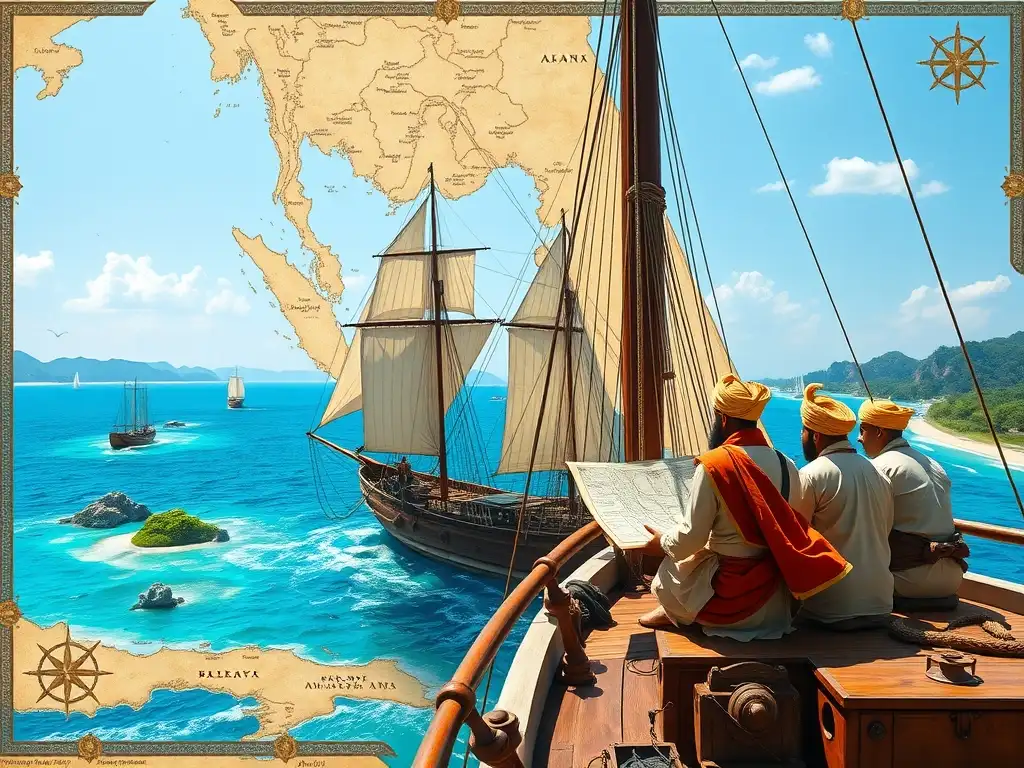
The maritime history of ancient India is a fascinating tapestry woven with the threads of exploration, trade, and cultural exchange. Indian navigators in Southeast Asia played a pivotal role in connecting the Indian subcontinent with distant lands, facilitating not just commerce but also the spread of ideas, religions, and cultural practices.
From the bustling ports of the Indus Valley to the vibrant trade centers of the Gupta Empire, Indian navigators charted courses across the waters of Southeast Asia, leaving an indelible mark on the region's history. This article delves into the rich legacy of these navigators, examining their contributions to maritime trade, the cultural exchanges that ensued, and the historical context that shaped their voyages.
Overview of Indian Maritime History
Indian maritime history dates back thousands of years, with evidence of seafaring activities found as early as the Indus Valley Civilization (c. 3300–1300 BCE). The strategic location of the Indian subcontinent, surrounded by the Arabian Sea, Indian Ocean, and Bay of Bengal, facilitated extensive maritime trade routes. Key elements of this history include:
- Shipbuilding Techniques: Ancient Indians were skilled shipbuilders, utilizing locally sourced materials and advanced techniques. Their vessels were designed for both cargo and passenger transport.
- Navigational Skills: Indian navigators mastered the art of navigation, employing the stars, winds, and ocean currents to guide their journeys across vast distances.
- Trade Networks: Indian maritime trade networks extended to Southeast Asia, the Middle East, and even Africa, facilitating the exchange of goods such as spices, textiles, and precious stones.
Navigation was not merely a means of travel; it was a vital component of ancient Indian society. The significance of navigation can be summarized as follows:
- Economic Prosperity: Trade via maritime routes was essential for the economic sustenance of ancient Indian kingdoms, contributing to wealth and prosperity.
- Cultural Exchange: The movement of people and ideas led to rich cultural interactions, influencing art, architecture, and religious practices in Southeast Asia.
- Strategic Alliances: Control over maritime routes allowed Indian kingdoms to establish strategic alliances with Southeast Asian states, enhancing their political influence.
Early Maritime Trade Routes
The establishment of early maritime trade routes was crucial for the interaction between India and Southeast Asia. These routes facilitated the exchange of goods and ideas, leading to the emergence of vibrant trade networks. Key trade ports included:
- Lothal: An important port city of the Indus Valley Civilization, it served as a hub for maritime trade with Mesopotamia and beyond.
- Kaveripattinam: A significant port in Tamil Nadu, known for its trade with Southeast Asia, particularly during the Sangam period.
Influences from the Indus Valley Civilization
The Indus Valley Civilization laid the foundation for Indian maritime activities. Its sophisticated urban centers, such as Harappa and Mohenjo-Daro, showcased advanced skills in:
- Urban Planning: The well-planned dockyards suggest a strong maritime culture.
- Trade Practices: Artifacts indicate extensive trade relations with neighboring regions, setting the stage for future explorations.
The Rise of Indian Kingdoms and Their Naval Power
The emergence of powerful Indian kingdoms, particularly during the Maurya and Gupta periods, marked a significant expansion of naval capabilities. Factors contributing to this growth included:
- Political Stability: Centralized governance allowed for the development of naval fleets and enhanced maritime activities.
- Cultural Patronage: Kings supported maritime expeditions, leading to increased trade and cultural exchanges with Southeast Asia.
Understanding the role of Indian navigators in exploring Southeast Asian waters reveals the depth of ancient India's maritime legacy and its lasting impact on regional history. The exploration and trade activities not only shaped the economic landscape but also fostered a rich tapestry of cultural interactions that continue to influence Southeast Asia today.
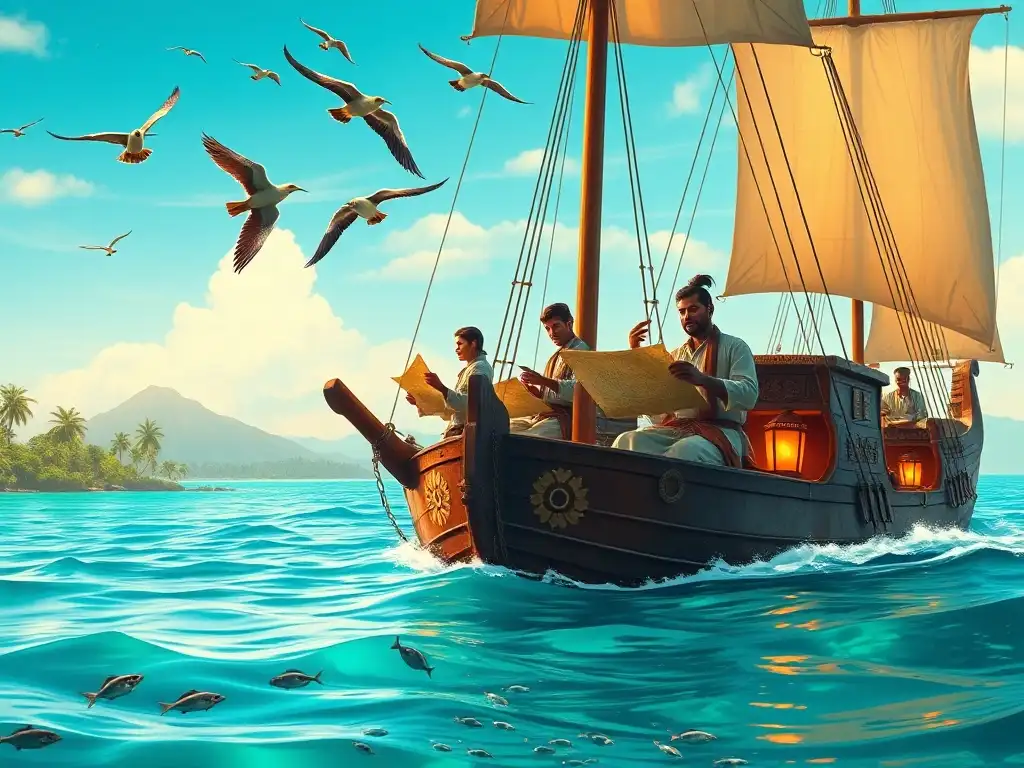
Indian navigators played a crucial role in shaping the maritime landscape of Southeast Asia. Their contributions extended beyond mere exploration; they established extensive trade networks, facilitated cultural exchanges, and left a lasting impact on the local civilizations. These navigators, equipped with sophisticated maritime knowledge and skills, ventured into uncharted waters, fostering connections that would influence the region for centuries.
Exploration and Discovery of Southeast Asian Waters
The exploration of Southeast Asian waters by Indian navigators dates back to ancient times, with evidence suggesting that they were among the first to chart these regions. Utilizing advanced shipbuilding techniques and navigational tools, such as the charkha (a type of compass), Indian sailors navigated through the treacherous waters of the Indian Ocean and the South China Sea.
Their expeditions led to the discovery of numerous islands and coastal territories, including the Malay Peninsula, the Philippines, and parts of Indonesia. These discoveries not only expanded geographic knowledge but also opened new avenues for trade and cultural interaction. The navigators’ ability to adapt to local conditions and their profound understanding of monsoon winds further facilitated their explorations, allowing them to travel great distances with relative ease.
Trade Networks Established by Indian Navigators
The establishment of trade networks by Indian navigators was one of their most significant contributions to Southeast Asia. These networks connected Indian ports, such as Tamralipti and Kalinga, with various Southeast Asian trading hubs, including Srivijaya and Majapahit.
Through these routes, commodities like spices, textiles, and precious stones flowed into Southeast Asia, while local products such as gold, ivory, and sandalwood were transported back to India. This vibrant trade not only enriched both regions economically but also fostered a sense of interdependence and mutual benefit.
The navigators also played a key role in introducing Indian agricultural practices, religious beliefs, and technological innovations to Southeast Asia, further solidifying these trade connections.
Cultural Exchanges Facilitated by Maritime Activities
The maritime activities of Indian navigators were instrumental in facilitating cultural exchanges between India and Southeast Asia. As they traversed the seas, they not only transported goods but also ideas, religions, and cultural practices.
Hinduism and Buddhism, two of the major religions of ancient India, spread throughout Southeast Asia due to the efforts of these navigators. Temples such as Borobudur and Angkor Wat serve as testaments to the profound influence of Indian culture in the region. Additionally, the introduction of Indian art, architecture, and literature enriched the local cultures, leading to a unique blend of traditions that characterized ancient Southeast Asia.
Prominent Figures in Maritime Exploration
Several key figures emerged as prominent navigators in the ancient Indian maritime tradition. Notable among them was Aryabhata, who, while primarily known for his contributions to mathematics and astronomy, also made significant advancements in navigation. His works laid the foundation for the navigational techniques used by seafarers.
Another important figure was Vikramaditya, a legendary king associated with numerous maritime expeditions. Under his reign, Indian naval power expanded, and explorations into Southeast Asia became more organized and systematic. These figures played a pivotal role in inspiring future generations of navigators to explore and connect with distant lands.
Notable Voyages to Southeast Asia
Among the notable voyages undertaken by Indian navigators, the journey to Sumatra stands out. This expedition, led by a group of traders, established direct contact with the Srivijaya empire, which was a significant trading hub during the 7th to 13th centuries. The interactions between Indian traders and local rulers resulted in the establishment of trade agreements and cultural ties that lasted for centuries.
Furthermore, voyages to Java and the Philippines facilitated the exchange of not only goods but also ideas and technologies. These expeditions were instrumental in shaping the maritime landscape of Southeast Asia, demonstrating the navigators’ prowess and the importance of their contributions to regional history.
Impact of Indian Navigators on Local Cultures
The impact of Indian navigators on local cultures in Southeast Asia was profound and multifaceted. Their arrival introduced new agricultural techniques, trade practices, and artistic expressions, which were embraced and adapted by local populations.
The influence of Indian languages is evident in many Southeast Asian dialects, with numerous words of Sanskrit origin still in use today. Additionally, the architectural styles of Indian temples and palaces inspired local constructions, leading to a unique fusion of design elements.
Moreover, the cultural exchanges facilitated by these navigators helped establish a shared heritage, weaving together the histories of India and Southeast Asia. The legacy of these ancient interactions continues to be felt today, reflecting the enduring relationship forged by Indian navigators in the region.
The Indian navigators played a pivotal role in exploring Southeast Asian waters, employing a variety of sophisticated navigational techniques that showcased their expertise and deep understanding of maritime practices. These techniques not only facilitated trade and cultural exchanges but also laid the groundwork for lasting connections between India and Southeast Asia.
Traditional Methods of Navigation
Indian sailors relied on a variety of traditional methods to navigate the vast and often treacherous waters of Southeast Asia. These methods included:
- Landmarks: Sailors used visible landmarks along the coastline to guide their vessels. Coastal navigation was crucial, particularly when approaching land.
- Sounding: By measuring the depth of the water, navigators could identify underwater features and avoid hazards. This technique was essential for safe passage through shallow waters.
- Drift Analysis: Sailors understood the effects of wind and current on their vessels and adjusted their routes accordingly, often anticipating shifts in direction based on these variables.
These methods were passed down through generations and were integral to the success of Indian maritime ventures.
Use of Stars and Ocean Currents
The knowledge of celestial navigation was vital for Indian sailors. They used the stars to determine their latitude and maintain their course during long voyages. Key elements included:
- Polaris (North Star): This star served as a constant point of reference for navigators in the northern hemisphere.
- Constellations: Navigators recognized various constellations, using them to track their position in relation to the horizon.
In addition to stellar navigation, Indian sailors were adept at understanding ocean currents. They utilized:
- Monsoon Winds: Recognizing seasonal wind patterns allowed for more efficient travel. The southwest monsoon winds, for example, facilitated journeys to Southeast Asia.
- Current Patterns: By studying and utilizing ocean currents, sailors could conserve energy and time, enhancing their navigational efficiency.
This combination of celestial knowledge and understanding of marine conditions allowed Indian navigators to traverse vast distances with remarkable accuracy.
Shipbuilding Innovations in Ancient India
The success of Indian navigators was also aided by advancements in shipbuilding techniques. Some notable innovations included:
- Dhow Design: The development of dhows—traditional sailing vessels—allowed for greater cargo capacity and stability in turbulent waters. These ships were characterized by their lateen sails, which enabled them to sail effectively against the wind.
- Materials: Indian shipbuilders used locally sourced timber and advanced techniques to construct robust vessels capable of withstanding long ocean voyages.
- Hull Designs: Innovations in hull design improved buoyancy and maneuverability, making ships more efficient and safer for navigation in diverse marine environments.
These shipbuilding advancements significantly enhanced the capabilities of Indian navigators in Southeast Asian waters.
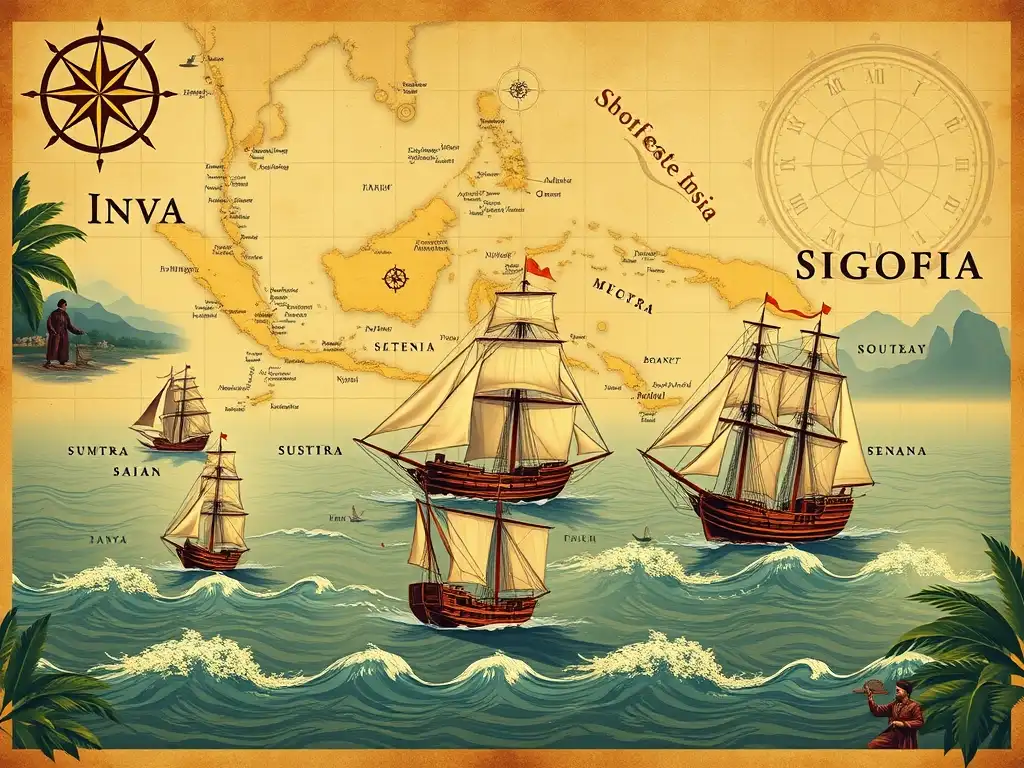
The navigation prowess of Indian sailors had profound impacts on Southeast Asia, shaping economic, cultural, and religious landscapes in the region.
Economic Influence through Trade
The extensive maritime routes established by Indian navigators facilitated vibrant trade networks between India and Southeast Asia. Key aspects of this economic influence included:
- Trade Goods: Indian merchants traded a variety of goods such as spices, textiles, and precious stones, which were highly sought after in Southeast Asia.
- Market Expansion: The influx of Indian traders contributed to the growth of port cities in Southeast Asia, turning them into bustling centers of commerce.
- Economic Integration: Indian navigators helped integrate Southeast Asian economies with broader trade networks extending to China and the Middle East, enhancing regional prosperity.
This economic interaction laid the foundation for long-term trade relationships that continue to be significant today.
Cultural Influences on Southeast Asian Societies
Indian navigation also resulted in rich cultural exchanges that significantly influenced Southeast Asian societies. Notable cultural impacts included:
- Language and Literature: The introduction of Sanskrit and Tamil literature enriched local languages and literary traditions, influencing artistic expression.
- Art and Architecture: Indian styles of art and architecture, including temple designs, were adopted and adapted in various Southeast Asian cultures, creating unique hybrid forms.
- Cuisine: Indian culinary practices and spices became integrated into local cuisines, adding diverse flavors and cooking techniques that are still prevalent.
These cultural exchanges fostered a sense of shared heritage and diversity in Southeast Asia.
The Spread of Religion and Ideas
The voyages of Indian navigators also played a crucial role in the dissemination of religious beliefs and philosophical ideas across Southeast Asia. Key elements of this spread included:
- Hinduism and Buddhism: Indian sailors brought with them the teachings of Hinduism and Buddhism, leading to the establishment of temples and religious practices in Southeast Asian societies.
- Cultural Ideologies: Concepts such as kingship, governance, and social hierarchy were influenced by Indian political and philosophical ideas, affecting local governance structures.
- Interfaith Dialogues: The interaction between Indian sailors and Southeast Asian populations fostered dialogues between various religious traditions, promoting a culture of tolerance and coexistence.
This spread of religion and ideas contributed to the rich tapestry of Southeast Asian culture and identity, creating lasting legacies that resonate to this day.
The legacy of Indian navigators in Southeast Asia is profound and multifaceted, shaping not only the maritime practices of the region but also influencing trade, culture, and interactions among civilizations. During ancient times, Indian navigators played a critical role in establishing sea routes that connected the Indian subcontinent with various Southeast Asian nations, such as Indonesia, Malaysia, and the Philippines. Their mastery of navigation techniques, including the use of stars and ocean currents, allowed for the successful exploration and trade in these waters.
The Indian influence in Southeast Asia is evident in the spread of cultural practices, religions, and languages. Indian navigators facilitated the exchange of ideas and goods, which helped in the establishment of Hinduism and Buddhism in the region. Additionally, the introduction of Indian art, architecture, and literature enriched the cultural tapestry of Southeast Asia, leaving an indelible mark that persists to this day.
Lasting Effects on Maritime Practices
The maritime practices established by Indian navigators laid the groundwork for future seafaring cultures in Southeast Asia. Techniques such as the use of monsoon winds for navigation were pioneered by Indian mariners, enabling them to undertake long-distance voyages. These navigational skills were not only adopted by local seafarers but also modified and improved upon over generations.
Moreover, Indian traders introduced various shipbuilding techniques and innovations, influencing the design of local vessels. The construction of larger, more durable ships equipped for extensive ocean travel became a hallmark of Southeast Asian maritime culture. This exchange of knowledge fostered a robust maritime tradition in the region, promoting trade networks that connected Southeast Asia to India and beyond.
Historical Recognition of Indian Contributions
Despite the significant impact of Indian navigators on Southeast Asia, historical recognition of their contributions has often been overshadowed by other narratives. However, recent scholarship has begun to illuminate the crucial role played by Indian mariners in the region's development. Ancient texts, inscriptions, and archaeological findings have provided insights into the vibrant maritime trade that thrived due to Indian influence.
The establishment of port cities such as Srivijaya and Majapahit, which became centers for trade and cultural exchange, can be directly linked to the activities of Indian navigators. These cities served as melting pots of diverse cultures, thanks to the influx of Indian traders and their knowledge. The recognition of these historical contributions is essential for a fuller understanding of Southeast Asia's past.
Modern Perspectives on Ancient Indian Navigation
In contemporary times, there is a renewed interest in the navigation techniques used by ancient Indian mariners. Scholars and historians are investigating the sophisticated methods that allowed these navigators to traverse vast oceanic expanses with remarkable accuracy. This exploration of ancient practices is not only enriching our understanding of maritime history but also inspiring modern navigational studies.
Furthermore, the legacy of Indian navigators is being celebrated through various cultural initiatives, including festivals and exhibitions that highlight maritime heritage. These efforts aim to educate new generations about the significance of ancient Indian navigation and its impact on Southeast Asia, fostering a sense of pride and appreciation for this shared history.
The contributions of Indian navigators in Southeast Asia are not merely historical; they continue to resonate in contemporary society. The maritime routes established by these early explorers facilitated the exchange of goods, ideas, and cultures, creating a foundation for the rich tapestry of Southeast Asian civilization.
Summary of Contributions to Southeast Asian Waters
Indian navigators significantly influenced Southeast Asia through their advanced maritime practices, trade networks, and cultural exchanges. Their ability to navigate vast oceans and establish trade routes not only enhanced regional economies but also facilitated the spread of religions, art, and languages. This interplay of cultures has left an enduring legacy that shapes the identity of Southeast Asian nations today.
Reflection on the Cultural Heritage Shared between India and Southeast Asia
The cultural heritage shared between India and Southeast Asia is a testament to the long-standing relationships fostered by Indian navigators. This heritage is reflected in the architecture of ancient temples, the prevalence of Indian languages, and the ongoing traditions that stem from ancient exchanges. Recognizing and celebrating this shared history is vital for appreciating the diverse cultural landscape of Southeast Asia, as it underscores the interconnectedness of civilizations and the role of Indian navigators in shaping the region’s history.
- Introduction to Indian Navigators in Southeast Asia
- Overview of Indian Maritime History
- Importance of Navigation in Ancient India
- Historical Context of Indian Navigators
- Contributions of Indian Navigators to Southeast Asia
- Key Indian Navigators and Their Expeditions
- Navigational Techniques Used by Indian Sailors
- The Impact of Indian Navigation on Southeast Asia
- Legacy of Indian Navigators in Southeast Asia
- Conclusion: The Enduring Significance of Indian Navigators
- What was the significance of Indian navigators in Southeast Asia?
- How did Indian navigators influence the maritime trade of ancient Southeast Asia?
- What advancements did Indian navigators contribute to maritime exploration?
- Did Indian navigators establish any settlements in Southeast Asia?
- What legacy did Indian navigators leave in Southeast Asia?
Frequently Asked Questions
Indian navigators played a crucial role in establishing maritime trade routes, facilitating cultural exchanges, and spreading Hinduism and Buddhism across Southeast Asia.
They were key in connecting Indian subcontinent markets with Southeast Asian ports, promoting the exchange of spices, textiles, and precious metals, which helped boost local economies.
Indian navigators were known for their advanced navigation techniques, including the use of stars, currents, and winds, which enabled them to traverse vast oceanic distances effectively.
Yes, they established several trading posts and influenced local cultures, leading to the formation of Indianized kingdoms, such as Srivijaya and Funan.
The legacy includes the spread of Indian culture, language, and religions, which shaped the region’s historical trajectory and contributed to its rich cultural tapestry.
The contributions of Indian navigators in Southeast Asia are not merely historical footnotes; they are pivotal chapters in the narrative of maritime exploration and cultural exchange. Today, as we navigate an increasingly interconnected world, the significance of these early seafarers resonates more than ever. Their journeys across vast oceans remind us of the power of exploration and the shared heritage that binds diverse cultures together. The legacy of Indian navigators serves as a testament to the spirit of adventure and the quest for knowledge that transcends time.
The influence of Indian navigators has shaped not only the trade routes but also the cultural landscapes of Southeast Asia. Their voyages facilitated the exchange of ideas, goods, and traditions, fostering a rich tapestry of multicultural interactions that continue to thrive today. As we reflect on this history, we recognize that the currents of these ancient mariners still flow through the veins of modern Southeast Asian societies. The sea is a world of its own, where cultures meet and stories intertwine.
This quote encapsulates the essence of the Indian navigators' impact, highlighting how their journeys forged connections that have endured through generations.
As we look to the future, let us draw inspiration from the daring spirit of these navigators. I invite you to reflect on your own journey and the paths you choose to explore. Consider how you can embrace the lessons of cultural exchange and collaboration in your life.
Whether through travel, learning, or engaging with diverse communities, each of us has the opportunity to navigate our own waters and contribute to a shared legacy of understanding and unity. The story of Indian navigators is not just a tale of the past; it is a call to action for all of us to become explorers in our own right.
Thank you for taking the time to explore the fascinating influence of Indian navigators in Southeast Asian waters! We hope you’ve uncovered rich insights into their courageous voyages and enduring legacy. Now, it’s your turn to dive deeper and connect with this incredible history!
Here are some actions you can take to continue your exploration:
- Join a local history group or online forum dedicated to ancient maritime explorations, where you can learn and share knowledge with fellow enthusiasts.
- Discover related cultures: Look for documentaries or books that delve into the maritime traditions of Southeast Asia, and share your newfound insights with friends!
- Consider documenting your own journey by writing a brief piece on what intrigued you most about Indian navigation—your contributions can inspire others to appreciate this rich history!
What aspect of the Indian navigators’ journey resonates most with you, and how do you envision sharing their legacy with the world?