
The Evolution of Southeast Asian Scripts: Tracing Indian Origins


Welcome to Ancient India History, where we invite you on a captivating journey through the rich and diverse tapestry of ancient Indian civilizations. In our featured article, "The Evolution of Southeast Asian Scripts: Tracing Indian Origins," we delve into the profound Indian influence on Southeast Asian scripts, uncovering how centuries of cultural exchange have shaped this region's written heritage.
As you explore, prepare to be intrigued by the stories of innovation and adaptation that connect these distant lands. Join us as we unravel the threads of history that bind India and Southeast Asia together, igniting your curiosity to learn more about this remarkable journey!
- Introduction to Indian Influence on Southeast Asian Scripts
- Historical Context of Scripts in Southeast Asia
- The Origins of Southeast Asian Scripts
- Major Southeast Asian Scripts Influenced by Indian Culture
- The Impact of Indian Influence on Southeast Asian Literatures
- Case Studies of Indian Influence on Specific Southeast Asian Scripts
- The Legacy of Indian Influence on Southeast Asian Scripts
- Conclusion: The Significance of Indian Influence on Southeast Asian Scripts
-
Frequently Asked Questions
- What is the significance of Indian influence on Southeast Asian scripts?
- Which scripts in Southeast Asia were derived from Indian models?
- How did Indian culture impact Southeast Asian civilizations?
- What role did trade play in the spread of Indian scripts?
- Can we see the legacy of Indian scripts in modern Southeast Asia?
- Final Reflection: Embracing the Legacy of Indian Influence on Southeast Asian Scripts
- Unveil the Legacy of Southeast Asian Scripts!
Introduction to Indian Influence on Southeast Asian Scripts
The evolution of Southeast Asian scripts is a fascinating testament to the cultural and intellectual exchanges that have shaped the region over centuries. At the heart of this evolution lies the profound influence of ancient India, which played a pivotal role in the development of various writing systems across Southeast Asia.
From the sophisticated inscriptions of the Indus Valley Civilization to the flourishing literary traditions of the Gupta Empire, Indian civilization has left an indelible mark on the scripts used in countries like Indonesia, Thailand, and Cambodia. This article delves into the intricate pathways through which Indian scripts and linguistic ideas traveled, transformed, and integrated into the Southeast Asian context, revealing a rich tapestry of historical connections that continue to resonate today.
Overview of Southeast Asian Scripts
Southeast Asia is home to a diverse array of scripts, each reflecting the unique cultural and linguistic heritage of its people. Among the most significant scripts are:
- Brahmi-derived Scripts: Originating from the ancient Indian Brahmi script, these include:
- Khmer Script: Used in Cambodia, known for its ornate characters.
- Thai Script: Developed from the Old Khmer script, this writing system is vital for the Thai language.
- Javanese Script: Utilized in Indonesia, showcasing a blend of indigenous and Indian influences.
- Other Notable Scripts:
- Latin Script: Adopted in the 20th century for many Southeast Asian languages.
- Arabic Script: Used in some regions, particularly for Islamic texts.
These scripts not only serve as tools for communication but also embody the historical narratives and cultural identities of their respective societies.
Importance of Studying Script Evolution
Understanding the evolution of scripts in Southeast Asia is crucial for several reasons:
- Cultural Insights: Scripts are a reflection of the cultural exchanges and interactions between civilizations. Analyzing their evolution helps us grasp the complexities of cultural integration and identity formation.
- Historical Context: The study of scripts provides valuable information about trade routes, migration patterns, and the spread of religions, particularly Hinduism and Buddhism, which were instrumental in shaping Southeast Asian societies.
- Linguistic Development: Examining how scripts adapted to local languages sheds light on the linguistic diversity and evolution in the region, revealing how societies have expressed their unique identities through written language.
The Role of Ancient India in Shaping Script Development
Ancient India was a catalyst for the development of writing systems in Southeast Asia, primarily through:
- Trade and Commerce: Indian merchants and traders established extensive networks, bringing not only goods but also cultural and intellectual influences, including writing systems.
- Religious Exchange: The spread of Hinduism and Buddhism from India to Southeast Asia facilitated the adoption of Indian scripts. Temples and monasteries became centers of learning, where these scripts were taught and adapted to local languages.
- Political Influence: Indian dynasties, such as the Mauryas and Guptas, exerted political influence over Southeast Asia, leading to the establishment of Indianized kingdoms that adopted Indian scripts for administrative purposes.
Through these pathways, ancient India significantly shaped the script development in Southeast Asia, creating a legacy that continues to influence contemporary writing systems in the region.
Historical Context of Scripts in Southeast Asia
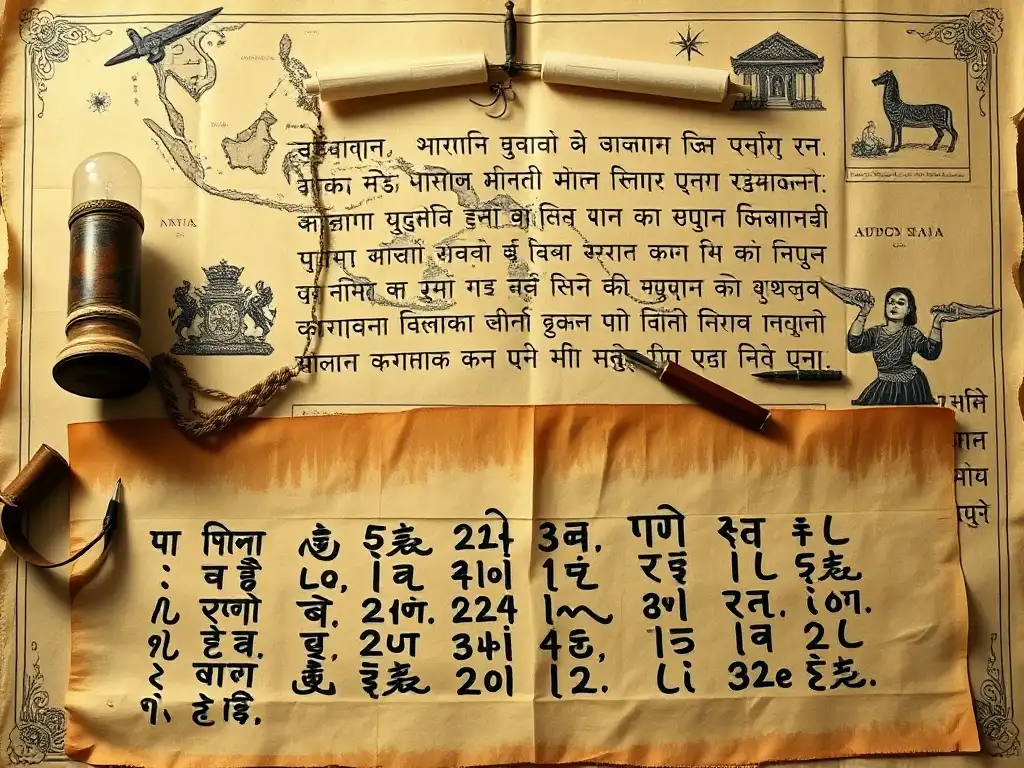
The history of Southeast Asian scripts is rich and complex, deeply intertwined with the cultural and trade exchanges that took place across the Indian Ocean. Understanding this context is essential to trace the Indian influence on Southeast Asian scripts. Prior to the influence of Indian culture, Southeast Asia had its own indigenous systems of communication, primarily oral. However, as trade routes expanded and cultural interactions intensified, the need for more sophisticated means of recording information arose.
Southeast Asia's geographical position made it a melting pot of cultures, where various influences converged. The region was not only a hub for trade between India, China, and the Middle East but also a canvas for the spread of ideas, religions, and scripts. This environment set the stage for the adoption and adaptation of Indian scripts, which would significantly shape the writing systems in the region.
Early Writing Systems in Southeast Asia
Before Indian scripts were introduced, Southeast Asia had various forms of communication, including:
- Petroglyphs and Pictographs: Early societies used these forms of visual representation, found in places like Borneo and the Philippines, to convey messages.
- Local Scripts: Some communities developed simple scripts, such as the Kawi script in Java, which had limited functionality and were primarily used for religious and ceremonial purposes.
Despite these early attempts at writing, they lacked the complexity needed for administrative and literary functions. The arrival of Indian writing systems provided the necessary structure and versatility, enabling the recording of religious texts, trade agreements, and historical records.
The Arrival of Indian Culture and Literacy
The arrival of Indian culture in Southeast Asia can be traced back to the early centuries CE, primarily through trade and the spread of Hinduism and Buddhism. Indian traders and missionaries brought with them not just goods but also knowledge, including literacy and scriptural traditions. This cultural exchange laid the foundation for the introduction of Indian scripts, which would greatly influence local writing systems.
The Brahmi script, one of the oldest writing systems in India, was particularly significant. It served as the prototype for many Southeast Asian scripts, including:
- Khmer: Used in Cambodia, derived from the Pallava script.
- Javanese: Originating from the Kawi script, which was influenced by both the Brahmi and Pallava scripts.
- Thai: Evolved from the Khmer script, showcasing the adaptability of Indian influences.
These scripts facilitated not only administrative tasks but also the dissemination of religious texts, which were crucial for the spread of Hinduism and Buddhism throughout the region.
Key Historical Events Influencing Script Adoption
Several pivotal events played a crucial role in the adoption of Indian scripts in Southeast Asia:
- The Spread of Hinduism and Buddhism: The establishment of Indian kingdoms in Southeast Asia, such as Srivijaya and Majapahit, fostered the spread of Indian culture, including scripts. Temples, inscriptions, and trade documents became key mediums for the dissemination of these scripts.
- The Maritime Trade Routes: The flourishing maritime trade routes connecting India with Southeast Asia facilitated cultural exchanges. Indian merchants and scholars settled in various regions, promoting literacy and the use of Indian scripts for trade documentation and governance.
- Inscriptions and Royal Patronage: Many Southeast Asian rulers adopted Indian scripts for official use, leading to their widespread acceptance. Inscriptions on stone and metal, such as the famous Stone of Datu, exemplified the integration of Indian writing into local governance.
The interplay of these historical events not only underscores the Indian influence on Southeast Asian scripts but also illustrates the dynamic nature of cultural exchanges that shaped the region's literary landscape. The integration of Indian scripts paved the way for the development of distinct writing systems that would evolve over centuries, reflecting both local traditions and Indian heritage.
The Origins of Southeast Asian Scripts

The evolution of Southeast Asian scripts is a fascinating depiction of cultural exchange and adaptation, tracing back to the influence of Indian writing systems. This transformation can be attributed to various factors, including trade, migration, and the spread of Buddhism and Hinduism. The very foundations of these scripts reveal a deep-rooted connection to Indian civilization, primarily through the Brahmi script, which served as a pivotal model for many Southeast Asian writing systems.
The Brahmi Script: A Foundation for Southeast Asian Writing
The Brahmi script, believed to have originated around the 3rd century BCE, is one of the earliest writing systems in India and has been identified as the primary ancestor of numerous scripts in Southeast Asia. Its phonetic nature allowed for the representation of various sounds, making it adaptable across different languages and cultures.
- Key Features of Brahmi Script:
- Phonetic Representation: Brahmi used symbols to represent consonants and vowels, a feature that would later influence Southeast Asian scripts.
- Syllabic Structure: Each character represented a consonant with an inherent vowel sound, which could be modified with diacritics.
- Artistic Variations: Over time, Brahmi evolved into various regional scripts, reflecting local artistic styles and cultural identities.
The early interactions between Indian traders and Southeast Asian kingdoms, particularly between the 1st and 6th centuries CE, facilitated the transmission of the Brahmi script to regions such as modern-day Indonesia, Malaysia, and Thailand. As these scripts took root, they underwent significant transformations to cater to the phonetic and linguistic needs of local languages.
Adaptations of Indian Scripts in Southeast Asia
The adaptation of Indian scripts in Southeast Asia is evident in a variety of writing systems that emerged across the region, many of which retained core elements of Brahmi while incorporating local characteristics.
- Notable Scripts Influenced by Brahmi:
- Khmer Script: Used in Cambodia, this script evolved from the Pallava script, which itself is a derivative of Brahmi. It features a complex syllabary and is used for both religious and secular texts.
- Javanese Script: Originating from the Brahmi script, it incorporates unique visual elements that reflect the cultural identity of the Javanese people. The script supports both the Javanese and Indonesian languages.
- Thai Script: Developed from the Khmer script, it has undergone modifications to suit the tonal nature of the Thai language while maintaining roots in Indian writing traditions.
The process of adaptation was not merely a replication of Indian scripts but rather a creative reinterpretation that aligned with local linguistic structures and cultural practices. As a result, Southeast Asian scripts became integral to the identity and heritage of their respective regions.
Comparison of Brahmi and Southeast Asian Scripts
Understanding the distinct features of Brahmi and its Southeast Asian derivatives provides insight into the profound impact of Indian influence on regional writing systems. Here’s a comparative analysis:
| Feature | Brahmi Script | Southeast Asian Scripts |
|---|---|---|
| Origin | 3rd century BCE, India | 1st–6th century CE, Southeast Asia |
| Phonetic Structure | Consonant-vowel syllabic | Consonant-vowel syllabic, with local modifications |
| Diacritics | Limited use | Extensive use to denote tones and vowel changes |
| Visual Style | Geometric and angular | Curvilinear and ornamental |
| Cultural Influence | Primarily Indian | Blended with local traditions and languages |
The evolution of Southeast Asian scripts reflects a dynamic interplay of adaptation and innovation, showcasing how the Indian influence on Southeast Asian scripts not only enriched the region's writing systems but also contributed to the broader tapestry of cultural exchange. This legacy continues to resonate in the contemporary scripts used in Southeast Asia today, affirming the enduring impact of ancient Indian civilization.
Major Southeast Asian Scripts Influenced by Indian Culture
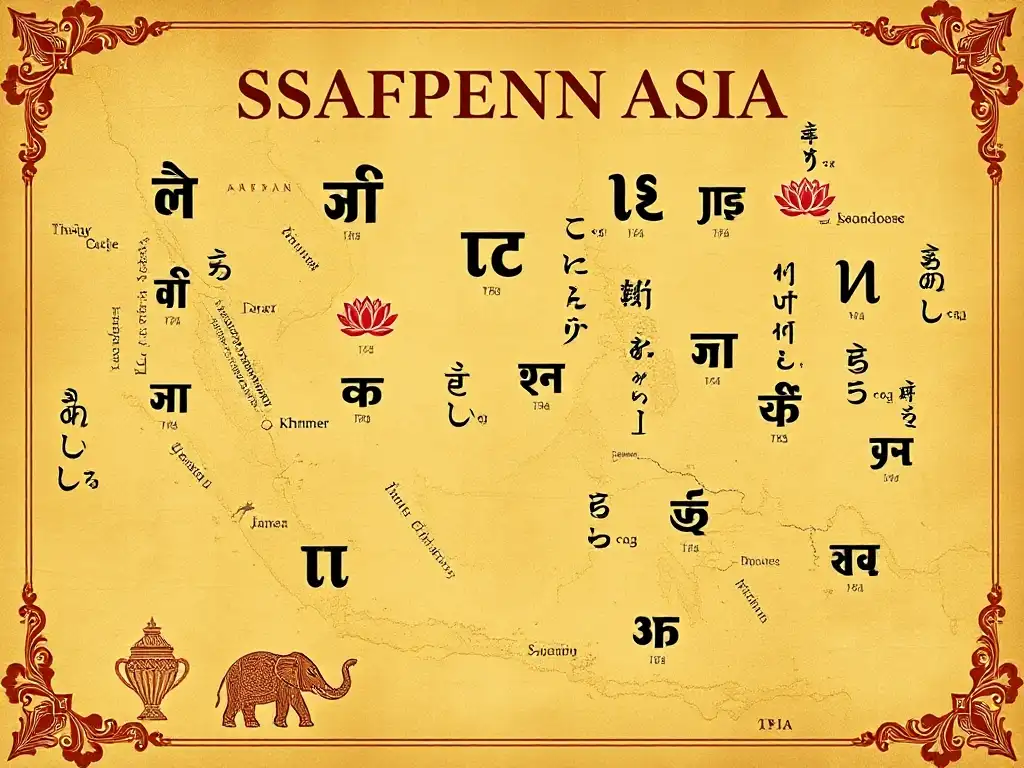
The Khmer Script and Its Indian Roots
The Khmer script, used primarily for writing the Khmer language in Cambodia, is a direct descendant of the Pallava script, which originated in South India around the 4th century CE. This connection showcases the Indian influence on Southeast Asian scripts, as the Khmer script evolved through a series of adaptations that integrated Indian phonetic principles and writing conventions.
- Historical Context: The introduction of Indian culture to Southeast Asia was facilitated by trade, maritime routes, and the spread of Hinduism and Buddhism. As Indian merchants and missionaries traveled to the region, they brought with them not only religious beliefs but also writing systems.
- Adoption and Adaptation: The Khmer script was formally adopted by the Khmer Empire during the reign of King Jayavarman II in the early 9th century. The script underwent several modifications, incorporating additional characters to represent sounds unique to the Khmer language. This adaptability reflects the dynamic nature of cultural exchanges between India and Southeast Asia.
- Modern Usage: Today, the Khmer script remains in use, illustrating the lasting impact of Indian scriptural traditions. It features a combination of consonants, vowels, and diacritics, showcasing a complex system of writing that retains its historical roots while adapting to contemporary needs.
The Thai Script: Evolution from Indian Influence
The Thai script, which is used to write the Thai language, is another exemplary case of Indian influence on Southeast Asian scripts. It is derived from the Old Khmer script, which itself was influenced by Brahmi, the ancient Indian writing system.
- Historical Development: King Ramkhamhaeng of the Sukhothai Kingdom is credited with creating the Thai script in the 13th century. His adaptation of the Khmer script involved simplifying certain aspects and incorporating unique phonetic elements to cater to the Thai language.
- Phonetic Characteristics: The Thai script consists of 44 consonants and 15 vowel symbols, along with tone markers that reflect the tonal nature of the Thai language. This phonetic complexity can be traced back to its Indian origins, where similar principles of sound representation were employed.
- Cultural Significance: The evolution of the Thai script underscores the profound cultural exchanges that occurred between India and Thailand. The script not only serves as a means of communication but also embodies the rich historical narratives and cultural heritage shared between these regions.
The Javanese Script: Tracing Indian Heritage
The Javanese script, used primarily on the island of Java in Indonesia, is another significant example of Indian influence on Southeast Asian scripts. It is derived from the Brahmi script and has undergone various transformations to accommodate the linguistic features of the Javanese language.
- Origins and Development: The Javanese script emerged in the 9th century CE, influenced by the Indian scripts brought over by traders and Buddhist monks. The earliest inscriptions in Javanese can be traced back to Hindu-Buddhist kingdoms such as the Medang Kingdom.
- Structural Features: The script is an abugida, meaning that each character represents a consonant with an inherent vowel sound that can be modified with diacritics. This structure is reminiscent of Brahmi, showcasing the direct lineage of Indian writing systems.
- Cultural Impact: The Javanese script has played a crucial role in preserving the literary and historical narratives of the region. It is used in various forms of literature, including poetry and religious texts, reflecting the deep-rooted Indian cultural influences that shaped its development.
The Khmer, Thai, and Javanese scripts exemplify the profound Indian influence on Southeast Asian scripts, illustrating how cultural exchanges over centuries have shaped the written traditions of this diverse region. These scripts not only serve practical purposes but also embody the historical connections that continue to resonate in the cultural identities of Southeast Asian nations.
The Impact of Indian Influence on Southeast Asian Literatures

The influence of Indian culture on Southeast Asian literatures is a profound testament to the historical connections between these regions. The flow of ideas, religious beliefs, and artistic expressions from India to Southeast Asia significantly shaped the literary landscape. This cultural exchange is evident in the adoption and adaptation of Indian scripts, languages, and narrative styles, which laid the foundation for the emergence of unique literary traditions in Southeast Asia.
Literary Traditions Developed from Indian Scripts
The adoption of Indian scripts in Southeast Asia led to the creation of several indigenous writing systems, which played a crucial role in the region's literary development. Among these, the Brahmi script served as a primary model, giving rise to various derivatives that evolved alongside local languages. For instance:
- Kawi Script: Originating from Java, the Kawi script is a direct descendant of the Brahmi script. It was used to write Old Javanese and played a vital role in the preservation of literature, including poetry and religious texts.
- Khmer Script: Developed in Cambodia, the Khmer script also traces its roots back to Brahmi. It became the medium for a wealth of literary works, including epics and historical chronicles.
- Thai Script: Although it evolved later, the Thai script shows the influence of both the Khmer script and the Indian writing systems, reflecting the interconnectedness of Southeast Asian cultures.
These scripts not only facilitated the documentation of local languages but also allowed for the incorporation of Sanskrit and Pali vocabulary, enriching Southeast Asian literary traditions with Indian linguistic elements.
The Role of Sanskrit and Pali in Southeast Asian Texts
Sanskrit and Pali have been pivotal in shaping the literary corpus of Southeast Asia. Their impact can be seen through religious texts, poetry, and historical chronicles that were composed in these languages or influenced by them.
- Religious Texts: Many Southeast Asian cultures adopted Hinduism and Buddhism, which brought with them a plethora of texts written in Sanskrit and Pali. For example, the Ramayana and Mahabharata, originally composed in Sanskrit, were translated and adapted into local languages, becoming integral to the cultural fabric of regions like Indonesia and Thailand.
- Poetry and Epics: The influence of Sanskrit poetry is evident in the rich tradition of epic literature in Southeast Asia. Local poets drew inspiration from Indian meters and themes, resulting in works that reflect both Indian and indigenous narratives. The Kakawin literature of Java is a prime example, showcasing the blend of Indian literary forms with local storytelling traditions.
- Historical Chronicles: Many historical texts from Southeast Asia were written in Pali, particularly in regions strongly influenced by Theravada Buddhism, such as Burma and Thailand. These chronicles often recount the history of kings and dynasties, intertwining local events with Buddhist teachings.
Preservation and Transformation of Indian Literature in Southeast Asia
The preservation and transformation of Indian literary works in Southeast Asia highlight the dynamic nature of cultural exchange. As Indian texts were introduced to Southeast Asia, local scholars and writers adapted them, ensuring their relevance to regional audiences.
- Adaptation of Themes: While the foundational stories and themes remained rooted in Indian literature, local adaptations infused these narratives with regional elements. For instance, the Ramayana was localized in Indonesia, where it was reinterpreted with Javanese cultural motifs, resulting in unique performances and storytelling traditions.
- Bilingual Texts: The emergence of bilingual texts, often written in a combination of local languages and Sanskrit or Pali, showcases the intertwining of linguistic and cultural identities. These texts served not only as a means of communication but also as a bridge between Indian and Southeast Asian cultures.
- Preservation through Performance: Oral traditions played a critical role in the preservation of Indian-inspired narratives. The performance of epics and legends in local languages ensured that these stories remained vibrant and accessible to new generations, even as they evolved over time.
The Indian influence on Southeast Asian scripts and literatures is a multifaceted phenomenon that reflects centuries of cultural exchange, adaptation, and innovation. The intricate web of literary traditions developed from Indian scripts continues to be a vital part of Southeast Asia's rich cultural heritage.
Case Studies of Indian Influence on Specific Southeast Asian Scripts

The Development of the Burmese Script from Indian Origins
The Burmese script, used primarily for writing the Burmese language, has its roots in the ancient Indian Brahmi script. This transition can be traced back to the spread of Buddhism in the region during the 1st millennium CE. The Mon people, who inhabited parts of present-day Myanmar and were heavily influenced by Indian culture, played a pivotal role in the introduction of Brahmi to Southeast Asia.
Historical Context
- Buddhism's Spread: The arrival of Buddhism in Myanmar can be traced to the 3rd century BCE when Emperor Ashoka sent missionaries to propagate the religion. This cultural exchange facilitated the introduction of Indian scripts and literary traditions.
- Mon Influence: The Mon kingdom, which thrived in what is now southern Myanmar, adopted and adapted the Brahmi script, creating a variant known as the Mon script. This served as a precursor to the development of the Burmese script.
Key Features of the Burmese Script
- Character Structure: The Burmese script consists of circular and semi-circular letters, a significant departure from the linear forms of Brahmi. This stylistic evolution reflects local aesthetic preferences while maintaining the phonetic principles of its Indian predecessor.
- Syllabic Nature: Similar to Brahmi, the Burmese script is syllabic, meaning that each character represents a consonant followed by an inherent vowel. This feature underscores the Indian influence on the phonetic structure of the script.
The adaptation of the Brahmi script into the Burmese script exemplifies the dynamic cultural exchanges between India and Southeast Asia.
The Balinese Script: A Blend of Local and Indian Elements
The Balinese script, used for writing the Balinese language and other local dialects, is another excellent example of Indian influence on Southeast Asian scripts. Originating from the Brahmi script, it underwent significant modifications to reflect the unique linguistic and cultural characteristics of Bali.
Historical Evolution
- Indian Cultural Influence: The arrival of Hinduism and Buddhism in Bali around the 1st century CE facilitated the adoption of Indian scripts. The Balinese script evolved as a means to document religious texts, literature, and local customs.
- Integration of Local Elements: Over time, the Balinese script incorporated indigenous features, such as additional diacritics to accommodate sounds specific to the Balinese language. This adaptation signifies the fusion of Indian and local traditions.
Characteristics of the Balinese Script
- Visual Aesthetics: The Balinese script is characterized by its intricate and decorative letters. The design reflects local artistic traditions, showcasing a blend of Indian and Balinese influences.
- Usage in Rituals: The script is often used in religious ceremonies and cultural expressions, highlighting its role in preserving Balinese identity while rooted in Indian heritage.
The Balinese script stands as a testament to the harmonious blending of Indian and local elements, enriching the cultural tapestry of Indonesia.
The Lao Script: Tracing Its Indian Connections
The Lao script, used for writing the Lao language, is another product of the Indian influence on Southeast Asian scripts. Derived from the Khmer script, which itself evolved from the Brahmi script, the Lao script reflects the profound impact of Indian culture and language in the region.
Historical Background
- Buddhist Influence: The dissemination of Buddhism in Laos during the 8th century CE facilitated the introduction of Indian scripts. Monastic communities played a crucial role in teaching literacy through texts written in Brahmi and its derivatives.
- Khmer and Lao Connection: The evolution from Khmer to Lao script illustrates a direct lineage of Indian influence. As the Khmer Empire flourished, its script served as a foundation for the development of scripts in neighboring regions, including Laos.
Distinctive Features of the Lao Script
- Syllabic System: Like its Indian progenitors, the Lao script employs a syllabic writing system. Each character represents a consonant with an inherent vowel, demonstrating the phonetic continuity from Brahmi.
- Tone Representation: The script incorporates additional marks to indicate tonal variations in the Lao language, a feature that highlights local linguistic needs while maintaining its Indian roots.
The Lao script exemplifies the enduring legacy of Indian influence, manifesting in both structure and function, and serving as a vital link in the cultural history of Southeast Asia.
Through detailed case studies of the Burmese, Balinese, and Lao scripts, it becomes evident that the Indian influence on Southeast Asian scripts is profound and multifaceted. Each script reflects a unique blend of Indian and local elements, demonstrating the dynamic interactions that have shaped regional languages and cultures over centuries.
The Legacy of Indian Influence on Southeast Asian Scripts

The historical interplay between Indian civilizations and Southeast Asia has left an indelible mark on the region's scripts, profoundly shaping their written languages. This phenomenon can be traced back to the early centuries of the Common Era when Indian traders, travelers, and scholars introduced a variety of cultural elements, including linguistic traditions, to Southeast Asia. The Indian influence on Southeast Asian scripts is particularly notable in the adoption and adaptation of Brahmi and Kharosthi scripts, which laid the groundwork for many Southeast Asian writing systems.
Cultural Exchanges and Their Lasting Impact
The exchanges between India and Southeast Asia were not merely transactional but encompassed a rich tapestry of cultural interactions. These interactions facilitated the transfer of knowledge, religion, and art.
- Trade Routes: The maritime trade routes connecting India with Southeast Asia were crucial for the dissemination of ideas and scripts. Merchants brought along not only goods but also cultural practices and writing systems.
- Religious Texts: With the spread of Hinduism and Buddhism, religious texts and inscriptions were translated into local languages, often using Indian scripts as a foundation. For example, the Pali Canon, written in the Brahmi script, influenced the development of writing systems in countries like Thailand and Myanmar.
- Local Adaptations: As Indian scripts were adopted, they were adapted to fit the phonetic nuances of local languages. For instance, the Khmer script and Burmese script evolved from Indian scripts, incorporating unique characters to represent sounds specific to those languages.
The long-lasting impact of these exchanges is evident in the scripts still used today, demonstrating how cultural diffusion can lead to significant linguistic evolution.
Modern Recognition of Historical Script Influences
In recent years, scholars have increasingly recognized the significance of Indian influence on Southeast Asian scripts.
- Linguistic Studies: Linguists have conducted comprehensive studies to trace the origins and adaptations of various Southeast Asian scripts back to Indian roots. This ongoing research is vital for understanding the historical context of these languages and their development.
- Cultural Heritage Initiatives: Many countries in Southeast Asia are now taking steps to preserve and promote their historical scripts, acknowledging their Indian origins. For example, programs aimed at revitalizing traditional scripts in Indonesia and Thailand highlight the importance of recognizing these connections to Indian heritage.
- Educational Curricula: Educational institutions are incorporating the study of historical scripts into their curricula, emphasizing the need for students to understand the cultural and historical significance of their writing systems.
This modern recognition not only enhances appreciation for Southeast Asia's rich linguistic landscape but also underscores the enduring legacy of Indian cultural influence.
Future Research Directions on Indian Influence in Southeast Asia
As the field of historical linguistics continues to evolve, several promising avenues for future research on the Indian influence on Southeast Asian scripts emerge:
- Interdisciplinary Approaches: Combining linguistics with archaeology, anthropology, and history can yield deeper insights into how scripts evolved in response to cultural exchanges. Collaborative projects that engage multiple disciplines are likely to uncover new connections.
- Digital Humanities: The use of digital tools and databases can facilitate comparative studies of scripts. By analyzing vast amounts of textual data, researchers can identify patterns and influences that may have been overlooked.
- Field Research: Conducting field research in regions where these scripts are still in use can provide firsthand insights into their application and evolution. Engaging with local scholars and practitioners can enrich the understanding of the scripts' historical significance.
- Preservation Efforts: Continued efforts towards documenting and preserving endangered scripts will be essential. Initiatives aimed at archiving historical texts and promoting literacy in traditional scripts can foster a deeper appreciation for their Indian origins.
The exploration of Indian influence on Southeast Asian scripts is a vibrant field ripe for further investigation, with the potential to enhance our understanding of cultural exchanges that have shaped the region's linguistic heritage.
Conclusion: The Significance of Indian Influence on Southeast Asian Scripts
The influence of Indian scripts on Southeast Asian writing systems is a testament to the profound cultural exchanges that occurred throughout history. These interactions played a pivotal role in shaping the linguistic landscapes of Southeast Asia. The adoption and adaptation of Indian scripts, such as Brahmi and its derivatives, led to the creation of various regional scripts that not only facilitated communication but also contributed to the development of local literature and administration. Understanding this influence provides valuable insights into the dynamics of cultural transmission and transformation across borders.
Summary of Key Findings
The exploration of Indian influence on Southeast Asian scripts reveals several key findings:
- Historical Foundations: The Brahmi script, dating back to the 3rd century BCE, served as a crucial foundation for many Southeast Asian scripts. Its dissemination was facilitated by trade routes and the spread of Buddhism and Hinduism.
- Diverse Adaptations: Southeast Asian countries such as Thailand, Cambodia, and Indonesia adapted Indian scripts to create unique writing systems. For example:
- Khmer Script: Derived from Brahmi, it evolved to accommodate the Khmer language and is characterized by its intricate characters.
- Javanese Script: This script emerged from the Indian influence and showcased local phonetic needs while retaining some original Brahmi elements.
- Cultural Exchange: The scripts not only represented linguistic advancements but also symbolized the exchange of ideas, religious beliefs, and artistic expressions between India and Southeast Asia.
- Legacy and Impact: The adoption of Indian scripts laid the groundwork for the cultural and literary traditions in Southeast Asia, influencing modern languages and scripts in the region.
The Continued Relevance of Historical Script Studies
The study of historical scripts remains relevant today for several reasons:
- Linguistic Understanding: By examining the evolution of scripts, researchers can better understand the relationships between languages and their development over time.
- Cultural Identity: Scripts are a crucial part of cultural identity. Understanding their origins helps nations appreciate their heritage and promotes cultural pride.
- Educational Value: Historical script studies can inform educational curricula, encouraging students to explore linguistic history and cross-cultural influences.
- Preservation Efforts: As many scripts face the threat of extinction, understanding their historical significance can guide preservation efforts and promote the revitalization of endangered writing systems.
Final Thoughts on Cultural Exchange and Script Evolution
Cultural exchange is an ongoing process that shapes societies and their identities. The evolution of Southeast Asian scripts, influenced by Indian writing systems, exemplifies how languages and scripts can transcend geographical boundaries, fostering connections among diverse cultures.
As we delve deeper into the history of scripts, it is essential to recognize the importance of these exchanges in creating a rich tapestry of human expression. The legacy of Indian influence on Southeast Asian scripts not only highlights the historical interactions between these regions but also underscores the need for continued exploration and appreciation of our shared cultural heritage.
The study of Indian influence on Southeast Asian scripts reveals a dynamic narrative of adaptation, innovation, and cultural continuity that remains significant in our understanding of history and identity today.
Frequently Asked Questions
What is the significance of Indian influence on Southeast Asian scripts?
The Indian influence on Southeast Asian scripts is significant as it laid the foundation for writing systems in the region, promoting literacy and cultural exchange.
Which scripts in Southeast Asia were derived from Indian models?
Scripts such as Brahmi, Khmer, and Javanese are examples of writing systems that evolved from Indian models, showcasing the deep-rooted connections between India and Southeast Asia.
How did Indian culture impact Southeast Asian civilizations?
Indian culture brought religion, art, and literature to Southeast Asia, influencing local customs and practices, leading to a unique blend of Indian and indigenous traditions.
What role did trade play in the spread of Indian scripts?
Trade was a crucial factor in the dissemination of Indian scripts; as merchants exchanged goods, they also shared knowledge and writing systems, facilitating cultural integration.
Can we see the legacy of Indian scripts in modern Southeast Asia?
Yes, the legacy of Indian scripts persists in modern Southeast Asia, where several languages and scripts still reflect the historical influence of ancient Indian civilizations.
Final Reflection: Embracing the Legacy of Indian Influence on Southeast Asian Scripts
The evolution of Southeast Asian scripts is a testament to the profound and lasting impact of Indian culture and language on the region. Today, as we navigate a world increasingly defined by globalization and cultural exchange, understanding these historical connections becomes essential. The intricate web of influences that shaped Southeast Asian writing systems not only highlights the significance of cultural intermingling but also reminds us of the power of shared heritage in shaping identities.
Cultural narratives are often woven from threads of history, and the influence of Indian scripts on Southeast Asian writing is a prime example of this interconnectedness. The adoption and adaptation of these scripts have fostered a rich tapestry of languages and literatures that continue to thrive today. As we reflect on this evolution, we recognize that "the past is never dead; it's not even past," as William Faulkner poignantly stated. This ongoing dialogue between cultures underscores the importance of acknowledging our shared histories and the ways they inform our present and future.
As we conclude our exploration of the Indian influence on Southeast Asian scripts, I invite you to reflect on your own cultural narratives and the connections that shape your identity. Consider how the stories of the past resonate in your life today and how you can contribute to the ongoing dialogue of cultural exchange. By embracing our shared legacies, we can foster a deeper understanding of one another and celebrate the beauty of our diverse yet interconnected world.
Unveil the Legacy of Southeast Asian Scripts!
Thank you for embarking on the fascinating journey of Southeast Asian scripts and their Indian roots! We hope you’ve gained a deeper appreciation for how language evolves and connects cultures across time and space. Now, it’s time to take this knowledge further and engage with the rich history we've explored.
Here’s how you can continue your journey:
- Explore further: Dive into additional resources on the influence of Indian culture in Southeast Asia by visiting our dedicated pages that discuss ancient scripts and their significance.
- Share your insights: Engage in discussions with friends or on social media. Your perspective can enlighten others about the historical connections that shape our world.
- Join the conversation: Leave a comment below! We would love to hear your thoughts on how understanding these scripts enhances our appreciation for cultural diversity.
What insights have you gained about the interplay between language and culture in Southeast Asia?