
Sanskrit as a Tool for CrossCultural Communication


Welcome to Ancient India History, where we embark on a journey through the rich tapestry of ancient civilizations that shaped a remarkable era. In this exploration, we delve into the fascinating topic of Sanskrit as a Tool for Cross-Cultural Communication. Discover how this ancient language not only served as a medium of expression but also bridged diverse cultures and ideas across the ages. Are you ready to unlock the secrets of communication that transcended boundaries? Join us as we unravel the profound impact of Sanskrit in the world of ancient dialogue and interaction!
- Introduction to Sanskrit as a Tool for Cross-Cultural Communication
- Historical Context of Sanskrit
- The Role of Sanskrit in Cross-Cultural Exchanges
- Key Contributions of Sanskrit to Cross-Cultural Communication
- Case Studies: Successful Cross-Cultural Communication through Sanskrit
- Challenges in Understanding Sanskrit for Cross-Cultural Communication
- Conclusion: The Legacy of Sanskrit in Cross-Cultural Communication
- References
-
Frequently Asked Questions
- What is the significance of Sanskrit in cross-cultural communication?
- How did ancient Indian civilizations use Sanskrit for communication?
- What contributions did the Gupta Empire make to Sanskrit literature?
- How does Sanskrit influence modern languages and cultures?
- What role does Sanskrit play in today's global cultural context?
- Final Reflection: Sanskrit's Enduring Legacy in Cross-Cultural Communication
- Unveil the Power of Sanskrit: Start Your Journey Today!
Introduction to Sanskrit as a Tool for Cross-Cultural Communication
The Sanskrit language, one of the oldest known languages in the world, holds a pivotal role in the cultural and intellectual history of ancient India. Its rich lexicon and nuanced grammatical structure have not only contributed to the development of Indian literature, philosophy, and science but have also served as a crucial medium of communication across diverse cultures.
This article explores the significance of Sanskrit as a tool for cross-cultural communication, delving into its historical context and its broader implications in fostering dialogues between various civilizations. By examining the intricate relationship between Sanskrit and cross-cultural interactions, we can better appreciate how this ancient language has shaped not only Indian society but also influenced global cultural exchanges throughout history.
Importance of Sanskrit in Ancient India
Sanskrit was more than just a language; it was the backbone of ancient Indian civilization, playing a vital role in various spheres of life, including religion, philosophy, and art. Its significance can be understood through several key aspects:
-
Literary and Religious Texts:
Sanskrit is the language of many foundational texts in Hinduism, Buddhism, and Jainism, including the Vedas, Upanishads, and epics like the Mahabharata and Ramayana. These texts were instrumental in shaping spiritual and philosophical thought, not only in India but also in other parts of Asia.
-
Intellectual Exchange:
The language facilitated scholarly exchanges among ancient Indian thinkers and philosophers. Universities like Nalanda and Takshashila became melting pots of knowledge where ideas were shared, debated, and disseminated across borders.
-
Cultural Identity:
As a scholarly language, Sanskrit helped in creating a sense of cultural identity among various communities within ancient India. It provided a common linguistic framework that transcended regional dialects, fostering unity in diversity.
-
Influence Beyond Borders:
The reach of Sanskrit extended beyond India, influencing languages and cultures in Southeast Asia, particularly in regions like Indonesia, Thailand, and Cambodia, where Hindu and Buddhist texts were translated and adapted.
Overview of Cross-Cultural Communication
Cross-cultural communication refers to the exchange of ideas, values, and beliefs between individuals or groups from different cultural backgrounds. In the context of ancient civilizations, it played a crucial role in facilitating trade, diplomacy, and cultural exchanges. The following elements highlight the significance of cross-cultural communication:
-
Trade Relations:
Ancient trade routes, such as the Silk Road, were not only conduits for goods but also for cultural and linguistic exchanges. Merchants and travelers interacted with different cultures, leading to the dissemination of languages, including Sanskrit.
-
Diplomatic Alliances:
Diplomatic communication often required a shared linguistic medium, and Sanskrit served as a sophisticated tool for negotiation and alliance-building among various kingdoms.
-
Philosophical Discourse:
The translation of Sanskrit texts into other languages allowed for the philosophical ideas of ancient India to permeate other cultures, enriching their intellectual traditions and fostering mutual understanding.
Sanskrit's role as a tool for cross-cultural communication is a testament to its enduring legacy. Through its influence on literature, scholarly exchanges, and philosophical dialogues, Sanskrit not only shaped ancient Indian civilization but also laid the groundwork for rich intercultural interactions that resonate to this day.
Historical Context of Sanskrit

Origins of Sanskrit: A Linguistic Journey
Sanskrit, one of the oldest languages in the world, has a rich and intricate history that dates back over 3,500 years. Its origins are rooted in the Indo-European language family, making it a pivotal point of study for linguists and historians alike. The earliest form of Sanskrit, known as Vedic Sanskrit, emerged alongside the composition of the Vedas, the sacred texts of Hinduism, around 1500 BCE.
The development of Sanskrit can be traced through various stages:
- Vedic Sanskrit (1500-500 BCE): This period is characterized by the usage of complex grammatical structures and a rich vocabulary, largely found in religious texts.
- Classical Sanskrit (500 BCE onwards): Marked by the formalization of grammar and syntax, this era saw the work of Panini, who compiled the rules of Sanskrit grammar in his seminal text, Ashtadhyayi. This work laid the foundation for the study of the language and influenced many other languages in the region.
Sanskrit's grammar is notably sophisticated, featuring a system of phonetics that allows for precise communication. The language's structure, with its roots and affixes, enables the formation of a plethora of words, making it a versatile medium for expression.
Sanskrit in Ancient Indian Civilizations
Sanskrit played a crucial role in the cultural and intellectual life of ancient Indian civilizations. It was not merely a language but a vehicle for transmitting knowledge, philosophy, and spirituality. The presence of Sanskrit in various facets of life can be observed in:
- Literature and Philosophy: Texts such as the Mahabharata, Ramayana, and the Upanishads were written in Sanskrit, encapsulating moral, ethical, and philosophical teachings that shaped Indian thought.
- Science and Mathematics: Sanskrit was the medium for significant scientific discourse. The works of ancient scholars like Aryabhata and Brahmagupta in mathematics and astronomy are prime examples of how Sanskrit facilitated the exchange of knowledge.
- Rituals and Religion: In religious ceremonies, Sanskrit hymns and chants were integral, reinforcing its role as a sacred language that connected the spiritual with the earthly.
Sanskrit's prominence in these areas fostered a sense of unity among diverse cultures within ancient India, creating a shared linguistic heritage that transcended regional dialects.
Influence of Sanskrit on Neighboring Cultures
The impact of Sanskrit extended beyond the borders of India, influencing neighboring cultures and languages across Asia. As trade routes flourished and empires expanded, Sanskrit became a lingua franca in various regions, facilitating cross-cultural communication. Key areas of influence include:
- Southeast Asia: The spread of Hinduism and Buddhism saw Sanskrit adopted in countries like Thailand, Cambodia, and Indonesia. Temples such as Angkor Wat feature inscriptions in Sanskrit, showcasing the language's role in religious and cultural exchanges.
- Tibetan and Mongolian Cultures: Sanskrit texts were translated into Tibetan, leading to the establishment of a rich tradition of Buddhist scholarship. The Mongolian Empire also absorbed elements of Sanskrit through its interactions with Indian scholars.
- Influence on Other Languages: Several modern languages in India, such as Hindi, Bengali, and Marathi, have drawn vocabulary and grammatical structures from Sanskrit, reflecting its enduring legacy.
The historical role of Sanskrit as a tool for cross-cultural communication is evident in its ability to bridge diverse traditions and languages, promoting a shared understanding of philosophical and spiritual concepts across regions. Thus, Sanskrit’s legacy as a unifying language continues to resonate in contemporary linguistic and cultural landscapes.
The Role of Sanskrit in Cross-Cultural Exchanges

Sanskrit has long been recognized not only as a classical language of ancient India but also as a significant medium for cross-cultural communication across various civilizations. Its structured grammar, rich vocabulary, and philosophical depth made it an ideal language for scholarly discourse, diplomacy, and trade. The historical context of Sanskrit reveals its pivotal role in facilitating exchanges across Asia, particularly during the formative periods of Indian civilization.
Sanskrit as a Lingua Franca in Ancient Times
Sanskrit emerged as a lingua franca in ancient times, particularly during the Vedic period (approximately 1500-500 BCE). This period saw the codification of the language through texts such as the Vedas, which not only established a religious and philosophical framework but also created a common linguistic medium for diverse groups. As various tribes and cultures came into contact, Sanskrit provided a unifying language that transcended regional dialects.
The significance of Sanskrit as a medium of communication can be illustrated through its adoption by scholars and rulers across various regions. For instance, during the Maurya Empire (322-185 BCE), Sanskrit was utilized in inscriptions and administrative documents, facilitating governance across a vast territory that included diverse ethnic groups. This administrative use of Sanskrit solidified its status as a standard language, encouraging its adoption in trade, diplomacy, and scholarly exchanges.
Moreover, the grammatical framework of Sanskrit, as outlined by Panini in his Ashtadhyayi, made it particularly effective for precise expression. The language's ability to convey complex ideas succinctly allowed it to function as a tool for philosophical discourse among different cultures. Scholars from regions such as Central Asia and the Middle East often engaged in dialogue in Sanskrit, promoting intellectual exchanges that enriched various traditions.
Trade Routes and Cultural Interactions
The historical trade routes, such as the Silk Road, played a crucial role in the dissemination of Sanskrit beyond the Indian subcontinent. Merchants and travelers carried not only goods but also languages and cultures along these routes. As Indian traders interacted with merchants from Persia, Greece, and later, China, Sanskrit became a medium for transactions and cultural exchanges.
In regions like Southeast Asia, Sanskrit significantly influenced local languages and cultures. The establishment of trade ports along the coasts facilitated interactions that led to the adoption of Sanskrit terms in local dialects. Notably, the inscription of Sanskrit on monuments in places such as Indonesia and Cambodia highlights the lasting impact of these exchanges. For example, the Khalidasa inscriptions in Indonesia reflect the integration of Sanskrit into local governance and cultural practices, indicating how trade fostered a shared linguistic heritage.
The spread of Buddhism and Hinduism also contributed to the cross-cultural dynamics facilitated by Sanskrit. As missionaries traveled to regions like Tibet and Southeast Asia, they carried Sanskrit texts, which served as religious and philosophical guides. This not only expanded the reach of Indian religious practices but also established Sanskrit as a central element in the cultural fabric of these societies.
The Spread of Sanskrit through Literature and Philosophy
The proliferation of Sanskrit literature and philosophical works further enhanced its role in cross-cultural communication. Texts such as the Mahabharata and the Ramayana transcended regional boundaries, reaching audiences far beyond the Indian subcontinent. These epic narratives, rich with moral and ethical teachings, provided a common cultural reference that resonated with diverse populations.
Philosophical schools, particularly during the Gupta Empire (approximately 240-550 CE), showcased Sanskrit's capacity for intellectual discourse. The works of philosophers like Adi Shankaracharya and Nagarjuna were not only composed in Sanskrit but also widely studied in various regions, influencing local thought systems. The translation of these texts into other languages facilitated further cross-cultural dialogues, emphasizing the universal themes present in Sanskrit literature.
Furthermore, the establishment of universities, such as Nalanda and Takshashila, attracted scholars from across Asia. These institutions fostered an environment where Sanskrit was the medium of instruction, thereby promoting its use in academic and philosophical discussions. The exchange of ideas in these centers of learning exemplified how Sanskrit functioned as a bridge among cultures, facilitating the sharing of knowledge and perspectives.
The history of Sanskrit as a tool for cross-cultural communication is marked by its adoption as a lingua franca, its role in trade and cultural interactions, and its dissemination through literature and philosophy. This linguistic heritage not only shaped ancient India but also left an indelible mark on the cultures and civilizations that engaged with it. The legacy of Sanskrit continues to be felt today, underscoring its importance in the historical narrative of cross-cultural exchanges.
Key Contributions of Sanskrit to Cross-Cultural Communication

The role of Sanskrit in fostering cross-cultural communication throughout history cannot be overstated. As one of the oldest languages still in use today, Sanskrit not only served as a medium of scholarly and philosophical discourse but also acted as a bridge connecting diverse cultures across Asia. Here are some of the key contributions of Sanskrit in the realm of cross-cultural communication.
Sanskrit Texts: A Medium of Knowledge Transfer
Sanskrit texts, such as the Vedas, Upanishads, and epics like the Mahabharata and Ramayana, have been pivotal in disseminating knowledge across various civilizations. These texts are not merely literary works; they encapsulate profound philosophical insights, scientific knowledge, and ethical guidelines that transcended regional boundaries.
- Philosophical Treatises: The ancient Indian philosophical schools, such as Vedanta and Nyaya, developed complex arguments and systems of thought in Sanskrit that influenced thinkers beyond India. For instance, the ideas of non-dualism and karma found in the Upanishads have impacted Buddhist and Jain philosophies, as well as Western philosophies during the colonial period.
- Scientific Knowledge: Sanskrit was the language of science and mathematics in ancient India, with significant contributions in fields such as astronomy, medicine, and mathematics. Texts like Aryabhata's Aryabhatiya and Sushruta’s Sushruta Samhita were translated into various languages, facilitating the spread of Indian scientific knowledge to other cultures.
- Literature and Arts: The rich literary tradition of Sanskrit, including poetry, drama, and aesthetics, has influenced countless artists and writers in neighboring regions. The Natyashastra, a foundational text on theatre arts, not only shaped Indian performance arts but also inspired theatrical traditions in Southeast Asian countries.
Influence of Sanskrit on Other Languages
The influence of Sanskrit extends beyond its own literary tradition; it has significantly shaped several languages in Asia, particularly those in the Indo-European family. This linguistic impact has been a crucial element in promoting cross-cultural communication.
- Loanwords and Vocabulary: Many languages, including Hindi, Bengali, and various languages of Southeast Asia, have absorbed numerous Sanskrit words. For example, the word dharma (धर्म) has been adopted in languages like Thai and Khmer, denoting concepts of law and morality.
- Scripts and Grammar: The Devanagari script, derived from Brahmi, has been a source of inspiration for several Southeast Asian scripts. The grammatical structures of languages like Nepali and Marathi showcase the influence of Sanskrit, which has provided a common linguistic thread that facilitates mutual understanding.
- Cultural Exchange: Through trade, pilgrimage, and scholarly exchanges, Sanskrit has facilitated cross-cultural dialogues. For instance, the spread of Buddhism saw the translation of Sanskrit texts into Chinese and Tibetan, leading to a rich interplay of ideas that enhanced cultural ties across Asia.
Preservation of Cultural Heritage through Sanskrit
Sanskrit has played an essential role in the preservation of India's cultural heritage, acting as a repository of ancient wisdom and artistic expression that resonates across generations.
- Historical Records: Many historical accounts and genealogies were recorded in Sanskrit, preserving the narratives of kings, dynasties, and significant events. This has provided insight into ancient Indian history and its interactions with neighboring cultures.
- Rituals and Traditions: The use of Sanskrit in religious and cultural rituals has maintained the continuity of traditions over millennia. Mantras, chants, and hymns recited in Sanskrit are integral to Hindu rituals, ensuring that cultural practices retain their historical significance.
- Modern Revival: Today, there is a renewed interest in Sanskrit as a medium for cultural and intellectual engagement. Efforts to revive Sanskrit education and literature aim to connect contemporary society with its ancient roots, fostering cross-cultural appreciation and dialogue.
Sanskrit has been a vital tool for cross-cultural communication throughout history, serving as a medium for knowledge transfer, influencing other languages, and preserving cultural heritage. Its contributions continue to resonate in modern times, highlighting the enduring legacy of this ancient language.
Case Studies: Successful Cross-Cultural Communication through Sanskrit

The Impact of Sanskrit in Southeast Asia
Sanskrit has played a pivotal role in the cultural and political landscapes of Southeast Asia, particularly from the first century CE onwards. As Indian traders and scholars traveled to regions like Indonesia, Cambodia, and Thailand, they brought with them not only goods but also the rich linguistic heritage of Sanskrit. This facilitated a unique form of cross-cultural communication that significantly influenced local cultures.
- Cultural Exchange:
- Hindu and Buddhist Texts: The spread of Hinduism and Buddhism in Southeast Asia can be traced back to Sanskrit scriptures. Texts like the Mahabharata and Ramayana were translated and adapted into local languages, creating a blend of Indian and local narratives. This exchange enriched the cultural fabric of the regions, fostering mutual understanding.
- Architecture and Art: The influence of Sanskrit extended beyond literature. Temples such as Angkor Wat in Cambodia and Borobudur in Indonesia display inscriptions in Sanskrit, showcasing the adoption of Indian architectural styles and artistic expressions. These structures served as a medium through which religious and philosophical ideas were communicated across cultures.
- Political Influence:
- Royal Patronage: Southeast Asian kings often adopted Sanskrit titles and used the language in inscriptions to legitimize their rule. For instance, the Khmer Empire utilized Sanskrit in royal edicts, establishing authority and connecting with the broader Indian cultural sphere.
Sanskrit in the Transmission of Religious Ideas
Sanskrit served as a crucial vehicle for the transmission of religious ideas between India and other cultures. Its use in religious texts allowed for the dissemination of complex philosophies and spiritual teachings, creating a bridge between diverse belief systems.
- Buddhism: The spread of Buddhism beyond India was significantly aided by Sanskrit texts. Sutras and commentaries were translated into various languages, enabling local populations to access and understand Buddhist teachings. This cross-cultural communication facilitated the integration of Buddhist philosophy into different cultural contexts, evident in regions like Tibet, China, and Mongolia.
- Hinduism: Similar to Buddhism, Hindu texts composed in Sanskrit, including the Vedas and Upanishads, were translated and adapted in various cultures. This not only promoted Hindu philosophical ideas but also allowed for the coexistence of local traditions, creating a syncretic religious environment.
Interactions with the Persian and Greek Cultures
The interactions between Sanskrit and other ancient civilizations, such as Persian and Greek, showcase the language's role in fostering cross-cultural dialogue.
- Persian Influence:
- Cultural Syncretism: The Mauryan Empire's interactions with Persian cultures during the time of Ashoka led to a rich exchange of ideas and artistic styles. Sanskrit inscriptions from this period reflect a fusion of Persian and Indian motifs, highlighting how Sanskrit served as a common linguistic ground for diplomatic communication and cultural exchange.
- Greek Encounters:
- Philosophical Exchange: The conquests of Alexander the Great brought Greek philosophers into contact with Indian scholars. Sanskrit texts were translated into Greek, facilitating discussions on philosophy and science. This exchange enriched both cultures, particularly in areas such as mathematics and astronomy, where Sanskrit mathematical texts like Aryabhata's contributions influenced Greek thought.
Sanskrit not only served as a tool for cross-cultural communication but also acted as a catalyst for the exchange of ideas across diverse civilizations. Its impact on Southeast Asia, the transmission of religious ideas, and interactions with Persian and Greek cultures underscore its significance in shaping historical narratives and cultural identities throughout ancient history.
Challenges in Understanding Sanskrit for Cross-Cultural Communication

Language Barriers and Misinterpretations
Sanskrit, while a profound and rich linguistic tradition, presents several challenges in the realm of cross-cultural communication. One of the primary hurdles is the existence of multiple dialects and variations within the language itself. While classical Sanskrit serves as a standardized form, regional dialects and local interpretations can lead to misunderstandings. Different communities may ascribe varied meanings to the same word or phrase based on cultural or contextual nuances.
Moreover, the complexity of Sanskrit grammar adds another layer of challenge. With its intricate system of roots, affixes, and conjugations, even native speakers may find it difficult to convey their thoughts accurately in Sanskrit. This complexity can lead to misinterpretations when communicating with speakers from different cultural backgrounds who may not be familiar with the grammatical structure of the language.
Example of Misinterpretations:
- Word: "Dharma"
- Interpretation in Hindu Context: Refers to duty, morality, and law.
- Interpretation in Buddhist Context: Can imply the teachings of the Buddha, leading to confusion in cross-cultural exchanges.
In addition, the historical context of Sanskrit has evolved significantly over centuries. The original meanings and usages of words can differ greatly from contemporary interpretations. This can be particularly problematic when ancient texts are referenced in modern discussions, as the cultural and philosophical frameworks have shifted dramatically.
The Evolving Nature of Sanskrit over Time
The evolution of Sanskrit is a testament to its adaptability and resilience, yet this very nature can complicate its role in cross-cultural communication. Historically, Sanskrit has undergone several transformations, from Vedic Sanskrit used in the earliest Hindu scriptures to Classical Sanskrit, which became the lingua franca of scholars and poets during the Gupta Empire.
One notable aspect of this evolution is the emergence of numerous regional languages influenced by Sanskrit. Languages such as Hindi, Bengali, and Marathi have borrowed extensively from Sanskrit, often incorporating Sanskrit vocabulary and syntactic structures. However, this borrowing can lead to discrepancies in meaning and usage across different cultures. For instance:
| Language | Sanskrit Influence | Example Word |
|---|---|---|
| Hindi | Significant vocabulary adoption | "Shanti" (peace) |
| Bengali | Philosophical and literary terms | "Dharma" |
| Marathi | Everyday communication | "Samata" (equality) |
Additionally, the revival of interest in Sanskrit in modern times, particularly in educational institutions and cultural movements, has led to the redefinition of certain terms and concepts. Scholars may interpret ancient texts through contemporary lenses, altering their original intent. This reinterpretation can create barriers in cross-cultural dialogue, as meanings may shift away from their traditional contexts.
While Sanskrit serves as a powerful tool for cross-cultural communication, its inherent challenges—stemming from language barriers, misinterpretations, and its evolving nature—necessitate a deep understanding of both linguistic and cultural contexts. As we continue to explore the history of Sanskrit's role in cross-cultural exchanges, recognizing these challenges will be essential for effective communication and mutual understanding.
Conclusion: The Legacy of Sanskrit in Cross-Cultural Communication
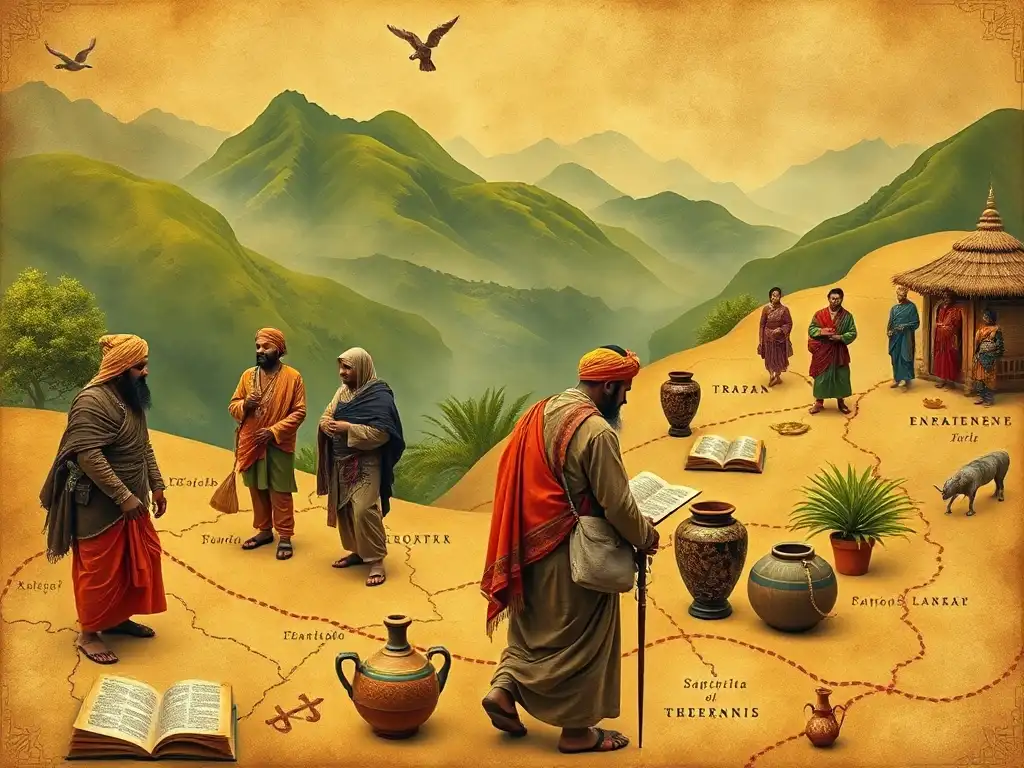
The legacy of Sanskrit as a tool for cross-cultural communication is profound and multifaceted, extending beyond its historical context into contemporary relevance. This ancient language has served as a bridge connecting various cultures, philosophies, and religions throughout history, facilitating dialogue and understanding among diverse communities. The intricate grammatical structure and rich vocabulary of Sanskrit have allowed it to express complex ideas, making it an invaluable resource for scholarship and intellectual exchange.
The contributions of Sanskrit to fields such as literature, philosophy, and science have established a foundation for cross-cultural dialogue that persists to this day. Texts like the Vedas, Upanishads, and various epics have not only influenced Indian civilization but have also reverberated across the globe, impacting cultures as far-reaching as those in Southeast Asia and Europe. The ability of Sanskrit to encapsulate profound spiritual and philosophical concepts has made it a language of choice for scholars and practitioners worldwide.
The Relevance of Sanskrit Today
In today’s globalized world, Sanskrit continues to hold relevance in multiple dimensions:
- Academic Relevance: Universities around the world are increasingly offering courses in Sanskrit, recognizing its importance in understanding ancient texts and philosophies. Scholars utilize Sanskrit to engage with classical literature, providing insights into the historical context and cultural practices of ancient civilizations.
- Cultural Revitalization: There is a growing movement toward the revival of Sanskrit in cultural practices. Festivals, recitals, and workshops are being organized to celebrate Sanskrit literature, music, and dance, fostering a sense of identity and pride among communities.
- Interfaith Dialogue: As a language that has been a medium for various religious texts, Sanskrit plays a crucial role in interfaith discussions. It facilitates a deeper understanding of Hinduism, Buddhism, and Jainism, allowing for enriched conversations among followers of different faiths.
- Linguistic Influence: The influence of Sanskrit on numerous modern languages, particularly in the Indian subcontinent, showcases its enduring legacy. Languages like Hindi, Bengali, and others have borrowed extensively from Sanskrit, making it a cornerstone of linguistic heritage.
Future Prospects for Sanskrit in Global Communication
The future of Sanskrit in global communication appears promising, driven by several key factors:
- Technological Integration: With advancements in technology, there is an opportunity for Sanskrit to be integrated into digital platforms. Language processing tools, apps for learning Sanskrit, and online courses can make the language more accessible to a global audience.
- Cultural Exchange Programs: Collaborative initiatives between Indian institutions and international universities can foster greater interest in Sanskrit. Such programs can promote cross-cultural understanding and appreciation of ancient texts.
- Research and Publications: Increased funding for research in Sanskrit studies could yield new translations and interpretations of ancient texts, making them available to a broader audience. This can lead to a resurgence of interest in the language and its cultural significance.
- Global Community Building: The establishment of global networks of Sanskrit enthusiasts and scholars can facilitate knowledge-sharing and collaborative projects, strengthening the role of Sanskrit in international cultural exchanges.
Sanskrit's role as a tool for cross-cultural communication is not merely a relic of the past but a living legacy that continues to evolve. Its historical significance, coupled with modern relevance and future prospects, positions Sanskrit as a vital component of global dialogue and understanding in an increasingly interconnected world.
References
In the study of Sanskrit as a tool for cross-cultural communication, numerous sources provide critical insights into its historical significance and development. Understanding these references can greatly enhance one's comprehension of how Sanskrit has facilitated communication across diverse cultures throughout history.
- Historical Texts:
- Ancient texts like the Vedas and Upanishads serve as foundational literature that not only encapsulate philosophical ideas but also demonstrate early examples of cross-cultural exchanges.
- Pāṇini's Ashtadhyayi, a significant work on Sanskrit grammar, offers insights into the linguistic structure that enabled the language's adaptability and use across different regions.
- Modern Analysis:
- Contemporary scholars such as Michael Witzel have explored the implications of Sanskrit in the wider context of Indo-European languages, highlighting its role in shaping cultural narratives.
- R. S. Sharma's works on ancient Indian history provide a broader context regarding the socio-political dynamics that allowed for Sanskrit's spread.
- Comparative Linguistics:
- Studies comparing Sanskrit with other ancient languages, such as Latin and Greek, shed light on its unique features and contributions to linguistic evolution.
Suggested Reading on Sanskrit and Cross-Cultural Communication
To further explore the fascinating intersection of Sanskrit and cross-cultural communication, the following texts are recommended:
- "Sanskrit and Its Role in the Development of Asian Cultures" by Harold G. Coward: This book examines how Sanskrit influenced various Asian cultures, particularly in terms of philosophy and religious thought.
- "The Language of the Gods in the World of Men" by R. P. Kangle: This work offers an in-depth analysis of Sanskrit's impact on societal structures and its role as a medium of intellectual exchange.
- "Cross-Cultural Studies in Sanskrit Literature" by S. S. Nataraja: This collection of essays discusses the literary merits of Sanskrit and its capability to convey complex ideas across cultural boundaries.
- "The Cultural Significance of Sanskrit" by M. R. Srikantan: This book delves into Sanskrit's role in sustaining cultural identities and fostering communication within diverse communities.
Notable Scholars and Works on Sanskrit History
Several scholars have made significant contributions to the understanding of Sanskrit's historical role in cross-cultural communication:
- Frits Staal: His research focuses on the philosophy of language and the ritualistic aspects of Sanskrit, emphasizing its role in both cultural and spiritual exchanges.
- A. K. Warder: Known for his extensive work on Indian literature, Warder's analyses highlight how Sanskrit literature has facilitated dialogues between different cultural and philosophical traditions.
- T. A. Gopinath Rao: His studies on ancient Indian scripts and their evolution provide insights into the linguistic aspects of Sanskrit, illustrating its ability to bridge cultural gaps.
- R. N. Dandekar: His works emphasize the socio-cultural dimensions of Sanskrit, exploring its use in various historical contexts and its significance in fostering cross-cultural understanding.
By engaging with these references and suggested readings, one can gain a deeper appreciation for the role of Sanskrit in shaping communication across diverse cultures, as well as its enduring legacy in the history of human civilization.
Frequently Asked Questions
What is the significance of Sanskrit in cross-cultural communication?
Sanskrit serves as a foundational language that has influenced numerous languages and cultures, facilitating cross-cultural communication across regions and time periods.
How did ancient Indian civilizations use Sanskrit for communication?
Ancient Indian civilizations utilized Sanskrit in religious, philosophical, and literary texts, promoting cultural exchange and understanding among diverse populations.
What contributions did the Gupta Empire make to Sanskrit literature?
The Gupta Empire is known for its golden age of Sanskrit literature, producing significant works in poetry, drama, and philosophy that enriched cross-cultural dialogue.
How does Sanskrit influence modern languages and cultures?
Sanskrit has significantly influenced many modern languages, especially in South Asia, and continues to be a source of cultural identity and tradition.
What role does Sanskrit play in today's global cultural context?
In today's global context, Sanskrit is studied for its historical significance and its role in cross-cultural communication, bridging gaps between ancient and modern societies.
Final Reflection: Sanskrit's Enduring Legacy in Cross-Cultural Communication
The exploration of Sanskrit as a tool for cross-cultural communication reveals its profound relevance in today's interconnected world. As globalization continues to blur cultural boundaries, understanding the historical significance of Sanskrit in facilitating dialogue among diverse civilizations becomes increasingly vital. The ability of this ancient language to bridge gaps and foster mutual understanding is a striking testament to the power of language in shaping human connections.
The influence of Sanskrit extends far beyond its historical roots; it continues to resonate in contemporary cultural and social landscapes. The richness of Sanskrit not only enriches literary traditions but also serves as a foundation for philosophical discourse across cultures. As we reflect on its impact, we are reminded of the words of Mahatma Gandhi: A language is something infinitely greater than grammar and philology. It is the poetic testament of the genius of a race and culture, and the living embodiment of the thoughts and fancies that have moulded them.
This perspective underscores the ongoing relevance of Sanskrit in fostering cross-cultural dialogue and understanding.
As we look to the future, I invite you to reflect on the lessons of Sanskrit and its role in our lives. Consider how you can embrace the principles of cross-cultural communication in your own interactions. Whether through learning a new language, engaging with diverse cultures, or promoting inclusivity in your community, each small action contributes to a larger tapestry of understanding. Let us honor the legacy of Sanskrit by nurturing connections that transcend borders and celebrating the beauty of our shared humanity.
Unveil the Power of Sanskrit: Start Your Journey Today!
Thank you for diving into the fascinating world of Sanskrit and its role in cross-cultural communication! By exploring this ancient language, you've uncovered insights that can bridge gaps and foster connections across cultures. Now, it's time to take action and truly harness the power of Sanskrit in your life and interactions.
Here are a few steps you can take right now:
- Enroll in a Sanskrit course: Join an online class or find local workshops to start learning this beautiful language.
- Share your newfound knowledge: Discuss what you've learned with friends or on social media. Inspire others to appreciate the richness of Sanskrit!
- Engage in cultural exchanges: Connect with speakers of Sanskrit and participate in conversations that enhance your understanding of different cultures.
How can you integrate what you’ve learned about Sanskrit into your daily conversations and interactions? We would love to hear your thoughts!